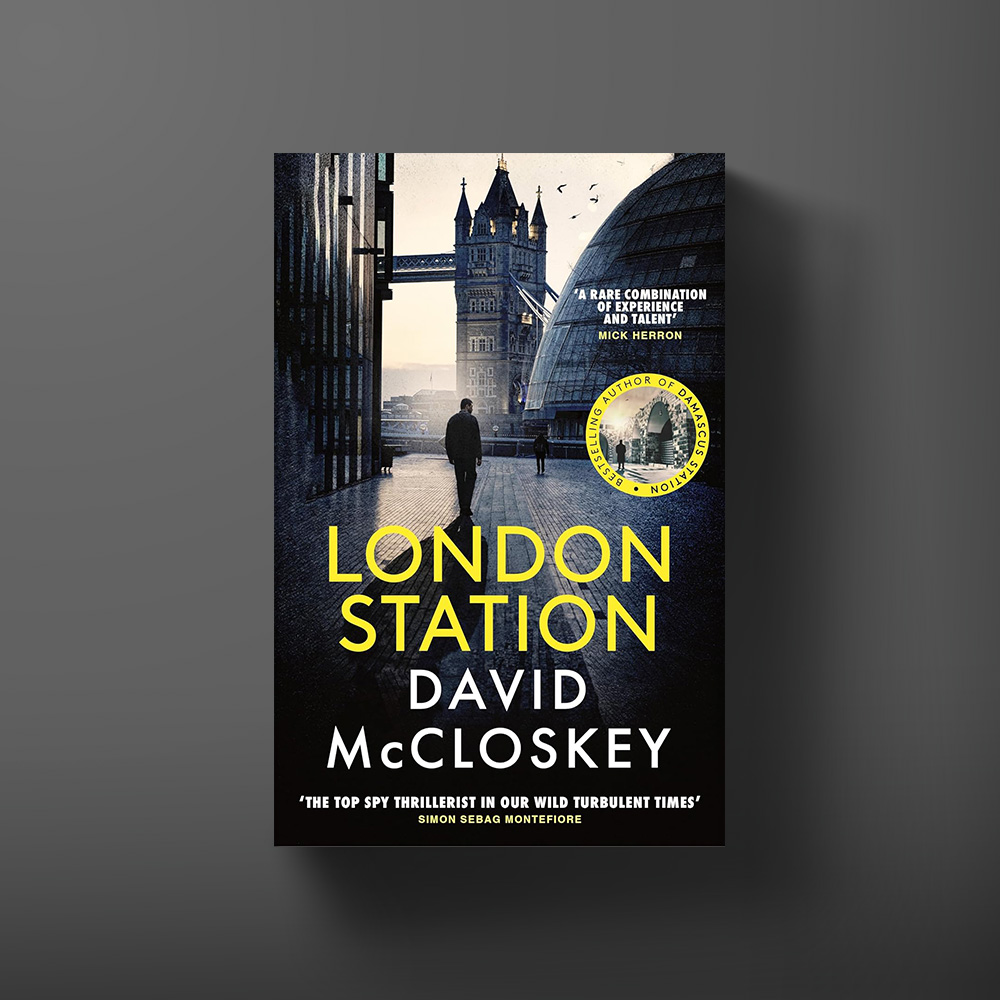
This month at the James Bond Book Club we will be reading London Station by David McCloskey. Celebrating the book’s launch, here is our interview with David. It was a pleasure to talk with him about his books, his time working for the CIA as an analyst, what he learnt about the special relationship between MI6 and the CIA when researching this book and much more.
London Station is a gripping political thriller which considers what would happen if the CIA and MI6 started spying on each other. It sees the return of a popular character from Damascus Station and offers a unique and powerful combination of real espionage intel, humanity and creativity.
David McCloskey is hailed as the best spy novelist around… And with a brand new book hitting the shelves on 8th October, we had to see about it!
OVERVIEW
London Station, McCloskey’s fifth novel, what if the CIA and MI6 started spying on each other?
We see the return of a fan-favourite character, Artemis Procter from Damascus Station (don’t worry, though – it’s a standalone story!). The fiery CIA agent is hoping to get her hands dirty in the field but instead, thanks to a turn of bad luck and the introduction of a new and unconventional CIA Director, she is sent to London to act as Chief of Station there. It’s a role she does not particularly enjoy.
Soon, alliances shift, colleagues clash, old friends become adversaries and the special relationship isn’t feeling so special. When agents on both sides start dying, and secrets start leaking out to hostile foreign actors, everyone is forced to think carefully about who can and can’t be trusted.
London Station offers incredible insider knowledge brought to life in the skilled hands of a bestselling novelist. It’s tense, political, and a refreshing take on the modern spy novel.
WHY WE CHOSE IT
David McCloskey is a major voices in contemporary espionage fiction, and we’re excited that he has brought his latest spy thriller to London, the home of James Bond.
There is an interesting similarity between Ian Fleming and David McCloskey: both draw on first-hand experience of the intelligence world in their fiction, albeit in very different ways. Fleming served in British Naval Intelligence during the Second World War, while McCloskey worked as a CIA analyst before turning to fiction.
Fleming transformed the world of intelligence into the mythology of James Bond: exotic locations, elaborate schemes, glamorous love interests, larger-than-life villains… His books capture the excitement and fantasy of espionage, creating a world where the extraordinary feels entirely natural.
McCloskey takes almost the opposite approach. His novels are firmly rooted in the contemporary world of intelligence, drawing on real geopolitical tensions, institutional relationships and the complexities of modern espionage so, rather than escaping from reality, London Station gets its tension from how close to reality it feels.
What better way to explore how the spy novel has changed, and whether the reality of espionage is any less exciting than 007?
THEMES TO CONSIDER
– Tradition – What does the novel suggest about the changing nature of the “special relationship” and the way modern espionage differs from the Cold War model?
– Anger – How do anger, resentment and revenge influence the characters’ decisions?
– Love – Think about the roles love and relationships play with the espionage-heavy plot.
REVIEWS
Antony Beevor – ‘Quite literally, this is not just McCloskey’s best book by far, it is the best spy novel I have ever read: brilliantly written and plotted’
Simon Sebag Montefiore – ‘Brilliant, wildly compelling, thrilling read that I couldn’t put down. One of the best thrillers I’ve ever read, propulsively realistic & prophetic. His creation Artemis is becoming a classic. David McCloskey is the top spy thrillerist of our lethal era’
Charles Beaumont – ‘An immensely enjoyable and gripping read, but also an essential account – perhaps the first one – of a major shift in world politics: the end of the transatlantic alliance. Right on the nose, very funny and hugely insightful. We are lucky to have a writer of David’s quality to be the person writing it’
Alex Gerlis – ‘A real treat for all espionage fans: a stylish and clever thriller which poses the question “what if the CIA and MI6 began spying on each other” and answers it with a gripping plot featuring the welcome return of Artemis Procter. Highly recommended for all spy fiction fans and beyond’
Tim Shipman – ‘Superbly written, with atmosphere, intelligence and tension, it reminds you of the best of Graham Greene. There can be no higher praise’
Sunday Times – ‘McCloskey is the best spy thriller writer working today’
ABOUT THE AUTHOR
David McCloskey is a former CIA analyst. While at the CIA, he wrote regularly for the President’s Daily Brief during President Obama’s tenure, delivered classified testimony to Congressional oversight committees, and briefed senior White House officials, Ambassadors, military officials, and Arab royalty. He worked in CIA field stations across the Middle East throughout the Arab Spring and conducted a rotation in the Counterterrorism Centre focused on the jihad in Syria and Iraq. David holds an M.A. from the Johns Hopkins School for Advanced International Studies, where he specialized in energy policy and the Middle East. He is the co-host with Gordon Corera of the successful The Rest is Classified podcast and lives in Texas with his wife and three children.
His first novel, Damascus Station, set in Syria, was the bestselling debut spy novel of its year and shortlisted for a British Book Award. His second, Moscow X was a Waterstones Thriller of the Month and a Sunday Times Thriller of the Year. And his third, The Seventh Floor, was a Sunday Times Bestseller. His most recent novel, The Persian, entered at no 3 in the Sunday Times Bestsellers chart in January and is out in paperback on 2 July. London Station is his fifth novel. His novels are in print in more than fifteen countries and are under development for film and television.
London Station comes out on 8th October, so be sure to order a copy in time to read along with us! And stay tuned for an interview with the author coming soon…
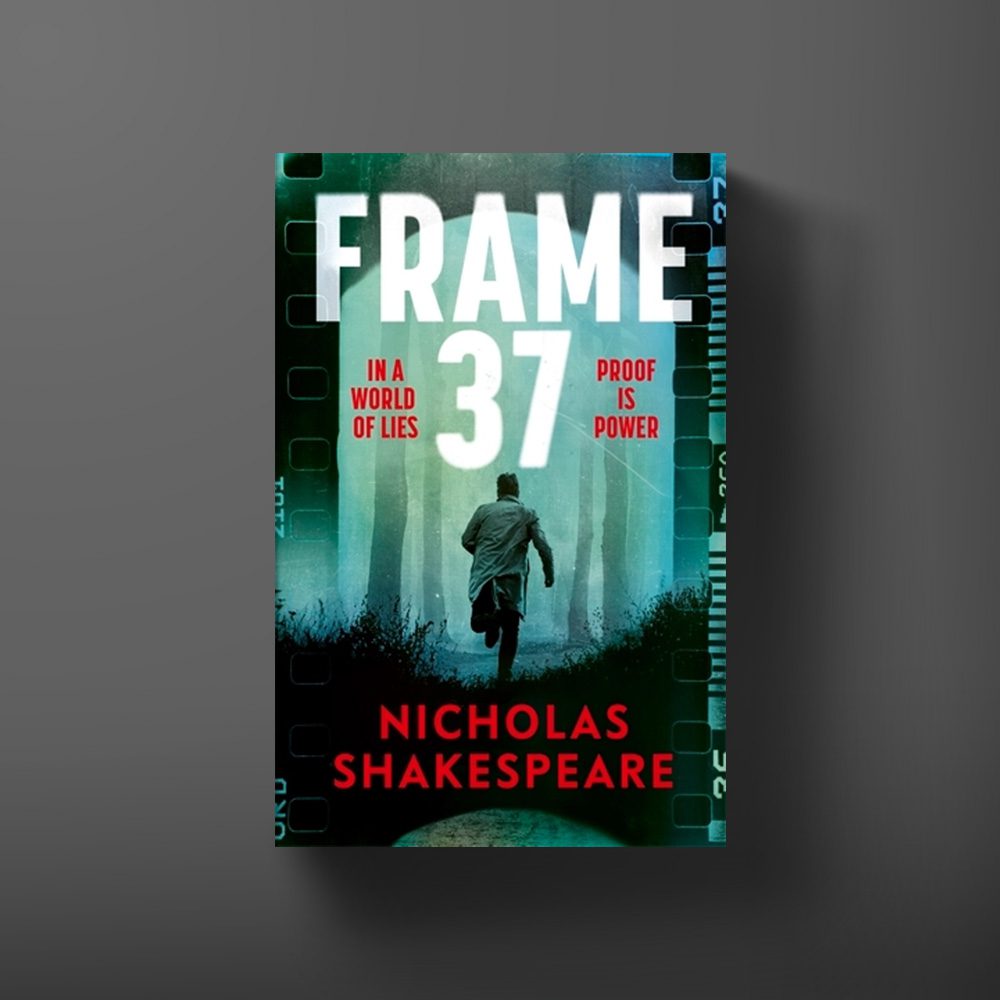
Join us for a deeper insight into this month’s James Bond Book Club pick, Frame 37, as we discuss it with the author, Nicholas Shakespeare.
Where did the title, Frame 37, come from?
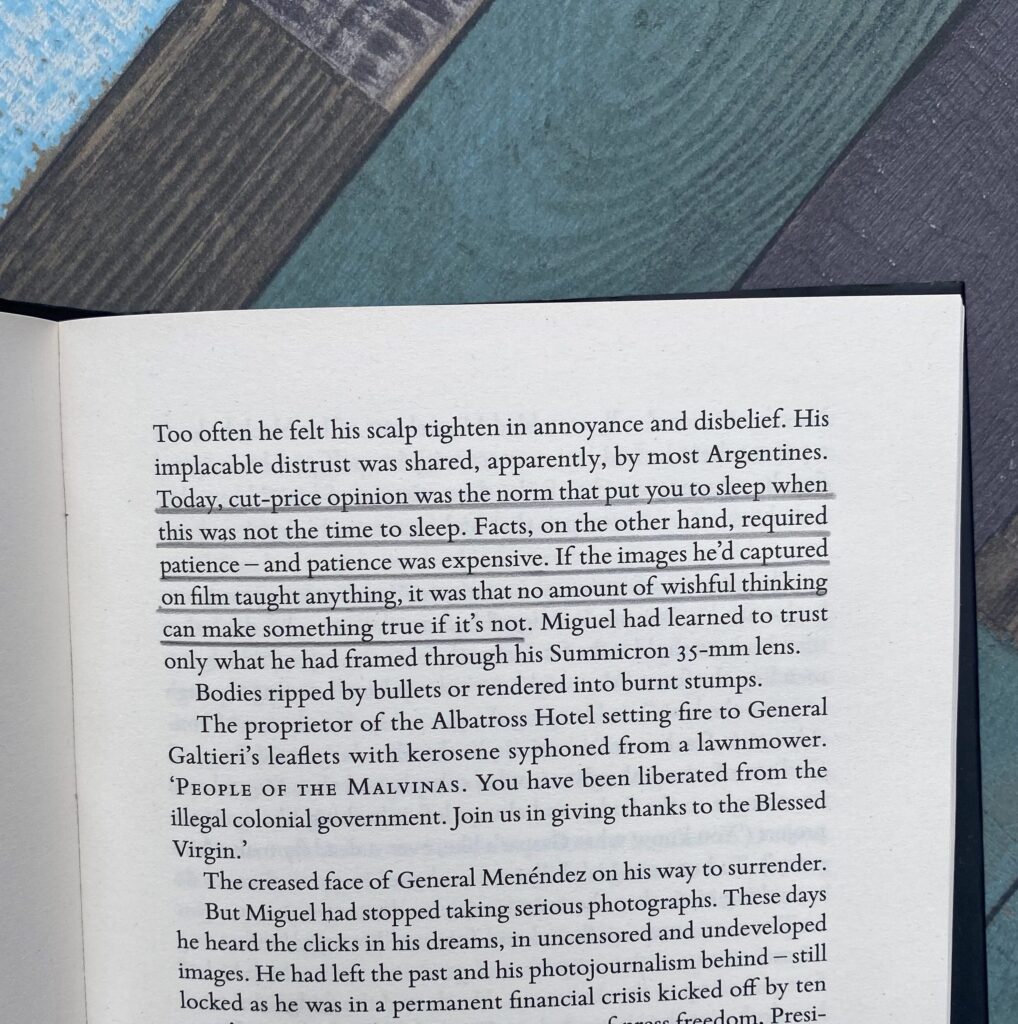
On an old-fashioned analogue camera, a film roll of 36 negatives, if loaded carefully, could provide an extra shot. The heart of my thriller concerns what, potentially, was captured on this 37th frame: i.e. if a Leica lost for 40 years can be discovered with the film intact, then that film might provide unimpeachable evidence to prevent a violent and narcissistic rapist from becoming the most powerful man on earth. In a world where both digital photography and AI today question the integrity of virtually every image, it’s become noticeable that we are reverting to old-fashioned analogue film as a more reliable guarantor of the truth. In much the same way, we are falling back on “the old verities” of local journalism and vinyl records. Even as national newspaper circulations slump and fake news dominates the headlines, it seems ever more important for local journalists to continue reporting on their communities and holding local politicians to account.
Where did the central idea come from, of a presidential candidate with a skeleton in his cupboard?
I’d begun this novel in Tasmania in 2019 – in my beach-retreat equivalent of “Goldeneye”, where I have gone to write for 25 years – when my agent Clare Alexander rang from London to say that she’d had an approach from the Ian Fleming Estate. Would I be interested in doing a new authorised biography of Ian Fleming? Naturally intrigued and increasingly enthusiastic, I shortly afterwards had to put my novel on hold. But what is curious is how the plot I’d conceived, of a presidential candidate who’d been a sexual abuser, started to be mimicked by events unfolding in America, not least with the celebrated court cases of Brett Kavanaugh vs. Christine Blasey Ford and Donald Trump vs E. Jean Carroll. Two other seeds may have contributed. One was the drama of Dominique Strauss-Kahn, former head of the International Monetary Fund and at the time a shoo-in for the French presidency, who was arrested in New York in May 2011 for the alleged sexual assault on a hotel maid. By a strange quirk, a line from my first novel The Vision of Elena Silves was quoted six months later by Francois Hollande, the eventual successful candidate, when he announced his presidential bid in January 2012 at Le Bourget (“They fail who did not begin with a dream”) – except that Hollande believed he was quoting from another Shakespeare… The other seed was the discovery of a scarcely known incident in which Laura Bush, future wife of George Bush Jr., killed a fellow undergraduate in a car crash when she was seventeen. I reflected on how much effort must have gone into keeping this story out of the headlines and what would happen if you had a presidential candidate who had kept an even darker skeleton in their cupboard.
Did you have the plot mapped out before you began?
I tend to start my novels with a scenario that, for whatever reason, has got under my skin, a pebble that I’d like to extract from my shoe, as it were. The Vision of Elena Silves was inspired by one night in Portugal seeing the Coimbra convent where the last surviving witness of the Miracle of Fatima was still alive. I had a sudden image of a nun incarcerated by the Catholic church ever since she was a teenager, who had been inflicted with a knowledge of God, who suddenly wonders what would happen if she escaped the convent to look for the boy she’d been in love with, who’d had his own vision, a political vision. I wrote the novel to find out. The same with Frame 37. What unimpeachable evidence could possibly exist out there to stop a Trump-like shoo-in from becoming the US president?
The protagonist John Dyer is an ex-foreign correspondent who has appeared in two other novels, The Dancer Upstairs and The Sandpit. Did you feel the dangers which Raymond Chandler warned Ian Fleming about in having a serial character?
Originally, I never intended for John Dyer to be anything other than the waiter to serve the narrative of The Dancer Upstairs. He was a mere Latin American correspondent for a London newspaper that closes down its office in Rio. As an early Conrad reader – I remember Peter O’Toole and David Lean passing through Phnom Penh when we lived there, to film Lord Jim – I was probably influenced by Conrad’s regular device of the Marlowe figure who pops up again in Heart of Darkness. It’s strange how to be told a story at second-hand can, counter-intuitively, make the reader incline forward in their chair rather than lean back. In John Malkovich’s adaptation of The Dancer Upstairs, in which Javier Bardem plays the lead role, the camera acts as Dyer and goes straight into the action, onto Bardem’s face. But in Dyer’s second outing, The Sandpit, set in Oxford, I decided to shift Dyer towards the centre of events and so had to provide him with extra biographical details (rather as Fleming was forced to do with each Bond book, scraping bits of himself into his protagonist until we finally discover that Bond was Scottish and went, like Fleming, to Eton). By the end of The Sandpit, Dyer had become established in my head and I could easily picture him using his journalistic talents to track down the story behind Frame 37. The problem is that with each outing he needs more background. At the same time, he is hemmed in by what we already know about him. That is to say, he becomes deeper in one sense but narrower in another, in that the fictional opportunities he is able to offer are firmly hidebound by his own experience and times. The danger becomes that the author forgets certain salient details, as le Carré did when he brought back George Smiley – not appreciating that he’d be over 100 by this time.
Were you conscious of writing a political thriller – and if so what did unusual demands or restraints does that impose on a novelist, if any?
Much as I enjoy them, I confess to not being as dedicated a serial reader of political or spy thrillers as I should be. The first fiction I am conscious of responding to was a retelling of King Arthur and the Knights of the Round Table. I was five or six when my mother came into my room in Port Dickson on the Malayan coast to find my face marked with tears. “What’s wrong?” I looked up glitter-eyed. “Launcelot is dead!” Thereafter, I sought out stories that promised the same impact. Buchan, Shute, Greene, MacLean, Innes, le Carré, not to leave out Fleming. Like many writers I know, I started writing once I’d exhausted the supply. However, I’m also tremendously conscious that I don’t necessarily abide by the formulas, whatever they may be, of the genre novel. I’m with Bruce Chatwin on this – that the only true story is a good story. How one gets there to tell it is different for each writer. I have an undiminished admiration for Graham Greene who plundered whatever came to hand – childhood tales, detective stories, political thrillers, spy thrillers, travelogues – without becoming straitjacketed or restrained by any single discipline.
‘There’s no such thing as an ex-journalist.’ Dyer seems to rediscover his passion for the craft by revisiting his youth. How did you approach constructing his backstory?
In The Dancer Upstairs and its sort-of sequel The Sandpit, Dyer developed from being a foreign correspondent with a chance to come out of Latin America on a high – to being a single father who’d traded in journalism for charity work/teaching English/writing a book about the Amazon, and has exchanged Rio for Oxford, where he himself was at prep school. I had myself moved with my wife and two small boys from Tasmania to Oxford and I unashamedly exploited the situation I found myself in: an autumn father surrounded at the school gates by younger, wealthier, more international parents who had fingers in important pies like banking and Intelligence. Dyer may have turned his back on journalism, but he couldn’t blind himself to a good story when he saw it – he couldn’t turn off his reporter’s eye. I’d been interested in the elusive promise of nuclear fission. When I was lucky enough to get a Visiting Fellowship at All Souls, it gave me a passport to speak to the topmost brains in this field. It was during a discussion with Steve Cowley, then President of Corpus Christi College and now Director of the Princeton Plasma Physics Laboratory, that we came up with a plausible idea for cracking nuclear fission – modelled on nothing more rarefied than a bog-standard prep school football. Then, when I was hunting around for a lead character for Frame 37, I realised there was still a year or two of Dyer’s earlier life that hadn’t been accounted for, which I seized upon, and sent him as a graduate student to Ann Arbor, on a course I had once failed to be accepted for. By chance at a Cambridge college reunion not long ago, I rediscovered a school friend who had been awarded the very fellowship I’d unsuccessfully applied for. He was able to describe for me in detail Ann Arbor as it would have been in 1981. Just like Fleming and Bruce Chatwin, whose biography I also wrote, I’m an obstinate stickler for not writing about places unless I’ve been to them. I had to draw on all Dyer’s resources as an ex-journalist to invent Ann Arbor and Michigan. It’s the only place in my novels I haven’t visited.
Do you think pausing this project to research Ian Fleming for your biography had an effect on the finished novel?
I’m hugely grateful to Ian Fleming for having allowed the world the chance to catch up with my plot. In rather the same way, although on an infinitely larger scale, the film of “Dr No” came out just at the time of the Cuban Missile Crisis (1962), which the movie gave every impression of appearing to dramatise. During the five years that I needed to put aside to write Fleming’s life, not only did the central device in Frame 37 – of a presidential candidate with a violent sexual past – become more contemporary and feasible, but so did the possibility that analogue film and local journalism might prove to be fiercer watchdogs of the truth than AI and fake news. This was not so obviously the case back in 2019.
What kind of specialist research did you need to do in writing about a US intelligence assassin and modern surveillance?
Growing up abroad as a diplomat’s son, I met several spies or former spies, including Greene and le Carré (who had been a friend of my parents at Oxford), both important influences as I’ve said. But I never benefited significantly from their indiscretions or knowledge. I need to do the fieldwork myself. (In Peru, when researching the Shining Path revolutionary movement for The Dancer Upstairs, I was conscious of the irony that it was the US Embassy in Lima, whose agents were famous for never leaving the capital, who were mustard keen for me to share my material). In Frame 37, I have a US Delta Force-trained assassin. He is based on a man I met by chance in Tasmania 25 years ago after I discovered that I had a doppelganger, N(evin) Shakespeare, an electrician who lived in Tasmania’s north-west. Nevin put me in touch with one of his clients, who, he said, boasted that “he’d once had Colonel Gaddafi in his cross-sights”. Fascinated, I sat in this alleged assassin’s bungalow and wrote down everything he told me about his years in Delta Force, operating in Peru, the Yemen, Libya. I put aside the eight-pages of notes and forgot about them until, in 2023, I needed a state assassin for my story. I then remembered this interview. It turned out to provide everything I required and more. By and large, fictional characters and the dramatic situations novelists like to put them in are remarkably unaltered from the days of the Odyssey. Technology stands out as perhaps the one area where authors need to show a passable command in order to create their smoke and mirrors. That said, surveillance techniques are so fast changing that a novelist can never hope to be up to date. In Frame 37, I depended on a chance encounter that my wife had with another local dog-walker who turned out to work in the “information security business”. I gave him a call and he divulged some details which I was glad to use in Frame 37 – including the, for me, riveting story of how facial recognition cameras at JFK airport were once capable of 100% success, but the time required to process the data led to five-hour queues at the airport, so the pace was speeded up – yet this only allowed for a 45% hit rate. I’m sure they’ve solved this glitch by now, but it gave me an aperture that sounded at least plausible to exploit in my novel. You only need an aperture. As the owner of the Leica must have known when he took that presidentially altering shot in Frame 37.
Ian Fleming’s advice for writing a thriller was simply ‘get the reader to turn the page’. In your own words, how do you write a thriller?
Crikey, that’s a tough one. One of several personal discoveries I made when researching Fleming’s life was the role of my grandfather, a prolific writer and teacher called S. P. B. Mais, in lending a distant hand to Fleming’s own thriller-writing methods. SPB, as he was known, had taught Fleming’s friend Alec Waugh at Sherborne, and got published his scandalous first novel The Loom of Youth (1917), after giving Waugh his recipe for successful writing: to work five hours a day and write 2,000 words. It was SPB’s inflexible rule to be a workman and keep to a routine from which nothing must be allowed to deter you. Waugh took this to heart and passed it on to Fleming (along with a life-shifting recommendation to visit Jamaica). What I envy in Fleming are his natural command of short sentences, his lucidity, his infectious energy and pace. I like his image of each chapter as “a wave to be jumped as we race with exhilaration behind the hero like a water-skier behind a fast motor boat.” Of course, you try to do this whenever you can, but I fall over far too often. As a result, my novels take much longer – three years as against Fleming’s two to three months. In this respect, I find myself closer to the timeframes of Graham Greene and John le Carré. Perhaps every writer, though, has their own Personal Best timespan, as it were. Many of the writers I admire were gifted at least once in their lifetime with a book they wrote at speed. The Spy Who Came in From the Cold allegedly took le Carré seven weeks. Stendhal wrote The Charterhouse of Parma in 52 days. Edna O’Brien wrote The Country Girls in three weeks… I still hold to the dream of one day completing a book in “Fleming time”.
We hope you enjoyed this interview! Be sure to pick up this month’s excellent thriller, Frame 37, if you haven’t already. Thank you very to Nicholas Shakespeare for taking the time to talk to the James Bond Book Club.
We’ll be back next month to announce our October pick…
Did you know that the most recent biographer of Ian Fleming, Nicholas Shakespeare, also writes a mean thriller? Welcome to September at the James Bond Book Club.
OVERVIEW
Ex-journalist John Dyer has settled into a quiet life when he receives news that his old university friend, Lia, has been murdered. Decades have passed since they last spoke, but the circumstances of her death draw Dyer into an investigation of his own.
His search takes him back forty years to the night when he and three friends witnessed a terrible crime – and to the evidence that was lost in its aftermath. Somewhere is a Leica camera containing the proof of what happened all those years ago and if Dyer can find it, he may be able to expose the truth. But someone else is determined to make sure he never gets the chance.
Following his leads from Tasmania to Argentina and finally to Michigan, where the story began, Dyer finds himself confronting an adversary whose reach and power are greater than he could have imagined. A personal investigation becomes a race against time, with Dyer increasingly isolated and the stakes rising with every step.
WHY WE CHOSE IT
When discussing crime fiction today, we can often find ourselves remarking on the irony that some of the most powerful people in the real world seem to have stepped straight out of a Bond novel, with their wealth, influence, corruption and willingness to abuse power. Frame 37 captures this idea that the villains of Fleming’s imagination no longer seem quite so far removed from the people who wield real power. What once belonged to the world of espionage fiction can, at times, be all too familiar.
Ian Fleming was, in his own way, responding to the political realities of his time, turning the anxieties of the Cold War into larger-than-life villains and conspiracies. Frame 37 approaches similar territory from a more grounded perspective, asking what happens when hidden power and political corruption are not exaggerated for the page, but feel uncomfortably close to reality.
For Bond fans, there is plenty here to get our teeth into: international intrigue, dangerous secrets, powerful adversaries and a protagonist who finds himself in increasingly deep water. But Frame 37 also gives us something different. Whether you have been reading Bond for decades or are new to Fleming and the wider world of espionage fiction, we hope it offers a fresh perspective on one of the things that makes Bond so enduring: the idea that, beneath all the fantasy, his villains are often reflections of very real fears about power, politics and the people who wield them.
THEMES TO CONSIDER
– Power and corruption – What happens when the people with the most power also have the most to hide?
– Truth, proof, photography – How much is the truth worth if you cannot prove it? What role do cameras play in espionage fiction?
– The ordinary man in extraordinary danger – What makes Dyer an effective thriller protagonist, and how does his vulnerability change the way we experience the danger?
REVIEWS
William Boyd – ‘A remarkable contemporary thriller… A triumph’
Evening Standard – ‘An absorbing thriller with shades of John le Carré’
The Times – ‘One of our best and truest novelists’
Spectator – ‘An intelligent, suspenseful take on classic thriller tropes that is nonetheless rooted in the mess of the here and now’
Daily Mail – ‘Superbly written, with atmosphere, intelligence and tension, it reminds you of the best of Graham Greene. There can be no higher praise’
Sunday Times – ‘If you’re not averse to a slow-burn literary thriller, this globe-trotting saga is a first-rate example: nothing is stereotypical’
ABOUT THE AUTHOR
Nicholas Shakespeare is a prize-winning novelist and biographer, described by the Wall Street Journal as ‘one of the best English novelists of our time’. One of Granta’s Best of Young British Novelists 1993, his books have been translated into 22 languages. They include The Vision of Elena Silves, winner of the Somerset Maugham Award, and The Dancer Upstairs, which was made into a film by John Malkovich and named Best Novel of 1995 by the American Libraries Association. His nonfiction includes the critically acclaimed authorised biography of Bruce Chatwin, In Tasmania, and Priscilla: the hidden life of an Englishwoman in Occupied France. He has been longlisted for the Booker Prize twice, was a Visiting Fellow at All Souls College, Oxford, and is a Fellow of the Royal Society of Literature.
In 2023, Shakespeare released Ian Fleming: The Complete Man – the first authorised biography of the author since 1966 – and received the Crime Writer’s Association Gold Dagger for that year’s best non-fiction.
We hope you enjoy Frame 37. Stay tuned for more content and please share your thoughts with us if you read along!
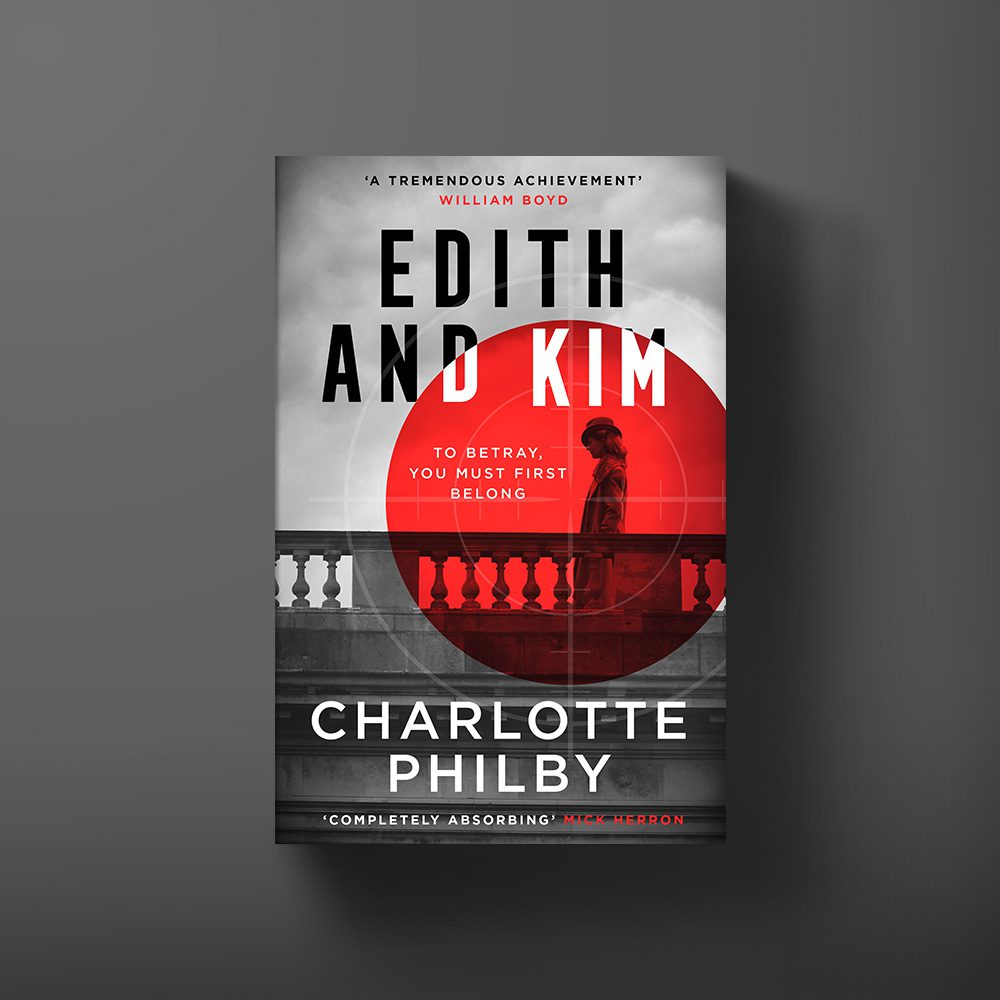
Ian Fleming’s wartime career at Naval Intelligence meant he moved in the same circles as many extraordinary and mysterious figures. For our August Book Club selection, we’ve chosen a novel inspired by one of the most remarkable espionage partnerships of the twentieth century, Edith and Kim (2022) by Charlotte Philby, the granddaughter of notorious double agent Kim Philby.
OVERVIEW
Set against the backdrop of the Second World War and its aftermath, Edith & Kim tells the story of Edith Tudor-Hart and Kim Philby, two people whose lives became entwined through espionage and betrayal.
Edith Tudor-Hart, an Austrian-born photographer living in Britain, appears at first to lead an unassuming life. Beneath the surface, however, she is committed to a clandestine cause, using her extensive social network to identify promising young recruits sympathetic to the Soviet Union.
One of those recruits is Harold “Kim” Philby, an ambitious and intelligent Cambridge graduate whose charm and social standing make him an ideal candidate for Soviet intelligence. As Philby’s career takes him deeper into the heart of Britain’s intelligence establishment, Edith watches from the margins, both proud of what she has set in motion and increasingly troubled by its consequences.
Moving across the shadowy world of wartime espionage, Charlotte Philby blends historical fact with fiction to explore one of history’s most consequential spy relationships and shed light on a fascinating yet often-forgotten woman.
WHY WE CHOSE IT
The world of James Bond has always existed somewhere between fantasy and reality. Ian Fleming transformed the secret world of intelligence into a landscape of exotic locations and larger-than-life adversaries, but the foundations of that world came from the real institutions and personalities of twentieth-century espionage.
The use of real events and historical figures is woven into the fabric of espionage fiction. Spy novels have always existed in conversation with politics, international affairs and real intelligence operations, blurring the line between fact and fiction. One name that appears again and again is Kim Philby.
One of the infamous Cambridge Five, Philby rose to become one of Britain’s most senior intelligence officers while secretly working for the Soviet Union. For decades, he passed some of Britain’s most closely guarded secrets to Moscow before his eventual defection in 1963 exposed one of the greatest betrayals in intelligence history.
Rather than focusing on Philby himself, Charlotte Philby turns her attention to Edith Tudor-Hart, the woman who introduced him to his Soviet recruiter, exploring the personal relationships that shaped one of the twentieth century’s defining espionage stories.
Ian Fleming was actually introduced to Philby in 1932 by their mutual friend Harold Alaric Jacob, and later gave him a small literary nod in Goldfinger: ‘Miss Philby is secretary of the Bank Women’s Hockey Team of England.’ While Philby’s story is very different from the adventures of James Bond, it belongs to the same intelligence world that inspired Fleming’s fiction.
Espionage has always been about more than secrets. It is about people. For fans of James Bond and Ian Fleming, Edith & Kim offers a fascinating glimpse at the history behind the fiction: the complicated human stories that helped shape the stories we read today.
THEMES TO CONSIDER
– The hidden figures of history – Kim Philby’s name is famous, but Edith Tudor-Hart’s story has remained far less familiar. Why do some people become central figures in history while others disappear?
– Truth and invention – Historical fiction must fill the gaps left by the archive. How does Charlotte Philby use imagination to explore the lives behind the known facts?
– The intelligence world behind Bond – How does the reality of espionage compare with the world created by Ian Fleming?
REVIEWS
William Boyd – ‘Completely fascinating. A sophisticated and brilliantly constructed fictional retelling of a crucial relationship in 20th century espionage history. A tremendous achievement.’
Charles Cumming – ‘A fascinating contribution to the literature of the Cambridge spies by a clever, nimble writer with some genuine skin in the game.’
Mick Herron – ‘Completely absorbing.’
Sarah Vaughan – ‘Blending SIS files and imagined letters from her grandfather, Philby shines a spotlight on Edith Tudor-Hart as activist, spy and often desperate single, working mother.’
New Statesman – ‘A dextrous writer who gives her tale a quickening, thrillerish propulsion.’
Sunday Times – ‘Atmospheric and rigorously researched… we’re slyly induced to fear that Edith (who is also juggling roles as a single mother and photographer) could be arrested or prevented from working, before realising that we’re rooting for a Stalinist enemy of Britain.’
ABOUT THE AUTHOR
Charlotte Philby is a critically acclaimed author of six novels. As a journalist, she worked for eight years as a newspaper reporter, editor and columnist at the Independent, where she was shortlisted for the Cudlipp Prize for investigative reporting. She is a former contributing editor and features writer at Marie Claire, and has written for publications including the Sunday Times, New Statesman and Financial Times.
She is the granddaughter of Kim Philby whose life she reimagines in Edith & Kim.
Alongside Edith & Kim, her novels include Part of the Family, A Double Life and The End of Summer.
We hope you’ll join us as we explore another compelling work of espionage fiction. Stay tuned for more content and please share your thoughts with us if you read along!
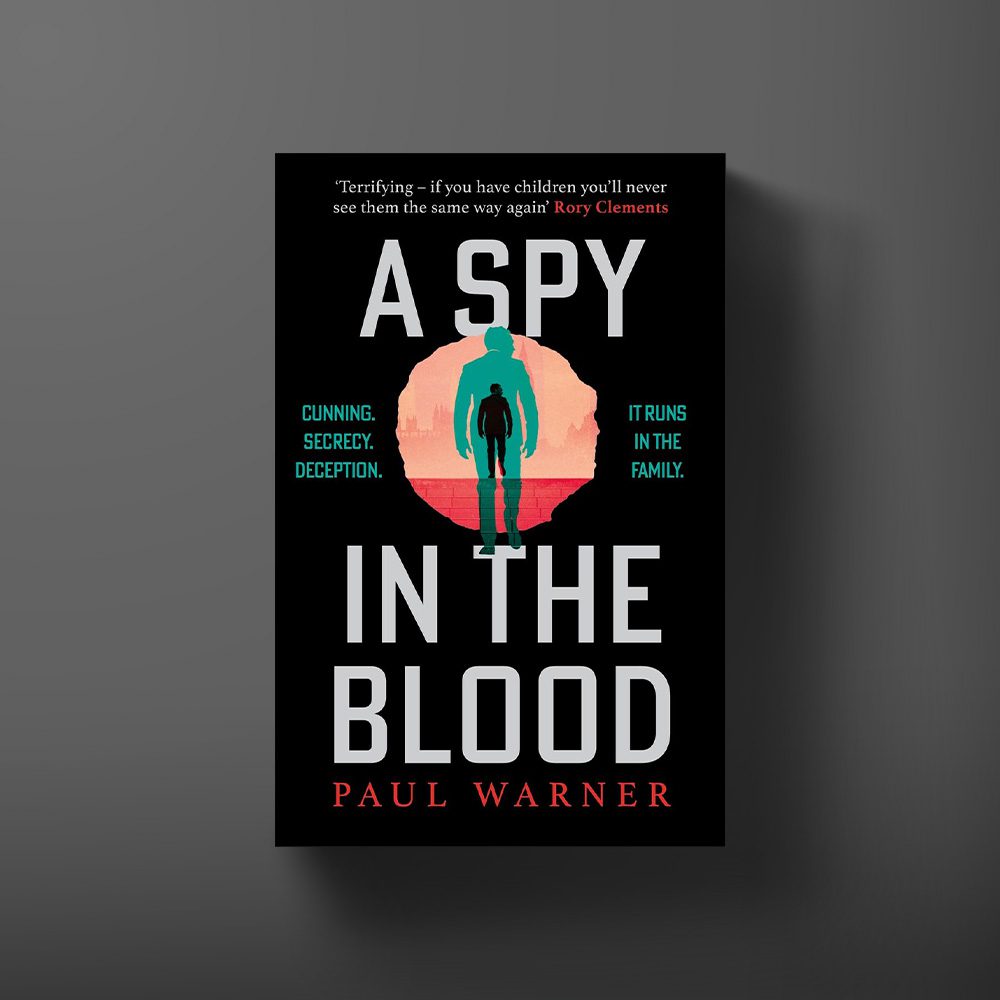
Paul Warner, author of A Spy in the Blood, this month’s pick for the James Bond Book Club, kindly shared his (00)7 all-time favourite spy fiction reads with us.
The spy novel, I think it’s fair to say, is having a moment. In compiling my top 007 espionage books, I’ve tried to balance different eras, to reflect the wealth of literature we’ve been blessed with since Childers, Conrad and Buchan wrote the blueprint in the early part of the last century, but it wasn’t easy. I’ve had to leave out many classics – sorry, Len, Berlin Game would have been 008, I promise – in my quest to be true to my personal favourites and the books which influenced me formatively or rekindled my love of the genre in recent times.
In no particular order, let’s open the mission dossier:
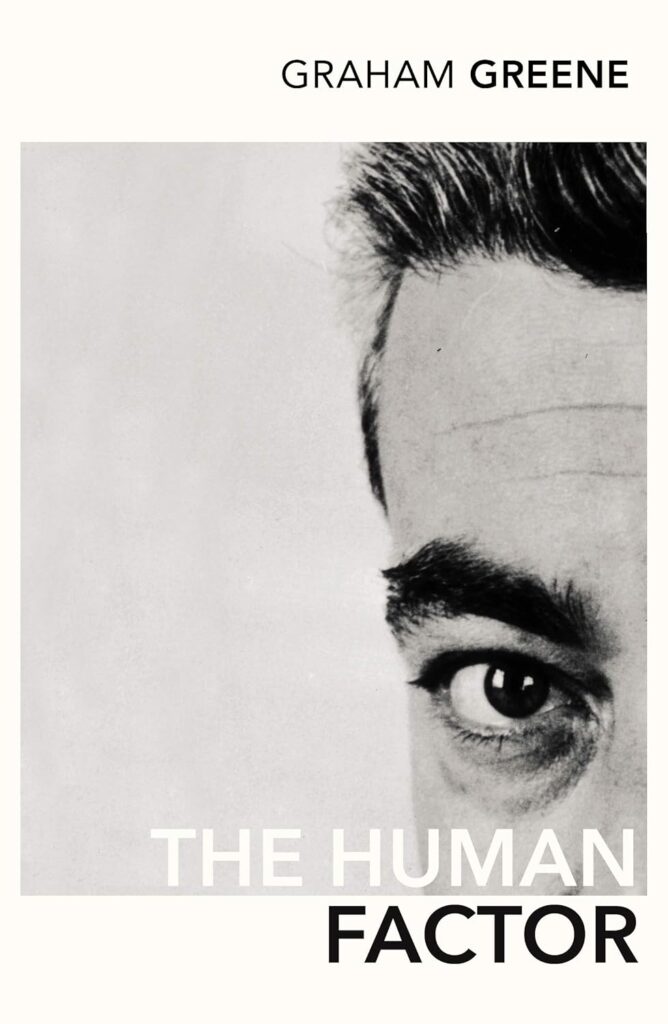
001: The Human Factor by Graham Greene
Words can’t express how much I love Graham Greene, and this late novel feels like a distillation of everything that made him such a powerful writer (his primary couple even sport names borrowed from The End of the Affair). His protagonist, Maurice Castle, is as conflicted as any in Greeneland and yet, this time, his story contains more than a healthy trace of autobiography, including reminiscences of Berkhamsted and the bureaucracy involved in working for the intelligence services. There are some wonderful early conversations between Castle and the unfortunate Davis, comparing the mundanity of their Service lives with the hedonistic exploits of James Bond. Ultimately, the book is about the effects of betraying country for family and, though Greene claimed at the time it wasn’t influenced by his friend Kim Philby, the book’s end leaves little doubt that Philby’s defection weighed heavily on Greene’s psyche.
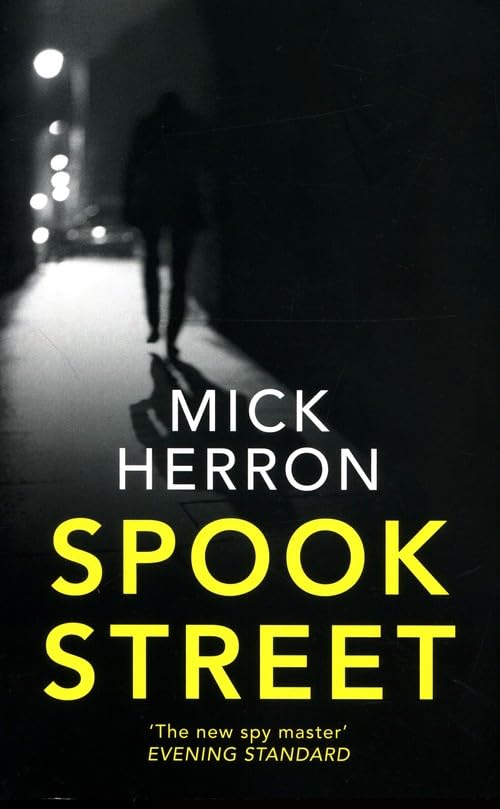
002: Spook Street by Mick Herron
The fourth of the Slough House thrillers, Spook Street feels a more personal story than a lot of the adventures involving the Slow Horses, the group of no-hopers ditched ignominiously from HQ. This one deals with River Cartwright’s grandfather, a legend from yesteryear, whose dementia is causing him to leak sensitive intel. The politically incorrect Jackson Lamb (surely the greatest fictional creation of the millennium so far?), worked with River’s grandfather back in the day and intervenes explosively when River goes rogue. The core theme of family, and the collateral damage family members cause for their descendants, raises this book above Herron’s others for me, though all his entries in this series are gloriously witty and irreverent whilst maintaining serious, cynical statements on modern politics and the associated deep-state conspiracies.
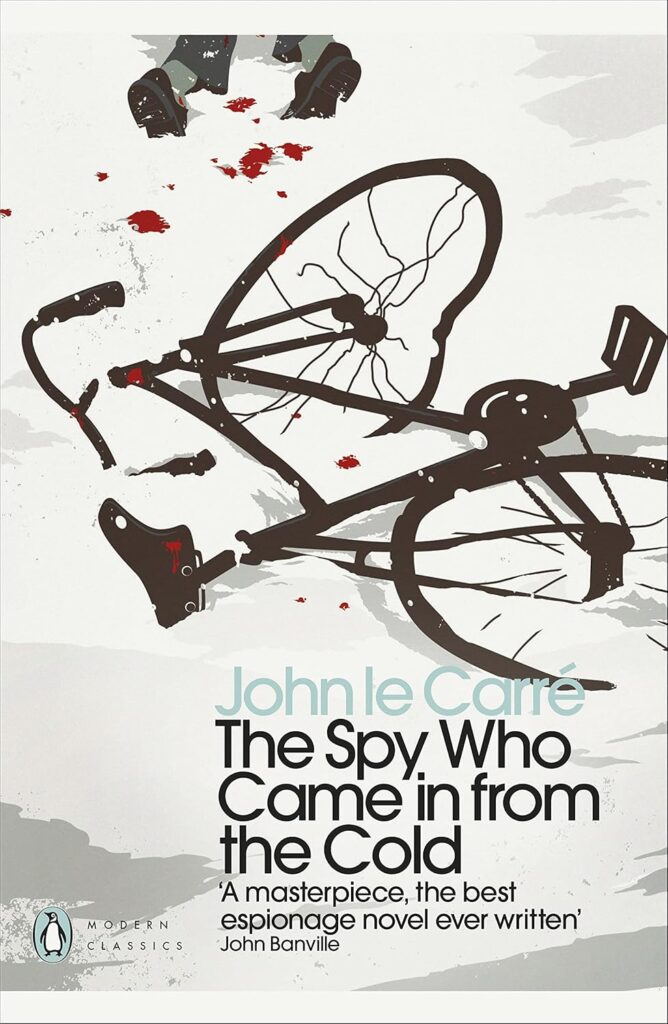
003: The Spy Who Came in from the Cold by John le Carré
Published in 1963, in a Cold War landscape of Profumo affairs, Cuban Missile Crises and Cambridge Five defections, The Spy Who Came in from the Cold wears its weariness in bitter, disillusioned Alec Leamas, sent on one final assignment on the wrong side of the Berlin wall. It’s a book that feels horribly real, in the year before true spymania and all its attendant gadgets swept the nation, as Leamas attempts to navigate a grey world of moral ambiguity. The love story at the book’s centre is as tragic as anything in Shakespeare. It’s beautifully constructed and powerfully written, and never forgets what’s at stake. ‘This is a war,’ Leamas says at one point. ‘…graphic and unpleasant… fought on a tiny scale, at close range… with a wastage of innocent life.’ You could argue that le Carré went on to write better masterpieces than this but, my God, this one hits.
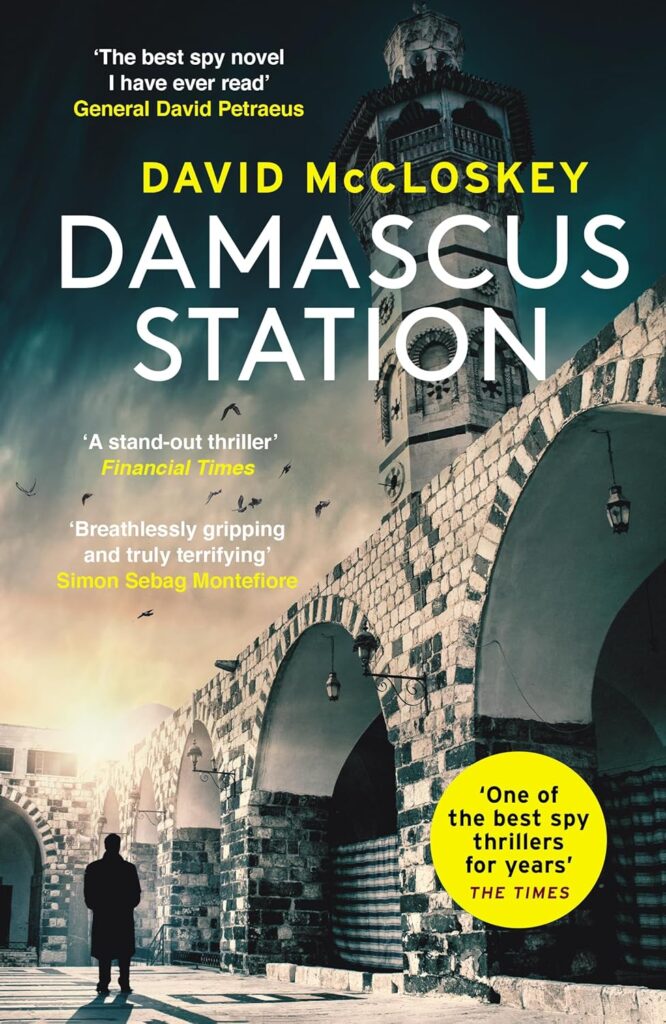
004: Damascus Station by David McCloskey
Set during the early days of the Syrian Civil War, CIA officer Sam Joseph recruits Mariam Haddad, an official connected to the presidential palace, to hunt for the killer of an American spy. They uncover a whole host of unpleasantries and, for their pains, are hunted by the regime’s spy catcher and his brother, the head of the Republican Guard. Uncompromising and brutal at times, the novel is also surprisingly tender, as Sam and Mariam break the rules of the game and fall in love. The characters’ backstories feel fully rendered and the alarmingly blunt Artemis Aphrodite Procter (we really need a spin off with her and Jackson Lamb going toe-to-toe) steals every scene she’s in, but it’s the tradecraft that truly grips. Despite Sam’s expertise and professionalism, McCloskey’s characters never feel safe and there’s palpable tension behind every scene.
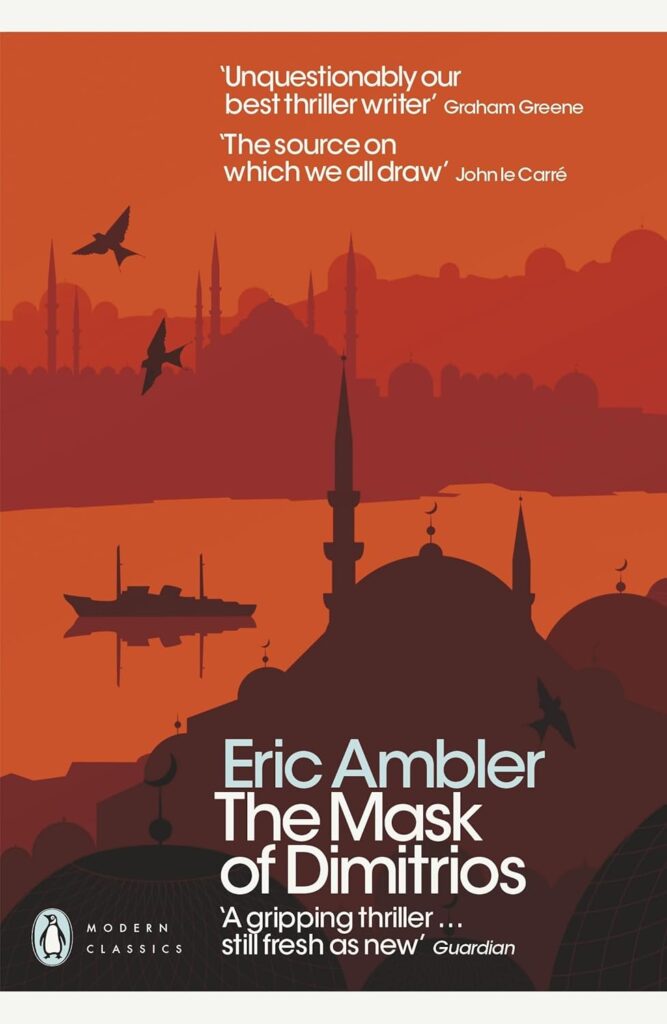
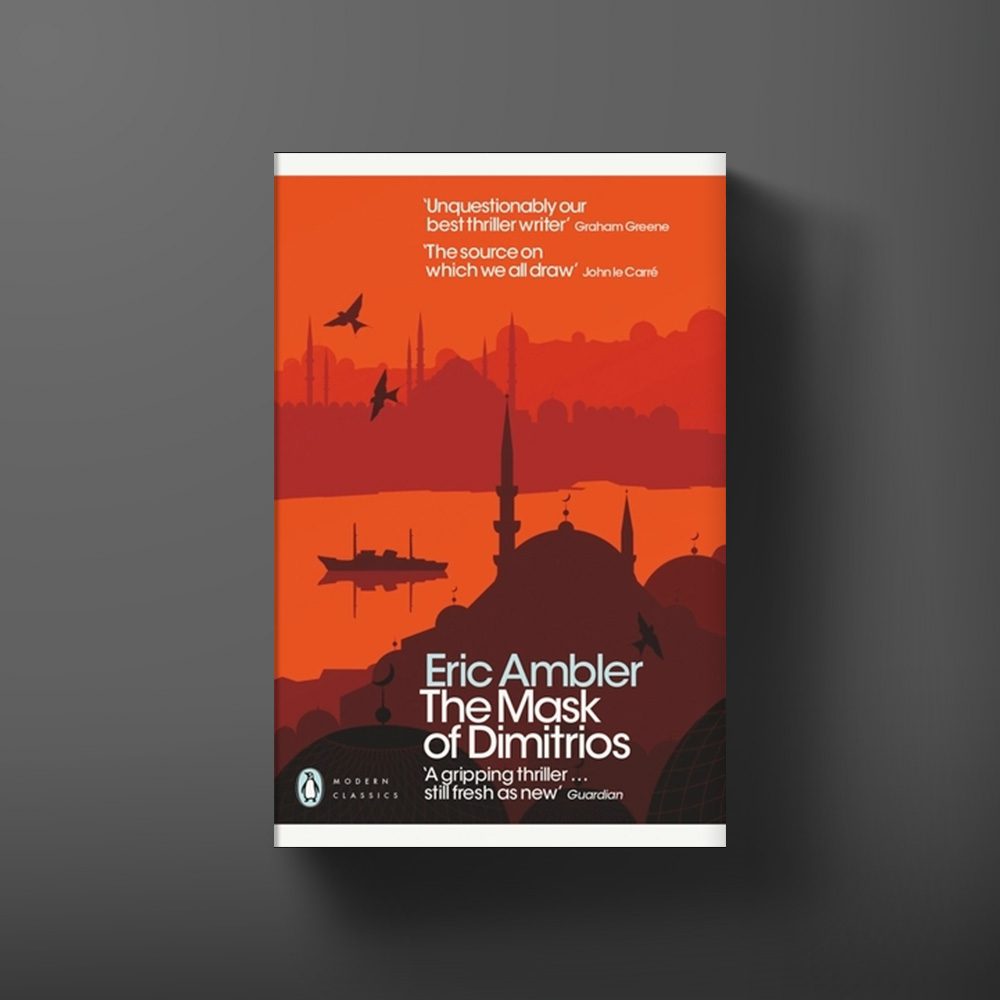
005: The Mask of Dimitrios by Eric Ambler
Like Ambler’s Uncommon Danger and Epitaph for a Spy before, The Mask of Dimitrios’ great strength is its main character’s everyman, fallible qualities. English crime novelist Charles Latimer is looking for literary inspiration in Istanbul when he gets in deep with his investigations into the death of a master criminal found in the Bosphorus and, as in John Buchan’s 39 Steps, or Graham Greene’s Ministry of Fear, there’s something so intoxicating about his protagonist’s civvy street arc: out of his depth in the early stages, outwitting hardened opponents by the final page as he finds himself thrust into a position of heroism. Few, if any, writers wrote about nobodies becoming somebodies better than Ambler did. We’re all familiar with Ambler’s influence on Fleming, but the fact that his books still hold up today speaks volumes about how good they are.
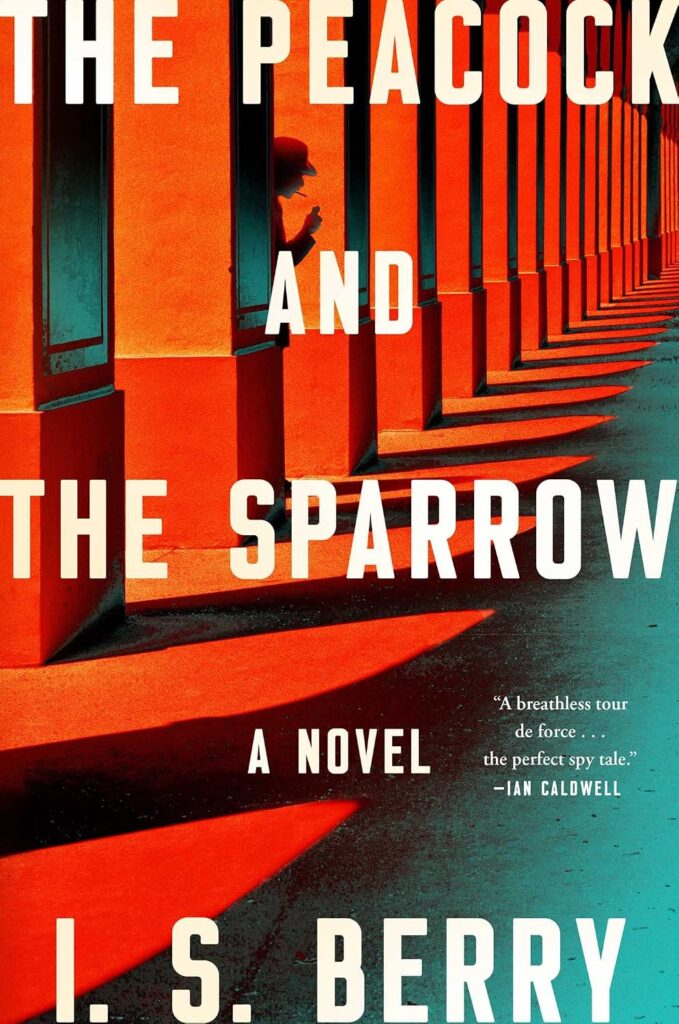
006: The Peacock and The Sparrow by I. S. Berry
The most recent book on this list, and another by an ex-CIA employee. I. S. Berry’s only book to date is a realistic and heartfelt thriller, concerning Shane Collins’ final tour in Bahrain as he digs for evidence that the Iranians are supporting a Shiite insurgency there. Poets and artists and alcoholics mix during the Arab Spring, and no one can trust anybody, even the beguiling Almaisa who, it transpires, has reasons to forgive Collins of his unforgivable impropriety. Collins himself is a modern day Alec Leamas: jaded; romantically-challenged; bruised by the dangerous game he’s chosen to play for his country. Beautifully written and twisty without being showy, I. S. Berry weaves a gripping story of uncertain love and disloyalty, her prose in turns literary and urgent. I’m hoping for lots more.
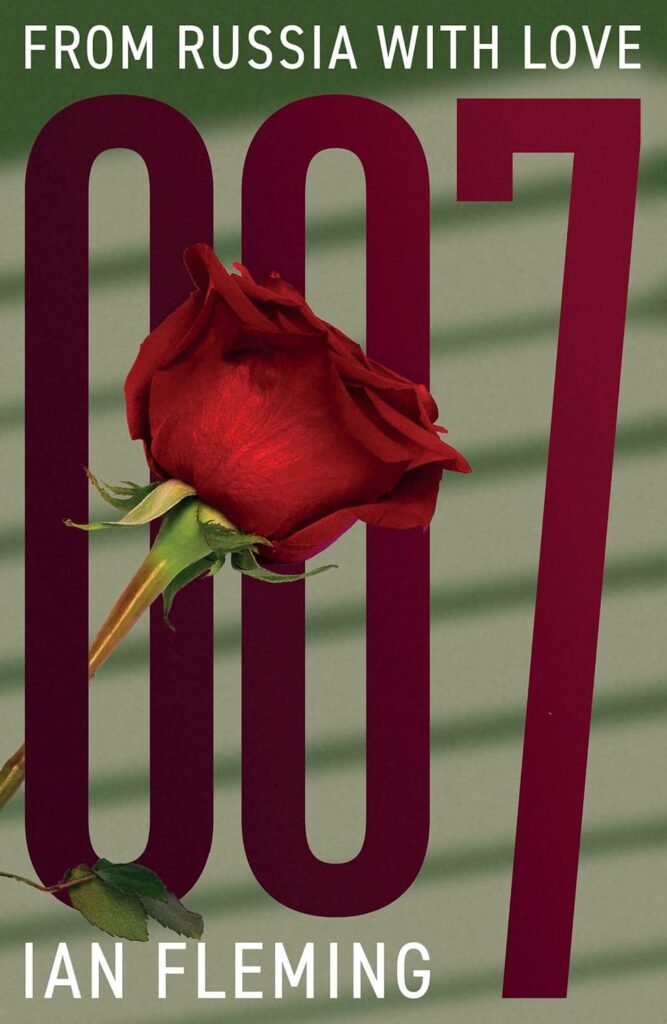
007: From Russia, with Love by Ian Fleming
Who else was I going to glorify at this number but James Bond? For my money, Fleming’s fifth is the series at its peak. The story focuses on SMERSH’s attempt to not only assassinate Bond but do so in such a way as to ruin both his and Britain’s image in the process, by baiting him with a beautiful Russian cipher clerk and a Soviet decoding machine. Fleming is at his descriptive best in this one (the first chapter alone contains a six page description of Donovan Grant’s massage), and Bond himself doesn’t appear until deep into the novel; because we’re privy to the Russians’ machinations for ten chapters, we’re one step ahead of Bond and worry for his safety all the way up to the rare cliffhanger. Though Fleming quickly decided he didn’t want to kill his character off, that final image of Bond pivoting on his heel and crashing headlong to the wine-red floor lingers in the imagination for a long time. In my case, for four decades.
BY PAUL WARNER
Thanks to Paul Warner for sharing this list.
Paul is a thriller writer himself and we can’t recommend his book, A Spy in the Blood, highly enough. Read more about it here, and watch our interview with Paul here.
This month at the James Bond Book Club we’ve been reading Paul Warner’s A Spy in the Blood. We were thrilled to speak to the author himself to take a deep dive into the appeal of espionage fiction, his approach to writing, questions of nature versus nurture and we even got a hint of what’s in store for his next book…
Old spy, new tricks. This month we’re switching gears to a more current-day M16 and reading… A Spy in the Blood by Paul Warner.
OVERVIEW
Mark Wolfe used to be a top secret-agent for MI6. Now he spends his days sitting behind desk, recruiting new agents and watching the clock. He has nearly made it to retirement without his family even knowing about his life of espionage…
But when his daughter, Jodi, joins the service and vanishes on her first major mission, Mark has no choice but to step back into the shadows. This time, he’s not fighting for his country. He’s fighting for his family and the modern world of espionage is darker than the one he remembers.
WHY WE CHOSE IT
Published in January to widespread critical acclaim – including being named The Times‘ Thriller of the Month – A Spy in the Blood immediately stood out as a novel that would appeal to James Bond readers, while offering a fresh perspective on espionage and a new voice in the genre.
At its heart, the novel asks a deceptively simple question: what makes a great spy? Is exceptional tradecraft something that can be learned through training and experience, or are some people simply born with the instincts needed for the job? Paul Warner explores these ideas through the relationship between veteran MI6 officer Mark Wolfe and his daughter, creating a story that is as much about legacy and family as it is about espionage.
The novel also poses an intriguing thought for Bond fans. Ian Fleming’s Bond exists in a perpetual present, remaining roughly the same age throughout the novels. But what might happen when a legendary field agent reaches retirement? What scars would decades of espionage leave behind, and how would those experiences shape the next generation? While Mark Wolfe is very much his own character, his story offers a fascinating exploration of questions that Fleming’s Bond was never given the opportunity to answer.
Of course, alongside these thoughtful themes, A Spy in the Blood delivers everything readers expect from a modern espionage thriller: a compelling mystery, authentic tradecraft, shifting loyalties, and high-stakes action. It’s an intelligent, character-driven spy novel that feels both contemporary and rooted in the traditions of the genre, one we could not wait to get our hands on.
THEMES TO CONSIDER
– Nature vs. Nurture – Can the qualities that make someone a great spy be passed on or taught?
– Obedience – Which are more important, the vows you make to your family or the ones you make to your country?
– Realism – Is this a more or less realistic take on MI6 than Fleming’s?
REVIEWS
The Times – ‘Warner’s impressive debut wins the reader’s trust with its nuanced depiction of character, brisk handling of the action and sure grasp of the cost to spies of a life of deception and betrayal’
David Goodman – ‘This explosive debut shifts from the shadowy streets of London to the freezing mountains of the Hindu Kush, powered by double-crosses, brutal action and last-resort adrenaline. Warner’s wry humour, fatalism and the dogged persistence of his protagonist Mark Wolfe draw you deep into the plot, spiralling through betrayal, sacrifice and the inexorable corruption of the secret world. An expertly thrown knife of a spy novel that slips the blade between your ribs when you least expect it.’
The Financial Times – ‘This is an impressive launch for what promises to be an exciting new series’
Rory Clements – ‘Terrifying – if you have children you’ll never see them the same way again’
ABOUT THE AUTHOR
Long obsessed by espionage fiction, A Spy in the Blood is Paul’s debut spy thriller. The second book in his Mark Wolfe espionage series, Funeral for a Spy, will be published by Zaffre Books in 2027.
Paul Warner has taught English and Art at several schools in London, Naples and East Sussex, where he currently lives with his partner and two children. He has previously been a bookseller and a voice-over artist. Writing as Paul Read, he has also written for the Times Educational Supplement and published two novels through Legend Press.
We hope you enjoy this month’s pick. Stay tuned for an author interview and lots more thrills!
For our (00)7th James Bond Book Club selection, we’re spotlighting the novel that sits at the very heart of the genre. It is a book that James Bond himself reads. A book that helped inspire Ian Fleming’s creation of James Bond and has influenced generations of espionage writers. Without further ado, our June Book Club pick is… Eric Ambler’s The Mask of Dimitrios.
OVERVIEW
Set in the uneasy years between the two World Wars, The Mask of Dimitrios begins in Istanbul, where English crime writer Charles Latimer hears of Dimitrios Makropoulos, a notorious criminal whose body has been found in the Bosphorus. Intrigued by the man who seemed to appear at the centre of one shady affair after another, Latimer decides to trace his movements across Europe to learn more.
His search takes him from Turkey through the Balkans and into Western Europe, where each new encounter reveals another piece of Dimitrios’ past. What begins as research for a book becomes something more personal as Latimer finds himself drawn into a criminal world of political intrigue and hidden loyalties.
First published in 1939, The Mask of Dimitrios offers a fascinating glimpse of Europe on the eve of enormous change and it remains widely regarded as one of the greatest espionage thrillers ever written.
WHY WE CHOSE IT
Eric Ambler was one of the writers Ian Fleming acknowledged as an influence. Ambler helped shape the modern thriller before Bond existed, replacing larger-than-life adventurers with a darker, more realistic world of international crime and political uncertainty.
In From Russia with Love, Fleming actually has Bond reading The Mask of Dimitrios while travelling to Istanbul. It’s one of the rare occasions we are told exactly what Bond is reading. Some scholars have even suggested that Ambler’s novel influenced aspects of From Russia with Love itself, making this more than a passing literary reference.
As our (00)7th book, The Mask of Dimitrios offers a chance to explore one of the novels that helped shape the world from which James Bond emerged: a journey into the roots of the spy thriller before Bond, before SPECTRE, and before the Cold War made 007 a global phenomenon.
THEMES TO CONSIDER
– Crime and politics – The novel presents crime and politics as deeply interconnected. How does Ambler blur the lines between them?
– Curiosity and obsession – Latimer begins his investigation out of curiosity, but becomes increasingly consumed by Dimitrios’ story. At what point does interest become obsession?
– Before Bond: Ambler and Fleming – Fleming admired Ambler and later had Bond reading The Mask of Dimitrios in From Russia, with Love. What similarities and differences can you see between Ambler’s thriller and Fleming’s approach to character?
REVIEWS
The Times – ‘Not Le Carré, not Deighton, not Ludlum have surpassed the intelligence, authenticity or engrossing storytelling that established The Mask of Dimitrios as the best of its kind’
The Wall Street Journal – ‘A startling, elegant masterpiece of espionage fiction’
The Guardian – ‘A gripping thriller … still fresh as new’
John le Carré – ‘The source we all draw on’
Graham Greene – ‘Unquestionably our best writer’
ABOUT THE AUTHOR
Eric Ambler is often said to have invented the modern thriller. Beginning in 1936, he wrote a series of novels that thrust ordinary protagonists into political intrigues they were ill-prepared to deal with. Praised for their realism and sophistication, Ambler’s books transformed the genre and established him as one of the most influential thriller writers of the twentieth century. He paved the way for many thriller writers including John Le Carre, Len Deighton, Robert Ludlum and, of course, Ian Fleming.
Eric Ambler is often credited with helping to invent the modern thriller. Beginning in 1936, he wrote a series of novels featuring ordinary protagonists drawn into political conspiracies and international intrigue far beyond their control. Praised for their realism and sophistication, Ambler’s books transformed the genre and established him as one of the most influential thriller writers of the twentieth century.
Alongside The Mask of Dimitrios, some of Ambler’s best-known novels include Cause for Alarm, Journey into Fear, and The Light of Day.
We can’t wait to dig into this cornerstone of the spy fiction canon and the impact it had on Ian Fleming’s writing. Follow our social channels for discussions, highlights, and more.
Dive deeper into our February Book Club pick, Fatale by Jean-Patrick Manchette, as we interview Nick Skidmore, the man behind the new Vintage Classics edition of this ruthless cornerstone of modern noir.
Jean-Patrick ManchetteNick Skidmore
Can you tell us a bit about yourself and how you first encountered Manchette?
I’m Nick Skidmore and I’m the Publishing Director of Vintage Classics. I oversee the running of the classics list, which covers everything from considering the authors we bring to the list to guiding decisions around how we engage readers and retailers in our mission to do something a little different with Classics publishing. In this latter capacity, it was actually a brilliant Indie bookshop owner, Tom at Gloucester Rd Books, that put me on to Manchette. He’s a Manchette uber-fan and was lamenting how difficult it had been to stock NYRB’s editions here in the UK. Soon after I delved into Manchette’s books and knew we could and should find a dedicated place for him on our list. The fact he is so little here seemed, well, criminal.
What do you look for when it comes to publishing a classic crime novel?
Classics are read and beloved by a huge range of readers that cut across generations, demographics and appetites, and ideally we want to publish books that encourage everyone to engage with classic books. Some crime books will therefore be cozy or traditional, some might intersect with historical or political themes, and others will just be downright weird or quirky. I’m always on the lookout for books that can blend across these segments. For example, we have a brilliant novel called The Girls by John Bowen publishing in the summer that sees two women – a gay couple who own a craft store in a Cotswold village – murder a man and hide his body in a septic tank. It will appeal to both market town-dwelling readers looking for something rural and familiar, and fans of the weird and macabre – the kinds of readers we see gravitating to books by Ottessa Moshfegh or Daisy Johnson. To find a book that can unite two groups of readers feels like a special mission.
You’re publishing four of Manchette’s novels this year. Why now?
I always say that the art of re-publishing an old book is timing: some brilliant books can be reintroduced back into the world, but if the conditions aren’t there for it, it won’t flourish. Manchette feels ripe for our particular moment. He is a writer who is rallying against his present, violently cutting down all the idiocies and ideological positions of anyone or thing that claims the high-ground, and he writes, I think, with a filmic grace, a pace and brevity, that means the books will appeal to lots of readers struggling to find the time to fit books into their busy lives.
Readers of Fleming’s James Bond might expect clear heroes and villains, but Fatale operates in a much greyer moral space. Is that shift part of how noir evolved, and where does Manchette fit into that evolution?
I’m no expert on Noir, but a pessimistic outcome and moral ambiguity is part of its DNA. I think where Manchette deviates is there are rarely any heroes in his work, tragic or otherwise. He takes a more cosmic perspective on which scale we’re all operating out of misplaced instincts. He also took the American elements of Noir and found a way to plug that into the moment of French social change, so that he shows Noir isn’t about a sense of place but a particular ruthless mindset that stretches way beyond the borders of LA or wherever.
What do you think Manchette’s intentions were with this particular story?
Without condoning Aimee’s methods… That society is rotten from the very bottom, to the very top. And we should relish it being cleaned out.
When Manchette wrote Fatale it was rejected by his publisher, Série Noire, for being too literary. Manchette qualified it as an ‘experimental novel’ more than a thriller. Is the ‘too literary’ label a criticism, or the thing that makes it endure?
When I hear ‘too literary’ I also hear its inverse, ‘not generic enough’. Manchette has always been framed as a pioneer, a re-inventor of the crime genre in France, and yes, that endures. Fatale, and many of this other books, appeal today precisely because they don’t follow the rules of what’s been laid down by other writers – while the characters, violence and general criminality is guaranteed, you really are on the edge of your seat in their short pages because everything else is on the table.
And when we say ‘experimental,’ what does that actually feel like on the page?
I think the flow of the book, its pacing, is key – short, sharp chapters, powered on by a functionality to how Aimee operates and a glaze-like lack of interiority that allows the reader to skate through the book without ever really penetrating into the soul of any one character.
If you had to describe Fatale in three words, what would they be?
‘Violent’. ‘Vengeful’. And, most importantly, ‘Fun’.
Aimée often feels less like a main character and more like a presence moving through the town. Do you think Manchette is deliberately resisting reader identification with her, and if so, why?
Manchette isn’t the kind of writer to dwell on interiority. There’s a wonderful passage in one of his other books – The Prone Gunman – where the protagonist reads of the murder of his ex-girlfriend in the paper, and the narrator tries to guess what emotions might be going through his head based on his strained face. If I had to hazard a guess, I’d say that this resistance is a stylistic choice to ensure the reader never quite feels identification with his main characters – and also that there’s something very bourgeoise about feeling and its extreme sentimentality. But that’s just my guess!
Hitmen and professional killers show up often in Manchette’s work. Why do you think he returns to these figures so frequently?
Two brilliant Manchette books with hitmen in them are The Prone Gunman and Three to Kill. In the former, we follow the hitman. In the latter, it’s a man who goes from being hunted by a hitman to hunting the hitmen instead. In all of these characters, there’s something wonderfully other – the fact that hitmen exist outside the flow of society, observing, waiting, striking – that lends them as perfect vehicles for Manchette to tell stories that rally against the current world.
Which contemporary authors do you think Manchette would be reading or recommending if he were alive today and why?
Manchette was moving away from crime novels at the end of his life, and to me writers like Rachel Kushner or Ottessa Moshfegh feel like they occupy the same disaffected space. And of course, if we’re sticking to crime, a revolutionary writer like David Peace.
What else can we look forward to from Vintage Classics X Manchette?
We also published Manchette’s satirical take on revolution politics – Nada – this year, and later, in July, we have his pair of Noir detective thrillers, No Room at the Morgue and Skeletons in the Closet. The aim is to bring all his books here to the UK, something that hasn’t been done before, and feels like a very important mission.
Thanks to Nick. Find out why we chose Fatale for the James Bond Book Club here and get your copy at the Ian Fleming Shop here.
Manage Consent
To provide the best experiences, we use technologies like cookies to store and/or access device information. Consenting to these technologies will allow us to process data such as browsing behaviour or unique IDs on this site. Not consenting or withdrawing consent, may adversely affect certain features and functions.
Functional
Always active
The technical storage or access is strictly necessary for the legitimate purpose of enabling the use of a specific service explicitly requested by the subscriber or user, or for the sole purpose of carrying out the transmission of a communication over an electronic communications network.
Preferences
The technical storage or access is necessary for the legitimate purpose of storing preferences that are not requested by the subscriber or user.
Statistics
The technical storage or access that is used exclusively for statistical purposes.The technical storage or access that is used exclusively for anonymous statistical purposes. Without a subpoena, voluntary compliance on the part of your Internet Service Provider, or additional records from a third party, information stored or retrieved for this purpose alone cannot usually be used to identify you.
Marketing
The technical storage or access is required to create user profiles to send advertising, or to track the user on a website or across several websites for similar marketing purposes.
 Skip to main content