Book Club Interview: Nicholas Shakespeare on Frame 37

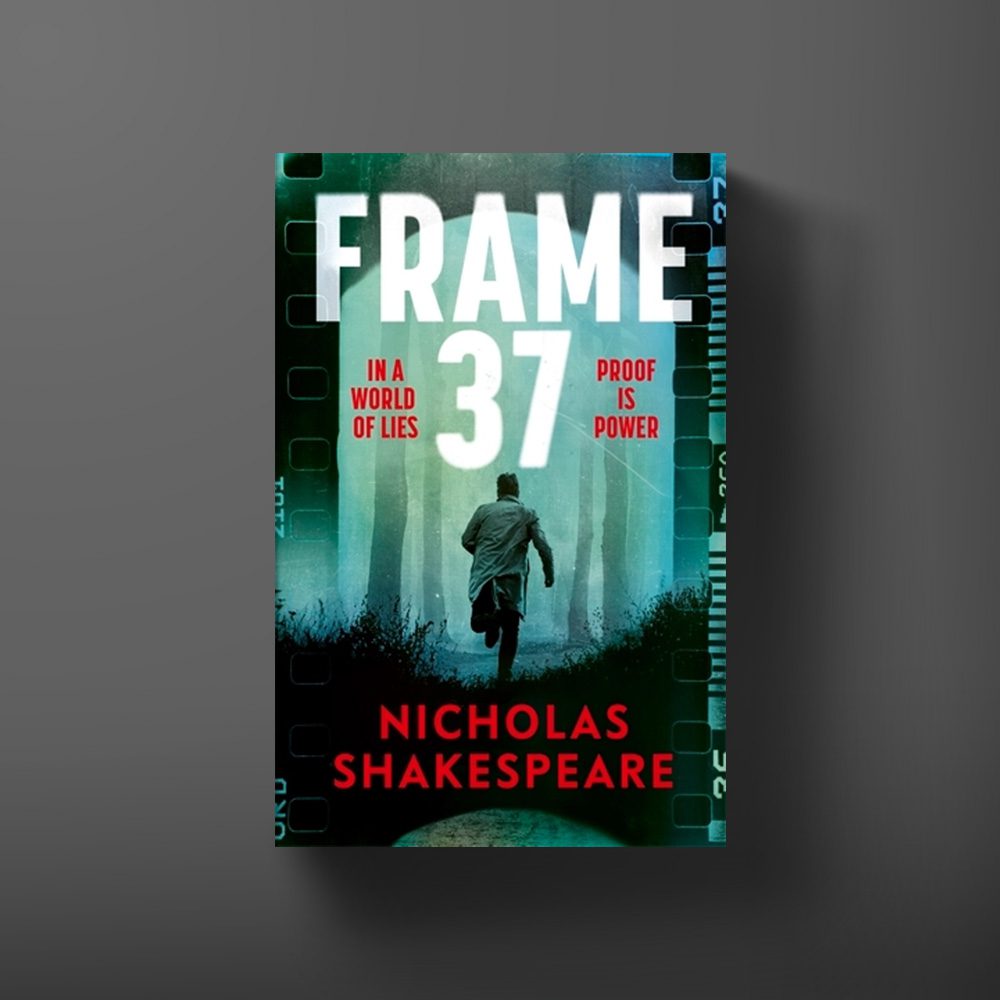
Join us for a deeper insight into this month’s James Bond Book Club pick, Frame 37, as we discuss it with the author, Nicholas Shakespeare.

Where did the title, Frame 37, come from?

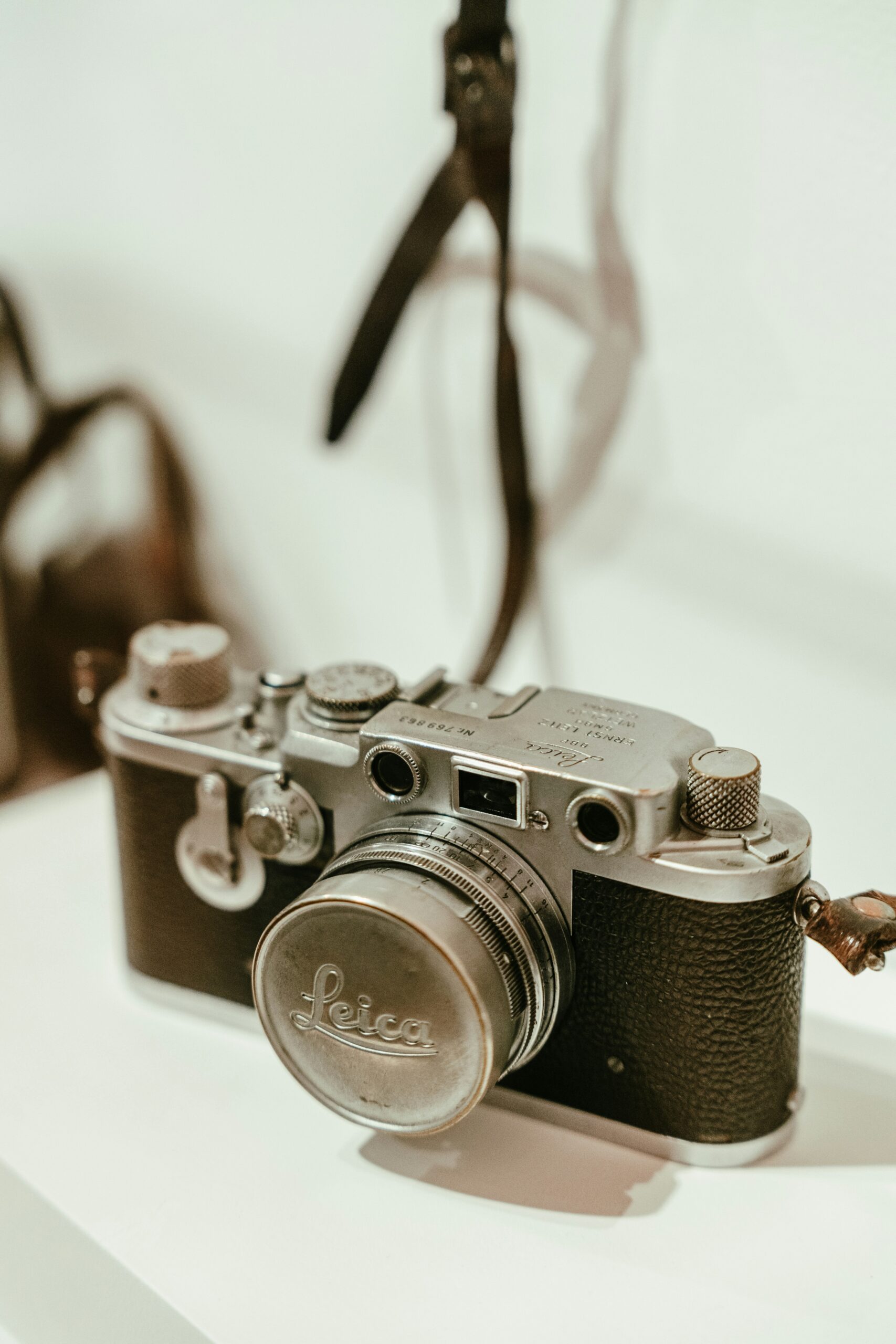
On an old-fashioned analogue camera, a film roll of 36 negatives, if loaded carefully, could provide an extra shot. The heart of my thriller concerns what, potentially, was captured on this 37th frame: i.e. if a Leica lost for 40 years can be discovered with the film intact, then that film might provide unimpeachable evidence to prevent a violent and narcissistic rapist from becoming the most powerful man on earth. In a world where both digital photography and AI today question the integrity of virtually every image, it’s become noticeable that we are reverting to old-fashioned analogue film as a more reliable guarantor of the truth. In much the same way, we are falling back on “the old verities” of local journalism and vinyl records. Even as national newspaper circulations slump and fake news dominates the headlines, it seems ever more important for local journalists to continue reporting on their communities and holding local politicians to account.

Where did the central idea come from, of a presidential candidate with a skeleton in his cupboard?

I’d begun this novel in Tasmania in 2019 – in my beach-retreat equivalent of “Goldeneye”, where I have gone to write for 25 years – when my agent Clare Alexander rang from London to say that she’d had an approach from the Ian Fleming Estate. Would I be interested in doing a new authorised biography of Ian Fleming? Naturally intrigued and increasingly enthusiastic, I shortly afterwards had to put my novel on hold. But what is curious is how the plot I’d conceived, of a presidential candidate who’d been a sexual abuser, started to be mimicked by events unfolding in America, not least with the celebrated court cases of Brett Kavanaugh vs. Christine Blasey Ford and Donald Trump vs  E. Jean Carroll. Two other seeds may have contributed. One was the drama of Dominique Strauss-Kahn, former head of the International Monetary Fund and at the time a shoo-in for the French presidency, who was arrested in New York in May 2011 for the alleged sexual assault on a hotel maid. By a strange quirk, a line from my first novel The Vision of Elena Silves was quoted six months later by Francois Hollande, the eventual successful candidate, when he announced his presidential bid in January 2012 at Le Bourget (“They fail who did not begin with a dream”) – except that Hollande believed he was quoting from another Shakespeare… The other seed was the discovery of a scarcely known incident in which Laura Bush, future wife of George Bush Jr., killed a fellow undergraduate in a car crash when she was seventeen. I reflected on how much effort must have gone into keeping this story out of the headlines and what would happen if you had a presidential candidate who had kept an even darker skeleton in their cupboard.

Did you have the plot mapped out before you began?

I tend to start my novels with a scenario that, for whatever reason, has got under my skin, a pebble that I’d like to extract from my shoe, as it were. The Vision of Elena Silves was inspired by one night in Portugal seeing the Coimbra convent where the last surviving witness of the Miracle of Fatima was still alive. I had a sudden image of a nun incarcerated by the Catholic church ever since she was a teenager, who had been inflicted with a knowledge of God, who suddenly wonders what would happen if she escaped the convent to look for the boy she’d been in love with, who’d had his own vision, a political vision. I wrote the novel to find out. The same with Frame 37. What unimpeachable evidence could possibly exist out there to stop a Trump-like shoo-in from becoming the US president?

The protagonist John Dyer is an ex-foreign correspondent who has appeared in two other novels, The Dancer Upstairs and The Sandpit. Did you feel the dangers which Raymond Chandler warned Ian Fleming about in having a serial character?

Originally, I never intended for John Dyer to be anything other than the waiter to serve the narrative of The Dancer Upstairs. He was a mere Latin American correspondent for a London newspaper that closes down its office in Rio. As an early Conrad reader – I remember Peter O’Toole and David Lean passing through Phnom Penh when we lived there, to film Lord Jim – I was probably influenced by Conrad’s regular device of the Marlowe figure who pops up again in Heart of Darkness. It’s strange how to be told a story at second-hand can, counter-intuitively, make the reader incline forward in their chair rather than lean back. In John Malkovich’s adaptation of The Dancer Upstairs, in which Javier Bardem plays the lead role, the camera acts as Dyer and goes straight into the action, onto Bardem’s face. But in Dyer’s second outing, The Sandpit, set in Oxford, I decided to shift Dyer towards the centre of events and so had to provide him with extra biographical details (rather as Fleming was forced to do with each Bond book, scraping bits of himself into his protagonist until we finally discover that Bond was Scottish and went, like Fleming, to Eton). By the end of The Sandpit, Dyer had become established in my head and I could easily picture him using his journalistic talents to track down the story behind Frame 37. The problem is that with each outing he needs more background. At the same time, he is hemmed in by what we already know about him. That is to say, he becomes deeper in one sense but narrower in another, in that the fictional opportunities he is able to offer are firmly hidebound by his own experience and times. The danger becomes that the author forgets certain salient details, as le Carré did when he brought back George Smiley – not appreciating that he’d be over 100 by this time.
Were you conscious of writing a political thriller – and if so what did unusual demands or restraints does that impose on a novelist, if any? 

Much as I enjoy them, I confess to not being as dedicated a serial reader of political or spy thrillers as I should be. The first fiction I am conscious of responding to was a retelling of King Arthur and the Knights of the Round Table. I was five or six when my mother came into my room in Port Dickson on the Malayan coast to find my face marked with tears. “What’s wrong?” I looked up glitter-eyed. “Launcelot is dead!” Thereafter, I sought out stories that promised the same impact. Buchan, Shute, Greene, MacLean, Innes, le Carré, not to leave out Fleming. Like many writers I know, I started writing once I’d exhausted the supply. However, I’m also tremendously conscious that I don’t necessarily abide by the formulas, whatever they may be, of the genre novel. I’m with Bruce Chatwin on this – that the only true story is a good story. How one gets there to tell it is different for each writer. I have an undiminished admiration for Graham Greene who plundered whatever came to hand – childhood tales, detective stories, political thrillers, spy thrillers, travelogues – without becoming straitjacketed or restrained by any single discipline.

‘There’s no such thing as an ex-journalist.’ Dyer seems to rediscover his passion for the craft by revisiting his youth. How did you approach constructing his backstory?

In The Dancer Upstairs and its sort-of sequel The Sandpit, Dyer developed from being a foreign correspondent with a chance to come out of Latin America on a high – to being a single father who’d traded in journalism for charity work/teaching English/writing a book about the Amazon, and has exchanged Rio for Oxford, where he himself was at prep school. I had myself moved with my wife and two small boys from Tasmania to Oxford and I unashamedly exploited the situation I found myself in: an autumn father surrounded at the school gates by younger, wealthier, more international parents who had fingers in important pies like banking and Intelligence. Dyer may have turned his back on journalism, but he couldn’t blind himself to a good story when he saw it – he couldn’t turn off his reporter’s eye. I’d been interested in the elusive promise of nuclear fission. When I was lucky enough to get a Visiting Fellowship at All Souls, it gave me a passport to speak to the topmost brains in this field. It was during a discussion with Steve Cowley, then President of Corpus Christi College and now Director of the Princeton Plasma Physics Laboratory, that we came up with a plausible idea for cracking nuclear fission – modelled on nothing more rarefied than a bog-standard prep school football. Then, when I was hunting around for a lead character for Frame 37, I realised there was still a year or two of Dyer’s earlier life that hadn’t been accounted for, which I seized upon, and sent him as a graduate student to Ann Arbor, on a course I had once failed to be accepted for. By chance at a Cambridge college reunion not long ago, I rediscovered a school friend who had been awarded the very fellowship I’d unsuccessfully applied for. He was able to describe for me in detail Ann Arbor as it would have been in 1981. Just like Fleming and Bruce Chatwin, whose biography I also wrote, I’m an obstinate stickler for not writing about places unless I’ve been to them. I had to draw on all Dyer’s resources as an ex-journalist to invent Ann Arbor and Michigan. It’s the only place in my novels I haven’t visited. 

Do you think pausing this project to research Ian Fleming for your biography had an effect on the finished novel? 

I’m hugely grateful to Ian Fleming for having allowed the world the chance to catch up with my plot. In rather the same way, although on an infinitely larger scale, the film of “Dr No” came out just at the time of the Cuban Missile Crisis (1962), which the movie gave every impression of appearing to dramatise. During the five years that I needed to put aside to write Fleming’s life, not only did the central device in Frame 37 – of a presidential candidate with a violent sexual past – become more contemporary and feasible, but so did the possibility that analogue film and local journalism might prove to be fiercer watchdogs of the truth than AI and fake news. This was not so obviously the case back in 2019.
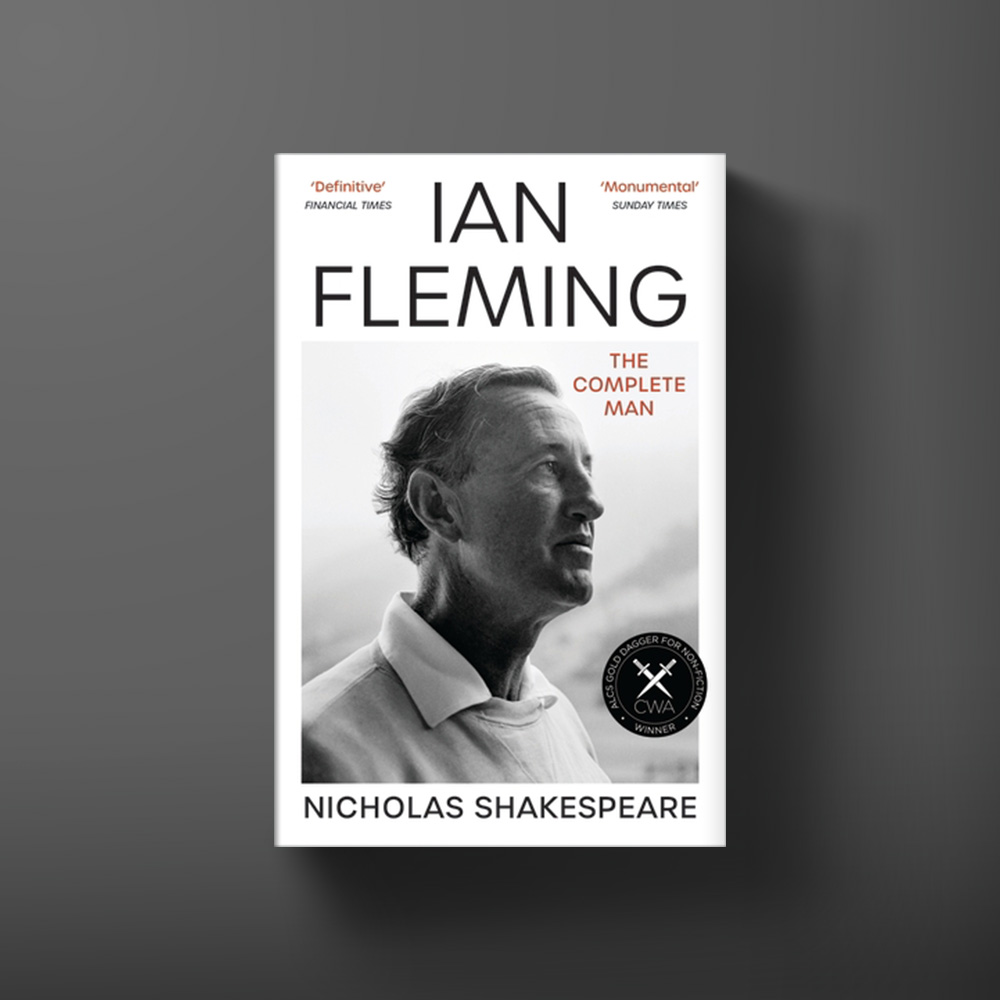
Paperback cover for Ian Fleming The Complete Man by Nicholas Shakespeare.

What kind of specialist research did you need to do in writing about a US intelligence assassin and modern surveillance?

Growing up abroad as a diplomat’s son, I met several spies or former spies, including Greene and le Carré (who had been a friend of my parents at Oxford), both important influences as I’ve said. But I never benefited significantly from their indiscretions or knowledge. I need to do the fieldwork myself. (In Peru, when researching the Shining Path revolutionary movement for The Dancer Upstairs, I was conscious of the irony that it was the US Embassy in Lima, whose agents were famous for never leaving the capital, who were mustard keen for me to share my material). In Frame 37, I have a US Delta Force-trained assassin. He is based on a man I met by chance in Tasmania 25 years ago after I discovered that I had a doppelganger, N(evin) Shakespeare, an electrician who lived in Tasmania’s north-west. Nevin put me in touch with one of his clients, who, he said, boasted that “he’d once had Colonel Gaddafi in his cross-sights”. Fascinated, I sat in this alleged assassin’s bungalow and wrote down everything he told me about his years in Delta Force, operating in Peru, the Yemen, Libya. I put aside the eight-pages of notes and forgot about them until, in 2023, I needed a state assassin for my story. I then remembered this interview. It turned out to provide everything I required and more. By and large, fictional characters and the dramatic situations novelists like to put them in are remarkably unaltered from the days of the Odyssey. Technology stands out as perhaps the one area where authors need to show a passable command in order to create their smoke and mirrors. That said, surveillance techniques are so fast changing that a novelist can never hope to be up to date. In Frame 37, I depended on a chance encounter that my wife had with another local dog-walker who turned out to work in the “information security business”. I gave him a call and he divulged some details which I was glad to use in Frame 37 – including the, for me, riveting story of how facial recognition cameras at JFK airport were once capable of 100% success, but the time required to process the data led to five-hour queues at the airport, so the pace was speeded up – yet this only allowed for a 45% hit rate. I’m sure they’ve solved this glitch by now, but it gave me an aperture that sounded at least plausible to exploit in my novel. You only need an aperture. As the owner of the Leica must have known when he took that presidentially altering shot in Frame 37.

Ian Fleming’s advice for writing a thriller was simply ‘get the reader to turn the page’. In your own words, how do you write a thriller?

Crikey, that’s a tough one. One of several personal discoveries I made when researching Fleming’s life was the role of my grandfather, a prolific writer and teacher called S. P. B. Mais, in lending a distant hand to Fleming’s own thriller-writing methods. SPB, as he was known, had taught Fleming’s friend Alec Waugh at Sherborne, and got published his scandalous first novel The Loom of Youth (1917), after giving Waugh his recipe for successful writing: to work five hours a day and write 2,000 words. It was SPB’s inflexible rule to be a workman and keep to a routine from which nothing must be allowed to deter you. Waugh took this to heart and passed it on to Fleming (along with a life-shifting recommendation to visit Jamaica). What I envy in Fleming are his natural command of short sentences, his lucidity, his infectious energy and pace. I like his image of each chapter as “a wave to be jumped as we race with exhilaration behind the hero like a water-skier behind a fast motor boat.” Of course, you try to do this whenever you can, but I fall over far too often. As a result, my novels take much longer – three years as against Fleming’s two to three months. In this respect, I find myself closer to the timeframes of Graham Greene and John le Carré. Perhaps every writer, though, has their own Personal Best timespan, as it were. Many of the writers I admire were gifted at least once in their lifetime with a book they wrote at speed. The Spy Who Came in From the Cold allegedly took le Carré seven weeks. Stendhal wrote The Charterhouse of Parma in 52 days. Edna O’Brien wrote The Country Girls in three weeks… I still hold to the dream of one day completing a book in “Fleming time”. 


We hope you enjoyed this interview! Be sure to pick up this month’s excellent thriller, Frame 37, if you haven’t already. Thank you very to Nicholas Shakespeare for taking the time to talk to the James Bond Book Club.

We’ll be back next month to announce our October pick…
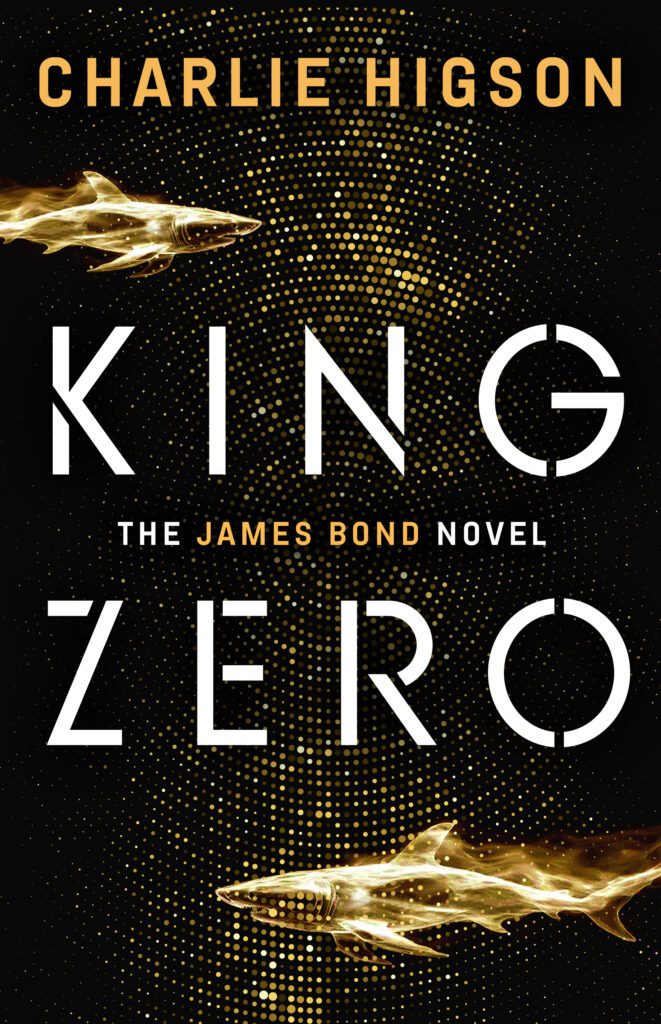
New Release: King Zero

Out now in the UK is King Zero, Charlie Higson’s blockbuster new Bond adventure. When a former MI6 agent is murdered in the Saudi desert, Bond uncovers a deadly conspiracy led by a powerful new enemy. Can the last analogue hero stop a digital-age threat before the countdown reaches zero?

Le Chiffre. Dr No. Goldfinger. James Bond has faced them all. But now the world is changing, and even 007 has no idea what’s coming for him…

It starts with a murdered agent in the Saudi desert.

Only a traitor could have known enough to bring him down.

But even James Bond can’t guess at the secret that was worth killing him to keep.

As Bond follows the trail across the globe, he doesn’t realise the countdown has already begun.

And hiding in the shadows is a man with more power than he could ever have imagined.

Prepare for a villain unlike any before.

Prepare for KING ZERO.

Order your copy at ianflemingshop.com

New Release: Danger Society

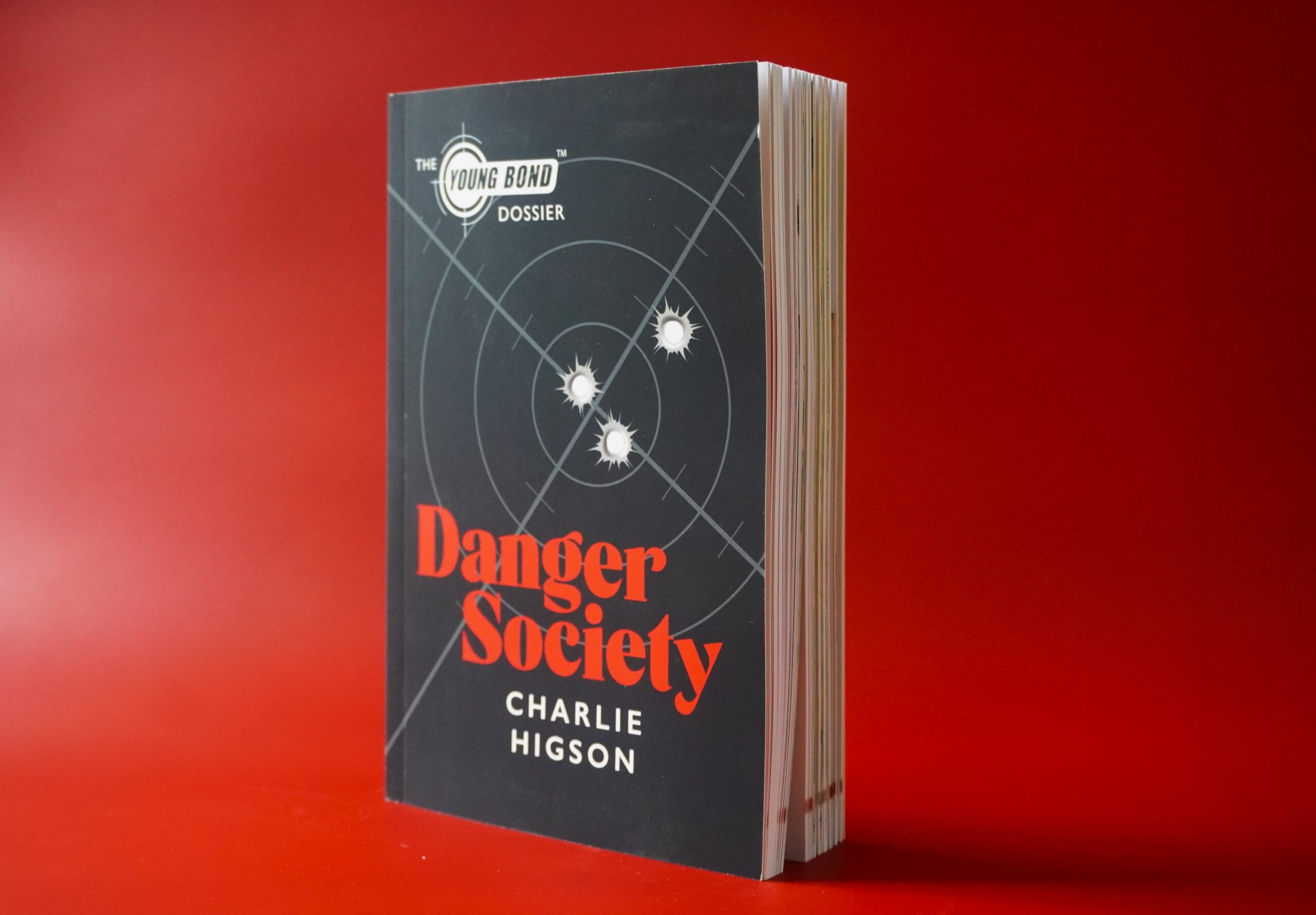
Danger Society: The Young Bond Dossier is now back in print with a new cover design.

Book cover for Danger Society by Charlie Higson.

Everything you ever wanted to know about the boy, who became the man, who became the legend…

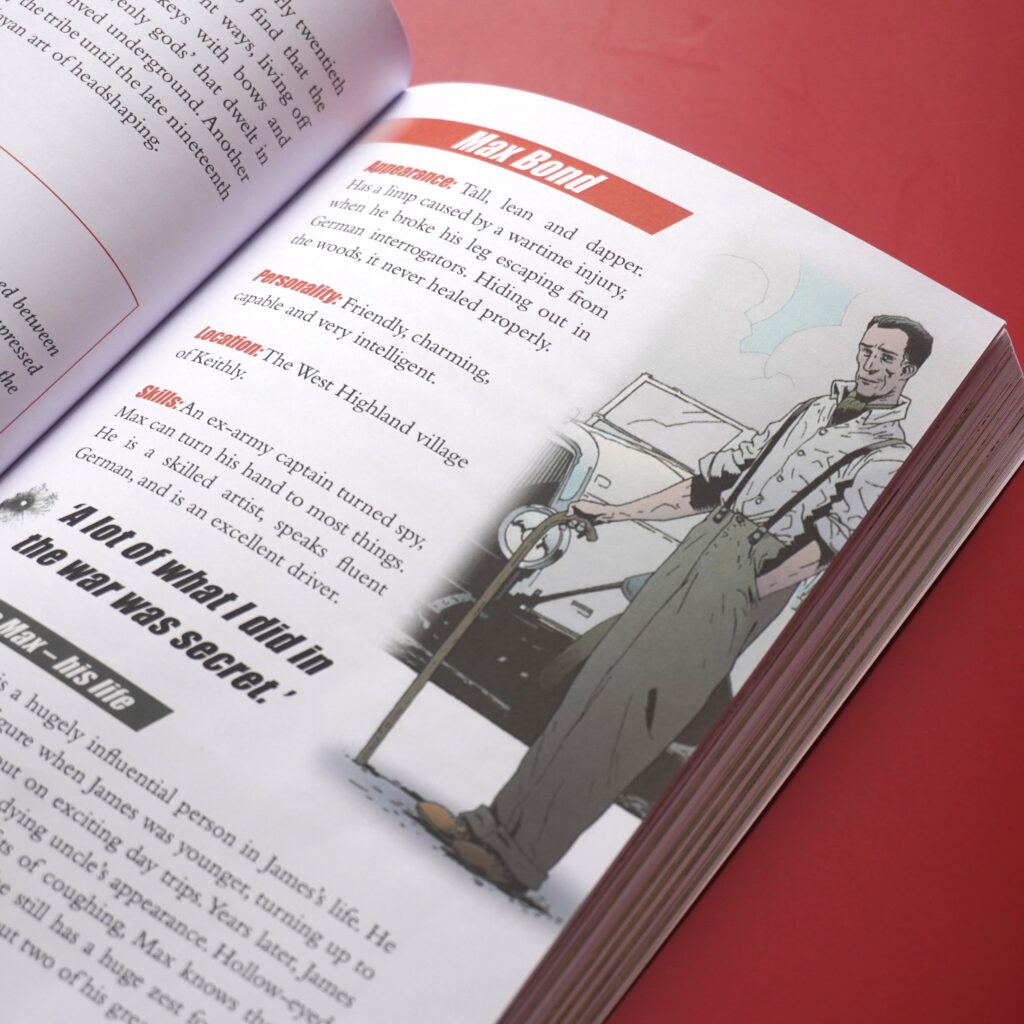
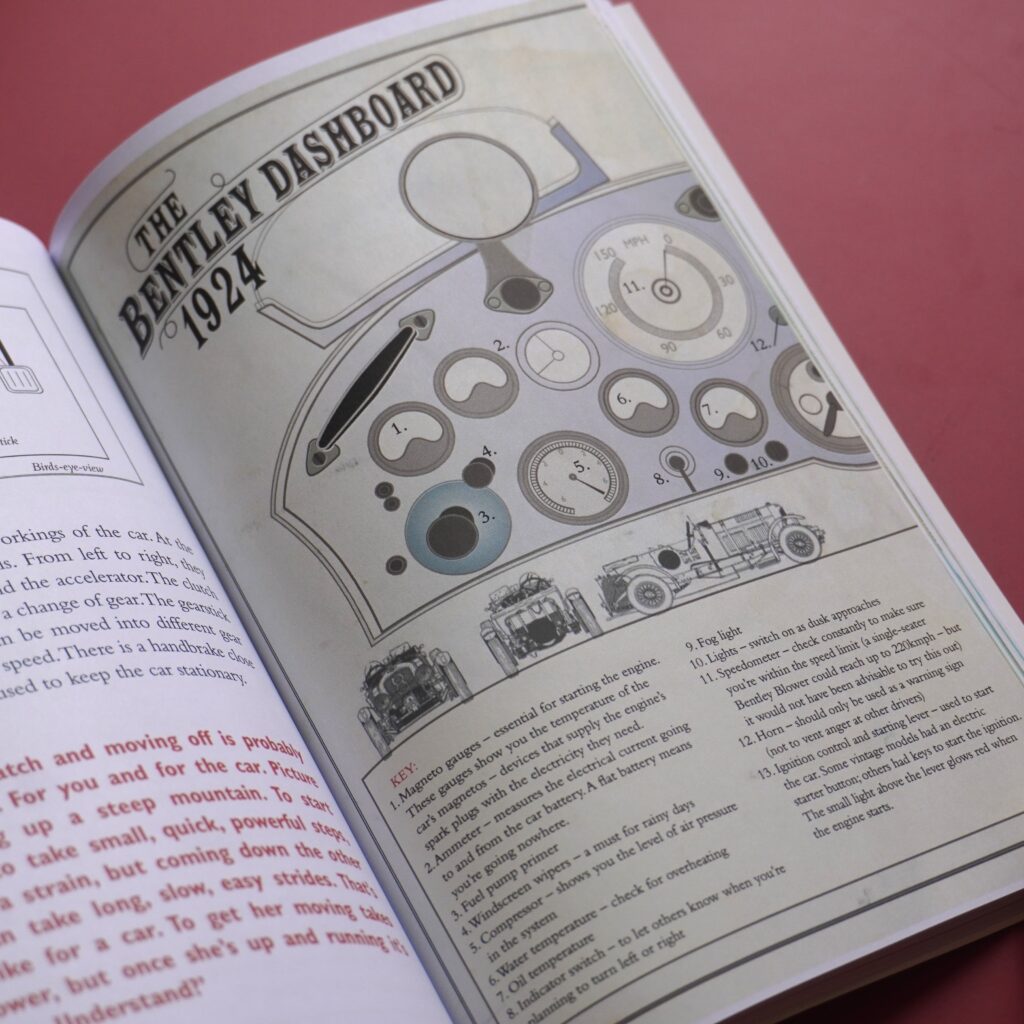
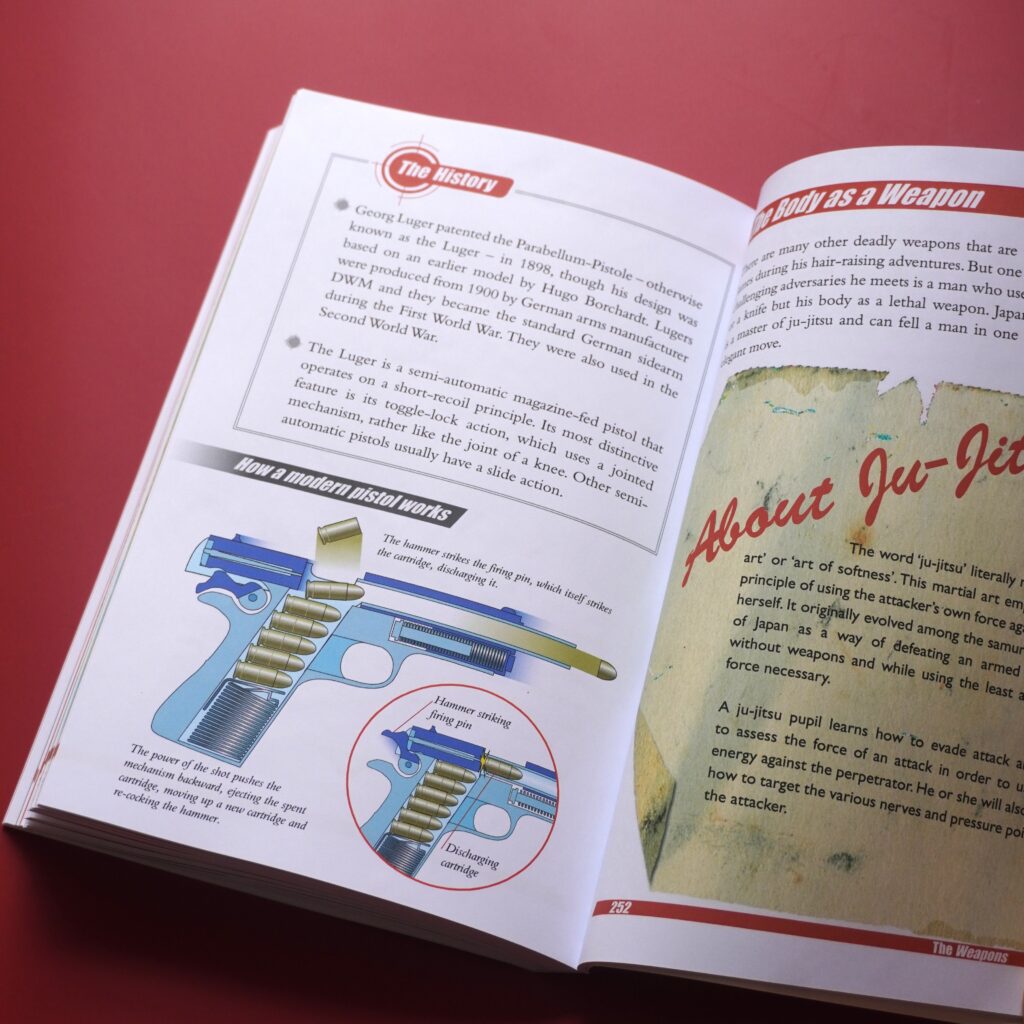
Danger Society: The Young Bond Dossier features a short story by Charlie Higson, and is the complete and definitive guide to the world and adventures of Young Bond. Packed with information – from in-depth character profiles to the cars, the weapons and the exotic locations, plus facts, stats, photographs, maps, and illustrations by Kev Walker – this book is both a must-have for Young Bond fans and a perfect introduction to the megaselling series

Order your copy at ianflemingshop.com

New Release: The Facts of Death

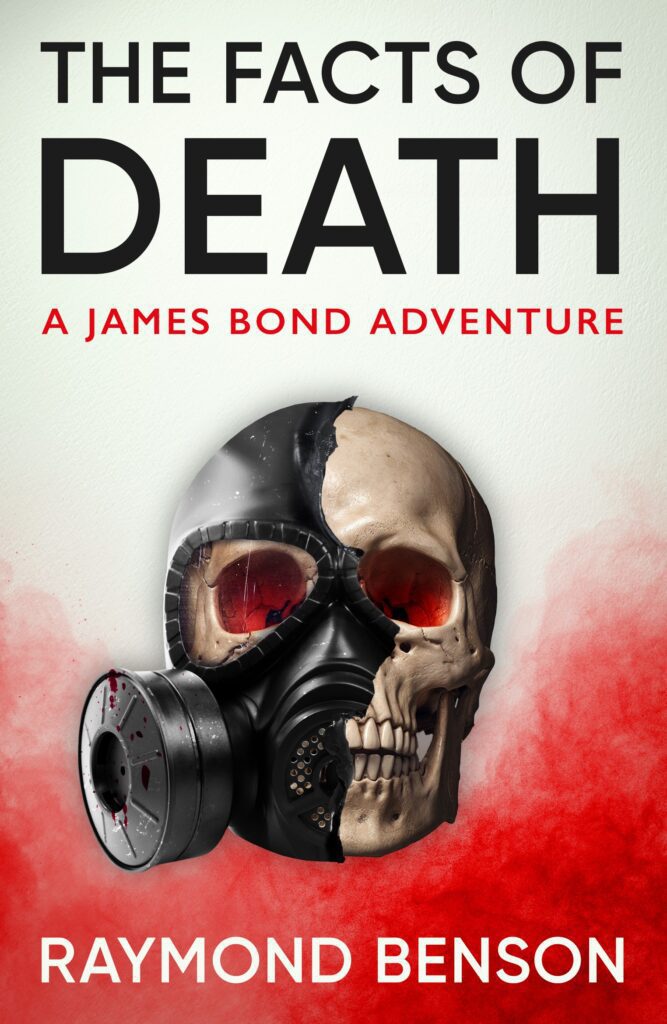
The Facts of Death, Raymond Benson’s second Bond novel is back in print with a new look.

The 18th James Bond adventure, rediscover this classic 007 continuation adventure in a brand-new paperback edition, featuring a new introduction from the author.

Book cover for The Facts of Death by Raymond Benson.

They call him the Number Killer. A calculating assassin who always leaves a numerical calling card. But now he’s picked the wrong victim – M’s lover – and James Bond is going to beat the odds and make things even.

From the desolate badlands of Texas to the crumbling ruins of Greece, the danger multiplies as Bond tracks his quarry to a sinister cult of fanatics shrouded in the teachings of the Greek mathmatician Pythagoras.

With a vicious cadre of killers trying to subtract him from the equation, Bond must infiltrate the cult and stop their chaotic computations – or the next number that comes up may be his own…

‘Benson pays homage to Fleming’s plots… imbues his Bond with enough honour, sexual prowess and action-hero skills to please the purist and enthrall the novice’ – Publisher’s Weekly

‘A postmodern treat for fans and newcomers’ – Kirkus Reviews

Order your copy at ianflemingshop.com

Announcement: James Bond And The Secret Agent Academy

We’re thrilled to announce a new blockbuster 007 literary adventure, James Bond and the Secret Agent Academy, by bestselling crime writer M.W. Craven. Publishing in June 2026, it will kick-off an action-packed new series for readers aged 8-12.

The series will take the world’s most beloved secret agent to a place of dread, weirdos and strange food: school. A new generation of young heroes, mentored by 007, have entered the Secret Agent Academy to see if they have what it takes to join the ranks of the Double O’s. Together with Bond can they defeat a deadly foe lurking in the shadows – and, more importantly, can they pass their exams? For existing fans and a new generation of spy adventure readers, this is 007 like you’ve never seen him before.

The series is written by bestselling and CWA Ian Fleming Steel Dagger award-winning crime and thriller author M.W. Craven who says, “While writing a middle-grade book that features James Bond training the secret agents of tomorrow is undoubtedly an extraordinary honour, it also comes with a daunting responsibility. The challenge of introducing Ian Fleming’s Bond – a brand that has transcended books and movies to become part of our national identity – to a brand-new audience is not something to accept lightly, but after speaking with the team at Ian Fleming Publications Ltd, sharing our concerns about recent research from the National Literacy Trust in the UK showing that reading for pleasure amongst children is at a 20-year low, it wasn’t an opportunity I felt I could turn down. Yet this is not James Bond as you’ve seen him before. Expect whacky gadgets, whacky lessons, and even whackier members of staff.”

Simon Ward, Publishing Director at Ian Fleming Publications, says: “We are always looking for stories we want to read: stories that have everything we love from Ian Fleming’s legendary James Bond adventures but with new characters and new settings that Ian would approve of. This is a James Bond story unlike any other we’ve done: a world of twisted villains, extremely silly names and bizarre gadgets but with a contemporary setting and a cast of young heroes children can relate to. For this we needed an author unlike any we’ve had before: M.W. Craven is the perfect combination of fierce intelligence, nail-biting action and mischievous humour. Not only is he the perfect adult thriller writer, it turns out that he is also a born children’s author. This is a series that kids and grownups alike will love. We look forward to welcoming all new recruits.”

James Bond and the Secret Agent Academy will be published in June 2026. Pre-order your copy now.

‘Shaken, Not Stirred’

Join us as we take a look at the role drinks play in Ian Fleming’s James Bond novels.

It begins in the very first 007 adventure, Casino Royale, with the immortal line, ‘shaken and not stirred’ and The Vesper martini, christened in honour of Bond’s great love, Vesper Lynd. From then on, strong, carefully crafted drinks are at the heart of every 007 story. 

Ian Fleming was very particular about the finer details of his hero’s lifestyle. As well as Bond’s drinking habits, his clothes, weaponry, cars and food are all described with precision, a narrative trait which is perfectly highlighted by his instruction on how to make the perfect martini.

Diamonds Are Forever

‘The waiter brought the martinis, shaken and not stirred, as Bond had stipulated, and some slivers of lemon peel in a wine glass. Bond twisted two of them and let them sink to the bottom of his drink. He picked up his glass and looked at the girl over the rim. “We haven’t drunk to the success of a mission” he said.’

The particular attention that is paid to how eggs should be scrambled, how a car should be customised and how best to serve vodka, are all testament to the writer’s own preferences. Though many have debated how much of Ian Fleming there was in James Bond, there has always been agreement amongst fans that Fleming shared his own tastes and enthusiasms with his character. Along with the advocation of particular brands, these strokes of realism provide a layer of truth and help to bring the fantasy of James Bond’s world to within the readers’ reach. ‘All these small details’, Fleming wrote, ‘are ‘points de repère’ to comfort and reassure the reader on his journey into fantastic adventure.’

Goldfinger

‘James Bond, with two double bourbons inside him, sat in the final departure lounge of Miami Airport and thought about life and death.’

In a feature titled ‘London’s Best Dining’ for Holiday magazine, Fleming provides a tip for American tourists on how to sample a decent martini, showing how much it mattered to him beyond the pages of his novels.

‘It is extremely difficult to get a good martini anywhere in England. In London restaurants and hotels the way to get one is to ask for a double dry martini made with Vodka. The way to get one in any pub is to walk calmly and confidently up to the counter and, speaking very distinctly, ask the man or girl behind it to put plenty of ice in the shaker (they nearly all have a shaker), pour in six gins and one dry vermouth (enunciate ‘dry’ carefully) and shake until I tell them to stop. You then point to a suitably large glass and ask them to pour the mixture in. Your behaviour will create a certain amount of astonishment, not unmixed with fear, but you will have achieved a very large and fairly good Martini.’

Paying attention to exact details are crucial skills for any spy who wants to complete a mission successfully and safely. The life of a secret agent is one of daring action and life-threatening peril.  James Bond’s preference for the finer things in life suggests that when the moments of danger have passed, pleasures should be indulged. Enjoying the very finest dover sole and a glass of chilled champagne provides 007 with a reward and pushes his experiences to the height of sophistication and quality, in those brief respites from danger.

Live and Let Die

‘There are moments of great luxury in the life of a secret agent… occasions when he takes refuge in good living to efface the memory of danger and the shadow of death.’

As well as enjoying the pleasures of drinking, alcohol serves to ease the conscience of a cold blooded killer such as 007, and provides moments of relief in a life of violence and upheaval. Drinks play a soothing role in the James Bond novels and offer a well-earned splash of luxury after a long day spent navigating the dirty business of spying.

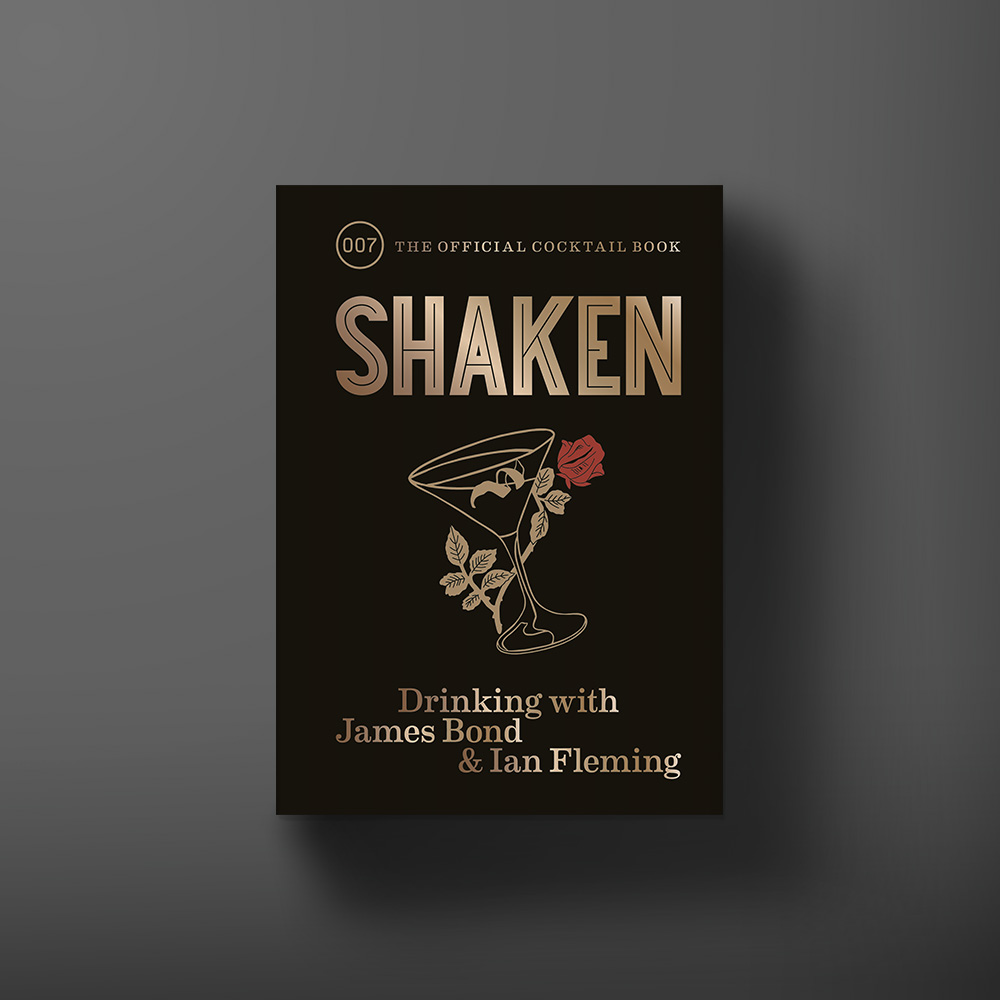
Discover 50 cocktails inspired by the characters and plots of the 007 novels in Shaken: Drinking with James Bond and Ian Fleming, created by the team at award-winning Bar Swift in London’s Soho.

Interview: Cover Artist, Michael Gillette

We sit down with Michael Gillette, the man behind the colourful James Bond hardback editions, which are now also available in limited edition art prints at ianflemingshop.com.

How did it feel to collaborate to build on Fleming’s 007 legacy with us at the start of our self-publishing journey?

2018 was when I first had the idea to pitch these designs. I felt like it was inevitable that you would self-publish the books. I’m not sure you’d even decided to at that point [we hadn’t!] so I don’t know why I was so convinced. I had the idea for something really geometric, simple, bright and bold which hadn’t been done, that I could recall. I’m really glad you’re self-publishing. In the shifting sands, it’s the right thing to do. And I know it’s a massive venture. I started out doing sleeves for indie bands, and it feels a bit like that. Being part of a smaller unit, you’re much more part of the endeavor, and you want it to succeed. I want the books to succeed and I want you folks at Ian Fleming Publications to succeed.

I view my career as a rodeo illustrator. Certainly when I did the centenary editions, I was right in the middle of doing a million other jobs. And obviously, I never had any dealings with The Ian Fleming Estate then, just a shadowy missive every now and again that would come through Penguin. You don’t really build a relationship, you do the job and then it’s off and gone. It’s been really interesting to get to know you all, to see how it works, and to watch your progress too. I don’t want to conflate my experience with everyone’s experience, but it seems as things get more and more virtual, the relationships that sustain are the real world relationships. That’s the way I feel. It seems like The Estate has always been a bit like that anyway – more about direct relationships and for sure, it’s hard to get into, but it is loyal once you are in there.

There was no doubt that these books had to be designed by someone who understood the Bond book world. Do you think these new circumstances had an effect on the designs and the design process?

Yes definitely. At Penguin, there was a whole marketing department, a designer and an art director, John Hamilton, a legend. It did go very smoothly, but you’re being presented with something and told what to do. Even though it’s what everyone sees first, the artist is generally hired last. They know what they want, and then they pick an illustrator to do it. This project was completely the opposite, it was self-initiated. I could do anything I wanted, certainly to begin with. Take From Russia with Love. You’d already approved a different idea, but I thought this was better.

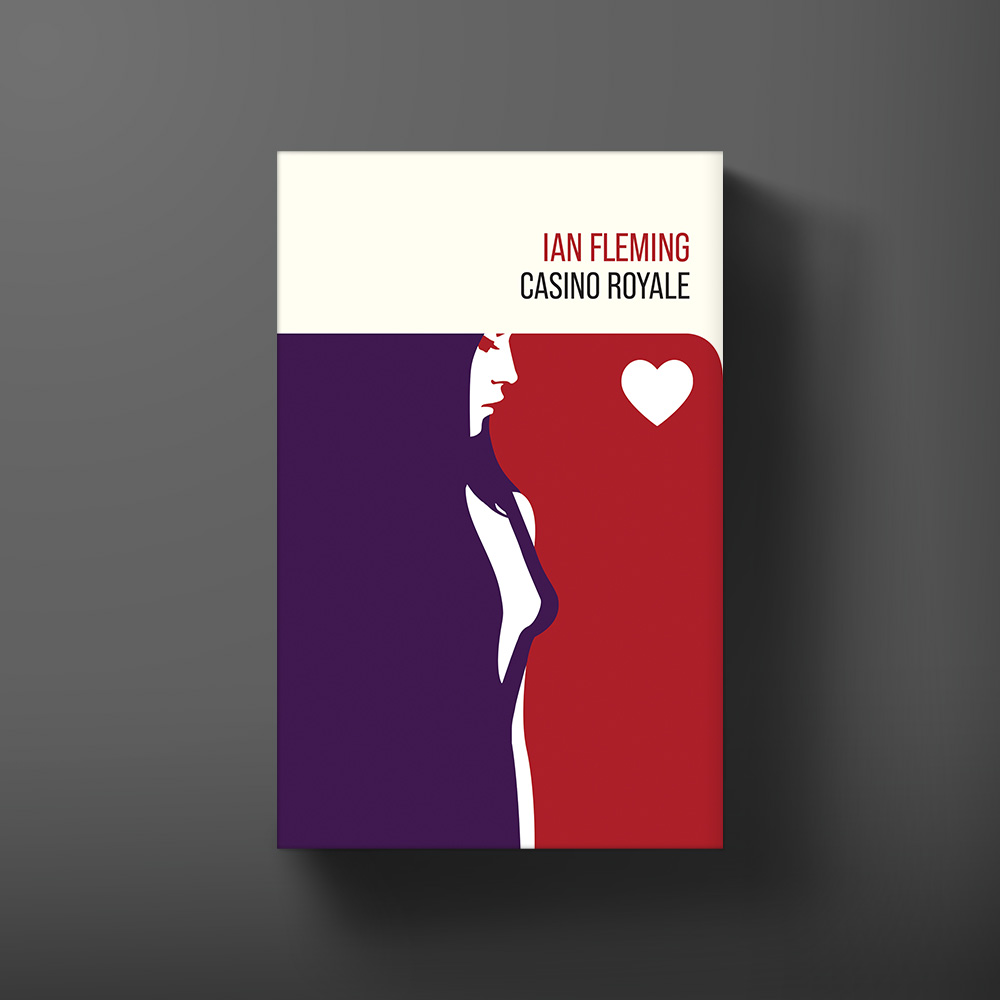
Hardback book cover for Casino Royale by Ian Fleming, designed by Michael Gillette.
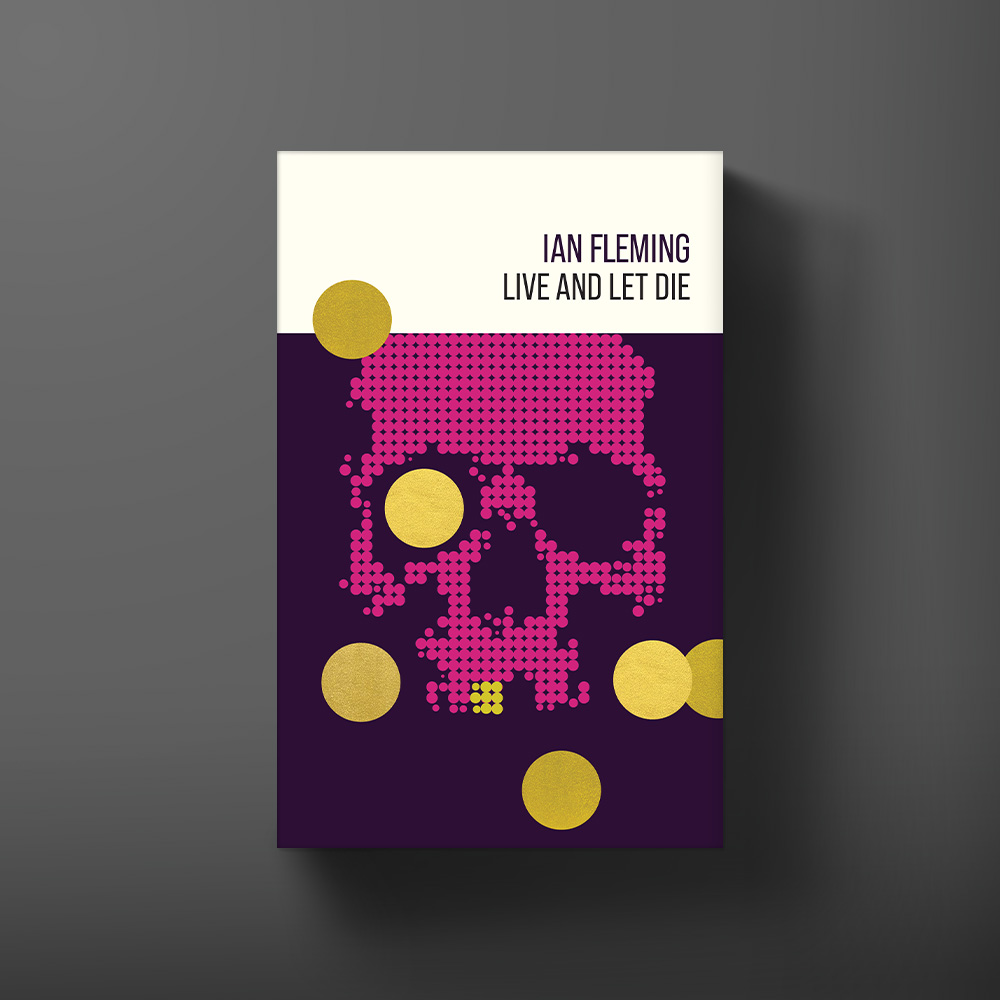
Hardback book cover for Live and Let Die by Ian Fleming, designed by Michael Gillette.

Does that extra flexibility facilitate your creative process? Do you wait for the flash of inspiration or do you go looking for it?

Well, initially the ideas came in a flood. I did this very geometric burst to begin with and then I just put them away until 2021. I was teaching a class on concept illustration which includes things like negative space and symbolism. I’d say to the students ‘your mind will give you as many solutions as you ask of it,’ which sounds ridiculous, but it’s actually true. Most people only ask for one idea, or ask for a couple of ideas, and then get very stuck. At the end of that class, I had a lull because Covid was still strong in California, so I took another two weeks. I had these ideas that were based on what I’d been teaching and showing the students, these graphic concepts. The designers I introduced them to were people like Saul Bass, and those ideas were absorbed into them too. So I did another two week burst of that, and then put them away again. I thought I could just be doing it forever.

I guess it’s just trying to keep things fresh. I teach my students that your subconscious is where all the ideas are, and your conscious is, you know, the little peak on the mountain, above the sea, and all the ideas that are going on underneath it, you just have to keep asking for them. If I got really stuck with an idea, I’d go back and read the book just to try and find a new direction on it. The other difference of this job is just how long it went on. I’ve never had anything go on this long. It’s been six years and I couldn’t show anybody at any point, apart from maybe my wife, who is a good sounding board.

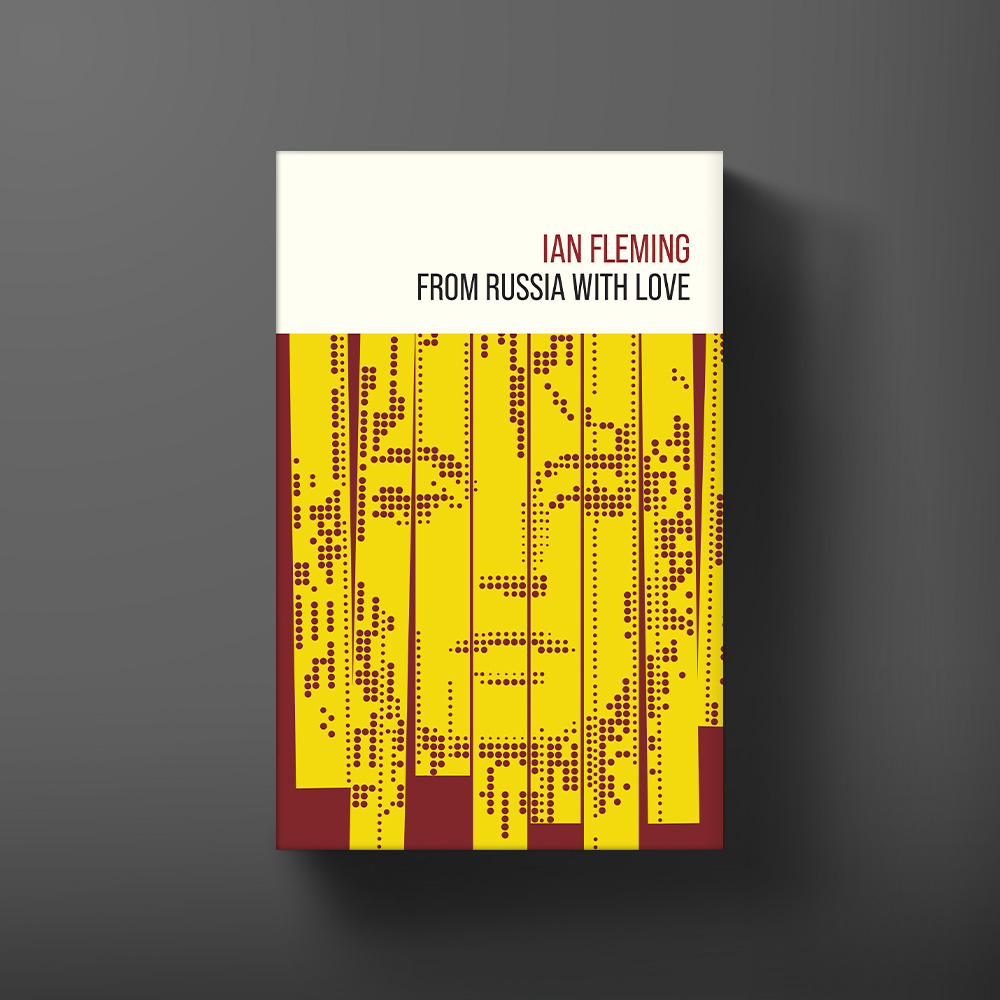
Hardback book cover for From Russia With Love by Ian Fleming, designed by Michael Gillette.
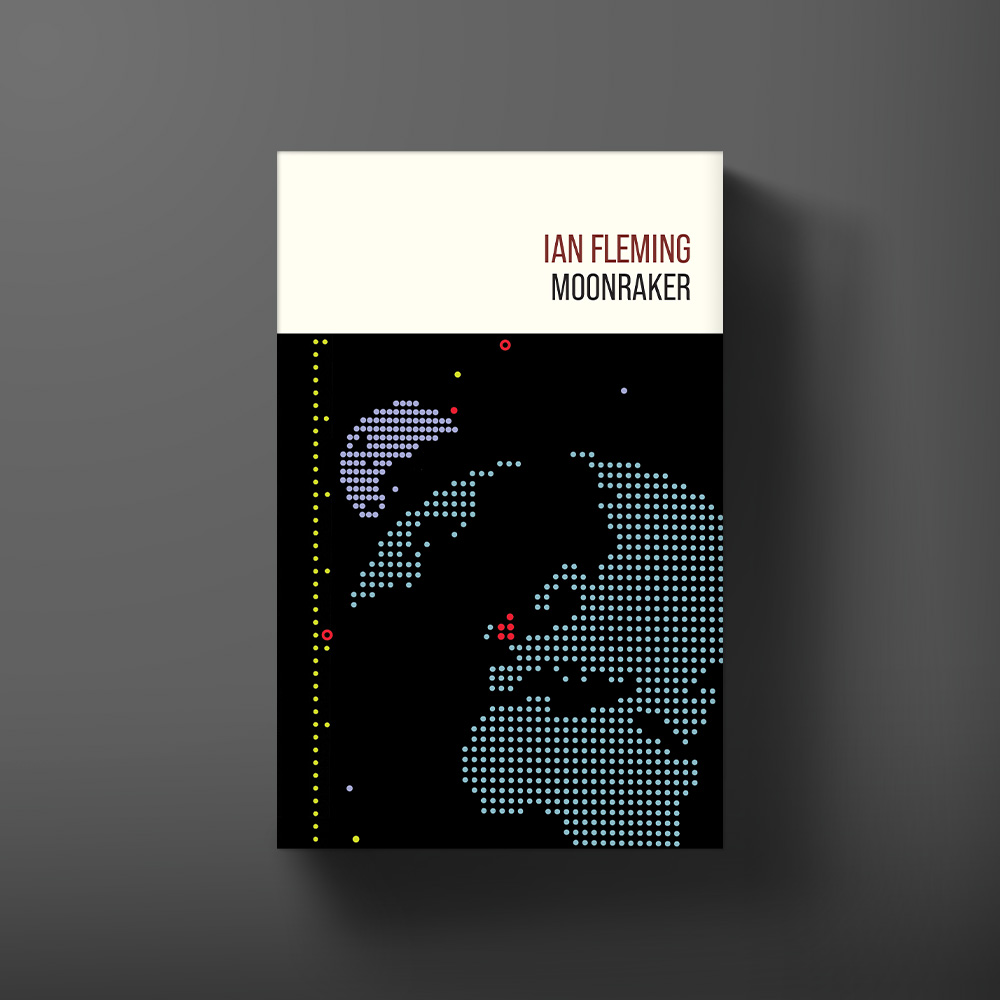
Hardback book cover for Moonraker by Ian Fleming, designed by Michael Gillette.

With From Russia with Love, for example, there were at least four versions which are all very similar. Do you think a design improves the more times you do it, or can you overdo it?

Oh, you can kill something by over-polishing it. That one is a bit different, because it was a technical difficulty. I had an idea which I couldn’t find an easy way of executing. I could get it approximated quite quickly but making the image read without the face getting wider or distorted took a lot of shifting of dots by hand. It might have been a day and a half’s worth of shifting small dots to make it right. I’d spent so long getting it to try and work, and realizing that it was working, that I probably did ‘white knuckle’ it a bit and say, ‘no, this is the idea.’

Hardback book cover for The Spy Who Loved Me by Ian Fleming, designed by Michael Gillette.
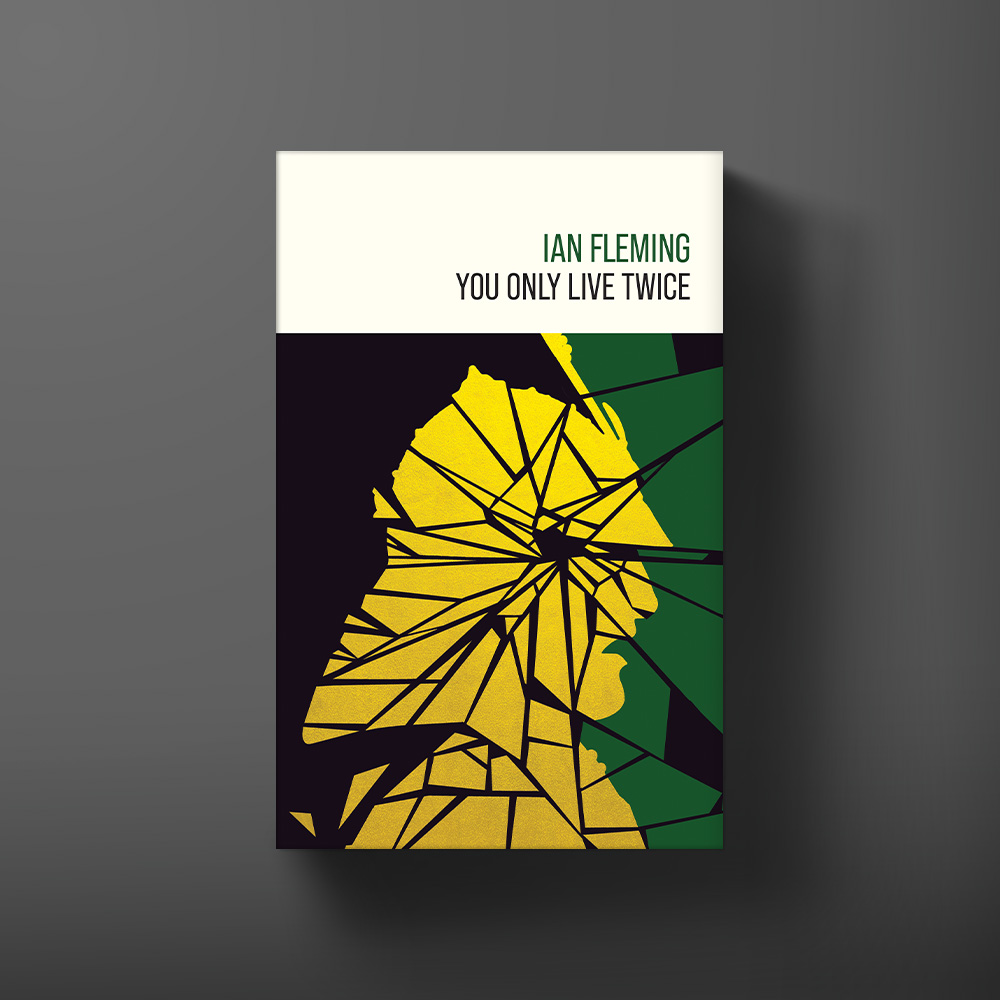
Hardback book cover for You Only Live Twice by Ian Fleming, designed by Michael Gillette.

Why were you insistent that we went with this cover in particular?

Because it’s an idea that I think is absolutely right for the book. It suits the story of the book. The two lures of the story are the cipher machine and the love interest. For those things to be married together in a single image with just two colors, it just works. Saul Bass is about symbolizing and summarizing. And that’s exactly what this cover does. I suppose there’s a point at which you’ve spent so much time on something that you will not let it go. Your mind has become shrunk to that idea. It’s like you’ve become a stalker for your own idea. I think that’s the only one that I really felt like that about. It was a good call. Well, it was a call.

The design process for these books was more like creating an object than just a cover. What did you learn from this?

With the 2008 books, I didn’t see them until they were physical products. Apart from the cover, I had no idea what the rest of it was. When I left college, I started designing for bands. That was my USP. I really loved it. I stopped because my illustration career took over, but I’ve always been into the idea of the total look of something. To be able to have that total look really excites me. I think that at this point in time to make a physical book, especially a beautiful hardback, there’s got to be a level of thought behind it that’s worth people buying it. You just think, ‘how does this look in the hand?’ That’s why I tried to make things look as close to the size they would be, like the bullets.

I’m not saying it’s a dying art, I think it’s just that designers are dying off because they can’t afford to do it as a job. You go into Waterstones and everything looks very much the same, the same typeface and the same treatment. With the self-publishing, you’ve done something more considered.

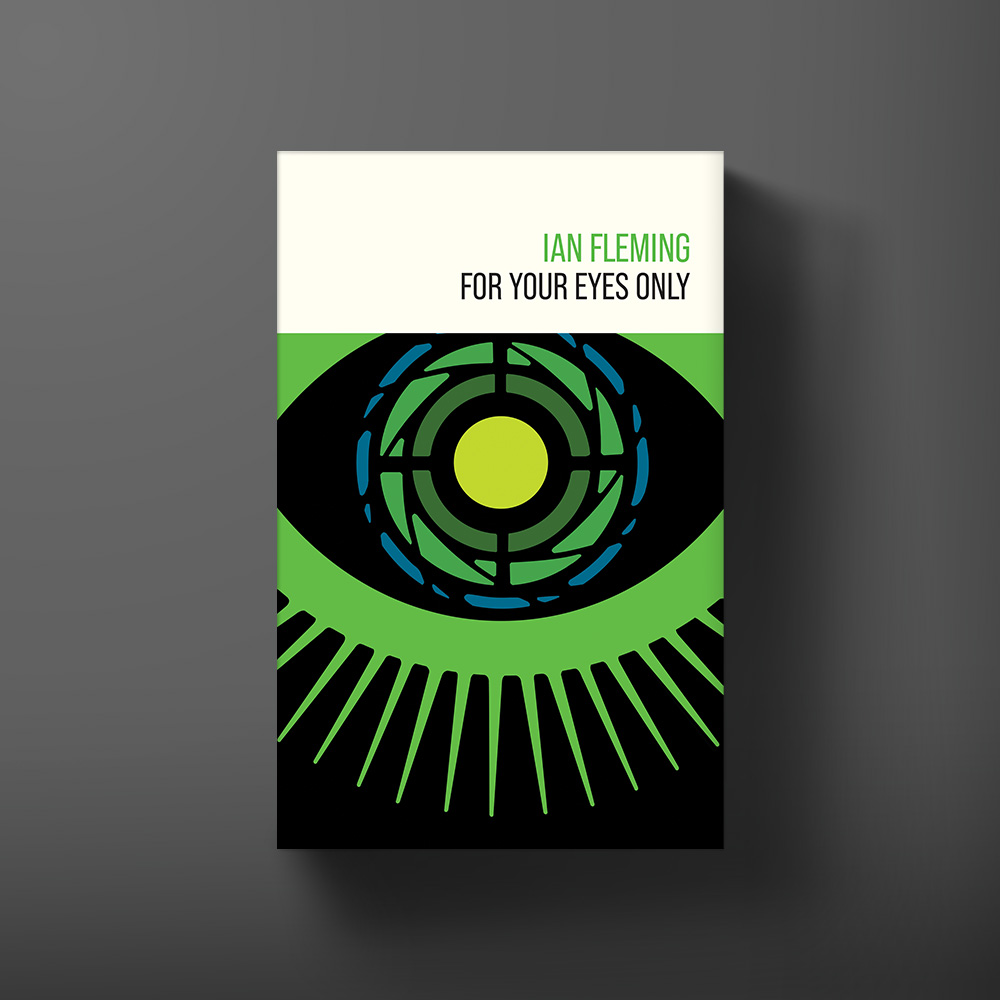
Hardback book cover for For Your Eyes Only by Ian Fleming, designed by Michael Gillette.
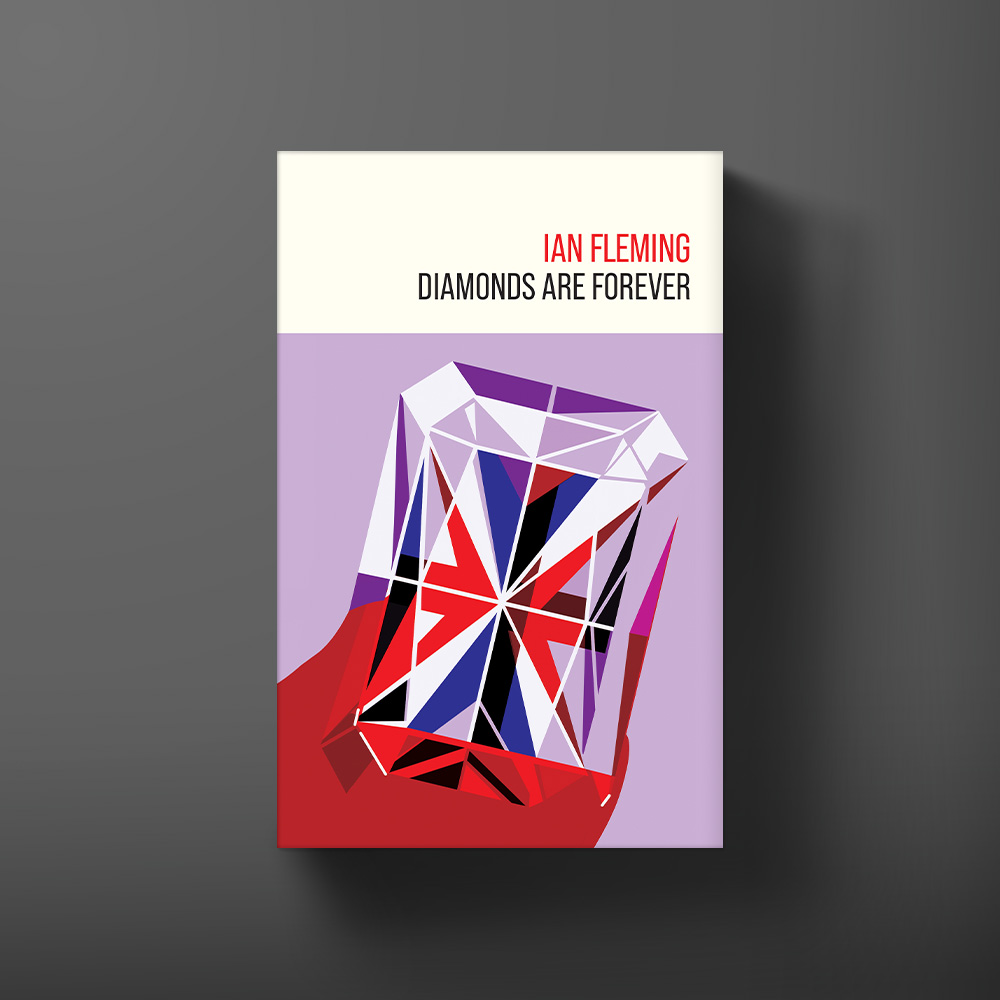
Hardback book cover for Diamonds Are Forever by Ian Fleming, designed by Michael Gillette.

The endpapers really add to this. How did you go about making them?

I’ve got this sketchbook with lots of ideas, where I would just draw endlessly, like a bank of ideas. I always tell my students to use their sketchbooks. Draw, draw, draw. Sketch it out. You never know what you’re going to get. The muse comes when you’ve got a pencil in your hand. I couldn’t understand how I was still coming up with ideas, but they were working. Sometimes, the more ideas you’re having, the more ideas they have. I don’t know how it works, but that’s how it works.

Many of them are like optical illusions. This must have been fiddly and time-consuming?

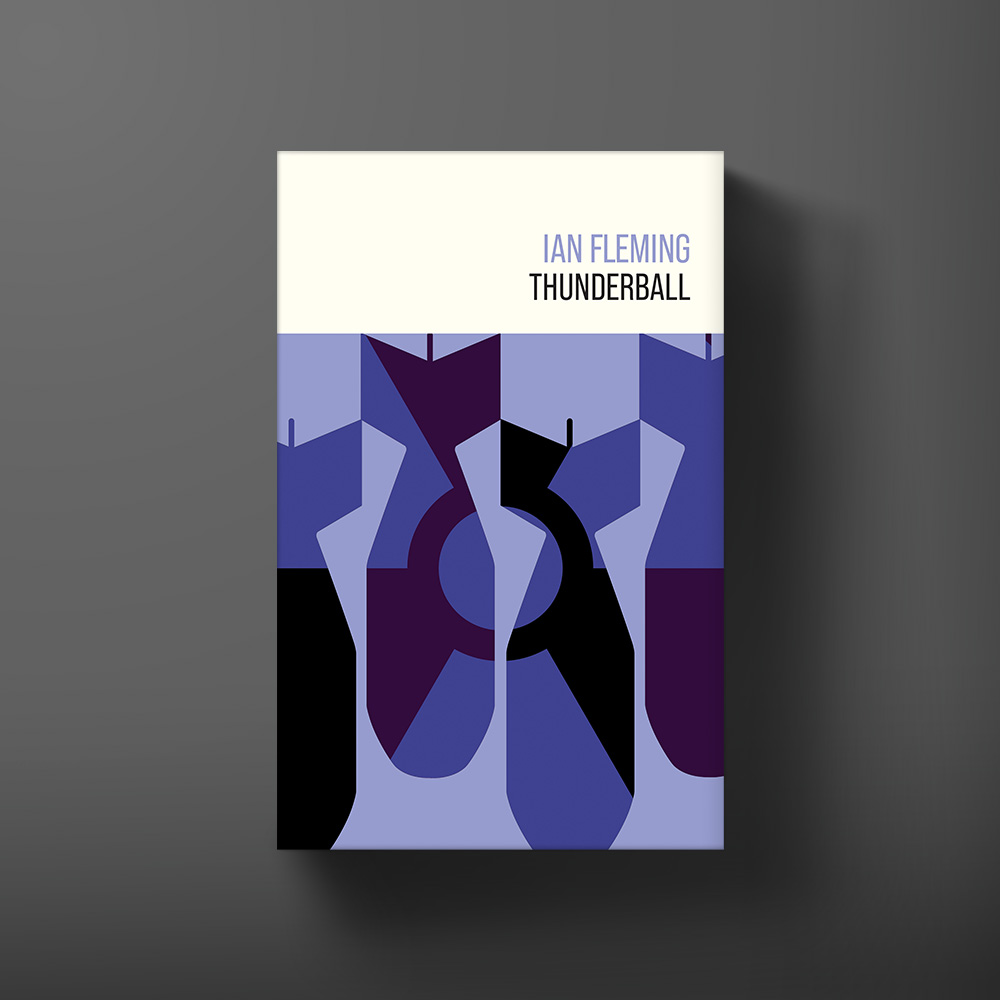
They’re techniques I taught at college: concept art and digital design. So I know how to manipulate things that way and make them repeat. Sometimes they work and sometimes they don’t. Like for Thunderball with the silencer that almost looks like a crucifix – that’s a motif that worked really well. I was amazed at how I was still doing all the endpapers right down to the wire. It takes a long time. I want to give some value for money there. I know the expectancy of being a fan of something and the disappointment when it’s shabbily treated. I want to speak to that in the Bond world.

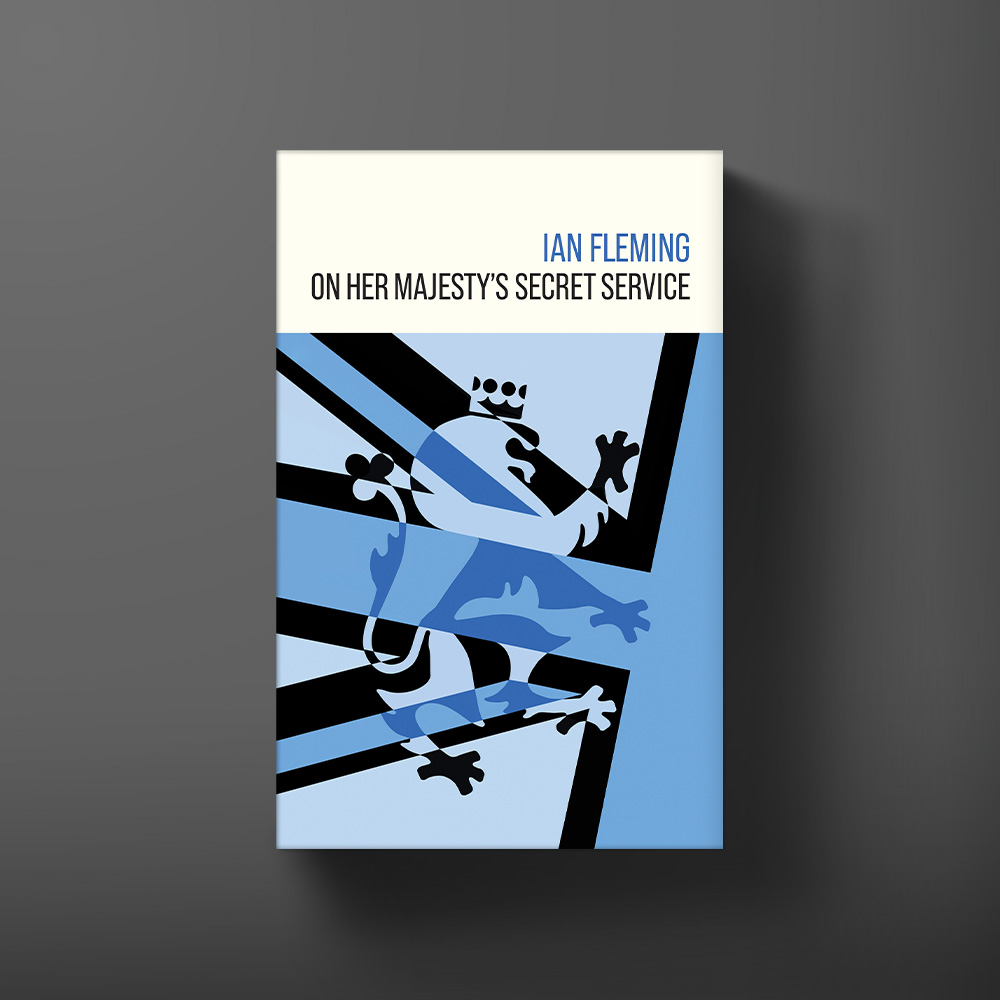
Hardback book cover for On Her Majesty's Secret Service by Ian Fleming, designed by Michael Gillette.
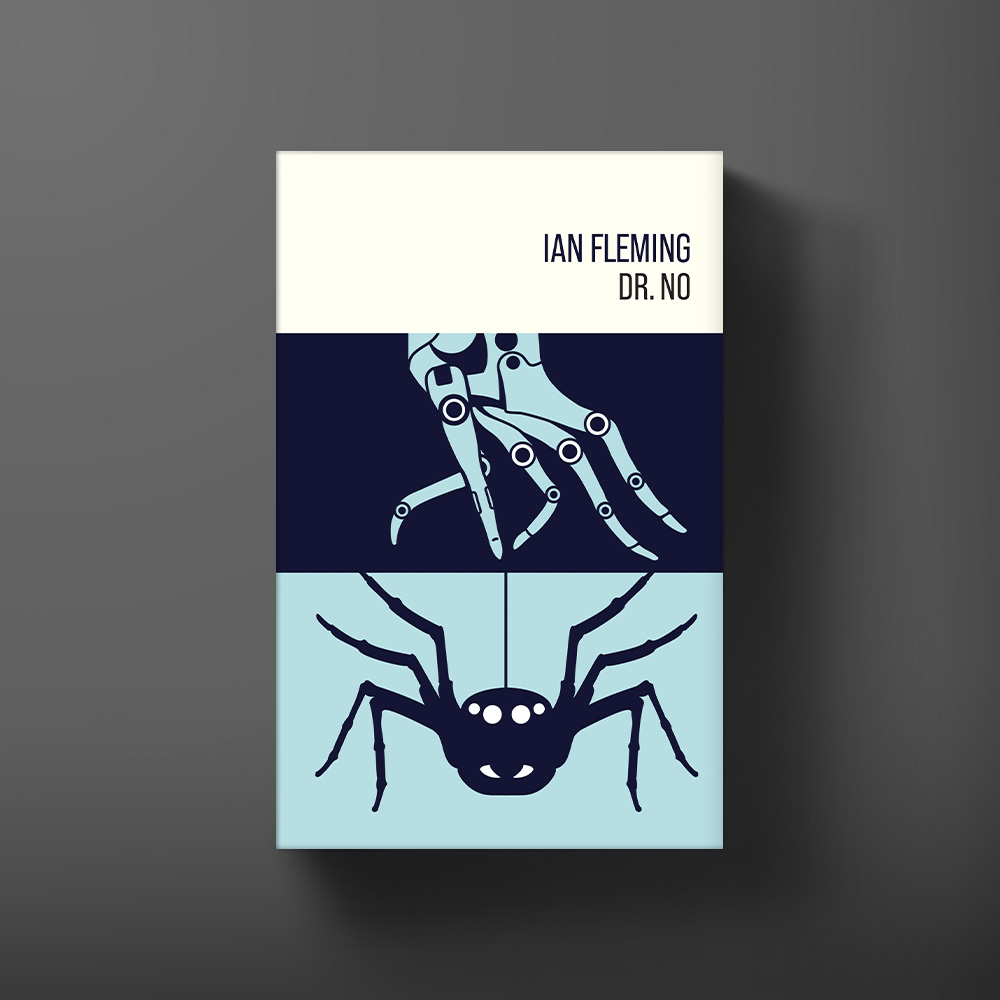
Hardback book cover for Dr. No by Ian Fleming, designed by Michael Gillette.

For the centenary editions, you decided not to use any guns. Why was that and what was different for these editions?

We just don’t want to glamorise guns, really. They’re still not gun heavy but they just work so well. I feel they draw on the action of the books a lot more than the previous covers. If there was a big wheel of things, this series draws on them: gadgets, some girls, some guns, some death, some bombs… The whole world of it has become so iconic that it’s so much fun to play around with that stuff. I’m not reinventing the wheel, just putting some good rims on it, trying to combine things in a new way to make you see them slightly differently. It’s so much fun just to play around with that stuff, it’s why everybody loves James Bond.

The wheel is a great analogy. The designs draw on so many elements, but then they feel cohesive at the same time. Was this hard to achieve?

That is the difficult thing to pull off. When I was at college, I could make really good images of things, but I could never make a second one the same. I couldn’t make a cohesive series of things, which is a bit like where AI is currently at. It can’t make a cohesive set of ideas. It’s taken me a long time to be able to pull that manoeuvre off. I do sometimes wonder how long it will be before AI makes that leap.

I try to ask myself, ‘what is a human response to this?’ Is this natural or is this synthetic? Leonardo da Vinci said that 98% of people create nothing but excrement. A lot of work that I’ve done wasn’t very good, but I was sharpening the axe to do something which was good.

Hardback book cover for Thunderball by Ian Fleming, designed by Michael Gillette.
Hardback book cover for The Man with the Golden Gun by Ian Fleming, designed by Michael Gillette.

What are you doing in your work to combat these fears? What would you teach to your students?

Look at Ian Fleming, he didn’t wait for the muse. He went on holiday and then bombed them out. But they’ve endured somehow. Something went on those pages that’s well beyond what you could ask a machine for. And I think it’s his complicated human nature that’s connected with people. Whether they know the books or not, there’s something about the complicated nature that he has put into James Bond that has endured. Bringing it back to the books, I view this as a vote for the continuation of holding something in your hand and connecting with it. I hope that the physical world is going to continue, and things like books had better be good in order to survive. We’ve all got to try a bit harder at it, I think, to be more considered. That’s why it’s so exciting that you’re doing it yourself. You know your product and your mind enough to know when something is right or not, and you know it’s not about what’s new, but what’s true. I think that’s what people want to respond to.

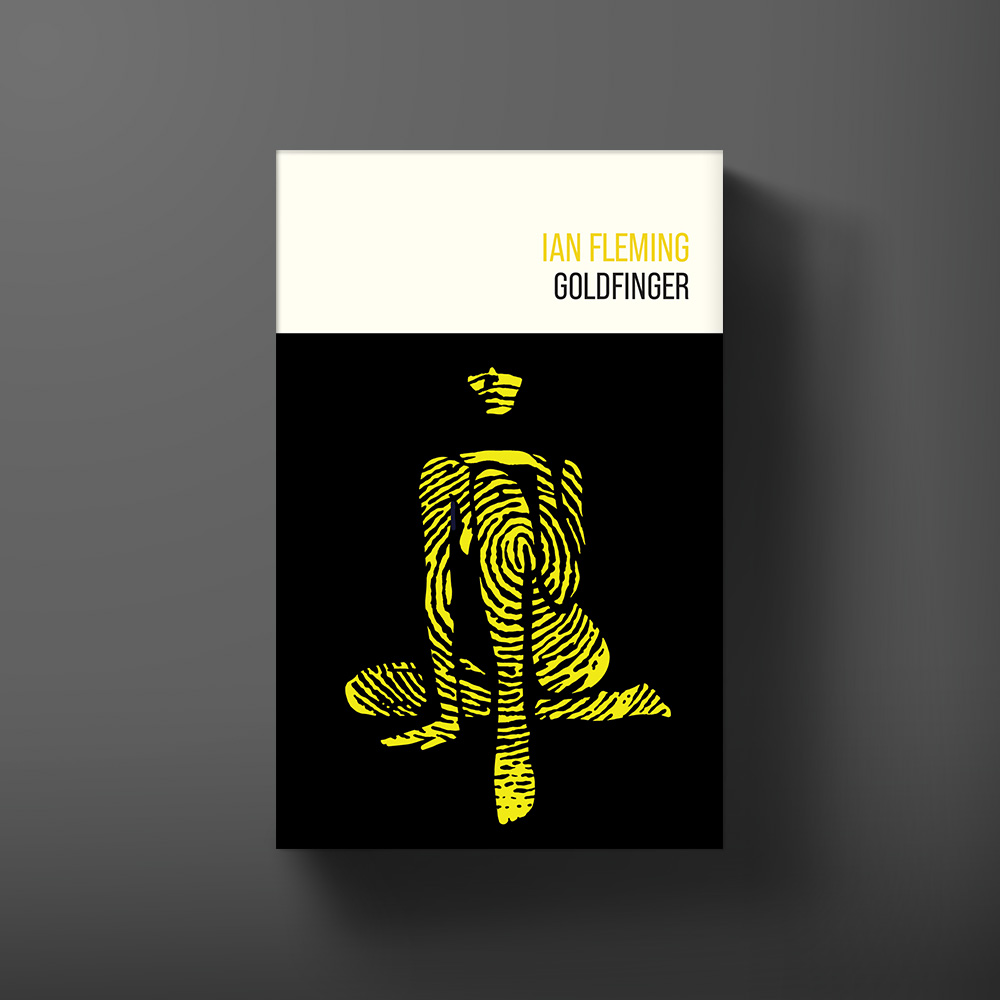
Hardback book cover for Goldfinger by Ian Fleming, designed by Michael Gillette.
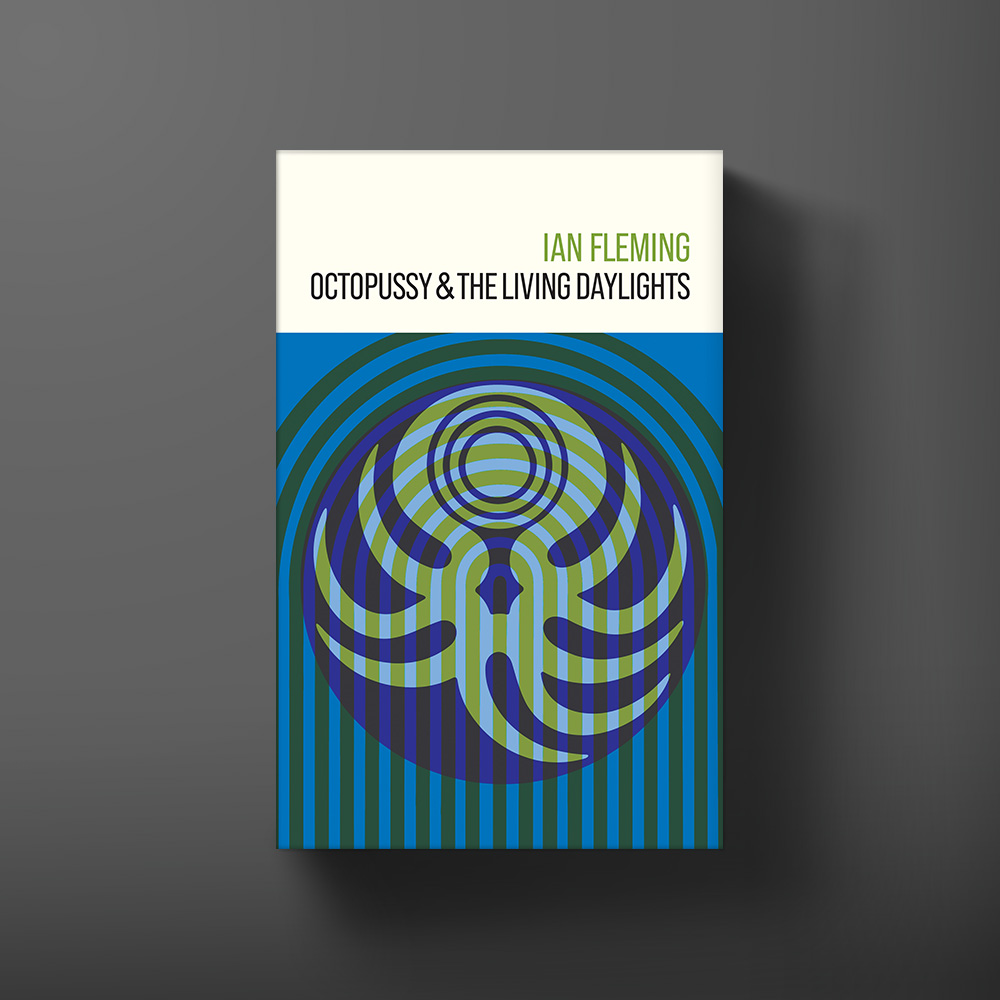
Hardback book cover for Octopussy and the Living Daylights by Ian Fleming, designed by Michael Gillette.

Check out more of Michael’s work here and find the full range of books and art prints at our shop.

Fleming’s Felix: From The Beginning

Raymond Benson gives us an insight into the life and origins of Felix Leiter.

I love Felix Leiter. Always have. Ever since I first read Ian Fleming’s novels in the 1960s. While it was certainly the character of James Bond who lit a fire under me at a very young age, I identified with Felix. After all, Felix was a Texan. So was I. In the premiere book, Casino Royale, Bond reflects that “good Americans were fine people and that most of them seemed to come from Texas.”

Where did the author find his inspiration for Felix Leiter? We really don’t know. Felix’s first name was one of the middle names of Fleming’s longtime friend, John Felix Charles Bryce (but everyone knew him as “Ivar”). The surname came from Fleming’s Washington, DC friends, socialites Tommy and Marion “Oatsie” Leiter. Neither of them were Texans. Did Fleming know any Texans? I am not aware of any evidence to that effect.

Hardback book cover for Casino Royale by Ian Fleming, designed by Michael Gillette.

Unless one has read Fleming’s books, a Bond fan might not know the “real Felix.” While several fine actors have portrayed the character on film, a faithful incarnation of Fleming’s Felix has never been seen.

Allow me to paint a portrait of Ian Fleming’s Felix Leiter. Felix is Bond’s closest ally in six of the novels. At first, he’s with the CIA. After Felix loses a right arm and a leg to a shark in Live and Let Die, the CIA lets him go; however, he then finds work with Pinkerton’s Detective Agency. Felix remains with Pinkerton’s until Thunderball, in which Allen Dulles (the CIA chief) puts Felix on the reserve force. Felix is again placed on the reserves in The Man With the Golden Gun.

When Bond meets him in Casino Royale, Felix is about thirty-five. He is tall and thin, and he wears his clothes “loosely from his shoulders like Frank Sinatra.” Although his movements and speech are slow, Bond gets the feeling that there is plenty of speed and strength in Felix, and that he would be a “tough and cruel fighter.” Fleming goes on to describe him in Chapter 7:

‘As he sat hunched over the table, he seemed to have some of the jackknife quality of a falcon. There was this impression also in his face, in the sharpness of his chin and cheekbones and the wide wry mouth. His grey eyes had a feline slant which was increased by his habit of screwing them up against the smoke of the Chesterfields which he tapped out of the pack in a chain. The permanent wrinkles which this habit had etched at the corners gave the impression that he smiled more with his eyes than with his mouth. A mop of straw-coloured hair lent his face a boyish look which closer examination contradicted.’

One of the ties between the Englishman and the American may be that they enjoy being barroom rivals. There is almost always an obligatory scene in which the two visit a bar and drink themselves silly. In Casino Royale, Bond educates Felix on the making of a “real” martini, and Felix remembers the formula in subsequent novels. In Thunderball, Felix seems to have studied martinis thoroughly, for he, in turn, educates a barman in a Nassau hotel on the ingredients of that real martini. Felix knows when he’s being had; the martinis at the hotel are served with inadequate portions of liquor. Felix explains to the barman: “… here’s one who’s dry behind the ears. A good barman should learn to be able to recognize the serious drinker from the status-seeker who wants just to be seen in your fine bar.”

Kingsley Amis, in The James Bond Dossier,seems to think that Felix has no personality. Nonsense! (Sorry, Kingsley.) Felix’s personality is clearly revealed in his manner of speech and the subjects about which he speaks, as well as through several of the character’s idiosyncrasies. For instance, Felix is a jazz fan, and he escapes a nasty scrape in Live and Let Die by “arguing the finer points of jazz” with his black captor. Felix tells Bond many anecdotes about America while giving him guided tours of New York, Saratoga, or Florida. He and Bond have a good laugh at the quaint citizens of St Petersburg, and they take pleasure in complaining about the commercialism of the Bahamas’ hotels.

Felix is actually a bit of a goofball! He is so buoyant that the sun always seems to shine on him when he’s around Bond. Even after his mishap with the shark, Felix retains his upbeat humor. He’s the kind of joker who comes up behind Bond (in Diamonds Are Forever), sticks his hook against Bond’s back, and says, “All right, Limey. Take it easy unless you want lead for lunch.”

Most importantly, though, is the fact that Felix reinforces the theme of Friendship running through the series. The bond between the two men is extremely heartfelt. Felix Leiter, of all of Bond’s allies, brings to the books a warmth and joviality which is missing most of the time.

When Bond first encounters Felix in Casino Royale, the Texan is amiable and boyish. Fleming succeeds in giving the character a personality that is distinctly American. But the CIA man is a mere shell of what is to come. Not much is revealed about Felix in Casino Royale, but he is an immediately likeable figure. Fleming was wise in using Felix as the “cavalry to the rescue” when Bond loses all his money at the baccarat table.

Felix is further developed in Live and Let Die, where he has a strong supporting role. His cheeriness is an excellent complement to Bond’s seriousness, almost a breath of fresh air. Felix acts as Bond’s guide to America, and much of Fleming’s sense of humor is revealed in the Texan’s speeches: “You can get through any American conversation,” advised Leiter, “with ‘Yeah,’ ‘Nope,’ and ‘Sure.’ The English word to be avoided at all costs,” added Leiter, “was ‘Ectually,’” Bond had said that this word was not part of his vocabulary.

The friendship between Bond and Felix comes to fruition in this second novel. From the first chapter, in which the American surprises the Englishman by greeting him in a hotel room, to the tragic incident in which Felix almost loses his life to a shark, the men are inseparable. They barhop through Harlem together, sharing meals, conversation, and clue-gathering. Despite their differences in background, the men hit it off as if they’ve been friends since childhood. Bond seems to depend on this alliance with a male friend—it means more to him, sometimes, than his relationship with any woman in the novels. Bond even has trouble keeping the emotion from choking his voice in Chapter 17 when he learns that Felix, after having lost half an arm and half a leg, will live after all.

‘Bond’s heart was full. He looked out of the window. “Tell him to get well quickly,” he said abruptly. “Tell him I miss him.”’

Interestingly, Fleming killed off Felix in the first draft of the novel. It was the author’s American literary agent, Naomi Burton, who objected and talked Fleming into keeping Felix alive. She recognised the appeal of the character.

One of the highlights of Diamonds Are Forever is Bond’s reunion with Felix. Bond seems to remove his cold, stone-faced exterior when he’s around the Texan. Their tight friendship is apparent in their conversation and actions. Bond again allows some emotion to reveal itself when he says goodbye to Felix toward the end of the novel in Chapter 21:

‘Bond felt a lump in his throat as he watched the lanky figure limp off to his car after being warmly embraced by Tiffany Case. “You’ve got yourself a good friend there,” said the girl.

“Yes,” said Bond, “Felix is all of that.”’

Felix accompanies Bond to Saratoga and again pops up in the nick of time in Las Vegas. Now Felix is working for Pinkerton’s Detective Agency, “The Eye That Never Sleeps.” Felix does not seem bitter at all about carrying a steel hook for a right hand or limping through life with a wooden leg. He is as good-humored as ever. Perhaps this conscious negation of his physical disabilities is one reason why Felix remains a useful friend to Bond. Their reunion on the streets of New York is a joyful moment: they immediately proceed to their usual form of entertainment, i.e., eating and drinking. Besides procuring Bond’s drinks, Felix takes the liberty of ordering the Englishman’s meal. Felix is once again very helpful as Bond’s tour guide. He “mansplains” everything Bond needs to know about the Saratoga race track, Las Vegas gambling statistics, and American life.

The character appears only briefly at the end of Goldfinger, again in the form of cavalry to the rescue. He saves Bond’s life and the Englishman admits that Felix is always good at doing so. Felix, who still works for Pinkerton’s, is the same cordial character who is so refreshing to have around. It’s too bad his appearance is so brief in the book.

Hardback book cover for Thunderball by Ian Fleming, designed by Michael Gillette.

Felix has one of his biggest roles in Thunderball. The alliance between Bond and Felix is the tightest it has ever been. The loyalty these two men have for each other is one of the warmest qualities of the book—the sequence in which Bond meets the CIA agent at the airport and realizes it’s none other than Felix is an uplifting moment. Then it seems all they want to do is drink each other under the table after gorging themselves with meals. Describing the “chopped tenderloin of beef” at the Royal Bahamian, Nassau in Chapter 12, Felix complains, “This is hamburger and bad hamburger. The French onion rings were never in France, and what’s more, they’re not even rings. They’re oval.”

Bond and Felix constantly kid each other, much like how I understand the relationship between Ian Fleming and his American friend, Ernest Cuneo, would have played out. For example, in the following Chapter 14, the men are using the cover of a property-seeking English businessman and his American lawyer when they meet in a hotel restaurant:

‘Bond joined Leiter at a corner table. They both wore white dinner jackets with their dress trousers. Bond had pointed up his rich, property-seeking status with a wine-red cummerbund. Leiter laughed. “I nearly tied a gold-plated bicycle chain round my waist in case of trouble, but I remembered just in time that I’m a peaceful lawyer. I suppose it’s right that you should get the girls on this assignment I suppose I just stand by and arrange the marriage settlement and later the alimony.”’

Felix doesn’t seem to have any bitterness about the loss of his right hand and leg. Toward the end of the book in Chapter 22, the Texan insists on joining Bond in the underwater ambush of Largo’s men:

‘Felix Leiter interrupted. He said obstinately, “And don’t think you’re going to leave me behind eating Virginia ham. I put an extra foot-flipper on this”—he held up the shining hook—”and I’ll race you over half a mile any day, gammy leg and all. You’d be surprised the things one gets around to improvising when someone chews off one of your arms. Compensation it’s called by the medics, in case you hadn’t heard about it…”

Leiter turned to Bond. “You goddam shyster. Thought you were going to leave your old pal behind, didn’t you? God, the treachery of you Limeys! Perfidious Albion is right, all right.”

Bond laughed. “How the hell was I to know you’d been in the hands of rehabilitators and therapists and so on? I never knew you took life so seriously. I suppose you’ve even found some way of petting with that damned meathook of yours.” Leiter said darkly, “You’d be surprised. Get a girl round the arm with this and you’d be amazed the effect it has on their good resolutions.”’

The character’s final Fleming appearance is in The Man With the Golden Gun. Although there is no traditional drinking scene between Bond and Felix (a disappointing first), the sequences in which the Texan appears are high points. As usual, Felix pops up in the nick of time at the novel’s end, clearing the way for Bond to clean up the business at hand. And again, as usual, Felix is hurt and can’t participate in the final battle. Felix escapes this adventure by breaking his one good leg. Then, in a half-kidding, half-poignant moment in Chapter 15 as he leaves the hospital on crutches where Bond is under medical care, Felix tells Mary Goodnight:

‘“Okay, Miss Goodnight. Tell matron to take him off the danger list. And tell him to keep away from me for a week or two. Every time I see him a piece of me gets broken off. I don’t fancy myself as The Vanishing Man.” Again he raised his only hand in Bond’s direction and limped out.’

It is my great pleasure and privilege to be inserting into Ian Fleming’s timeline a special tale featuring someone I’ve considered a friend for a long time… Felix Leiter in The Hook and the Eye.

For more insights from Raymond, check out his book, The James Bond Bedside Companion.

Interview: Edmund Weil On Cocktails

Meet cocktail maestro Edmund Weil, part of the team behind essential cocktail book, Shaken: Drinking with James Bond and Ian Fleming. A distant relative of Ian Fleming, Edmund introduces a range of James Bond and Ian Fleming inspired cocktails to make at home, presenting each recipe with knowledge and passion for both the literary connection and the art of mixology.

The book is the work of experienced bar keepers – and real life husband and wife team – Edmund Weil and Rosie Stimpson, together with bar industry legends Bobby Hiddleston and Mia Johansson. Here we talk to Edmund about how the project came together and what makes the perfect cocktail.

We love the detail behind each drink – something that Fleming himself was particular about in his own books. How did you achieve this?

The selection of passages from the books and the names and themes selected by Ian Fleming Publications made it a real pleasure to research and execute the cocktail creation and write them up. In my experience it is much easier to create the perfect cocktail with a clear framework; whether it’s a theme for a menu, or thinking about a very particular clientele, or as in this case a literary inspiration.

How did you first get involved in the world of speakeasies?

My wife Rosie and I have always loved vintage style and music; that was always going to be the basis for our dream of opening a bar. Our first bar, Nightjar, was also located underground with an unassuming doorway between a café and a chicken shop, so the concept of a hidden bar really lent itself to the space. Luckily the drinking public at the time were also very taken by the speakeasy concept and the craft cocktail revolution, so it became very popular very quickly.

Hardback book cover for Shaken, Drinking with James Bond and Ian Fleming, the official 007 cocktail book.

All of your bars, Nightjar, Oriole and Swift are named after birds. What was the inspiration?

My grandfather, who was Ian Fleming’s cousin, had a great passion for birds and passed that on to me. It was very interesting to learn while researching this book that this passion was shared by Ian Fleming himself. His descriptions of nature (and birds in particular) are rivalled only by his descriptions of food and drink.

How have drinking habits changed from Ian Fleming’s day in the 1950s to now?

By the 1950s the first golden age of the cocktail was already on the wane. Prohibition, followed by the 2nd World War, had eroded much of the cocktail knowledge and finesse that had built up during the Belle Epoque. Fleming, on the other hand, was a greater connoisseur than most. Some of his preferred methods are a little unorthodox by today’s standards (you won’t find too many bartenders shaking their martinis for instance!). Perhaps the biggest societal change however is quantity; if you look at Bond’s alcohol consumption over the timeframes of the novels it works out at about 92 units per week! Today’s drinkers are as a rule, more abstemious and more discerning, which means that creating special but responsible drinking experiences for guests is the biggest challenge for bar operators.

What makes the perfect cocktail?

The perfect cocktail must have excellent ingredients, which need to be mixed in harmony and balance. With some ingredients (especially pungent amari) even a  few drops can change the balance of a drink completely. Likewise it is often the simplest of drinks in which that harmony is hardest to attain. That’s why I would advise any budding cocktail-maker to always taste their drinks before serving. This gives the chance to rebalance the drink if it’s off.

Which of the 50 cocktails in the book is your personal favourite?

I’m a sucker for ‘stirred down and brown’ drinks with pungent flavours, so the Trueblood is high on the list. It’s based around barrel proof blended Japanese whisky, with strong support coming from Campari, crème de dassis and sweet vermouth. The perfect after-dinner digestif.

Which of the recipes would you suggest a cocktail beginner start with? 

The Moneypenny is an excellent choice. A rose and cucumber-tinted Collins, it’s refreshing and easy on the palate, but still has enough flavour elements to turn someone on to the joy of mixing drinks.

Which is best for a party?

Without doubt the Old Man’s Thing. Adapted from a punch that Ian Fleming would serve to his guests at GoldenEye, it is a delicious classic rum punch with a theatrical element in the flaming float of overproof rum.

Do you have a favourite literary Bond character?

Tiger Tanaka. The ultimate badass.

And a favourite Bond novel?

Casino Royale – it is the grittiest and most realistic of the Bond novels (he even falls in love!). I love the vividness of the gambling scenes and Vesper Lynd is a fantastic femme fatale.

Check out Shaken: Drinking with James Bond and Ian Fleming for yourself in our shop.

Interview: Mark Pearson On John Pearson

Featured

We sit down with Mark Pearson to learn more about his father John’s work and 007’s impact on his own life. Mark has written an introduction in the latest edition of his father’s book, James Bond: The Authorised Biography.

Was Bond a big part of your upbringing?

I was exposed to the first of the Bond films by my father. He took a party of young children on my birthday to see Dr. No. Looking back on it, it was a slightly inappropriate thing to do for an eight-year-old child but there you go, it was fun. And all my friends thought it was really cool. Bond was quintessentially cool. And there were also the conversations around the dinner table when my father came to write James Bond: The Authorised Biography. They often centred on ‘Well, what would Bond have done in these circumstances?’ We’d be sitting around and talking about behaviours and people. My father was very open to the idea of getting ideas about Bond from us as children, which is slightly odd.

In your introduction, you write about some of the characters being based on people you knew growing up. What is this experience like, reading fictionalised versions of people from your real life?

One of the funniest for me is the depiction of my grandmother. In the book, James Bond has a cleaning lady who looks after his life and she’s much more than the cleaning lady. Sort of a female butler, if you like. And she sniffs in disapproval whenever Bond does something that she doesn’t like, and this is exactly what my grandmother used to do. We all knew that when my father wrote that, he was actually writing about his own mother, our grandmother, and we found that quite funny. Then there was the inclusion of our landlord as a porter at Blades, John Prizeman. And then the rather more surprising one, which was when we discover that James Bond’s mistress has been sponsored by a rich armament millionaire, who was named after Richard de Combray. He was a family friend who in fact was gay, so very unlikely to sponsor a female prostitute. Very unlikely to sponsor a prostitute full stop. Richard was a lovely, delightful man, who couldn’t have been less like an arms dealer.

The biography is so deeply researched. Do you recall anything about your father’s research, writing and creative processes?

My father was both a meticulous researcher and note-taker. When he was writing The Life of Ian Fleming he interviewed about 140 people. He kept every single one of the notes from that and so one of the things that the Queen Anne Press did before my father died was to publish the notes. The reality is that you could produce something similar for the Gettys or the Kray twins. You could do something similar for the Churchills because he kept meticulous notes of the conversations he had with people. But sometimes those notes were not exactly tactful. Coming back to our core subject here, which is Bond – Admiral Godfrey was clearly the model for M, and my father wasn’t taken by him when they met. What’s funny about that story, is that I think it was a two-way thing. I believe Admiral Godfrey was thinking ‘Is this whippersnapper, at 34, mature enough to write the book about my friend Ian?’ What we’re left with in the notes are comments about Admiral Godfrey’s appearance being fundamentally rundown, wearing rather tired looking brogues, but that you could still see a glint of the old M, or C, in his eyes, you could see the ruthlessness. I thought that was rather revealing and compelling.

How do you feel about the new edition of the James Bond: The Authorised Biography?

Well, I think let’s start with the really obvious thing – the cover of the new book is fun. Fun is actually central to this book, and it’s an opportunity to reengage with different populations. But the fun that goes with this is great: having a kit which any self-respecting spy can take into a mission. It feels very 60s. But I also think this edition celebrates the fact that this book is 50 years old. It’s actually 50 years young and in a curious way it’s still quite relevant. It’s still fresh. And I think people of my children’s and, dare I say, even my children’s children’s generation will enjoy this book.

Why do you think 007 and everything around 007 is so enduring?

I think it’s a mixture of things. There are massive overlays between a perception of what it meant to be British, coupled with the intelligence world and the lack of information about it, which is true to this day, although perhaps less so than it was at the time when Ian was writing. Coupled with this enormous sense of derring-do and a belief that one person could make a difference. That’s also very compelling, I think. Without question in the 50s and 60s we’d come out of a world war and people were desperate to have something which gave them a more positive view and a bit of fun. So I’ll come back to the theme of fun: the enduring theme of Bond, for me anyway, is fun.

What is your favourite James Bond book?

Diamonds Are Forever. An absolutely compelling page-turner. It is interesting, isn’t it? I was given the Bond books as a child. I remember being completely befuddled by Casino Royale, I didn’t understand it. Although my father did take me and my brother to Monte Carlo to look at a casino in action. My brother was eight and I was nine. And we were not allowed in. My father went in to do his research on gambling which took him a couple of hours. So we were parked, opposite, quite literally parked in a car. And he went off and did his research, and that was that really.

Hardback book cover for Diamonds Are Forever by Ian Fleming, designed by Michael Gillette.

Had he given you Casino Royale before or after the casino visit?

Oh after that. But Ian gave my father a copy of Casino Royale, a first edition, which he inscribed. In fact I’d love to track down this copy because it means a lot. It’s inscribed to my father and it says ‘Thank you for supporting me through the writing of these books’. If anybody out there knows where it is, I’d love to see if we can find a way of borrowing it back!

Finally, what is your favourite John Pearson book?

Well, I really do love this book. So I think I’ll just stick with that.

Learn more about the life and work of John Pearson here.