 Skip to main content
NEWS
The James Bond Book Club Selection for November 2026 is The Spy Who Came in from the Cold
BECOME A FLEMING INSIDER > JOIN HERE

The James Bond Book Club Selection for November 2026 is The Spy Who Came in from the Cold
Posted on 6 November, 2026
“He met failure as one day he would probably meet death, with cynical resentment and the courage of a solitary.”
This month we are reaching for another espionage and Cold War classic, John le Carré’s The Spy Who Came in from the Cold.
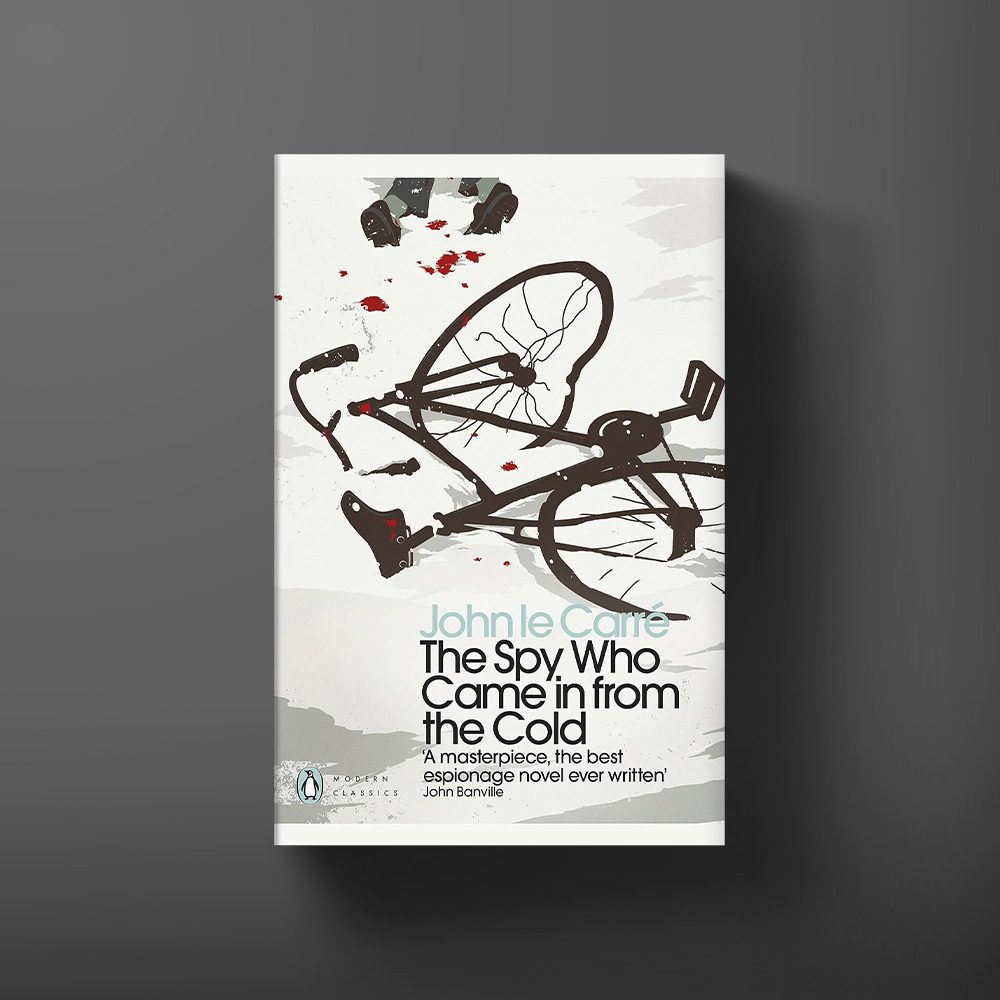
Alec Leamas is tired. It’s the 1960s, he’s been out in the cold for years, spying in the shadow of the Berlin Wall for his British masters. He has seen too many good agents murdered for their troubles. Now Control wants to bring him in at last – but only after one final assignment.
He must travel deep into the heart of Communist Germany and betray his country, a job that he will do with his usual cynical professionalism. But when George Smiley tries to help a young woman Leamas has befriended, Leamas’s mission may prove to be the worst thing he could ever have done.
From 1963, this spy story is a genre-defining classic.
John le Carré’s The Spy Who Came in from the Cold is widely regarded as one of the greatest espionage novels ever written. Published in 1963, it established le Carré as a major voice in spy fiction and helped redefine the genre, switching out glamorous adventures for a grittier, more morally complex view of Cold War paranoia. At the James Bond Book Club, we want to showcase the best of the best of spy fiction, and this is a novel that belongs firmly in that category.
Le Carré and Ian Fleming are often posed as two opposing types of spy writer: Le Carré’s hardened perspective on intelligence and moral compromise challenge Fleming’s world of glamour, thrills, adventure and, of course, larger-than-life villains. Fleming admired le Carré’s work, while le Carré was reluctant to be associated with the Bond phenomenon. Both authors, however, helped define how we imagine the world of espionage.
The Spy Who Came in from the Cold offers an opportunity to explore that variety within the genre. It’s time to discover the other side of the Cold War.
– Cynicism – What role does cynicism play in espionage and espionage fiction?
– Innocence – Is it possible to remain innocent in a world governed by ideological conflict, or does involvement inevitably mean complicity?
– Idealism – is idealism a form of moral courage, or the opposite?
J.B. Priestley ― Superbly constructed, with an atmosphere of chilly hell
Graham Greene ― The best spy story I have ever read
A. N. Wilson ― The master storyteller … has lost none of his cunning
Malcolm Gladwell ― I have re-read The Spy Who Came In From The Cold over and over again since I first encountered it in my teens, just to remind myself how extraordinary a work of fiction can be
William Boyd ― One of those very rare novels that changes the way you look at the world. Unflinching, highly sophisticated, superbThe Sunday Times – He can communicate emotion, from sweating fear to despairing love, with terse and compassionate conviction. Above all, he can tell a tale
John le Carré was born in 1931.In six decades, he 26 novels that came to define the espionage genre. The son of a confidence trickster, he spent his childhood between boarding school and the London underworld. At sixteen he found refuge at the University of Bern, then later at Oxford. A spell of teaching at Eton led him to a short career in British Intelligence (MI5 & 6). He published his debut novel, Call for the Dead, in 1961 while still a secret servant.
The Spy Who Came in from the Cold is his third novel and the one that secured him a worldwide reputation, which was consolidated by the acclaim for his trilogy, Tinker Tailor Soldier Spy, The Honourable Schoolboy and Smiley’s People. At the end of the Cold War, le Carré widened his scope to explore an international landscape including the arms trade and the War on Terror. His memoir, The Pigeon Tunnel, was published in 2016 and the last George Smiley novel, A Legacy of Spies, appeared in 2017. He died on 12 December 2020. His posthumous novel, Silverview, was published in 2021.
Read along with us throughout November and stay tuned for The Spy Who Came in from the Cold content!