New Release: The Facts of Death

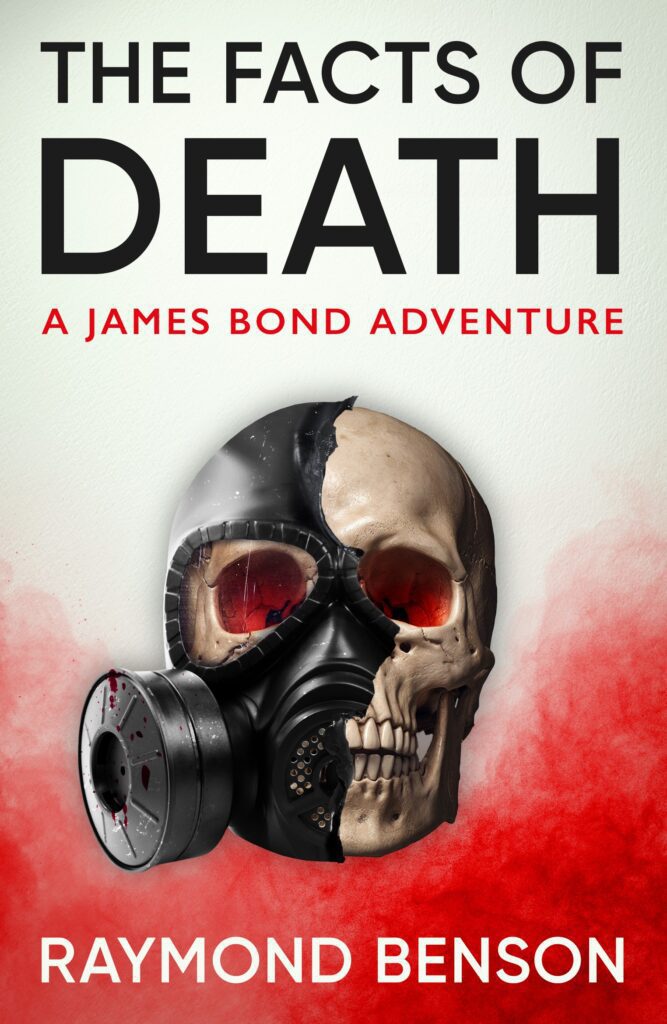
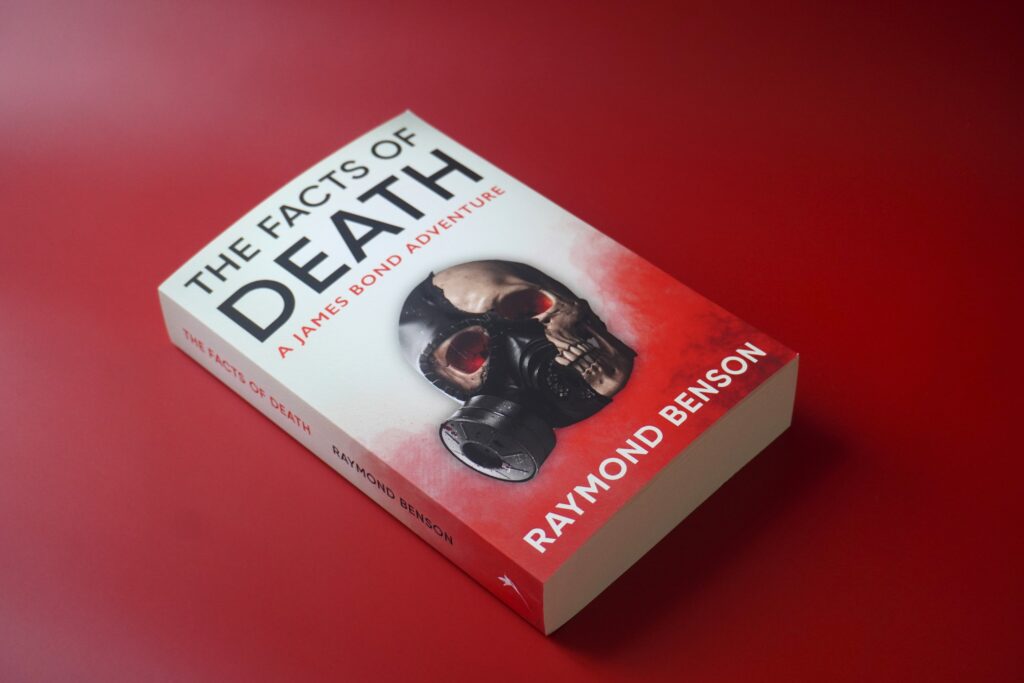
The Facts of Death, Raymond Benson’s second Bond novel is back in print with a new look.

The 18th James Bond adventure, rediscover this classic 007 continuation adventure in a brand-new paperback edition, featuring a new introduction from the author.

Book cover for The Facts of Death by Raymond Benson.

They call him the Number Killer. A calculating assassin who always leaves a numerical calling card. But now he’s picked the wrong victim – M’s lover – and James Bond is going to beat the odds and make things even.

From the desolate badlands of Texas to the crumbling ruins of Greece, the danger multiplies as Bond tracks his quarry to a sinister cult of fanatics shrouded in the teachings of the Greek mathmatician Pythagoras.

With a vicious cadre of killers trying to subtract him from the equation, Bond must infiltrate the cult and stop their chaotic computations – or the next number that comes up may be his own…

‘Benson pays homage to Fleming’s plots… imbues his Bond with enough honour, sexual prowess and action-hero skills to please the purist and enthrall the novice’ – Publisher’s Weekly

‘A postmodern treat for fans and newcomers’ – Kirkus Reviews

Order your copy at ianflemingshop.com

Raymond Benson and Stuart W. Howard, in Conversation

Go deeper into the world of Felix Leiter and celebrate the new audiobook release of ​The Hook and the Eye with this in-depth conversation between author Raymond Benson and narrator Stuart W. Howard.​

Find out how Stuart approached the character, the recording process and learn about some of the projects that they’ve worked on together – including a certain stage play of Casino Royale.​

New Release: The Hook and the Eye audiobook

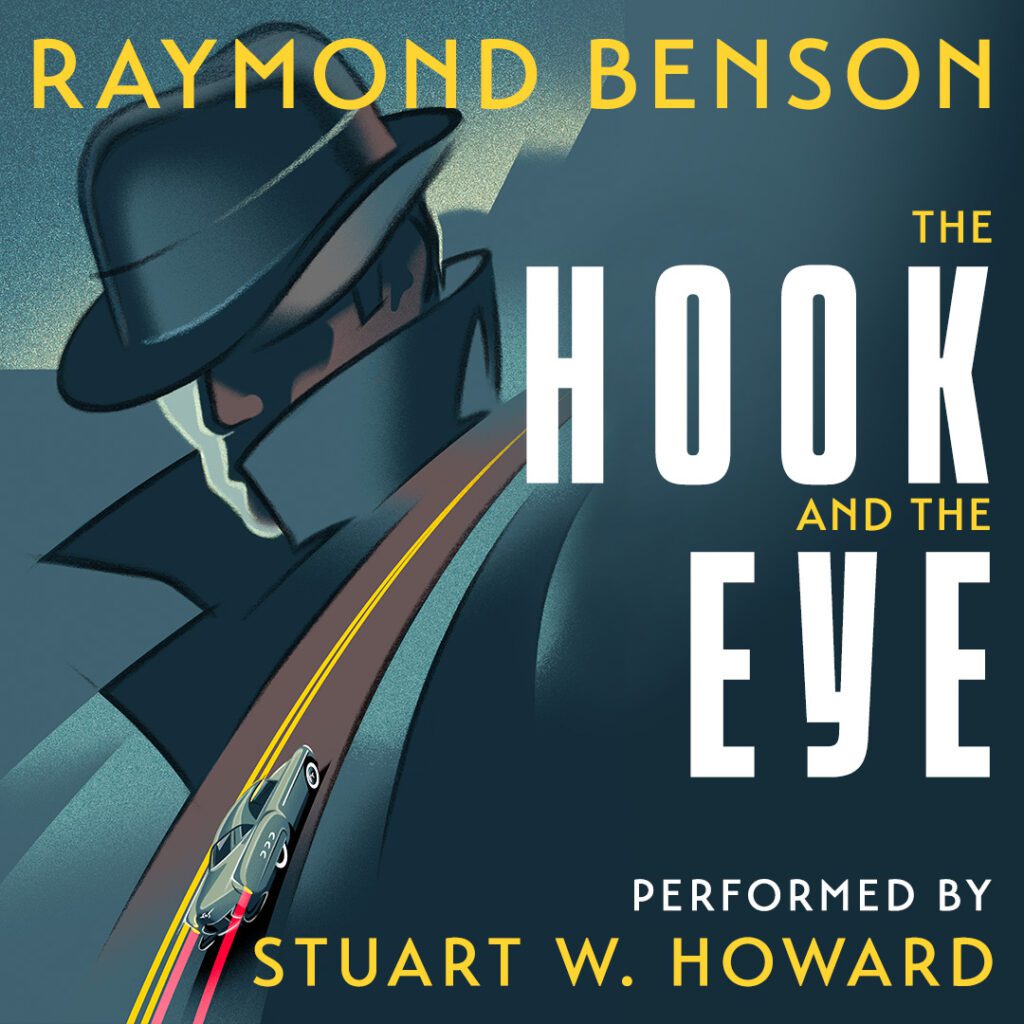
The Hook and the Eye, Raymond Benson’s novel focused on Felix Leiter, James Bond’s trusted American ally, is out now in a new audiobook edition.

Performed by Stuart W. Howard, the audiobook brings Benson’s story to life, and transports listeners to the America of 1952, where deception, intrigue, and a mysterious beauty await…

Audiobook cover for The Hook and the Eye by Raymond Benson

It is 1952. Felix has lost his job at the CIA and finds himself working for the Pinkerton Detective Agency. What starts as a simple surveillance job turns into a matter of life and death when Felix stumbles upon a murder and a cabal of spies embedded in Manhattan.

Hired to transport the impossibly beautiful and impossibly secretive Dora from New York to Texas, Felix is thrust into a non-stop adventure, where danger and deceit lie in wait around every bend in the road.

The Hook and the Eye is a mystery, a romance, a spy story, a road trip tale and a postcard of a lost Americana. It is Raymond Benson at his very best.

EXPLORE MORE

Fleming’s Felix: From The Beginning

Interview: Raymond Benson On The Hook And The Eye

Hooked On Leiter: The Video Diary

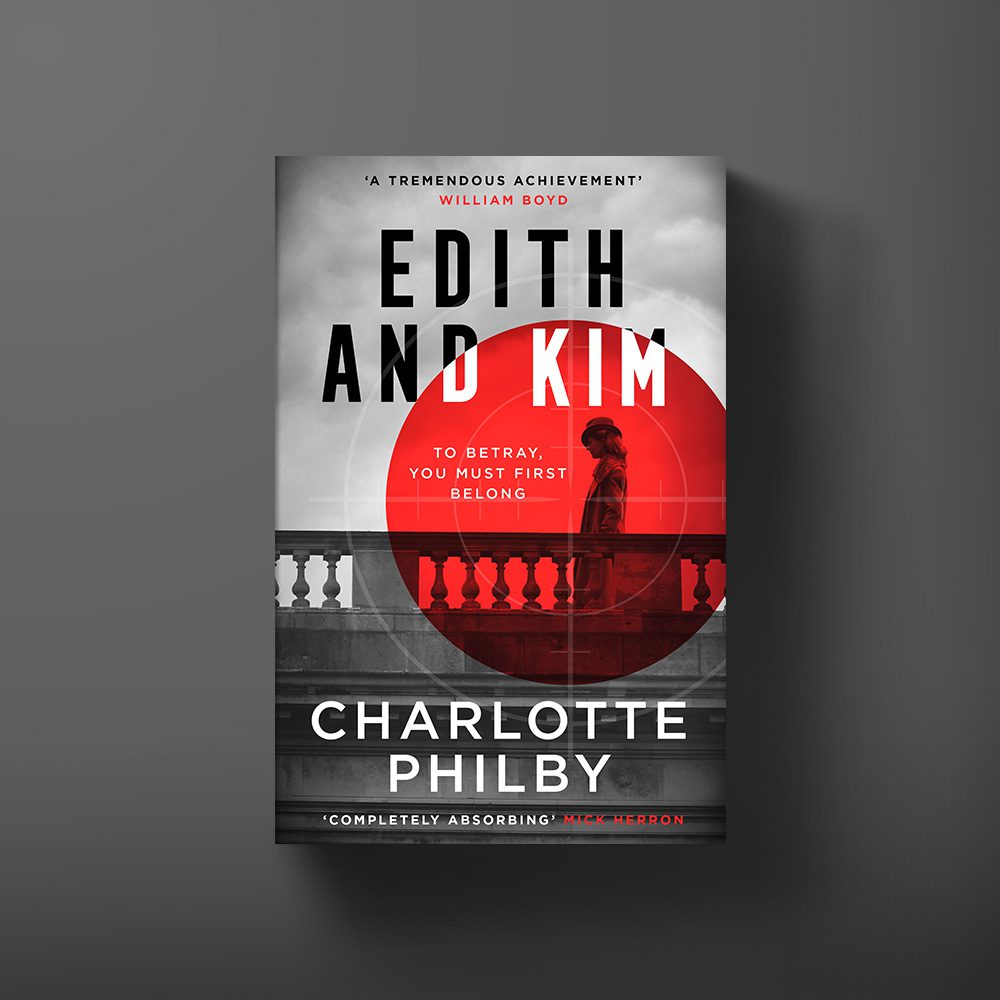
The James Bond Book Club Selection for August 2026 is Edith and Kim

Ian Fleming’s wartime career at Naval Intelligence meant he moved in the same circles as many extraordinary and mysterious figures. For our August Book Club selection, we’ve chosen a novel inspired by one of the most remarkable espionage partnerships of the twentieth century, Edith and Kim (2022) by Charlotte Philby, the granddaughter of notorious double agent Kim Philby.

OVERVIEW

Set against the backdrop of the Second World War and its aftermath, Edith & Kim tells the story of Edith Tudor-Hart and Kim Philby, two people whose lives became entwined through espionage and betrayal.

Edith Tudor-Hart, an Austrian-born photographer living in Britain, appears at first to lead an unassuming life. Beneath the surface, however, she is committed to a clandestine cause, using her extensive social network to identify promising young recruits sympathetic to the Soviet Union.

One of those recruits is Harold “Kim” Philby, an ambitious and intelligent Cambridge graduate whose charm and social standing make him an ideal candidate for Soviet intelligence. As Philby’s career takes him deeper into the heart of Britain’s intelligence establishment, Edith watches from the margins, both proud of what she has set in motion and increasingly troubled by its consequences.

Moving across the shadowy world of wartime espionage, Charlotte Philby blends historical fact with fiction to explore one of history’s most consequential spy relationships and shed light on a fascinating yet often-forgotten woman.

WHY WE CHOSE IT

The world of James Bond has always existed somewhere between fantasy and reality. Ian Fleming transformed the secret world of intelligence into a landscape of exotic locations and larger-than-life adversaries, but the foundations of that world came from the real institutions and personalities of twentieth-century espionage.

The use of real events and historical figures is woven into the fabric of espionage fiction. Spy novels have always existed in conversation with politics, international affairs and real intelligence operations, blurring the line between fact and fiction. One name that appears again and again is Kim Philby.

One of the infamous Cambridge Five, Philby rose to become one of Britain’s most senior intelligence officers while secretly working for the Soviet Union. For decades, he passed some of Britain’s most closely guarded secrets to Moscow before his eventual defection in 1963 exposed one of the greatest betrayals in intelligence history.

Rather than focusing on Philby himself, Charlotte Philby turns her attention to Edith Tudor-Hart, the woman who introduced him to his Soviet recruiter, exploring the personal relationships that shaped one of the twentieth century’s defining espionage stories.

Ian Fleming was actually introduced to Philby in 1932 by their mutual friend Harold Alaric Jacob, and later gave him a small literary nod in Goldfinger: ‘Miss Philby is secretary of the Bank Women’s Hockey Team of England.’ While Philby’s story is very different from the adventures of James Bond, it belongs to the same intelligence world that inspired Fleming’s fiction.

Espionage has always been about more than secrets. It is about people. For fans of James Bond and Ian Fleming, Edith & Kim offers a fascinating glimpse at the history behind the fiction: the complicated human stories that helped shape the stories we read today.

THEMES TO CONSIDER

The hidden figures of history – Kim Philby’s name is famous, but Edith Tudor-Hart’s story has remained far less familiar. Why do some people become central figures in history while others disappear?

Truth and invention – Historical fiction must fill the gaps left by the archive. How does Charlotte Philby use imagination to explore the lives behind the known facts?

The intelligence world behind Bond – How does the reality of espionage compare with the world created by Ian Fleming?

REVIEWS

William Boyd – ‘Completely fascinating. A sophisticated and brilliantly constructed fictional retelling of a crucial relationship in 20th century espionage history. A tremendous achievement.’

Charles Cumming – ‘A fascinating contribution to the literature of the Cambridge spies by a clever, nimble writer with some genuine skin in the game.’

Mick Herron – ‘Completely absorbing.’

Sarah Vaughan – ‘Blending SIS files and imagined letters from her grandfather, Philby shines a spotlight on Edith Tudor-Hart as activist, spy and often desperate single, working mother.’

New Statesman – ‘A dextrous writer who gives her tale a quickening, thrillerish propulsion.’ 

Literary Review – ‘Persuasive… involving… impressive.’ 

Sunday Times – ‘Atmospheric and rigorously researched… we’re slyly induced to fear that Edith (who is also juggling roles as a single mother and photographer) could be arrested or prevented from working, before realising that we’re rooting for a Stalinist enemy of Britain.’ 

ABOUT THE AUTHOR

Charlotte Philby is a critically acclaimed author of six novels. As a journalist, she worked for eight years as a newspaper reporter, editor and columnist at the Independent, where she was shortlisted for the Cudlipp Prize for investigative reporting. She is a former contributing editor and features writer at Marie Claire, and has written for publications including the Sunday Times, New Statesman and Financial Times

She is the granddaughter of Kim Philby whose life she reimagines in Edith & Kim.

Alongside Edith & Kim, her novels include Part of the Family, A Double Life and The End of Summer.


We hope you’ll join us as we explore another compelling work of espionage fiction. Stay tuned for more content and please share your thoughts with us if you read along!

The Best in Spy Fiction, According to Paul Warner

Paul Warner, author of A Spy in the Blood, this month’s pick for the James Bond Book Club, kindly shared his (00)7 all-time favourite spy fiction reads with us.


The spy novel, I think it’s fair to say, is having a moment. In compiling my top 007 espionage books, I’ve tried to balance different eras, to reflect the wealth of literature we’ve been blessed with since Childers, Conrad and Buchan wrote the blueprint in the early part of the last century, but it wasn’t easy. I’ve had to leave out many classics – sorry, Len, Berlin Game would have been 008, I promise – in my quest to be true to my personal favourites and the books which influenced me formatively or rekindled my love of the genre in recent times. 

In no particular order, let’s open the mission dossier:

001: The Human Factor by Graham Greene

Words can’t express how much I love Graham Greene, and this late novel feels like a distillation of everything that made him such a powerful writer (his primary couple even sport names borrowed from The End of the Affair). His protagonist, Maurice Castle, is as conflicted as any in Greeneland and yet, this time, his story contains more than a healthy trace of autobiography, including reminiscences of Berkhamsted and the bureaucracy involved in working for the intelligence services. There are some wonderful early conversations between Castle and the unfortunate Davis, comparing the mundanity of their Service lives with the hedonistic exploits of James Bond. Ultimately, the book is about the effects of betraying country for family and, though Greene claimed at the time it wasn’t influenced by his friend Kim Philby, the book’s end leaves little doubt that Philby’s defection weighed heavily on Greene’s psyche.

002: Spook Street by Mick Herron

The fourth of the Slough House thrillers, Spook Street feels a more personal story than a lot of the adventures involving the Slow Horses, the group of no-hopers ditched ignominiously from HQ. This one deals with River Cartwright’s grandfather, a legend from yesteryear, whose dementia is causing him to leak sensitive intel. The politically incorrect Jackson Lamb (surely the greatest fictional creation of the millennium so far?), worked with River’s grandfather back in the day and intervenes explosively when River goes rogue. The core theme of family, and the collateral damage family members cause for their descendants, raises this book above Herron’s others for me, though all his entries in this series are gloriously witty and irreverent whilst maintaining serious, cynical statements on modern politics and the associated deep-state conspiracies. 

003: The Spy Who Came in from the Cold by John le Carré 

Published in 1963, in a Cold War landscape of Profumo affairs, Cuban Missile Crises and Cambridge Five defections, The Spy Who Came in from the Cold wears its weariness in bitter, disillusioned Alec Leamas, sent on one final assignment on the wrong side of the Berlin wall. It’s a book that feels horribly real, in the year before true spymania and all its attendant gadgets swept the nation, as Leamas attempts to navigate a grey world of moral ambiguity. The love story at the book’s centre is as tragic as anything in Shakespeare. It’s beautifully constructed and powerfully written, and never forgets what’s at stake. ‘This is a war,’ Leamas says at one point. ‘…graphic and unpleasant… fought on a tiny scale, at close range… with a wastage of innocent life.’ You could argue that le Carré went on to write better masterpieces than this but, my God, this one hits.

004: Damascus Station by David McCloskey

Set during the early days of the Syrian Civil War, CIA officer Sam Joseph recruits Mariam Haddad, an official connected to the presidential palace, to hunt for the killer of an American spy. They uncover a whole host of unpleasantries and, for their pains, are hunted by the regime’s spy catcher and his brother, the head of the Republican Guard. Uncompromising and brutal at times, the novel is also surprisingly tender, as Sam and Mariam break the rules of the game and fall in love. The characters’ backstories feel fully rendered and the alarmingly blunt Artemis Aphrodite Procter (we really need a spin off with her and Jackson Lamb going toe-to-toe) steals every scene she’s in, but it’s the tradecraft that truly grips. Despite Sam’s expertise and professionalism, McCloskey’s characters never feel safe and there’s palpable tension behind every scene.

005: The Mask of Dimitrios by Eric Ambler

Like Ambler’s Uncommon Danger and Epitaph for a Spy before, The Mask of Dimitrios’ great strength is its main character’s everyman, fallible qualities. English crime novelist Charles Latimer is looking for literary inspiration in Istanbul when he gets in deep with his investigations into the death of a master criminal found in the Bosphorus and, as in John Buchan’s 39 Steps, or Graham Greene’s Ministry of Fear, there’s something so intoxicating about his protagonist’s civvy street arc: out of his depth in the early stages, outwitting hardened opponents by the final page as he finds himself thrust into a position of heroism. Few, if any, writers wrote about nobodies becoming somebodies better than Ambler did. We’re all familiar with Ambler’s influence on Fleming, but the fact that his books still hold up today speaks volumes about how good they are.

006: The Peacock and The Sparrow by I. S. Berry

The most recent book on this list, and another by an ex-CIA employee. I. S. Berry’s only book to date is a realistic and heartfelt thriller, concerning Shane Collins’ final tour in Bahrain as he digs for evidence that the Iranians are supporting a Shiite insurgency there. Poets and artists and alcoholics mix during the Arab Spring, and no one can trust anybody, even the beguiling Almaisa who, it transpires, has reasons to forgive Collins of his unforgivable impropriety. Collins himself is a modern day Alec Leamas: jaded; romantically-challenged; bruised by the dangerous game he’s chosen to play for his country. Beautifully written and twisty without being showy, I. S. Berry weaves a gripping story of uncertain love and disloyalty, her prose in turns literary and urgent. I’m hoping for lots more. 

007: From Russia, with Love by Ian Fleming

Who else was I going to glorify at this number but James Bond? For my money, Fleming’s fifth is the series at its peak. The story focuses on SMERSH’s attempt to not only assassinate Bond but do so in such a way as to ruin both his and Britain’s image in the process, by baiting him with a beautiful Russian cipher clerk and a Soviet decoding machine. Fleming is at his descriptive best in this one (the first chapter alone contains a six page description of Donovan Grant’s massage), and Bond himself doesn’t appear until deep into the novel; because we’re privy to the Russians’ machinations for ten chapters, we’re one step ahead of Bond and worry for his safety all the way up to the rare cliffhanger. Though Fleming quickly decided he didn’t want to kill his character off, that final image of Bond pivoting on his heel and crashing headlong to the wine-red floor lingers in the imagination for a long time. In my case, for four decades.

BY PAUL WARNER


Thanks to Paul Warner for sharing this list.

Paul is a thriller writer himself and we can’t recommend his book, A Spy in the Blood, highly enough. Read more about it here, and watch our interview with Paul here.

The James Bond Book Club Selection for July 2026 is A Spy in the Blood

Old spy, new tricks. This month we’re switching gears to a more current-day M16 and reading… A Spy in the Blood by Paul Warner.  

Book cover of A Spy in the Blood.
OVERVIEW

Mark Wolfe used to be a top secret-agent for MI6. Now he spends his days sitting behind desk, recruiting new agents and watching the clock. He has nearly made it to retirement without his family even knowing about his life of espionage… 

But when his daughter, Jodi, joins the service and vanishes on her first major mission, Mark has no choice but to step back into the shadows. This time, he’s not fighting for his country. He’s fighting for his family and the modern world of espionage is darker than the one he remembers. 

WHY WE CHOSE IT

Published in January to widespread critical acclaim – including being named The Times‘ Thriller of the Month – A Spy in the Blood immediately stood out as a novel that would appeal to James Bond readers, while offering a fresh perspective on espionage and a new voice in the genre.

At its heart, the novel asks a deceptively simple question: what makes a great spy? Is exceptional tradecraft something that can be learned through training and experience, or are some people simply born with the instincts needed for the job? Paul Warner explores these ideas through the relationship between veteran MI6 officer Mark Wolfe and his daughter, creating a story that is as much about legacy and family as it is about espionage.

The novel also poses an intriguing thought for Bond fans. Ian Fleming’s Bond exists in a perpetual present, remaining roughly the same age throughout the novels. But what might happen when a legendary field agent reaches retirement? What scars would decades of espionage leave behind, and how would those experiences shape the next generation? While Mark Wolfe is very much his own character, his story offers a fascinating exploration of questions that Fleming’s Bond was never given the opportunity to answer.

Of course, alongside these thoughtful themes, A Spy in the Blood delivers everything readers expect from a modern espionage thriller: a compelling mystery, authentic tradecraft, shifting loyalties, and high-stakes action. It’s an intelligent, character-driven spy novel that feels both contemporary and rooted in the traditions of the genre, one we could not wait to get our hands on.

THEMES TO CONSIDER

Nature vs. Nurture – Can the qualities that make someone a great spy be passed on or taught?

Obedience – Which are more important, the vows you make to your family or the ones you make to your country?

Realism – Is this a more or less realistic take on MI6 than Fleming’s?

REVIEWS

The Times – ‘Warner’s impressive debut wins the reader’s trust with its nuanced depiction of character, brisk handling of the action and sure grasp of the cost to spies of a life of deception and betrayal’

David Goodman – ‘This explosive debut shifts from the shadowy streets of London to the freezing mountains of the Hindu Kush, powered by double-crosses, brutal action and last-resort adrenaline. Warner’s wry humour, fatalism and the dogged persistence of his protagonist Mark Wolfe draw you deep into the plot, spiralling through betrayal, sacrifice and the inexorable corruption of the secret world. An expertly thrown knife of a spy novel that slips the blade between your ribs when you least expect it.’

The Financial Times – ‘This is an impressive launch for what promises to be an exciting new series’

Rory Clements – ‘Terrifying – if you have children you’ll never see them the same way again’

ABOUT THE AUTHOR

Long obsessed by espionage fiction, A Spy in the Blood is Paul’s debut spy thriller. The second book in his Mark Wolfe espionage series, Funeral for a Spy, will be published by Zaffre Books in 2027.

Paul Warner has taught English and Art at several schools in London, Naples and East Sussex, where he currently lives with his partner and two children. He has previously been a bookseller and a voice-over artist. Writing as Paul Read, he has also written for the Times Educational Supplement and published two novels through Legend Press.


We hope you enjoy this month’s pick. Stay tuned for an author interview and lots more thrills!

The 2026 CWA Dagger Winners

‘There is only one recipe for a best-seller and it is a very simple one. You have to get the reader to turn over the page.’

Ian Fleming

​Ian Fleming Publications are proud to sponsor the Crime Writer’s Association’s Ian Fleming Steel Dagger Award, an annual literary prize for the best thriller published in the UK. Eligible books in this category are thrillers set in any period and include, but are not limited to, spy fiction, noir thrillers and action-adventure stories.​ Past winners include Gillian Flynn, Mick Herron, Robert Harris and Karin Slaughter.

The winners of the 2026 Daggers were announced last night at the CWA Daggers Awards Dinner, with King of Ashes by S. A. Cosby taking the Ian Fleming Steel Dagger Award. The judges commented:

‘Guilt, sacrifice and family secrets collide in this immersive blend of American Dream drama and Shakespearean tragedy. Cosby’s vivid prose, intricate plotting and commitment to emotional and moral complexity give the novel distinct power.’

Our congratulations go out to all of the winners.


King of Ashes by S. A. Cosby

Roman Carruthers left the smoke and fire of his family’s crematory business behind in his hometown of Jefferson Run, Virginia. He is enjoying a life of shallow excess as a financial adviser in Atlanta until he gets a call from his sister, Neveah, telling him their father is in a coma after a hit-and-run accident.

When Roman goes home, he learns the accident may not be what it seems. His brother, Dante, is deeply in debt to dangerous, ruthless criminals. And Roman is willing to do anything to protect his family. Anything.

A financial whiz with a head for numbers and a talent for making his clients rich, Roman must use all his skills to try to save his family while dealing with a shadow that has haunted them all for twenty years: the disappearance of their mother when Roman and his siblings were teenagers. It’s a mystery that Neveah, who has sacrificed so much of her life to hold her family together, is determined to solve once and for all.

As fate and chance and heartache ignite their lives, the Carruthers family must pull together to survive or see their lives turn to ash. Because, as their father counseled them from birth, nothing lasts forever. Everything burns.

S. A. Cosby is a New York Times bestselling writer from southeastern Virginia. He is the author of All the Sinners Bleed, which was on more than forty Best of the Year lists, including Barack Obama’s, as well as Edgar Award finalist Razorblade Tears and Los Angeles Times Book Prize winner Blacktop Wasteland. He has also won the Anthony Award, ITW Thriller Award, Barry Award, Macavity Award, BCALA Award, and Audie Award and has been longlisted for the ALA Andrew Carnegie Medal for Excellence.

Black and white photo of author S.A. Cosby

Find the winners, shortlists and longlists for all of the Daggers here, and learn about the previous shortlists and winners of the Ian Fleming Steel Dagger here. Information about the entry process for the awards is available here.

Book Club Interview: Dr. Lucas Townsend on The Mask of Dimitrios

To round off June at the James Bond Book Club, we hope you enjoy this discussion with Dr. Lucas Townsend all about The Mask of Dimitrios, how it inspired Ian Fleming and its place in the history of espionage fiction.​

​Dr. Lucas Townsend is a lecturer and researcher in English Literature and Culture at Johannes Gutenberg-Universität Mainz and the Associate Editor of the International Journal of James Bond Studies. His research is engaged in exploring the relationship of Ian Fleming to wider literary cultures and authors of modernism, intermodernism, and thriller fiction in mid-century Britain.​

The Hunt for the 27th Letter 

Throughout his life Ian Fleming was fascinated by the appearance of things, whether it was the cut of a suit, the birds of Jamaica or a typeface. In 1947, while helping his friend Robert Harling at the typographical magazine Alphabet & Image, he conceived the idea of a competition for the best interpretation of a twenty-seventh letter of the alphabet.

Entries had to represent a recognised sound or combination of sounds, and must display decorative, philological and typographical merit. Fleming intended to judge the entries alone, and the winner was to receive a book token to the value of five guineas, which at the time was a decent sum. Unfortunately, Fleming was unable to judge his competition – he was in Jamaica at the time – and it was judged in his absence by Robert Harling himself. It was won jointly by illustrator and designer Cecil Keeling and designer and calligrapher John Tarr. Their submissions included letters for ‘-sion’, ‘th’ and ‘st’. The runner-up was artist L. R. Clynick, with a ‘sh’.

Peter Fleming, Ian’s elder brother, was writing a column under the name ‘Strix’ in The Spectator at the time. His choice was ‘er’, as in ‘I have no – er – hesitation in saying…’ He saw it as a long, thin, horizontal letter, ‘drooping slightly at the end; and I’m not sure that I wouldn’t give it an umlaut to make it more decorative.’ His problem was where to fit it into the alphabet. Z was clearly proud of its position and ‘it would sound silly if you used the new letter in stock phrases like “He knows his job from A to ER.”‘ His solution? ‘When I was learning the alphabet, I remember finding the H I J K L stretch particularly tricky going, negotiable only with the help of ER; and if nobody minds, I think it had better go in between K and L, for sentimental reasons.’

In 2017 at the suggestion of Fergus Fleming, Ian’s nephew, the competition was resurrected in The Book Collector, the leading English-language journal for encouraging, supporting and informing all manner of book collecting, co-founded by Ian himself. It received over 2,500 entries, with the shortlist selected by Phil Cleaver, The Book Collector designer and Professor in the Creative Industries at Middlesex University, James Fergusson, Editor of The Book Collector, Fergus Fleming, co-publisher at Queen Anne Press, and Lilian Lindblom-Smith, Head of Graphic Design at Middlesex University. The final decision was then made by the ‘Godfather of British Pop Art’, Sir Peter Blake.

image of David Guthrie's invented letter for 'LOL'
© David Guthrie

‘LOL’, the 27th letter of the alphabet as imagined by graphic design student David Guthrie took the top spot, and Guthrie was awarded a, in the words of The Book Collector, ‘modestly magnificent’ trophy book – a volume of Ian Fleming’s letters embossed with his letter – and £250, with the journal also donating £500 to the literacy charity Give A Book.

Photo of the prize for the 27th letter competition, a leather bound book with the winning letter on the cover.