
The James Bond Book Club Selection for May 2026 is A Stranger in Corfu

With summer just around the corner, we were in the mood for some sun-soaked intrigue (à la Fleming) and the streaky blue shores adorning the cover of Alex Preston’s latest novel called out to us. So, introducing the James Bond Book Club’s May pick…  A Stranger in Corfu.
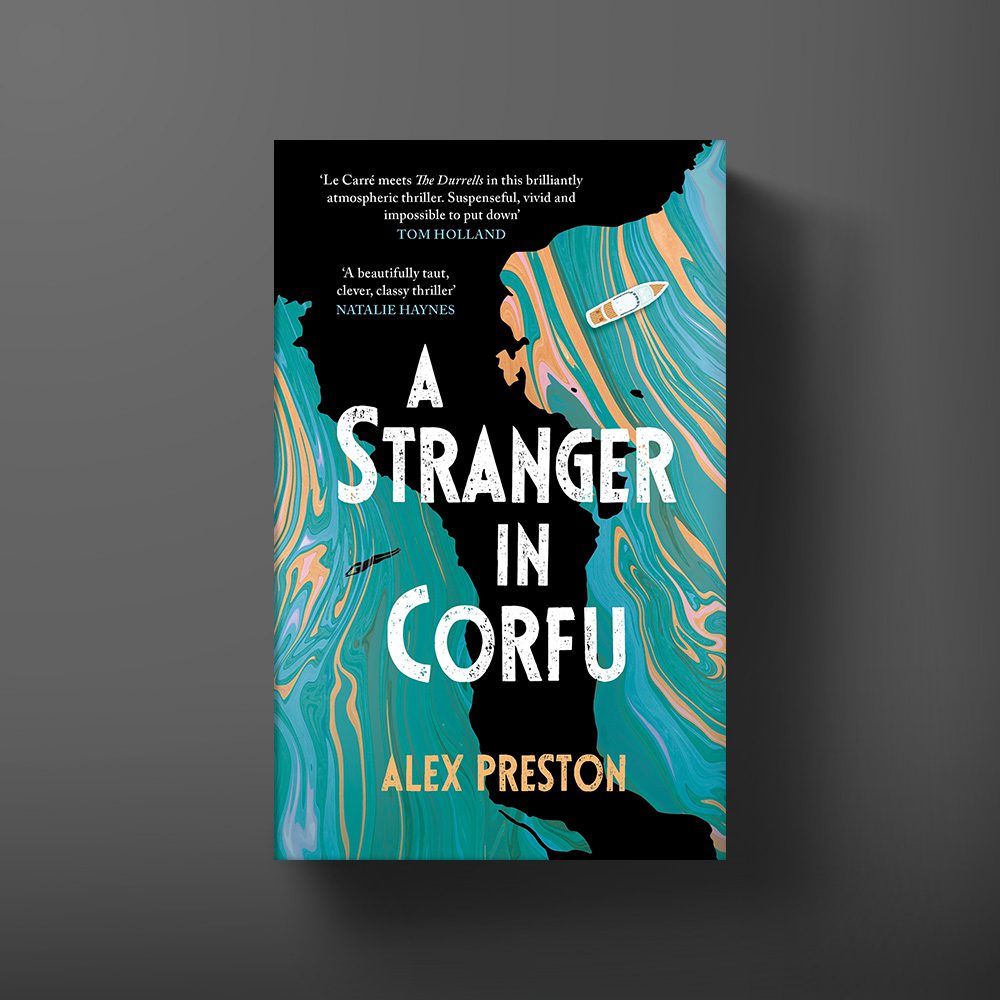

Book cover of A Stranger in Corfu
OVERVIEW

Set on the small Ionian island of Vidos, just off the coast of Corfu, A Stranger in Corfu blends espionage and mystery into an unusual and atmospheric novel. The island serves as a discreet refuge for former intelligence agents – a place where those who are no longer useful to MI6 are quietly sent to recover, retire or disappear.

Nina Wolfe, a young operative reeling from a failed mission in Bosnia and the trauma that followed, arrives to this strangely suspended island expecting rest and anonymity. Instead, she finds herself amongst a group of ageing spies whose pasts are anything but settled. When one of the island’s residents is found dead, the calm is fractured, and Nina is drawn into a web of long-buried secrets and unresolved betrayals.

The novel moves between past and present, exploring the lives that brought these agents to Vidos and the moral compromises that continue to haunt them. What begins as a story of recuperation becomes something far darker: a reckoning with the personal cost of a life lived in the shadows.


WHY WE CHOSE IT

A secluded island off Corfu, populated by former spies living out a quiet, watchful afterlife, feels entirely in keeping with the worlds inhabited by James Bond. It’s easy to imagine such a place existing just beyond the edges of a Bond novel: sunlit… beautiful… faintly menacing beneath the surface.

Ian Fleming had a gift for using location not just as backdrop but as atmosphere: exotic settings that heighten both the glamour and danger of espionage. Preston’s Vidos taps into that same tradition. Its idyllic isolation creates a sense of unease, where the past lingers and secrets feel inescapable, no matter how far one travels.

A Stranger in Corfu takes that familiar, Bond-like setting and turns it inward. Instead of high-octane missions, we’re given the aftermath – a cast of characters who might once have moved through those classic espionage landscapes, now confined to one of their own. The result is a novel that feels both evocative of the genre we love and intriguingly at odds with it.

THEMES TO CONSIDER

The afterlife of espionage – What happens to spies when their usefulness ends? Is Vidos a refuge, a prison, or something in between?

Memory and guilt – Many of the characters are shaped by past actions they cannot undo. How does the novel explore the psychological cost of those choices?

Identity and reinvention – Can those who have lived under assumed identities ever truly know themselves – or start again?

REVIEWS

Tom Holland – ‘Le Carré meets The Durrells – A Stranger is Corfu is a brilliantly atmospheric thriller. Suspenseful, vivid and impossible to put down’

Vaseem Khan – ‘A beautifully written examination of what it means to put your life – and soul – on the line for a cause. A spy novel of the highest calibre’

Adam Rutherford – ‘Taut, tense and utterly gripping: Preston evokes a wonderfully thrilling story from the dreamy Ioanian. Nothing short of brilliant’

Evie Wyld – ‘A beautiful, taut novel laced with the thrills of lives half-lived and never escaped; of friendship, love and relentless betrayal beneath Corfu’s blazing sun and the restless, dark sea – where secrets threaten to drown them all. A story that haunts long after the last page’

ABOUT THE AUTHOR

Alex Preston is an award-winning author of five novels including This Bleeding CityThe RevelationsIn Love and War and Winchelsea, as well as a book of non-fiction As Kingfishers Catch Fire. He writes regularly for the Economist and Harper’s Bazaar. He reviews books for the Observer’s New Review, Financial Times and Spectator. Alex is co-founder of the Corfu Literary Festival and Patron of Oxford Literary Festival.

We hope you enjoy A Stranger in Corfu. Follow our social channels for discussions, highlights, and more.
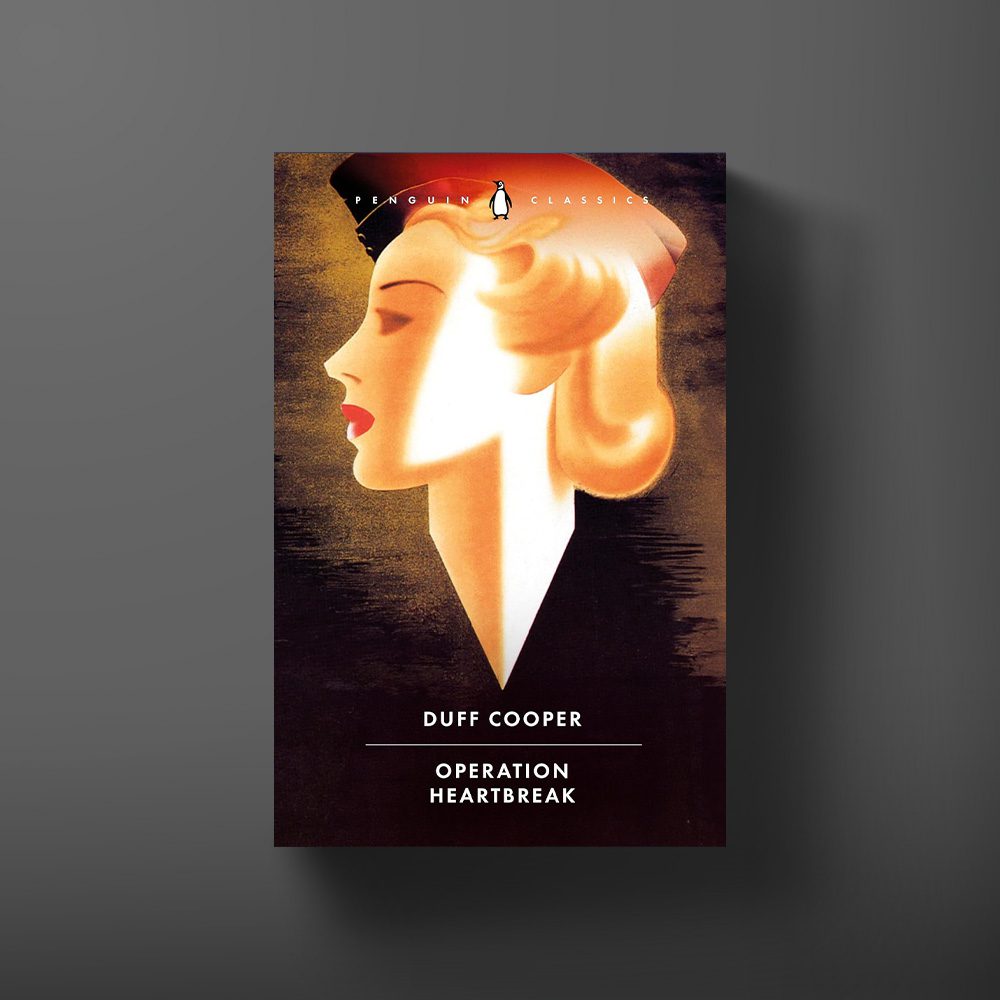
The James Bond Book Club Selection For April 2026 Is Operation Heartbreak

This month, we are turning to an often forgotten classic: Operation Heartbreak. This elegiac reimagining of Operation Mincemeat by Alfred Duff Cooper is as beautiful as it is tragic, a novel that will appeal to history lovers, fans of Fleming and any reader drawn to quietly affecting fiction.

Book cover of Operation Heartbreak.
OVERVIEW

William Maryngton’s only ambition is to serve his country, as his father did before him. But by the time the First World War ends in 1918, he is too young to take part. As the years pass, he finds himself increasingly out of step with both military life and the modern world.

When war breaks out again, William is drawn into an unexpected role. Selected for a covert intelligence operation, he becomes involved in a plan designed to deceive German forces and alter the course of the conflict. Operation Heartbreak follows William’s path from frustrated outsider to an unlikely participant in one of the war’s most unusual missions.

First published in 1950, this is a fictional account of Operation Mincemeat, the 1943 intelligence mission designed to mislead German forces about the Allied invasion of Sicily, in which Ian Fleming was famously involved. Because of the author’s ministerial role in government, he reportedly learned of the operation in an informal conversation with Winston Churchill. Given the sensitive nature of wartime secrets, the British Cabinet Office attempted to suppress the novel’s publication. Still, it predates most public accounts of the mission.

WHY WE CHOSE IT

The story focusing on Operation Mincemeat makes this an irresistible pick for us here at Ian Fleming Publications and the James Bond Book Club!

In 1939, Fleming, while serving as personal assistant to the Director of Naval Intelligence, devised the initial concept for Operation Mincemeat. He is believed to have borrowed the idea from another novel – Basil Thompson’s The Milliner’s Hat Mystery.

Operation Heartbreak predates most public accounts of the mission and was written at a time when its details were still sensitive. What it offers is not simply a version of events, but a perspective shaped by proximity to the environment and events that it draws on. Beyond that, the novel is deeply character-driven and explores, in a genuinely moving way, what it means to feel out of place and at odds in a changing world.

We came for the true story and stayed for the imagined one. It isn’t a thriller, per se, but it will absolutely make you turn the page.

THEMES TO CONSIDER

Duty and patriotism – What does it mean to serve one’s country, and how far should that duty extend?

The ironies of war and heroism – The novel raises questions about what heroism really looks like in wartime.

Unfulfilled ambition and loneliness – At its heart, the novel reflects on the personal sacrifices and quiet tragedies that underpin even the greatest victories.

REVIEWS

The Times – ‘Not a word is wasted… a perfect novel.’

Daily Mail ‘Moving and bittersweet

Evening Standard – ‘Poignant and moving.’

Wall Street Journal – ‘Its ending is as unexpected as it is affecting.’

Daily Telegraph – ‘Told with humour, deep feeling and considerable skill.’

Nina Bawden – ‘A wonderful novel by a masterly writer that should be on everyone’s bookshelf.’

ABOUT THE AUTHOR

Alfred Duff Cooper, born in 1890, was an author, statesman and diplomat. During his time as a second lieutenant in World War I, Cooper was awarded the Distinguished Service Order. After World War I, he worked in politics, entering Parliament in 1923 and serving until 1938, when, in protest at the Munich Agreement, he resigned from his position. In 1940, Prime Minister Winston Churchill requested Cooper’s return to office, where he was later appointed as ambassador to France. He became 1st Viscount Norwich in 1951, a few short years before his death in 1954. Operation Heartbreak is his only novel, but his other notable works include the biography Talleyrand and his autobiography Old Men Forget

We hope you enjoy Operation Heartbreak. Follow our social channels for discussions, highlights, and more.
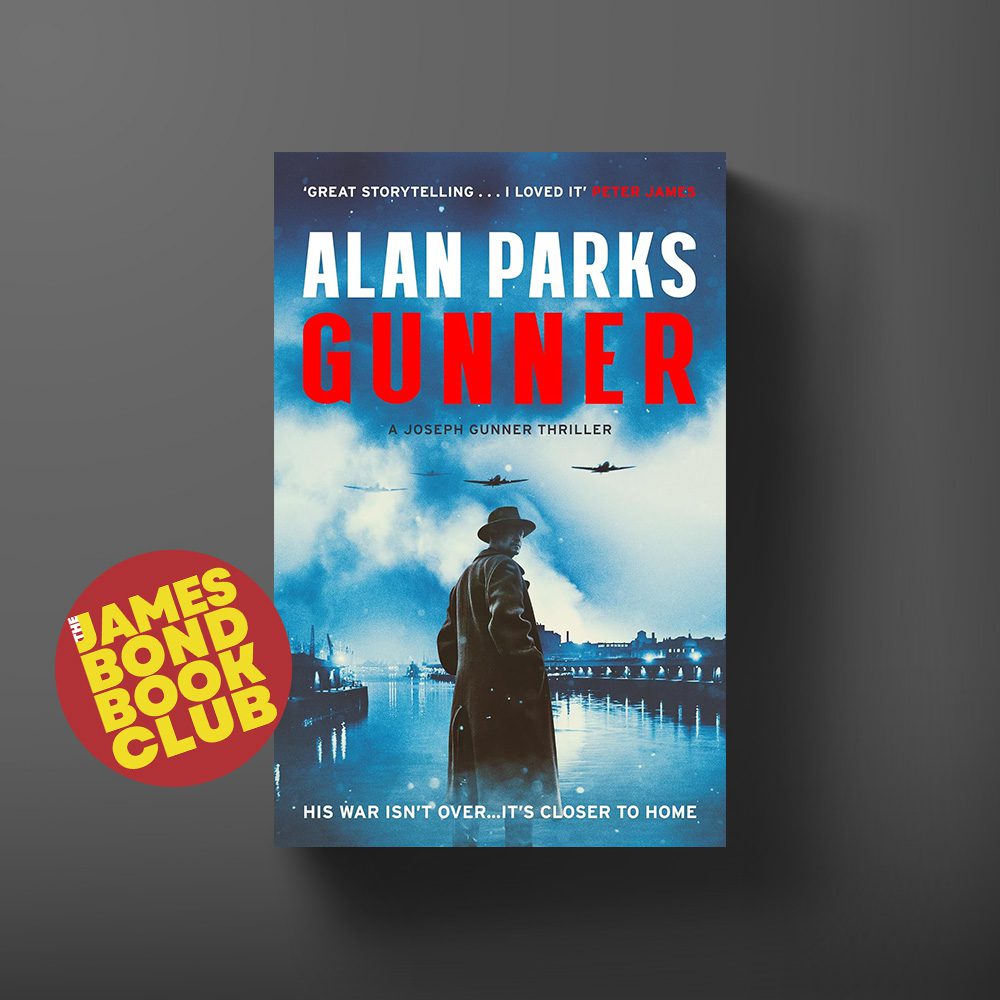
The James Bond Book Club Selection For March 2026 Is Gunner

This month, we’re stepping into the fog‑choked streets of wartime Glasgow and recommending the fierce new crime classic, Gunner, by Alan Parks. First published in 2025 and now gaining recognition as a compelling blend of historical thriller and noir, Gunner introduces us to a different kind of operative – one forged in the brutal crucible of the Second World War.

OVERVIEW

It is 1941 and the titular Joseph Gunner has returned to his hometown after being injured on the front lines in France.  His arrival coincides with the Luftwaffe bombing of his city.  The places and people have changed, some unrecognizably so, although some things never change: he has barely stepped off the train in Glasgow when he is approached by his old boss, Detective Inspector Drummond. Gunner was a policeman (or ‘polis’) before the war and now Drummond needs his help with a new case.  A body has been found in the bomb wreckage, one not killed by the Luftwaffe, but rather mutilated and disfigured.  So begins a mystery that will take Gunner through rubble-strewn streets, grimy but steadfast pubs and into the prisoner of war camps – where an even greater, and stranger, mystery awaits.

WHY WE CHOSE IT

Fans of Ian Fleming will appreciate Gunner’s link to real‑world intrigue: Joseph Gunner’s story is partly inspired by real events from wartime Glasgow, including the mysterious flight of Rudolf Hess in 1941. Just as Fleming drew on his own intelligence experience to shape James Bond, Alan Parks weaves historical fact with thrilling fiction, creating a world where danger and secrecy feel entirely real.

It’s a rare glimpse into a world where courage and survival aren’t just literary devices, they were the reality for those living under constant threat. For readers who love James Bond, this is the kind of historical spy fiction that makes the danger tangible.

THEMES TO CONSIDER

War and trauma. How do Gunner’s physical and emotional wounds shape his every decision?

Power and corruption. What happens when espionage meets street‑level brutality, and friend and foe aren’t always distinguishable?

Identity under pressure. How are we tested when the world is at its most dangerous?

History as character. The Blitz isn’t just a backdrop, how does it permeate and shape the story?

REVIEWS

The Guardian – ‘A gritty, immersive, genuine page‑turner … meticulously researched.’

The Times ‘One of the greatest Scottish writers

Peter James – ‘Great storytelling … a vivid sense of place and time.’

Vaseem Khan – ‘A lean, mean, and ruthlessly readable thriller.’

Andrew Taylor – ‘A superb thriller with a gripping, constantly surprising plot.’

ABOUT ALAN PARKS

Alan Parks is an acclaimed Scottish crime writer whose award‑winning novels are praised for their realism, rich atmospheres and complex characters. With Gunner, he blends historical depth with a gripping thriller sensibility, giving readers a world both vividly realized and relentlessly suspenseful. He is also the author of the Harry McCoy thrillers, which feature a world-weary and morally-questionable detective stomping around 1970s Glasgow, which is where Parks works and lives now. Before beginning his writing career, Parks worked for twenty years in the music industry.

We hope you enjoy Gunner. Follow our social channels for discussions, highlights, and more.

The James Bond Book Club Selection For February 2026 Is Fatale

Do you really need a licence to kill… to kill? This month at the James Bond Book Club, we’re diving into the darker corners of crime fiction and celebrating the reissuing of Jean-Patrick Manchette’s bloodthirsty thriller, Fatale. First released in 1977 and now recognised as a cornerstone of modern noir, Fatale is a ruthless, razor-sharp novel that strips the thriller down to its bare essentials.

We couldn’t wait to get our hands on this gorgeous new edition just published by Vintage Classics.

OVERVIEW

Aimée Joubert is a mysterious woman who arrives in a decaying French port town with no visible past and a quiet sense of purpose. She slips easily into the community, cultivating acquaintances and trust, all the while preparing a meticulously planned act of violence.

As her presence begins to destabilise the town’s corrupt ecosystem of businessmen, politicians, and criminals, Manchette unfolds a story that is as much about power and rot as it is about murder. Told with icy precision, the novel moves inexorably toward its conclusion, revealing how fragile social order becomes when confronted by someone who refuses to play by its rules.

What unfolds is not a traditional thriller, but a cold and unsettling study of control and destruction.

WHY WE CHOSE IT

At Ian Fleming Publications we are drawn to stories that interrogate the figure of the professional killer – and Fatale offers one of the most bracing reframings of that role.

Like Bond, Aimée Joubert is a highly trained operative who kills on demand, operates behind carefully constructed identities, and moves through international spaces with lethal efficiency. But where Bond’s violence is embedded within the narrative authority of the state, Fatale, published in the late 1970s, arrives after that framework has begun to fray.

Aimée operates in a world where ideology offers no shelter, and professionalism is stripped of meaning. This shift in perspective is what makes Fatale so unsettling. By presenting a figure recognisably close to the spy archetype, yet removing the moral scaffolding that traditionally surrounds it, Manchette exposes the mechanics of violence without reassurance or redemption. There are no heroes here.

THEMES TO CONSIDER

Detachment. Aimée’s precision raises unsettling questions about violence as labor and what happens when skill is divorced from morality.

Power and corruption. The novel dissects a town and a time characterised by greed.

Identity as performance. Like the best espionage fiction, Fatale explores how personas are constructed.

Gender and control. Aimée subverts expectations, weaponising others’ assumptions and exposing the vulnerabilities beneath masculine authority.

REVIEWS

The Times ‘France’s king of noir fiction…he writes with a bleak, tragic beauty.’

Big Issue ‘Shocking, funny, sad, smart and cool… A macabre delight from start to finish.’

Complete Review ‘A fist between the eyes, leaving the reader reeling… So devastating it takes your breath away.’

The Economist ‘Manchette’s books are all action, unfolding with a laconic efficiency that would make his killers proud.’

New York Times ‘I’d rather read Manchette than many contemporary noir writers.’

Jean-Patrick Manchette (1942–1995) was a French novelist, critic and screenwriter and a central figure in the néo-polar movement. His crime fiction fused hard-boiled American noir with radical political critique and his work is credited with reshaping the genre for a European and global audience. Fatale stands as one of his most refined and uncompromising works.

We hope you enjoy Fatale. Follow our social channels for discussions, highlights, and more.