Interview: Nicholas Shakespeare On Ian Fleming

We sit down with Nicholas Shakespeare to learn more about his biography Ian Fleming: The Complete Man. Read on to learn about the author’s research process, how he came to write about Fleming, and of course, his favourite Bond novel…

What was the spark that started all this?

Early in 2019, I was in Tasmania, having gone there to begin work on a new novel, when I was approached by the Fleming family, who wondered if I would consider writing what would be the first authorised biography of Ian Fleming since 1966. I admit I was hesitant. Excited. Intrigued. Flattered to be asked – who wouldn’t be? But also, to start with, a bit wary, given Fleming’s fame and reputation and the amount of chaff that hedges his name. Was there anything more to say about him? And if there was, was I the person to say it? Plus, did I wish to spend four or more years in the company of a cad? I knew of Peter and his involvement in the Norway Campaign from my previous non-fiction book, Six Minutes in May – he had been the first British officer to set foot in occupied Europe in WW2. I’d grown up on Bond, yet about his creator I knew little other than tidbits picked up when making films or writing about some of his contemporaries.

Black and white photograph of author Nicholas Shakespeare, a middle aged white man pictured in front of the sea.

How did you start your research for this project? 

Before committing myself, I conducted a background check. I sought out Fleming’s two previous biographers, John Pearson – who had shared a desk at the Times Educational Supplement 66 years earlier with my father (I was able to reintroduce them) – and Andrew Lycett. I spoke to Fleming’s surviving family and friends. I was given and came across new material. And what I found as I did my due diligence was not what I expected. The image I previously had of Ian Fleming from sideways glances was in many surprising respects inaccurate and unfair. It camouflaged another Fleming, a figure who – in contrast to the “squalid, unillumined” figure of Malcolm Muggeridge’s depiction – was sympathetic, funny, vital and humane.
Did your research on this book differ to your previous projects?

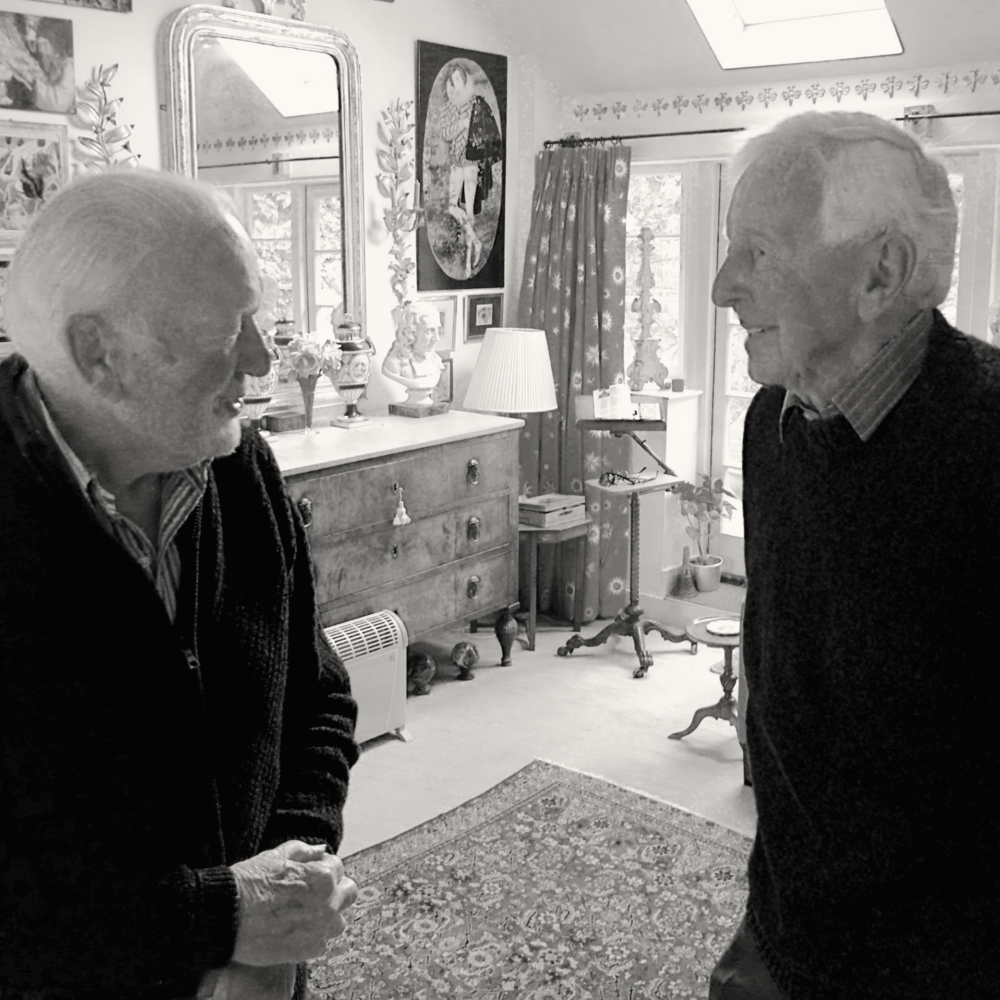
With a subject as raked-over as Fleming, the challenge is to produce something fresh. As in my books Bruce Chatwin, Six Minutes in May and Priscilla, I was keen to unearth new archive material out of what has become pretty exhausted terrain. Not only that, but to scatter oral history throughout the text – e.g. first-hand accounts of those like Fleming’s step-daughter Fionn Morgan, who is one of the few who could recount lived memories.

One of my luckiest encounters was with the last surviving member of Fleming’s Intelligence-gathering unit, 30AU. So impatient was I to meet him that I arrived a Wednesday early. Later, I was glad I got the date wrong. Bill Marshall, aged 94, was hospitalised five days after our conversation. Had I come at the right time, I would never have heard what he told me. The former Royal Marine was a lightning rod directly back into the D-Day landings. He recalled meeting Fleming in northern France in 1944 and digging up the top-secret plans of a prominent German scientist.

Tell us about the title ‘The Complete Man’.

In the 1930s Fleming often spoke to the journalist Mary Pakenham of his ambition to be the Renaissance ideal, “the Complete Man”. I then read Alan Moorehead’s account of how WW2 had transformed “the ordinary man” – and how “he was, for a moment of time, a complete man, and he had this sublimity in him.” This certainly was true of Fleming: the war was the making of him (and later of Bond). Only after my book went to press did le Carré’s biographer Adam Sisman alert me to this other quote, in Raymond Chandler’s essay “The Simple Art of Murder”: “But down these mean streets a man must go who is not himself mean, who is neither tarnished nor afraid. The detective in this kind of story must be such a man. He is the hero; he is everything. He must be a complete man and a common man and yet an unusual man.”

What I like about the phrase “complete man” is that it suggests one of the central themes to have emerged: there is much more to Fleming than Bond, a character he created almost as an afterthought in the last twelve years of his life, when the most interesting part of it was essentially over. To simplify horribly, there would be no James Bond had Fleming not led the life he did, but if Bond had not existed, Fleming is someone we should still want to know about.

When memories and anecdotes differ, especially when it comes to family and also with top secret wartime stories, how do you find your way through everything and express it in a book?

So many stories disintegrate when scraped with wire wool. My favourite example is the 1997 book Op.JB, by former British intelligence agent Christopher Creighton, who argued that Fleming was personally involved in capturing Martin Bormann from Hitler’s bunker in Berlin. Taken with the story, Peter Fleming’s biographer Duff Hart-Davis agreed to ghost-write Creighton’s account. “I think (for me) the final straw came when Creighton [who also claimed to be godson of Churchill’s Intelligence expert, Desmond Morton] claimed that Fleming had brought Hitler, as well as Bormann, out of the bunker, and that on their way to the Weidendamm bridge Hitler’s head had been blown off by an incoming shell.”

When it comes to family stories as well, the truth has its own smell. I included the anecdote of Ian’s niece Gilly, that Ian had written the first Bond because of a bet with Peter, not because I felt it was necessarily 100% accurate, but because it revealed the way the family had understood things. Readers are intelligent enough to make up their own mind.
How has writing this biography changed how you think about Ian Fleming? 

 It struck me only recently that a moral of Fleming’s story is this: don’t run off with the wife of the proprietor of the Daily Mail if you want to avoid being forever after rendered into tabloid fat. People tend to have made up their minds about Fleming as a sardonic, wife-beating cad who strutted about pretending to be more important than he was. What decided me to write the book, after completing two months of due diligence, was to discover that his war work was indeed significant, much more than anyone had thought, although he couldn’t for security reasons talk, let alone boast about it. And how much kinder he was in life than his posthumous caricature suggested. It was Maud Russell’s line in her unpublished diary seven years after his death that clinched it: Sometimes I think of Ian – mostly of his personality, his character & his innate kindliness. (17/10/1971). Kindliness is a prize quality to uncover. I was relieved to find it in spades.

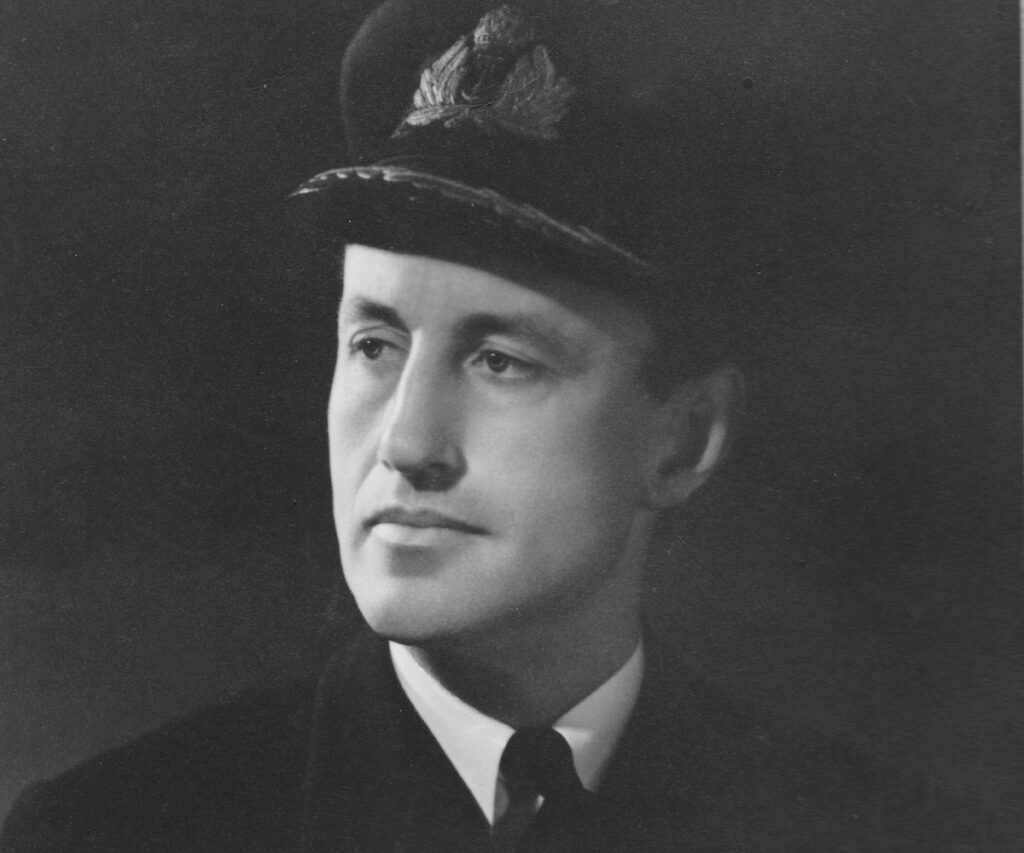
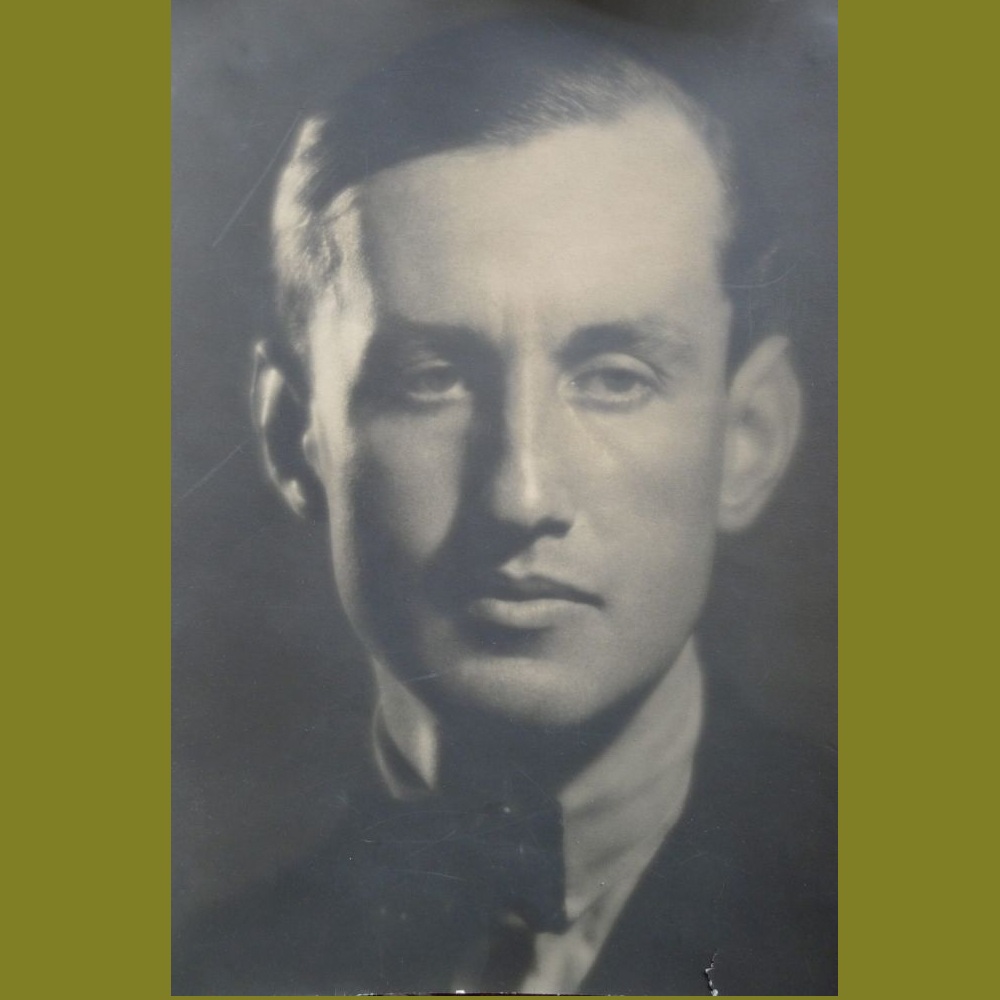
Not that he was an unprickly or an easy subject to dig up. Early on, Charles de Mestral, the son of his Swiss fiancée Monique, sent me an envelope containing the original photographs that his mother had taken of Ian in the early 1930s when they were engaged, and which she had preserved in a sort of shrine all her life. I propped up the largest photograph on my desk, I suppose as some sort of talisman; a black and white studio portrait of him c 1931. For four years, he stared impenetrably at me, defying my attempts to crack him. Only towards the end did I glance across and see Fleming through the veil of his cigarette smoke, and have a sense that I understood him better – and more than that, quite liked him. It was the opposite trajectory of my experience in writing about Bruce Chatwin, someone I had known personally and admired, but whom – because of the unnatural, up-close nature of biography – I ended up becoming less enamoured about.

How has writing this biography changed how you read and think about Bond? 

That no day passes without James Bond making a media appearance is a testament to the ongoing power of his brand. Even so, I probably did not appreciate, quite, the reach of his influence. What I came to recognise is the astronomical extent of this. “He is better known than God,” Fleming’s niece Gilly told me. “All the Tibetans know of James Bond. They’ve never heard of God.” The Italian film director Adolfo Celi was welcomed with feasts in forlorn villages in Africa “where they had never seen or read anything, but where they had seen Thunderball.”

But it’s not only to foreigners that Bond has succeeded in promoting a seductive ideal of what it means to be British. He has done this most effectively to the British themselves. When we required an Ambassador to represent us at the opening of the 2012 London Olympics, who did we pluck from the heavens to act as the Queen’s bodyguard, in a cameo appearance watched by an estimated 1 billion people, but the one other Britisher to have enjoyed Her Majesty’s fame (she had attended not a few of his premieres as well).

The sun may have set on colonialist misogynists, but not on Fleming’s addictive and unmistakeable conception of a patriotic British male, attractive to both sexes, who is impossible to pay off. As a signature of Britain, Bond has proved impervious to time, to changing mores. Infinitely malleable, eternally refreshable, with his latest dialogue and behaviour contemporised by none other than Phoebe “Fleabag” Waller-Bridge, Bond is the mythical hero who not only never dies – despite earlier heart-stopping intakes of alcohol and tobacco – but who goes on getting livelier: a character with central values that still hold appeal and are adaptable enough to be reinvented over decades. As Max Hastings told me: “It seems to me that whatever reservations we all have about Ian Fleming and Bond, today it is impossible to overstate their quite extraordinary influence in making something English seem important in the twenty-first century world. James Bond has a stature to which no modern prime minister, nor royal, nor indeed anything can lay claim.”

And finally, what is your favourite 007 book and why?

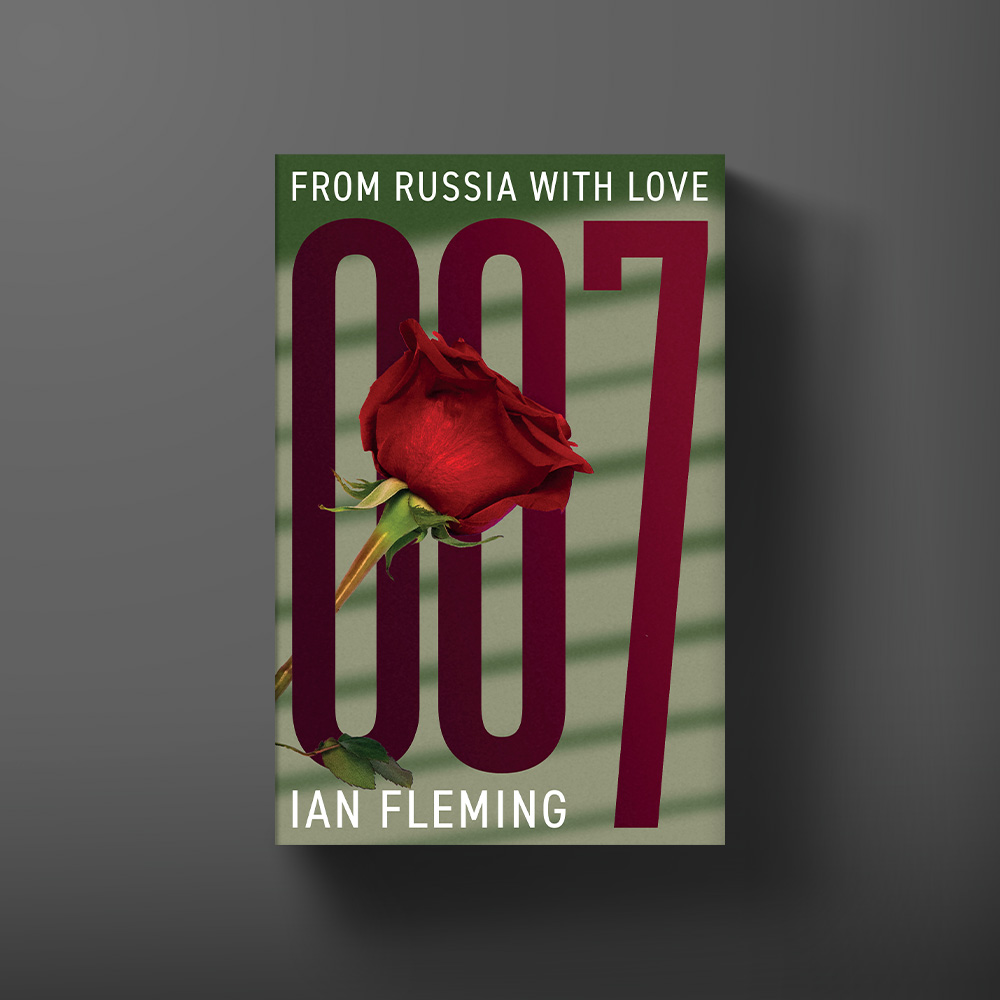
My favourite 007 book is From Russia, With Love, which was also Fleming’s own favourite. I can’t do better than quote the reaction of his American publisher Al Hart: “A real wowser, a lulu, a dilly and a smasheroo. It is also a clever and above all sustained piece of legitimate craftsmanship.”
Paperback book cover for From Russia with Love by Ian Fleming.

Discover Nicholas’ biography Ian Fleming: The Complete Man, at our shop.
Interview: Raymond Benson On Bond

We sit down with the author to talk everything Bond, books and Benson!

What was your introduction to Bond?

I was a child of the 1960s, so I experienced ‘Bondmania’. When Goldfinger the movie opened I was nine years old. I lived next door to two girls and I was playing a game at their house when I heard this music coming from the living room, this fantastic brassy-sounding, dynamic, orchestrated music. I went in and the mom of the two girls was playing the Goldfinger soundtrack. And I kid you not, the woman’s name was M! So I ran home and I told my dad we had to go and see Goldfinger. I just went nuts. I thought it was fantastic. And then I realised there’s all these books. Everywhere you went in those days in 1964 you would see the paperback books by Ian Fleming, the Signet books with the uniformly designed covers. Did you know that that was the first time that an author had a uniformly designed series and paperbacks?

After this initial introduction, how did you become involved with 007?

By the 1970s although I would go to see each movie as it came out, I wasn’t the obsessed Bond fan. I got a degree in theatre as a director. And after I graduated from college, I moved to New York City, and I started directing plays and I also became a musician, composing music for theatrical productions. But then in 1981, the first John Gardner book came out, Licence Renewed. I enjoyed it. I thought, ‘Oh, this is kind of cool’. I got excited again. It was the same kind of excitement that I had in the 1960s. Around this time, some friends and I were sitting around a table when the question came up, if you had to write a book, what would you write? I thought about it, and said, “I’d like to write a big encyclopaedic coffee table book about the history of James Bond.” My friends all thought that was a great idea. One who had just published a book introduced me to his editor and I pitched my idea to her and that became the James Bond Bedside Companion.

In the 1990s I started writing and designing computer games, and that was where I really started honing my fiction. These games were story-based – complicated, elaborate stories where you solve puzzles and you talk to characters. So then in 1995, Peter [Janson-Smith] calls me out of the blue to say that John Gardner doesn’t want to write any more Bond books and would I like to give it a shot? Now, this was something I never campaigned for. Never thought about doing. It wasn’t in my wheelhouse. We talked at length about what my Bond books would be like, and Peter said, why don’t we keep it in sync with the new movies? I agreed but I also wanted to keep Fleming’s Bond. I want him to have all of his vices intact – to be a drinker and a smoker and a womaniser and be more of a brooding, serious guy. He might be a little anachronistic in the ‘90s , but as Judi Dench said in GoldenEye, he’s a ‘misogynistic dinosaur’.

What is your writing process like?

For that first book, I knew if it was published it would be in 1997. And what was the big event for Britain that year? It was the handover of Hong Kong. So I did a little research and once I had a good background on the history of Hong Kong, I wrote an outline for the story. I got the contract, and it was announced I was the next writer – unbelievable . I then travelled to Hong Kong with my wife to do the nitty gritty research. We went to China and Macau, as well as Hong Kong. I travelled in Bond’s footsteps and went to all the locations and met with the Royal Hong Kong Police to talk about Triads. That became the model of all my research trips. I would first look at a world map and pinpoint what hotspots Britain was concerned with and then do a little preliminary research. Then I’d come up with a plot and a story and write the outline, which is the most difficult part of the process. I would spend a month or two on this 20 page treatment broken out into block paragraphs. Each block paragraph represents a chapter – what’s going to happen in that chapter that moves the story forward. I don’t really get into character or dialogue or anything like that. It’s really the plot, the story. Once I work out all the twists and turns and the obstacles and the villains, I really hone it.

My method today is still to write a scene a day. By scene I mean, it has to begin and end. It could be a whole chapter, it could be part of a chapter. It could be two pages, it could be 20 pages. Like Ian Fleming, I would get the first draft completely done in one go, because I think that establishes a pace. Once that’s done, I go back and start reading, revising and deleting.

How did it feel to become a part of the world you had cared about for so long? Did you feel like you’d reverted to nine-year-old Raymond Benson?

Well, when Peter read Zero Minus Ten for the first time, he called me up. It still almost brings tears to my eyes. He just said, ‘Raymond, you’ve written a Bond book.’ Coming from Peter, that was just an incredible feeling. Looking back, who would have thought that nine-year-old Raymond Benson would one day be writing a Bond novel? That was just impossible to even think about. It’s turning a childhood obsession into a career. And those seven years were a roller coaster. I travelled the world. I met all kinds of great people. It was an amazing time.

What have you been doing since your last Bond book?

After Bond I started writing my own stuff. Bond kind of typecast me in the eyes of publishers. But I did not want to write spy novels. I didn’t want to write anything that was like James Bond. My other books are more like Hitchcock stories, you know, normal people in extraordinary circumstances. I also did a lot of what we call tie-in writing. Tom Clancy’s estate hired me to do a couple of books and Metal Gear, the video game. And I was also a sought-after ghostwriter. I’ve been a freelance writer up until now.

How are you feeling about the re-release of Zero Minus Ten? Have you read it back recently?

I’m really excited. I’m so happy about it. During the pandemic I read the books again. I mean, it’s 20/25 years later and they seem very fresh to me. I was reading the detailed things about Hong Kong and the Triads. I was going, wow, these are pretty good .

It’s well documented that From Russia With Love is your favourite Bond book. Do you have a favourite non-Fleming Bond book?

Oh wow. I would have to say one of mine and that would be High Time To Kill. I really think that’s the pinnacle of what I wrote. It’s what I call The Union Trilogy: High Time To Kill, Double Shot and Never Dream of Dying. I think that’s my strongest work. That’s what I liked the most. I would like to shout out to all the authors. It’s not an easy task. I think if you’ve managed to be in the club, to be a Bond author, then more power to you. I consider it a great honour to have these people as my siblings so to speak. I don’t take it for granted. I really appreciate that the Flemings trusted me, that Peter trusted me, and I still love it. I’m still very much a part of it. And I appreciate it.

Interview: Mark Pearson On John Pearson

Featured

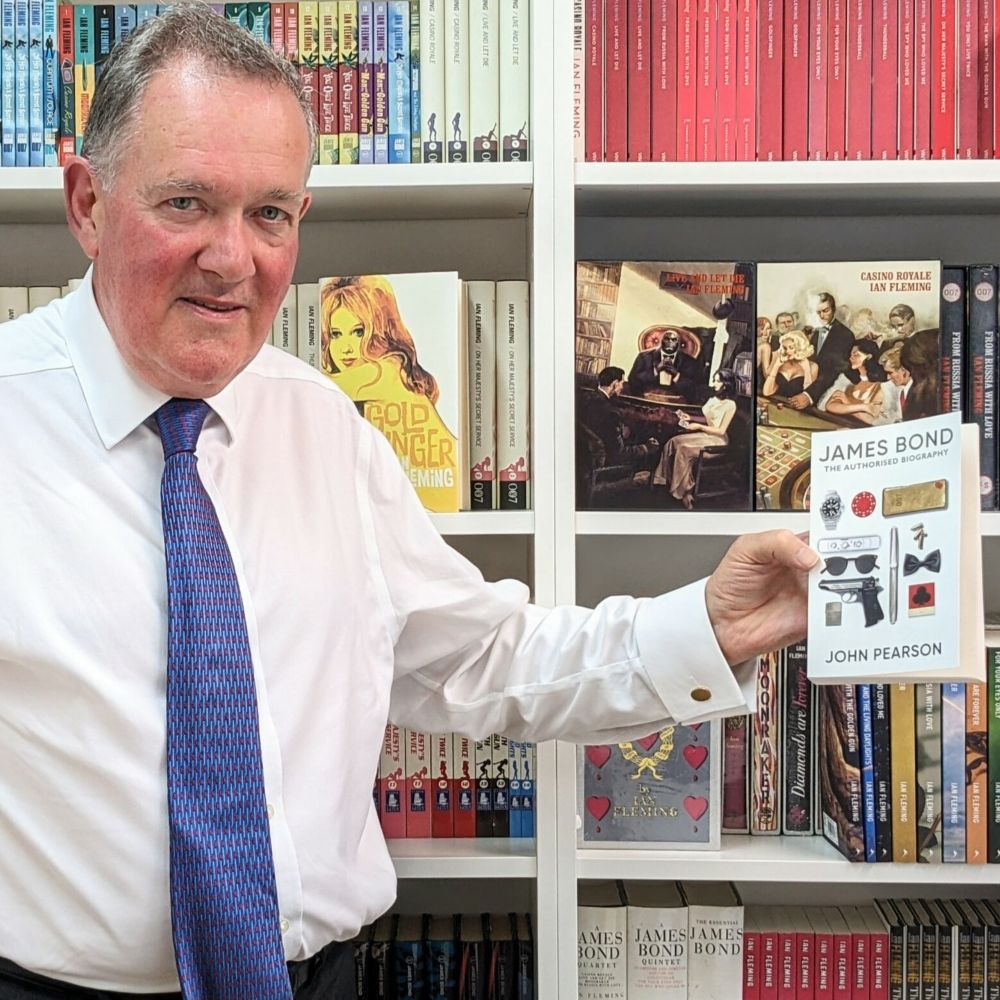
We sit down with Mark Pearson to learn more about his father John’s work and 007’s impact on his own life. Mark has written an introduction in the latest edition of his father’s book, James Bond: The Authorised Biography.

Was Bond a big part of your upbringing?

I was exposed to the first of the Bond films by my father. He took a party of young children on my birthday to see Dr. No. Looking back on it, it was a slightly inappropriate thing to do for an eight-year-old child but there you go, it was fun. And all my friends thought it was really cool. Bond was quintessentially cool. And there were also the conversations around the dinner table when my father came to write James Bond: The Authorised Biography. They often centred on ‘Well, what would Bond have done in these circumstances?’ We’d be sitting around and talking about behaviours and people. My father was very open to the idea of getting ideas about Bond from us as children, which is slightly odd.

In your introduction, you write about some of the characters being based on people you knew growing up. What is this experience like, reading fictionalised versions of people from your real life?

One of the funniest for me is the depiction of my grandmother. In the book, James Bond has a cleaning lady who looks after his life and she’s much more than the cleaning lady. Sort of a female butler, if you like. And she sniffs in disapproval whenever Bond does something that she doesn’t like, and this is exactly what my grandmother used to do. We all knew that when my father wrote that, he was actually writing about his own mother, our grandmother, and we found that quite funny. Then there was the inclusion of our landlord as a porter at Blades, John Prizeman. And then the rather more surprising one, which was when we discover that James Bond’s mistress has been sponsored by a rich armament millionaire, who was named after Richard de Combray. He was a family friend who in fact was gay, so very unlikely to sponsor a female prostitute. Very unlikely to sponsor a prostitute full stop. Richard was a lovely, delightful man, who couldn’t have been less like an arms dealer.

The biography is so deeply researched. Do you recall anything about your father’s research, writing and creative processes?

My father was both a meticulous researcher and note-taker. When he was writing The Life of Ian Fleming he interviewed about 140 people. He kept every single one of the notes from that and so one of the things that the Queen Anne Press did before my father died was to publish the notes. The reality is that you could produce something similar for the Gettys or the Kray twins. You could do something similar for the Churchills because he kept meticulous notes of the conversations he had with people. But sometimes those notes were not exactly tactful. Coming back to our core subject here, which is Bond – Admiral Godfrey was clearly the model for M, and my father wasn’t taken by him when they met. What’s funny about that story, is that I think it was a two-way thing. I believe Admiral Godfrey was thinking ‘Is this whippersnapper, at 34, mature enough to write the book about my friend Ian?’ What we’re left with in the notes are comments about Admiral Godfrey’s appearance being fundamentally rundown, wearing rather tired looking brogues, but that you could still see a glint of the old M, or C, in his eyes, you could see the ruthlessness. I thought that was rather revealing and compelling.

How do you feel about the new edition of the James Bond: The Authorised Biography?

Well, I think let’s start with the really obvious thing – the cover of the new book is fun. Fun is actually central to this book, and it’s an opportunity to reengage with different populations. But the fun that goes with this is great: having a kit which any self-respecting spy can take into a mission. It feels very 60s. But I also think this edition celebrates the fact that this book is 50 years old. It’s actually 50 years young and in a curious way it’s still quite relevant. It’s still fresh. And I think people of my children’s and, dare I say, even my children’s children’s generation will enjoy this book.

Why do you think 007 and everything around 007 is so enduring?

I think it’s a mixture of things. There are massive overlays between a perception of what it meant to be British, coupled with the intelligence world and the lack of information about it, which is true to this day, although perhaps less so than it was at the time when Ian was writing. Coupled with this enormous sense of derring-do and a belief that one person could make a difference. That’s also very compelling, I think. Without question in the 50s and 60s we’d come out of a world war and people were desperate to have something which gave them a more positive view and a bit of fun. So I’ll come back to the theme of fun: the enduring theme of Bond, for me anyway, is fun.

What is your favourite James Bond book?

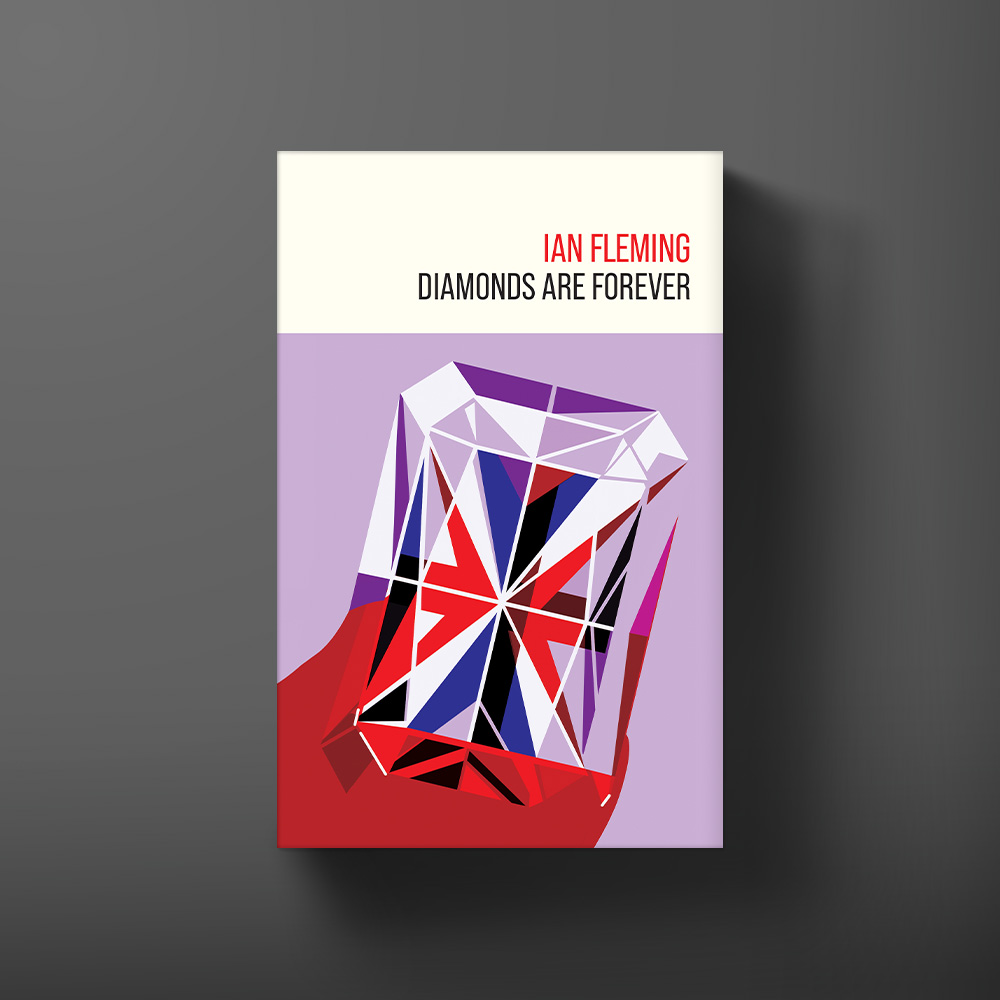
Diamonds Are Forever. An absolutely compelling page-turner. It is interesting, isn’t it? I was given the Bond books as a child. I remember being completely befuddled by Casino Royale, I didn’t understand it. Although my father did take me and my brother to Monte Carlo to look at a casino in action. My brother was eight and I was nine. And we were not allowed in. My father went in to do his research on gambling which took him a couple of hours. So we were parked, opposite, quite literally parked in a car. And he went off and did his research, and that was that really.

Hardback book cover for Diamonds Are Forever by Ian Fleming, designed by Michael Gillette.

Had he given you Casino Royale before or after the casino visit?

Oh after that. But Ian gave my father a copy of Casino Royale, a first edition, which he inscribed. In fact I’d love to track down this copy because it means a lot. It’s inscribed to my father and it says ‘Thank you for supporting me through the writing of these books’. If anybody out there knows where it is, I’d love to see if we can find a way of borrowing it back!

Finally, what is your favourite John Pearson book?

Well, I really do love this book. So I think I’ll just stick with that.

Learn more about the life and work of John Pearson here.

The Story Behind: Ian Fleming The Journalist

Writer Tom Cull takes a stroll through London and examines Ian’s career as a journalist, before he found fame with fiction.

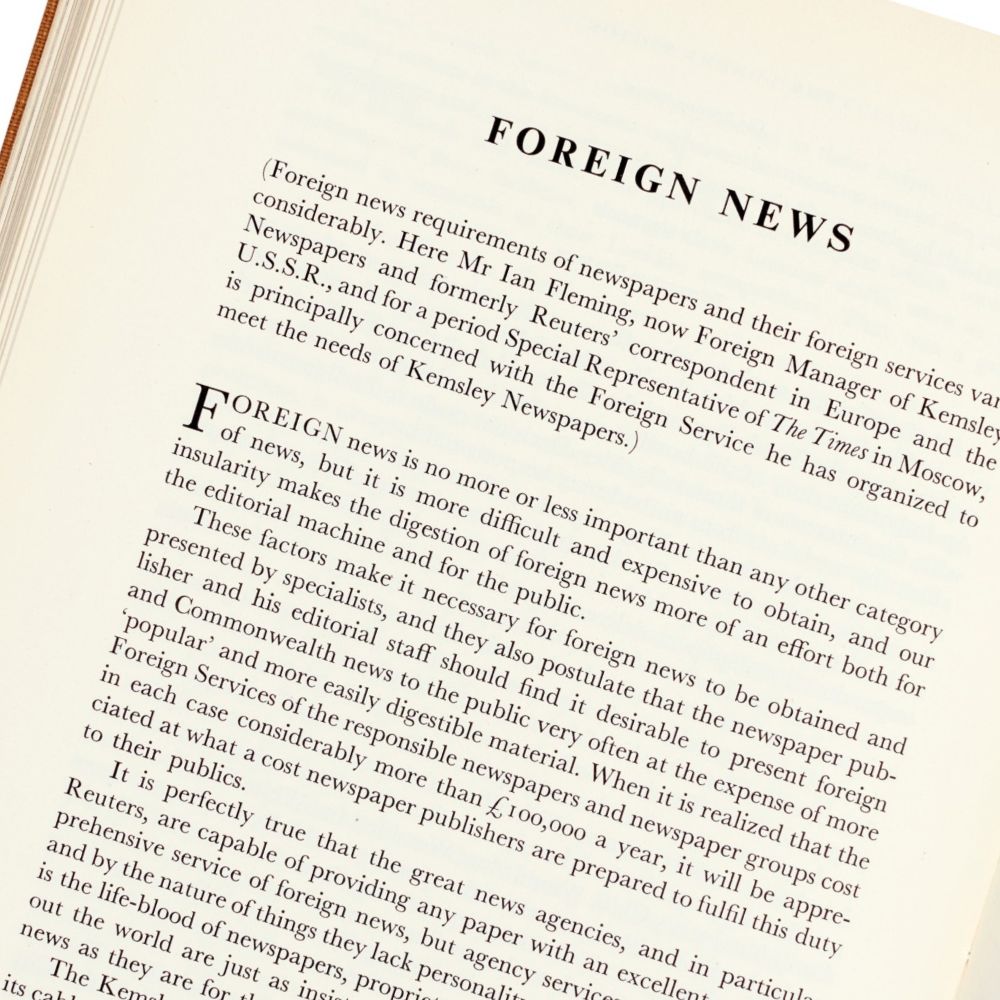
On a quiet Sunday in the City of London, I re-traced some of Ian Fleming’s old haunts during his journalism and banking days, including what used to be the Reuters building at The Royal Exchange. It occurred to me that it was here that Ian Fleming got his first taste of writing professionally. Throughout his career, journalism formed an important part of his research and inspiration, before finally becoming a way to remain ‘part of the action’ after the war.

His well-documented two month break in Jamaica to write his James Bond novels was a feat of discipline and economy; writing quickly and accurately and never looking back, trusting totally in his technique. Many writers, including the prolific Raymond Chandler, found this timetable astonishing. He asked Ian in an interview in 1958 how he could write so quickly with all the other things that he did, and remarked that the fastest book he ever wrote was in three months. So, from where did Ian Fleming acquire this skill?

For this we must go back to Monday October 19, 1931.

Fleming was given the responsibility of updating over 500 obituaries, work which his editor-in-chief described as ‘accurate, painstaking and methodical’. But soon, his superiors realised he could be of better use in the field. He was sent to Austria to cover the Alpine Motor Trials (Coupe des Alpes) in the summer of 1932 and thrived on the excitement of it all.

When an intriguing assignment came up in Stalin’s Russia, to report on a court case involving British construction workers (tantamount to a show trial), Fleming was called up. His ‘smattering of Russian’ and the fact that the regular Reuters Moscow correspondent might have had his Russian sources compromised meant that this was Ian’s big break. It was also his first exposure to the dark underbelly of Soviet communism that would pique his interest in cloak and dagger matters and mark Russia out as the political bête noire for the West. His reporting again impressed his peers. He turned in articles on tight deadlines. Ian described his training at Reuters as giving him a ‘good, straightforward style’ and there he learned to write fast and accurately because at Reuters ‘if you weren’t accurate you were fired, and that was the end of that.’

He returned to England to an offer of a higher salary and posting to Shanghai but his earning potential was not quite what he was after. His brother Richard had entered the flourishing family banking firm and it was suggested that Ian had hoped to inherit money from his grandfather, but when this didn’t happen, he decided to go into the City for himself. Doors were being held open for Ian as a fait accompli as he conceded:

‘I loathe the idea from nearly every point of view, and I shall hate leaving Reuters. But I’m afraid it has got to be done.’

In 1933 he was offered a job at the stockbroking firm Cull and Company on Throgmorton Avenue; where he worked for two years before joining Rowe and Pitman, the company from which he was recruited by Naval Intelligence. Fleming’s brief but formative years in journalism would not be his last, as after the war he returned to Fleet Street to work for Kemsley Newspapers as their Foreign Editor, providing him with the perfect opportunity to remain at the heart of things. Another opportunity to hone his craft, collect information, or ‘gen’, and keep his hand in with old contacts from the intelligence world. His friend from SIS days Nicholas Elliott, for instance, kept in touch with Fleming and offered his help if ever he needed a ‘useful piece of information from one of his many City contacts.’

Instead of running agents, Fleming was running foreign correspondents such as Richard ‘Dikko’ Hughes, stationed in Japan, and Anthony Terry who was stationed in Berlin. Two great friends who were to provide him with inspiration and crucial cultural and geographic details for his James Bond adventures You Only Live Twice and The Living Daylights, as well as his non-fiction work Thrilling Cities.

Fleming’s page-turning style owed a debt to those early years at Reuters, which remains to this day one of the largest news organisations in the world.

Tom Cull runs Artistic Licence Renewed. He knew iconic Bond cover artist Richard Chopping well as a child and Tom’s great grandfather hired a young Ian Fleming to work at the family bank Cull & Co. between 1933 and 1935.

The Story Behind: The Loomis Dean Portfolio

Ian Fleming Images is delighted to have acquired the Ian Fleming portfolio of legendary American photographer Loomis Dean (1917–2005). The collection includes iconic images which first featured in LIFE Magazine in the 1960s. Dean’s images join the official photographic archive of the author overseen by Ian Fleming Images for his Estate.

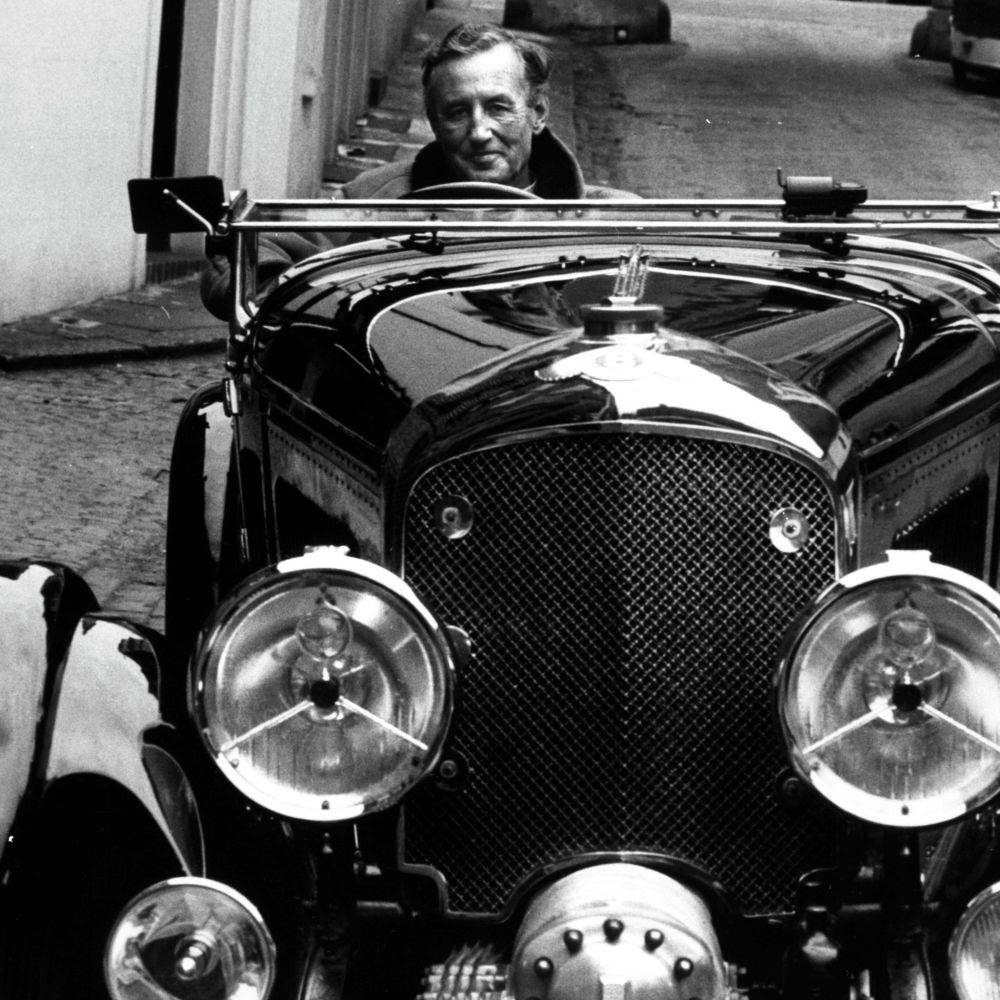
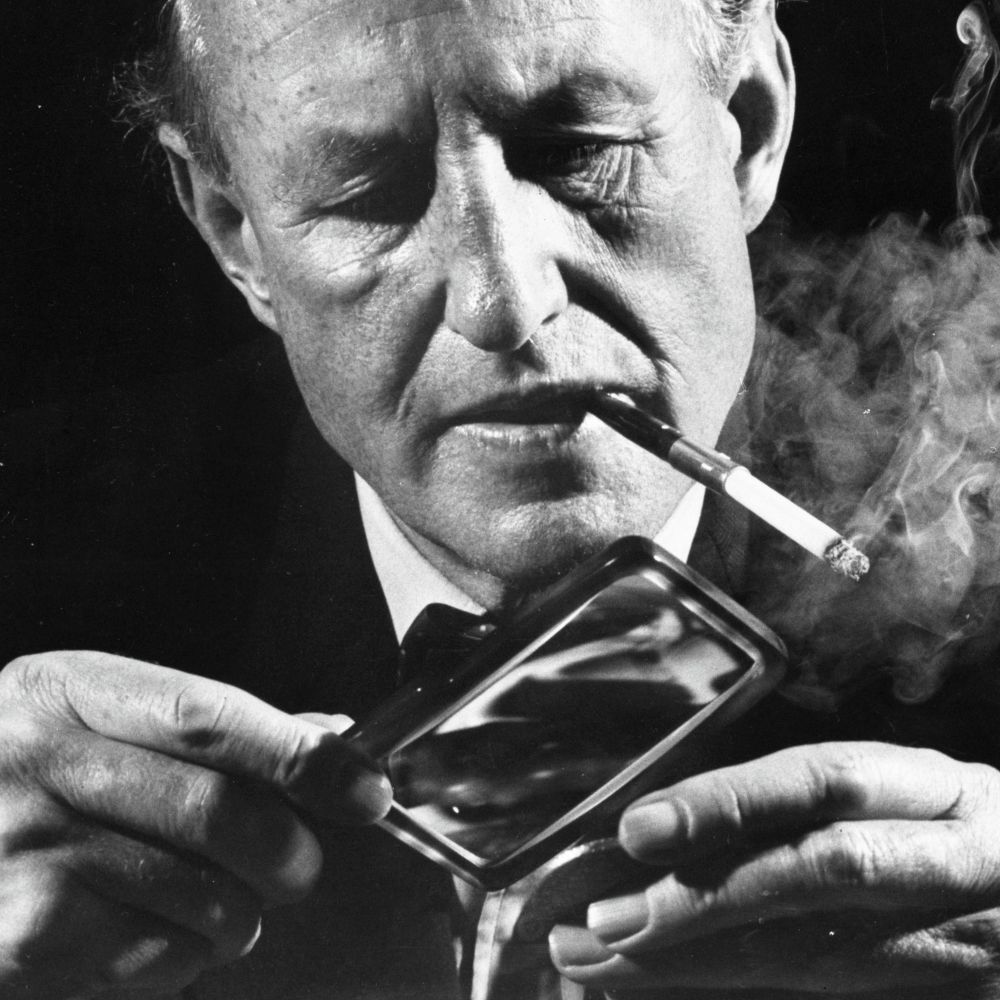
Loomis Dean (1917-2005) photographed a wide variety of people and events during his long career. He spent time as an aerial reconnaissance photographer in the Pacific during the Second World War and also photographed Elvis Presley and many Hollywood greats of the 1950s. This was followed by 25 years capturing personalities and events around the world from his base at LIFE‘s Paris office. Dean’s photographs appeared on more than 50 covers of the iconic magazine, including the iconic image of Ian Fleming behind the wheel of a friend’s 4 1/2 litre Bentley, much like the one driven by 007.

Dean was famed for his ability to put his subjects at ease. His habit of adding amusing or interesting elements to the scene, sets his work apart from more traditional portrait shots. He mixes styles: reportage, candid and formal portraiture are combined to give us a unique insight into his subject’s personality – all with an appealing sense of informality and a fun atmosphere. 

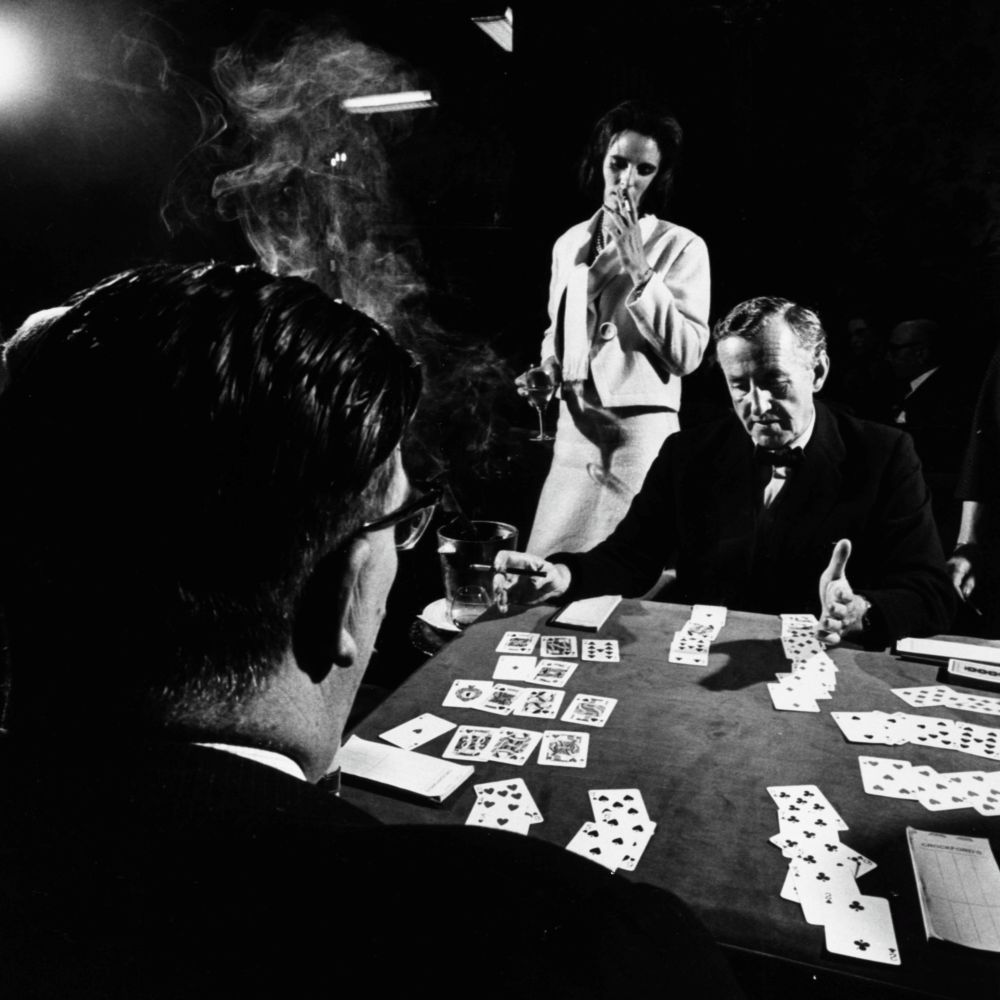
The 17-piece collection acquired by Ian Fleming Images include photos of the author in situations in which James Bond might have found himself, blurring the lines between the two. Watch him examining old Brazilian coins at a London coin shop when researching pirate gold for Live and Let Die in 1962. Other images access a more private part of Fleming’s life, such as rustling up his famous scrambled eggs at his London home in an apron, as featured in 007 in New York, and deep in thought at the card table.

Dean’s camera took him back into the world of 007 in 1967, when the search was on for a new actor to play James Bond on screen. LIFE sent Dean to casting sessions for new movie, On Her Majesty’s Secret Service, to capture the candidates being put through their paces. The five hopefuls included George Lazenby, who would eventually win the coveted role, and the magazine went on to publish a handful of Dean’s photos in an article on the film and on the Bond phenomenon.

Ian Fleming Images work to promote the author’s legacy through pictures. They manage the licensing of his image internationally, offering a wide range of photographs of Fleming throughout his life for both commercial and editorial usage. Please contact images@ianfleming.com for more details.

Discover more about Loomis Dean’s work here.

Celebrating: The Life Of Milton Glaser 1929-2020

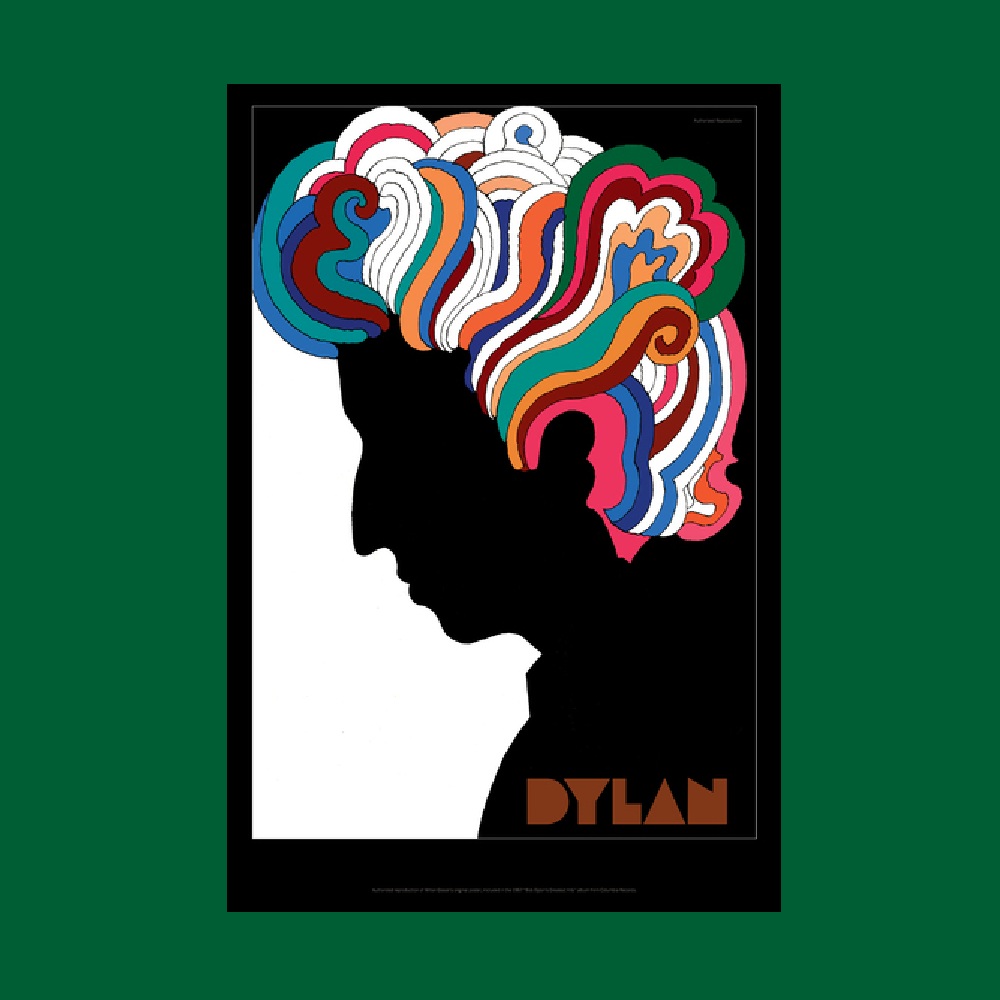
We shine the spotlight on the prolific career of graphic designer Milton Glaser. Born in New York City to Hungarian Jewish immigrants, Glaser’s influence on the American visual landscape cannot be overstated. His working life spanned over 60 years, and in 2009 he became the first graphic designer to be awarded the National Medal of Arts.

Glaser’s output was as eclectic as it was striking. He created the logos for DC Comics, for Brooklyn Brewery, and for New York magazine – which he also co-founded. He designed over 400 posters, including an album poster for Bob Dylan, the poster for Tony Kushner’s Pulitzer-winning play, Angels in America, and the poster for the 1984 Winter Olympics.

However, he is undoubtedly most famous for the ‘I♥NY’ logo he created in 1977 to promote tourism and civic pride – an image so deceptively simple and so ubiquitous it’s easy to forget that someone actually designed it. It didn’t spring spontaneously into being. Like 007 (both the phrase and the character), the logo has become a cultural phenomenon, globally recognised, frequently referenced or parodied, instantly familiar. A true icon.

So it makes sense, that Milton Glaser has a tangible connection to James Bond.

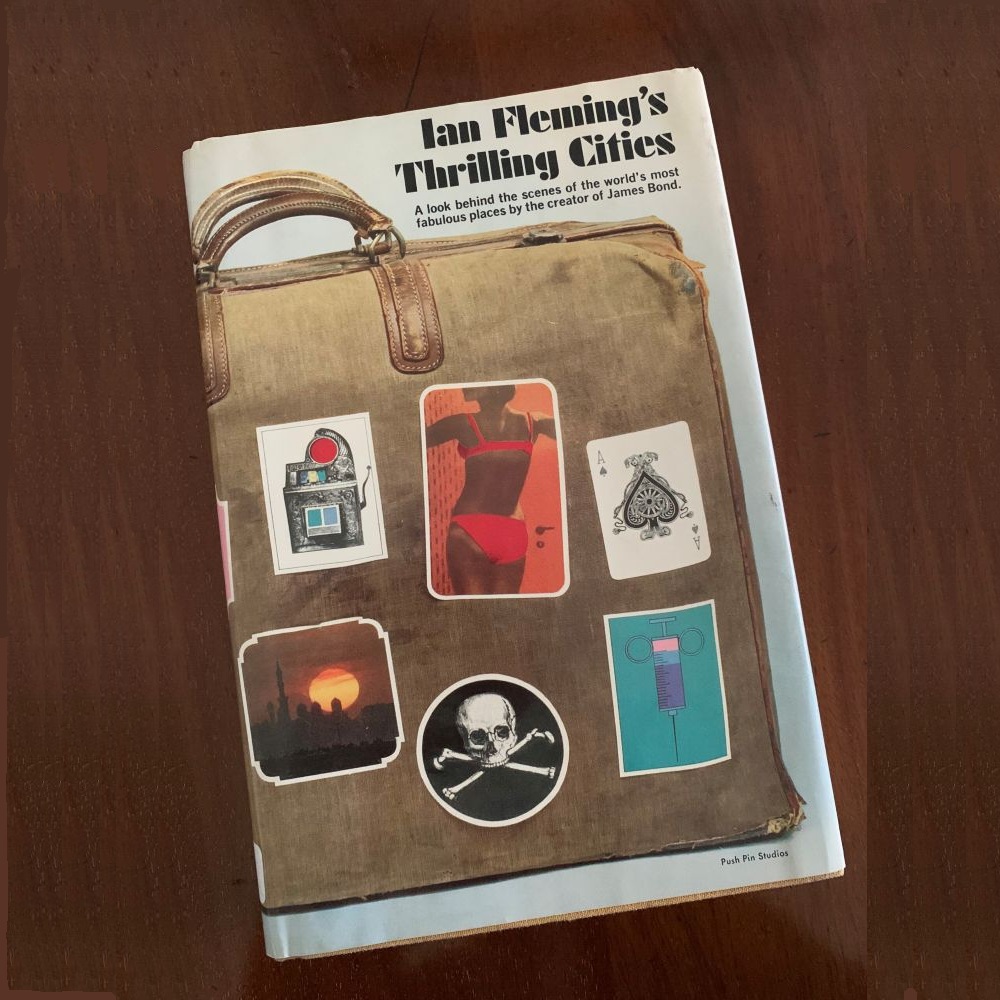
In 1959 and 1960, between work on the manuscripts for Goldfinger and For Your Eyes Only, Ian Fleming travelled to thirteen cities around the world, documenting his impressions in a series of articles for The Sunday Times. Edited versions of these articles were published in the UK as Thrilling Cities in 1963. When the New American Library edition followed in 1964, it boasted jacket artwork by Glaser’s own design company, Push Pin Studios.

The jacket depicts a battered suitcase sporting a playful collection of stickers – a skull, a bikini-clad woman, the ace of spades – evoking the glamour of Fleming’s famous secret agent.

Each chapter heading also features a unique illustration drawn by Glaser himself. The illustrations capture an element of each city, with Glaser’s trademark economy and wit.

It is somewhat ironic that the designer whose name is indelibly linked with his love for NY should have illustrated this particular book. Fleming’s chapter on the city is famously damning, opening as it does with the words, ‘I enjoyed myself least of all in New York‘. He goes on to conclude that the city is ‘rapidly losing its heart‘. We will never know what Glaser made of this pronouncement. But thanks to his timeless design, nobody else will truly be able to claim that New York lacks ♥.

Fleming himself refused to soften his words for an American audience despite requests from his US publisher. Instead, he gave the city a peace-offering in the form of a James Bond short story titled 007 In New YorkThis was included in the US edition of Thrilling Cities, with an introduction conceding that Bond’s ‘tastes and responses are not always my own and [his] recent minor adventure in New York […] may prove more cheerful in the reading‘: Fleming’s apology, and a gift, to the city that had hosted him so often.

Milton Glaser died in 2020, aged 91, and he was still busy working. His final creation harks back to the origins of I♥NY and is a typographical treatment of the word together. This is his bequest to a city, and a planet, in the throes of tumultuous change.

The world today is not the world recorded in snapshots by Fleming in 1960, and Glaser’s contributions to Thrilling Cities represent a tiny fraction of his overall legacy. But like 007, Glaser’s cultural icons will long outlive their creator.

Find out more about Milton Glaser here.

The Story Behind: The Living Daylights

Writer Tom Cull takes us on a journey into Fleming’s short story of assassination on the streets of Berlin; the fulcrum of Cold War tension.

The Living Daylights had a few working titles including Trigger Finger, but first appeared in The Sunday Times colour supplement in 1962, under the title Berlin Escape. Written in two weeks at the end of September, before On Her Majesty’s Secret Service and after the disappointing reception of The Spy Who Loved Me, this short story was a serious, back-to-basics effort, which took Bond to his secret service roots. Not for nothing did Bond own a Double-0 status and this was Fleming’s way of proving it: by the no-nonsense briefing from M, target practice at the Century Range in Bisley, then off to Berlin to assassinate a deadly KGB sniper codenamed Trigger.

Original Magazine Trigger Finger

It is a taut, tough and brutally realistic window into a fraught Cold War Berlin, which by 1961 was still emerging from economic and political divisions from a war that destroyed 50% of the city and left 8 million dead. Two very different political ideologies were pitted against each other between the Soviet socialist sector in the East of Berlin and the Allied sector in the West. The Soviets dismantled much of the industries and transport that existed, which encouraged a thriving black market economy and culminated in the ultimate segregation – the Berlin Wall. When Fleming visited Berlin for part of his Thrilling Cities volume, he described the Eastern Sector where ‘death and chaos and, worst of all, present drabness hang most heavily in the air.’

Fleming knew Germany well from his education and travels, but to reflect the state of play on the ground during the Cold War with the right verisimilitude, he turned to a trusted colleague and friend, who was every bit as skilled as Bond; Anthony Terry.

Terry had worked under Fleming for the Mercury Foreign News Service in Vienna, Bonn, Paris, and most importantly, Berlin. Terry had been one of MI6’s most successful agents during WW2 and his knowledge of Berlin provided a wealth of intelligence, or ‘gen’ as Fleming would commonly say. He ran his foreign correspondents at the newspaper much like he had whilst in Naval Intelligence, and the lines were often blurred as to whether he was seeking news stories or genuine intelligence to relay back to his former employers. One such recipient was the MI6 officer Nicholas Elliot, who was at Durnford School with Fleming and became famous for the disappearance of Lionel ‘Buster’ Crabb and the defection of Kim Philby on his watch.

Terry’s detailed knowledge of Germany provided Fleming with local news and gossip on Berlin for his regular Atticus column (chronicling a range of obscure incidents, interesting facts and mild gossip) at The Sunday Times, as well as much of the location information for the chapter on Berlin in Thrilling Cities. Letters between the two frequently flowed between Kemsley House and wherever Terry was at the time in Germany. Fleming’s more light-hearted letters, still revelling in the cloak and dagger aspects of the work, were met with Terry’s precise (and lengthy) replies; the hallmarks of an intelligence officer.

In a letter sent to Fleming in 1956, Terry wrote responses to questions (with alternative scenarios) for Fleming to use for his next story, even including tram numbers and building addresses. The detail was remarkable. Fleming responded in a letter to Anthony Terry on 17th July 1956:

‘You really shouldn’t have taken so much trouble. You have practically written a thriller and I was fascinated by all the gen.’

Fleming had moved to 4 Mitre Court, just off Fleet St., after finishing with The Sunday Times, and continued to correspond with Terry – this time more as friends than as business associates. On 31st October 1961 Fleming, without hesitation, wrote to Terry for advice on his next story, to be set in Berlin. For example, he asked about which sectors Kochstrasse and Wilhelmstrasse were in order to accurately portray the apartment buildings where Bond and Trigger are respectively holed up waiting for Agent 272 to make a run for it between the East and West sectors.

Hardback book cover for Octopussy and the Living Daylights by Ian Fleming, designed by Michael Gillette.

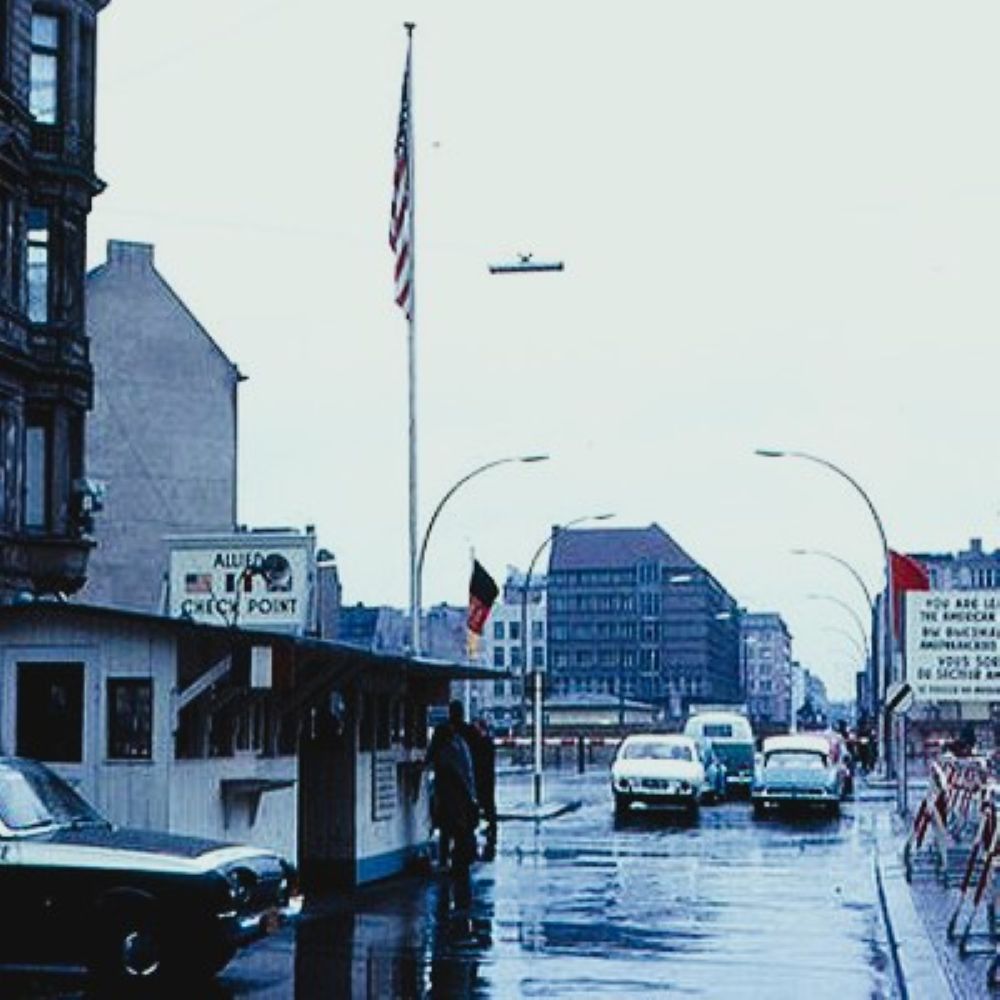
The crux of the drama takes place over the three days and nights where Bond waits patiently to take the shot from 40a Wilhelmstrasse, one block away from Checkpoint Charlie. This crossing point between the East and West sectors was designated for foreigners and members of the Allied forces and later became a renowned symbol for the Cold War. Today it is a tourist attraction, but in 1962, when The Living Daylights was written, this might have been the first introduction to it for his readers, despite several incidents there. The story eerily foreshadowed the death of an East German teenager Peter Fechter on 17 August 1962, six months after the story was first published. Fechter was shot by East German guards when trying to cross the wall into the West and bled to death a few metres inside the Soviet sector.

A tedious enough task as it was for Bond, he suffers further from the company of straight-laced staff-man Captain Paul Sender, nervously watching over him all the time with only a bottle of Dimple Haig and a copy of Verderbt, Verdammt, Verraten (a fabrication of Fleming’s) as respite.

Through Sender’s character, Fleming inserts a dig at Wykehamists (former pupils of Winchester College) on several occasions. Bond paints him as a tea or a Horlicks man and learns all he needs from his tie:

Bond knew the type: backbone of the Civil Service; over-crammed and under-loved at Winchester; a good second in PPE at Oxford; the war, staff jobs he would have done meticulously; perhaps an OBE.’

He even has a ‘Wykehamist snore’.

As the action unfolds, the noise of the orchestra cleverly masks the KGB’s gunfire as they try to prevent the agent whom Bond has been sent to protect, escape to the West. It is commonly suggested that this idea was inspired by Pat Reid’s true-life escape from the Colditz prisoner of war camp, where two escapees ran across a courtyard under the cover of orchestra noise. The conductor of the Colditz orchestra was Reid’s fellow POW Douglas Bader, who happened to be a golfing partner of Fleming later in life.

Bond assumes his target, ‘Trigger’ is a man but it turns out to be the beautiful woman he had spotted with the orchestra earlier carrying a cello case. The inspiration for this character was clear:

‘Of course Suggia had managed to look elegant, as did that girl Amaryllis somebody.’

This is a reference to Fleming’s sister Amaryllis Fleming, who was a celebrated cellist and had been mentored by the Portuguese concert cellist Guilhermina Suggia.  Amaryllis was a very popular member of the Fleming clan. In Fergus Fleming’s biography Amaryllis Fleming, he mentions that Ian had even offered her royalties from From Russia, with Love, so it was fitting that she should have been immortalised at some point within one of his stories. She solemnly returned the favour by playing Bach’s Sarabande in C-minor at Fleming’s funeral.

Paperback book cover for Octopussy and the Living Daylights by Ian Fleming.

Yet perhaps another inspiration, not directly indicated, came from a real-life Russian sniper – one who was responsible for fifty-four confirmed kills, including enemy snipers during the Battle of Vilnius. Roza Shanina was a beautiful, blonde Russian sniper and was among the first female snipers to receive the Soviet Medal for Courage. Roza only lived to be 20 years old, killed in battle in 1945, but her legend as ‘the unseen terror of East Prussia’ lived on. Might Fleming have had her in mind for ‘Trigger’ too? It’s certainly possible… Fleming’s ‘Trigger’ was luckier than Roza. Bond could not bring himself to kill her, instead shooting her Kalashnikov from her hands. When quizzed by Sender as to why Bond let her off, he remarks:

‘Certainly broke her nerve for that kind of work. Scared the living daylights out of her. In my book, that was enough.’

Ours too.

Tom Cull runs Artistic Licence Renewed. He knew iconic Bond cover artist Richard Chopping well as a child and Tom’s great grandfather hired a young Ian Fleming to work at the family bank Cull & Co. between 1933 and 1935.

The Story Behind: Ian & Maud

The diaries of Maud Russell, A Constant Heart, shed interesting light on Ian Fleming’s War years. Here Josephine Lane examines their contents and shares insights into this intimate and significant relationship.

 On the 8th February 1944, Maud Russell wrote in her diary,

‘Yesterday I. came to dinner, looking well and busy with a dream, the dream being a house and 10 acres on a mountain slope in Jamaica after the war.’

‘I.’ was none other than Ian Fleming, who went on to realise this exotic dream in 1947 by buying an old donkey racetrack in Jamaica where he built GoldenEye, the home which sheltered him from the bitter British winter and where he wrote his James Bond novels every year from 1952 until his death in 1964.  Russell’s recently published war diaries reveal that it was her gift of £5,000 that enabled Fleming to build this creative sanctuary which nurtured the rise of his fictional hero. But who was Fleming’s generous benefactor and what significance does their relationship with each other hold?

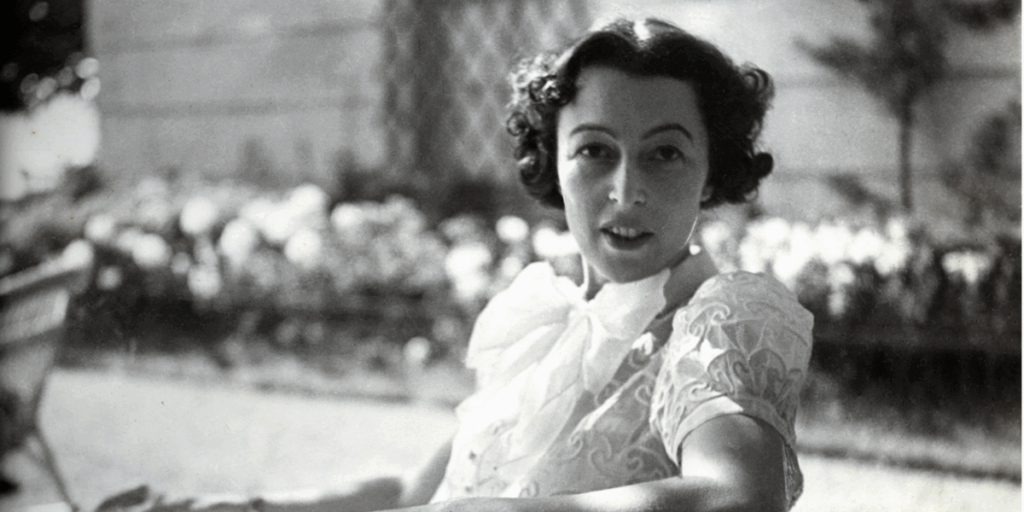
Born in 1891 to German Jewish parents who had settled in London in the 1880s, Maud Russell was a society hostess and one of the foremost French art collectors of her time. She married Gilbert Russell, a stockbroker and cousin of the Duke of Bedford, during the First World War and they lived between the beautiful Mottisfont Abbey in Hampshire and their house in Cavendish Square in London. Gilbert introduced Maud to many politicians and members of the aristocracy while her interest in the arts encouraged a host of artists, writers, society figures and musicians into their social circle. Amongst them was Ian Fleming who Maud described as having the ‘handsome looks of a fallen angel.’ Although Maud was quite a few years older than Ian, their relationship blossomed from casual acquaintances to intimate friends and likely lovers.

A Constant Heart: The War Diaries of Maud Russell 1938-1945 is skilfully and affectionately edited by Maud’s granddaughter Emily Russell and reveals an intimate portrait of an intelligent and independent-minded woman who was surrounded by influential people of the day. The book is bursting with references to key figures of the time, such as this auspicious entry about a new acquaintance she met when dining with Lord Louis Mountbatten in 1942, ‘At lunch there was his nephew Prince Philip of Greece, a nice looking man, who speaks perfect English and is in the Navy. It struck me afterwards that he would do for Princess Elizabeth.’

Maud’s passion for art led her to be acquainted with several exceptional artists of the day and the diaries record lunches with Matisse, for whom she sat in the 1930s, members of the Bloomsbury Group and the photographer Cecil Beaton. She was also close friends with the artist Boris Anrep who specialised in the art of mosaic and whose work can be seen in the foyer of the National Gallery; a project funded by Maud. Undoubtedly her most important artistic relationship during this period was with Rex Whistler whom Maud commissioned to undertake a stunning and vast trompe l’oeil in what is now known as the Whistler Room at Mottisfont Abbey.

As well as documenting meetings with interesting figures from the 1940s, the diaries open a captivating window into a very unique perspective of life during the Second World War. They are a stark reminder of the great uncertainty and the daily anxiety faced when victory against the Axis powers was by no means guaranteed and international freedom was at grave risk. ‘I was in a rage all day and mad to think we have so miscalculated the German forces as to be in danger of losing Egypt… I roared myself hoarse.’

But few fights were more personal than Maud’s own endeavour to help her Jewish relatives living in Germany. On the 9th–10th November 1938 there was an atrocious, nationwide attack on the Jews in Germany, which came to be known as Kristallnacht – the Night of Broken Glass. Approximately 1,000 synagogues were burned, 7,000 Jewish businesses were destroyed, 91 Jews were murdered and tens of thousands more were arrested and interned in concentration camps. The situation was critical and Maud not only campaigned for visas for her relatives but actually flew to Cologne in December, risking her own safety to help her family. ‘I had arrived on the day when all Jews in Germany were ordered to stay indoors between 8am and 8pm so I wondered whether my appearance might arouse comment, but it didn’t.’ The courage and fearlessness of such actions inspire limitless admiration.

‘I think these months are enormously significant and interesting but I wish I was living on another planet.’

The diaries also bear witness to the death of Maud’s beloved husband Gilbert, who died of asthma in 1942. These passages are incredibly moving, as Maud unravels her grief and processes her loss;

‘The main, the fullest, the richest and the most feeling part of life ended with him. I gave him all the tenderness I possessed. There was little over.’

Reading through the diaries it becomes clear how vital her relationship with Ian Fleming was, particularly during this difficult time, ‘His solid friendship helped me these days. He understood how I felt about G. I think he was very distressed about Gilbert himself.’ Indeed, it is likely that Gilbert Russell engineered Fleming’s role in Naval Intelligence during the War and in turn Ian helped Maud to obtain a post in the Admiralty after Gilbert’s death in her bid to forge a new life.

‘He loves his NID work better than anything he has ever done, I think, except skiing.’

The diaries reveal an intimate closeness and fond affection between Ian and Maud, who meet at least once a week throughout the war. An outcome of this is the extraordinary insight the diaries provide into Fleming’s wartime activities. Amongst other things she notes that Fleming broadcasts directly to the Germans, tours the coastal defences, witnesses the Dieppe raid from a destroyer and visits Spain and Portugal to discuss intelligence matters with Roosevelt’s special envoy. A particularly shocking anecdote is recorded in November 1941,

‘He has been on some dangerous job again. He cannot ever tell me what they are.  A house in which he was dining was blown from under him. He and his friends were left marooned on the third floor, the staircase and most of the floors below were blown away. Eventually there was a tap at the window, a fireman’s head appeared and they left the house by the fireman’s ladder. The story was told as if there hadn’t been any danger.’

‘We discussed how either would know if the other was killed.  Not knowing at once gives an empty blank feeling.’

There are hints throughout the diaries that Ian and Maud’s relationship was more intimate than mere friendship. Maud provided Ian with his identification tag during the War (which he stipulated be made of gun-metal) and Emily Russell reveals that she found an envelope labelled ‘I.’s’ containing a lock of black hair, amongst her grandmother’s possessions. However, most telling of all is this touching and raw recollection, ‘He talked about marrying me, I had qualities he wants to find. I said, ‘No, ages makes it impossible.’ He said, ‘If I was five years older.’ ‘No,’ I said, ‘If you were at least 10 years older.’ For he is sixteen and a half years younger than me. If he were 10 years older I would marry him, but it’s no use a woman of 52 trying to keep pace with a man of 36. After a few years he might fall in love and want me to release him. I should do it and be alone again after much pain and drama, a good deal older, and in still greater need of compassion. He is very good to me.’

A Constant Heart front cover

A Constant Heart is a fascinating book, documenting a period of great international importance from a very personal perspective. Maud Russell’s concise and witty records set within an awe-inspiring social circle are a joy to read and her relationship with Ian Fleming is both moving and surprising. Little was known about Maud’s role in Ian’s life before the publication of these diaries and it is a pleasure to encounter Fleming from her perspective as a kind and thoughtful friend. And perhaps her influence runs deeper still. Without her generous gift of £5,000 who knows whether Fleming would have had the peace, quiet and solitude to dedicate himself to devising the deeds of agent 007. But when one learns that he addressed his correspondence to her as ‘Dear M.,’ perhaps it could be argued that her impact was even more fundamental to the literary lore of James Bond.

A Constant Heart: The War Diaries of Maud Russell 1938-1945 is published by Dovecote Press. Photographs courtesy of Dovecote Press and Emily Russell.

Kim Sherwood: Learning to Drive in a Sports Car

Researching the Alpine for Double or Nothing

‘I know that you don’t have a driver’s licence, but how much experience do you have behind the wheel?’ asks the man in charge. ‘Literally zero,’ I tell him. Lorne Mitchener, the Sales Manager at Thruxton Circuit – the fastest race track in the UK – takes this with admirable calm, as they’re about to let me get behind the wheel of an Alpine. He asks if I’m OK with speed and I flat out lie. No one here needs to know I’ve been sick in a Jaguar and a Tesla before. How did I get myself into this position?

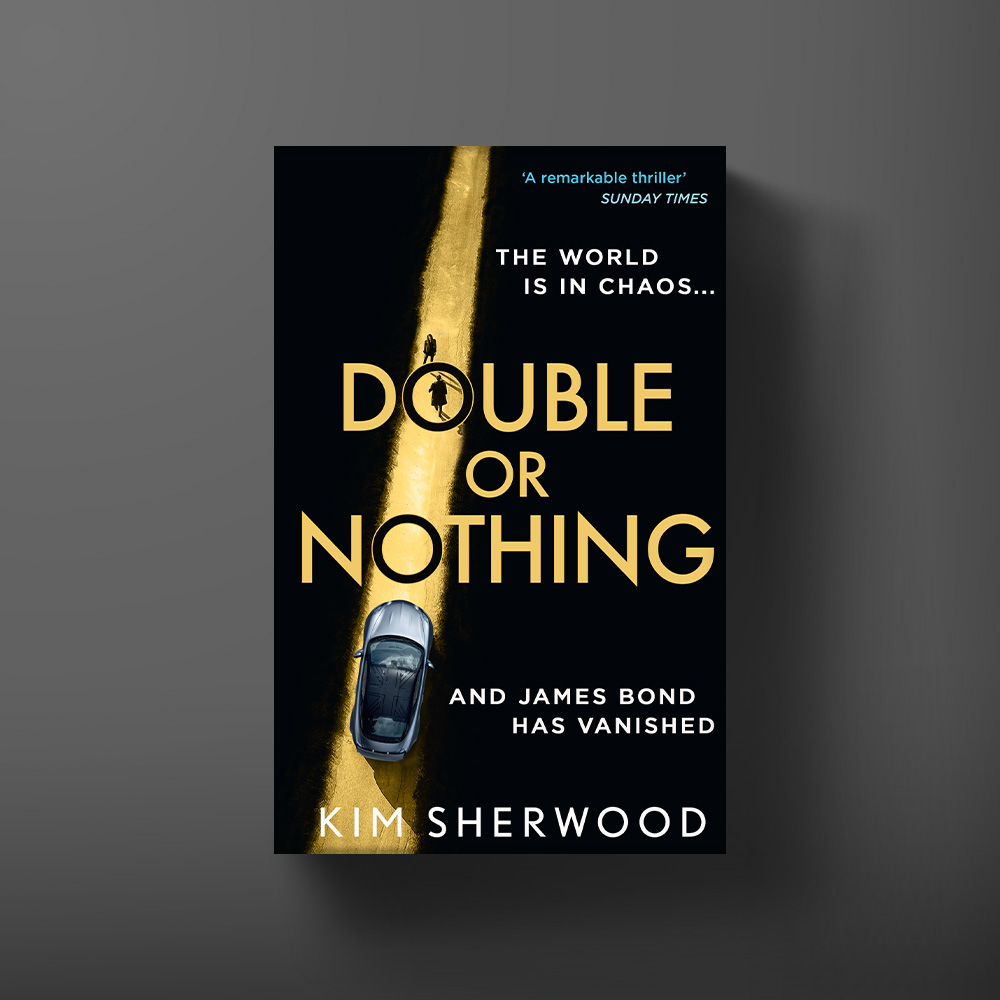
It started with Double or Nothing, my first novel expanding the world of James Bond. The Ian Fleming estate asked if I could include the Alpine A110S in the novel, as it’s a favourite of the managing director and Ian Fleming loved to include interesting cars in his books. I took one look at this beautiful car and decided that was the easiest editorial note in the world. Johanna Harwood (003) was now the proud driver of a matt thunder grey Alpine A110S.

Paperback book cover for Double or Nothing by Kim Sherwood.

There was only one hitch – I can’t drive. So a rally driver took me out in the car in Edinburgh to give me a taste. This was a covert mission as I wasn’t yet announced as the new author of James Bond. When I got in the car, I thanked the driver, explaining my driving illiteracy. We had a thrilling afternoon bombing around as I made notes on the sound of the engine and sensation of the low suspension. Then the driver asked me what I was doing there, exactly. ‘Um… I’m writing a book about cars.’ A beat. ‘But you just told me you can’t drive.’ ‘Right.’ Thinking furiously. ‘It’s a very limited book about cars.’

The fact that I can’t drive but I’m writing in the Bond universe proved such a rich irony that we’ve now got to a point where journalists open interviews by saying: ‘So, it’s a famous fact about you that you can’t drive…’ Well, I don’t know if it’s a famous fact, but when Alpine got wind of this, they offered to teach me how to drive at Thruxton Race Circuit. What better way to learn to drive than in a £70,000 work of art?

The day began with racer and F1 commentator Peter “Snowy” Snowden taking me out in the Alpine to get a feel of it on the track. As we passed 125mph, I piped up that I do actually sometimes get car sick… He told me we weren’t going fast yet, and would I be happy with a little more speed? Well, when in Rome/Andover. Reader, I loved it.

As Snowy hurtled between points, showing me how the car can open up on the track, nimble as a dancer and fast as a rocket, I realised this wasn’t driving. This was interdimensional travel and I just had to enjoy the ride. I’ve never grinned so much while holding on for dear life. Inside the vehicle, you’re so low to the ground every revolution of the wheel spins your stomach and rattles your bones. But outside, Snowy told me we would look smooth: just like a swan, serene on the surface, furious underneath. (The Serene & The Furious probably wouldn’t make such a successful franchise.) Snowy also turned out to be a Bond and Aston Martin aficionado, so our drive turned into the fastest interview I’ve ever done. Check out the videos on my Instagram!

Then it was my turn. Lorne put me behind the wheel of a Toyota GT86 first, to see how my feet fared (I also didn’t disclose that my feet are not to be relied upon at the best of times – if it’s between me and a villain in a foot race, the villain is winning). The moment I eased off the brakes and let the car coast forward felt like flying. Soon I was weaving between cones, and I suppose my feet did alright because the Alpine A110S arrived next. Now, if you’re panicking at this point, let me reassure you I was learning to drive for the very first time in a race car but not on a race track. I was very far from anyone I could hit. Apart from my family. When Lorne told me to drive over to them, he did have to add: ‘… but don’t drive into them.’

The Alpine was an entirely different beast from the Toyota. The car wanted to hurtle forward with the slightest touch. I was nervous at first but Lorne distracted me with questions about growing up in London and then before I knew it I was rounding corners at top speed. Possibly too much top speed.

‘That’s a really well-taken corner,’ said Lorne. ‘But you do need to apply the brakes.’ Right. Learning as I go! I didn’t want to get out of the car. Driving gave me a new appreciation not only for the incredible car stunts in the Bond film franchise, but most especially for Johanna Harwood’s relationship with her car. It is an extension of herself: agile, responsive, tough, bat-out-of-hell, beautiful. 

I was already dancing with victory when Lorne said they had one more surprise for me. They couldn’t let me go without getting me in an Aston Martin. If the Alpine A110S is a dancer, the Aston Martin Vantage AMR is all muscle. You’ll be relieved to hear I wasn’t driving. That responsibility was given to James Steventon. He also didn’t bother braking around the corners, and as we tested the fabric of space and time, I told him he looked remarkably relaxed, while every single muscle in my body was tensed.

‘That’s the trick,’ he said. ‘I’m half asleep right now. You have to be loose to have fast reflexes.’ It was eye-opening for me as a writer, and a dream come true for me as a Bond fan. And the thrills weren’t over yet. At the end of the day, Lorne told me that if I actually learn to drive, I can get behind the wheel of any car I want and take it on the track. I’m already arranging lessons. But for now, the next time a journalist asks me if I can drive, I’ll tell them: ‘Yes, but only sports cars…’

Discover Kim’s Double O series – Double or Nothing, A Spy Like Me and the soon to be released Hurricane Room.

The Story Behind: The Ian Fleming Doctor Bird

Meet Jim Wright, author of The Real James Bond, the biography of the ornithologist whose name was appropriated by Ian Fleming for his 007. Jim gives us an insight into the story of the Fleming Doctor Bird.

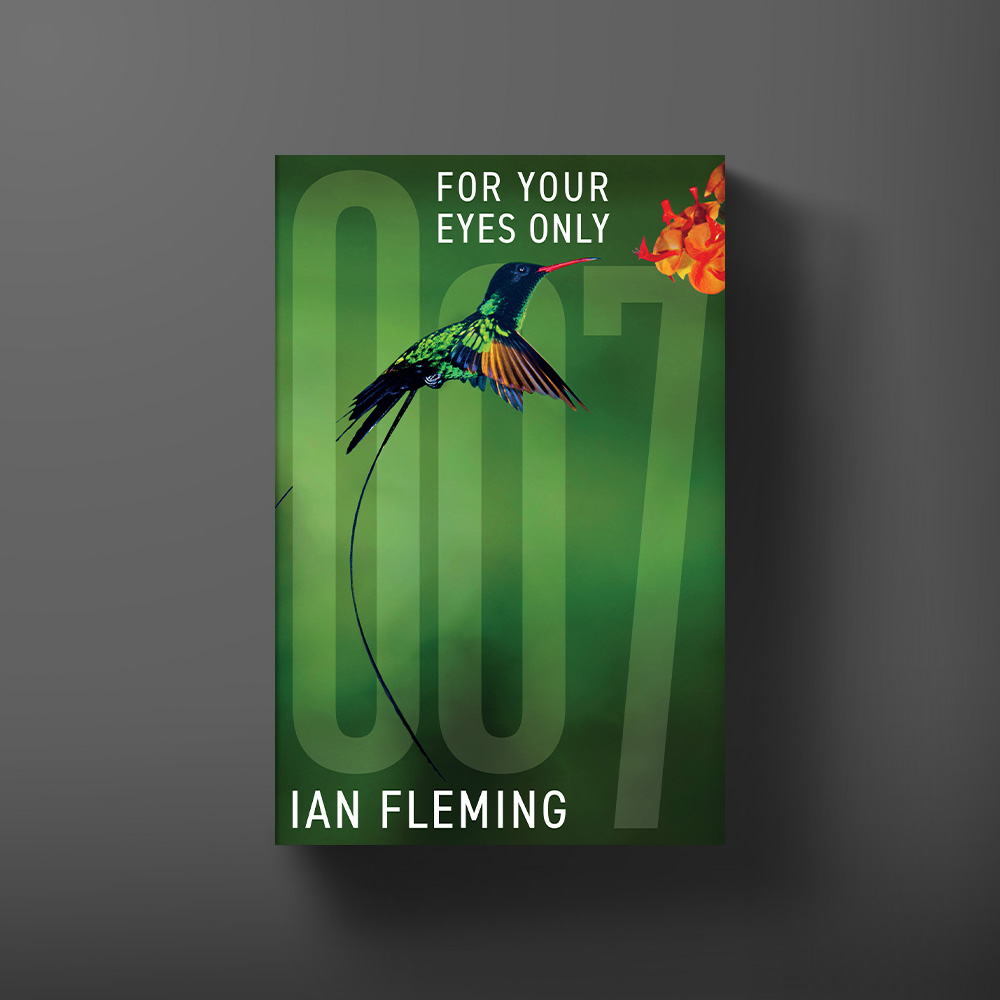
Wonder why the colophon for Ian Fleming Publications features a bird, and what kind of bird it is? For the answer, look no farther than For Your Eyes Only, arguably the best short story in the 1960 compilation of the same name. Fleming begins the tale in a most atypical fashion. He spends the first 105 words waxing poetic about the bird that would become integral to the colophon and Ian Fleming Publications’ logo:

‘The most beautiful bird in Jamaica, and some say the most beautiful bird in the world, is the streamertail or doctor hummingbird. The cock bird is about nine inches long, but seven inches of it are tail – two long black feathers that curve and cross each other and whose inner edges are in a form of scalloped design. The head and crest are black, the wings dark green, the long bill is scarlet, and the eyes, bright and confiding, are black. The body is emerald green, so dazzling that when the sun is on the breast you see the brightest green thing in nature.’

Paperback book cover for For Your Eyes Only by Ian Fleming.

Appropriately, the Red-billed Streamertail also takes centre stage on the front cover of Ian Fleming Publications’ new reissue of For Your Eyes Only. Webb & Webb Design Ltd. surely must have taken Fleming’s description to heart when they created the cover. If you look closely, you can see one of those long tailfeathers arching behind the first “0” in 007.

The hummingbirds of Jamaica were a big Fleming favourite. After he built GoldenEye on a bluff overlooking the Caribbean in the late 1940s, he planted hibiscus and bougainvillea flowers to attract these dynamic little fliers – especially the Red-billed Streamertails that grace the property to this day.  Fleming’s stepson Raymond O’Neill once commented about GoldenEye: ‘Hummingbirds buzzing all around you – it was absolute paradise.’

The plantings and a local tree known as a Poor Man’s Orchid also likely attracted the two other hummers known only to this island nation: The muscular Jamaican Mango, with its iridescent green and purple feathers, and the Vervain, just a wisp or two larger than neighbouring Cuba’s Bee Hummingbird, the smallest in the world.

The Streamertail is also called the Doctor Bird, most likely as a result of its stiff black crest and elongated tail feathers, which were said to resemble the old-fashioned top hat and long tailcoats that Jamaican doctors once wore. Another theory maintains that the name originates from the way these birds pierce the flowers with their bills to extract nectar like a doctor with a syringe. Not only are these scissor-tailed hummers beautiful to watch, but they make distinct sounds with both their wings and their bills. Even with their oversized tail feathers, they weigh just 6 grams, but you can hear them coming 50 yards away.

When Fleming and Ann Charteris Harmsworth married in March 1952, he described ‘a marvellous honeymoon among hummingbirds and barracudas.’ Later that same year, back in Britain and increasingly homesick for Jamaica, he told his friend and literary critic Cyril Connolly that ‘the Doctor Birds are waiting in the Crown of Thorns bushes and the butterfly fish on the reef.’ Another literary friend of the family, Peter Quennell, talked of visiting GoldenEye and seeing Doctor Birds appear “in a spark of celestial brilliance.”

Unlike most of the wild birds that make cameo appearances in the 007 thrillers, the Streamertails at the beginning of For Your Eyes Only are not gunned down by a villain. Perhaps it’s because they are never within shooting range. Perhaps the birds are too small for a villain to shoot. Or perhaps Fleming could never bring himself to kill such a beautiful bird, even on paper.

Find out more about Jim and his book here.