The James Bond Book Club Selection For February 2026 Is Fatale

Do you really need a licence to kill… to kill? This month at the James Bond Book Club, we’re diving into the darker corners of crime fiction and celebrating the reissuing of Jean-Patrick Manchette’s bloodthirsty thriller, Fatale. First released in 1977 and now recognised as a cornerstone of modern noir, Fatale is a ruthless, razor-sharp novel that strips the thriller down to its bare essentials.

We couldn’t wait to get our hands on this gorgeous new edition just published by Vintage Classics.

OVERVIEW

Aimée Joubert is a mysterious woman who arrives in a decaying French port town with no visible past and a quiet sense of purpose. She slips easily into the community, cultivating acquaintances and trust, all the while preparing a meticulously planned act of violence.

As her presence begins to destabilise the town’s corrupt ecosystem of businessmen, politicians, and criminals, Manchette unfolds a story that is as much about power and rot as it is about murder. Told with icy precision, the novel moves inexorably toward its conclusion, revealing how fragile social order becomes when confronted by someone who refuses to play by its rules.

What unfolds is not a traditional thriller, but a cold and unsettling study of control and destruction.

WHY WE CHOSE IT

At Ian Fleming Publications we are drawn to stories that interrogate the figure of the professional killer – and Fatale offers one of the most bracing reframings of that role.

Like Bond, Aimée Joubert is a highly trained operative who kills on demand, operates behind carefully constructed identities, and moves through international spaces with lethal efficiency. But where Bond’s violence is embedded within the narrative authority of the state, Fatale, published in the late 1970s, arrives after that framework has begun to fray.

Aimée operates in a world where ideology offers no shelter, and professionalism is stripped of meaning. This shift in perspective is what makes Fatale so unsettling. By presenting a figure recognisably close to the spy archetype, yet removing the moral scaffolding that traditionally surrounds it, Manchette exposes the mechanics of violence without reassurance or redemption. There are no heroes here.

THEMES TO CONSIDER

Detachment. Aimée’s precision raises unsettling questions about violence as labor and what happens when skill is divorced from morality.

Power and corruption. The novel dissects a town and a time characterised by greed.

Identity as performance. Like the best espionage fiction, Fatale explores how personas are constructed.

Gender and control. Aimée subverts expectations, weaponising others’ assumptions and exposing the vulnerabilities beneath masculine authority.

REVIEWS

The Times ‘France’s king of noir fiction…he writes with a bleak, tragic beauty.’

Big Issue ‘Shocking, funny, sad, smart and cool… A macabre delight from start to finish.’

Complete Review ‘A fist between the eyes, leaving the reader reeling… So devastating it takes your breath away.’

The Economist ‘Manchette’s books are all action, unfolding with a laconic efficiency that would make his killers proud.’

New York Times ‘I’d rather read Manchette than many contemporary noir writers.’

Jean-Patrick Manchette (1942–1995) was a French novelist, critic and screenwriter and a central figure in the néo-polar movement. His crime fiction fused hard-boiled American noir with radical political critique and his work is credited with reshaping the genre for a European and global audience. Fatale stands as one of his most refined and uncompromising works.

We hope you enjoy Fatale. Follow our social channels for discussions, highlights, and more.

Book Club Interview: Jinwoo Park on Oxford Soju Club

We had the pleasure of chatting to Jinwoo Park, the author behind Oxford Soju Club, the James Bond Book Club January pick. His debut novel, it is an exploration of identity in the Korean diaspora under the guise of a punch-packing spy thriller. In this interview, Jinwoo discusses the catharsis of the writing process, how his experience as a translator impacts his style, what ‘home’ means to him, and of course— a bit of Bond.

The James Bond Book Club Selection For January 2026 Is Oxford Soju Club

Happy New Year from the James Bond Book Club! Here’s to a year of daring missions, unforgettable characters, and stories that keep you turning the page. Get ready to enter new worlds and explore the world of espionage – one thrilling book at a time.

Kicking things off, our January pick is Oxford Soju Club by Jinwoo Park. It’s a bold, genre-blending debut published in 2025 that reimagines the spy novel through the lens of identity, nationality, loyalty and belonging. More than just a good story, this month’s choice looks at the masks we wear, the allegiances we forge, and the truths we hide, all set against the storied spires of Oxford.

OVERVIEW

Oxford Soju Club follows a trio of Korean characters whose lives converge in the ancient university city of Oxford. When North Korean spymaster Doha Kim is mysteriously killed, his protégé Yohan Kim – living under the assumed identity of Junichi Nakamura – scrambles to decipher his mentor’s last cryptic message: “Soju Club, Dr. Ryu.” At the same time, Yunah Choi, a Korean American CIA officer, is hot on his trail, while Jihoon Lim, a South Korean immigrant and owner of the eponymous Soju Club restaurant, finds his own peaceful life drawn into the escalating intrigue.

What unfolds is both a taut spy thriller and a deeply felt exploration of the Korean diaspora in which characters must navigate cultural expectations, divided loyalties, and the haunting distance between the selves they show the world and the selves they carry inside.

WHY WE CHOSE IT

At Ian Fleming Publications, we know a thing or two about going undercover — but Oxford Soju Club interrogates that concept in a much deeper, more human way. Park’s debut resonates with the Bond tradition not through tuxedos or glamour, but through psychological tension and international complexity.

What makes the novel particularly compelling is its exploration of identity and performance. Every character exists between worlds, whether undercover as someone they are not, or trying to belong to a country that never feels like home. These layered lives echo the coded existences of spies in fiction, but here they carry stakes that are profoundly human.

Park delivers the thrills, but with a modern twist: the greatest danger is not always a villain’s plot, but the cost of duty, survival, and the masks we wear.

THEMES TO CONSIDER

Identity and disguise. Beyond literal espionage, Park explores the psychological “masks” that immigrants and operatives alike adopt to survive and belong.

Belonging and alienation. Each character’s journey asks: where is home when heritage, duty, and personal desire point in different directions?

Loyalty and truth. The novel probes the delicate balance between allegiance to one’s origins and self-realisation in a globalised world.

Ritual, connection, and community. The Soju Club itself, a Korean restaurant in Oxford, becomes a site of refuge and reckoning, a space where food, drink, memory, and politics intertwine.

REVIEWS

The New York Times – ‘Park, a Korean Canadian writer and translator, deftly maps the shifting terrain of characters whose identities are in flux and who are haunted by pasts from which they cannot escape. His novel mixes spycraft with tenderness, violence with grace, and introduces a welcome new spy fiction talent.’ 

Booklist – ‘In stylistically rich prose, the author carefully portrays complex characters, distilling the intricate workings of the Korean psyche with riveting tension. Under the cover of a compelling espionage drama, Park conducts a metaphorical exploration of Korean identity.’

Shelf Awareness – Oxford Soju Club, is an extraordinarily multilayered examination of identity and loyalty, deftly presented as an addicting spy thriller.’

Washington Independent Review of Books – ‘[A] dizzying, hyperkinetic debut novel.’

Jinwoo Park is a Korean Canadian writer and literary translator whose debut novel brings a fresh, global perspective to espionage fiction. Born and raised in Seoul, he has lived in various parts North America and the UK since the age of eleven. Park completed a master’s degree in creative writing at the University of Oxford and brings both personal insight and narrative finesse to a story that pulsates with tension.

We hope you enjoy Oxford Soju Club as much as we do. Follow our social channels for discussion prompts, highlights and more.

Book Club Interview: Dr Pam Hirsch On The Lifeline

To round off the first month of the James Bond Book Club, we were delighted to discuss the fascinating life and work of Phyllis Bottome with Pam Hirsch, author of The Constant Liberal: Phyllis Bottome, (Quartet, 2020).


Please could you introduce yourself and your connection to Phyllis Bottome.

I am a retired Lecturer in Literature and Film at Cambridge University. I am also a biographer. There are three things that call out to the biographer in me: I am drawn to women who have been lost from sight, who were creative – writers, painters or dancers – and who were politically engaged on the liberal left. My parents both admired Bottome’s work, so physical copies of her books were part of their legacy to me.  The neglect of her work is emblematic of other popular writers. Recently, there has been a concerted effort to remedy this, and there have been some lively academic conferences deliberately asserting the term ‘Middlebrow’, wishing to recuperate the term.

Dr Pam Hirsch

What are you particularly drawn to when it comes to this author?

Bottome was a significant chronicler of her times, publishing prolifically on politics, social issues, psychology and education. It is not surprising that she has been hard to pin down, in that she cannot be securely fixed with one particular literary movement, or even one particular epoch. Born in the late nineteenth century, her first novel was published when she was only twenty and she was writing and publishing up until her death aged eighty-one. Her career covers the years before the First World War, the inter-war years, and during and after the Second World War. She is unusual, too, because she cannot be tied down to one particular location. Brought up in both England and the United States of America, she lived for substantial periods in mainland Europe – in Switzerland, Austria, France, Germany and Italy – so she was exceptionally well informed in European affairs as well as being international in outlook. She had a most extraordinary life, affording her a wealth of unusual experience. Ironically, some of her ‘travel’ was because her survival was repeatedly threatened by tuberculosis occasioning the necessity of living in the mountains. It was in St. Moritz for example that she met her future husband, Ernan Forbes Dennis.

Could you outline the significance of Bottome’s commitment to the psychology of Alfred Adler? 

Vienna was the birthplace of psychoanalysis and its variants. From the 1920s both Bottome and her husband became drawn to the Individual Psychology of Alfred Adler. His understanding that a fully developed individual would find happiness through love, work and an integrated role in the community chimed with her liberal values. He developed ideas, too, about sibling rivalry and the significance of birth order. They both studied with Adler and became close friends: she later wrote his biography. 

Adler Lecturing in Berlin c 1930

How do you think her understanding of the human mind influenced her work.

In 1920 Bottome went to war-ravaged Vienna with her husband who, after having been badly injured in the trenches of the First World War, had been trained in SIS (Secret Intelligence Service, now known as MI6) in Marseille. From this vantage point, as well as joining Viennese activists in organizing food and medical supplies in the starving city, she was able to watch the developing political situation. Her writing became increasingly more urgent as the future was challenged by significant political events, often asking what courage looks like under political pressure.

Can you tell us more about Tennerhof, the school run by Phyllis and her husband in the Austrian Alps? Why did they set it up, and what was life like there?

The resurgent threat of tuberculosis for Phyllis caused her and Ernan to leave both Vienna and Ernan’s successful career in Intelligence there, and move to the mountains. Ernan, who was fluent in French and German, decided to set up a school to teach adolescent boys. They rented a house called ‘The Tennerhof’, in Kitzbühel, a sleepy little Tyrolean market town, which was good for skiing in the winter. The boys studied hard with Ernan every morning learning languages and in the afternoons were free to go skiing or walking. Phyllis, as usual, was writing. In the evenings, Phyllis often played a ‘game’ with the boys of starting a story, and then each would take it in turns to add to it.

It turned out that one of the boys at the Tennerhof was Ian Fleming, sent there by his mother to prepare him for possible entry into the Foreign Office. Ian had been in endless trouble before his arrival, and even after it, though there seems little doubt that Ernan turned Ian around at a time when he might otherwise have gone completely off the rails. Ernan was a gentleman from Scottish aristocratic ancestry, which made him seem to Ian a little like the male Flemings, and, further, he had been tested in war. Like Ian’s father, he could be regarded as a war-hero, and Ian came to see Ernan as an idealized father-figure.

Following Adler’s theories, Ernan saw that he had to replace Ian’s self-defeating goal of being a failure [always comparing himself to his own disadvantage with his older brother, Peter] with a new goal that could lead to success. He encouraged Ian to work hard towards being accepted by the Foreign Service, and it may well have been that Ernan’s previous work in military intelligence made this seem a rather glamorous option.

Once again, Ernan was almost uniquely well-placed to advise Ian; neither he nor Phyllis had attended university but had both educated themselves in a kind of long-running reading group of two. Their own range of reading was eclectic and they were very much European, rather than merely English intellectuals. As Ian was to say later:

‘I remember in those days before the war reading, thanks to the encouragement of the Forbes Dennises, the works of Kafka, Musil, the Zweigs, Arthur Schnitzler, Werfel, Rilke, von Hofmannstahl, and those bizarre psychologists Weininger and Groddeck – let alone the writings of Adler and Freud – and buying first editions (I used to collect them) illustrated by Kokoschka and Kubin.’

Phyllis and Ernan remained friends with Ian throughout his life.

Do you agree with the argument that The Lifeline inspired Fleming’s James Bond?

I am going to answer this by first giving a fairly detailed account of The Lifeline. It was her first book to be published immediately post-war in 1946 by Faber & Faber in Britain and by Little, Brown in America and was a study of the anti-Nazi underground forces in Europe.  Its focus is what happens to a decent sort of educated Englishman, Mark Chalmers, a master at Eton, when faced with extraordinary circumstances. Until 1938, when the narrative begins, Mark Chalmers had believed that this public-school code was enough to live by:

Perhaps half of the boys went to Eton because their parents wanted them to be grand – and the other half because it was a family tradition to go there if you could. The boys that wanted to be grand – if they were like their parents, and it had to be remembered that boys very often weren’t – did pick up all Eton’s strange faults and absurdities; its isolationism; its defensive arrogance; its inconsiderate insolence; and its deep unconscious selfishness.   

Mark found, after a briefing by the British Foreign Office, that he started to consider what Eton made of its boys, compared with what Hitler had made of the Hitler youth leaders. Hitler had airily stated that an English public school was the best training-ground for Nazi doctrines. 

Certainly, a sense that one’s own nation was superior to any other, and an assumption that therefore it was its right to control an empire, was true of both Germany and Britain.

Mark has had little experience of thinking about the wider world. It is only as a consequence of his annual walking holidays in Austria and being able to speak good German with an Austrian accent that landed him in the unexpected position of being recruited as a spy by his chum Reggie in the Foreign Office. Parachuted into Austria after the Anschluss his cover is to pass as a manic-depressive in an asylum run by Dr. Ida Eichhorn. Waiting with Father Martin, a monk who is his intermediary contact in the resistance movement, Mark watches as:

‘a slight, hatless figure in knee breeches, with a short blue canvas coat, scrambled over the rocks towards them. She was, Mark saw with disapproval, as she came nearer, exactly the kind of woman he didn’t like. Her thick untidy ginger-coloured hair was cut close to her head, her face was inordinately white; she had not painted her lips, and she had the cold wild eyes of a sea bird. Her figure was wiry and without curves; she had no allure; no poise.’

Mark is thirty-six years old and his experience of women is limited; in particular, he is not used to dealing with a woman who regards herself as his intellectual equal. As Ida points out to him, his trajectory of a preparatory school, public school and Oxbridge education is roughly equivalent to living in ‘a cloister from ten to twenty [as a consequence] he retains, in a certain portion of his brain, a one-sex world’.  Phyllis always expressed her distaste for any regime that keeps women as second-class citizens; although it was a significant feature of Nazi Germany, she is also pointing out that educational reforms would be necessary for post-war Britain.

Initially, like many upper-class Englishmen, Mark has not regarded the regime in Germany as necessarily a bad thing, although he was upset by the occupation of his favourite country. It is Father Martin who makes him understand what to live under a Nazi regime really means:

“Do not think that Hitler is not prepared as well for a long war as for a short one! His whole country is permanently organized on a war footing. You do not know what that means. You who tie gasmasks to your cricket bats, and still depend on horses and greyhounds to lift your untutored hearts! Remember and tell your people – the Germans are trained not only technically but spiritually for murder! Anti-semitism is not a folly – it is an atrocious process – the Nazis manufacture cruelty – against defenceless Jews – so that a whole people may be ready to accept murder as a pastime without physical damage to themselves. The Jew is the trial rabbit on which to whet the appetite of the German nation towards destruction”. 

The novel is amongst other things a Bildungsroman in that Mark begins the book thinking that he is ‘exactly the kind of man he wanted to be’, but has to reform his complacent concept of masculinity. Ida, the Adlerian psychologist acts as the provocateuse who re-educates him.

The novel exploits Gothic elements to make these points. Michael Salvatore, Ida’s former lover, is an insane aristocrat whom Ida keeps in top security within the asylum, which has once been his Schloss. In Phyllis’s novel, the mad creature locked away is not a wife, but a once glamorous and sensually attractive man. A further Gothic element, reminiscent of Oscar Wilde’s Portrait of Dorian Gray is the formal portrait of Salvator who Mark perceives as being ‘the handsomest man he had ever seen’.  Mark’s Doppelgänger is finally revealed to him as ‘a great, shaggy hair-grown figure [running] to and fro on all fours, very nimbly and tirelessly in spite of age, as if he were the wolf he now thought he was’. Mark’s initial admiration of the fierce hyper-masculinity of Salvator as represented in his portrait, is now lost as Salvator is revealed as not-fully-human. This theme, a critique of hyper-masculinity, arises from a clearly chartable feminist literary tradition. The nineteenth-century French woman writer George Sand explored it in her novel, Mauprat, which, along with her other novels, was closely studied by both Charlotte and Emily Brontë. The representations of the wolf-like tendencies of both Rochester in Jane Eyre and Heathcliff in Wuthering Heights, before their moral education has been effected, can each be regarded as, to some degree an homage to their favourite woman writer. Phyllis may or may not have read George Sand, but she was devoted to the work of the Brontë Sisters, so is picking up on this powerful trope. Utilising this particular form of feminist Gothic, Phyllis adapts it to make a compelling psychological analysis of the connections between a perverse form of masculinity and fascism. By the end of the narrative, Mark’s personal re-education causes him to eschew this form of masculinity and his political education means that he realises that not only have England and America their own internal problems, but also that they have been blind to their world obligations.  

Throughout the novel there are examples of upper-class Austrians, such as Ida, and also peasants, such as the Planer family, who are in resistance to the Nazi spirit. But Phyllis also shows how some upper-class Austrians had bought into the deadly fascist ideology. In representing Salvatore as a fascist who believes that he is a werewolf, the psychological affinity with Hitler is clearly signalled. Phyllis creates an embodied metaphor to stand for the anti-human insanity of fascism. When interviewed about the book, she said:

‘I invented the werewolf […] as part of the logic of the Nazi system. You see their logic is composed of fear, lies, force and hate. The direction is death. The werewolf is a killer going towards death. Unless we have an opposite logic of courage, truth, freedom and love which leads towards life, we are in danger of becoming Nazi. We must train ourselves.’

Writers, she said, more than ever, must be the world’s peacemakers.

So, in answer to the question of whether I think The Lifeline was a direct influence on the creation of James Bond, I would say probably not. In a 1962 interview in The New Yorker Ian Fleming said, ‘When I wrote the first one in 1953, I wanted Bond to be an extremely dull, uninteresting man to whom things happened’. This suggests, perhaps, that Fleming had been initially tempted to create a character like Phyllis’s. Certainly, Phyllis’s publishers always sent a copy of her novels to him, so he would certainly have read The Lifeline. But Fleming’s Bond is depicted as a professional Intelligence agent; Fleming after all had served in Intelligence during World War II, so could draw on his own experiences. And Bond was glamourous; quite possibly Fleming thought that this was what the reading public needed during the drabness of post-war Britain, with coal and some foods still being rationed.  Nor is Fleming concerned [or rather Bond], as Phyllis is, with the equality of women. And lastly, and connected with the last point, Phyllis is warning about the potential for fascist tendencies in Britain and its Empire. Bond, I think, only represents concern about the diminution of Britain’s Empire.

However, what Fleming owes to Bottome, as well as his love and respect, is what he learned from her at the Tennerhof. She would always encourage the boys to try their hands at writing and would always read and critique their stories. She mentored the apprenticeship writing of Ian Fleming, Nigel Dennis and Ralph Arnold, for example. In particular, she taught Ian how to write page-turners, as she herself did. When Phyllis died, in 1963, Ian wrote to Ernan:

‘She was such a dear person and between you, you spread an extraordinary warmth and light and sympathy wherever you went. You were father and mother to me when I needed them most and I have always treasured the memory of those days in Kitzbühel.’

If you could only recommend one other book by Phyllis Bottomme, what would it be and why?

The Mortal Storm, published in 1937 in the UK and in 1938 in the USA. It was a searing and psychologically convincing novel showing what fascism means, first to a German family, then to Jews and ultimately to freedom itself. MGM bought the rights to turn it into a film and it was MGM’s first openly anti-Nazi film to be screened in isolationist America.

Our thanks to Dr Pam Hirsch for answering our questions. Read more in her biography of Phyllis Bottome, The Constant Liberal, here.


The Lifeline is the first James Bond Book Club pick. Find out more about why we picked it here, and get your copy at the Ian Fleming Shop here.

The Official 2025 Ian Fleming Gift Guide

Find inspiration for your wishlist or gift list with our 2025 present edit.


FOR THE COLLECTOR

Completionists will appreciate a one-time-only signed or special edition. What about Raymond Benson’s very first Bond novel, Zero Minus Ten, signed by the author? Or the Collector’s Hardback Edition of Goldfinger? A must-have edition of just 250 copies with gold gilt sprayed edges. Or how about a boxset? The landmark 70th anniversary paperback reissues of all fourteen classic 007 titles are now available in a boxed set exclusive to the Ian Fleming Shop .

FOR THE WRITER

A writer’s notebook is an essential gift. Handcrafted by artisan bookbinders in England, the Hummingbird Notebook is the place for musing, research and notes. Choose from leather or buckram covers, in a variety of colours. Or what about some inspiration? Talk of the Devil brings together articles spanning Ian Fleming’s careers as both an author and a journalist, as well as documents from the Second World War and various correspondence – including with fellow author Raymond Chandler.

FOR THE COCKTAIL CONNOISSEUR

Equip them with the perfect accompaniments to their cocktail cabinet. Shaken: Drinking with James Bond and Ian Fleming is the official 007 cocktail book and features 50 delicious recipes inspired by Fleming’s stories. Or cause a stir with ‘The Shaken’ socks, the perfect design to raise a glass to.

FOR THE ARMCHAIR SLEUTH

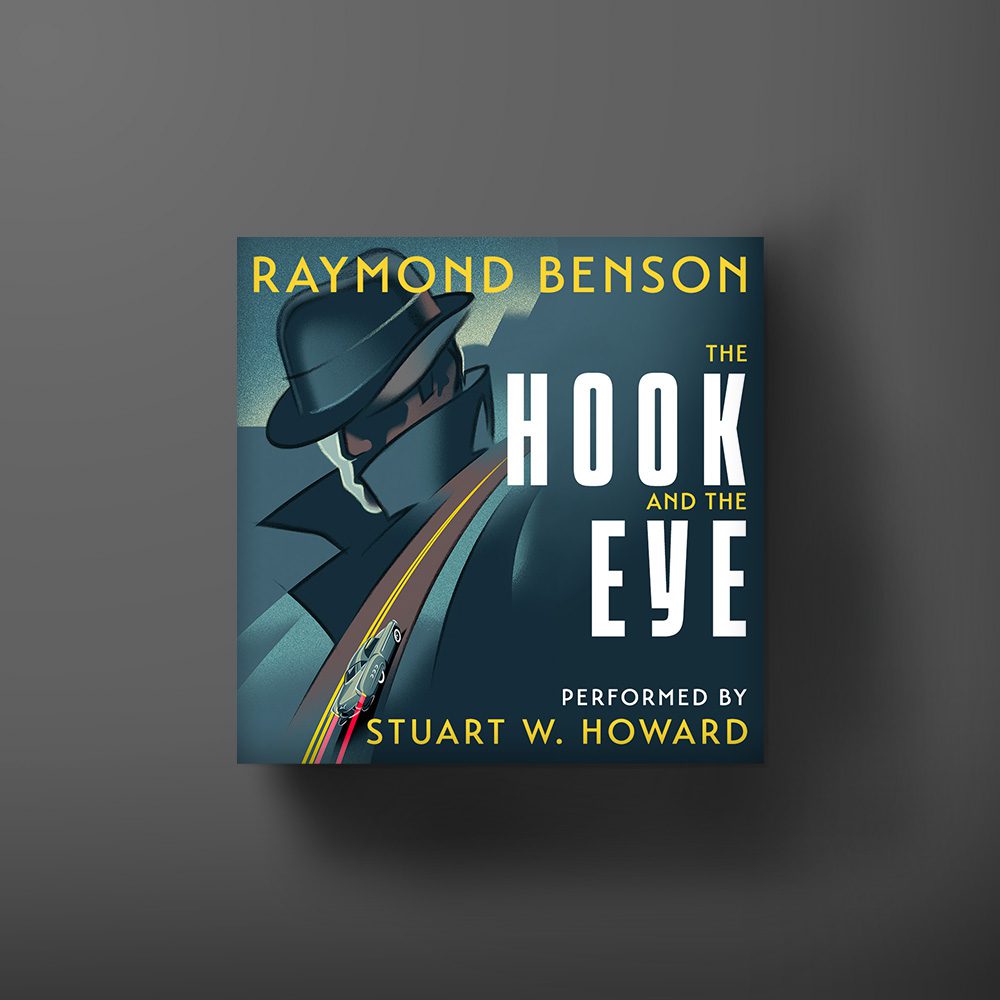
Give them a mystery they can sink their teeth into. Q is out of MI6, and in over his head in Vaseem Khan’s new novel Quantum of Menace, where Q’s investigating the death of a childhood friend turned quantum computer scientist . Or step into Raymond Benson’s new adventure, The Hook and the Eye, set after the events of Live and Let Die, following Felix Leiter’s first job as a private detective.

FOR THE HISTORIAN

Dive into the detail with gifts for the bedside table or library. The award-winning biography Ian Fleming: The Complete Man gives a new perspective on the writer’s life. Choose an edition signed by author Nicholas Shakespeare to make it even more special. Or what about Fleming’s lesser-known work of non-fiction, The Diamond Smugglers, which tells the true story of an illicit multi-million pound scheme smuggling gems out of Africa. Or dive into James Bond family history with the ‘Heraldry’ sock giftset, containing two pairs of socks embroidered with the Bond and De Bleuchamp/Blofeld crests.

FOR THE JETSETTER

Globetrotters can get a vivid snapshot of a mysterious, vanished world as they explore fourteen of the world’s most exotic locations alongside Ian Fleming in his non-fiction book Thrilling Cities. Or conjure up tropical sunshine with ‘The Thunderball’ socks, featuring 007 in classic scuba kit with speargun.

FOR THE MODERN AGENT

How about their favourite Ian Fleming 007 adventure in hardback or paperback? Or take them on a mission of a lifetime with a signed edition of Charlie Higson’s On His Majesty’s Secret Service. It’s two days before the coronation of King Charles III and Bond is tasked with foiling an attempt at (murderous) disruption. ‘The Double-O’ or ‘The Agent’ socks will upgrade their footwear… the only choice: black tie or white tux?

FOR THE KIDS

Buckle up for a magical adventure with Ian Fleming’s classic Chitty Chitty Bang Bang. Gift the paperback edition, signed by illustrator Thomas Gilbert, or our 60th anniversary collectible hardback, featuring the original artwork and cover by John Burningham.

Find more inspiration at ianflemingshop.com.

The James Bond Book Club For December 2025 Is The Lifeline

Welcome to our very first James Bond Book Club selection, The Lifeline. This month we’re shining a spotlight on a classic thriller first published in 1946 by Faber. It’s an essential read if you’re a fan of Ian Fleming’s work or love a smart, original, fast-paced spy story.

Republished by Muswell Press in 2024, with an intro from Miles Jupp and David Stenhouse, The Lifeline is the work of English writer Phyllis Bottome. Bottome mentored Ian Fleming in the 1930s and the book is often discussed as a key influence on Fleming’s own spy fiction.

OVERVIEW

The story takes place in Austria in 1938, as Nazism tightens its grip on Europe. Our protagonist, Mark Chalmers, is a teacher at Eton and leads a comfortable and detached life. He adores Austria, where he spends his holidays, but prefers to stay out of the world’s increasing turmoil. Everything shifts when an old friend from the Foreign Office introduces him to the enigmatic “B,” and recruits him for a dangerous mission. Reluctantly, he agrees to parachute into Nazi-occupied Austria to deliver vital intelligence to a British agent, armed only with his orders and, in case of capture, a suicide pill.

Chalmers plans to do the one job then walk away, but once he reaches his destination he’s drawn into the fight against fascism and there is no turning back. Seeing a country he loves under tyranny awakens something in him and what starts as a gripping adventure story becomes a rich, thoughtful study of the psychology of a spy.

WHY WE CHOSE IT

We’ve picked The Lifeline as the first James Bond Book Club recommendation not only because of its exploration of espionage but also because of its connection to Ian Fleming. Phyllis Bottome and her husband, Major Alban Ernan Forbes Dennis (himself a spy), ran a school for languages in Kitzbühelm Austria in the 1920s. Following his shortened stints at Eton and Sandhurst, Ian was sent there to study. By his own account, it was a happy period, spent skiing, mountain climbing, and learning languages, during which he also formed a close bond with Phyllis and her husband. She encouraged Ian to write and he produced his first known short stories here, followed in 1928 by his now-lost book of poetry The Black Daffodil.  

Chalmers, The Lifeline‘s protagonist goes on a moral journey and hints at the kind of hero Fleming would later create. Scholars often point to The Lifeline as a spiritual precursor to James Bond, exploring moral complexity and the post-war psyche from a more humanistic angle. It’s thought to have deeply influenced Fleming’s vision of duty, danger, and decency… the DNA of Bond himself.

THEMES TO CONSIDER

– Resistance and morality. Bottome examines how individuals act under oppressive regimes and what it means to live with integrity in dark times.

– Education and empathy. The novel questions education as a means of building character and combating hate. Can empathy be taught?

– Courage in everyday life. Rather than glorifying espionage or violence, The Lifeline celebrates quiet, human bravery, something that contrasts with the more glamorous heroism found in Fleming’s later Bond novels, yet hints at the moral depth Bond would inherit.

REVIEWS

The Financial Times, Best New Thrillers – ‘A cracking read. Top marks to Muswell Press for bringing this book back’

The Times – ‘The real thing…a well-wrought period piece that Fleming completists will enjoy’

Crime Time – ‘Fascinating. A major inspiration for Ian Fleming’s James Bond. A jolly good read.’

The Sunday Post – ‘A thriller of a highly diverting and original kind’ 

The Time Literary Supplement – ‘A gifted and entertaining novelist’

Starting in 1916, Phyllis Bottome wrote over 30 novels and a series of short stories and novellas, including the anti-Nazi best-seller, The Mortal Storm, based on her experiences of living in Germany. Four of her books have been turned into films, including The Mortal Storm, which became a Hollywood blockbuster starring James Stewart. Her work is currently enjoying a much deserved revival and we are delighted that our friends at Muswell Press are bringing The Lifeline to a new audience. Muswell Press is a small British independent publishing house, owned and run by sisters Kate and Sarah Beal, focused on crime, contemporary fiction, biography and LGBTQ stories.

We hope you enjoy exploring our first James Bond Book Club pick. Follow our social channels for more on the book, and get your copy of The Lifeline at the Ian Fleming Shop here.

For more insights into Ian Fleming’s personal life and history, read Talk of the Devil, an anthology featuring his non-fiction, reviews, letters and two short stories. Available as a hardback, eBook and audiobook.

Announcement: The James Bond Book Club

Ian Fleming famously wanted to write “the spy thriller to end all spy thrillers.” Did he succeed? Or did he initiate a genre that continues to evolve in his wake?

As the home of spy fiction, Ian Fleming Publications is delighted to announce the launch of the James Bond Book Club, bringing you the best of the best in spy fiction: the books that inspired 007, and the ones that carry his legacy forward. 

From foundation-laying classics to razor-sharp modern thrillers, each monthly pick will be chosen for its connection to the themes, style, or spirit of Ian Fleming’s iconic creation. Some books directly influenced Fleming’s writing while others meet the same high standards of tension, sophistication and craft, but all of them embody something unmistakably Bond.

Whether you’re a lifelong Bond fan or just someone who enjoys smart, stylish spy fiction, the James Bond Book Club is a new way to discover standout stories from across the genre, from its defining classics to its boldest contemporary voices.

Follow along for monthly announcements and join the conversation on our social channels. Plus, stay tuned for exclusive content such as reviews, interviews and extra recommendations.

Join us on 2nd December for our first book reveal. We look forward to reading with you.

Announcement: James Bond And The Secret Agent Academy

We’re thrilled to announce a new blockbuster 007 literary adventure, James Bond and the Secret Agent Academy, by bestselling crime writer M.W. Craven. Publishing in June 2026, it will kick-off an action-packed new series for readers aged 8-12.

The series will take the world’s most beloved secret agent to a place of dread, weirdos and strange food: school. A new generation of young heroes, mentored by 007, have entered the Secret Agent Academy to see if they have what it takes to join the ranks of the Double O’s. Together with Bond can they defeat a deadly foe lurking in the shadows – and, more importantly, can they pass their exams? For existing fans and a new generation of spy adventure readers, this is 007 like you’ve never seen him before.

The series is written by bestselling and CWA Ian Fleming Steel Dagger award-winning crime and thriller author M.W. Craven who says, “While writing a middle-grade book that features James Bond training the secret agents of tomorrow is undoubtedly an extraordinary honour, it also comes with a daunting responsibility. The challenge of introducing Ian Fleming’s Bond – a brand that has transcended books and movies to become part of our national identity – to a brand-new audience is not something to accept lightly, but after speaking with the team at Ian Fleming Publications Ltd, sharing our concerns about recent research from the National Literacy Trust in the UK showing that reading for pleasure amongst children is at a 20-year low, it wasn’t an opportunity I felt I could turn down. Yet this is not James Bond as you’ve seen him before. Expect whacky gadgets, whacky lessons, and even whackier members of staff.”

Simon Ward, Publishing Director at Ian Fleming Publications, says: “We are always looking for stories we want to read: stories that have everything we love from Ian Fleming’s legendary James Bond adventures but with new characters and new settings that Ian would approve of. This is a James Bond story unlike any other we’ve done: a world of twisted villains, extremely silly names and bizarre gadgets but with a contemporary setting and a cast of young heroes children can relate to. For this we needed an author unlike any we’ve had before: M.W. Craven is the perfect combination of fierce intelligence, nail-biting action and mischievous humour. Not only is he the perfect adult thriller writer, it turns out that he is also a born children’s author. This is a series that kids and grownups alike will love. We look forward to welcoming all new recruits.”

James Bond and the Secret Agent Academy will be published in June 2026. Pre-order your copy now.

‘Shaken, Not Stirred’

Join us as we take a look at the role drinks play in Ian Fleming’s James Bond novels.

It begins in the very first 007 adventure, Casino Royale, with the immortal line, ‘shaken and not stirred’ and The Vesper martini, christened in honour of Bond’s great love, Vesper Lynd. From then on, strong, carefully crafted drinks are at the heart of every 007 story. 

Ian Fleming was very particular about the finer details of his hero’s lifestyle. As well as Bond’s drinking habits, his clothes, weaponry, cars and food are all described with precision, a narrative trait which is perfectly highlighted by his instruction on how to make the perfect martini.

Diamonds Are Forever

‘The waiter brought the martinis, shaken and not stirred, as Bond had stipulated, and some slivers of lemon peel in a wine glass. Bond twisted two of them and let them sink to the bottom of his drink. He picked up his glass and looked at the girl over the rim. “We haven’t drunk to the success of a mission” he said.’

The particular attention that is paid to how eggs should be scrambled, how a car should be customised and how best to serve vodka, are all testament to the writer’s own preferences. Though many have debated how much of Ian Fleming there was in James Bond, there has always been agreement amongst fans that Fleming shared his own tastes and enthusiasms with his character. Along with the advocation of particular brands, these strokes of realism provide a layer of truth and help to bring the fantasy of James Bond’s world to within the readers’ reach. ‘All these small details’, Fleming wrote, ‘are ‘points de repère’ to comfort and reassure the reader on his journey into fantastic adventure.’

Goldfinger

‘James Bond, with two double bourbons inside him, sat in the final departure lounge of Miami Airport and thought about life and death.’

In a feature titled ‘London’s Best Dining’ for Holiday magazine, Fleming provides a tip for American tourists on how to sample a decent martini, showing how much it mattered to him beyond the pages of his novels.

‘It is extremely difficult to get a good martini anywhere in England. In London restaurants and hotels the way to get one is to ask for a double dry martini made with Vodka. The way to get one in any pub is to walk calmly and confidently up to the counter and, speaking very distinctly, ask the man or girl behind it to put plenty of ice in the shaker (they nearly all have a shaker), pour in six gins and one dry vermouth (enunciate ‘dry’ carefully) and shake until I tell them to stop. You then point to a suitably large glass and ask them to pour the mixture in. Your behaviour will create a certain amount of astonishment, not unmixed with fear, but you will have achieved a very large and fairly good Martini.’

Paying attention to exact details are crucial skills for any spy who wants to complete a mission successfully and safely. The life of a secret agent is one of daring action and life-threatening peril.  James Bond’s preference for the finer things in life suggests that when the moments of danger have passed, pleasures should be indulged. Enjoying the very finest dover sole and a glass of chilled champagne provides 007 with a reward and pushes his experiences to the height of sophistication and quality, in those brief respites from danger.

Live and Let Die

‘There are moments of great luxury in the life of a secret agent… occasions when he takes refuge in good living to efface the memory of danger and the shadow of death.’

As well as enjoying the pleasures of drinking, alcohol serves to ease the conscience of a cold blooded killer such as 007, and provides moments of relief in a life of violence and upheaval. Drinks play a soothing role in the James Bond novels and offer a well-earned splash of luxury after a long day spent navigating the dirty business of spying.

Discover 50 cocktails inspired by the characters and plots of the 007 novels in Shaken: Drinking with James Bond and Ian Fleming, created by the team at award-winning Bar Swift in London’s Soho.

Interview: Raymond Benson On The Hook And The Eye

We sat down with Bond novelist Raymond Benson to talk all things Felix, Fleming, and The Hook and the Eye. Read on to learn more about the latest adventures of James Bond’s trusted friend and ally.

After a long break from writing for Ian Fleming Publications, how does it feel to be back with a brand new story?

It feels great! For one thing, the people at Ian Fleming Publications are fabulous to work with. Both now and back when I was doing the Bonds in the late 1990s and early 2000s when there was a completely different team in place. In the past I was fortunate to work with Peter Janson-Smith, the man who was Ian Fleming’s literary agent. He not only acted as editor and mentor in a professional capacity to me, but he was also my friend. I miss him a great deal. That said, I love working with you lovely folks at IFPL now. It’s been a uniquely rewarding experience doing The Hook and the Eye with everyone. I’m glad to be back.

Black and white photograph of author Raymond Benson, a middle aged white man wearing glasses.

How did you find reconnecting with Felix, was it challenging at first or did it feel like returning to an old friend?

I love Felix. I always have, ever since I first read Fleming’s books as a kid in the 1960s. Somehow I identified with him, maybe because he was a Texan (I was born and raised in Texas, too). And while several fine actors portrayed Felix in the films, we’ve never seen Fleming’s literary character on the silver screen. For one thing, in four of the six books Fleming wrote in which Felix appears, he has a prosthesis for a right hand. But there’s also a joviality to his personality that’s only in the books. He’s very much a “kidder” and he always stays upbeat. Having the opportunity to get to know Felix better and place him in his own adventure was indeed like returning to an old friend—and that includes revisiting the Bond universe itself.

What was the very first thing you did regarding your research for this project? 

The first thing I did was re-read all the Felix passages in the Fleming books. I’ve read the novels numerous times throughout my life and I know them well. I just wanted to reacquaint myself with Felix’s speech, the way Fleming presents him, and also note the details of Felix’s life and history that Fleming gave us. There isn’t a lot about Felix prior to his meeting Bond in Casino Royale. But there are tidbits and clues… enough for me to take and then develop into something bigger. I then wanted to know exactly how his prosthesis would affect his life. Fleming doesn’t give us much info about the “hook.” When I first read the books, I pictured in my head a pirate hook. That, of course, is not what it would have been. In the time period I set the story—the early 1950s—Felix’s prosthesis would have been supplied by the Veterans Administration and similar to what actor Harold Russell had in the movie The Best Years of Our Lives. I sought out a prosthetics doctor who provided a lot of the information I needed to give readers a better understanding of how Felix deals with his disability and still manages to be something of a detective hero!

Book cover for The Hook And The Eye by Raymond Benson.

Felix Leiter is usually seen as a loyal ally to James Bond, but in this novel, he’s on his own. How did you approach writing from Felix’s perspective, especially in the context of a detective story as opposed to a Bond adventure?

I was certainly inspired by the pulp noir novels of the 1940s and 1950s, and certainly by Fleming’s 1950s-era novels. There’s a certain vibe that you get when you read those things. I’m not saying The Hook and the Eye is a pulp noir crime novel, but there are elements. I also wouldn’t call Fleming pulp noir nor “hard-boiled.” He was his own unique thing. I suppose I’ve fashioned the book more in his direction. I wanted it be as if Fleming had somehow developed an American voice and written the book himself in 1953. One thing that helped me immensely was the decision to write the novel in first person, from Felix’s perspective. This also helps generate that noir sensibility, but it also allows the reader to get to know Felix very, very well! We’ve never had a Bond novel written in first person, save for The Spy Who Loved Me, and that narrator isn’t Bond! So that’s a big difference in the way I’ve approached a Felix Leiter detective story as opposed to a James Bond adventure.

This project has been in the works for a long time. How different is the end result from your original concept?

Not very different at all! I’m not sure this is relevant, but way back in the late 1980s the very first novel I ever wrote was about a private detective who had a prosthesis. He wasn’t Felix Leiter. He was a different guy, but similar enough that down in my subconscious I was maybe thinking he was my version of a Felix Leiter. The title of the book was, coincidentally, Hook and Eye, Inc., as that was the name of the character’s detective agency. The story, locations, and time period were completely different from The Hook and the Eye. Peter Janson-Smith read the book and gave me some good feedback, but he agreed with me that it was the proverbial “first novel” and belonged in a drawer, never to see the light of day again! But it was a learning experience, and perhaps Peter saw then that, for future reference, I could begin a novel and, more importantly, finish it. Anyway, the current “true” conception of a Felix Leiter novel began after I had done my Bonds, which finished up in 2002. I wanted to see a Felix book in Fleming’s timeline that addressed his life and work in the early 1950s. The notion had come up occasionally in conversation with you at IFPL since that time, but doing a project like that just wasn’t in your plans then. Now it is! Last May 2024 I pitched the concept to Simon Ward, and that evolved into a full blown written proposal and outline, after which I received the green light. The concept and story hasn’t changed since. I suggested the title, The Hook and the Eye. I never meant for that to echo the title of my long lost unpublished first novel, but it better fits this one.  

Aside from having a Texan background, are there any similarities between yourself and Felix, either in terms of personality, values, or life experiences? How much of yourself do you see in him, and did that influence your writing of his character?

Whenever any author uses a first person narrative, I believe a touch of the author’s own voice goes into that of the narrator. I don’t think it can be helped. I think I know exactly how Felix would sound in real life because I knew and know men like him. I don’t think Felix has an exaggerated Texas drawl. He spent time in Europe and Washington DC. His accent would be tempered, much like mine. My Texas drawl was drilled out by being in theatre for so many years! I left Texas in my early twenties and moved to New York City. I have lived in other places in the north since then and now the Chicago area. Maybe Felix talks like I do, perhaps slower. As for other character traits… I’m sure my values match Felix’s, but we are of different generations. Felix would have been in my father’s generation, having served in World War II. That, in and of itself, makes our world outlooks markedly different. Felix did military service and worked in government afterwards—all that is foreign to me. But I know enough about those things and I have known men who have had those life experiences. It’s more about Felix’s personality. That is closer to me. I like to think I’m as upbeat as Felix. When I’m with my pals I joke around like Felix. I enthusiastically praise whatever food and drink we’re having in Felix fashion. I’m not the heavy drinker or smoker that Felix is, that’s for sure, but, like him, I’m a jazz fan! Incidentally, there’s a member of my family who was born without a right hand. So, there’s that familiarity, too. Also relevant to my own life are the locations. I’ve lived in or been to all of the locations in the story. A certain national park plays a big part in the tale, one that I’ve visited numerous times because it was in close proximity to where I grew up. The route of Felix’s road trip is one I traveled a few times. The settings in The Hook and the Eye are some of my favorite places in America.

Your attention to historical detail, particularly with the placement of the story between Live and Let Die and Diamonds Are Forever, adds a level of authenticity to the narrative. What were the challenges in fitting The Hook and the Eye into this established timeline, and how did you integrate the social and cultural landscape of 1952 into the plot?

John Griswold’s 2006 book, Ian Fleming’s James Bond: Annotations and Chronologies for Ian Fleming’s James Bond Stories speculated when in the real world that Fleming’s books took place. John used clues from the books and other factors and came up with believable conceits. He determined that Live and Let Die actually took place in January and February 1952. Diamonds Are Forever was in late summer 1953. Thus, my story for Felix could take place throughout most of 1952. This was fortunate for me because some real world events occurred that year that I felt could play into the tale. Once I committed to that setting, it became a matter of researching the period, especially the American landscape at the time in terms of roads, restaurants, and hotels that Felix would be using. I had to approximate what did and didn’t exist in 1952 in certain cities that are in the story. I was born in the 1950s. It really wasn’t too far removed from my own memories. The small town in Texas where I grew up was always at least five years behind the times of major urban areas like, say, New York… or even Dallas.  There are a lot of places in the States, especially in rural areas, where remnants of the past still exist. Even today you can visit small towns in America and find a Main Street that was built in the 1930s or 1940s with vintage movie theaters, retail businesses, diners and coffee shops, and offices. Sort of a ”lost Americana” that’s hiding in plain sight. That’s what I was interested in conveying. When I could, I used real places that might have been prominent in 1952 but are now either a shadow of what they were or, usually, completely gone. I also had to be mindful of what things cost then. Then there were the social mores that existed then. All the smoking. The drinking. Repressed sex. The burgeoning jazz scene. The Cold War political environment. All of this plays into The Hook and the Eye.

Without giving too much away, how did you go about developing Felix’s love interest/sidekick, Dora? What can readers expect from her?

Well, to talk too much about her would indeed give a lot away! I suppose I was thinking about the old films noir that had femmes fatale. (A femme fatale in those old films was usually a bad woman who led an otherwise good man to his doom.) I wanted someone that evoked that kind of character… but mind you, that doesn’t necessarily mean that Dora is a femme fatale. I wanted to give her an air of mystery that is compelling for Felix. Is she bad? Is she good? I’m hoping that she will keep the readers guessing, just as she keeps Felix guessing.   

There is so much to love about Felix as a protagonist. What do you hope readers enjoy most?

I’m hoping that readers will connect to Felix’s personality and get to know him as a fully drawn character. The positive feedback I’ve received so far from beta readers, editors, and the IFPL board seems to concentrate on Felix himself and the voice I’ve given him. The mystery-melodrama story/plot is also something a bit different for the Bond literary universe, but I believe it’s something Fleming might have come up with had he decided to write a Felix Leiter novel himself back in the 1950s. At least I’d like to think so.

Find out more about Raymond’s writing process in our Hooked on Leiter video series.