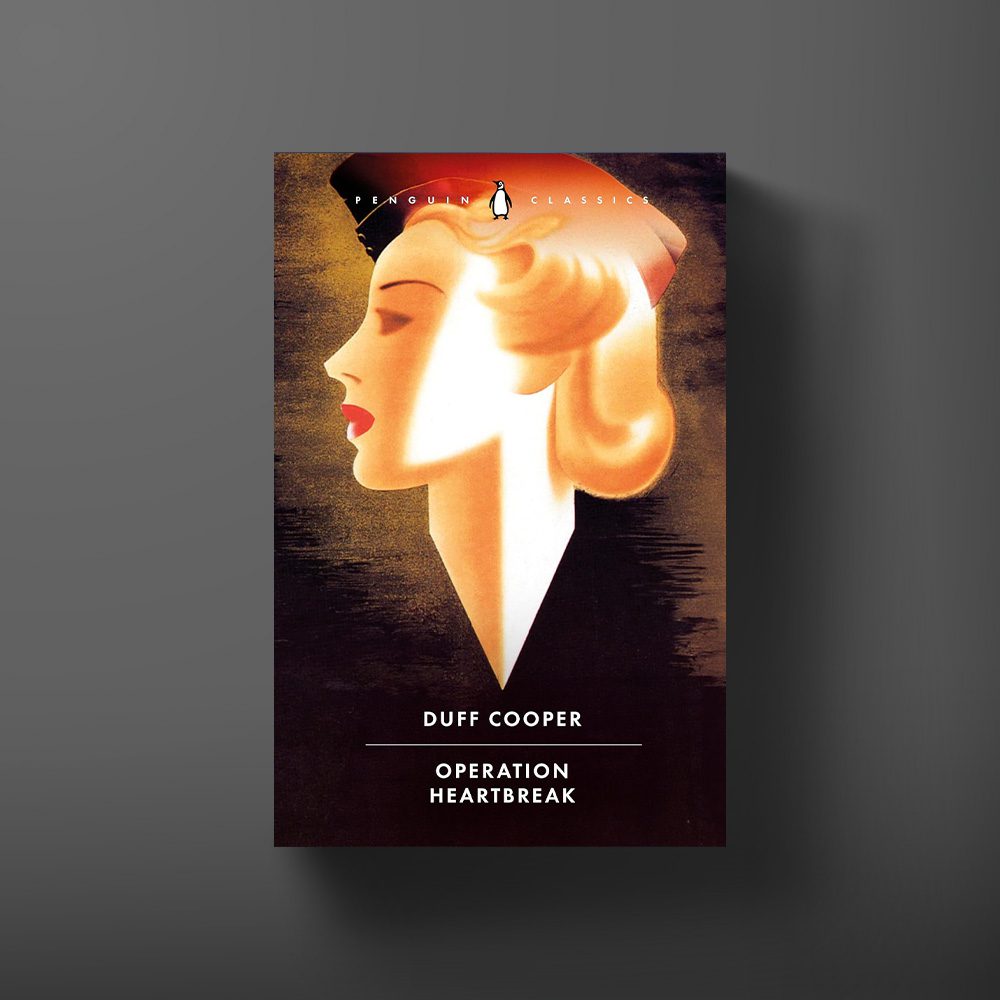
This month, we are turning to an often forgotten classic: Operation Heartbreak. This elegiac reimagining of Operation Mincemeat by Alfred Duff Cooper is as beautiful as it is tragic, a novel that will appeal to history lovers, fans of Fleming and any reader drawn to quietly affecting fiction.
OVERVIEW
William Maryngton’s only ambition is to serve his country, as his father did before him. But by the time the First World War ends in 1918, he is too young to take part. As the years pass, he finds himself increasingly out of step with both military life and the modern world.
When war breaks out again, William is drawn into an unexpected role. Selected for a covert intelligence operation, he becomes involved in a plan designed to deceive German forces and alter the course of the conflict. Operation Heartbreak follows William’s path from frustrated outsider to an unlikely participant in one of the war’s most unusual missions.
First published in 1950, this is a fictional account of Operation Mincemeat, the 1943 intelligence mission designed to mislead German forces about the Allied invasion of Sicily, in which Ian Fleming was famously involved. Because of the author’s ministerial role in government, he reportedly learned of the operation in an informal conversation with Winston Churchill. Given the sensitive nature of wartime secrets, the British Cabinet Office attempted to suppress the novel’s publication. Still, it predates most public accounts of the mission.
WHY WE CHOSE IT
The story focusing on Operation Mincemeat makes this an irresistible pick for us here at Ian Fleming Publications and the James Bond Book Club!
In 1939, Fleming, while serving as personal assistant to the Director of Naval Intelligence, devised the initial concept for Operation Mincemeat. He is believed to have borrowed the idea from another novel – Basil Thompson’s The Milliner’s Hat Mystery.
Operation Heartbreak predates most public accounts of the mission and was written at a time when its details were still sensitive. What it offers is not simply a version of events, but a perspective shaped by proximity to the environment and events that it draws on. Beyond that, the novel is deeply character-driven and explores, in a genuinely moving way, what it means to feel out of place and at odds in a changing world.
We came for the true story and stayed for the imagined one. It isn’t a thriller, per se, but it will absolutely make you turn the page.
THEMES TO CONSIDER
– Duty and patriotism – What does it mean to serve one’s country, and how far should that duty extend?
– The ironies of war and heroism – The novel raises questions about what heroism really looks like in wartime.
– Unfulfilled ambition and loneliness – At its heart, the novel reflects on the personal sacrifices and quiet tragedies that underpin even the greatest victories.
REVIEWS
The Times – ‘Not a word is wasted… a perfect novel.’
Daily Mail– ‘Moving and bittersweet‘
Evening Standard – ‘Poignant and moving.’
Wall Street Journal – ‘Its ending is as unexpected as it is affecting.’
Daily Telegraph – ‘Told with humour, deep feeling and considerable skill.’
Nina Bawden – ‘A wonderful novel by a masterly writer that should be on everyone’s bookshelf.’
ABOUT THE AUTHOR
Alfred Duff Cooper, born in 1890, was an author, statesman and diplomat. During his time as a second lieutenant in World War I, Cooper was awarded the Distinguished Service Order. After World War I, he worked in politics, entering Parliament in 1923 and serving until 1938, when, in protest at the Munich Agreement, he resigned from his position. In 1940, Prime Minister Winston Churchill requested Cooper’s return to office, where he was later appointed as ambassador to France. He became 1st Viscount Norwich in 1951, a few short years before his death in 1954. Operation Heartbreak is his only novel, but his other notable works include the biography Talleyrand and his autobiography Old Men Forget.
We hope you enjoy Operation Heartbreak. Follow our social channels for discussions, highlights, and more.
On 20th March 1942, Ian Fleming, then personal assistant to Admiral Godfrey, Director of Naval Intelligence, proposed the formation of a Special Intelligence Assault Unit. Held under the Official Secrets Act for 50 years after the war, details of his top secret unit are still emerging. Here unit historian Dave Roberts has penned a definitive record for us. Welcome to Part Two: Missions. Catch up on Part One: Formation here.
THE FIRST OPERATION
The unit’s first operation was part of Operation Torch, the landings in North Africa. A small detachment was to attack the main French naval headquarters in Algiers Harbour alongside US troops, but heavy opposition meant they had to land several miles from the port and make their way on foot. When they finally did make it to the port, they seized valuable Intelligence material, including a previously unknown Abwehr Enigma machine which allowed Bletchley Park to read six weeks of back traffic.
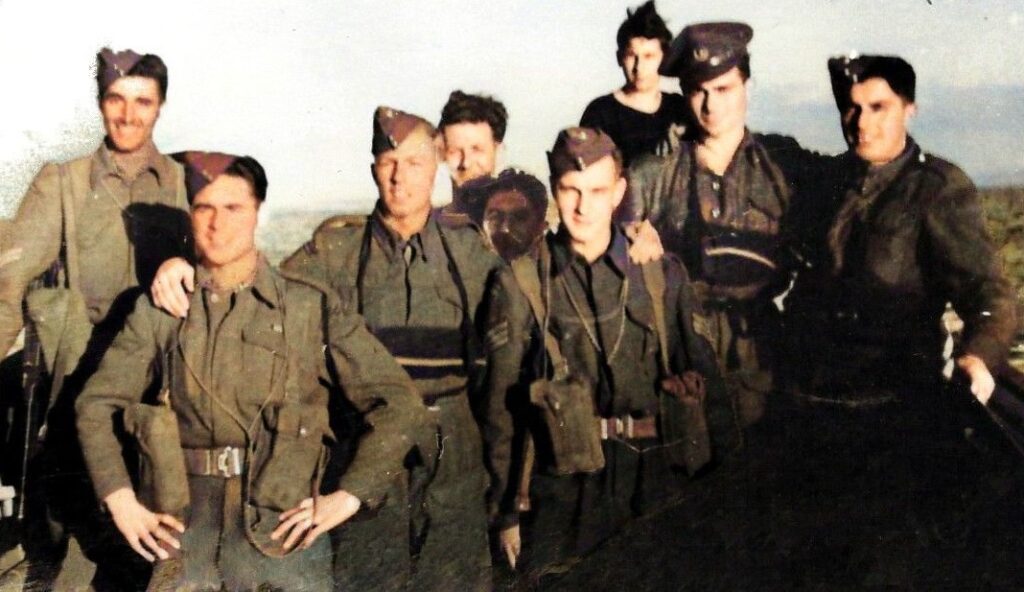
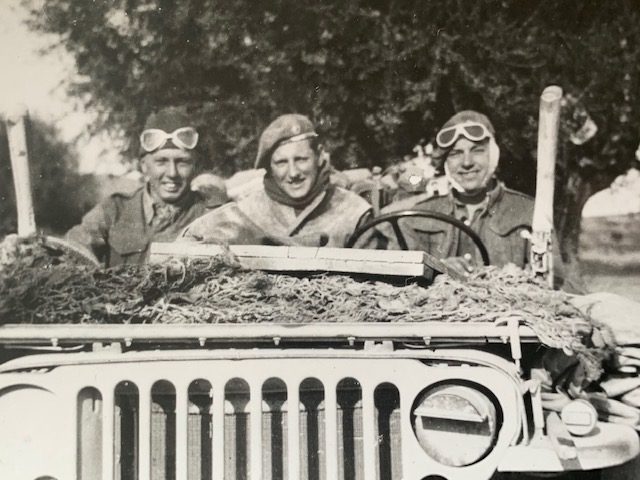
Photograph of the original 30AU members, Algiers November 1942
An expanded section returned to North Africa in January 1943, as the Allies closed in on the German Afrika Korps in Tunisia. Under the command of Dunston Curtis, RNVR, DSC, they travelled in jeeps and motorcycles with the White Ensign flying, becoming the first unit to travel from 1st Army to 8th Army, often crossing the frontline on their way. Entering towns alongside the vanguard of the British 8th Army as it pushed north, the unit once again proved their usefulness in seizing vital intelligence and equipment. They were now to be included in all future Allied invasion plans.
As the unit expanded, it prepared for Operation Husky, the invasion of Sicily. Landing alongside other British forces at the southeastern tip of the island, the unit quickly began to exploit various radar and communications sites on the island. Racing to keep up with the retreating Axis forces, and to ensure they could reach targets before they were demolished or looted, the unit again operated alongside front line British and US units, earning the wrath of American General Patton who nicknamed them, “Limey gangsters” for their rather cavalier attitude to procedures and uniform regulations.
In September 1943, attention turned to Italy and 30 Commando was tasked with exploiting various naval targets on the western coast, as well the small islands such as Capri, which housed important Italian torpedo technology and personnel. They worked alongside Italian naval crews, now part of the Allied forces, following Italy’s surrender, the US Navy, including the screen legend, Douglas Fairbanks Jnr., and elements of the OSS, the forerunner to America’s CIA.
In the eastern Mediterranean, a small section of 34 Troop, under the command of Captain Belcher, worked alongside the Long Range Desert Group in operations around the many Greek islands. Sadly, Belcher and 3 of his men were killed in a German air raid on Leros in October 1943.
In December 1943, 35 and 36 Troops were withdrawn from the Mediterranean in preparation for Overlord, the invasion of France. The Army section, 34 Troop, remained in Italy through to the end of the war, successfully exploiting targets in Rome and Florence and later working alongside the SAS and Italian partisans in Northern Italy in operations behind German lines.
D-DAY
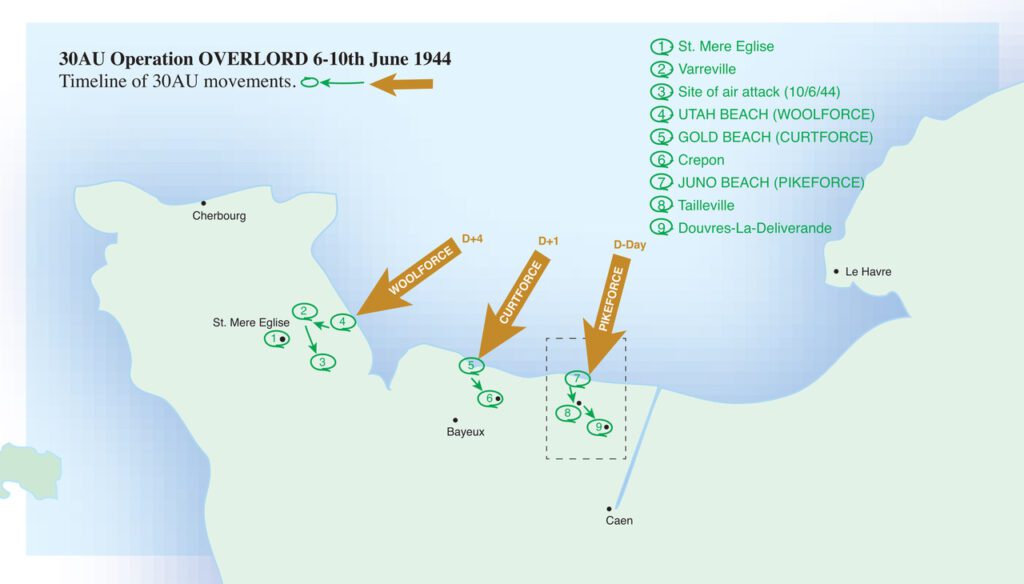
Reorganised, expanded and with renamed 30 Assault Unit, Fleming’s men were to be at the very heart of Allied Naval and intelligence planning for D-Day, with sections landing on JUNO, UTAH and GOLD. Detailed planning went into producing new ‘Black Books’ of targets for the unit and scale models of their main targets were produced by the Inter-Services Topographical Department at Oxford.
Divided into three sections, PIKEFORCE, CURTFORCE and WOOLFORCE, 30 AU landed on the French coast between the 6th and 10th June. Despite some minor successes, their main target, the radar station at Douvres proved to be much bigger and better defended than intelligence had led them to believe. It didn’t fall until the 17th June by which point the majority of the unit was operating with US troops in Brittany.
PIKEFORCE & CURTFORCE suffered no casualties in the landings and subsequent operations but WOOLFORCE, landing on UTAH on the 10th June suffered the single heaviest number of casualties in the unit’s short history when German butterfly bombs exploded over the field where they had bivouacked on their first night in France. Five men were killed and 16 wounded, some seriously.
NORMANDY & BEYOND
During the summer of 1944, 30 AU operated in small teams across Normandy. Highly mobile, with armoured cars, jeeps armed with twin machine guns, trucks to carry away their “loot” and a trawler on permanent stand-by, they exploited targets across the region. The start of the V1 bombing campaign led to requests from the Air Ministry for them to find the launch sites and, for the first time, an RAF officer was attached to the unit. Launch sites and equipment were found on the 17th June and the DNI received the personal thanks of the Air Chief for 30’s efforts.
With the fall of Cherbourg, attentions turned to Paris and Brittany, with WOOLFORCE entering Paris alongside the lead elements of French Army. In the West, small teams ranged over the Brittany peninsula liberating towns and villages. At St Pabu, Lt Hugill and 5 Marines took the surrender of over 280 Germans at the radar station there and were awarded a Distinguished Service Cross and 2 Distinguished Service medals. During the unit’s time in Brittany, it worked closely with the local resistance units, relying on them for up-to-date intelligence and for guiding them safely to new targets. Three resistance fighters were even recruited into the unit and issued with British uniforms, a fact only recently revealed with the discovery of one of the men’s wartime diaries.
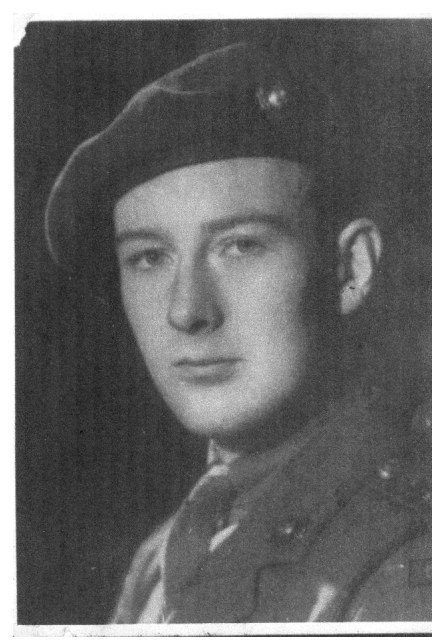
For such a small unit, operating at and beyond the front lines, casualties were surprisingly light. The biggest losses were by WOOLFORCE on D-day and when 3 men were killed crossing a railway line just outside Brest. The death that hit the unit hardest though was that of Captain Huntington-Whitely, RM, killed at Le Havre as he took the surrender of a group of Germans. ‘Red’ as he was known to the men had been with the unit from the beginning.
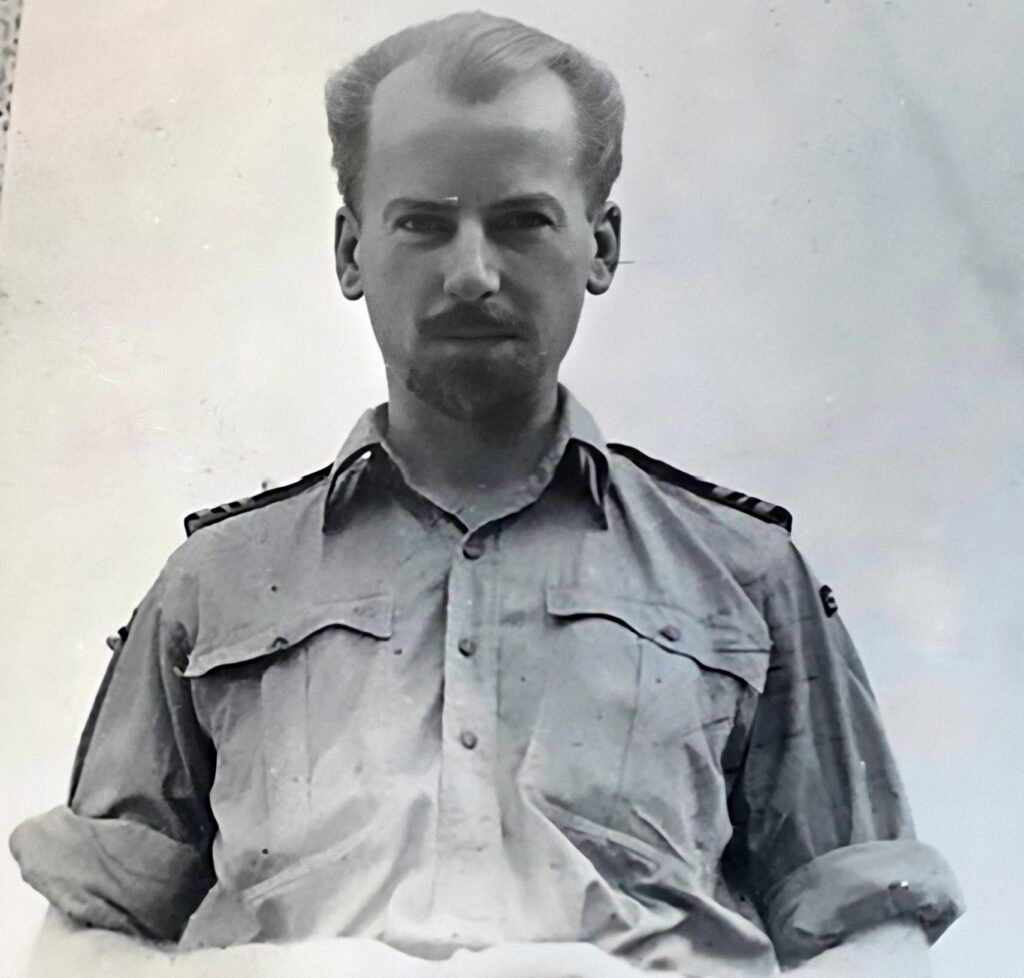
Royal Marine Captain, Peter Huntingdon-Whiteley
Stay tuned for the final part of Dave Roberts’ definitive history, focusing on the legacy of this extraordinary military unit. Find out more at the official 30 Commando website and social channels.
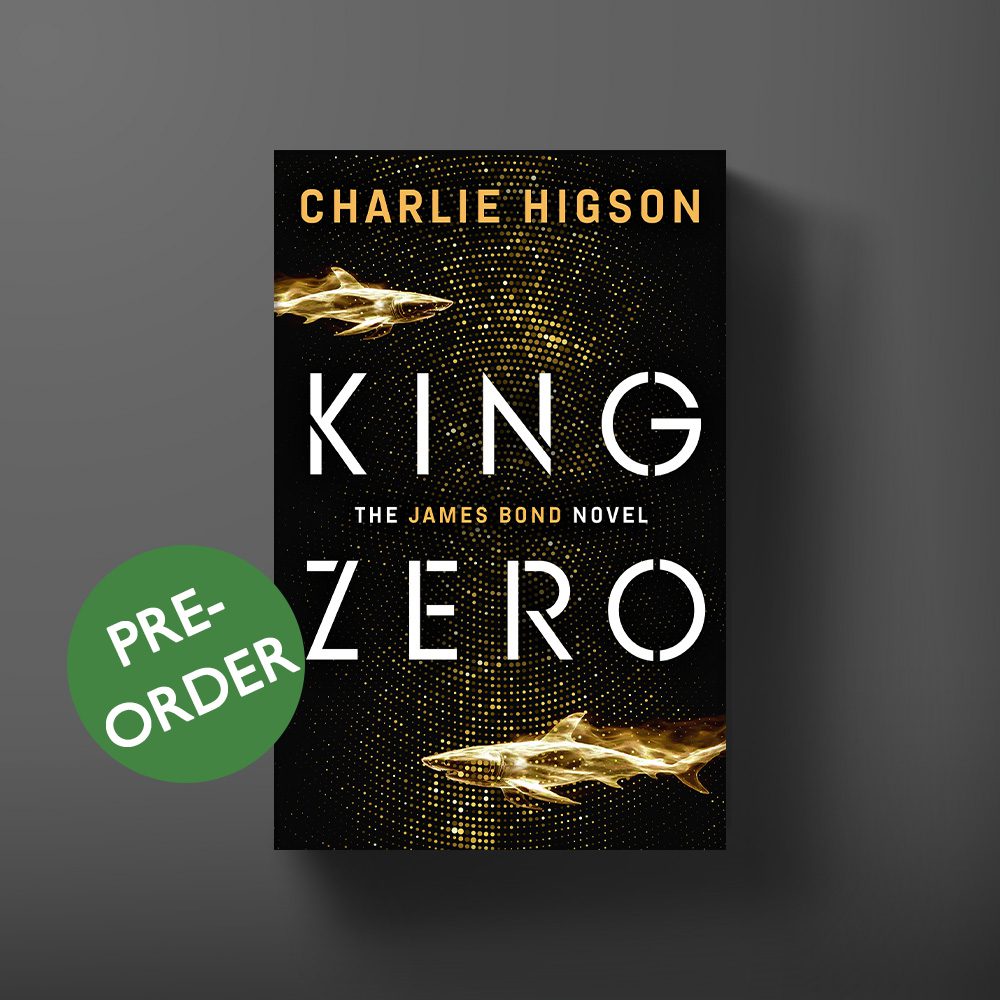
We are excited to announce King Zero, a blockbuster new adult James Bond novel from multi-million copy bestselling Young Bond creator, Charlie Higson. It will be published in the UK on 24th September 2026 by Penguin Michael Joseph.
Beginning with the murder of an agent in Saudi Arabia by a weapon never before seen by the Secret Service and spanning the globe in an epic race against time to avert global catastrophe, the novel brings the literary Bond squarely into the twenty-first century, where the old world that made him is crumbling and a terrifying new order emerges while a dangerous villain – the most distinctive since Goldfinger – moves in the shadows. Higson explores themes of power, technology, and international tensions over resources in an extraordinarily timely story.
“Having warmed up with my Young Bond series, and the short story, On His Majesty’s Secret Service, I’m beyond excited to be writing my first full blown adult Bond adventure. 20 years after first writing “The name’s Bond, James Bond,” it still sends shivers down my spine every time I type it. I’m having a blast with this new novel, which is absolutely set in the modern world, and I hope will sit comfortably on the airport bookshelves alongside other contemporary thrillers. It embraces the worlds of both the literary Bond and the cinematic Bond, and my bad guy has all the elements we expect from a classic Bond villain, with a twist that’s not been done before.” – Charlie Higson
“We are delighted to be working with Penguin Michael Joseph on the publication of King Zero. Charlie Higson’s return to James Bond follows his outstanding success with On His Majesty’s Secret Service, commissioned for the King’s Coronation, and we are delighted to be working with Charlie again, bringing the next chapter of Bond to fans.” – Amanda Douglas, Managing Director of Ian Fleming Publications Ltd.
“There’s no character in all of fiction quite like James Bond, and since Ian Fleming’s passing no-one has captured him quite so distinctively as Charlie Higson. We were swept away by Charlie’s vision for Bond which will delight old fans and new, and we can’t wait to make this the coolest, classiest publication of the year.” – Joel Richardson, Publisher at Michael Joseph
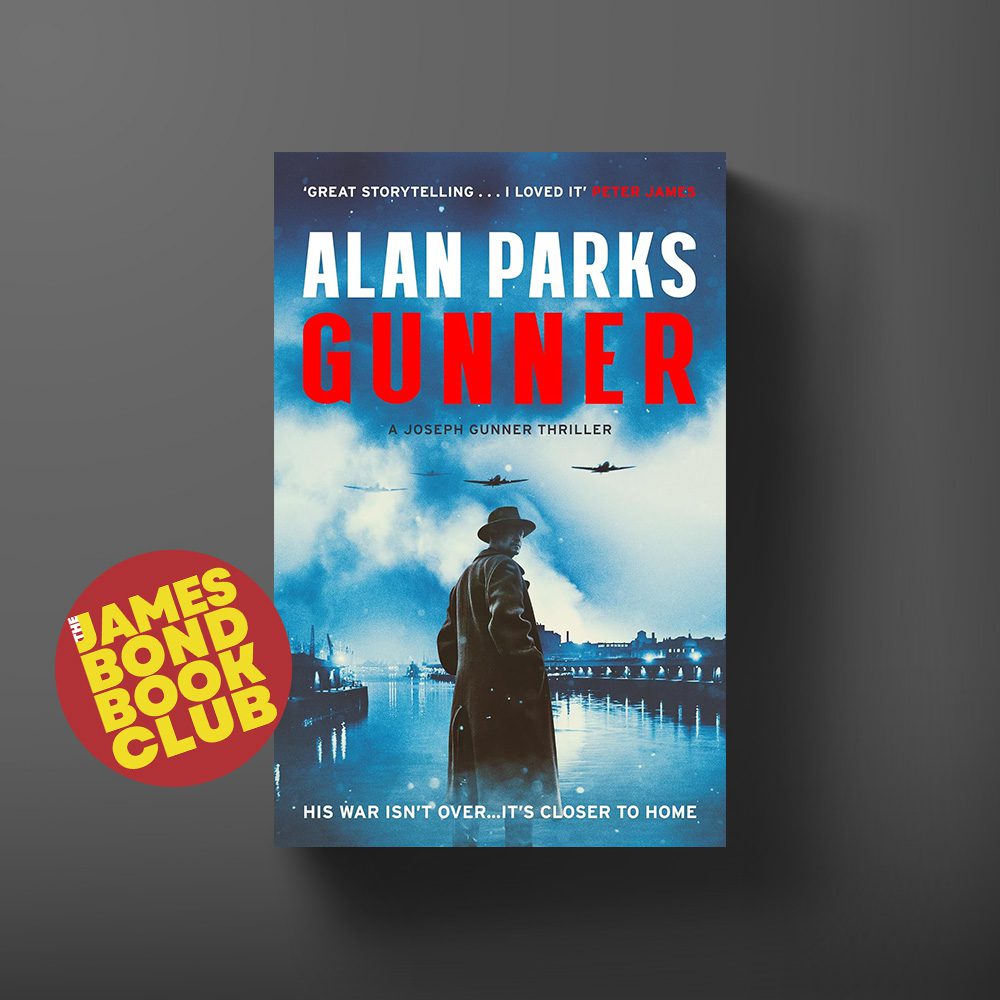
This month, we’re stepping into the fog‑choked streets of wartime Glasgow and recommending the fierce new crime classic, Gunner, by Alan Parks. First published in 2025 and now gaining recognition as a compelling blend of historical thriller and noir, Gunner introduces us to a different kind of operative – one forged in the brutal crucible of the Second World War.
OVERVIEW
It is 1941 and the titular Joseph Gunner has returned to his hometown after being injured on the front lines in France. His arrival coincides with the Luftwaffe bombing of his city. The places and people have changed, some unrecognizably so, although some things never change: he has barely stepped off the train in Glasgow when he is approached by his old boss, Detective Inspector Drummond. Gunner was a policeman (or ‘polis’) before the war and now Drummond needs his help with a new case. A body has been found in the bomb wreckage, one not killed by the Luftwaffe, but rather mutilated and disfigured. So begins a mystery that will take Gunner through rubble-strewn streets, grimy but steadfast pubs and into the prisoner of war camps – where an even greater, and stranger, mystery awaits.
WHY WE CHOSE IT
Fans of Ian Fleming will appreciate Gunner’s link to real‑world intrigue: Joseph Gunner’s story is partly inspired by real events from wartime Glasgow, including the mysterious flight of Rudolf Hess in 1941. Just as Fleming drew on his own intelligence experience to shape James Bond, Alan Parks weaves historical fact with thrilling fiction, creating a world where danger and secrecy feel entirely real.
It’s a rare glimpse into a world where courage and survival aren’t just literary devices, they were the reality for those living under constant threat. For readers who love James Bond, this is the kind of historical spy fiction that makes the danger tangible.
THEMES TO CONSIDER
– War and trauma. How do Gunner’s physical and emotional wounds shape his every decision?
– Power and corruption. What happens when espionage meets street‑level brutality, and friend and foe aren’t always distinguishable?
– Identity under pressure. How are we tested when the world is at its most dangerous?
– History as character. The Blitz isn’t just a backdrop, how does it permeate and shape the story?
REVIEWS
The Guardian – ‘A gritty, immersive, genuine page‑turner … meticulously researched.’
The Times– ‘One of the greatest Scottish writers‘
Peter James – ‘Great storytelling … a vivid sense of place and time.’
Vaseem Khan – ‘A lean, mean, and ruthlessly readable thriller.’
Andrew Taylor – ‘A superb thriller with a gripping, constantly surprising plot.’
ABOUT ALAN PARKS
Alan Parks is an acclaimed Scottish crime writer whose award‑winning novels are praised for their realism, rich atmospheres and complex characters. With Gunner, he blends historical depth with a gripping thriller sensibility, giving readers a world both vividly realized and relentlessly suspenseful. He is also the author of the Harry McCoy thrillers, which feature a world-weary and morally-questionable detective stomping around 1970s Glasgow, which is where Parks works and lives now. Before beginning his writing career, Parks worked for twenty years in the music industry.
We hope you enjoy Gunner. Follow our social channels for discussions, highlights, and more.
Dive deeper into our February Book Club pick, Fatale by Jean-Patrick Manchette, as we interview Nick Skidmore, the man behind the new Vintage Classics edition of this ruthless cornerstone of modern noir.
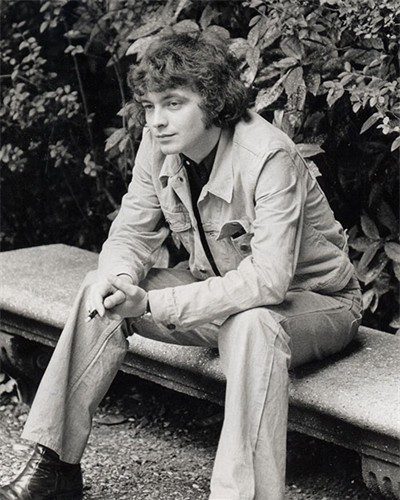
Jean-Patrick ManchetteNick Skidmore
Can you tell us a bit about yourself and how you first encountered Manchette?
I’m Nick Skidmore and I’m the Publishing Director of Vintage Classics. I oversee the running of the classics list, which covers everything from considering the authors we bring to the list to guiding decisions around how we engage readers and retailers in our mission to do something a little different with Classics publishing. In this latter capacity, it was actually a brilliant Indie bookshop owner, Tom at Gloucester Rd Books, that put me on to Manchette. He’s a Manchette uber-fan and was lamenting how difficult it had been to stock NYRB’s editions here in the UK. Soon after I delved into Manchette’s books and knew we could and should find a dedicated place for him on our list. The fact he is so little here seemed, well, criminal.
What do you look for when it comes to publishing a classic crime novel?
Classics are read and beloved by a huge range of readers that cut across generations, demographics and appetites, and ideally we want to publish books that encourage everyone to engage with classic books. Some crime books will therefore be cozy or traditional, some might intersect with historical or political themes, and others will just be downright weird or quirky. I’m always on the lookout for books that can blend across these segments. For example, we have a brilliant novel called The Girls by John Bowen publishing in the summer that sees two women – a gay couple who own a craft store in a Cotswold village – murder a man and hide his body in a septic tank. It will appeal to both market town-dwelling readers looking for something rural and familiar, and fans of the weird and macabre – the kinds of readers we see gravitating to books by Ottessa Moshfegh or Daisy Johnson. To find a book that can unite two groups of readers feels like a special mission.
You’re publishing four of Manchette’s novels this year. Why now?
I always say that the art of re-publishing an old book is timing: some brilliant books can be reintroduced back into the world, but if the conditions aren’t there for it, it won’t flourish. Manchette feels ripe for our particular moment. He is a writer who is rallying against his present, violently cutting down all the idiocies and ideological positions of anyone or thing that claims the high-ground, and he writes, I think, with a filmic grace, a pace and brevity, that means the books will appeal to lots of readers struggling to find the time to fit books into their busy lives.
Readers of Fleming’s James Bond might expect clear heroes and villains, but Fatale operates in a much greyer moral space. Is that shift part of how noir evolved, and where does Manchette fit into that evolution?
I’m no expert on Noir, but a pessimistic outcome and moral ambiguity is part of its DNA. I think where Manchette deviates is there are rarely any heroes in his work, tragic or otherwise. He takes a more cosmic perspective on which scale we’re all operating out of misplaced instincts. He also took the American elements of Noir and found a way to plug that into the moment of French social change, so that he shows Noir isn’t about a sense of place but a particular ruthless mindset that stretches way beyond the borders of LA or wherever.
What do you think Manchette’s intentions were with this particular story?
Without condoning Aimee’s methods… That society is rotten from the very bottom, to the very top. And we should relish it being cleaned out.
When Manchette wrote Fatale it was rejected by his publisher, Série Noire, for being too literary. Manchette qualified it as an ‘experimental novel’ more than a thriller. Is the ‘too literary’ label a criticism, or the thing that makes it endure?
When I hear ‘too literary’ I also hear its inverse, ‘not generic enough’. Manchette has always been framed as a pioneer, a re-inventor of the crime genre in France, and yes, that endures. Fatale, and many of this other books, appeal today precisely because they don’t follow the rules of what’s been laid down by other writers – while the characters, violence and general criminality is guaranteed, you really are on the edge of your seat in their short pages because everything else is on the table.
And when we say ‘experimental,’ what does that actually feel like on the page?
I think the flow of the book, its pacing, is key – short, sharp chapters, powered on by a functionality to how Aimee operates and a glaze-like lack of interiority that allows the reader to skate through the book without ever really penetrating into the soul of any one character.
If you had to describe Fatale in three words, what would they be?
‘Violent’. ‘Vengeful’. And, most importantly, ‘Fun’.
Aimée often feels less like a main character and more like a presence moving through the town. Do you think Manchette is deliberately resisting reader identification with her, and if so, why?
Manchette isn’t the kind of writer to dwell on interiority. There’s a wonderful passage in one of his other books – The Prone Gunman – where the protagonist reads of the murder of his ex-girlfriend in the paper, and the narrator tries to guess what emotions might be going through his head based on his strained face. If I had to hazard a guess, I’d say that this resistance is a stylistic choice to ensure the reader never quite feels identification with his main characters – and also that there’s something very bourgeoise about feeling and its extreme sentimentality. But that’s just my guess!
Hitmen and professional killers show up often in Manchette’s work. Why do you think he returns to these figures so frequently?
Two brilliant Manchette books with hitmen in them are The Prone Gunman and Three to Kill. In the former, we follow the hitman. In the latter, it’s a man who goes from being hunted by a hitman to hunting the hitmen instead. In all of these characters, there’s something wonderfully other – the fact that hitmen exist outside the flow of society, observing, waiting, striking – that lends them as perfect vehicles for Manchette to tell stories that rally against the current world.
Which contemporary authors do you think Manchette would be reading or recommending if he were alive today and why?
Manchette was moving away from crime novels at the end of his life, and to me writers like Rachel Kushner or Ottessa Moshfegh feel like they occupy the same disaffected space. And of course, if we’re sticking to crime, a revolutionary writer like David Peace.
What else can we look forward to from Vintage Classics X Manchette?
We also published Manchette’s satirical take on revolution politics – Nada – this year, and later, in July, we have his pair of Noir detective thrillers, No Room at the Morgue and Skeletons in the Closet. The aim is to bring all his books here to the UK, something that hasn’t been done before, and feels like a very important mission.
Thanks to Nick. Find out why we chose Fatale for the James Bond Book Club here and get your copy at the Ian Fleming Shop here.
The teenage James Bond returns in a brand-new full-cast audio drama from Big Finish Productions – beginning in September 2026 with an adaptation of SilverFin by Charlie Higson.
Ian Fleming Publications Ltd and Big Finish Productions are pleased to announce Young Bond, a new range of full-cast audio dramas, bringing the teenage years of Ian Fleming’s legendary secret agent to life in cinematic sound.
This brand-new series is adapted from the previously published Young Bondnovels, reimagined for audio as cinematic, full-cast audio drama. The range will begin with an adaptation of SilverFin by Charlie Higson, the first Young Bond novel (originally published in 2005). Charlie Higson is also involved as a consultant on the series.
Big Finish will soon be casting the roles of James Bond and Wilder Lawless and is inviting approaches from actors’ representatives only. Details of the roles and the types of actors being sought will be published on youngbondadventures.com.
The Young Bond audio adventures will be released as a series of digital download-to-own and collector’s edition CD box sets, exclusively from bigfinish.com and ianflemingshop.com.
To receive mission briefings, exclusive updates and first-look information about the range, listeners can sign up at www.youngbondadventures.com.
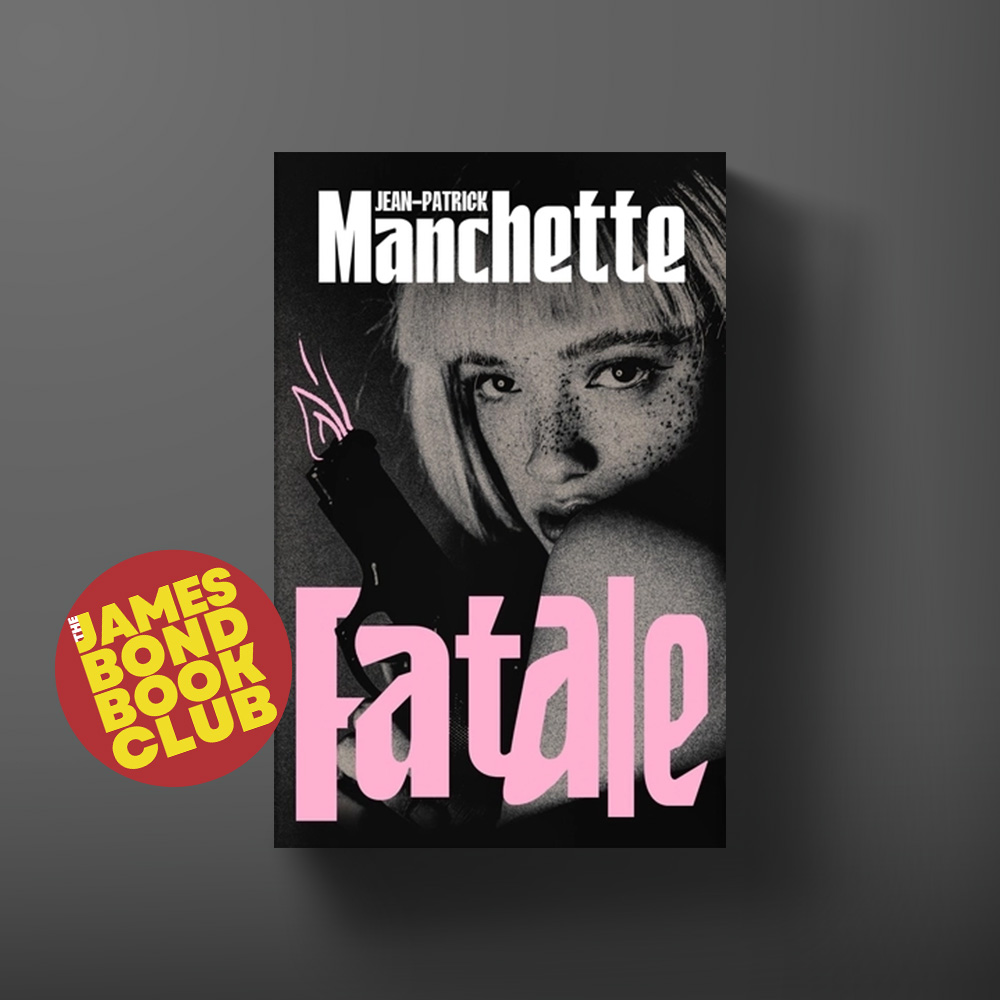
Do you really need a licence to kill… to kill? This month at the James Bond Book Club, we’re diving into the darker corners of crime fiction and celebrating the reissuing of Jean-Patrick Manchette’s bloodthirsty thriller, Fatale. First released in 1977 and now recognised as a cornerstone of modern noir, Fatale is a ruthless, razor-sharp novel that strips the thriller down to its bare essentials.
We couldn’t wait to get our hands on this gorgeous new edition just published by Vintage Classics.
OVERVIEW
Aimée Joubert is a mysterious woman who arrives in a decaying French port town with no visible past and a quiet sense of purpose. She slips easily into the community, cultivating acquaintances and trust, all the while preparing a meticulously planned act of violence.
As her presence begins to destabilise the town’s corrupt ecosystem of businessmen, politicians, and criminals, Manchette unfolds a story that is as much about power and rot as it is about murder. Told with icy precision, the novel moves inexorably toward its conclusion, revealing how fragile social order becomes when confronted by someone who refuses to play by its rules.
What unfolds is not a traditional thriller, but a cold and unsettling study of control and destruction.
WHY WE CHOSE IT
At Ian Fleming Publications we are drawn to stories that interrogate the figure of the professional killer – and Fatale offers one of the most bracing reframings of that role.
Like Bond, Aimée Joubert is a highly trained operative who kills on demand, operates behind carefully constructed identities, and moves through international spaces with lethal efficiency. But where Bond’s violence is embedded within the narrative authority of the state, Fatale, published in the late 1970s, arrives after that framework has begun to fray.
Aimée operates in a world where ideology offers no shelter, and professionalism is stripped of meaning. This shift in perspective is what makes Fatale so unsettling. By presenting a figure recognisably close to the spy archetype, yet removing the moral scaffolding that traditionally surrounds it, Manchette exposes the mechanics of violence without reassurance or redemption. There are no heroes here.
THEMES TO CONSIDER
– Detachment. Aimée’s precision raises unsettling questions about violence as labor and what happens when skill is divorced from morality.
– Power and corruption. The novel dissects a town and a time characterised by greed.
– Identity as performance. Like the best espionage fiction, Fatale explores how personas are constructed.
– Gender and control. Aimée subverts expectations, weaponising others’ assumptions and exposing the vulnerabilities beneath masculine authority.
REVIEWS
The Times– ‘France’s king of noir fiction…he writes with a bleak, tragic beauty.’
Big Issue– ‘Shocking, funny, sad, smart and cool… A macabre delight from start to finish.’
Complete Review– ‘A fist between the eyes, leaving the reader reeling… So devastating it takes your breath away.’
The Economist– ‘Manchette’s books are all action, unfolding with a laconic efficiency that would make his killers proud.’
New York Times– ‘I’d rather read Manchette than many contemporary noir writers.’
Jean-Patrick Manchette (1942–1995) was a French novelist, critic and screenwriter and a central figure in the néo-polar movement. His crime fiction fused hard-boiled American noir with radical political critique and his work is credited with reshaping the genre for a European and global audience. Fatale stands as one of his most refined and uncompromising works.
We hope you enjoy Fatale. Follow our social channels for discussions, highlights, and more.
We had the pleasure of chatting to Jinwoo Park, the author behind Oxford Soju Club, the James Bond Book Club January pick. His debut novel, it is an exploration of identity in the Korean diaspora under the guise of a punch-packing spy thriller. In this interview, Jinwoo discusses the catharsis of the writing process, how his experience as a translator impacts his style, what ‘home’ means to him, and of course— a bit of Bond.
Happy New Year from the James Bond Book Club! Here’s to a year of daring missions, unforgettable characters, and stories that keep you turning the page. Get ready to enter new worlds and explore the world of espionage – one thrilling book at a time.
Kicking things off, our January pick is Oxford Soju Club by Jinwoo Park. It’s a bold, genre-blending debut published in 2025 that reimagines the spy novel through the lens of identity, nationality, loyalty and belonging. More than just a good story, this month’s choice looks at the masks we wear, the allegiances we forge, and the truths we hide, all set against the storied spires of Oxford.
OVERVIEW
Oxford Soju Club follows a trio of Korean characters whose lives converge in the ancient university city of Oxford. When North Korean spymaster Doha Kim is mysteriously killed, his protégé Yohan Kim – living under the assumed identity of Junichi Nakamura – scrambles to decipher his mentor’s last cryptic message: “Soju Club, Dr. Ryu.” At the same time, Yunah Choi, a Korean American CIA officer, is hot on his trail, while Jihoon Lim, a South Korean immigrant and owner of the eponymous Soju Club restaurant, finds his own peaceful life drawn into the escalating intrigue.
What unfolds is both a taut spy thriller and a deeply felt exploration of the Korean diaspora in which characters must navigate cultural expectations, divided loyalties, and the haunting distance between the selves they show the world and the selves they carry inside.
WHY WE CHOSE IT
At Ian Fleming Publications, we know a thing or two about going undercover — but Oxford Soju Club interrogates that concept in a much deeper, more human way. Park’s debut resonates with the Bond tradition not through tuxedos or glamour, but through psychological tension and international complexity.
What makes the novel particularly compelling is its exploration of identity and performance. Every character exists between worlds, whether undercover as someone they are not, or trying to belong to a country that never feels like home. These layered lives echo the coded existences of spies in fiction, but here they carry stakes that are profoundly human.
Park delivers the thrills, but with a modern twist: the greatest danger is not always a villain’s plot, but the cost of duty, survival, and the masks we wear.
THEMES TO CONSIDER
– Identity and disguise. Beyond literal espionage, Park explores the psychological “masks” that immigrants and operatives alike adopt to survive and belong.
– Belonging and alienation. Each character’s journey asks: where is home when heritage, duty, and personal desire point in different directions?
– Loyalty and truth. The novel probes the delicate balance between allegiance to one’s origins and self-realisation in a globalised world.
– Ritual, connection, and community. The Soju Club itself, a Korean restaurant in Oxford, becomes a site of refuge and reckoning, a space where food, drink, memory, and politics intertwine.
REVIEWS
The New York Times – ‘Park, a Korean Canadian writer and translator, deftly maps the shifting terrain of characters whose identities are in flux and who are haunted by pasts from which they cannot escape. His novel mixes spycraft with tenderness, violence with grace, and introduces a welcome new spy fiction talent.’
Booklist – ‘In stylistically rich prose, the author carefully portrays complex characters, distilling the intricate workings of the Korean psyche with riveting tension. Under the cover of a compelling espionage drama, Park conducts a metaphorical exploration of Korean identity.’
Shelf Awareness – ‘Oxford Soju Club, is an extraordinarily multilayered examination of identity and loyalty, deftly presented as an addicting spy thriller.’
Washington Independent Review of Books – ‘[A] dizzying, hyperkinetic debut novel.’
Jinwoo Park is a Korean Canadian writer and literary translator whose debut novel brings a fresh, global perspective to espionage fiction. Born and raised in Seoul, he has lived in various parts North America and the UK since the age of eleven. Park completed a master’s degree in creative writing at the University of Oxford and brings both personal insight and narrative finesse to a story that pulsates with tension.
We hope you enjoy Oxford Soju Club as much as we do. Follow our social channels for discussion prompts, highlights and more.
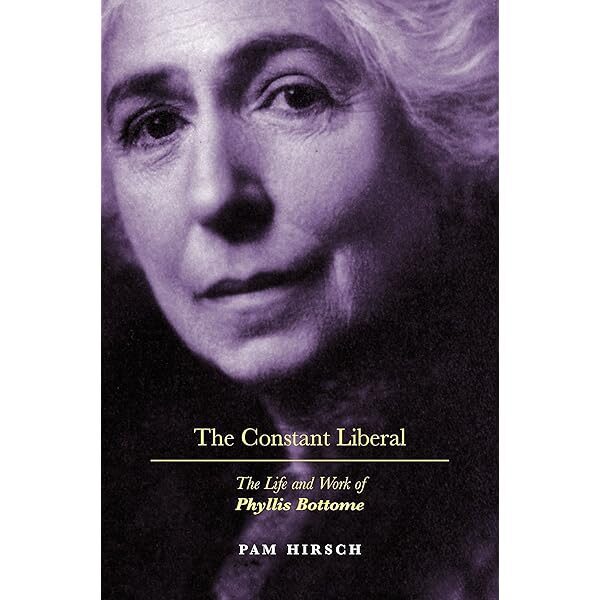
To round off the first month of the James Bond Book Club, we were delighted to discuss the fascinating life and work of Phyllis Bottome with Pam Hirsch, author of The Constant Liberal: Phyllis Bottome, (Quartet, 2020).
Please could you introduce yourself and your connection to Phyllis Bottome.
I am a retired Lecturer in Literature and Film at Cambridge University. I am also a biographer. There are three things that call out to the biographer in me: I am drawn to women who have been lost from sight, who were creative – writers, painters or dancers – and who were politically engaged on the liberal left. My parents both admired Bottome’s work, so physical copies of her books were part of their legacy to me. The neglect of her work is emblematic of other popular writers. Recently, there has been a concerted effort to remedy this, and there have been some lively academic conferences deliberately asserting the term ‘Middlebrow’, wishing to recuperate the term.
Dr Pam Hirsch
What are you particularly drawn to when it comes to this author?
Bottome was a significant chronicler of her times, publishing prolifically on politics, social issues, psychology and education. It is not surprising that she has been hard to pin down, in that she cannot be securely fixed with one particular literary movement, or even one particular epoch. Born in the late nineteenth century, her first novel was published when she was only twenty and she was writing and publishing up until her death aged eighty-one. Her career covers the years before the First World War, the inter-war years, and during and after the Second World War. She is unusual, too, because she cannot be tied down to one particular location. Brought up in both England and the United States of America, she lived for substantial periods in mainland Europe – in Switzerland, Austria, France, Germany and Italy – so she was exceptionally well informed in European affairs as well as being international in outlook. She had a most extraordinary life, affording her a wealth of unusual experience. Ironically, some of her ‘travel’ was because her survival was repeatedly threatened by tuberculosis occasioning the necessity of living in the mountains. It was in St. Moritz for example that she met her future husband, Ernan Forbes Dennis.
Could you outline the significance of Bottome’s commitment to the psychology of Alfred Adler?
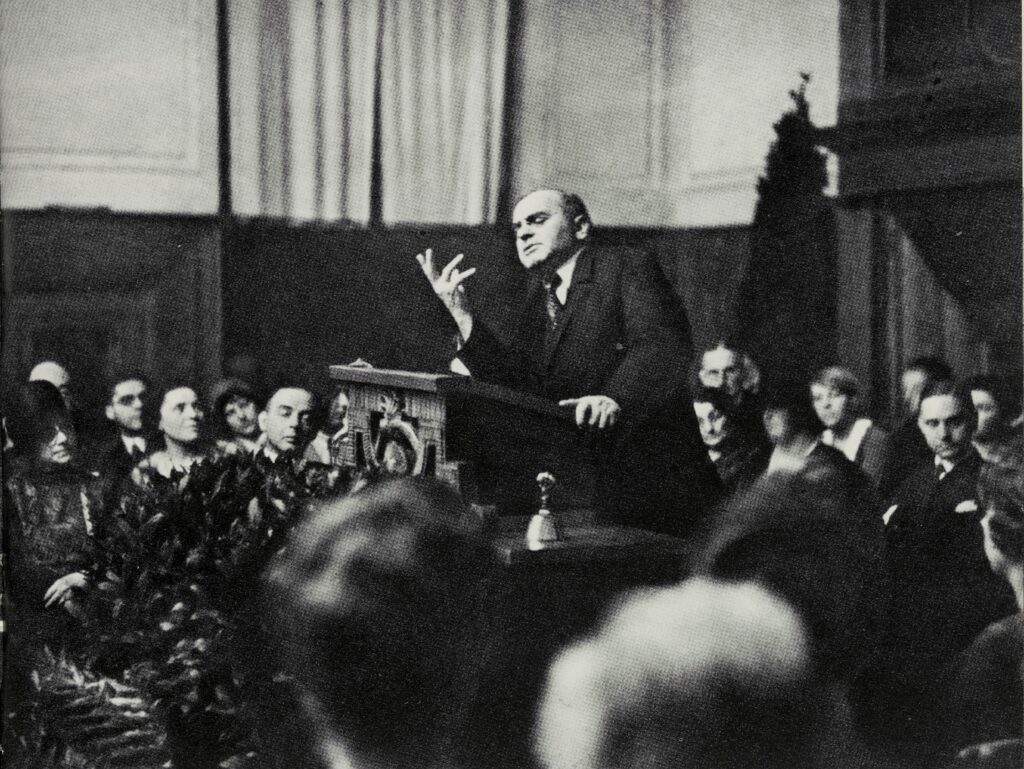
Vienna was the birthplace of psychoanalysis and its variants. From the 1920s both Bottome and her husband became drawn to the Individual Psychology of Alfred Adler. His understanding that a fully developed individual would find happiness through love, work and an integrated role in the community chimed with her liberal values. He developed ideas, too, about sibling rivalry and the significance of birth order. They both studied with Adler and became close friends: she later wrote his biography.
Adler Lecturing in Berlin c 1930
How do you think her understanding of the human mind influenced her work.
In 1920 Bottome went to war-ravaged Vienna with her husband who, after having been badly injured in the trenches of the First World War, had been trained in SIS (Secret Intelligence Service, now known as MI6) in Marseille. From this vantage point, as well as joining Viennese activists in organizing food and medical supplies in the starving city, she was able to watch the developing political situation. Her writing became increasingly more urgent as the future was challenged by significant political events, often asking what courage looks like under political pressure.
Can you tell us more about Tennerhof, the school run by Phyllis and her husband in the Austrian Alps? Why did they set it up, and what was life like there?
The resurgent threat of tuberculosis for Phyllis caused her and Ernan to leave both Vienna and Ernan’s successful career in Intelligence there, and move to the mountains. Ernan, who was fluent in French and German, decided to set up a school to teach adolescent boys. They rented a house called ‘The Tennerhof’, in Kitzbühel, a sleepy little Tyrolean market town, which was good for skiing in the winter. The boys studied hard with Ernan every morning learning languages and in the afternoons were free to go skiing or walking. Phyllis, as usual, was writing. In the evenings, Phyllis often played a ‘game’ with the boys of starting a story, and then each would take it in turns to add to it.
It turned out that one of the boys at the Tennerhof was Ian Fleming, sent there by his mother to prepare him for possible entry into the Foreign Office. Ian had been in endless trouble before his arrival, and even after it, though there seems little doubt that Ernan turned Ian around at a time when he might otherwise have gone completely off the rails. Ernan was a gentleman from Scottish aristocratic ancestry, which made him seem to Ian a little like the male Flemings, and, further, he had been tested in war. Like Ian’s father, he could be regarded as a war-hero, and Ian came to see Ernan as an idealized father-figure.
Following Adler’s theories, Ernan saw that he had to replace Ian’s self-defeating goal of being a failure [always comparing himself to his own disadvantage with his older brother, Peter] with a new goal that could lead to success. He encouraged Ian to work hard towards being accepted by the Foreign Service, and it may well have been that Ernan’s previous work in military intelligence made this seem a rather glamorous option.
Once again, Ernan was almost uniquely well-placed to advise Ian; neither he nor Phyllis had attended university but had both educated themselves in a kind of long-running reading group of two. Their own range of reading was eclectic and they were very much European, rather than merely English intellectuals. As Ian was to say later:
‘I remember in those days before the war reading, thanks to the encouragement of the Forbes Dennises, the works of Kafka, Musil, the Zweigs, Arthur Schnitzler, Werfel, Rilke, von Hofmannstahl, and those bizarre psychologists Weininger and Groddeck – let alone the writings of Adler and Freud – and buying first editions (I used to collect them) illustrated by Kokoschka and Kubin.’
Phyllis and Ernan remained friends with Ian throughout his life.
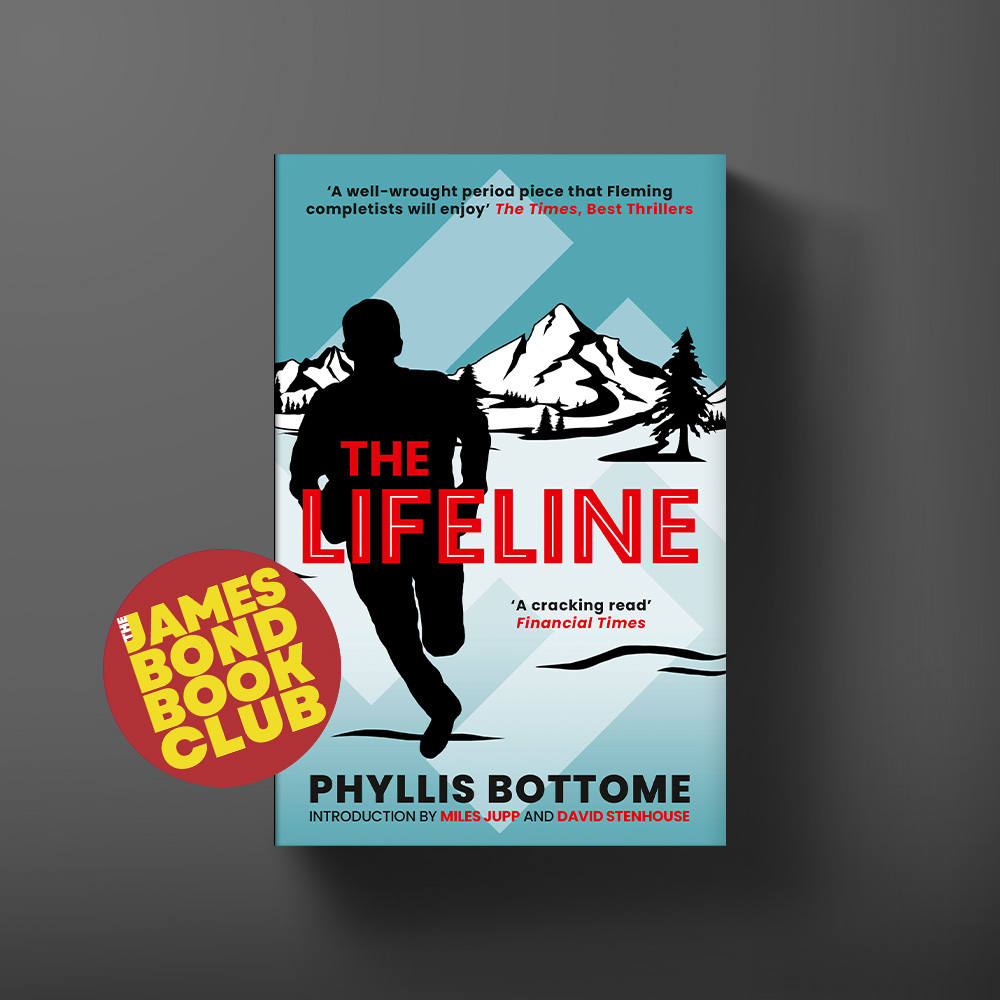
Do you agree with the argument that The Lifeline inspired Fleming’s James Bond?
I am going to answer this by first giving a fairly detailed account of The Lifeline. It was her first book to be published immediately post-war in 1946 by Faber & Faber in Britain and by Little, Brown in America and was a study of the anti-Nazi underground forces in Europe. Its focus is what happens to a decent sort of educated Englishman, Mark Chalmers, a master at Eton, when faced with extraordinary circumstances. Until 1938, when the narrative begins, Mark Chalmers had believed that this public-school code was enough to live by:
Perhaps half of the boys went to Eton because their parents wanted them to be grand – and the other half because it was a family tradition to go there if you could. The boys that wanted to be grand – if they were like their parents, and it had to be remembered that boys very often weren’t – did pick up all Eton’s strange faults and absurdities; its isolationism; its defensive arrogance; its inconsiderate insolence; and its deep unconscious selfishness.
Mark found, after a briefing by the British Foreign Office, that he started to consider what Eton made of its boys, compared with what Hitler had made of the Hitler youth leaders. Hitler had airily stated that an English public school was the best training-ground for Nazi doctrines.
Certainly, a sense that one’s own nation was superior to any other, and an assumption that therefore it was its right to control an empire, was true of both Germany and Britain.
Mark has had little experience of thinking about the wider world. It is only as a consequence of his annual walking holidays in Austria and being able to speak good German with an Austrian accent that landed him in the unexpected position of being recruited as a spy by his chum Reggie in the Foreign Office. Parachuted into Austria after the Anschluss his cover is to pass as a manic-depressive in an asylum run by Dr. Ida Eichhorn. Waiting with Father Martin, a monk who is his intermediary contact in the resistance movement, Mark watches as:
‘a slight, hatless figure in knee breeches, with a short blue canvas coat, scrambled over the rocks towards them. She was, Mark saw with disapproval, as she came nearer, exactly the kind of woman he didn’t like. Her thick untidy ginger-coloured hair was cut close to her head, her face was inordinately white; she had not painted her lips, and she had the cold wild eyes of a sea bird. Her figure was wiry and without curves; she had no allure; no poise.’
Mark is thirty-six years old and his experience of women is limited; in particular, he is not used to dealing with a woman who regards herself as his intellectual equal. As Ida points out to him, his trajectory of a preparatory school, public school and Oxbridge education is roughly equivalent to living in ‘a cloister from ten to twenty [as a consequence] he retains, in a certain portion of his brain, a one-sex world’. Phyllis always expressed her distaste for any regime that keeps women as second-class citizens; although it was a significant feature of Nazi Germany, she is also pointing out that educational reforms would be necessary for post-war Britain.
Initially, like many upper-class Englishmen, Mark has not regarded the regime in Germany as necessarily a bad thing, although he was upset by the occupation of his favourite country. It is Father Martin who makes him understand what to live under a Nazi regime really means:
“Do not think that Hitler is not prepared as well for a long war as for a short one! His whole country is permanently organized on a war footing. You do not know what that means. You who tie gasmasks to your cricket bats, and still depend on horses and greyhounds to lift your untutored hearts! Remember and tell your people – the Germans are trained not only technically but spiritually for murder! Anti-semitism is not a folly – it is an atrocious process – the Nazis manufacture cruelty – against defenceless Jews – so that a whole people may be ready to accept murder as a pastime without physical damage to themselves. The Jew is the trial rabbit on which to whet the appetite of the German nation towards destruction”.
The novel is amongst other things a Bildungsroman in that Mark begins the book thinking that he is ‘exactly the kind of man he wanted to be’, but has to reform his complacent concept of masculinity. Ida, the Adlerian psychologist acts as the provocateuse who re-educates him.
The novel exploits Gothic elements to make these points. Michael Salvatore, Ida’s former lover, is an insane aristocrat whom Ida keeps in top security within the asylum, which has once been his Schloss. In Phyllis’s novel, the mad creature locked away is not a wife, but a once glamorous and sensually attractive man. A further Gothic element, reminiscent of Oscar Wilde’s Portrait of Dorian Gray is the formal portrait of Salvator who Mark perceives as being ‘the handsomest man he had ever seen’. Mark’s Doppelgänger is finally revealed to him as ‘a great, shaggy hair-grown figure [running] to and fro on all fours, very nimbly and tirelessly in spite of age, as if he were the wolf he now thought he was’. Mark’s initial admiration of the fierce hyper-masculinity of Salvator as represented in his portrait, is now lost as Salvator is revealed as not-fully-human. This theme, a critique of hyper-masculinity, arises from a clearly chartable feminist literary tradition. The nineteenth-century French woman writer George Sand explored it in her novel, Mauprat, which, along with her other novels, was closely studied by both Charlotte and Emily Brontë. The representations of the wolf-like tendencies of both Rochester in Jane Eyre and Heathcliff in Wuthering Heights, before their moral education has been effected, can each be regarded as, to some degree an homage to their favourite woman writer. Phyllis may or may not have read George Sand, but she was devoted to the work of the Brontë Sisters, so is picking up on this powerful trope. Utilising this particular form of feminist Gothic, Phyllis adapts it to make a compelling psychological analysis of the connections between a perverse form of masculinity and fascism. By the end of the narrative, Mark’s personal re-education causes him to eschew this form of masculinity and his political education means that he realises that not only have England and America their own internal problems, but also that they have been blind to their world obligations.
Throughout the novel there are examples of upper-class Austrians, such as Ida, and also peasants, such as the Planer family, who are in resistance to the Nazi spirit. But Phyllis also shows how some upper-class Austrians had bought into the deadly fascist ideology. In representing Salvatore as a fascist who believes that he is a werewolf, the psychological affinity with Hitler is clearly signalled. Phyllis creates an embodied metaphor to stand for the anti-human insanity of fascism. When interviewed about the book, she said:
‘I invented the werewolf […] as part of the logic of the Nazi system. You see their logic is composed of fear, lies, force and hate. The direction is death. The werewolf is a killer going towards death. Unless we have an opposite logic of courage, truth, freedom and love which leads towards life, we are in danger of becoming Nazi. We must train ourselves.’
Writers, she said, more than ever, must be the world’s peacemakers.
So, in answer to the question of whether I think The Lifeline was a direct influence on the creation of James Bond, I would say probably not. In a 1962 interview in The New Yorker Ian Fleming said, ‘When I wrote the first one in 1953, I wanted Bond to be an extremely dull, uninteresting man to whom things happened’. This suggests, perhaps, that Fleming had been initially tempted to create a character like Phyllis’s. Certainly, Phyllis’s publishers always sent a copy of her novels to him, so he would certainly have read The Lifeline. But Fleming’s Bond is depicted as a professional Intelligence agent; Fleming after all had served in Intelligence during World War II, so could draw on his own experiences. And Bond was glamourous; quite possibly Fleming thought that this was what the reading public needed during the drabness of post-war Britain, with coal and some foods still being rationed. Nor is Fleming concerned [or rather Bond], as Phyllis is, with the equality of women. And lastly, and connected with the last point, Phyllis is warning about the potential for fascist tendencies in Britain and its Empire. Bond, I think, only represents concern about the diminution of Britain’s Empire.
However, what Fleming owes to Bottome, as well as his love and respect, is what he learned from her at the Tennerhof. She would always encourage the boys to try their hands at writing and would always read and critique their stories. She mentored the apprenticeship writing of Ian Fleming, Nigel Dennis and Ralph Arnold, for example. In particular, she taught Ian how to write page-turners, as she herself did. When Phyllis died, in 1963, Ian wrote to Ernan:
‘She was such a dear person and between you, you spread an extraordinary warmth and light and sympathy wherever you went. You were father and mother to me when I needed them most and I have always treasured the memory of those days in Kitzbühel.’
If you could only recommend one other book by Phyllis Bottomme, what would it be and why?
The Mortal Storm, published in 1937 in the UK and in 1938 in the USA. It was a searing and psychologically convincing novel showing what fascism means, first to a German family, then to Jews and ultimately to freedom itself. MGM bought the rights to turn it into a film and it was MGM’s first openly anti-Nazi film to be screened in isolationist America.
Our thanks to Dr Pam Hirsch for answering our questions. Read more in her biography of Phyllis Bottome, The Constant Liberal, here.
The Lifeline is the first James Bond Book Club pick. Find out more about why we picked it here, and get your copy at the Ian Fleming Shop here.
Manage Consent
To provide the best experiences, we use technologies like cookies to store and/or access device information. Consenting to these technologies will allow us to process data such as browsing behaviour or unique IDs on this site. Not consenting or withdrawing consent, may adversely affect certain features and functions.
Functional
Always active
The technical storage or access is strictly necessary for the legitimate purpose of enabling the use of a specific service explicitly requested by the subscriber or user, or for the sole purpose of carrying out the transmission of a communication over an electronic communications network.
Preferences
The technical storage or access is necessary for the legitimate purpose of storing preferences that are not requested by the subscriber or user.
Statistics
The technical storage or access that is used exclusively for statistical purposes.The technical storage or access that is used exclusively for anonymous statistical purposes. Without a subpoena, voluntary compliance on the part of your Internet Service Provider, or additional records from a third party, information stored or retrieved for this purpose alone cannot usually be used to identify you.
Marketing
The technical storage or access is required to create user profiles to send advertising, or to track the user on a website or across several websites for similar marketing purposes.
 Skip to main content