The Gold Standard: Ian Fleming’s Goldfinger

Writer Tom Cull talks about Goldfinger, a book full of iconic images, characters and scenes.

It is with little surprise that Anthony Horowitz chose to begin Trigger Mortis just at the point where Bond wraps up the case in Goldfinger. By his own admission, Horowitz has loved this particular Bond novel since childhood.

Goldfinger has Bond himself, tired and cynical after a dirty assignment at the start of the book. The sequence at Miami airport as he watches the sun set and considers the vicissitudes of fate is writing of the highest order.’

Ian Fleming’s Goldfinger is perhaps overshadowed in popular culture by the overwhelming success and iconography of the film adaptation. However, it is the novel that provided two of the greatest villains of all time in Auric Goldfinger and his henchman Oddjob, and of course one of the best Bond girls, Pussy Galore, who features in Horowitz’s Trigger Mortis. Perhaps occluded due to Gert Frobe’s excellent performance, is the fact that Auric Goldfinger’s Fort Knox plan speech was taken almost verbatim from the novel.
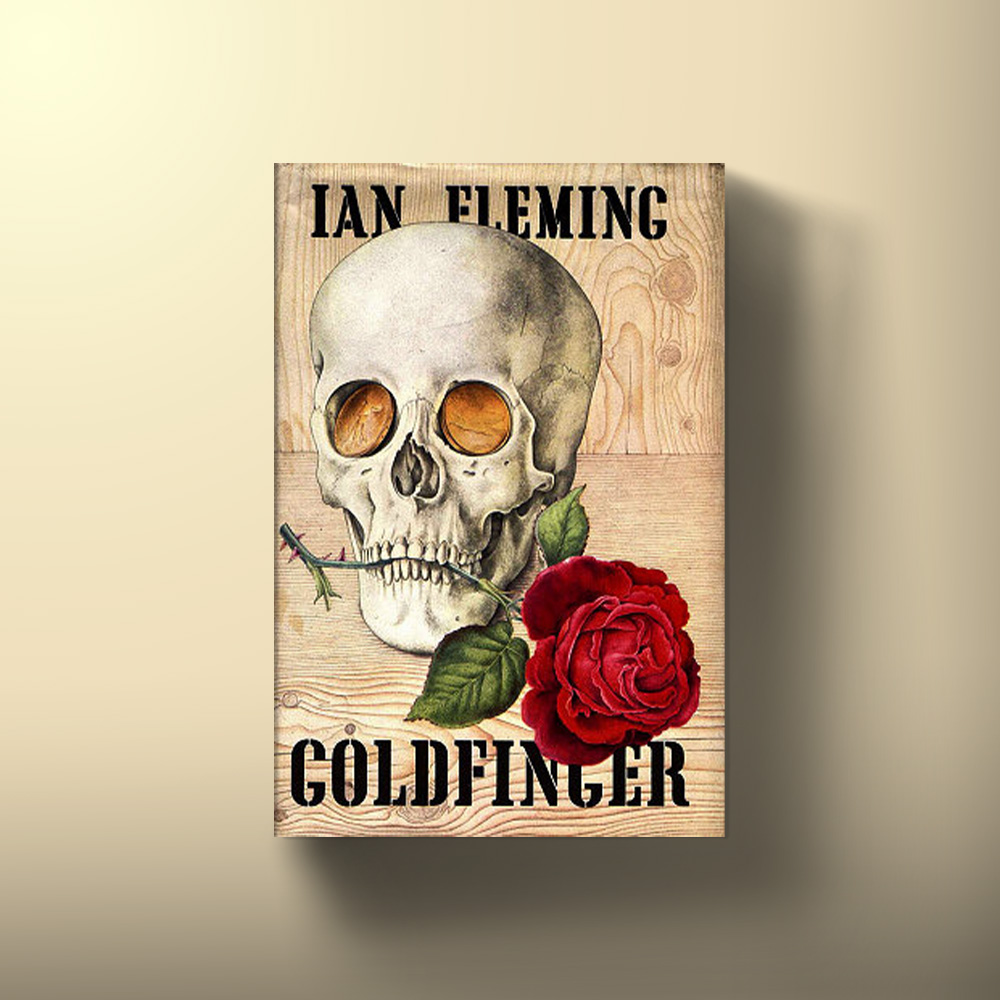
Book cover for Goldfinger by Ian Fleming, featuring an illustration of a skull with a rose in its mouth.

While her name might have raised eyebrows, Pussy Galore is in more ways than one Bond’s equal rather than a mere gender stereotype. She is a gang leader, a ‘trapeze artiste’. She is also impervious to Bond’s charms, until, as The Moneypenny Diaries author Samantha Weinberg puts it, ‘it suited her.’ Weinberg also noted that another tough woman in Goldfinger, Tilly Masterton, finds ‘her heart beating faster for Pussy Galore than it did for 007.’ These are no pallid damsels in distress.

Whereas many of Fleming’s other novels have an atavistic feel that speaks to the influences of thriller novelists of the early part of the century, Goldfinger is distinctly and unequivocally Fleming. Despite SMERSH’s existence as the omniscient threat in Goldfinger, Fleming is not bound by the Cold War or the Soviet apparatus that he so painstakingly captured in From Russia With Love, his fifth novel. The plot actually takes a back seat in Bond’s Aston Martin DB Mark III, whilst wonderful set pieces take the driver’s seat. Fleming overcomes these plot frailties by delivering memorable scenes with glorious self-indulgence and glee. Even with no hitherto interest in golf, readers cannot help but be enthralled by the gamesmanship between Bond and Goldfinger at the Royal St. Marks course.

‘As soon as Bond had hit the shot he knew it wouldn’t do. The difference between a good golf shot and a bad one is the same as the difference between a beautiful and a plain woman – a matter of millimetres.’
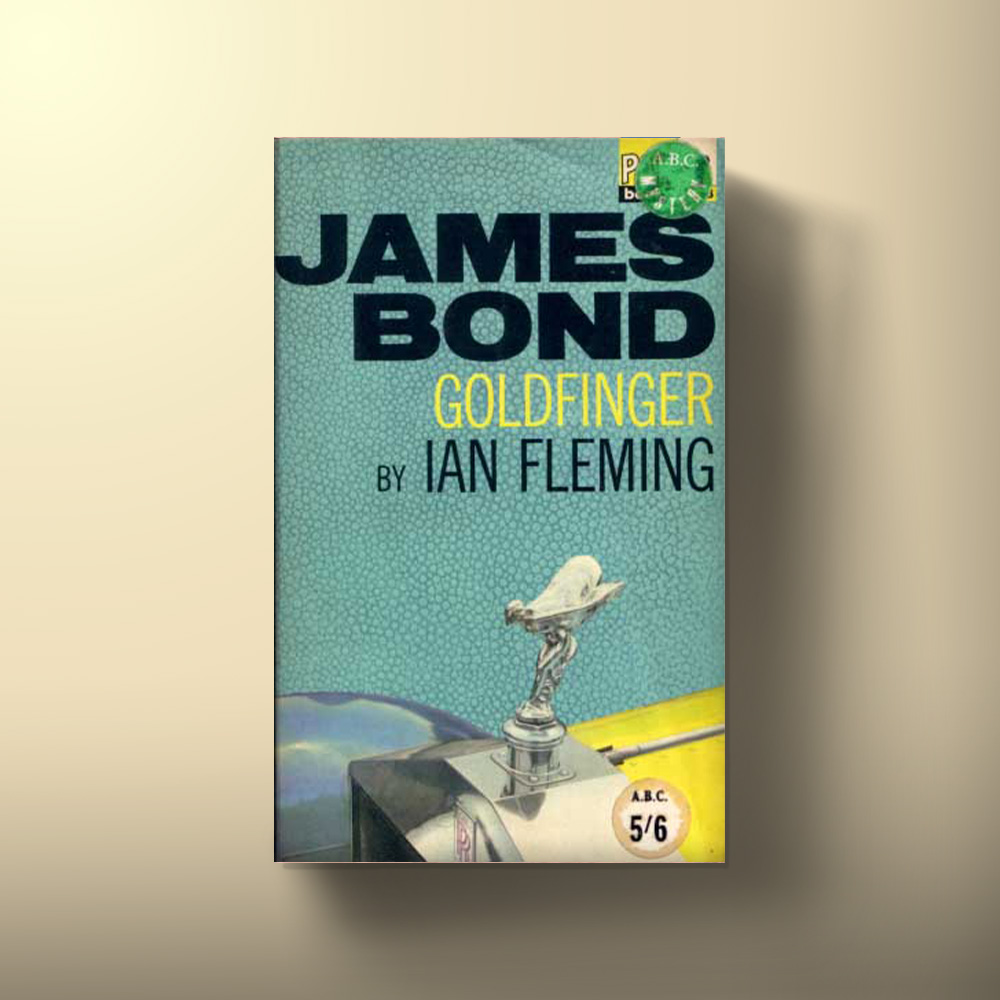
Book cover for Goldfinger by Ian Fleming, featuring silver detail on the hood of a yellow car, against a blue background.

It is perhaps no accident that the novel is best remembered for its individual scenes, since many were ideas that Fleming had originally conceived as short stories and plot devices for other project. Since many of them did make it into the novel, Goldfinger is one of Fleming’s longest endeavours, and as often is the case, Fleming drew on personal experiences in order to create these timeless characters and events. The modernist architect Erno Goldfinger, whose buildings Fleming abhorred, lent his name to Auric Goldfinger. Alfred Whiting, the golf pro at Fleming’s beloved Royal St. George’s golf course, became Alfred Blacking, a Royal St. Marks caddy. As in Moonraker, Fleming’s familiar setting of Kent is the backdrop, for Bond’s early encounters with Goldfinger. Yet whereas Moonraker lacks some international glamour, Fleming made up for this deficiency in Goldfinger by staging the action in a number of exotic and unfamiliar locations including Miami, Geneva, and Kentucky.

Goldfinger, published on 23 March 1959, was Ian Fleming’s 7th James Bond novel and was a great success which hit the top of the best-seller list almost immediately. Fleming was clearly proud of this effort and took on various promotional activities in order to show it off. The book also came complete with another outstanding Richard Chopping dust jacket cover, this one showing a skull with gold coins for eyes biting a rose. Chopping himself considered this piece to be his finest work in the series.
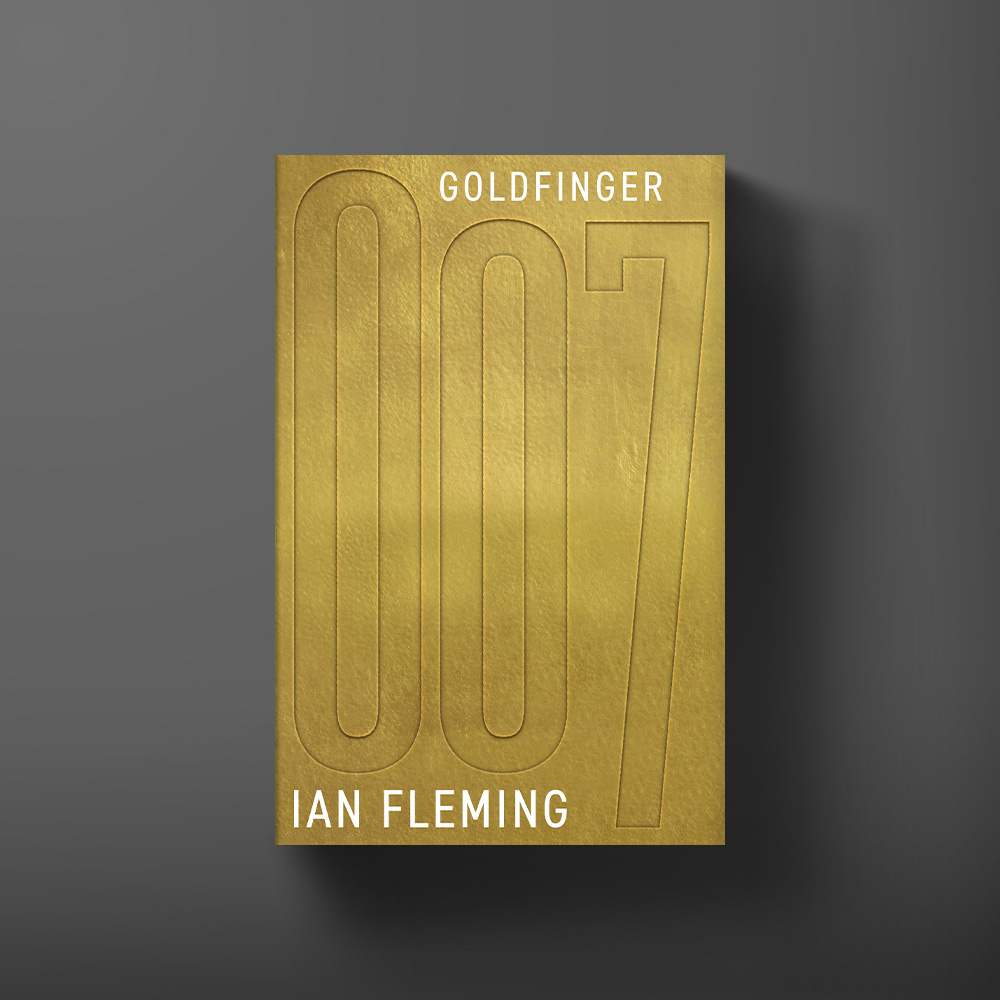
Paperback book cover for Goldfinger by Ian Fleming.

Critically, Goldfinger was better received than some of Fleming’s previous efforts. Even Anthony Boucher of The New York Times, who was Fleming’s arch-nemesis and a constant critic of James Bond, said ‘the whole preposterous fantasy strikes me as highly entertaining.’ In his 99 Novels: The Best in English Since 1939, Anthony Burgess perhaps unexpectedly selected Goldfinger as one of his honoured entrants, while O.F. Snelling, a friend of Fleming and the author of Double O Seven James Bond: A Report, perhaps puts it best when he writes that,

‘Ian Fleming walked an extremely shaky tight-rope across a pond of very thin ice when he wrote Goldfinger. What with its characters and situations, Goldfinger is the most bizarre example in a generally somewhat extraordinary output. But it is also, I submit, at the same time one of the best.’

Goldfinger sees Ian Fleming and his most famous creation at the height of their powers. Upon publication, the book also provided a welcome sense of escapism during a particularly tense portion of the Cold War. Take the time to relive Bond’s classic adventure.

Tom Cull runs Artistic Licence Renewed. He knew iconic Bond cover artist Richard Chopping well as a child and Tom’s great grandfather hired a young Ian Fleming to work at the family bank Cull & Co. between 1933 and 1935.
Interview: Anthony Horowitz

We meet British author Anthony Horowitz to talk literary inspiration, Ian Fleming and James Bond. Anthony has written three official James Bond continuation novels, Trigger Mortis (2015), Forever and a Day (2018) and With a Mind to Kill (2022), all of which draw on original material by Ian Fleming.

What was the greatest challenge involved in writing a Bond novel?

I’ve been a James Bond fan pretty much all my life and I suppose the greatest challenge, for me, was meeting my own expectations. It’s not just that he’s such an iconic character. I think people forget just how good a writer Ian Fleming was. He came up with amazing set pieces, wonderful action sequences, memorable characters. How could I possible write as well as him?

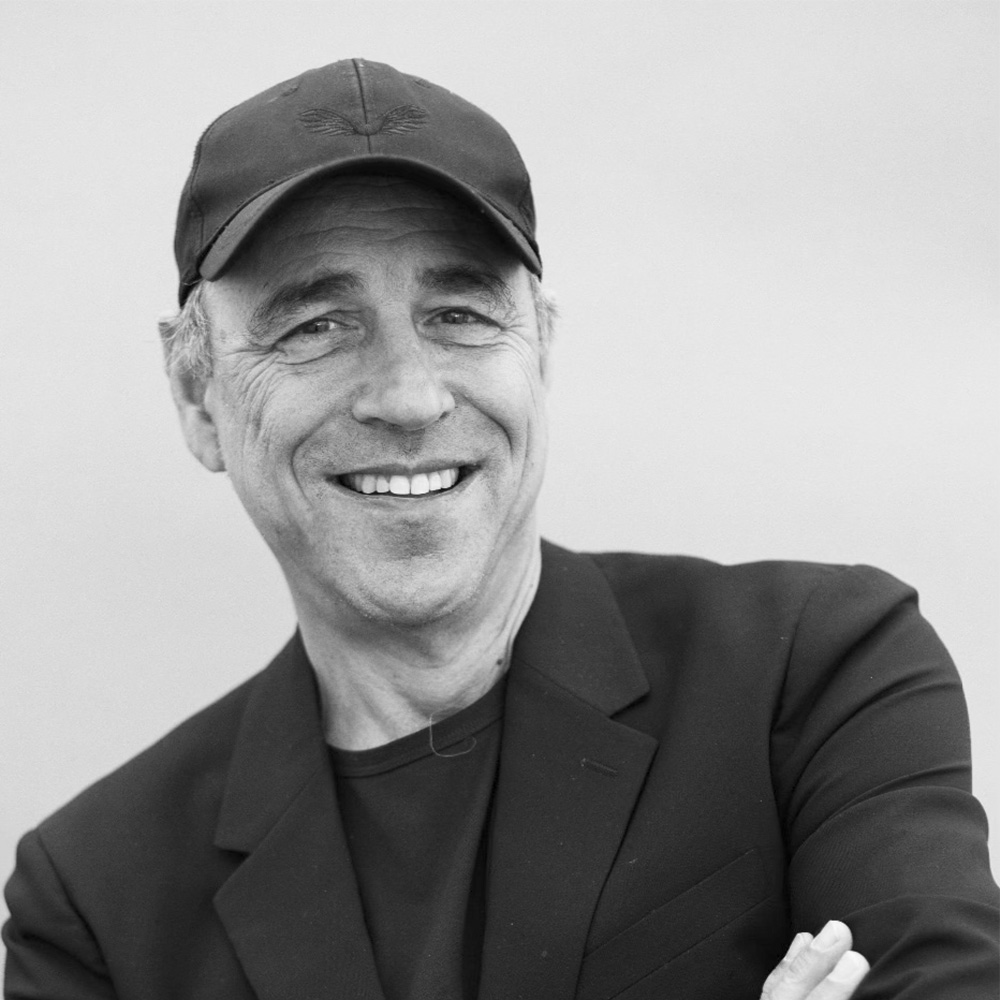
Black and white photograph of author Anthony Horowitz. He is a smiling middle aged white man wearing a suit jacket and baseball hat.

Why did you to choose to keep Bond in his original time period?

Bond represents a particular sort of man at a particular time. He is the ultimate spy at a time – the Cold War – when spying mattered most. He brings with him all the best values that we associate with the Second World War but he has the coldness and ruthlessness demanded by a new atomic age. He is an amazing character who epitomises the age he lived in, which is why, for me, it was critical to keep him in his original timeline.

How did you conjure up Trigger Mortis‘ wonderfully sinister Jason Sin and his Korean War backstory?

Getting the villain right in a James Bond novel is perhaps the biggest challenge of all. Make him too monstrous, too extreme, and you risk slipping into parody. And yet he/she has to be somehow larger-than-life. At the end of the day, what matters most, I think, is that the villain should be real and believable. It struck me that although both Hugo Drax and Goldfinger employed Koreans, there had never been a major Korean villain in a James Bond novel. Looking at the history of Korea, I stumbled upon the massacre at No Gun Ri. At that moment, I knew I had my villain, a man with every reason to hate the West.

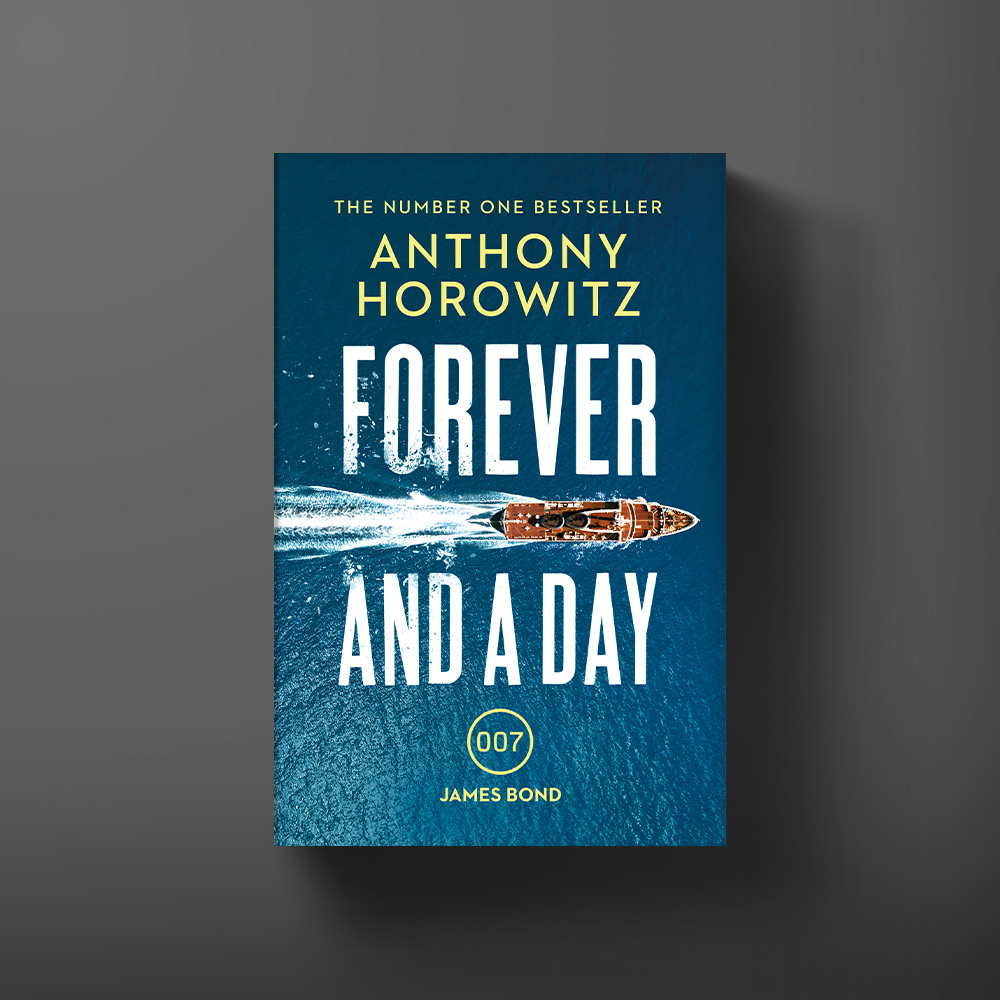
Book cover for Forever and a Day by Anthony Horowitz.

In Fleming’s James Bond books are there any phrases you wish you’d written? Or that you feel particularly embody the spirit of a Bond novel?

There are dozens of lines and phrases that I wish I’d come up with myself. That was Fleming’s genius. The 007 designation, the licence to kill, the names of the characters (M, Miss Moneypenny), the unforgettable titles – it’s impossible to do better.

Do you have a favourite phrase/sentence of your own from Bond series?

My favourite line in Trigger Mortis – because it really does capture Fleming’s style, is the line that opens Chapter 24. ‘Rain swept into London like an angry bride.’ I’m not sure what it means. Or why it works. But when I read it, it makes me smile.

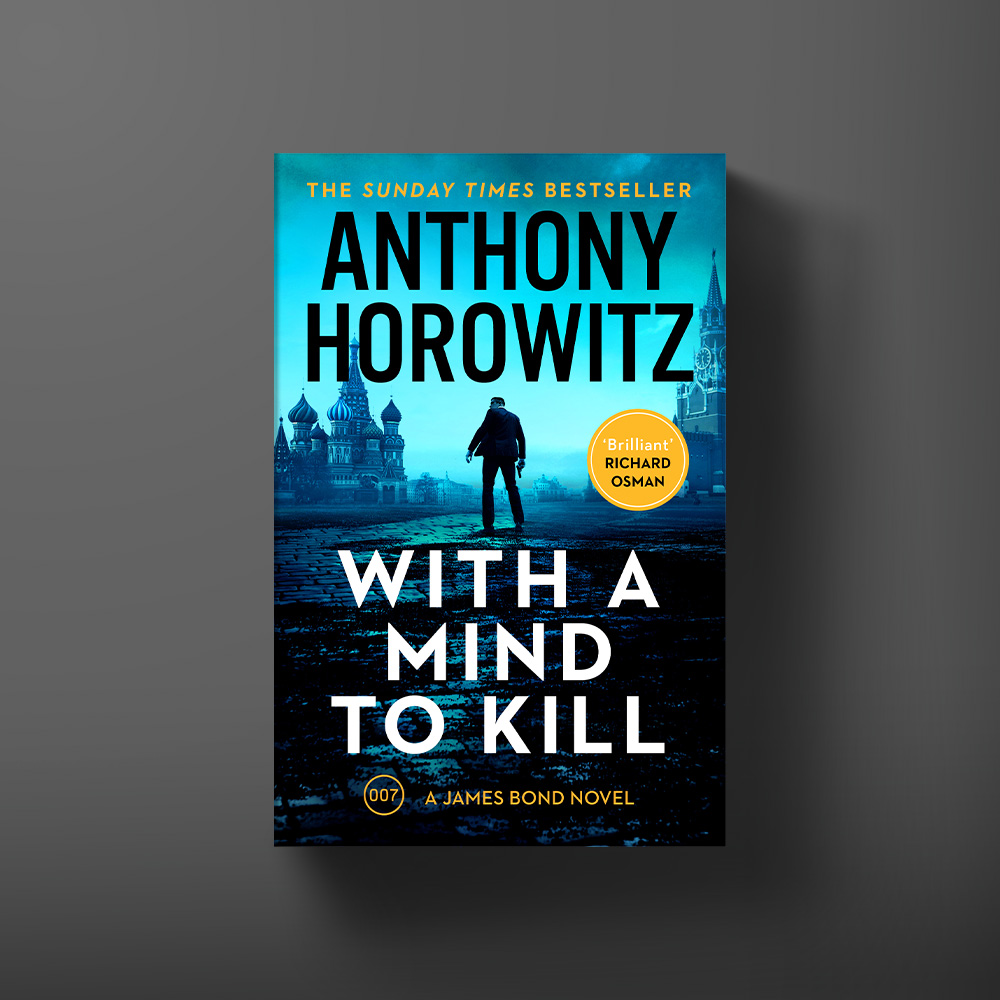
Book cover for With a Mind to Kill by Anthony Horowitz.

How has the process of writing Bond differed from that of your revival of another British literary legend, Sherlock Holmes?

There’s not much comparison – except that I have an equally healthy respect for Sir Arthur Conan Doyle. Sherlock is so much more distant that I didn’t feel quite so nervous writing about him. Late Victorian England is easier to characterise than the 1950s. I’d add that in the end I enjoyed writing the books equally. If you’re going to write a continuation novel, it helps to love the world into which you’ve been invited.

Which authors have influenced you the most and inspired you to become a writer yourself?

Obviously, Doyle and Fleming. I read both of them when I was a boy, dreaming of being a writer. Other influences were Charles Dickens and Tintin’s creator, Hergé.

Discover more about Anthony Horowitz here.

Interview: Illustrator, Patrick Léger

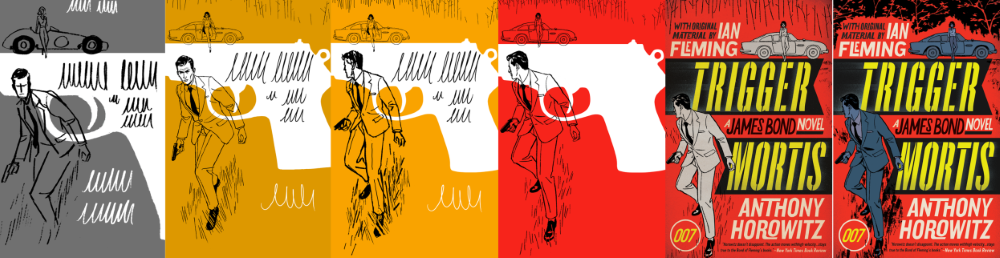
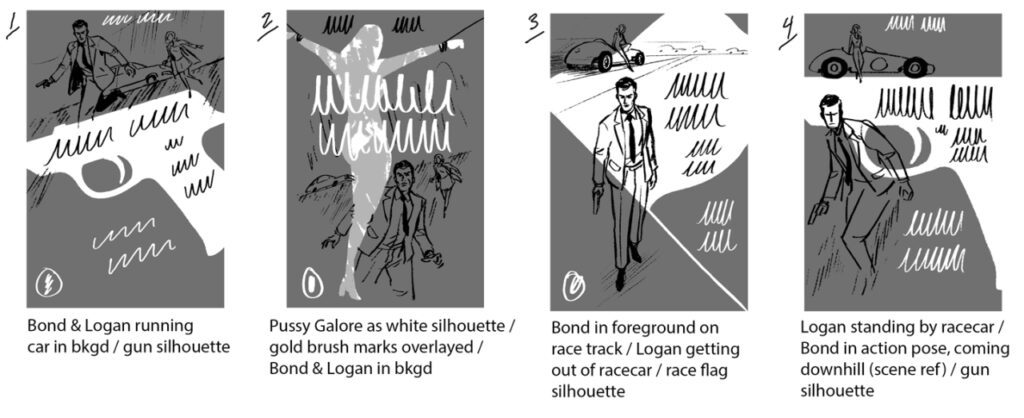
We check in with New York-based illustrator Patrick Léger who created the art for the US paperback edition of Anthony Horowitz’s Trigger Mortis.

What was your first encounter with James Bond?

My mother was a huge Timothy Dalton fan, and I remember watching our VHS of The Living Daylights constantly, growing up. I’m a bit of a movie buff so I’ve seen every Bond film. From Russia With Love is one of my favorite movies from the ’60s.

Your cover is a gorgeous hark back to Bond’s ’50s and ’60s origins – could you tell us about your inspirations?

When I was asked to do Trigger Mortis, I had just finished another spy novel cover a few months earlier and was currently working on an assignment for a men’s fashion magazine, so a James Bond cover seemed like a inevitable next step! The scene for the cover didn’t require too much research but I tried to make the fashion, hairstyles, and other details appropriate for the period. I referenced several of the earlier Bond films, which are a treasure trove for the look and the style of the ’60s. I did look at some of the original Bond covers, but I was more enamored with Robert McGinnis’ posters for the films and his own incredible covers for various crime novels of the ’60s and ’70s.

What originally drew you to the style of the ’50s, ’60s and ’70s?

When I first began illustrating, I was working in ink and looking at a lot of work by the illustrators from the 60s and 70s to study mark-making and learn more about the medium. Their techniques of drawing and that kind of generalised realism made it’s way into my own work and became a strong aspect of my own style.

How did this cover process differ from independent artwork projects?

Not being able to show Bond’s face was an interesting challenge. Typically you have those kinds of limitations with any book now though because marketability has become a big part of the process. I think overall it was actually easier to work on this than a typical book cover. James Bond is such an iconic character; you don’t really need to convey to the reader as much as you normally would. They already know what to expect from a Bond adventure.

How does the process for covers differs from other pieces of illustration?

Often with books, the art director will describe a rough concept, because the book may still be in the editing phase or there isn’t enough time for the illustrator to read through the entire text before the sketches are due. Here I believe the scene used was chosen by the Ian Fleming Estate. With editorial work, it’s usually entirely up to the artist to come up with multiple concepts for an article from which the editorial staff can choose a direction.

Your style always includes a striking palette – can you talk us through your colour decisions for Trigger Mortis?

The color choice was mainly up to the art director/designer in this case. We worked together doing various combinations and landed on those. The original idea was to use very limited color, so we tried to find 3-4 colors that would work in conjunction with the title design. I often use brighter colors because it helps to set off the the heavy, black linework in a way that a muted color scheme wouldn’t.

Explore Patrick Léger’s work here.