 Skip to main content

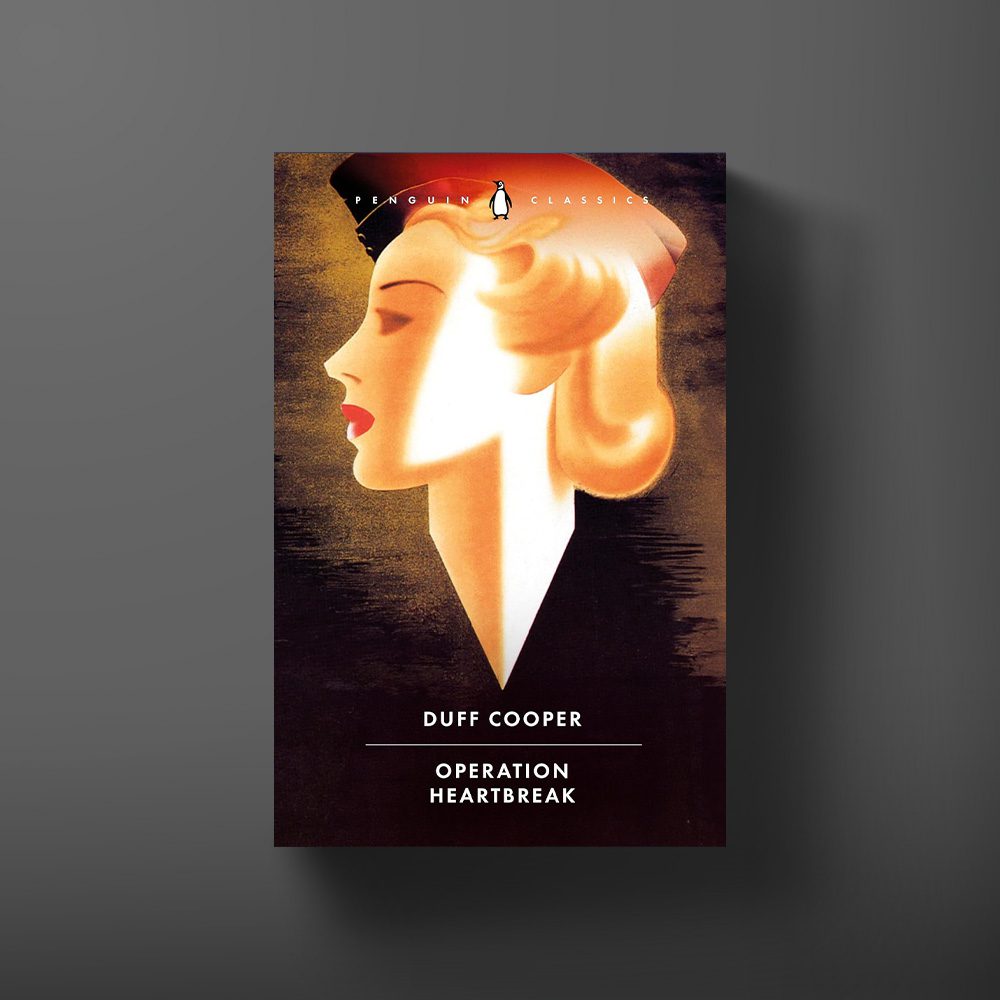
This month, we are turning to an often forgotten classic: Operation Heartbreak. This elegiac reimagining of Operation Mincemeat by Alfred Duff Cooper is as beautiful as it is tragic, a novel that will appeal to history lovers, fans of Fleming and any reader drawn to quietly affecting fiction.
OVERVIEW
William Maryngton’s only ambition is to serve his country, as his father did before him. But by the time the First World War ends in 1918, he is too young to take part. As the years pass, he finds himself increasingly out of step with both military life and the modern world.
When war breaks out again, William is drawn into an unexpected role. Selected for a covert intelligence operation, he becomes involved in a plan designed to deceive German forces and alter the course of the conflict. Operation Heartbreak follows William’s path from frustrated outsider to an unlikely participant in one of the war’s most unusual missions.
First published in 1950, this is a fictional account of Operation Mincemeat, the 1943 intelligence mission designed to mislead German forces about the Allied invasion of Sicily, in which Ian Fleming was famously involved. Because of the author’s ministerial role in government, he reportedly learned of the operation in an informal conversation with Winston Churchill. Given the sensitive nature of wartime secrets, the British Cabinet Office attempted to suppress the novel’s publication. Still, it predates most public accounts of the mission.
WHY WE CHOSE IT
The story focusing on Operation Mincemeat makes this an irresistible pick for us here at Ian Fleming Publications and the James Bond Book Club!
In 1939, Fleming, while serving as personal assistant to the Director of Naval Intelligence, devised the initial concept for Operation Mincemeat. He is believed to have borrowed the idea from another novel – Basil Thompson’s The Milliner’s Hat Mystery.
Operation Heartbreak predates most public accounts of the mission and was written at a time when its details were still sensitive. What it offers is not simply a version of events, but a perspective shaped by proximity to the environment and events that it draws on. Beyond that, the novel is deeply character-driven and explores, in a genuinely moving way, what it means to feel out of place and at odds in a changing world.
We came for the true story and stayed for the imagined one. It isn’t a thriller, per se, but it will absolutely make you turn the page.
THEMES TO CONSIDER
– Duty and patriotism – What does it mean to serve one’s country, and how far should that duty extend?
– The ironies of war and heroism – The novel raises questions about what heroism really looks like in wartime.
– Unfulfilled ambition and loneliness – At its heart, the novel reflects on the personal sacrifices and quiet tragedies that underpin even the greatest victories.
REVIEWS
The Times – ‘Not a word is wasted… a perfect novel.’
Daily Mail – ‘Moving and bittersweet‘
Evening Standard – ‘Poignant and moving.’
Wall Street Journal – ‘Its ending is as unexpected as it is affecting.’
Daily Telegraph – ‘Told with humour, deep feeling and considerable skill.’Nina Bawden – ‘A wonderful novel by a masterly writer that should be on everyone’s bookshelf.’
ABOUT THE AUTHOR
Alfred Duff Cooper, born in 1890, was an author, statesman and diplomat. During his time as a second lieutenant in World War I, Cooper was awarded the Distinguished Service Order. After World War I, he worked in politics, entering Parliament in 1923 and serving until 1938, when, in protest at the Munich Agreement, he resigned from his position. In 1940, Prime Minister Winston Churchill requested Cooper’s return to office, where he was later appointed as ambassador to France. He became 1st Viscount Norwich in 1951, a few short years before his death in 1954. Operation Heartbreak is his only novel, but his other notable works include the biography Talleyrand and his autobiography Old Men Forget.
We hope you enjoy Operation Heartbreak. Follow our social channels for discussions, highlights, and more.