‘Shaken, Not Stirred’

Join us as we take a look at the role drinks play in Ian Fleming’s James Bond novels.

It begins in the very first 007 adventure, Casino Royale, with the immortal line, ‘shaken and not stirred’ and The Vesper martini, christened in honour of Bond’s great love, Vesper Lynd. From then on, strong, carefully crafted drinks are at the heart of every 007 story. 

Ian Fleming was very particular about the finer details of his hero’s lifestyle. As well as Bond’s drinking habits, his clothes, weaponry, cars and food are all described with precision, a narrative trait which is perfectly highlighted by his instruction on how to make the perfect martini.
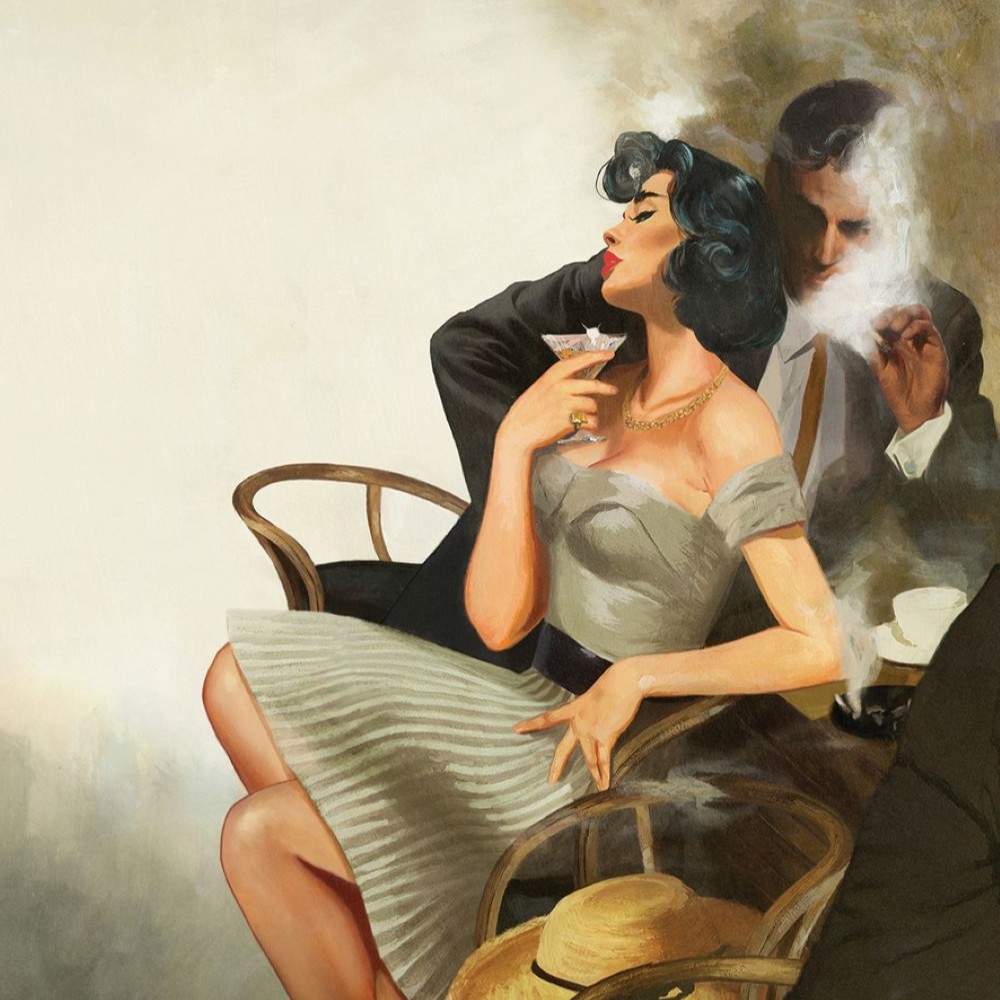
Diamonds Are Forever

‘The waiter brought the martinis, shaken and not stirred, as Bond had stipulated, and some slivers of lemon peel in a wine glass. Bond twisted two of them and let them sink to the bottom of his drink. He picked up his glass and looked at the girl over the rim. “We haven’t drunk to the success of a mission” he said.’

The particular attention that is paid to how eggs should be scrambled, how a car should be customised and how best to serve vodka, are all testament to the writer’s own preferences. Though many have debated how much of Ian Fleming there was in James Bond, there has always been agreement amongst fans that Fleming shared his own tastes and enthusiasms with his character. Along with the advocation of particular brands, these strokes of realism provide a layer of truth and help to bring the fantasy of James Bond’s world to within the readers’ reach. ‘All these small details’, Fleming wrote, ‘are ‘points de repère’ to comfort and reassure the reader on his journey into fantastic adventure.’

Goldfinger

‘James Bond, with two double bourbons inside him, sat in the final departure lounge of Miami Airport and thought about life and death.’

In a feature titled ‘London’s Best Dining’ for Holiday magazine, Fleming provides a tip for American tourists on how to sample a decent martini, showing how much it mattered to him beyond the pages of his novels.

‘It is extremely difficult to get a good martini anywhere in England. In London restaurants and hotels the way to get one is to ask for a double dry martini made with Vodka. The way to get one in any pub is to walk calmly and confidently up to the counter and, speaking very distinctly, ask the man or girl behind it to put plenty of ice in the shaker (they nearly all have a shaker), pour in six gins and one dry vermouth (enunciate ‘dry’ carefully) and shake until I tell them to stop. You then point to a suitably large glass and ask them to pour the mixture in. Your behaviour will create a certain amount of astonishment, not unmixed with fear, but you will have achieved a very large and fairly good Martini.’

Paying attention to exact details are crucial skills for any spy who wants to complete a mission successfully and safely. The life of a secret agent is one of daring action and life-threatening peril.  James Bond’s preference for the finer things in life suggests that when the moments of danger have passed, pleasures should be indulged. Enjoying the very finest dover sole and a glass of chilled champagne provides 007 with a reward and pushes his experiences to the height of sophistication and quality, in those brief respites from danger.

Live and Let Die

‘There are moments of great luxury in the life of a secret agent… occasions when he takes refuge in good living to efface the memory of danger and the shadow of death.’

As well as enjoying the pleasures of drinking, alcohol serves to ease the conscience of a cold blooded killer such as 007, and provides moments of relief in a life of violence and upheaval. Drinks play a soothing role in the James Bond novels and offer a well-earned splash of luxury after a long day spent navigating the dirty business of spying.

Discover 50 cocktails inspired by the characters and plots of the 007 novels in Shaken: Drinking with James Bond and Ian Fleming, created by the team at award-winning Bar Swift in London’s Soho.

Interview: Edmund Weil On Cocktails

Meet cocktail maestro Edmund Weil, part of the team behind essential cocktail book, Shaken: Drinking with James Bond and Ian Fleming. A distant relative of Ian Fleming, Edmund introduces a range of James Bond and Ian Fleming inspired cocktails to make at home, presenting each recipe with knowledge and passion for both the literary connection and the art of mixology.

The book is the work of experienced bar keepers – and real life husband and wife team – Edmund Weil and Rosie Stimpson, together with bar industry legends Bobby Hiddleston and Mia Johansson. Here we talk to Edmund about how the project came together and what makes the perfect cocktail.

We love the detail behind each drink – something that Fleming himself was particular about in his own books. How did you achieve this?

The selection of passages from the books and the names and themes selected by Ian Fleming Publications made it a real pleasure to research and execute the cocktail creation and write them up. In my experience it is much easier to create the perfect cocktail with a clear framework; whether it’s a theme for a menu, or thinking about a very particular clientele, or as in this case a literary inspiration.

How did you first get involved in the world of speakeasies?

My wife Rosie and I have always loved vintage style and music; that was always going to be the basis for our dream of opening a bar. Our first bar, Nightjar, was also located underground with an unassuming doorway between a café and a chicken shop, so the concept of a hidden bar really lent itself to the space. Luckily the drinking public at the time were also very taken by the speakeasy concept and the craft cocktail revolution, so it became very popular very quickly.

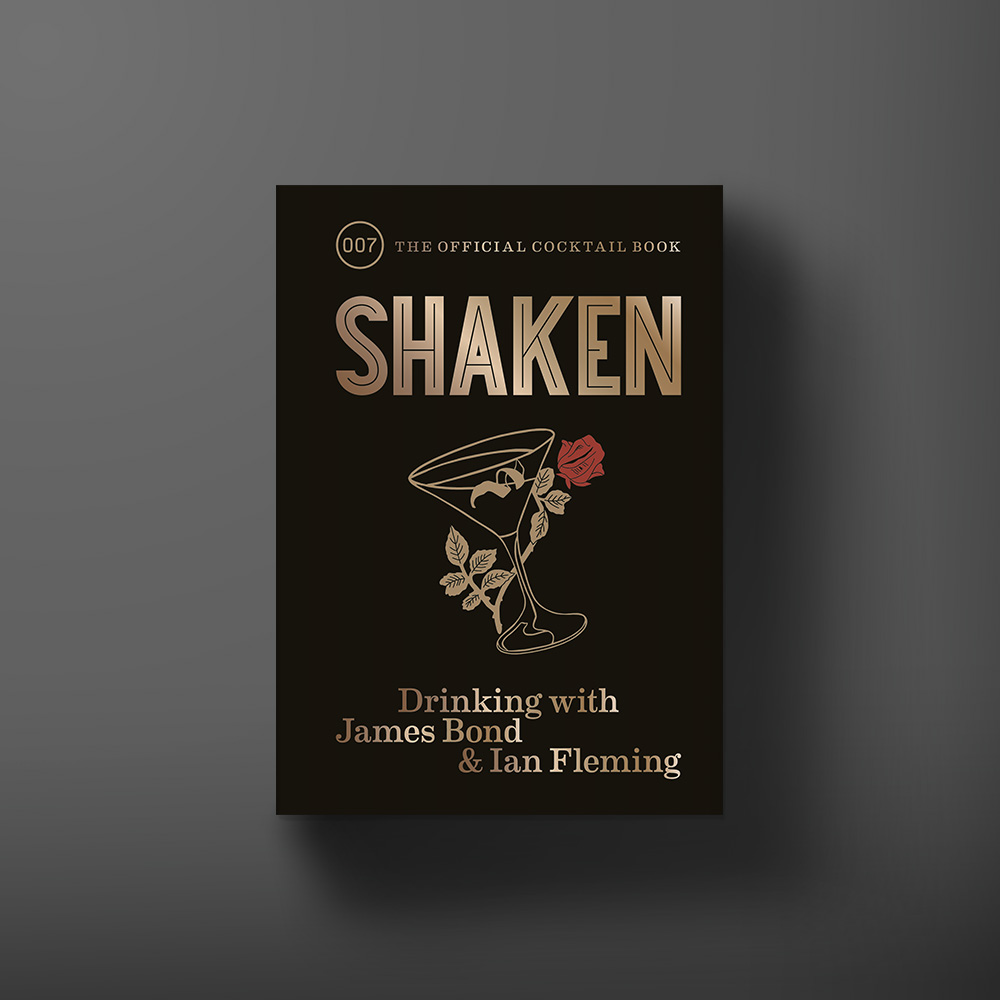
Hardback book cover for Shaken, Drinking with James Bond and Ian Fleming, the official 007 cocktail book.

All of your bars, Nightjar, Oriole and Swift are named after birds. What was the inspiration?

My grandfather, who was Ian Fleming’s cousin, had a great passion for birds and passed that on to me. It was very interesting to learn while researching this book that this passion was shared by Ian Fleming himself. His descriptions of nature (and birds in particular) are rivalled only by his descriptions of food and drink.

How have drinking habits changed from Ian Fleming’s day in the 1950s to now?

By the 1950s the first golden age of the cocktail was already on the wane. Prohibition, followed by the 2nd World War, had eroded much of the cocktail knowledge and finesse that had built up during the Belle Epoque. Fleming, on the other hand, was a greater connoisseur than most. Some of his preferred methods are a little unorthodox by today’s standards (you won’t find too many bartenders shaking their martinis for instance!). Perhaps the biggest societal change however is quantity; if you look at Bond’s alcohol consumption over the timeframes of the novels it works out at about 92 units per week! Today’s drinkers are as a rule, more abstemious and more discerning, which means that creating special but responsible drinking experiences for guests is the biggest challenge for bar operators.

What makes the perfect cocktail?

The perfect cocktail must have excellent ingredients, which need to be mixed in harmony and balance. With some ingredients (especially pungent amari) even a  few drops can change the balance of a drink completely. Likewise it is often the simplest of drinks in which that harmony is hardest to attain. That’s why I would advise any budding cocktail-maker to always taste their drinks before serving. This gives the chance to rebalance the drink if it’s off.

Which of the 50 cocktails in the book is your personal favourite?

I’m a sucker for ‘stirred down and brown’ drinks with pungent flavours, so the Trueblood is high on the list. It’s based around barrel proof blended Japanese whisky, with strong support coming from Campari, crème de dassis and sweet vermouth. The perfect after-dinner digestif.

Which of the recipes would you suggest a cocktail beginner start with? 

The Moneypenny is an excellent choice. A rose and cucumber-tinted Collins, it’s refreshing and easy on the palate, but still has enough flavour elements to turn someone on to the joy of mixing drinks.

Which is best for a party?

Without doubt the Old Man’s Thing. Adapted from a punch that Ian Fleming would serve to his guests at GoldenEye, it is a delicious classic rum punch with a theatrical element in the flaming float of overproof rum.

Do you have a favourite literary Bond character?

Tiger Tanaka. The ultimate badass.

And a favourite Bond novel?

Casino Royale – it is the grittiest and most realistic of the Bond novels (he even falls in love!). I love the vividness of the gambling scenes and Vesper Lynd is a fantastic femme fatale.

Check out Shaken: Drinking with James Bond and Ian Fleming for yourself in our shop.

Interview: Comic Artist, Jason Masters

We catch up with Jason Masters, South African artist responsible for the 007 comic book series’ VARGR, Eidolon and Black Box, to find out about his work, his collaboration with Warren Ellis and time with James Bond.

Are you a fan of the Bond universe?

I’m pretty sure I was hooked after the first cold open in the film Octopussy. It introduced me to the idea that there were other 00’s and that they could die. How was Bond going to defeat a villain that 009 couldn’t handle? Surely he was better than 007? He was 2 whole numbers above Bond! At least that’s how my kid’s brain interpreted the information. I loved it and made my way backwards and forwards through the catalogue from there.

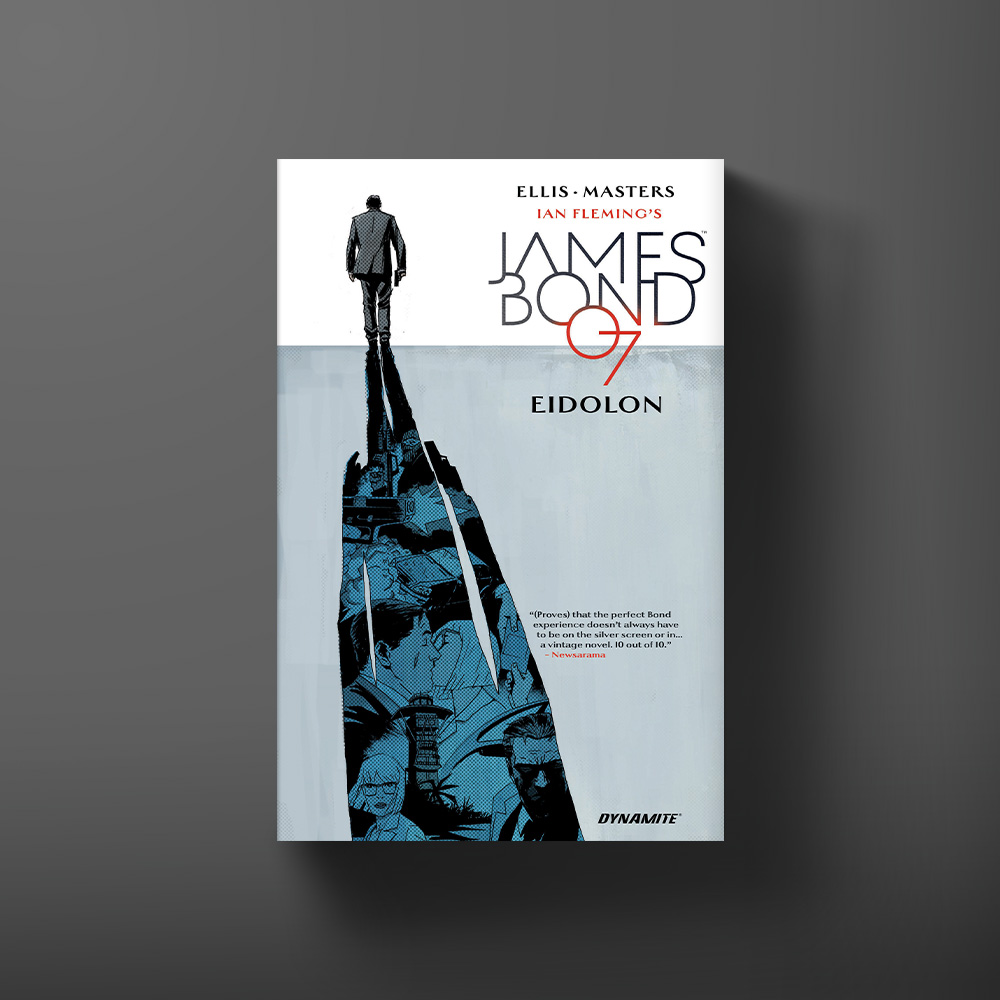
Cover for the Eidolon graphic novel written by Warren Ellis, with art by Jason Masters.

How did you go about creating Bond’s look for VARGR? 

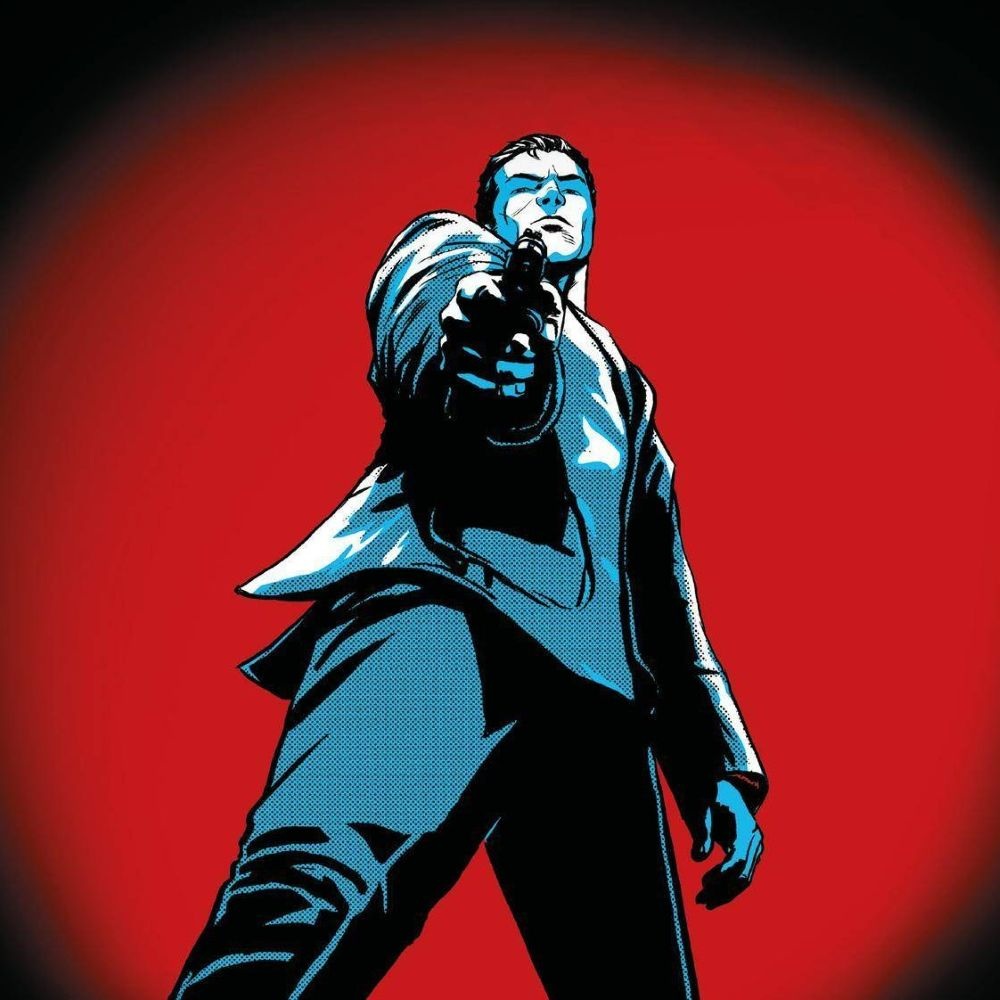
If James Bond hadn’t been played by so many different actors, the design process would probably have been a lot easier. There were times I’d sketch something, come back, and realise I’d drawn Timothy Dalton or Sean Connery. I thankfully got to bounce a few ideas off Warren in the beginning and that was incredibly helpful. In the end, starting with the actor Hoagy Carmichael as a base got me to where I am now. I easily did 20+ versions of Bond’s look before everyone was happy. Everyone has an idea of how Bond should look and pleasing everyone is very difficult.

I spent quite a lot of time thinking about 007’s body language. How would someone who is, almost certainly, the most dangerous person in the room carry himself? There would be a confidence there, not arrogance per se, but comfort in almost any situation. At any point, wherever he is at the time, it certainly isn’t the worst thing he’s been through that day. ‘Comfort’ within his surroundings might be too strong a word but any situation in which his environment isn’t trying to murder him must be quite a relief.

Bond might appear quite simple at face value but his aesthetic choices seem to say he’s a man who could be dead at any point, so why not experience the finest the world has to offer? He’s sometimes a killer dripping with brutal character.

What’s it like collaborating with the legendary Warren Ellis?

I’ve wanted to work with Warren for a long, long time. I never quite dreamed I’d get the added bonus of first working with him on a character so tremendously iconic. He’s a very generous creator, allowing me to throw in the occasional storytelling idea and answering my inane questions succinctly. He could have been a horrible monster to work with and I would still have come out of this smiling. It’s been quite the opposite experience in fact.

Was there anything he asked you for which was too crazy to draw?

Definitely not! To paraphrase Robert Crumb, ‘it’s just lines on paper’. I don’t think you could ask me to draw anything that was too crazy, difficult, sure but that’s the job. One of the most satisfying parts of the comic drawing process is the problem solving.

Can you talk through the style and atmosphere you have in mind when you sit down to draw these Bond stories – and how you use layout to reinforce that?

My pre-comic background is in advertising, art direction and design. From there I moved to commercial illustration and as a result, I like to approach a project by first trying to figure out a look for it. It’s a habit I can’t break but it does get me into what I think is the correct headspace for each job.

I did quite a bit of research on the old James Bond newspaper strips. I thought it would be fun to take the look and feel of that but give it a modern storytelling twist. Then if possible throw in a little bit of the grandeur that is present in all the settings of the films.

These are all the ingredients I tried to throw into the pot. What I achieved was nowhere near what I aimed for but I got close enough for me to at least feel I had made something enjoyable for the reader. Thankfully Dynamite also agreed to let me bring Guy Major on board for the colours and he’s been a great collaborator. Seeming to know exactly what I was trying to do from the start.

We love the crisp realness of the settings and the architectural detail. Is this something which has always been a component of your style? 

There’s probably always been an element of that in my work. I want backgrounds to be characters that are influenced by how the characters react to them. Unfortunately, the only way I know right now to make environments believable is to add details.

How do you approach the action and intense gore of Warren’s scripts? 

Warren writes action exactly how I like to draw it. While I love bold over-the-top superhero action I believe there’s also a place for violence with immediate consequences. I love depicting the almost chess-like moves and decisions a character has to make in a fight to get the results he wants. Bond is the most like this of all the characters I’ve ever drawn. Using what’s around him to get the job done with the least amount of attrition. That’s not always possible of course and sometimes he gets hurt. Violence is ugly and brutal and in these stories it shouldn’t be elevated. Violence without consequences is dancing. I’m not sure there’s a comic artist out there that doesn’t giggle to themselves, at least a little bit, when they have to draw something gross.

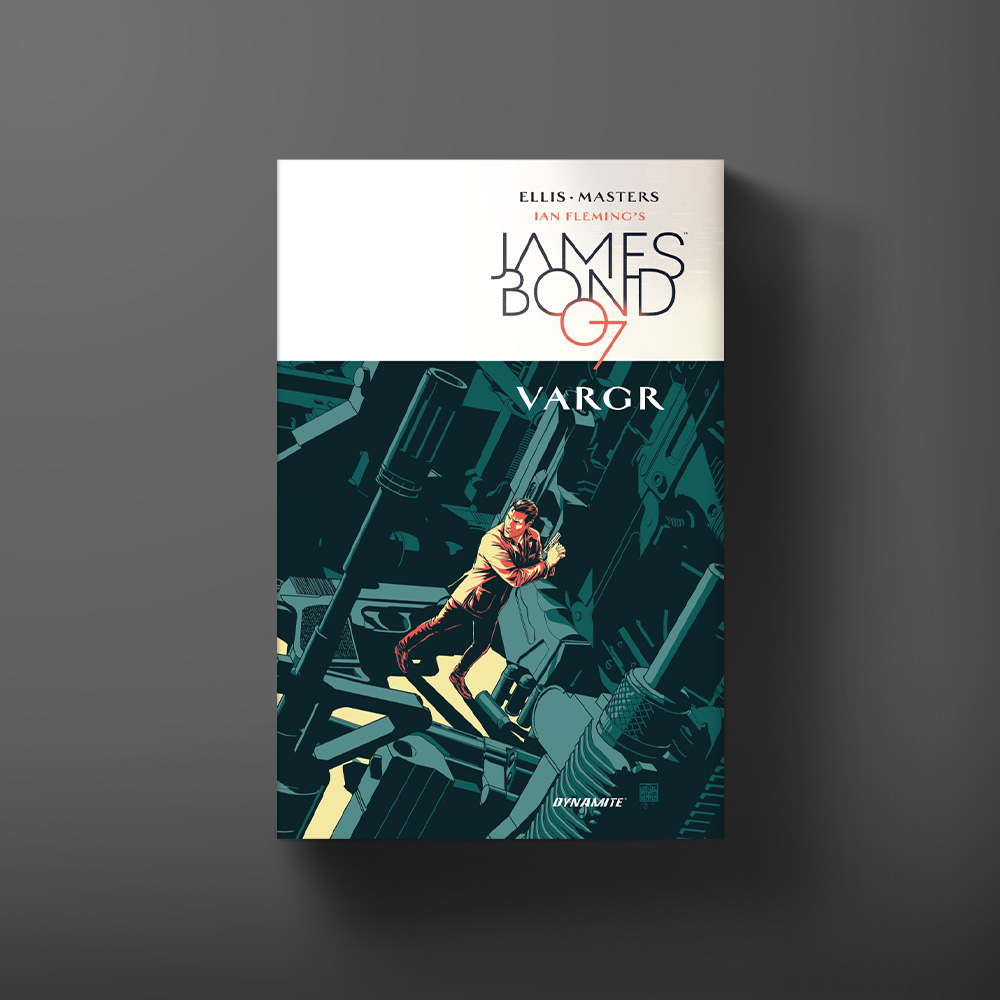
Cover for the VARGR graphic novel written by Warren Ellis, with art by Jason Masters.

Can you talk about your variant cover for issue #1? Were you given any sort of brief, or was it purely a case of constructing an image which embodied the spirit of this new Bond iteration?

Dynamite has been great with letting me try out ideas. I wanted an image with a minimal colour palette that would stand out on the comic shelf. In Bond’s hands anything could be a weapon: walls, furniture etc. So the idea was an environment made out of weapons while he, a weapon made flesh, stalked or was stalked by his prey. I think it turned out pretty well.

And finally, is the character Masters in the comic, a total coincidence?

Ha! I actually asked Warren that exact question when I got the first script but it turns out he hadn’t realised he’d done it. I think subconsciously, knowing Masters’ end, Warren might have wanted me dead for harassing him about working together.

Find out more about Jason Masters here.