‘Shaken, Not Stirred’

Join us as we take a look at the role drinks play in Ian Fleming’s James Bond novels.

It begins in the very first 007 adventure, Casino Royale, with the immortal line, ‘shaken and not stirred’ and The Vesper martini, christened in honour of Bond’s great love, Vesper Lynd. From then on, strong, carefully crafted drinks are at the heart of every 007 story. 

Ian Fleming was very particular about the finer details of his hero’s lifestyle. As well as Bond’s drinking habits, his clothes, weaponry, cars and food are all described with precision, a narrative trait which is perfectly highlighted by his instruction on how to make the perfect martini.
Diamonds Are Forever

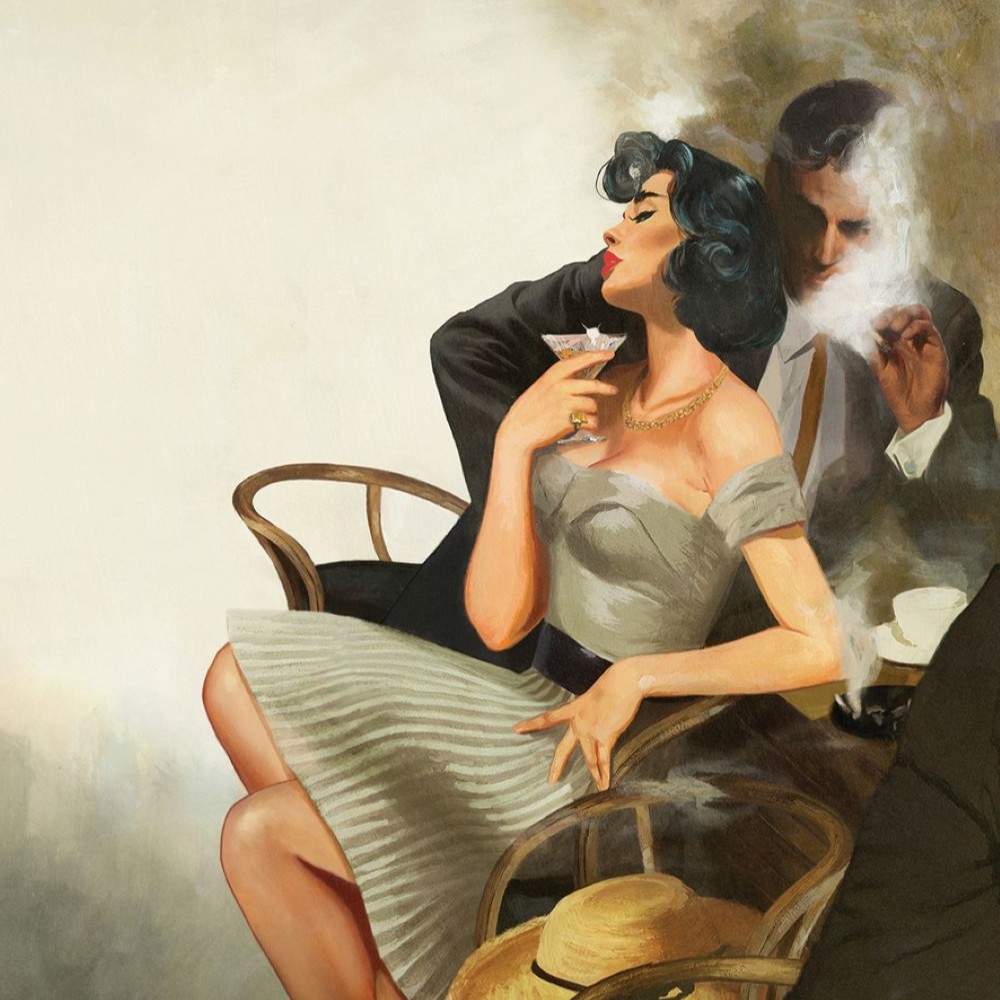
‘The waiter brought the martinis, shaken and not stirred, as Bond had stipulated, and some slivers of lemon peel in a wine glass. Bond twisted two of them and let them sink to the bottom of his drink. He picked up his glass and looked at the girl over the rim. “We haven’t drunk to the success of a mission” he said.’

The particular attention that is paid to how eggs should be scrambled, how a car should be customised and how best to serve vodka, are all testament to the writer’s own preferences. Though many have debated how much of Ian Fleming there was in James Bond, there has always been agreement amongst fans that Fleming shared his own tastes and enthusiasms with his character. Along with the advocation of particular brands, these strokes of realism provide a layer of truth and help to bring the fantasy of James Bond’s world to within the readers’ reach. ‘All these small details’, Fleming wrote, ‘are ‘points de repère’ to comfort and reassure the reader on his journey into fantastic adventure.’

Goldfinger

‘James Bond, with two double bourbons inside him, sat in the final departure lounge of Miami Airport and thought about life and death.’

In a feature titled ‘London’s Best Dining’ for Holiday magazine, Fleming provides a tip for American tourists on how to sample a decent martini, showing how much it mattered to him beyond the pages of his novels.

‘It is extremely difficult to get a good martini anywhere in England. In London restaurants and hotels the way to get one is to ask for a double dry martini made with Vodka. The way to get one in any pub is to walk calmly and confidently up to the counter and, speaking very distinctly, ask the man or girl behind it to put plenty of ice in the shaker (they nearly all have a shaker), pour in six gins and one dry vermouth (enunciate ‘dry’ carefully) and shake until I tell them to stop. You then point to a suitably large glass and ask them to pour the mixture in. Your behaviour will create a certain amount of astonishment, not unmixed with fear, but you will have achieved a very large and fairly good Martini.’

Paying attention to exact details are crucial skills for any spy who wants to complete a mission successfully and safely. The life of a secret agent is one of daring action and life-threatening peril.  James Bond’s preference for the finer things in life suggests that when the moments of danger have passed, pleasures should be indulged. Enjoying the very finest dover sole and a glass of chilled champagne provides 007 with a reward and pushes his experiences to the height of sophistication and quality, in those brief respites from danger.

Live and Let Die

‘There are moments of great luxury in the life of a secret agent… occasions when he takes refuge in good living to efface the memory of danger and the shadow of death.’

As well as enjoying the pleasures of drinking, alcohol serves to ease the conscience of a cold blooded killer such as 007, and provides moments of relief in a life of violence and upheaval. Drinks play a soothing role in the James Bond novels and offer a well-earned splash of luxury after a long day spent navigating the dirty business of spying.

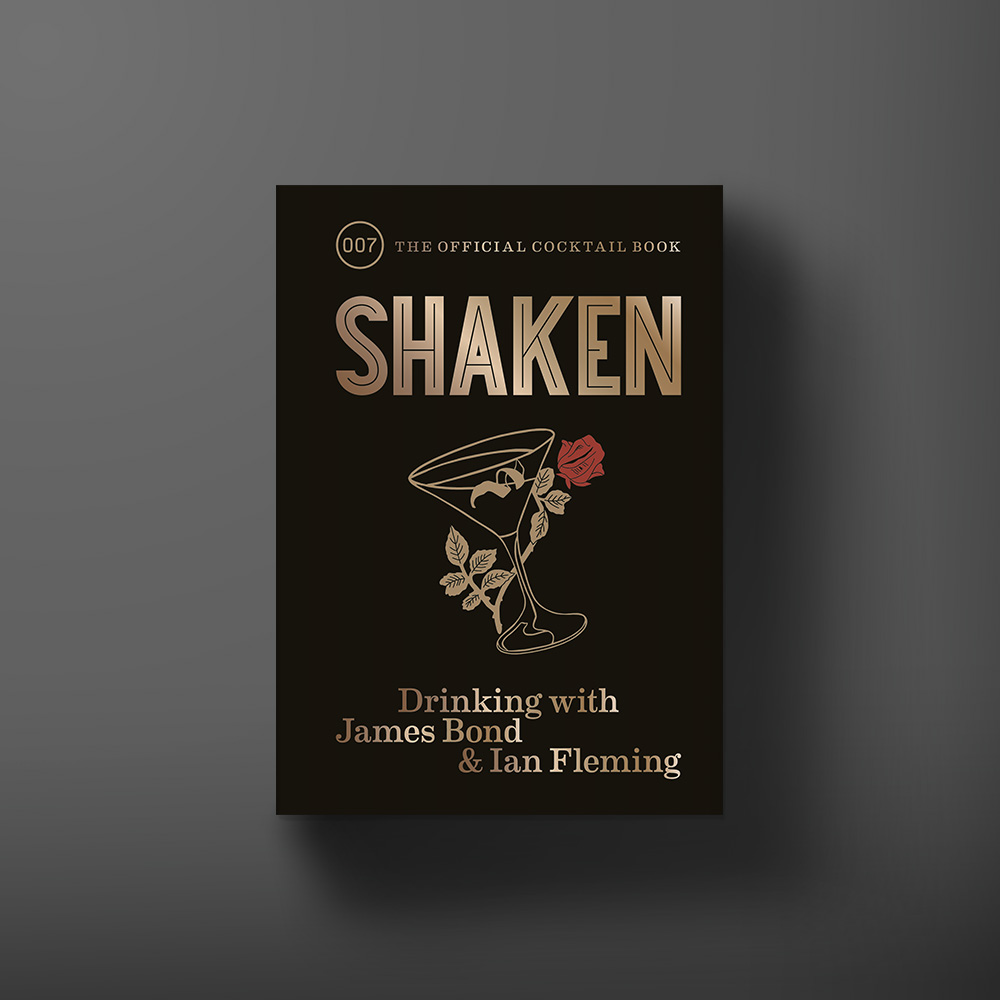
Discover 50 cocktails inspired by the characters and plots of the 007 novels in Shaken: Drinking with James Bond and Ian Fleming, created by the team at award-winning Bar Swift in London’s Soho.

Interview: Edmund Weil On Cocktails

Meet cocktail maestro Edmund Weil, part of the team behind essential cocktail book, Shaken: Drinking with James Bond and Ian Fleming. A distant relative of Ian Fleming, Edmund introduces a range of James Bond and Ian Fleming inspired cocktails to make at home, presenting each recipe with knowledge and passion for both the literary connection and the art of mixology.

The book is the work of experienced bar keepers – and real life husband and wife team – Edmund Weil and Rosie Stimpson, together with bar industry legends Bobby Hiddleston and Mia Johansson. Here we talk to Edmund about how the project came together and what makes the perfect cocktail.

We love the detail behind each drink – something that Fleming himself was particular about in his own books. How did you achieve this?

The selection of passages from the books and the names and themes selected by Ian Fleming Publications made it a real pleasure to research and execute the cocktail creation and write them up. In my experience it is much easier to create the perfect cocktail with a clear framework; whether it’s a theme for a menu, or thinking about a very particular clientele, or as in this case a literary inspiration.

How did you first get involved in the world of speakeasies?

My wife Rosie and I have always loved vintage style and music; that was always going to be the basis for our dream of opening a bar. Our first bar, Nightjar, was also located underground with an unassuming doorway between a café and a chicken shop, so the concept of a hidden bar really lent itself to the space. Luckily the drinking public at the time were also very taken by the speakeasy concept and the craft cocktail revolution, so it became very popular very quickly.

Hardback book cover for Shaken, Drinking with James Bond and Ian Fleming, the official 007 cocktail book.

All of your bars, Nightjar, Oriole and Swift are named after birds. What was the inspiration?

My grandfather, who was Ian Fleming’s cousin, had a great passion for birds and passed that on to me. It was very interesting to learn while researching this book that this passion was shared by Ian Fleming himself. His descriptions of nature (and birds in particular) are rivalled only by his descriptions of food and drink.

How have drinking habits changed from Ian Fleming’s day in the 1950s to now?

By the 1950s the first golden age of the cocktail was already on the wane. Prohibition, followed by the 2nd World War, had eroded much of the cocktail knowledge and finesse that had built up during the Belle Epoque. Fleming, on the other hand, was a greater connoisseur than most. Some of his preferred methods are a little unorthodox by today’s standards (you won’t find too many bartenders shaking their martinis for instance!). Perhaps the biggest societal change however is quantity; if you look at Bond’s alcohol consumption over the timeframes of the novels it works out at about 92 units per week! Today’s drinkers are as a rule, more abstemious and more discerning, which means that creating special but responsible drinking experiences for guests is the biggest challenge for bar operators.

What makes the perfect cocktail?

The perfect cocktail must have excellent ingredients, which need to be mixed in harmony and balance. With some ingredients (especially pungent amari) even a  few drops can change the balance of a drink completely. Likewise it is often the simplest of drinks in which that harmony is hardest to attain. That’s why I would advise any budding cocktail-maker to always taste their drinks before serving. This gives the chance to rebalance the drink if it’s off.

Which of the 50 cocktails in the book is your personal favourite?

I’m a sucker for ‘stirred down and brown’ drinks with pungent flavours, so the Trueblood is high on the list. It’s based around barrel proof blended Japanese whisky, with strong support coming from Campari, crème de dassis and sweet vermouth. The perfect after-dinner digestif.

Which of the recipes would you suggest a cocktail beginner start with? 

The Moneypenny is an excellent choice. A rose and cucumber-tinted Collins, it’s refreshing and easy on the palate, but still has enough flavour elements to turn someone on to the joy of mixing drinks.

Which is best for a party?

Without doubt the Old Man’s Thing. Adapted from a punch that Ian Fleming would serve to his guests at GoldenEye, it is a delicious classic rum punch with a theatrical element in the flaming float of overproof rum.

Do you have a favourite literary Bond character?

Tiger Tanaka. The ultimate badass.

And a favourite Bond novel?

Casino Royale – it is the grittiest and most realistic of the Bond novels (he even falls in love!). I love the vividness of the gambling scenes and Vesper Lynd is a fantastic femme fatale.

Check out Shaken: Drinking with James Bond and Ian Fleming for yourself in our shop.

The Writer, The Spy And The Silver Beast: John Gardner’s 007

John Gardner’s first published book was the autobiographical Spin the Bottle (1964), and while he never returned to non-fiction writing, he set out to bring reality, the real world, and a sense of verisimilitude into his work – especially to his fourteen original James Bond novels.

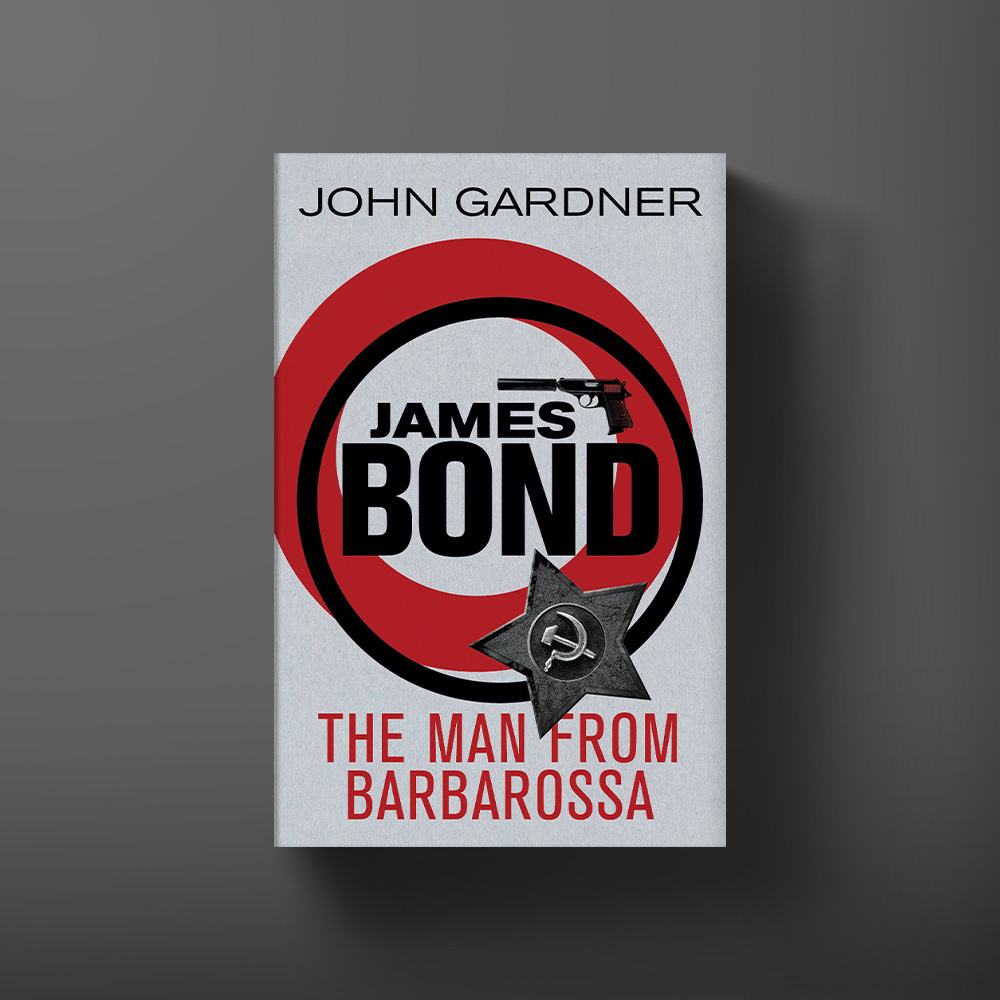
Gardner cited his eleventh Bond novel, 1991’s The Man from Barbarossa, as the best of his 007 adventures. Crucially, this is the story most grounded in then-current events, with Bond thrown into the very timely Middle East conflicts, as well the book correctly anticipating the close of the Cold War. Despite the thrilling, inventive narratives in his stories, Gardner was no fantasist. In his hands, the world’s most famous secret agent fought for Queen and country in a world readers could relate to.

Book cover for The Man From Barbarossa by John Gardner

Having previously worked as both a stage magician and Royal Marine officer amongst other jobs, John Gardner was a hands-on man and it was important to him that the gadgets in his 007 stories be grounded and plausible. In the acknowledgements to 1981’s Licence Renewed Gardner states

“I would like to point out to any unbelievers that all the hardware used by Mr. Bond in this story is genuine. Everything provided by Q Branch and carried by Bond – even the modification to Mr. Bond’s Saab – is obtainable on either the open, or clandestine, markets.”

For his tech research, Gardner spent his own time and money speaking to those in the know and actually getting to handle and experience the equipment on the bleeding edge of covert operations.

“One of the things that he wanted to do right from the word go,” explains John Gardner’s son, Simon, “was to make sure that at least 90% of the gadgets were real and could be obtained.

“At the time he was using a place on South Audley Street called Communication Controls Systems Ltd (CSS) and those were the ones he did a lot of work with. He wanted to show that someone like Bond would have, as he put it, ‘trade craft’. I think he wanted to try and get Bond to become a real person as opposed to this kind of fantasy character: he was trying to bring him back to the reality of espionage. There were a lot of fans who didn’t like that. They simply wanted to see the Bond of the films… He said, if I’m going to do Bond I want to try and do it as much my way as possible, which means that the trade craft has to be right and the gadgets have to be believable. That was his starting point.”

It is the aforementioned Saab that is one of John Gardner’s most famous contributions to the 007 canon. Motoring and James Bond’s licence to drive has always been an essential and beloved part of the adventures and the decision to put him into the Swedish automobile classic turned a lot of heads in 1981. The very first sentence Gardner writes Bond into in Licence Renewed, has him driving the mid-size, four-cylinder car.

“James Bond shifted down into third gear, drifted the Saab 900 Turbo into a tight left-hand turn, clinging to the grass shoulder, then put on a fraction more power to bring the car out of the bend.”

007’s car of choice was named ‘The Silver Beast’ and was of course equipped with special hidden features, such as bulletproof glass, rotating licence plates, tear gas ducts, steel-reinforced bumpers, hidden compartments for handguns, a mobile phone and much more. In the prose, Gardner namedrops CCS as the company who personalised the car for Bond but to further underline that the world of James Bond was now ‘our world’, Saab went ahead and created The Silver Beast themselves. This one-of-a-kind machine made the regional news, with John himself showcasing its bespoke additions.

Not only was this a wonderful marketing opportunity but it spoke to how so many fans of 007 see the character – as aspirational. You may not be taking on globe-trotting missions, but you can drink the drink, wear the suit and now buy the car!  

Gardner was tasked with bridging the gap between an idealised pop culture version of James Bond circa the early 1908s and a readership that was very different to 1953 when Casino Royale was published. In total he would write fourteen original Bond novels, plus two movie novelisations, landing him a spot in the Guinness World Records. “History is moving pretty quickly these days” said Ian Fleming and – like so many situations Bond finds himself in – John Gardner was in the right place at the right time, making him the perfect author for 007 in 1981.