 Skip to main content

We sit down with Mark Pearson to learn more about his father John’s work and 007’s impact on his own life. Mark has written an introduction in the latest edition of his father’s book, James Bond: The Authorised Biography.
Was Bond a big part of your upbringing?
I was exposed to the first of the Bond films by my father. He took a party of young children on my birthday to see Dr. No. Looking back on it, it was a slightly inappropriate thing to do for an eight-year-old child but there you go, it was fun. And all my friends thought it was really cool. Bond was quintessentially cool. And there were also the conversations around the dinner table when my father came to write James Bond: The Authorised Biography. They often centred on ‘Well, what would Bond have done in these circumstances?’ We’d be sitting around and talking about behaviours and people. My father was very open to the idea of getting ideas about Bond from us as children, which is slightly odd.
In your introduction, you write about some of the characters being based on people you knew growing up. What is this experience like, reading fictionalised versions of people from your real life?
One of the funniest for me is the depiction of my grandmother. In the book, James Bond has a cleaning lady who looks after his life and she’s much more than the cleaning lady. Sort of a female butler, if you like. And she sniffs in disapproval whenever Bond does something that she doesn’t like, and this is exactly what my grandmother used to do. We all knew that when my father wrote that, he was actually writing about his own mother, our grandmother, and we found that quite funny. Then there was the inclusion of our landlord as a porter at Blades, John Prizeman. And then the rather more surprising one, which was when we discover that James Bond’s mistress has been sponsored by a rich armament millionaire, who was named after Richard de Combray. He was a family friend who in fact was gay, so very unlikely to sponsor a female prostitute. Very unlikely to sponsor a prostitute full stop. Richard was a lovely, delightful man, who couldn’t have been less like an arms dealer.

The biography is so deeply researched. Do you recall anything about your father’s research, writing and creative processes?
My father was both a meticulous researcher and note-taker. When he was writing The Life of Ian Fleming he interviewed about 140 people. He kept every single one of the notes from that and so one of the things that the Queen Anne Press did before my father died was to publish the notes. The reality is that you could produce something similar for the Gettys or the Kray twins. You could do something similar for the Churchills because he kept meticulous notes of the conversations he had with people. But sometimes those notes were not exactly tactful. Coming back to our core subject here, which is Bond – Admiral Godfrey was clearly the model for M, and my father wasn’t taken by him when they met. What’s funny about that story, is that I think it was a two-way thing. I believe Admiral Godfrey was thinking ‘Is this whippersnapper, at 34, mature enough to write the book about my friend Ian?’ What we’re left with in the notes are comments about Admiral Godfrey’s appearance being fundamentally rundown, wearing rather tired looking brogues, but that you could still see a glint of the old M, or C, in his eyes, you could see the ruthlessness. I thought that was rather revealing and compelling.
How do you feel about the new edition of the James Bond: The Authorised Biography?
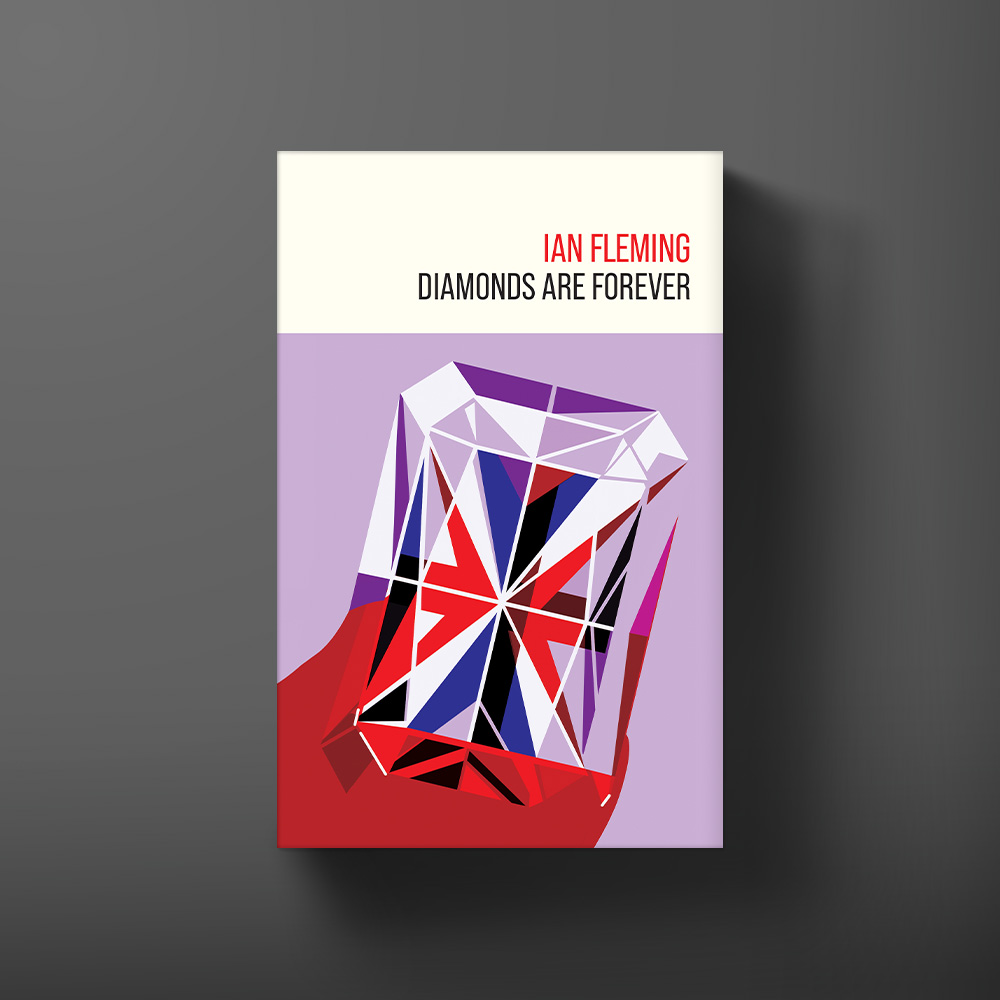
Well, I think let’s start with the really obvious thing – the cover of the new book is fun. Fun is actually central to this book, and it’s an opportunity to reengage with different populations. But the fun that goes with this is great: having a kit which any self-respecting spy can take into a mission. It feels very 60s. But I also think this edition celebrates the fact that this book is 50 years old. It’s actually 50 years young and in a curious way it’s still quite relevant. It’s still fresh. And I think people of my children’s and, dare I say, even my children’s children’s generation will enjoy this book.
Why do you think 007 and everything around 007 is so enduring?
I think it’s a mixture of things. There are massive overlays between a perception of what it meant to be British, coupled with the intelligence world and the lack of information about it, which is true to this day, although perhaps less so than it was at the time when Ian was writing. Coupled with this enormous sense of derring-do and a belief that one person could make a difference. That’s also very compelling, I think. Without question in the 50s and 60s we’d come out of a world war and people were desperate to have something which gave them a more positive view and a bit of fun. So I’ll come back to the theme of fun: the enduring theme of Bond, for me anyway, is fun.
What is your favourite James Bond book?
Diamonds Are Forever. An absolutely compelling page-turner. It is interesting, isn’t it? I was given the Bond books as a child. I remember being completely befuddled by Casino Royale, I didn’t understand it. Although my father did take me and my brother to Monte Carlo to look at a casino in action. My brother was eight and I was nine. And we were not allowed in. My father went in to do his research on gambling which took him a couple of hours. So we were parked, opposite, quite literally parked in a car. And he went off and did his research, and that was that really.
Had he given you Casino Royale before or after the casino visit?
Oh after that. But Ian gave my father a copy of Casino Royale, a first edition, which he inscribed. In fact I’d love to track down this copy because it means a lot. It’s inscribed to my father and it says ‘Thank you for supporting me through the writing of these books’. If anybody out there knows where it is, I’d love to see if we can find a way of borrowing it back!
Finally, what is your favourite John Pearson book?
Well, I really do love this book. So I think I’ll just stick with that.
Learn more about the life and work of John Pearson here.