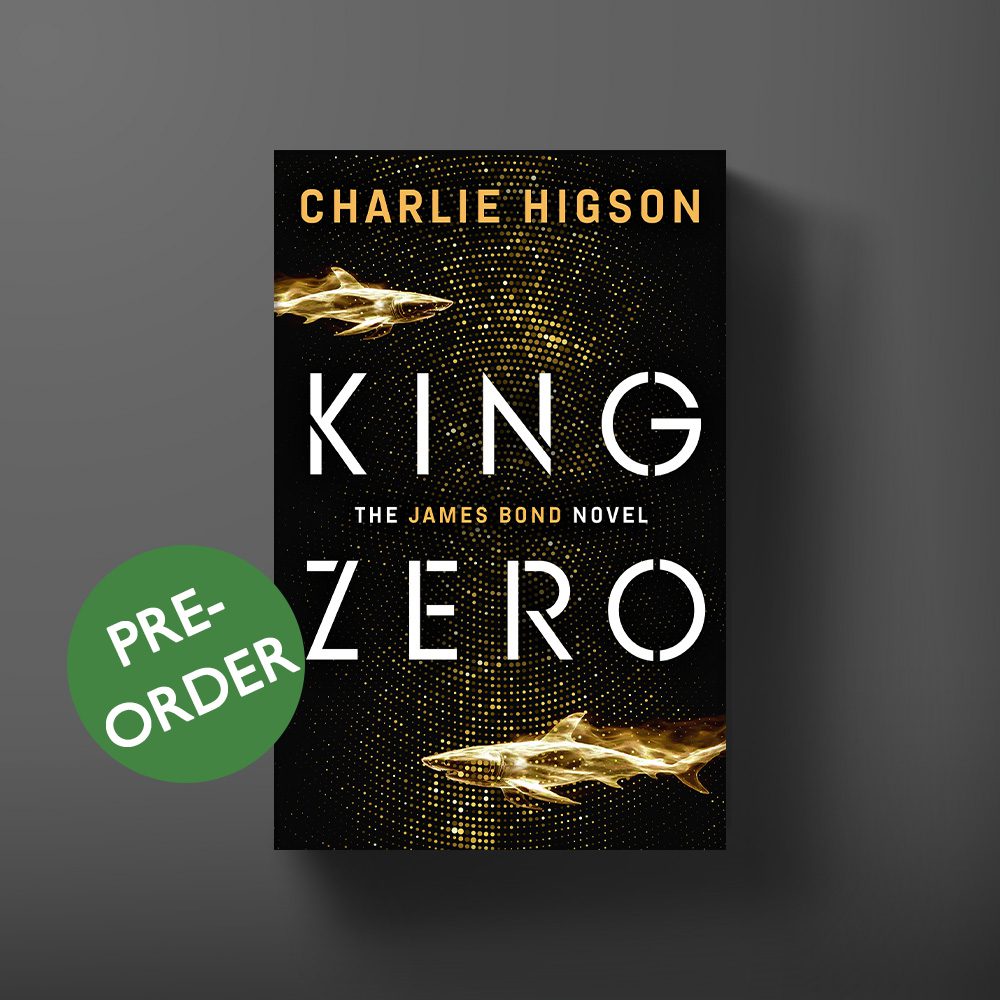
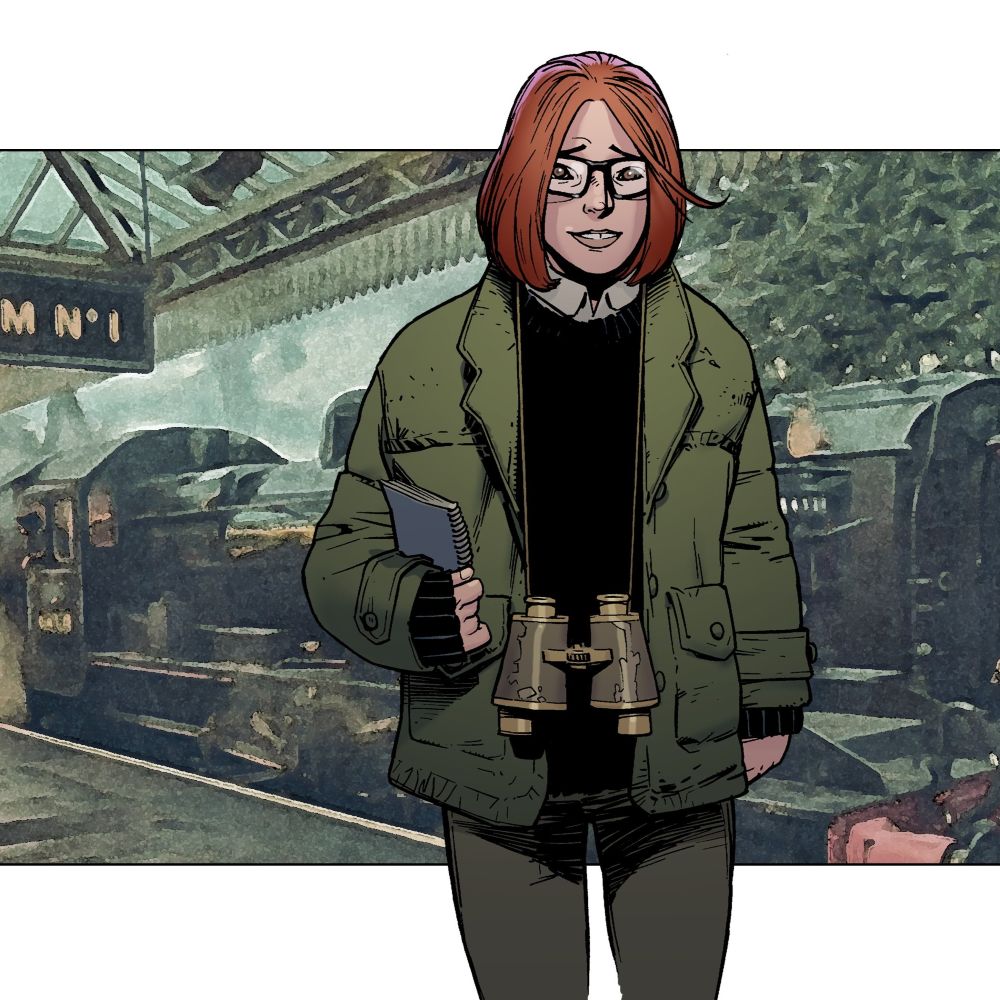
We are excited to announce King Zero, a blockbuster new adult James Bond novel from multi-million copy bestselling Young Bond creator, Charlie Higson. It will be published in the UK on 24th September 2026 by Penguin Michael Joseph.
Beginning with the murder of an agent in Saudi Arabia by a weapon never before seen by the Secret Service and spanning the globe in an epic race against time to avert global catastrophe, the novel brings the literary Bond squarely into the twenty-first century, where the old world that made him is crumbling and a terrifying new order emerges while a dangerous villain – the most distinctive since Goldfinger – moves in the shadows. Higson explores themes of power, technology, and international tensions over resources in an extraordinarily timely story.
“Having warmed up with my Young Bond series, and the short story, On His Majesty’s Secret Service, I’m beyond excited to be writing my first full blown adult Bond adventure. 20 years after first writing “The name’s Bond, James Bond,” it still sends shivers down my spine every time I type it. I’m having a blast with this new novel, which is absolutely set in the modern world, and I hope will sit comfortably on the airport bookshelves alongside other contemporary thrillers. It embraces the worlds of both the literary Bond and the cinematic Bond, and my bad guy has all the elements we expect from a classic Bond villain, with a twist that’s not been done before.” – Charlie Higson
“We are delighted to be working with Penguin Michael Joseph on the publication of King Zero. Charlie Higson’s return to James Bond follows his outstanding success with On His Majesty’s Secret Service, commissioned for the King’s Coronation, and we are delighted to be working with Charlie again, bringing the next chapter of Bond to fans.” – Amanda Douglas, Managing Director of Ian Fleming Publications Ltd.
“There’s no character in all of fiction quite like James Bond, and since Ian Fleming’s passing no-one has captured him quite so distinctively as Charlie Higson. We were swept away by Charlie’s vision for Bond which will delight old fans and new, and we can’t wait to make this the coolest, classiest publication of the year.” – Joel Richardson, Publisher at Michael Joseph
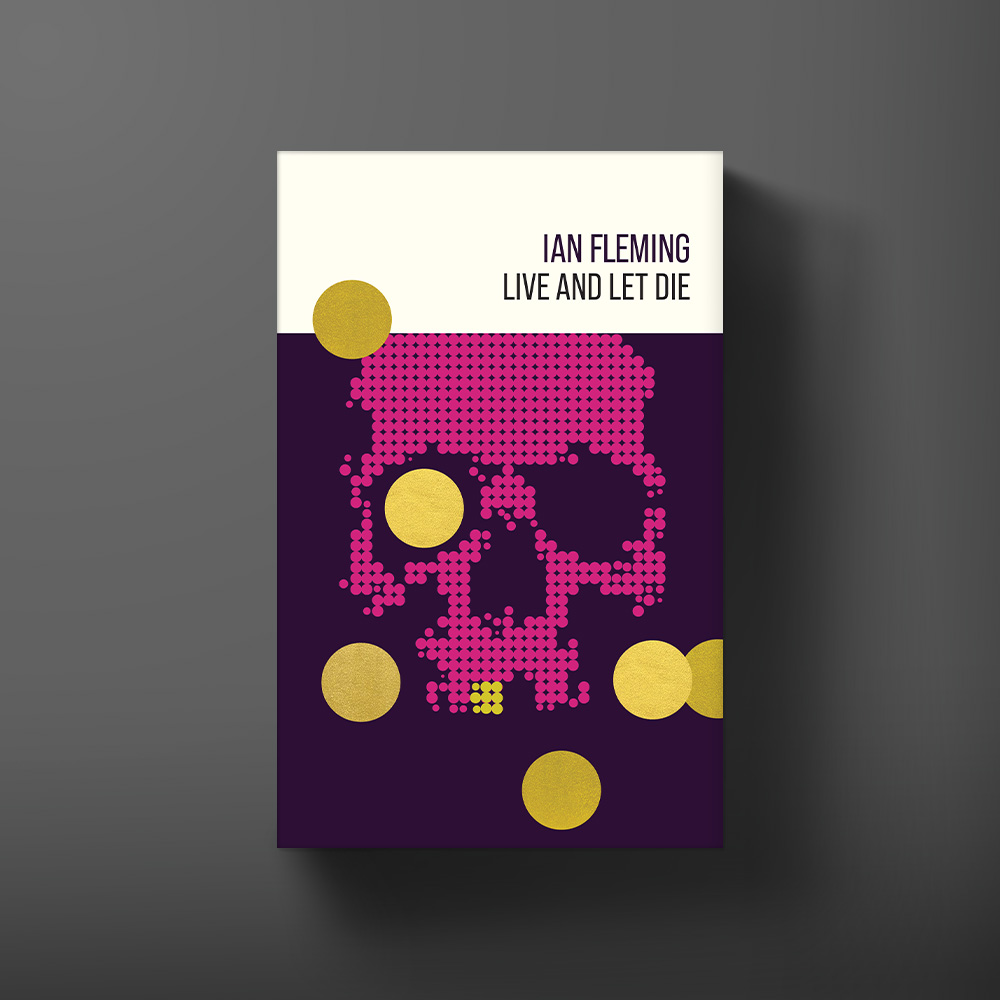
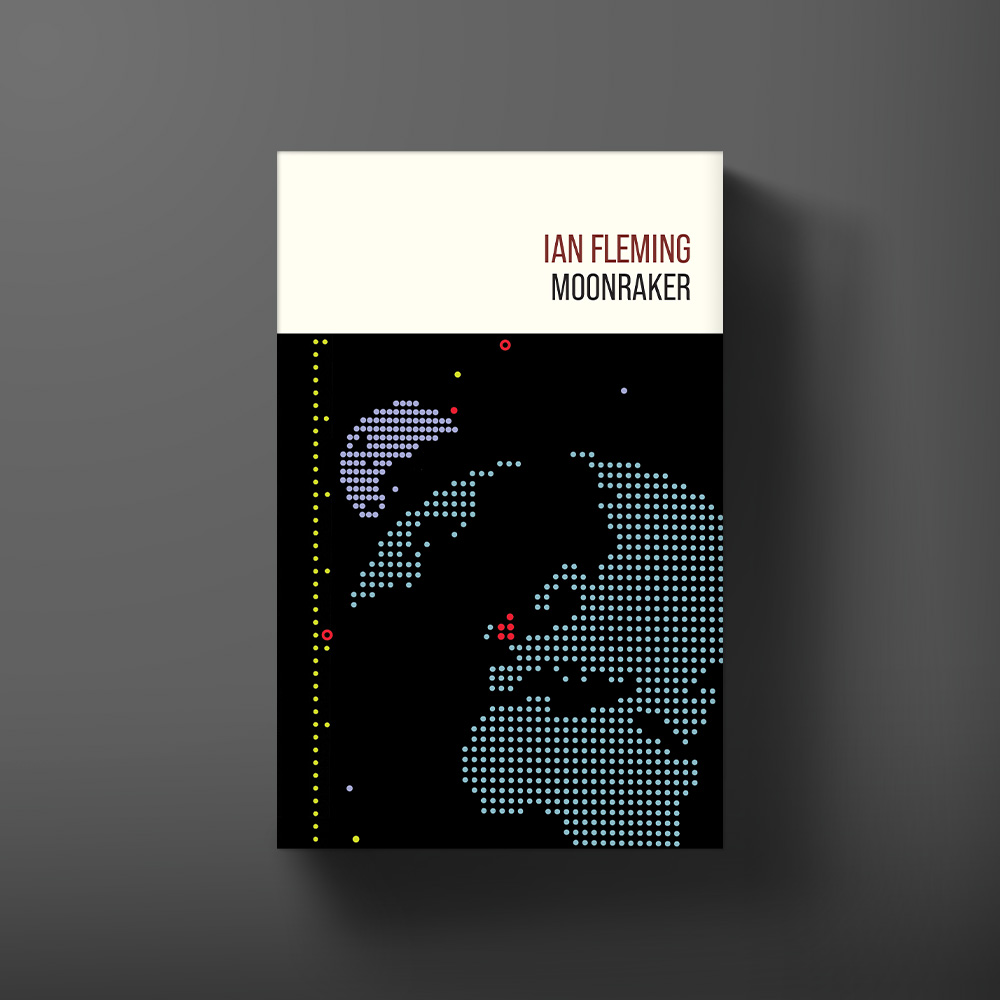
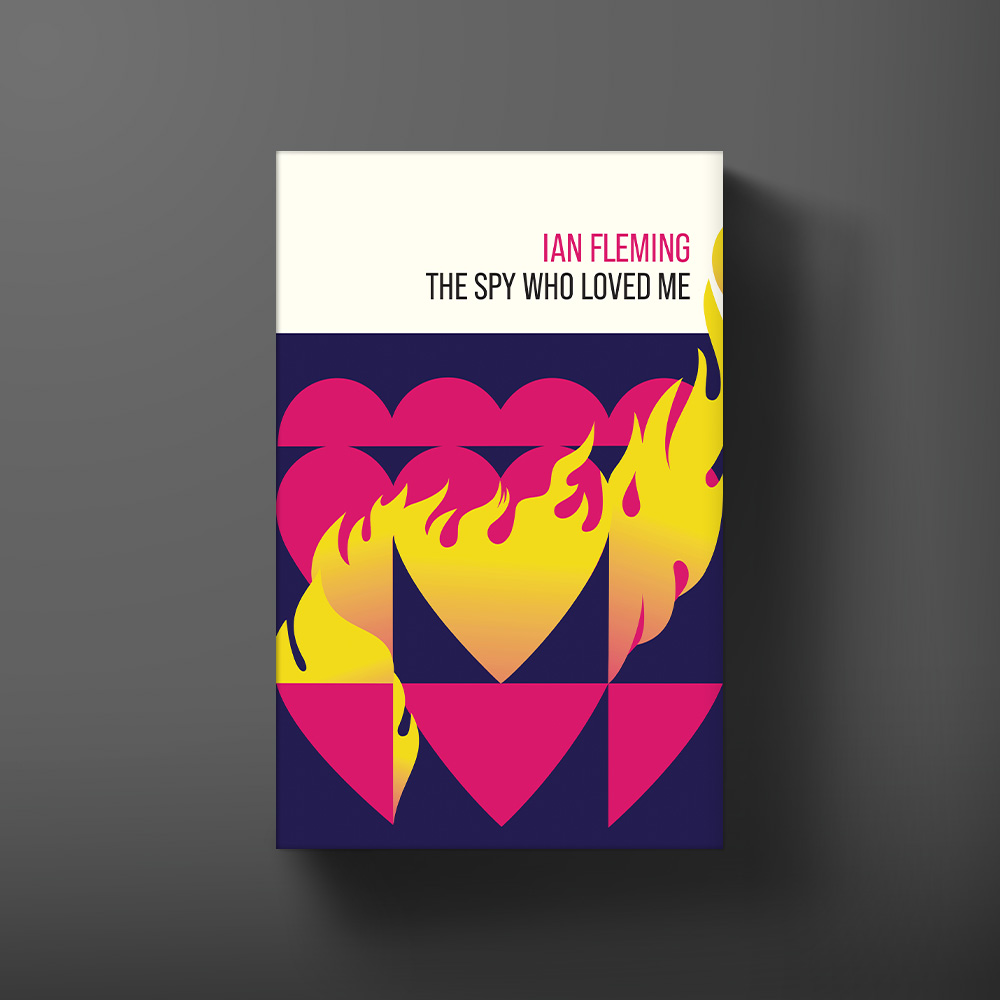
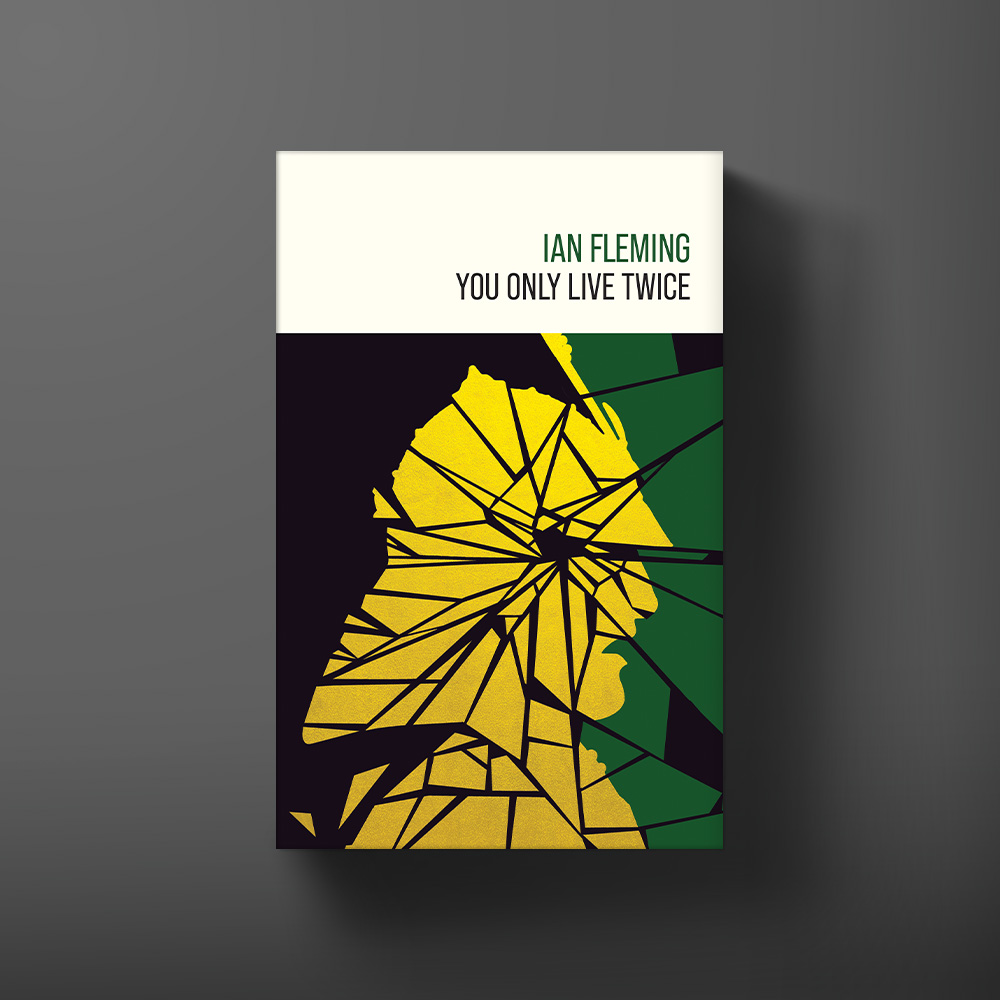
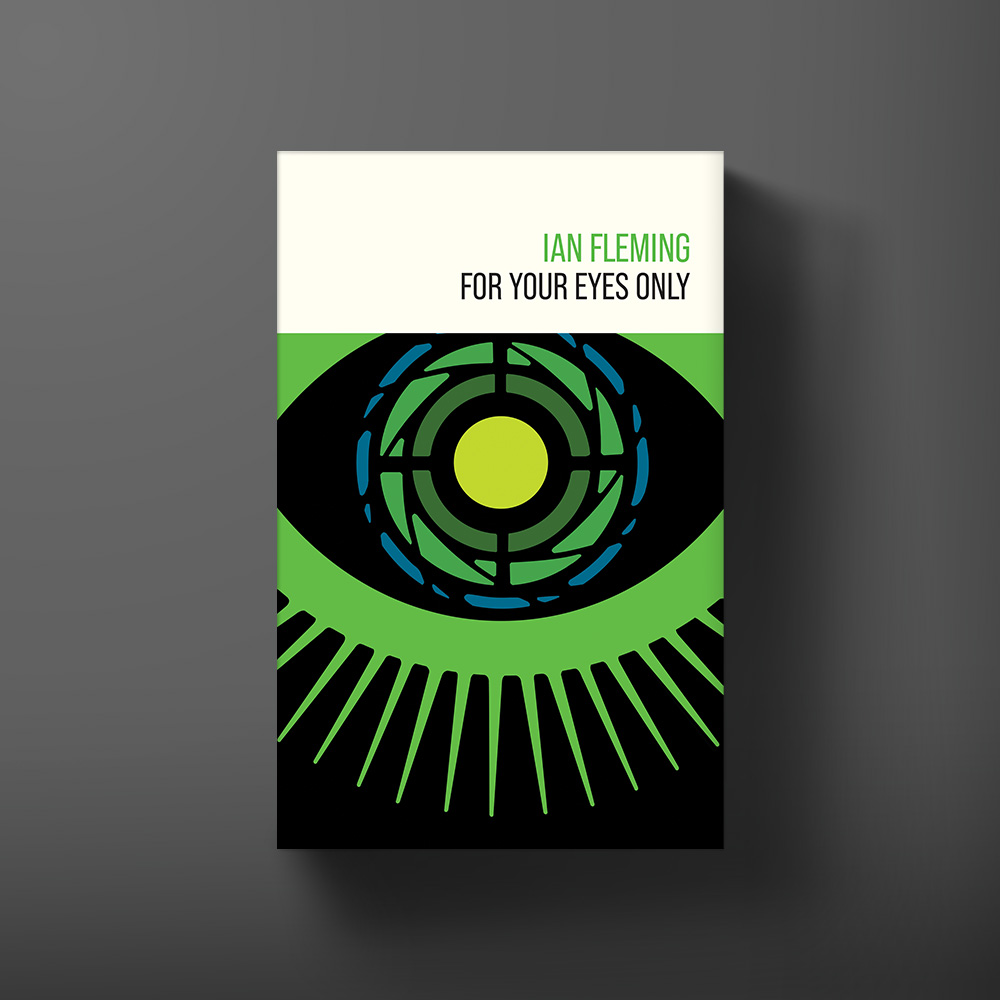
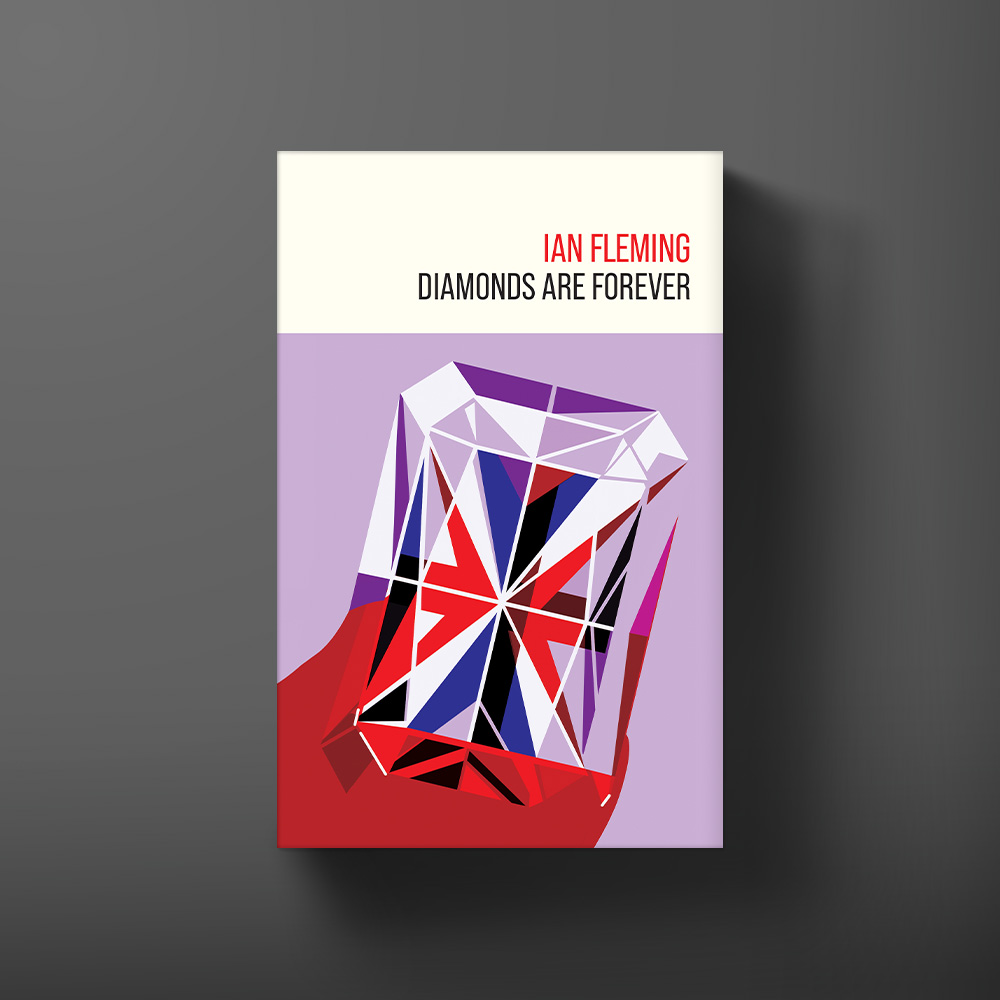
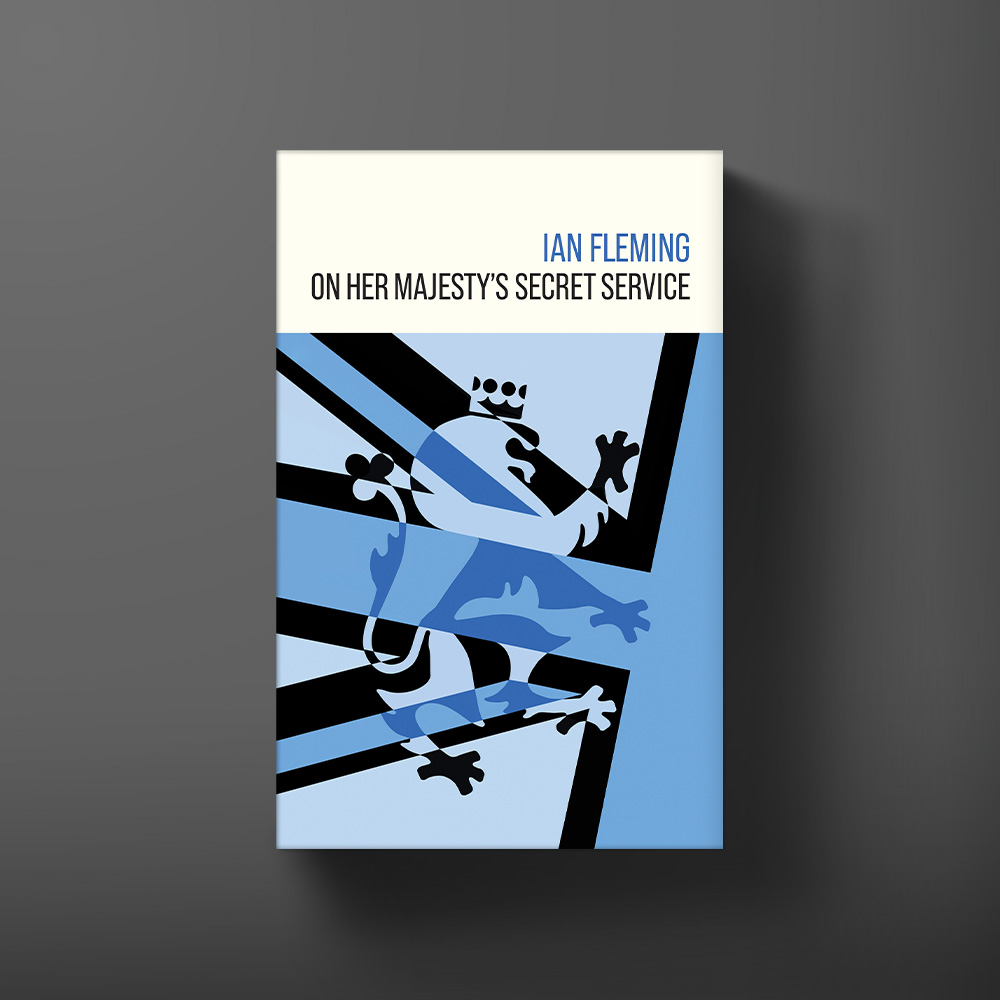
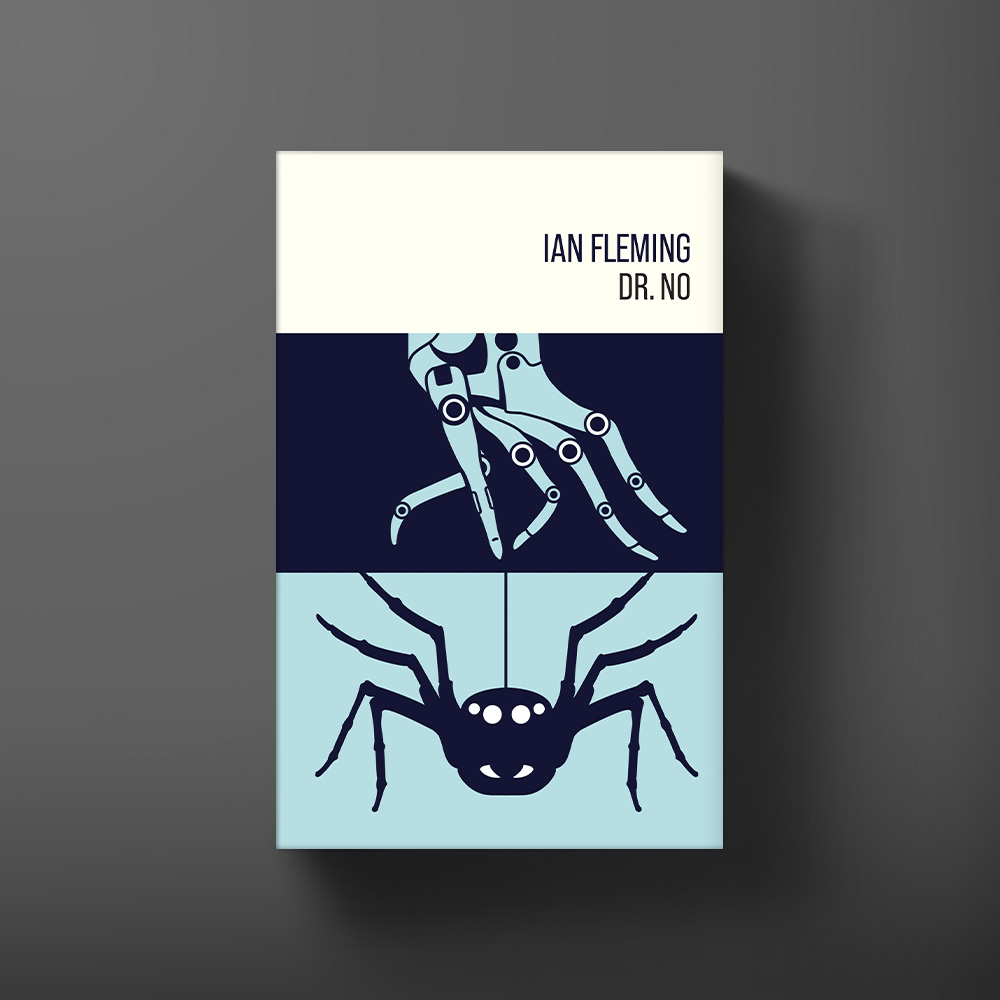
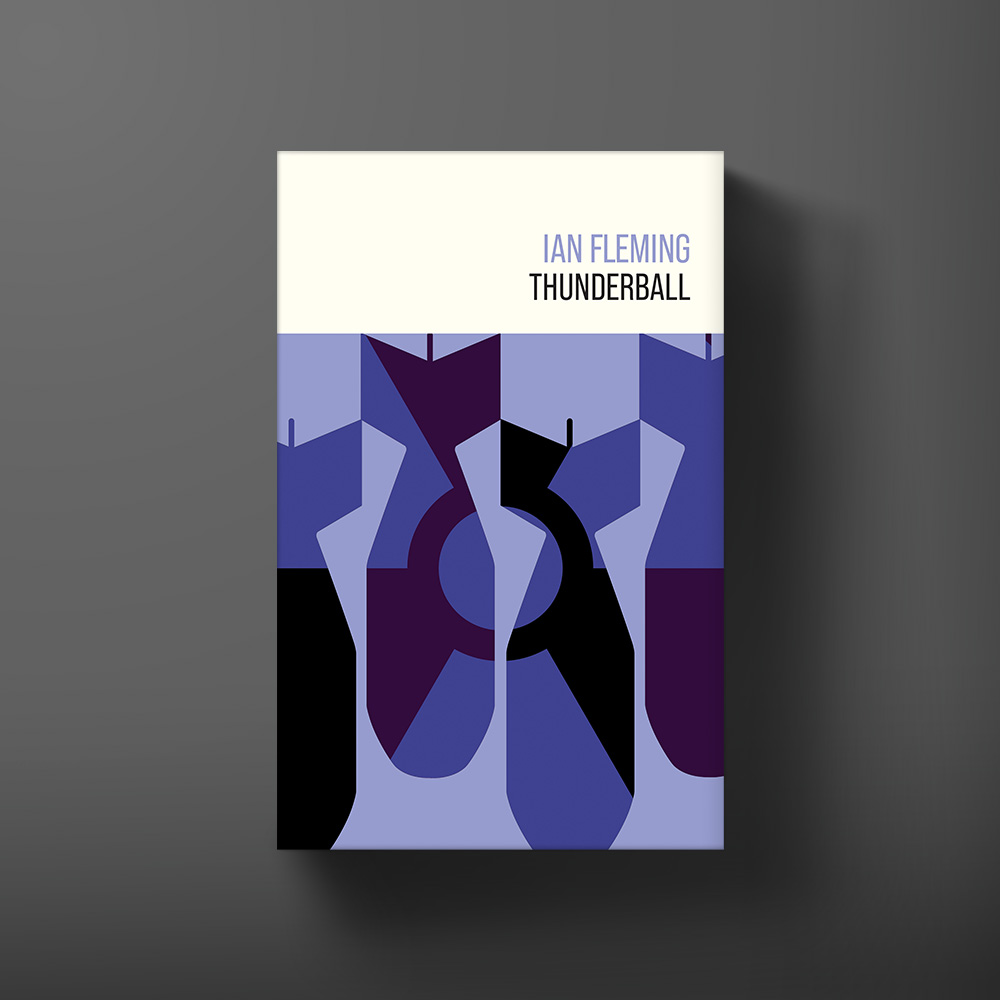
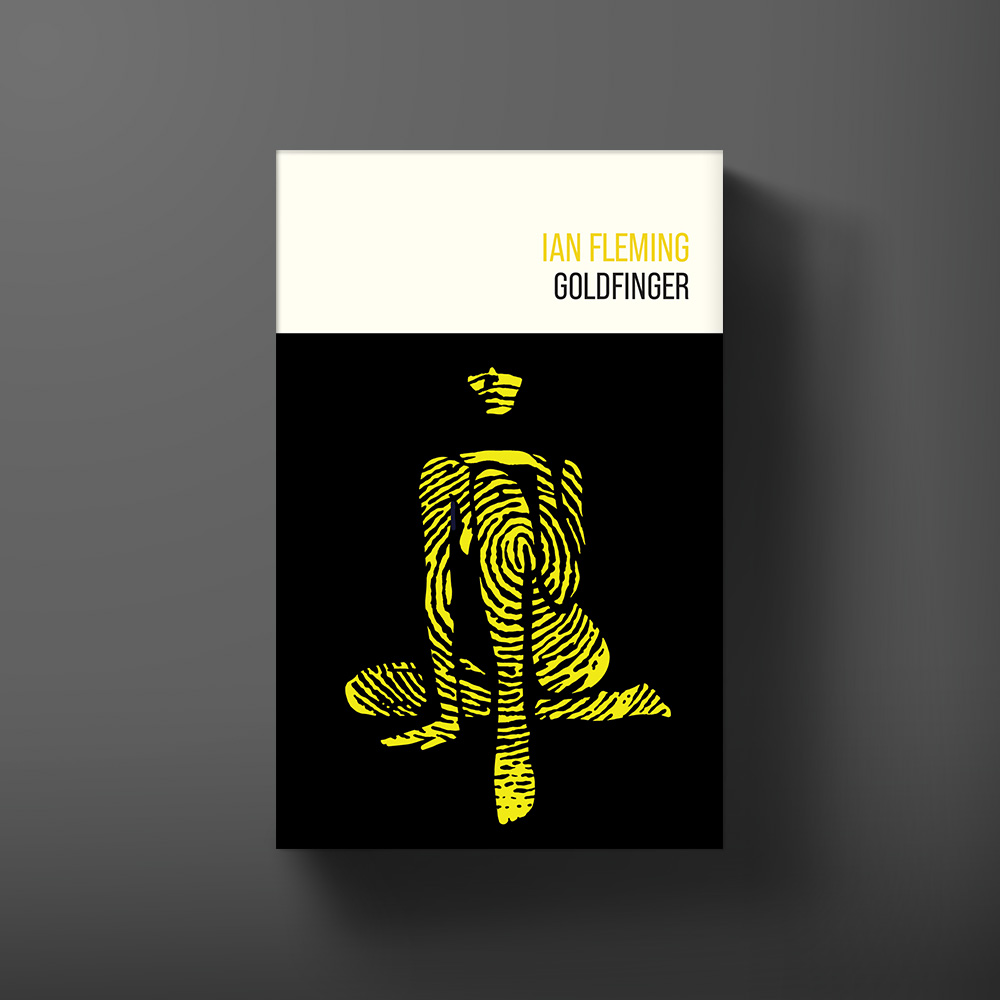
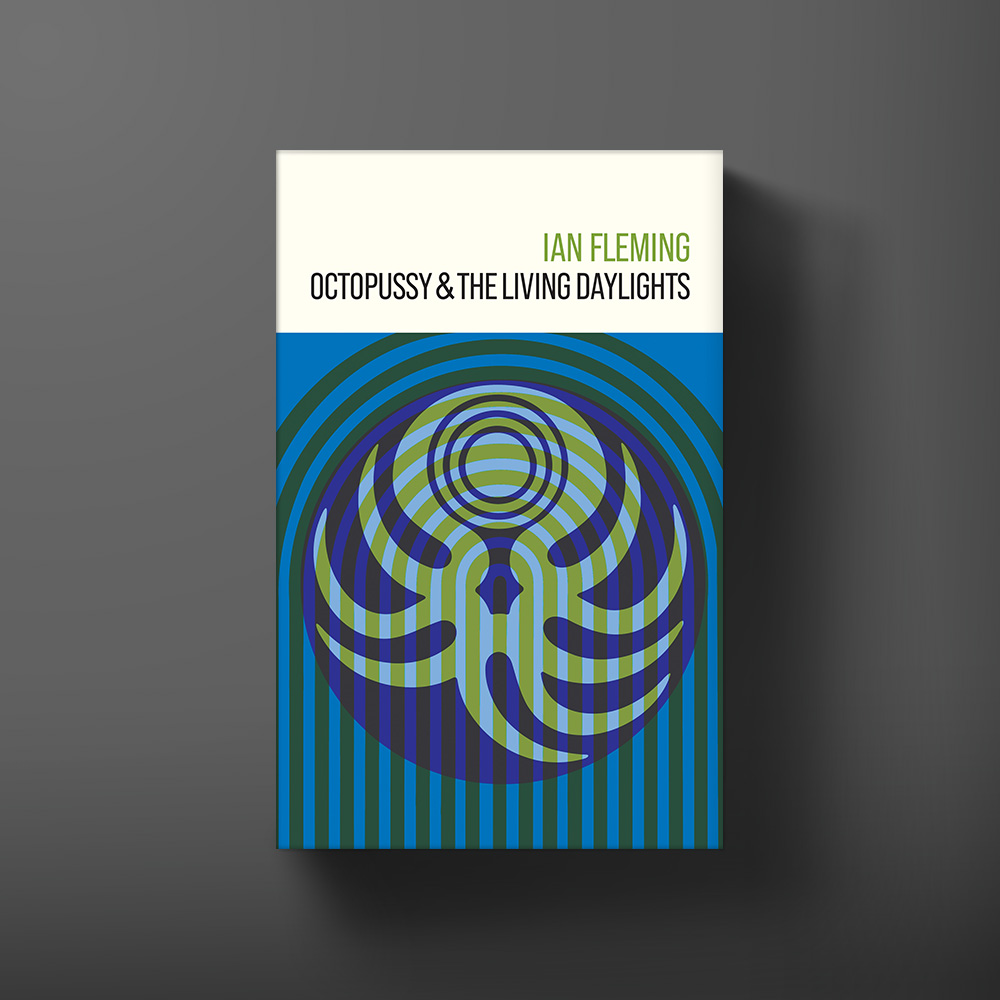
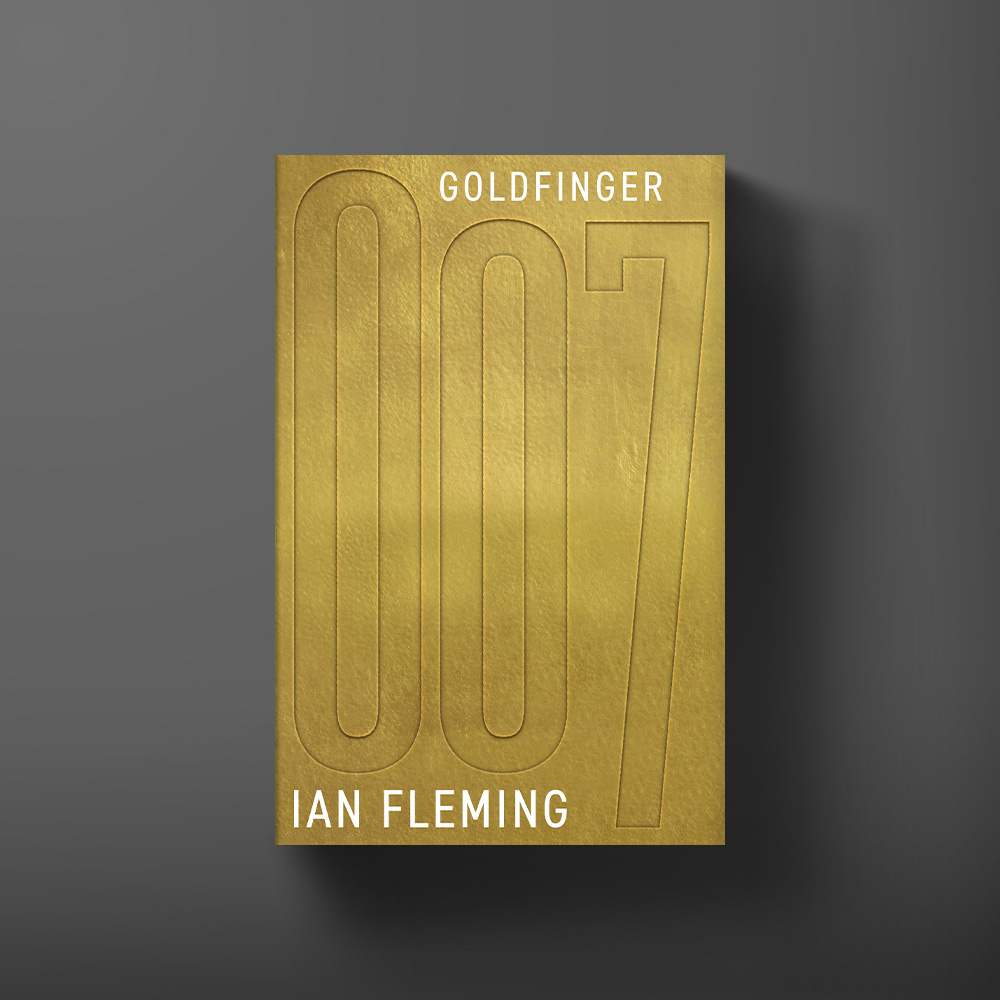
We sit down with Michael Gillette, the man behind the colourful James Bond hardback editions, which are now also available in limited edition art prints at ianflemingshop.com.
How did it feel to collaborate to build on Fleming’s 007 legacy with us at the start of our self-publishing journey?
2018 was when I first had the idea to pitch these designs. I felt like it was inevitable that you would self-publish the books. I’m not sure you’d even decided to at that point [we hadn’t!] so I don’t know why I was so convinced. I had the idea for something really geometric, simple, bright and bold which hadn’t been done, that I could recall. I’m really glad you’re self-publishing. In the shifting sands, it’s the right thing to do. And I know it’s a massive venture. I started out doing sleeves for indie bands, and it feels a bit like that. Being part of a smaller unit, you’re much more part of the endeavor, and you want it to succeed. I want the books to succeed and I want you folks at Ian Fleming Publications to succeed.
I view my career as a rodeo illustrator. Certainly when I did the centenary editions, I was right in the middle of doing a million other jobs. And obviously, I never had any dealings with The Ian Fleming Estate then, just a shadowy missive every now and again that would come through Penguin. You don’t really build a relationship, you do the job and then it’s off and gone. It’s been really interesting to get to know you all, to see how it works, and to watch your progress too. I don’t want to conflate my experience with everyone’s experience, but it seems as things get more and more virtual, the relationships that sustain are the real world relationships. That’s the way I feel. It seems like The Estate has always been a bit like that anyway – more about direct relationships and for sure, it’s hard to get into, but it is loyal once you are in there.
There was no doubt that these books had to be designed by someone who understood the Bond book world. Do you think these new circumstances had an effect on the designs and the design process?
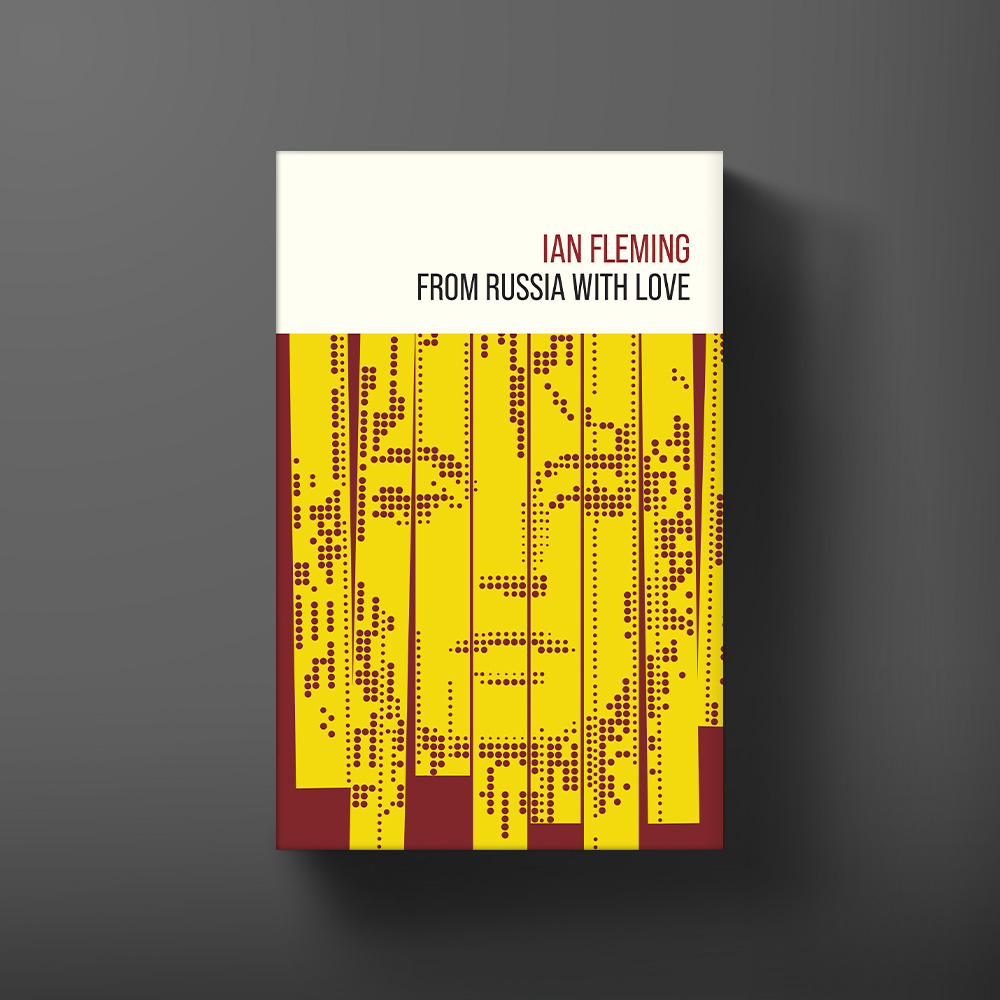
Yes definitely. At Penguin, there was a whole marketing department, a designer and an art director, John Hamilton, a legend. It did go very smoothly, but you’re being presented with something and told what to do. Even though it’s what everyone sees first, the artist is generally hired last. They know what they want, and then they pick an illustrator to do it. This project was completely the opposite, it was self-initiated. I could do anything I wanted, certainly to begin with. Take From Russia with Love. You’d already approved a different idea, but I thought this was better.
Does that extra flexibility facilitate your creative process? Do you wait for the flash of inspiration or do you go looking for it?
Well, initially the ideas came in a flood. I did this very geometric burst to begin with and then I just put them away until 2021. I was teaching a class on concept illustration which includes things like negative space and symbolism. I’d say to the students ‘your mind will give you as many solutions as you ask of it,’ which sounds ridiculous, but it’s actually true. Most people only ask for one idea, or ask for a couple of ideas, and then get very stuck. At the end of that class, I had a lull because Covid was still strong in California, so I took another two weeks. I had these ideas that were based on what I’d been teaching and showing the students, these graphic concepts. The designers I introduced them to were people like Saul Bass, and those ideas were absorbed into them too. So I did another two week burst of that, and then put them away again. I thought I could just be doing it forever.
I guess it’s just trying to keep things fresh. I teach my students that your subconscious is where all the ideas are, and your conscious is, you know, the little peak on the mountain, above the sea, and all the ideas that are going on underneath it, you just have to keep asking for them. If I got really stuck with an idea, I’d go back and read the book just to try and find a new direction on it. The other difference of this job is just how long it went on. I’ve never had anything go on this long. It’s been six years and I couldn’t show anybody at any point, apart from maybe my wife, who is a good sounding board.
With From Russia with Love, for example, there were at least four versions which are all very similar. Do you think a design improves the more times you do it, or can you overdo it?
Oh, you can kill something by over-polishing it. That one is a bit different, because it was a technical difficulty. I had an idea which I couldn’t find an easy way of executing. I could get it approximated quite quickly but making the image read without the face getting wider or distorted took a lot of shifting of dots by hand. It might have been a day and a half’s worth of shifting small dots to make it right. I’d spent so long getting it to try and work, and realizing that it was working, that I probably did ‘white knuckle’ it a bit and say, ‘no, this is the idea.’
Why were you insistent that we went with this cover in particular?
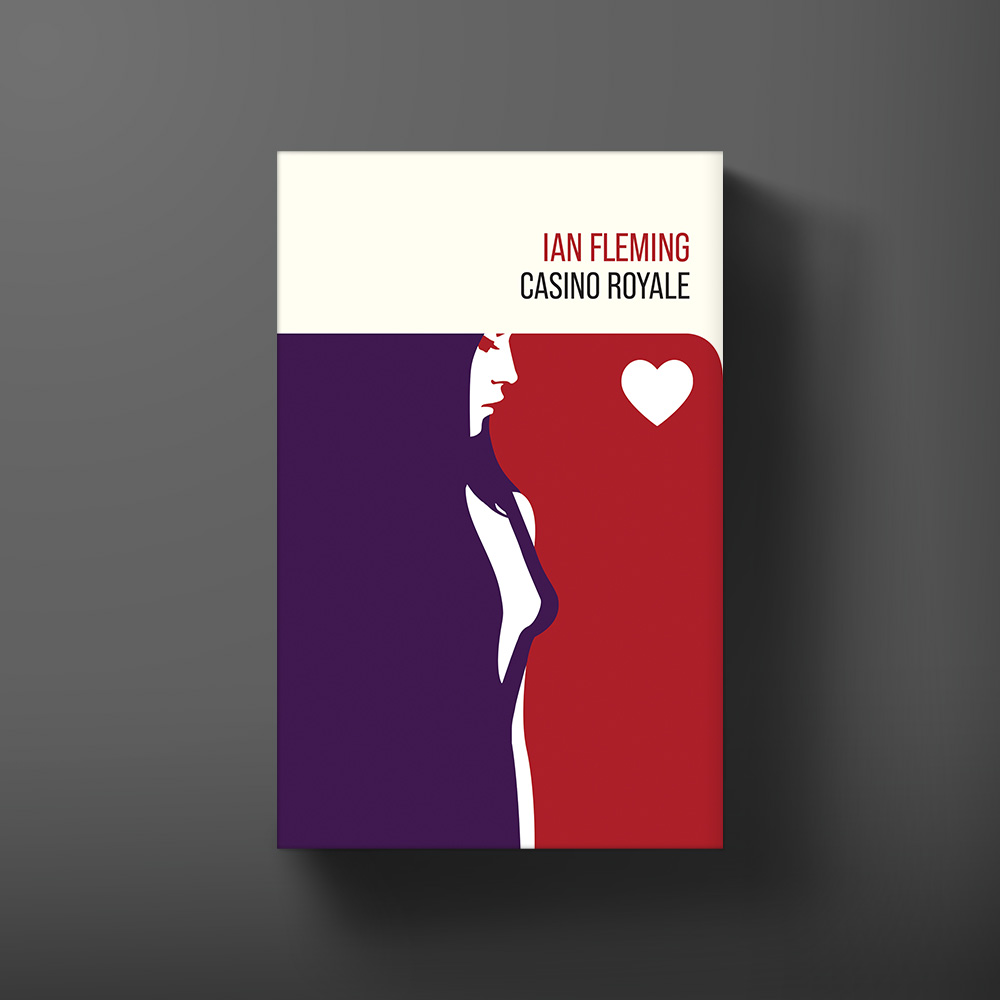
Because it’s an idea that I think is absolutely right for the book. It suits the story of the book. The two lures of the story are the cipher machine and the love interest. For those things to be married together in a single image with just two colors, it just works. Saul Bass is about symbolizing and summarizing. And that’s exactly what this cover does. I suppose there’s a point at which you’ve spent so much time on something that you will not let it go. Your mind has become shrunk to that idea. It’s like you’ve become a stalker for your own idea. I think that’s the only one that I really felt like that about. It was a good call. Well, it was a call.
The design process for these books was more like creating an object than just a cover. What did you learn from this?
With the 2008 books, I didn’t see them until they were physical products. Apart from the cover, I had no idea what the rest of it was. When I left college, I started designing for bands. That was my USP. I really loved it. I stopped because my illustration career took over, but I’ve always been into the idea of the total look of something. To be able to have that total look really excites me. I think that at this point in time to make a physical book, especially a beautiful hardback, there’s got to be a level of thought behind it that’s worth people buying it. You just think, ‘how does this look in the hand?’ That’s why I tried to make things look as close to the size they would be, like the bullets.
I’m not saying it’s a dying art, I think it’s just that designers are dying off because they can’t afford to do it as a job. You go into Waterstones and everything looks very much the same, the same typeface and the same treatment. With the self-publishing, you’ve done something more considered.
The endpapers really add to this. How did you go about making them?
I’ve got this sketchbook with lots of ideas, where I would just draw endlessly, like a bank of ideas. I always tell my students to use their sketchbooks. Draw, draw, draw. Sketch it out. You never know what you’re going to get. The muse comes when you’ve got a pencil in your hand. I couldn’t understand how I was still coming up with ideas, but they were working. Sometimes, the more ideas you’re having, the more ideas they have. I don’t know how it works, but that’s how it works.
Many of them are like optical illusions. This must have been fiddly and time-consuming?
They’re techniques I taught at college: concept art and digital design. So I know how to manipulate things that way and make them repeat. Sometimes they work and sometimes they don’t. Like for Thunderball with the silencer that almost looks like a crucifix – that’s a motif that worked really well. I was amazed at how I was still doing all the endpapers right down to the wire. It takes a long time. I want to give some value for money there. I know the expectancy of being a fan of something and the disappointment when it’s shabbily treated. I want to speak to that in the Bond world.
For the centenary editions, you decided not to use any guns. Why was that and what was different for these editions?
We just don’t want to glamorise guns, really. They’re still not gun heavy but they just work so well. I feel they draw on the action of the books a lot more than the previous covers. If there was a big wheel of things, this series draws on them: gadgets, some girls, some guns, some death, some bombs… The whole world of it has become so iconic that it’s so much fun to play around with that stuff. I’m not reinventing the wheel, just putting some good rims on it, trying to combine things in a new way to make you see them slightly differently. It’s so much fun just to play around with that stuff, it’s why everybody loves James Bond.
The wheel is a great analogy. The designs draw on so many elements, but then they feel cohesive at the same time. Was this hard to achieve?
That is the difficult thing to pull off. When I was at college, I could make really good images of things, but I could never make a second one the same. I couldn’t make a cohesive series of things, which is a bit like where AI is currently at. It can’t make a cohesive set of ideas. It’s taken me a long time to be able to pull that manoeuvre off. I do sometimes wonder how long it will be before AI makes that leap.
I try to ask myself, ‘what is a human response to this?’ Is this natural or is this synthetic? Leonardo da Vinci said that 98% of people create nothing but excrement. A lot of work that I’ve done wasn’t very good, but I was sharpening the axe to do something which was good.
What are you doing in your work to combat these fears? What would you teach to your students?
Look at Ian Fleming, he didn’t wait for the muse. He went on holiday and then bombed them out. But they’ve endured somehow. Something went on those pages that’s well beyond what you could ask a machine for. And I think it’s his complicated human nature that’s connected with people. Whether they know the books or not, there’s something about the complicated nature that he has put into James Bond that has endured. Bringing it back to the books, I view this as a vote for the continuation of holding something in your hand and connecting with it. I hope that the physical world is going to continue, and things like books had better be good in order to survive. We’ve all got to try a bit harder at it, I think, to be more considered. That’s why it’s so exciting that you’re doing it yourself. You know your product and your mind enough to know when something is right or not, and you know it’s not about what’s new, but what’s true. I think that’s what people want to respond to.
Check out more of Michael’s work here and find the full range of books and art prints at our shop.
We speak to Fergus Fleming about his inspiration for his book, The Man with the Golden Typewriter, his developing view of his uncle Ian Fleming, and some of the correspondences he discovered while researching.
Why did you start the project?
A book of Ian’s letters was long overdue and, somewhat rashly, I raised my hand. Even more rashly, the offer was accepted.
Can you tell us more about Ian Fleming’s golden typewriter?
The golden typewriter was Ian’s great joke to himself. Just imagine his glee when it arrived in all its glittering splendour (smuggled in from America by his friend Ivar Bryce to avoid taxes). Serious-minded contemporaries considered it the height of vulgarity, but Ian didn’t care. Let them sneer! He had a golden typewriter and they didn’t. The machine in question was a Royal Quiet De Luxe and cost the princely sum (then) of $174. It wasn’t the only one in the world: the Royal Typewriter Co. produced a small run of them as an advertising gimmick. They were often given away as sports prizes or to favoured employees. None, however, have achieved the same iconic status as Ian’s. In 1995 an unknown bidder – rumoured to be Pierce Brosnan – bought Ian’s Quiet De Luxe for a sum that has been calibrated by the Guinness Book of Records as the highest ever paid for a typewriter.
Did Ian use it for the Bond novels? My impression is that he didn’t. It doesn’t seem to feature in any of the pictures of him at his desk. But who knows?
How much did you know about your uncle’s works and legacy when you were growing up?
Ian’s books were on the shelves when I grew up, but I don’t remember them being held in particular reverence. As he said to Raymond Chandler, ‘[I] meekly accept having my head ragged off about them in the family circle’. My father was so horrified by The Spy Who Loved Me that he made my mother read it under a brown paper cover. His brother Peter was also a writer, and his books too were on the shelves. So it was just an accepted fact of life that our family wrote books.
But I will say this. When checking a fact in You Only Live Twice, I used an original copy. And there, all at once, was the excitement of it. The Chopping jacket, the typeface, the Cape logo, the smell, the feel of the paper, the price – 16s. net – and the memory of something you will never find in a bookshop today. For a moment I caught the thrill that Ian, and his readers, must have experienced when the latest Bond came out.
Do you have any favourites from the correspondences you went through?
One of the best is Ian’s apology to Mrs. James Bond. Her husband was an ornithologist whose book Birds of the West Indies happened to be on Ian’s desk in GoldenEye when he wrote Casino Royale. In 1961 she caught up with him and demanded an explanation.
‘Your husband has every reason to sue me in every possible position and for practically every kind of libel’
Ian replied, adding that he had chosen James Bond because it was plain, masculine and anonymous – unlike Peregrine Carruthers or some such. In recompense,
‘I can only offer your James Bond unlimited use of the name Ian Fleming for any purpose he may see fit. Perhaps one day he will discover some particularly horrible species of bird which he would like to christen in an insulting fashion.’
Did any of the letters mention ideas that he never used in his Bond books?
This is a sensitive matter that falls under The Official Publishing Secrets Act and as such I am not permitted to disclose the contents of any files that may or may not have come to my attention. That said, he did float the possibility of setting a Bond novel in Australia – which would have been interesting.
Did your opinion of Ian Fleming change after reading his correspondence and did you discover any new aspects of his character?
Ian has been portrayed so often in films and books as a callous, suave womaniser – in essence a mirror image of Bond – that I was prepared for something along those lines. To my surprise it didn’t materialise. Of course, this isn’t a biography and a fuller examination would probably confirm the accepted picture. All I can say is that his letters reveal a man who was witty, punctilious and kind, assailed by fits of self-doubt yet resolutely optimistic, who worked hard to make a living the best way he knew.
Do you think Ian was a true eccentric, or was the typewriter more a symbol of a persona he enjoyed cultivating as the writer of thrilling – and at times bombastic – fiction?
Ian wasn’t an eccentric. I would say he was more a romantic. He enjoyed turning dreams into reality and vice versa. He had an urge to tell stories. If he could make life a story – the martinis, the golden typewriter – then all to the good. If he could make a story out of life – to tell people what he saw, what he experienced, and how it inspired him – then so much the better.
‘Writing makes you more alive to your surroundings,’ he once said, ‘and since the main ingredient of living… is to be alive, this a quite a worthwhile by-product of writing.’ If writing made him alive, so did the imagination that underpinned it.
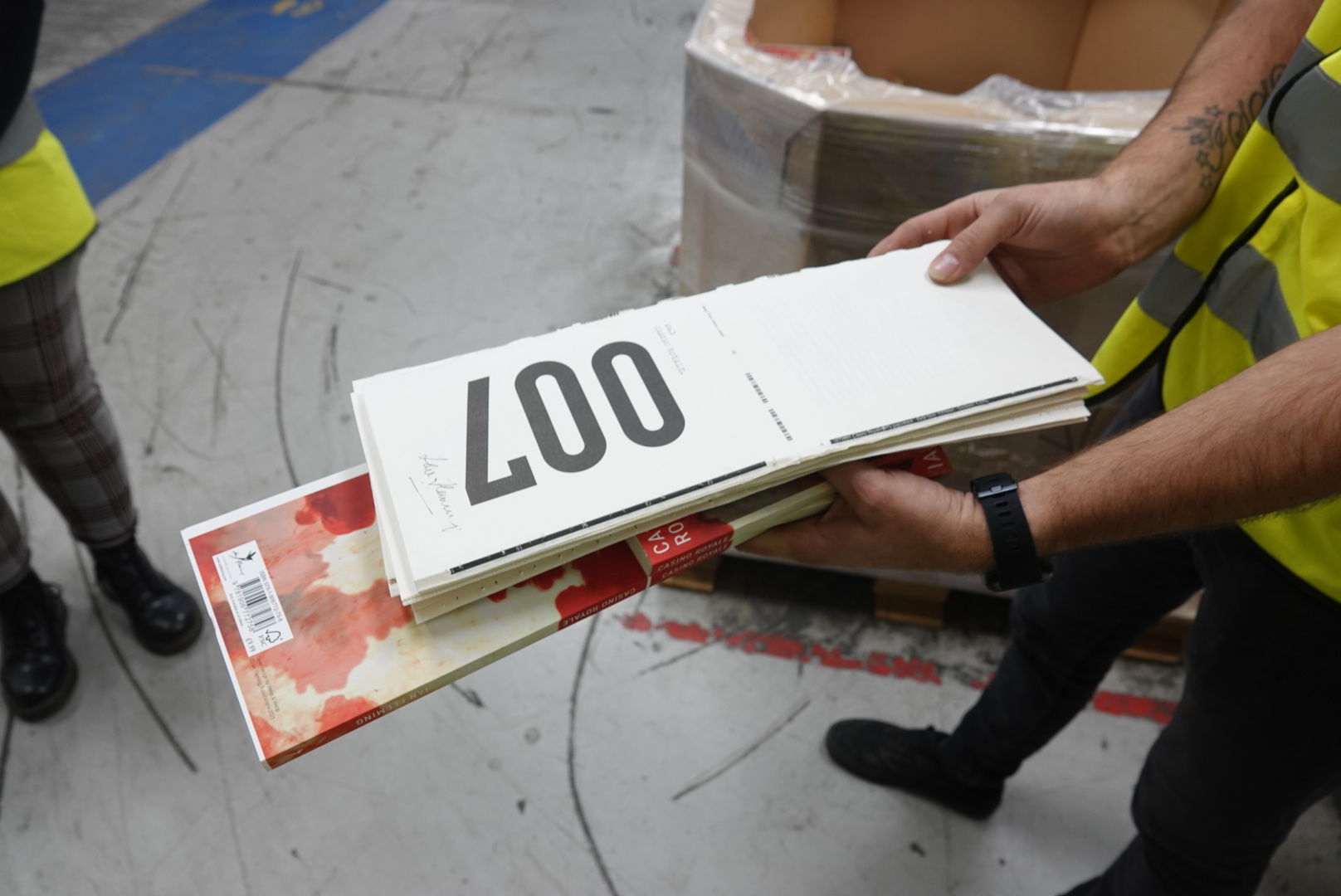
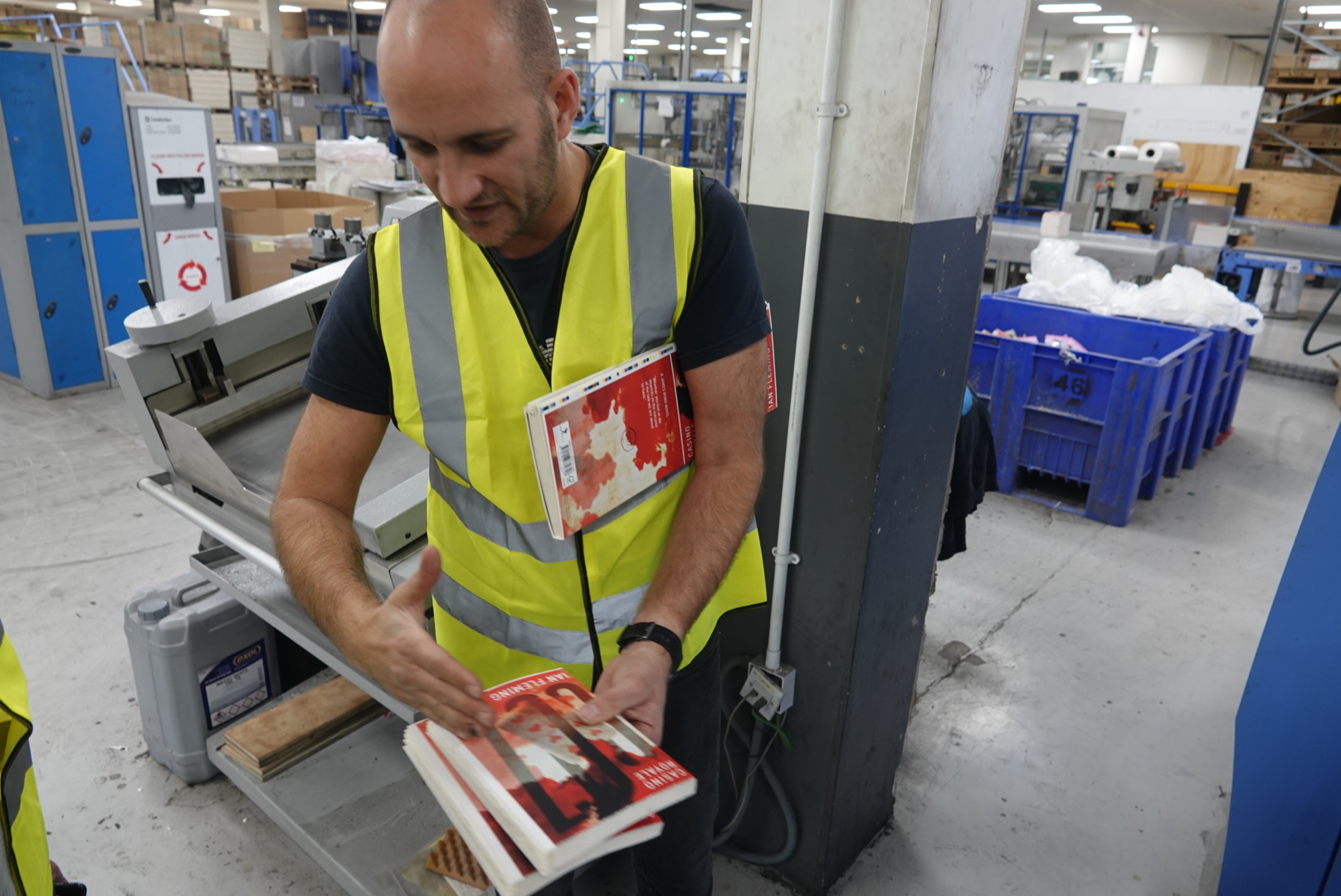
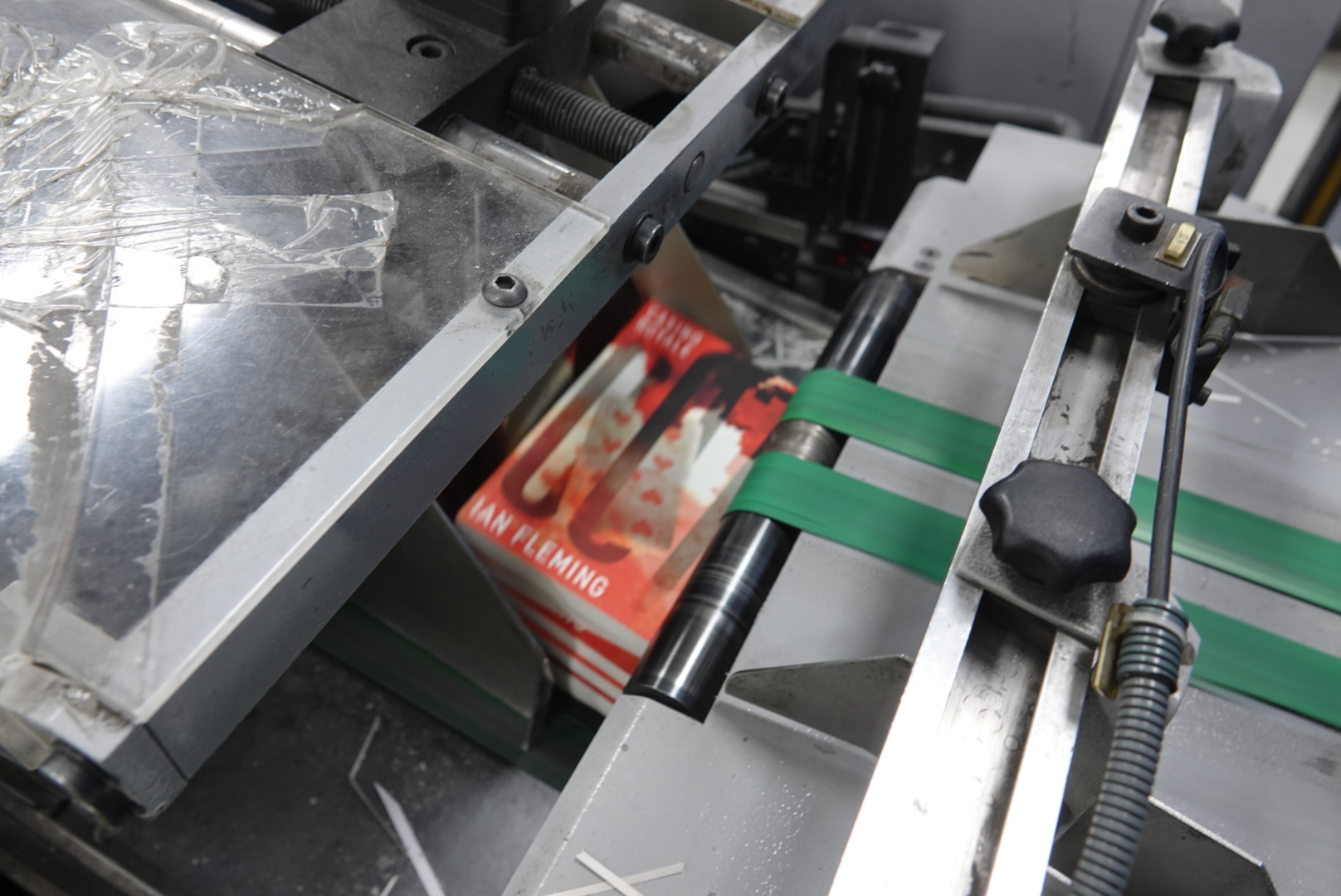
If you’ve ever wondered what goes into making a physical book, come with us as we head to CPI Books for a behind the scenes look. Grab your hi-vis vest and take a tour along their production line as they produce our Ian Fleming Bond paperback collection.
CPI are a large firm who print around 450 million books a year in sixteen sites around the world. A big delivery of paper has just been delivered when we arrive and we review different weights, densities and colour options. Together we choose a paper which has good opacity, excellent ink absorption and is thick enough to feel substantial but not too heavy as to slow the fast pace of Bond’s adventures!
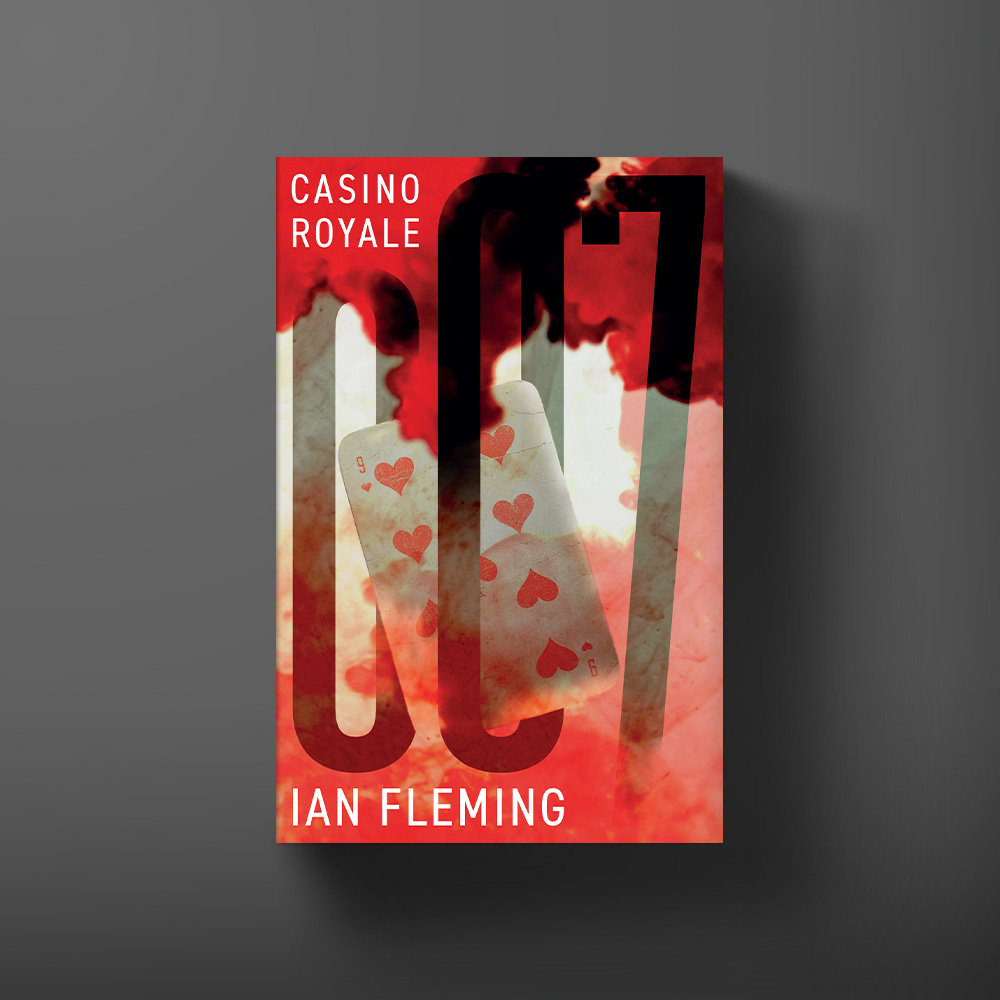
The paper is now fed in ready to receive the iconic words of Ian Fleming. Hundreds of text pages are printed per minute and the entire first run of Casino Royale is completed in less than two hours.
The interior text pages are assembled in sets of two, with both books printed simultaneously on the same sheet of paper. Books are printed in sections – called ‘signatures – of eight, twelve or sixteen. Our paperbacks are printed in signatures of eight.
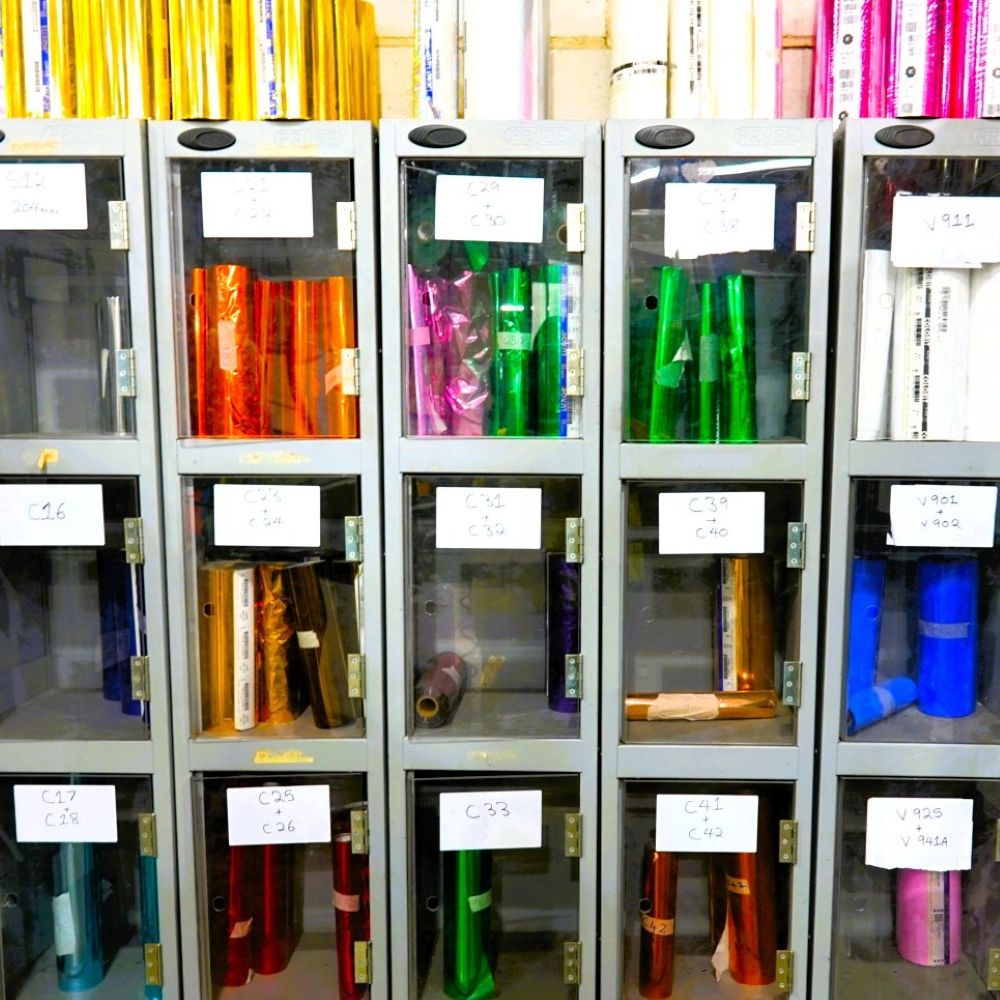
Next: our book covers. CPI produces these at their specialist cover printing site and ships them to the page print site to be collated into books. To achieve the modern vibrant effect we want, CPI use a high level of ink density and finish the paper with a soft touch matt lamination. There’s also a wide range of metallic effects on offer, in a dazzling spectrum of colours. This is just one of the many options CPI give to make a book look extra special, including embossing, debossing, spot varnish and sprayed edges. Metallic printing requires special rolls of foil and we use one of the golds for one of our Bond covers – can you guess which one?
As with the text pages, two covers are printed on one sheet, with the front side of one cover opposite the back inside of the other.
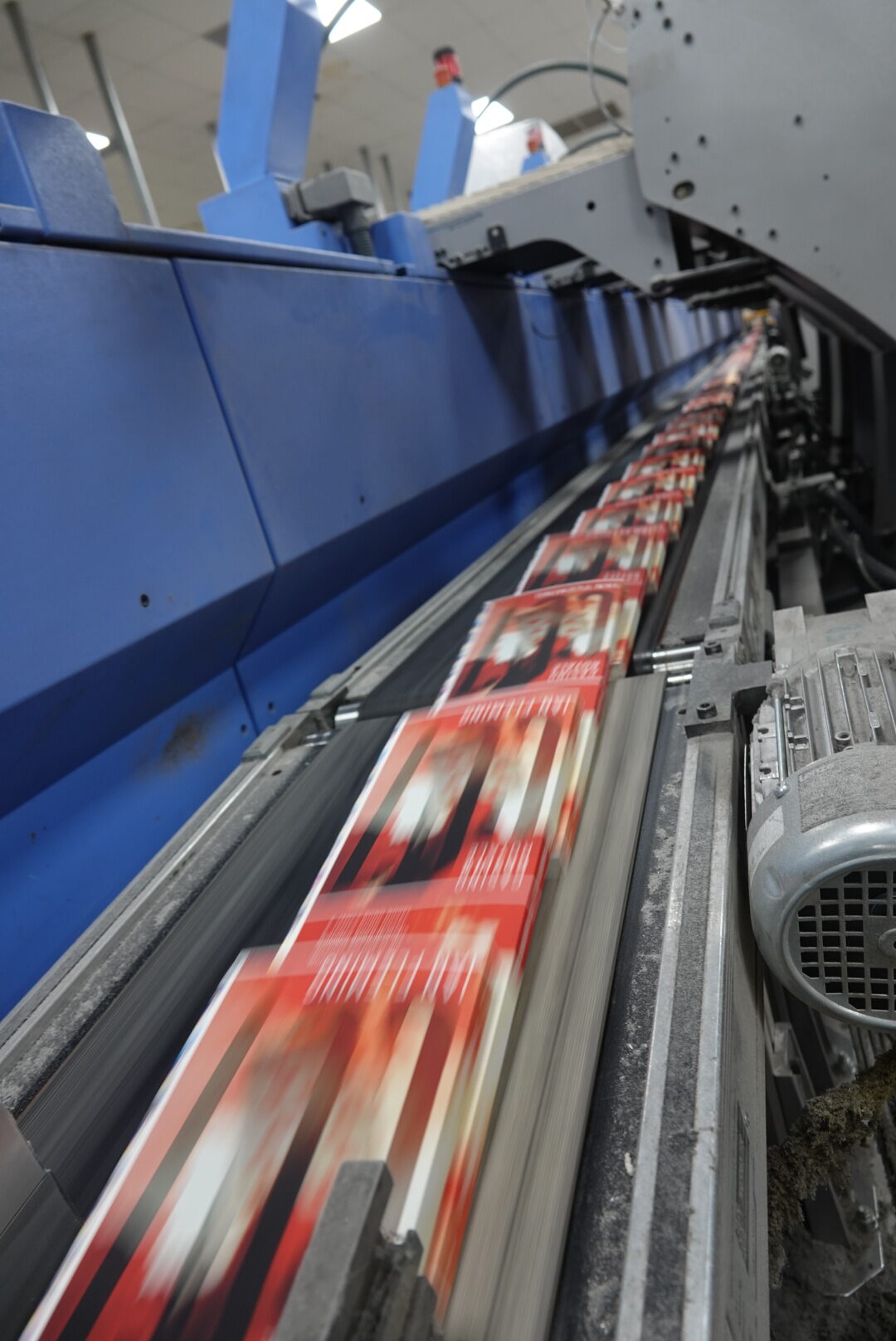
The paperbacks need to be glued together and to do this, individual plugs of dry glue are melted in a vat and applied to the spines
Next we watch the book take shape with the cover applied. Glue and ink need time to dry and the factory floor is designed so that by the time the books have travelled to the next part of the assembly line they are cool enough for the next stage.
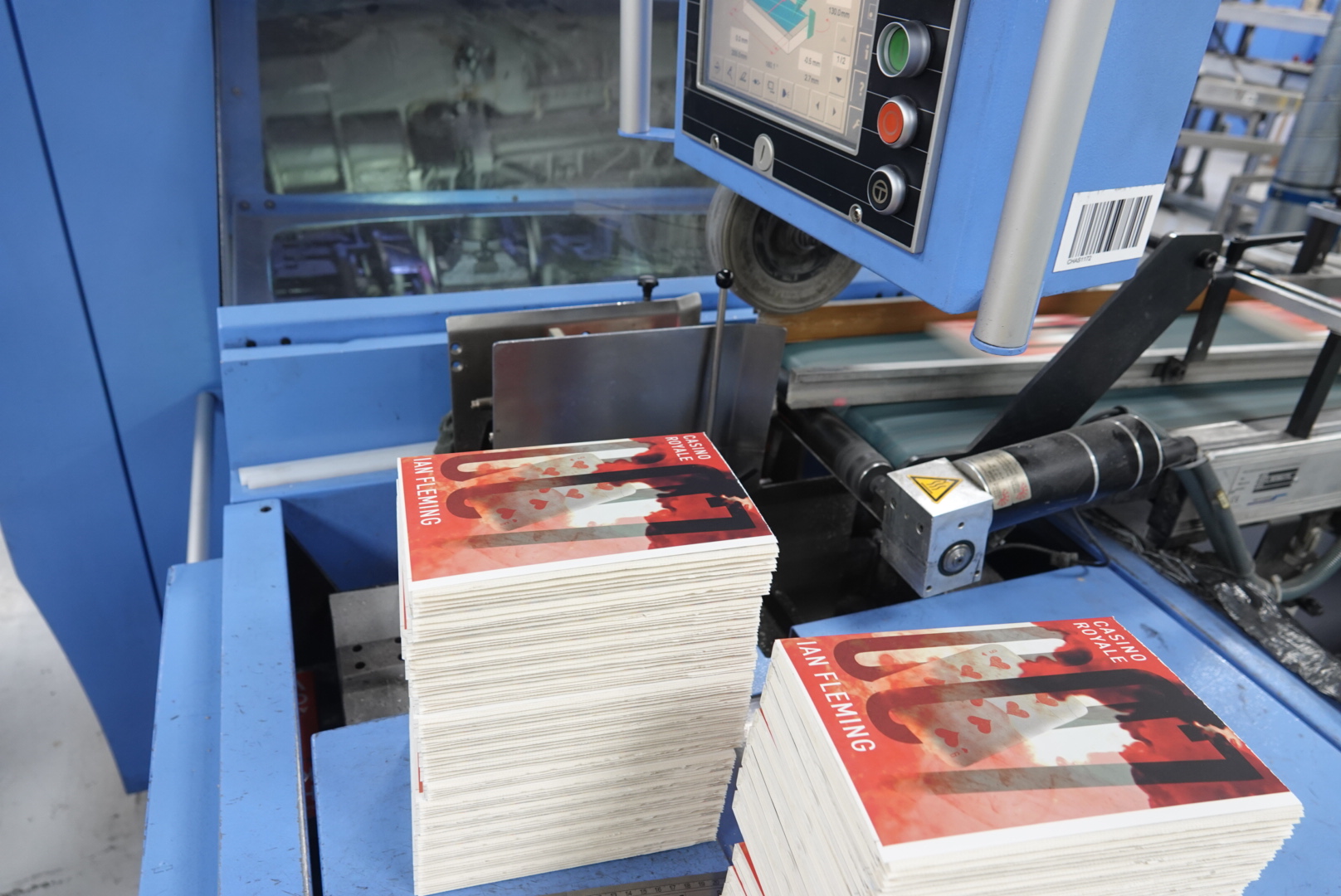
The assembled books are stacked with their covers cut to size and are checked for quality. Now to trim the inside text pages.
Books are now completely cut to size and approved by Quality Control. All that’s left is to box them up and ship out to our retailers, ready to go on their shelves!
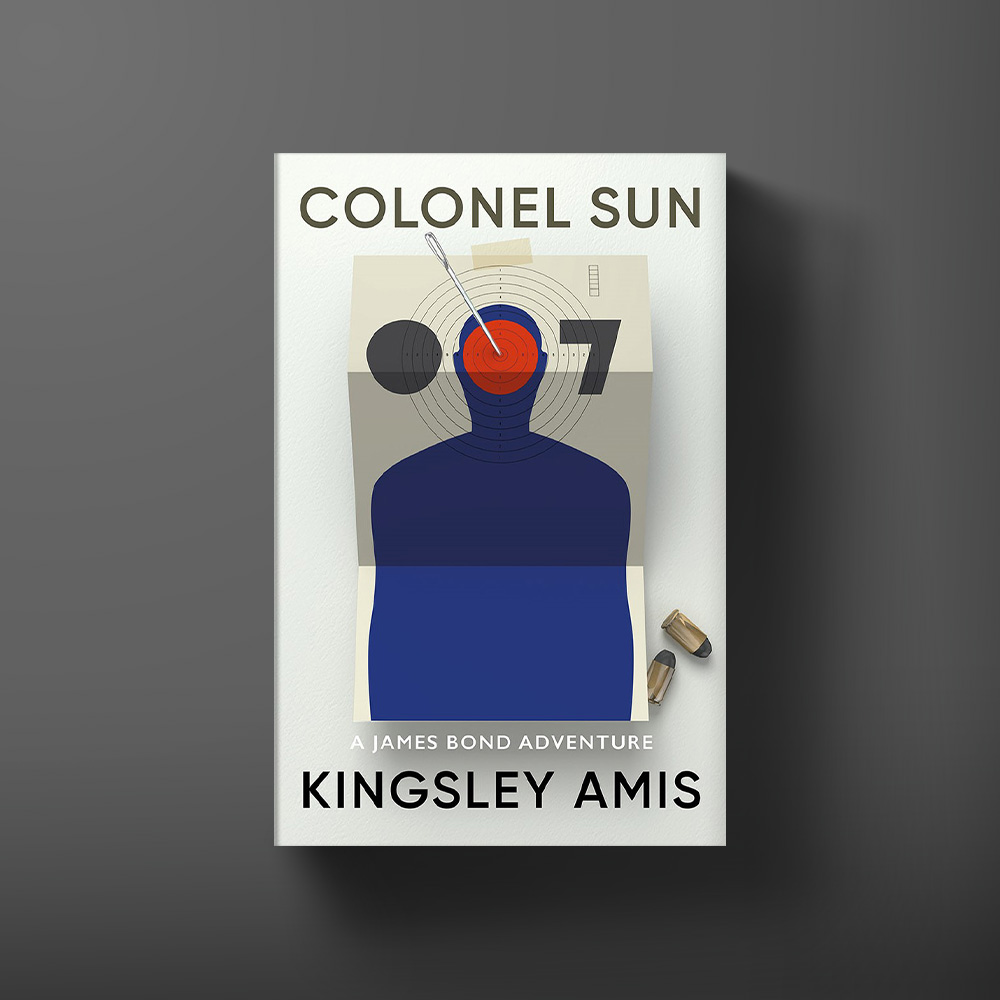
Writer Tom Cull discusses Kingsley Amis’ Colonel Sun, the story behind the novel and its relationship with the film, Spectre.
‘So James, I am going to where you are, the inside of your head.’
So says Ernst Stavro Blofeld in the 2015 film Spectre. He proclaims that he is the architect behind the many ghosts of Bond’s past and if this line echoes for you, then you probably recognise it from the very first James Bond continuation novel, Colonel Sun, written by Sir Kingsley Amis CBE under the not-so-secret pen name of Robert Markham.
In 1968, four years after Ian Fleming’s death, Ian Fleming Publications (then Glidrose) asked Amis if he would be interested in writing a new 007 novel. He was already a popular author and shrewdly – on the commissioners’ part – was known to be a Fleming fan.
Amis understood the high and low art paradoxes that existed in Fleming and the literary snobbery that befell him within some of his social circles. Amis’ own steadfast appreciation of wine andbeer; classical music andpop, the Classics and science fiction, motivated him to take time out to write a semi-serious literary criticism of Bond entitled The James Bond Dossier.
‘There’s a whole series of absurd critical judgements on Fleming’s books that need to be set right. Bond has been turned into a lush-living, snobbish, lecherous, sadistic corrupting Fascist… But if you read with care, you will notice for instance, that there is a strong, consistent moral framework to the books: Toughness, loyalty and persistence are the touchstones.’
This, coupled with Amis’ choice to teach Le Carré’s The Spy Who Came In From The Cold to students at Tennessee University demonstrates a lack of genre snobbery on his part. By delving this deeply into Fleming’s oeuvre, he was essentially attending a sort of Bond finishing school for authors. His first official mission would come quickly: Colonel Sun.
What works about Colonel Sun (originally called Dragon Island) – and which is true of the best continuation novels – is that Amis does not overtly impersonate Fleming, fall into pastiche or simply try too hard to match the originator’s style. Amis understood his own limitations in writing Bond as he documented in What Became of Jane Austen and other Questions in 1968. He couldn’t match Fleming for his great knowledge of technical minutiae, but he held detailed knowledge on diverse subjects – Lee Enfield rifles for instance – and more importantly, he understood the ideology of Bond.
You may wonder also if Amis’ own brand of humour worked its way into the novel as Fleming’s did. In part yes, but it is different from Fleming’s. Whereas Fleming’s dialogue often had a sense of the absurd and theatrical, Amis’ conversations have a more conversational rhythm and lightness of touch, seen for instance during Bond and Ariadne’s debate on Capitalism vs. Communism. The character of Litsas offers most of the light relief, as did many of Fleming’s supporting characters, but Bond does not play for laughs.
We also find a lower tech Bond, good with his fists and basic weaponry; Amis’ Bond was for men, not boys. Many of Fleming’s tropes are still there though. He plays golf (at Sunningdale) with Bill Tanner; drives a Bentley; lunches at Scott’s, that sort of thing.
Yet, Amis acknowledged the need to provide the reader with reassuring touch points to avoid any immediate dissonance with a fervent audience. Few of these things Amis did in his private life either:
‘Golf – a game I hope fervently to go to my grave without once having had to play – was there in the first sentence.’
M is given an expanded role and the backdrop is a reassuringly exotic: the Greek Islands. And like all of Fleming’s best novels, we get a brilliantly insidious master villain – the Chinese Colonel Sun Liang-Tan. Kingsley’s son, the novelist Martin Amis approved:
‘Apart from the odd repetition or slightly inept term, the style is excellent. Just like Fleming.’
The torture in Colonel Sun is arguably the book’s pièce de résistance. Sun literally gets inside Bond’s head. In the chapter titled ‘The Theory and Practice of Torture’, Bond is strapped to a chair in a cellar and Sun provides Bond with what is almost an education on torture methods.
‘When an American prisoner in Korea was deprived of his eyes, the most astonishing thing happened. He wasn’t there anymore. He’d gone, though he was still alive.’
Readers who felt squeamish during Fleming’s Casino Royale torture scene will certainly want to brace themselves here.
‘So James, I am going to penetrate to where you are, to the inside of your head. We’ll make our first approach via the ear.’
But what caused Amis to station his Chinese super-villain in Greece? For one, Amis was conscious of not re-treading old Fleming ground, so Jamaica and the USA were out. Yet he needed to match Fleming’s expert attention to detail, so a sojourn to the friendly islands of Ios and Naxos gave Amis enough time to gen up on the scenery and local food and drink, to add enough of what he coined ‘The Fleming Effect’. Bond eats manouri cheese; drinks light Mamos retsina and also Votris, the ‘only drinkable’ Greek brandy according to Litsas.
As for choosing a Chinese villain, Amis was again keen to avoid re-hashing any of Fleming’s villains, save perhaps for Dr. No who was Chinese-German, as Amis recanted:
‘Red China as a villain is both new to Bond and obvious in the right kind of way.’
Obvious perhaps, because by 1965 relations were strained between China and the rest of the world – and in particular Russia during the Sino-Soviet split, resulting in border clashes. Amis would have been conscious of this and also of how attitudes in Britain during the ’60s were changing. Another shift from the Fleming formula was to team 007 up with a female Russian agent. A whisper of From Russia with Love but with the notion that the Cold War against the Soviet Union was thawing as Bond suggests to Ariadne:
‘If they’re telling you there that the United States is world enemy number one, they need to catch up on their studies. The Kremlin knows perfectly well that the main threat isn’t the West any more, but the East. Surely that’s not news to you?’
Amis was brave enough to mould his own Bond while paying homage to its creator. With Colonel Sun, he set the benchmark for future continuation novelists and proved that Fleming’s Bond universe does welcome guests.
Tom Cull runs Artistic Licence Renewed. He knew iconic Bond cover artist Richard Chopping well as a child and Tom’s great grandfather hired a young Ian Fleming to work at the family bank Cull & Co. between 1933 and 1935.
Writer Tom Cull talks about Goldfinger, a book full of iconic images, characters and scenes.
It is with little surprise that Anthony Horowitz chose to begin Trigger Mortis just at the point where Bond wraps up the case in Goldfinger. By his own admission, Horowitz has loved this particular Bond novel since childhood.
‘Goldfinger has Bond himself, tired and cynical after a dirty assignment at the start of the book. The sequence at Miami airport as he watches the sun set and considers the vicissitudes of fate is writing of the highest order.’
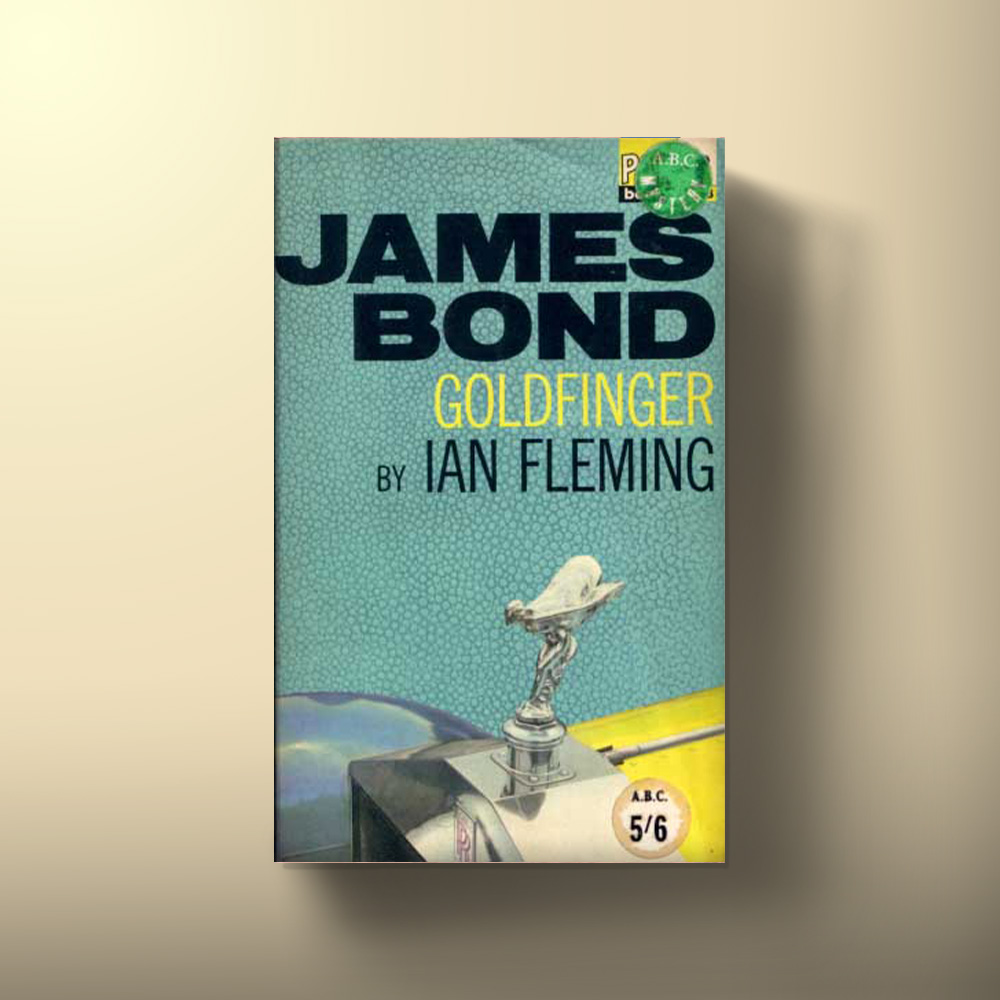
Ian Fleming’s Goldfinger is perhaps overshadowed in popular culture by the overwhelming success and iconography of the film adaptation. However, it is the novel that provided two of the greatest villains of all time in Auric Goldfinger and his henchman Oddjob, and of course one of the best Bond girls, Pussy Galore, who features in Horowitz’s Trigger Mortis. Perhaps occluded due to Gert Frobe’s excellent performance, is the fact that Auric Goldfinger’s Fort Knox plan speech was taken almost verbatim from the novel.
While her name might have raised eyebrows, Pussy Galore is in more ways than one Bond’s equal rather than a mere gender stereotype. She is a gang leader, a ‘trapeze artiste’. She is also impervious to Bond’s charms, until, as The Moneypenny Diaries authorSamantha Weinberg puts it, ‘it suited her.’ Weinberg also noted that another tough woman in Goldfinger, Tilly Masterton, finds ‘her heart beating faster for Pussy Galore than it did for 007.’These are no pallid damsels in distress.
Whereas many of Fleming’s other novels have an atavistic feel that speaks to the influences of thriller novelists of the early part of the century, Goldfinger is distinctly and unequivocally Fleming. Despite SMERSH’s existence as the omniscient threat in Goldfinger, Fleming is not bound by the Cold War or the Soviet apparatus that he so painstakingly captured in From Russia With Love, his fifth novel. The plot actually takes a back seat in Bond’s Aston Martin DB Mark III, whilst wonderful set pieces take the driver’s seat. Fleming overcomes these plot frailties by delivering memorable scenes with glorious self-indulgence and glee. Even with no hitherto interest in golf, readers cannot help but be enthralled by the gamesmanship between Bond and Goldfinger at the Royal St. Marks course.
‘As soon as Bond had hit the shot he knew it wouldn’t do. The difference between a good golf shot and a bad one is the same as the difference between a beautiful and a plain woman – a matter of millimetres.’
It is perhaps no accident that the novel is best remembered for its individual scenes, since many were ideas that Fleming had originally conceived as short stories and plot devices for other project. Since many of them did make it into the novel, Goldfinger is one of Fleming’s longest endeavours, and as often is the case, Fleming drew on personal experiences in order to create these timeless characters and events. The modernist architect Erno Goldfinger, whose buildings Fleming abhorred, lent his name to Auric Goldfinger. Alfred Whiting, the golf pro at Fleming’s beloved Royal St. George’s golf course, became Alfred Blacking, a Royal St. Marks caddy. As in Moonraker, Fleming’s familiar setting of Kent is the backdrop, for Bond’s early encounters with Goldfinger. Yet whereas Moonraker lacks some international glamour, Fleming made up for this deficiency in Goldfinger by staging the action in a number of exotic and unfamiliar locations including Miami, Geneva, and Kentucky.
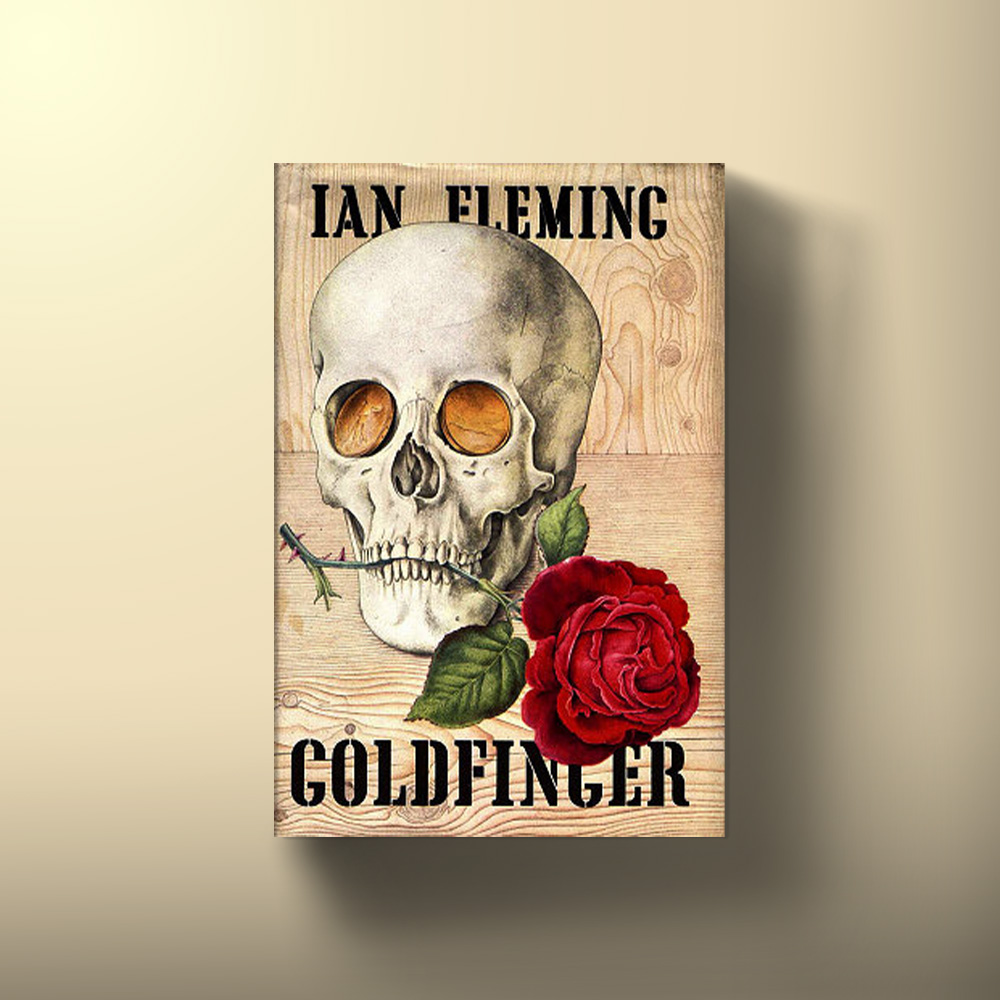
Goldfinger, published on 23 March 1959, was Ian Fleming’s 7th James Bond novel and was a great success which hit the top of the best-seller list almost immediately. Fleming was clearly proud of this effort and took on various promotional activities in order to show it off. The book also came complete with another outstanding Richard Chopping dust jacket cover, this one showing a skull with gold coins for eyes biting a rose. Chopping himself considered this piece to be his finest work in the series.
Critically, Goldfinger was better received than some of Fleming’s previous efforts. Even Anthony Boucher of The New York Times, who was Fleming’s arch-nemesis and a constant critic of James Bond, said ‘the whole preposterous fantasy strikes me as highly entertaining.’ In his 99 Novels: The Best in English Since 1939, Anthony Burgess perhaps unexpectedly selected Goldfinger as one of his honoured entrants, whileO.F. Snelling, a friend of Fleming and the author of Double O Seven James Bond: A Report, perhaps puts it best when he writes that,
‘Ian Fleming walked an extremely shaky tight-rope across a pond of very thin ice when he wrote Goldfinger. What with its characters and situations, Goldfinger is the most bizarre example in a generally somewhat extraordinary output. But it is also, I submit, at the same time one of the best.’
Goldfinger sees Ian Fleming and his most famous creation at the height of their powers. Upon publication, the book also provided a welcome sense of escapism during a particularly tense portion of the Cold War. Take the time to relive Bond’s classic adventure.
Tom Cull runs Artistic Licence Renewed. He knew iconic Bond cover artist Richard Chopping well as a child and Tom’s great grandfather hired a young Ian Fleming to work at the family bank Cull & Co. between 1933 and 1935.
Meet Young Bond author Steve Cole, as he shares his experience writing the series and being part of the 007 universe.
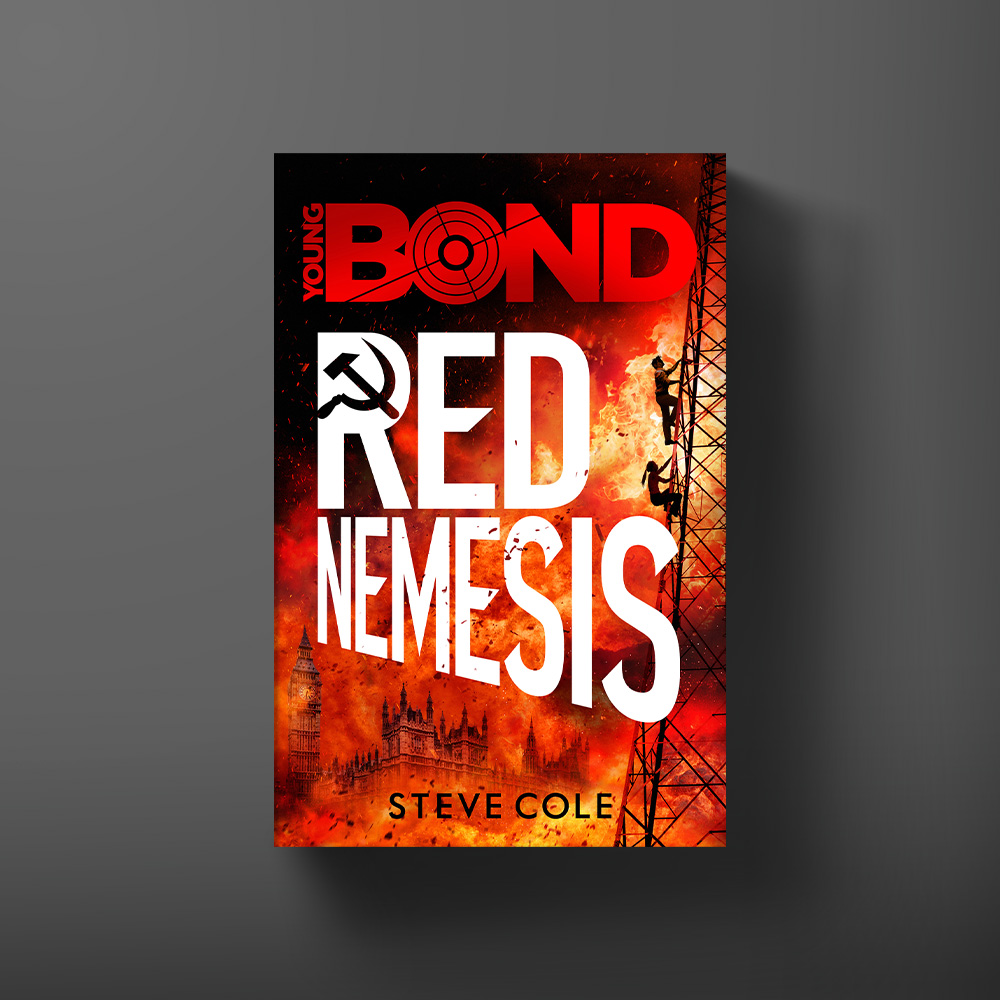
How did you choose the title for your last novel, Red Nemesis?
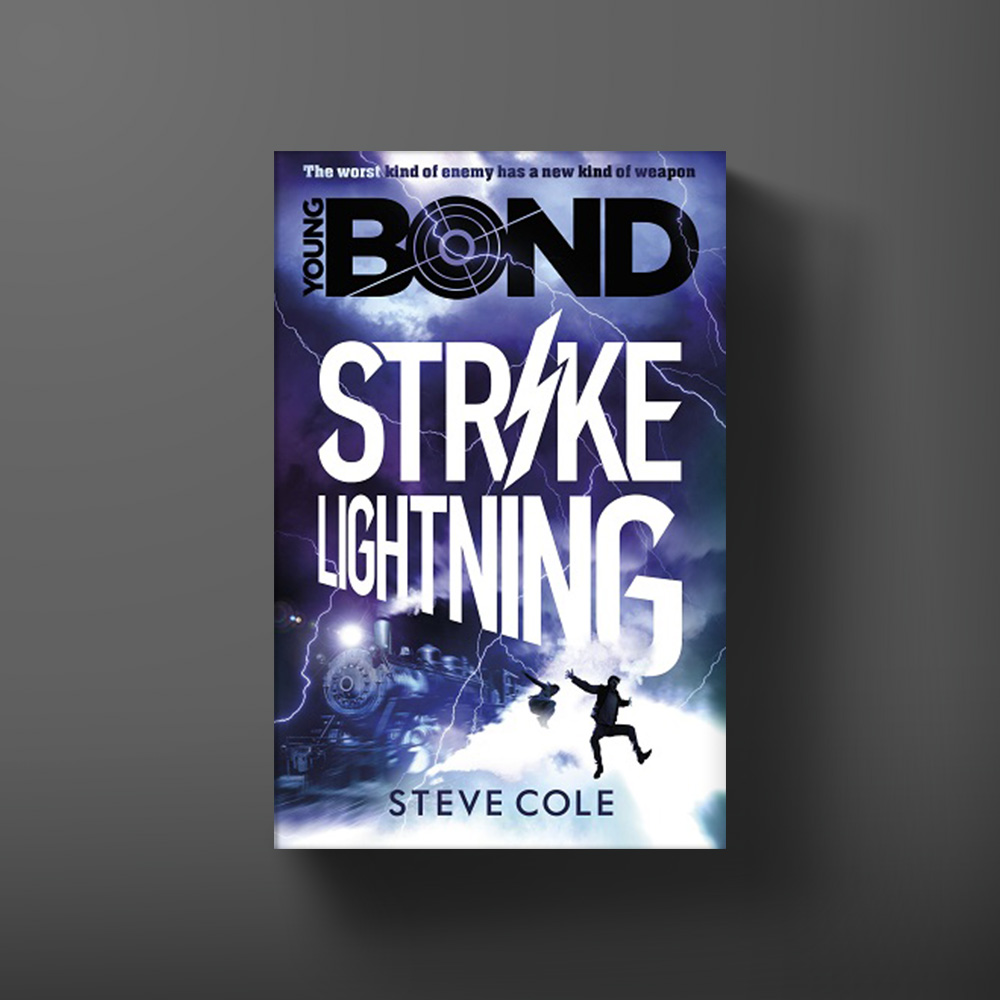
Lurking somewhere between inspiration and desperation is the titling department of my mind! For the synopsis it was named On Moscow’s Orders as a counterpoint to Charlie Higson’s final Young Bond, By Royal Command. Then for the first draft it was called Dance With Death, which ultimately felt a bit too generic. Fleming’s Bond titles have a wonderful, tantalising quality to them, you want to know what they’re about. I made a list of possible titles and Red Nemesis really seemed to sum it up, the idea of how importantly and dangerously the Soviet Union will figure in Bond’s life. It also syllabically matches book three, Strike Lightning, just as Heads You Die matches Shoot to Kill. So that appealed to the nerd in me.
Red Nemesis has a grimly dramatic Russian edge, was this a homage to From Russia with Love or were there other points of inspiration for this direction?
From Russia With Love is my second favourite 007 novel (after On Her Majesty’s Secret Service), and I thought it would be fun to get Bond to Russia, himself. Also, of course, it’s the last book of my arc and I wanted an iconic and suitably dangerous location. You don’t have Moscow as a setting second or third in the cycle; it’s the big one and I always planned it as a location for the conclusion. Stalin’s Russia looms in the modern imagination as a truly horrifying place, so to throw young James into its jaws ups the stakes.
Why did you decide todelve into some of the sadder parts of Bond’s past – particularly the death of his mother and father when he was eleven years old?
When you have a character as magnetic as James Bond I think you want to know what’s shaped him in life. The death of his parents obviously affected Bond deeply, and my first thought when plotting was to have someone exploit that incident to their own advantage. As Red Nemesis is the last of my Young Bonds I wanted to push James a little further towards the adult world of espionage and spy-play that lays before him. What better way to pull him into that world than the adults now missing from his life?
This book provides Bond with the chance to deal with his father’s unfinished business. Anya, his ally in Moscow, finds herself in a similar position; so, the influences of fathers and fatherlands are key themes and add a bit of personal weight to the story.
Mimic is a wonderfully creepy villain and one of our favourites in all of the Young Bond books – what was your inspiration?
I actually conceived a Mimic-like character when planning Heads You Die, though ultimately he didn’t quite fit into the villains’ set up: there wasn’t enough for him to do. I didn’t forget him though. He was nearly a bodyguard in Strike Lightning too! It just seemed very creepy to have someone who could impersonate anyone, particularly when communication was so much more primitive – that voice on the crackling telephone line or the wireless broadcast, is it really who you think it is? That person crying for help, are you sure it’s them? So for my final book, I made his talents – both verbal and physical – more integral.
It feels like you had great fun coming up with the clues for James to follow – how did you think of them and was it as enjoyable as it comes across?
It can be tricky, when setting a cryptic puzzle for your hero, to know just how devious to be! It’s not really any fun unless you can allow your reader enough clues to try to work it out themselves. You don’t want to make things too easy but the puzzle can’t be too contrived either. The challenge was to make the clues personal to James, so that in the end he is the only one who can really work things out. But no one wants the hero to solve things too early, so I tried to set things up so that even when James has figured out one cryptic clue, it leads to another mystery.
How do you feel about your time with Young Bond?
The time seems to have zipped past in a patter of nervous heartbeats. I’ve so enjoyed my time with Bond: I’ve worked with so many lovely people, heard from so many nice 007 fans and visited so many cool places over the course of these four novels. It’s been a challenge like no other. I’ve cared passionately about it, I’ve given it my best and I shall miss it. But it’s part of a writer’s brief to reinvent their job as the years push onward.
Who has been your favourite Young Bond character to write about?
Discounting Bond himself, I suppose I enjoyed writing about James’s friend, Hugo, in Shoot to Kill and particularly Heads You Die. He brings a different perspective to the storytelling and reveals a different side of James – I enjoyed teaming them up. Kitty Drift from Strike Lightning is a favourite. Wonderfully straightforward, she wears her heart a little self-consciously on her sleeve. She’s resourceful and witty and passionate about what she does.
Which of your Young Bond adventures have you enjoy writing the most?
I can’t really single one out as I enjoyed each in different ways. But I really had fun going full throttle with Red Nemesis, where the stakes are perhaps their highest and James is given frightening glimpses of both his father’s past and his own future. Being able to write scenes that touch at the heart of a character like Bond is a great privilege.
What other projects are you pursuing and what would you like to achieve next?
I think like most writers, parts of my head are always pursuing other projects without permission! I’ll see what they come up with. I am currently thinking of some standalone projects but love series fiction too; you’re not just writing a book, you’re making a continuing world that readers can revisit, time and again. I always used to be known as the Astrosaurs guy, and I guess now I’m known as the new Young Bond guy, so I’m happy to wait and see what the next book label will be.
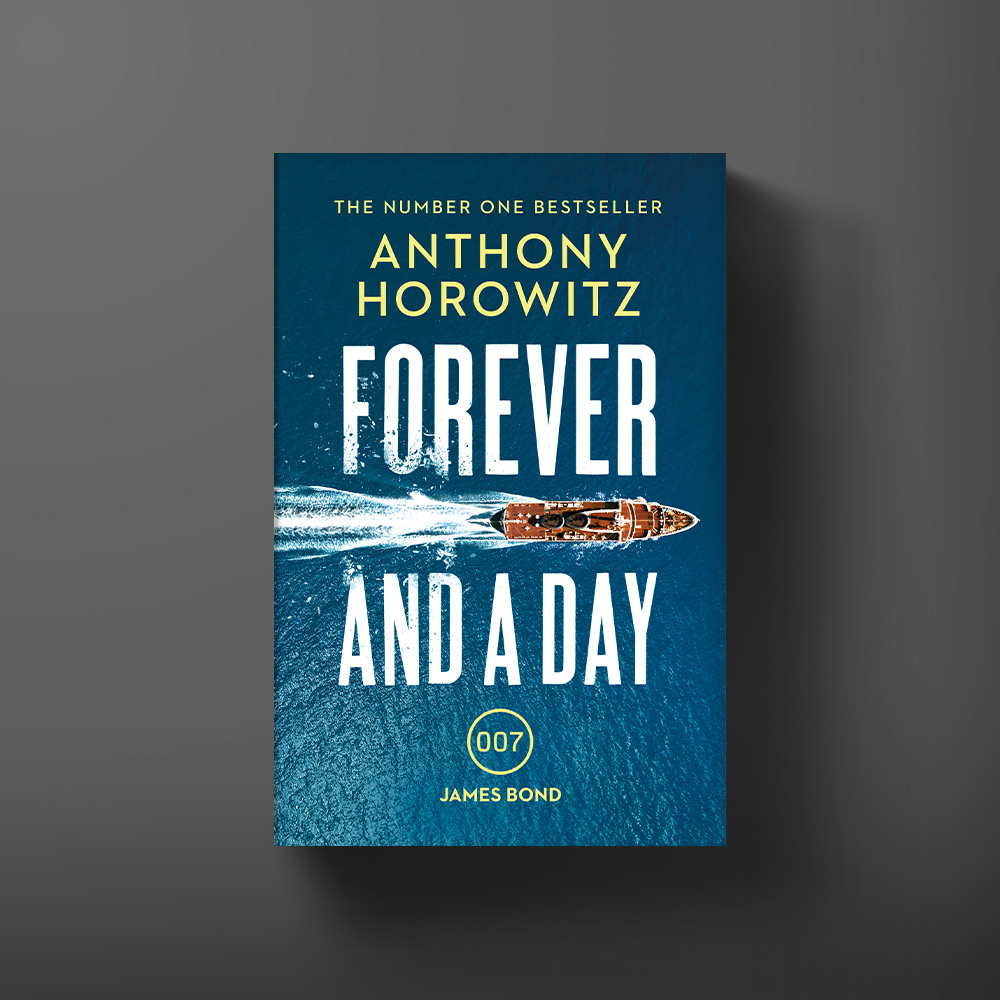
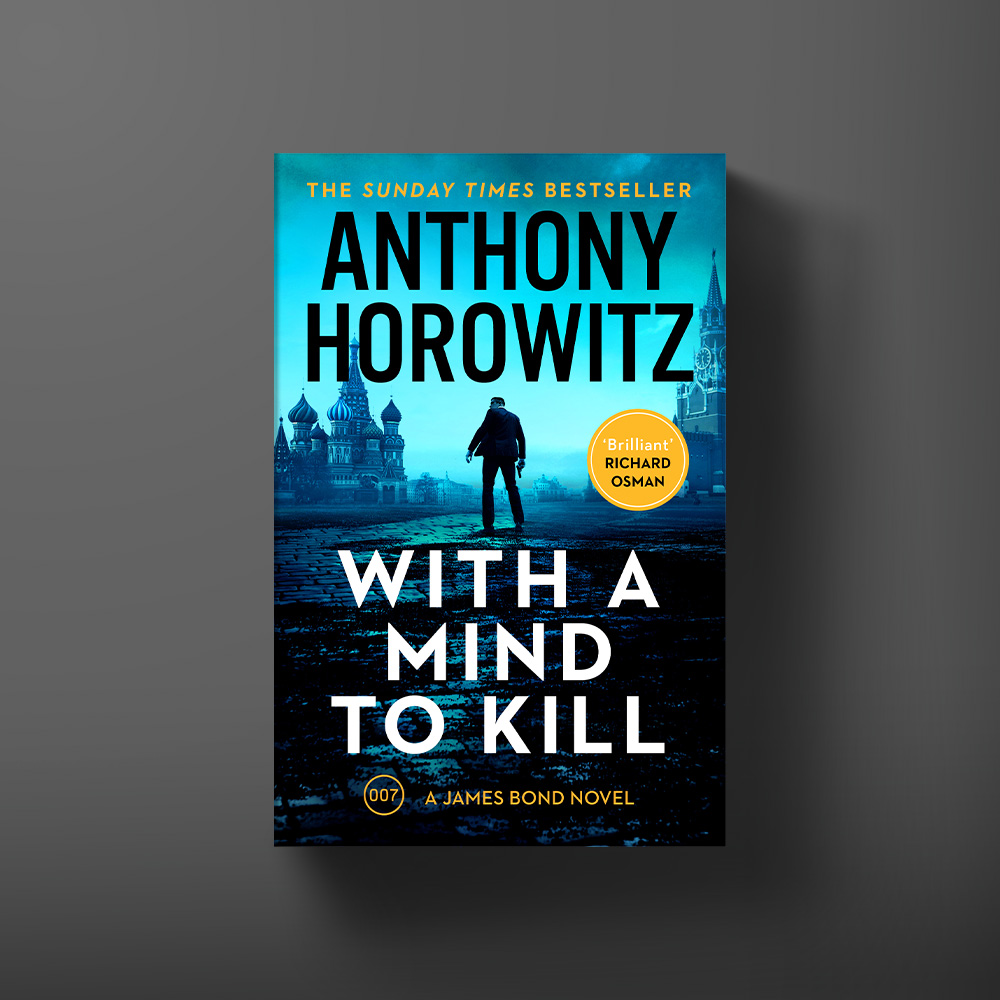
We meet British author Anthony Horowitz to talk literary inspiration, Ian Fleming and James Bond. Anthony has written three official James Bond continuation novels, Trigger Mortis (2015), Forever and a Day (2018) and With a Mind to Kill (2022), all of which draw on original material by Ian Fleming.
What was the greatest challenge involved in writing a Bond novel?
I’ve been a James Bond fan pretty much all my life and I suppose the greatest challenge, for me, was meeting my own expectations. It’s not just that he’s such an iconic character. I think people forget just how good a writer Ian Fleming was. He came up with amazing set pieces, wonderful action sequences, memorable characters. How could I possible write as well as him?
Why did you to choose to keep Bond in his original time period?
Bond represents a particular sort of man at a particular time. He is the ultimate spy at a time – the Cold War – when spying mattered most. He brings with him all the best values that we associate with the Second World War but he has the coldness and ruthlessness demanded by a new atomic age. He is an amazing character who epitomises the age he lived in, which is why, for me, it was critical to keep him in his original timeline.
How did you conjure up Trigger Mortis‘ wonderfully sinister Jason Sin and his Korean War backstory?
Getting the villain right in a James Bond novel is perhaps the biggest challenge of all. Make him too monstrous, too extreme, and you risk slipping into parody. And yet he/she has to be somehow larger-than-life. At the end of the day, what matters most, I think, is that the villain should be real and believable. It struck me that although both Hugo Drax and Goldfinger employed Koreans, there had never been a major Korean villain in a James Bond novel. Looking at the history of Korea, I stumbled upon the massacre at No Gun Ri. At that moment, I knew I had my villain, a man with every reason to hate the West.
In Fleming’s James Bond books are there any phrases you wish you’d written? Or that you feel particularly embody the spirit of a Bond novel?
There are dozens of lines and phrases that I wish I’d come up with myself. That was Fleming’s genius. The 007 designation, the licence to kill, the names of the characters (M, Miss Moneypenny), the unforgettable titles – it’s impossible to do better.
Do you have a favourite phrase/sentence of your own from Bond series?
My favourite line in Trigger Mortis – because it really does capture Fleming’s style, is the line that opens Chapter 24. ‘Rain swept into London like an angry bride.’ I’m not sure what it means. Or why it works. But when I read it, it makes me smile.
How has the process of writing Bond differed from that of your revival of another British literary legend, Sherlock Holmes?
There’s not much comparison – except that I have an equally healthy respect for Sir Arthur Conan Doyle. Sherlock is so much more distant that I didn’t feel quite so nervous writing about him. Late Victorian England is easier to characterise than the 1950s. I’d add that in the end I enjoyed writing the books equally. If you’re going to write a continuation novel, it helps to love the world into which you’ve been invited.
Which authors have influenced you the most and inspired you to become a writer yourself?
Obviously, Doyle and Fleming. I read both of them when I was a boy, dreaming of being a writer. Other influences were Charles Dickens and Tintin’s creator, Hergé.
Writer Tom Cull talks about The Man with the Golden Gun, the last of Ian Fleming’s 007 novels.
Eight months after Ian Fleming’s death, The Man with the Golden Gun was published. The birth of the final James Bond novel was difficult and its merits within the canon are still debated among aficionados.
Although Fleming had on many occasions claimed that he was finished with writing Bond books, he had completed the first draft of The Man with the Golden Gun by March 1964. After once again undertaking a Bond novel despite his rapidly deteriorating health, a word to his editor William Plomer at Jonathan Cape, rings with an eerie finality:
‘This is, alas, the last Bond and, again alas, I mean it, for I really have run out of both puff and zest.’
Along with Fleming’s reservations, the artwork for The Man with the Golden Gun also initially proved difficult. Once again Richard Chopping collaborated with Fleming on the dust jacket. Finding Scaramanga’s golden Colt .45 pistol too long to confine to a single panel, his artwork extended to the back of the jacket. Apparently, booksellers were not enamored with the experiment because it required them to open the book in order to display it properly. Now of course, it is regarded as a masterpiece of book jacket design and one of the few still affordable as a first edition.
Fleming’s Gambit
Despite this lack of “puff and zest”, the opening to The Man with the Golden Gun is as good as anything Fleming ever wrote. In summary, the opening is: fantastical, surprising, implausible, and tense. Classic Fleming.
The Service learns that a year after destroying Blofeld’s castle in Japan, Bond suffered a head injury and developed amnesia. Having lived as a Japanese fisherman for several months, Bond traveled to the Soviet Union to learn his true identity. While there, he was brainwashed and assigned to kill M upon returning to England, and during his debriefing interview with M, Bond tries to kill him with a cyanide pistol. Thankfully, the attempt fails.
The psychological tension between Bond and M is palpable in Fleming’s final Bond novel. We know that something’s not right, but we’re not entirely sure what it is until the meeting takes place and we see Bond attempt to assassinate his superior, whom he had previously “loved, honoured and obeyed.” Without question, this unspoken, taut hostility between the two men is only successful because The Man with the Golden Gun explores Bond’s psychology more than any other Bond book.
Spy-thriller writer Charles Cumming, who wrote the introduction to the 2006 Penguin edition of The Man with the Golden Gun, reflected on this opening sequence:
“Given the author’s fragile condition, The Man with the Golden Gun is a remarkable success. The opening sequence is as good as anything Fleming ever received; I particularly love Moneypenny’s ‘quick, emphatic shake of the head’ as she desperately tries to warn Bill Tanner that something is amiss with Bond.”
After recovering from the episode, Bond is dispatched to Jamaica to assassinate Francisco Scaramanga, a.k.a., The Man with the Golden Gun:
“‘Bond was a good agent once,’ said M. ‘There’s no reason why he shouldn’t be a good agent again.’”
The Golden Misfire?
Fleming died before the manuscript could go through the usual process of a second draft and revisions. If Fleming had had his druthers, he might have delayed the publishing of The Man with the Golden Gun, as Fleming biographer Andrew Lycett stated:
“He hoped he might be able to rework it when he was in Jamaica the following spring. But Plomer disabused him of that idea, telling him that the novel was well up to standard.”
Kingsley Amis, a confirmed Fleming fan, was asked for his opinion of the manuscript, but it’s debatable how many of his suggestions, if any, were used. “No decent villain, no decent conspiracy, no branded goods…and even no sex, sadism or snobbery” were just some of Amis’s objections. His main criticisms concerned Scaramanga, whom he labeled a “dandy with a special (and ineffective) gun”. To the celebrated novelist this seemed a bit thin considering Fleming’s usual prowess for creating well-drawn and memorable villains. Amis was also concerned with the lack of what he called ‘The Fleming Sweep,’ Fleming’s signature use of rich detail.
With more hindsight, Amis tempered his earlier criticisms of The Man with the Golden Gun in a later collection of essays entitled What Became of Jane Austen. According to Amis, there is no doubt that the lack of follow-up on plot points, such as why Scaramanga hires Bond as his trigger-man, is due to an uncharacteristically unconfident Fleming. Amis suggests that the Bond-as-trigger-man idea might be the responsibility of “an earlier draft perhaps never committed to paper, wherein Scaramanga’s hiring of Bond is sexually motivated”. Amis goes on to muse that Fleming could have been in critical retreat after too many bashings, and chose not to pursue this idea. However, according to William Plomer in Andrew Lycett’s biography of Fleming, he “can’t think that Ian had any qualms about ‘prudence.’”
Part of Amis’ ire was the result of holding Fleming to such a high standard, and Amis maintained that beneath all the dash and flair (and plot inconsistencies), there was “formidable ingenuity and sheer brainwork” in Fleming. I tend to agree, and if The Man with the Golden Gun were to come out today by a new thriller writer, it would likely receive an overwhelmingly positive reaction. However, in the context of Fleming’s oeuvre and his standing with the critics of his day, The Man with the Golden Gun never stood a chance.
Yet despite all the negative criticism at the time, history has been a little kinder. Of late, The Man with the Golden Gun has undergone critical reappraisal, with acclaimed novelist and Bond continuation author William Boyd arguing for the book as one of Fleming’s “realistic” novels (rather than “fantastical”) in the introduction to the 2012 UK edition published by Vintage.
“Fleming’s Bond novels are full of implausibility and coincidences and convenient plot-twists – narrative coherence, complexity, nuance, surprise and originality were not aspects of the spy novel that Fleming was particularly interested in, and The Man with the Golden Gun is no exception. And indeed Scaramanga’s eventual drawn-out demise is almost low-key, by Fleming’s standards, and as well written – in a brutal, deadpan sense – as anything Fleming achieved.”
Charles Cumming has even better things to say about Scaramanga:
“When 007 and Scaramanga are sizing one another up at the hotel, we are treated to dialogue worthy of Raymond Chandler.”
The Final Curtain
It is apparent that Fleming’s work rate and ingenuity were failing as we witness the end of him and his creation in The Man with the Golden Gun; a novel filled with unintended verisimilitude. After creating and defining a genre, it was mission accomplished for Fleming and Bond well before this novel and Fleming’s old enemy – boredom – was lurking in the wings years before the first sentence of The Man with the Golden Gun had been written.
‘[Bond] decided that he was either too old or too young for the worst torture of all, boredom, and got up and went to the head of the table. He said to Mr. Scaramanga, 2I’ve got a headache. I’m going to bed.”‘
The Man with the Golden Gun is also fittingly about Fleming’s relationship with his beloved Jamaica and the disintegration of British colonialism. Bond and Felix Leiter are awarded the Jamaican Police Medal for “Services to the Independent State of Jamaica”, which is a blunt nod to the end of British imperialism in Jamaica in 1962. In a final effort to hang on to the old vestiges of the British Empire, Fleming takes potshots at the new world power, the United States, and the perceived “Americanization” of the Cold War West. In his recent book Goldeneye: Where Bond Was Born, author Matthew Parker underscores these jabs at America by highlighting how the American-accented Scaramanga is depicted as a keen promoter of tacky Americanized resort hotels with “tropical jungle” dining rooms.
As if he were well aware that he had one figurative bullet left in the chamber, Fleming seized the chance to set the record straight about his creation in The Man with the Golden Gun. Namely, Fleming set out to dispel the notion of Bond as a snob by offering him the ultimate in status symbols – a Knighthood from the Queen. Bond declines, explaining to M: “I am a Scottish peasant and will always feel at home being a Scottish peasant.” One could read this as Fleming’s grand send-off to his critics, or one could see it as Bond’s defiance alone. Either way it presents the literary end for Fleming’s Bond and the very real finale for Fleming himself.
Tom Cull runs Artistic Licence Renewed. He knew iconic Bond cover artist Richard Chopping well as a child and Tom’s great grandfather hired a young Ian Fleming to work at the family bank Cull & Co. between 1933 and 1935.
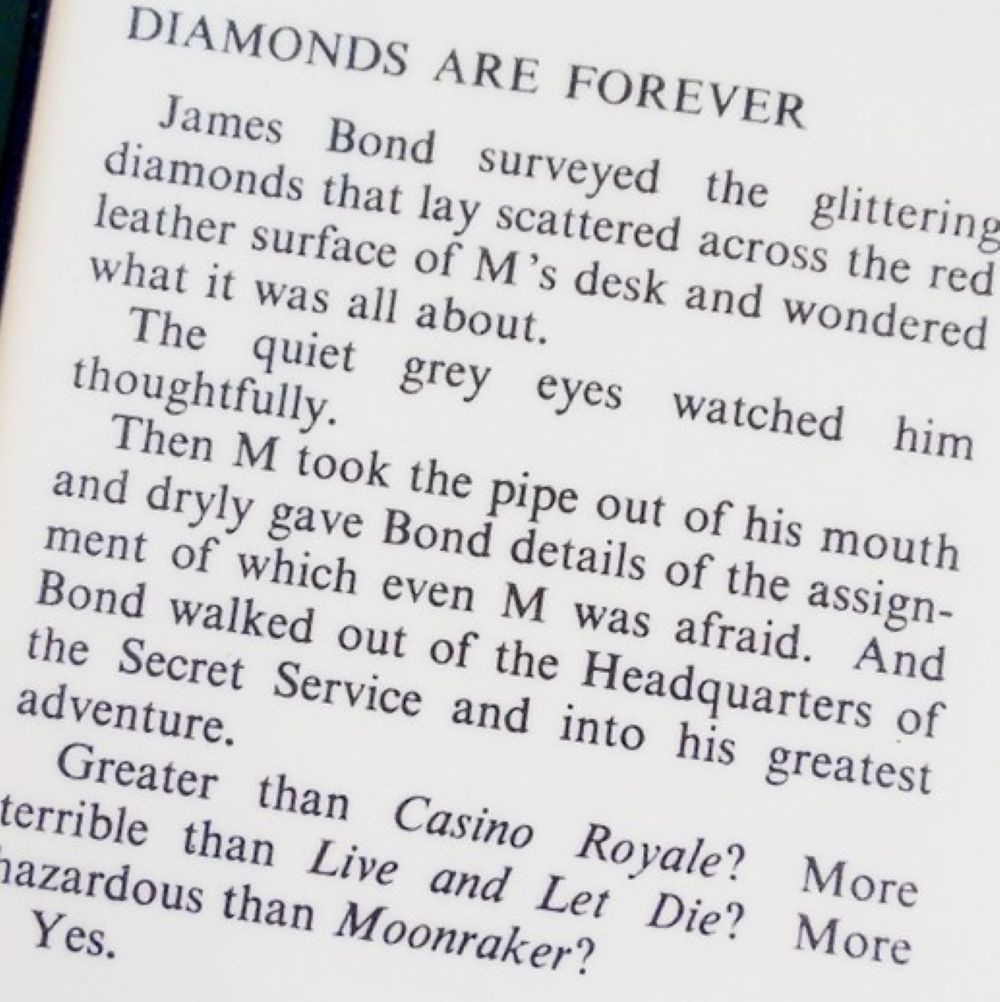
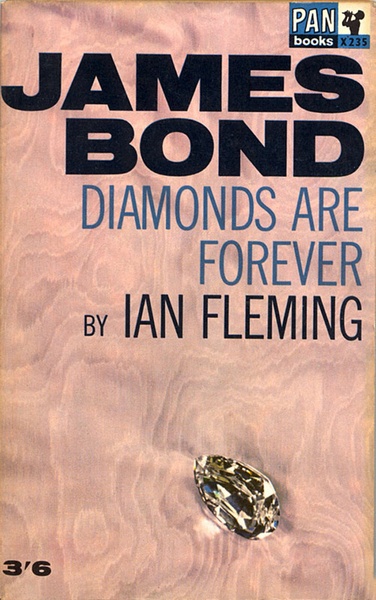
Writer Tom Cull takes us on a deep dive into Ian Fleming’s trans-continental thriller Diamonds Are Forever.
‘Bond put down the piece of quartz and gazed again into the heart of the diamond. Now he could understand the passion that diamonds had inspired through the centuries, the almost sexual love they aroused among those who handled them and cut them and traded in them. It was domination by a beauty so pure that it held a kind of truth, a divine authority before which all other material things turned, like the bit of quartz, to clay. In these few minutes Bond understood the myth of diamonds, and he knew that he would never forget what he had suddenly seen inside the heart of this stone…’
Ian Fleming said of Diamonds Are Forever in an interview with the Daily Express in 1956, ‘I’ve put everything into this except the kitchen sink. Can you think of a plot about a kitchen sink for the next one? Otherwise I am lost.’
And indeed he did. Whereas some of his books relied heavily on his imagination, this vastly under-rated fourth novel published in 1956, required lots of first-hand research and travel. Fleming’s twin love of travel and ‘things’ were indulged to their fullest potential in this novel. The central plot revolved around diamond smuggling – a hot topic at the time – and like many, he was enchanted by their lustre, permanence and chatoyance:
‘When jewels have chatoyance the colour in the lustre changes with movement in the light, and the colour of this girl’s eyes seemed to vary between a light grey and a deep grey-blue.’
He was also fascinated in the power and allure of these jewels that could provoke people, even of good standing, to smuggle them. In his book The Man With The Golden Typewriter, Fergus Fleming describes how in 1954, while coming home from Jamaica, his uncle saw an advertisement in American Vogue that read ‘A Diamond is Forever’. He reported on this for one of his Atticus columns in The Sunday Times commenting in his piece upon the fifth largest diamond ever recorded at the time on June 20th.
Fleming’s enthrallment with diamonds would need to be tied to a thrilling narrative to become the core of the new Bond novel; one possible source of inspiration for the plot was the true story of a former geologist for De Beers who, while prospecting in a forbidden zone in Namibia, had managed to hide a container of some 1400 diamonds. On December 21, 1952, a small aircraft landed on the diamond-strewn beach in the forbidden zone, whereby the geologist got out of the plane and retrieved the cache of diamonds that he had squirrelled away six months earlier. The geologist and his pilot were spotted and arrested.
The opening chapter of Diamonds Are Forever– ‘The Pipeline’ – is very reminiscent of this true-life event and brilliantly describes the details of a smuggling operation conducted by the Spang brothers. As Fleming later told the Daily Express in 1964, “I always study the best authorities on a particular subject.” These authorities included De Beers themselves and former head of MI5 Sir Percy Sillitoe of the International Diamond Security Organisation, who later would help advise him on his non-fiction work The Diamond Smugglers. De Beers allowed him to watch the cutting and sorting of the diamonds, and Sillitoe’s name would make it into the novel as M tells Bond in chapter 2, ‘”You probably saw in the papers that De Beers took on our friend Sillitoe when he left MI5, and he’s out there now, working in with the South African security people.”’
After confining Bond to a domestic English setting in Moonraker, both Fleming, Bond, and apparently their readers, were ready for some foreign travel. What better excuse for Fleming to visit his old Eton chum Ivar Bryce? Bryce who was now in Vermont at Black Hole Hollow Farm with his new wife, the millionairess Josephine Hart.
Bryce had played an important role in Fleming’s life as a friend, confidante and business partner, while his regular summer excursions to this idyllic spot in the Green Mountains of Vermont gave Ian the kind of relaxation and adventure that fed his imagination. He and Bryce would take road trips in Bryce’s Studillac car to various places, notably across the border to New York state to Saratoga and the famous racetrack and mud baths. The resort was a favourite of former President Franklin D. Roosevelt known for its healing properties that helped his polio, as Fleming alludes to in his novel: ‘People drift up to take the waters and the mud baths for their troubles, rheumatism and such like, and it’s like any other off-season spa anywhere in the world.’
In chapter 10 entitled ‘Studillac to Saratoga’, Fleming beautifully describes the atmosphere at the racetrack, ‘It’s probably the smartest race-meeting in America, and the place crawls with Vanderbilts and Whitneys.’And the scenes with Bond and Felix Leiter could well be describing Fleming and Bryce.
The American artist and literary Bond fan Gerald Wadsworth commented on the accuracy of the US setting.
‘When Bond and Felix Leiter drive up to Saratoga Springs in the Studillac, Bond is treated to an exercise in American car culture – a black Studebaker convertible with a Cadillac engine, special transmission, brakes and suspension, designed by Raymond Loewy, and could run circles around Corvette’s and Thunderbird’s of the day. Their route to Saratoga was detailed, not unlike when Bond would travel through Europe. Roads, highways, turnpikes and various elements of local laws would be routinely described to the reader.’
Another one of their gang was Ernie Cuneo, whose name features heavily as an undercover cab driver, Ernie Cureo. No argument who this was based on. Famous gangster Lucky Luciano also gets a mention, who later featured again in Fleming’s Thrilling Cities travelogue.
Fleming’s fascination with American gangster culture would feature in a few of his novels (Goldfinger, for example), but in Diamonds Are Forever, he placed it at the fore in the form of the Spang brothers, Wint and Kidd and Shady Tree. The setting, style and tone of this novel reads more like one of Raymond Chandler’s hard-boiled detective novels; indeed, as the great man noted himself, Fleming’s proficiency for setting was one for his most unique strengths, ‘Fleming can go to a town for the background of a new novel, and in three days he will have mapped up every detail of that town.’
Fleming was not immune from criticism however, and his friend and peer Chandler knowingly jibed Fleming for forgetting to ‘have a glass of iced water on the table while he wrote about Las Vegas.’In Chandler’s well-qualified review in The Sunday Times, he criticised the book for a certain amount of padding, which Fleming disagreed with: ‘I find technical details of a place like Las Vegas so fascinating that I put them in over-generously.’ He went on. ‘I quite admit to my tendency of overloading my books with Baedekerish information, but Chandler is wrong in thinking this was ‘padding’ which I abhor in other writers.’
Chandler did however finish his review with a resounding endorsement of Fleming’s ability to please his American audience, saying in the Sunday Times on 25th March 1956,
‘I have left the remarkable thing about this book to the last. And that it is written by an Englishman. The scene is almost entirely American, and it rings true to an American. I am unaware of any other writer who has accomplished this.’
Finally, and not least, is the wonderful Tiffany Case (a nod to Tiffany & Co. presumably), who is one of the very few women that earns an extended stay at Bond’s Chelsea flat. A diamond in the rough herself, if you will forgive the pun, Tiffany has a troubled past and gets mixed up with the Spang brothers in their diamond smuggling racket. Tiffany and Bond are kindred spirits in many ways; loners who struggle with attachment which leads to some particularly reflective conversations about love and marriage. Fleming’s writing here perhaps reflected by his own cynical views on matrimony by this time, a few years into his own marriage with Ann Fleming.
“Are you married?” She paused. “Or anything?”
“No. I occasionally have affairs.”
“So you’re one of those old-fashioned men who like sleeping with women. Why haven’t you ever married?”
“I expect because I think I can handle life better on my own. Most marriages don’t add two people together. They subtract one from the other.” Tiffany Case thought this over. “Maybe there’s something in that,” she said finally. “But it depends what you want to add up to. Something human or something inhuman. You can’t be complete by yourself.”
Diamonds Are Forever is unique in the Bond canon as it is one of the most true to life stories Ian Fleming wrote. Take the road trip with him once again.
Tom Cull runs Artistic Licence Renewed. He knew iconic Bond cover artist Richard Chopping well as a child and Tom’s great grandfather hired a young Ian Fleming to work at the family bank Cull & Co. between 1933 and 1935.
Manage Consent
To provide the best experiences, we use technologies like cookies to store and/or access device information. Consenting to these technologies will allow us to process data such as browsing behaviour or unique IDs on this site. Not consenting or withdrawing consent, may adversely affect certain features and functions.
Functional
Always active
The technical storage or access is strictly necessary for the legitimate purpose of enabling the use of a specific service explicitly requested by the subscriber or user, or for the sole purpose of carrying out the transmission of a communication over an electronic communications network.
Preferences
The technical storage or access is necessary for the legitimate purpose of storing preferences that are not requested by the subscriber or user.
Statistics
The technical storage or access that is used exclusively for statistical purposes.The technical storage or access that is used exclusively for anonymous statistical purposes. Without a subpoena, voluntary compliance on the part of your Internet Service Provider, or additional records from a third party, information stored or retrieved for this purpose alone cannot usually be used to identify you.
Marketing
The technical storage or access is required to create user profiles to send advertising, or to track the user on a website or across several websites for similar marketing purposes.
 Skip to main content