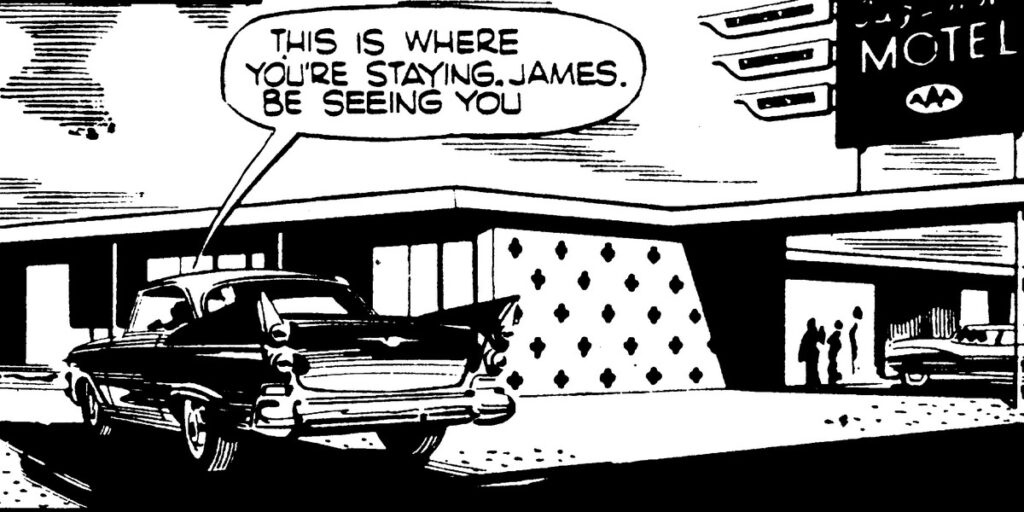
John Gardner’s first published book was the autobiographical Spin the Bottle (1964), and while he never returned to non-fiction writing, he set out to bring reality, the real world, and a sense of verisimilitude into his work – especially to his fourteen original James Bond novels.
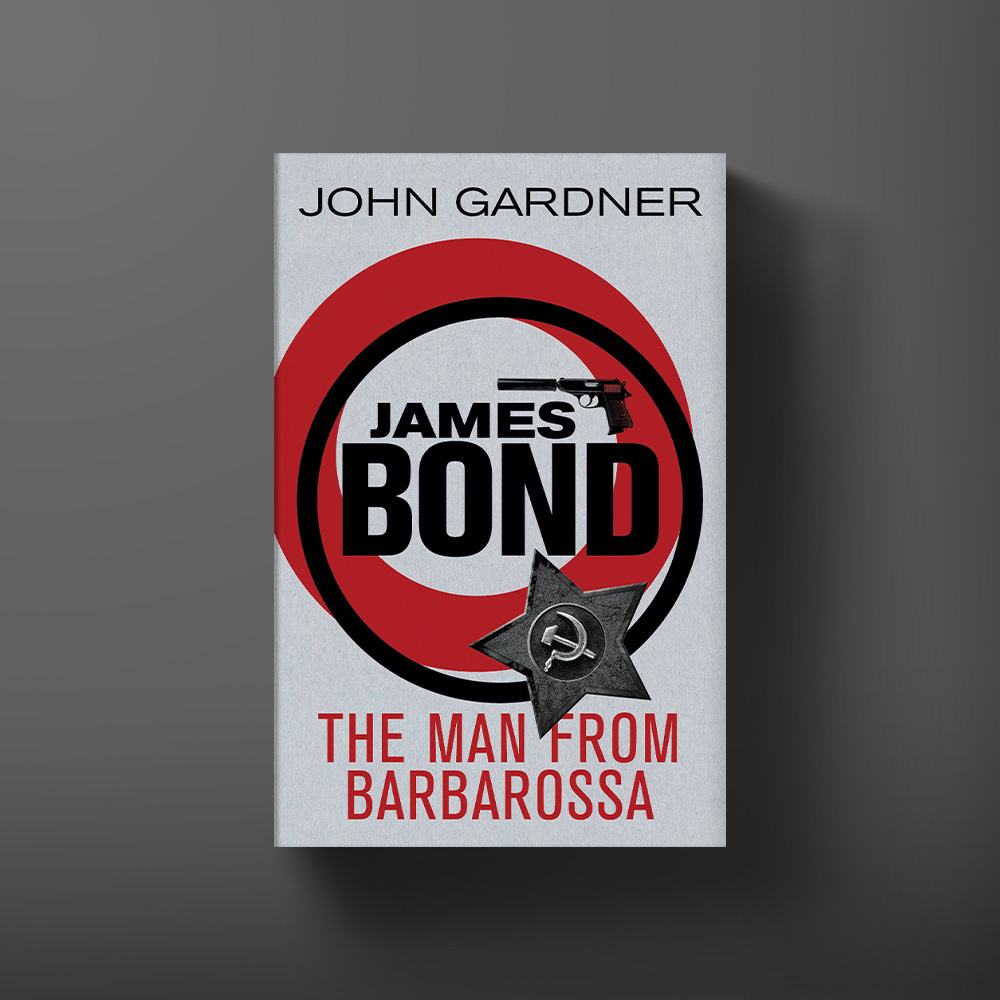
Gardner cited his eleventh Bond novel, 1991’s The Man from Barbarossa, as the best of his 007 adventures. Crucially, this is the story most grounded in then-current events, with Bond thrown into the very timely Middle East conflicts, as well the book correctly anticipating the close of the Cold War. Despite the thrilling, inventive narratives in his stories, Gardner was no fantasist. In his hands, the world’s most famous secret agent fought for Queen and country in a world readers could relate to.
Having previously worked as both a stage magician and Royal Marine officer amongst other jobs, John Gardner was a hands-on man and it was important to him that the gadgets in his 007 stories be grounded and plausible. In the acknowledgements to 1981’s Licence Renewed Gardner states
“I would like to point out to any unbelievers that all the hardware used by Mr. Bond in this story is genuine. Everything provided by Q Branch and carried by Bond – even the modification to Mr. Bond’s Saab – is obtainable on either the open, or clandestine, markets.”
For his tech research, Gardner spent his own time and money speaking to those in the know and actually getting to handle and experience the equipment on the bleeding edge of covert operations.
“One of the things that he wanted to do right from the word go,” explains John Gardner’s son, Simon, “was to make sure that at least 90% of the gadgets were real and could be obtained.
“At the time he was using a place on South Audley Street called Communication Controls Systems Ltd (CSS) and those were the ones he did a lot of work with. He wanted to show that someone like Bond would have, as he put it, ‘trade craft’. I think he wanted to try and get Bond to become a real person as opposed to this kind of fantasy character: he was trying to bring him back to the reality of espionage. There were a lot of fans who didn’t like that. They simply wanted to see the Bond of the films… He said, if I’m going to do Bond I want to try and do it as much my way as possible, which means that the trade craft has to be right and the gadgets have to be believable. That was his starting point.”
It is the aforementioned Saab that is one of John Gardner’s most famous contributions to the 007 canon. Motoring and James Bond’s licence to drive has always been an essential and beloved part of the adventures and the decision to put him into the Swedish automobile classic turned a lot of heads in 1981. The very first sentence Gardner writes Bond into in Licence Renewed, has him driving the mid-size, four-cylinder car.
“James Bond shifted down into third gear, drifted the Saab 900 Turbo into a tight left-hand turn, clinging to the grass shoulder, then put on a fraction more power to bring the car out of the bend.”
007’s car of choice was named ‘The Silver Beast’ and was of course equipped with special hidden features, such as bulletproof glass, rotating licence plates, tear gas ducts, steel-reinforced bumpers, hidden compartments for handguns, a mobile phone and much more. In the prose, Gardner namedrops CCS as the company who personalised the car for Bond but to further underline that the world of James Bond was now ‘our world’, Saab went ahead and created The Silver Beast themselves. This one-of-a-kind machine made the regional news, with John himself showcasing its bespoke additions.
Not only was this a wonderful marketing opportunity but it spoke to how so many fans of 007 see the character – as aspirational. You may not be taking on globe-trotting missions, but you can drink the drink, wear the suit and now buy the car!
Gardner was tasked with bridging the gap between an idealised pop culture version of James Bond circa the early 1908s and a readership that was very different to 1953 when Casino Royale was published. In total he would write fourteen original Bond novels, plus two movie novelisations, landing him a spot in the Guinness World Records. “History is moving pretty quickly these days” said Ian Fleming and – like so many situations Bond finds himself in – John Gardner was in the right place at the right time, making him the perfect author for 007 in 1981.
Jon Gilbert, internationally renowned dealer in rare Fleming-related material and author of Ian Fleming: The Bibliography, explores the provenance of Chitty Chitty Bang Bang.
By the 1960s, novelist Ian Fleming had created a literary and cinematic phenomenon in the shape of British Secret Agent James Bond. Occasionally writing that he was tiring of his ‘cardboard hero’, Fleming would soon conjure up another unforgettable gadget-laden champion of literature and the big screen, though sadly he would not live to see the runaway success of his next great invention.
His only book for children, Chitty Chitty Bang Bang was the written version of the fantastic bedtime stories he concocted for his son Caspar. It tells the adventures of a magical, flying car restored by Caractacus Pott, a retired Naval Commander and now family-man inventor, who bought the vehicle using proceeds from his ingenious ‘whistling’ sweets which he had sold to the aristocratic owner of a large local confectionery factory. The car, whose original registration was GEN 11, was soon christened Chitty Chitty Bang Bang’ after the ritual noises produced when her powerful engine burst into life. Fleming’s Chitty seemingly has a mind of her own and reveals her unusual abilities to the spell-bound Pott family, whisking them off on a crime-busting caper across the English Channel.
The author took his inspiration for the motor from a series of aero-engined racing cars built and raced by Count Louis Zborowski in the early 1920s at Higham Park near Canterbury. Zborowski was the son of a racing driver who died in a crash and an American heiress to the Astor family, and at the age of sixteen became spectacularly wealthy upon his mother’s death, inheriting a sizeable portion of Manhattan. He invested in designing, building and racing his own cars, each called Chitty Bang Bang, before he too was involved in a fatal accident, during the 1924 Italian Grand Prix at Monza.
Fleming, who had experienced heart trouble from his late thirties, suffered a heart attack in April 1961 and was confined to bed at the London Clinic, subsequently convalescing on the south coast of England and Dieppe in Northern France. Doctors advised his coronary thrombosis was due to heavy smoking and recommended he reduce his cigarette consumption from sixty to twenty per day and cease golf and exercise for one year. Whilst recovering, Fleming committed these Chitty tales to paper, under the working title The Magical Car, informing his friend and publisher Michael Howard of Jonathan Cape – in typically playful style.
‘I can assure you that I will be firing on all cylinders again before long … [and] I am writing a children’s book, so you will see that there is never a moment, even on the edge of the tomb, when I am not slaving for you’
Fleming was known to borrow names from people he knew for his fictional characters and had plundered the roll of fellow students from Eton College when considering names for his James Bond novels (Strangways, Scaramanga, Hilary Bray, etc). A glance at the school list also reveals two pupils called Chitty and Chitty (Major and Minor), sons of Eton schoolmaster the Reverend George Jameson Chitty; these may also have inspired the Chitty Chitty of the final title.
At the end of April 1961 Fleming advised Howard that his children’s story was nearly finished, and on 27th June he took Caspar to see the latest Walt Disney film The Absent-Minded Professor. He was horrified to find it featured a flying motor car, built by a crackpot inventor in his own backyard, which was shown circling a church spire. Fleming, whose own tale included Chitty soaring over the spire of Canterbury Cathedral, was rightly frustrated, commenting to Howard:
‘This really is the limit. Would you ask one of your intelligence spies to have a look at this film and suggest what amendments we ought to make? Personally I think we could get away with cutting out the spire of Canterbury Cathedral, but it really is pretty maddening’.
Fearing repercussions, Fleming did make this suggested change to the church-roof section of the story.
Written as three instalments, a proper manuscript was typed up in August 1961, corrected by the author and dispatched to Cape’s offices that October. From this, various typescripts were produced, one of which Fleming sent in May 1962 to his great friend the automotive and aeronautical designer Amherst Villiers. Villiers was famous for his pioneering work in superchargers which were fitted with great success to the ‘Blower’ Bentley race cars of the 1930s and which Fleming had chosen for James Bond to drive in his early adventures.
A covering letter requested Villiers read the enclosed stories with a view to providing illustrations for the motor car. The author’s instructions as to how the car should look were rather specific, but he trusted Villiers to give the car the right appearance mechanically, with vents and pipes and entrails all spilling out, as well as a snazzy dashboard displaying various knobs and buttons. He suggested visually stimulating drawings intended for children aged ‘about seven to ten’, and signed off the letter requesting that Villiers return the stories whatever the outcome, as they were the only copies to hand at that time. Although Villiers produced a few sketches, he could not commit to the project as he was busy developing Grand Prix cars for Graham Hill, but preliminary drawings were provided by artist Haro Hodson before the award-winning children’s author and illustrator John Burningham was commissioned in late 1963.
Fleming had originally suggested his friend Trog as the illustrator, Trog being the pseudonym of Wally Fawkes, cartoonist for the Daily Mail, who had created a spoof James Bond in his ‘Flook’ strip. A further script was typed in July 1962, and copy-editing was carried out in February 1963. The galley proofs were read for errors and the text was set for all three volumes in January 1964, before the bound proofs were issued in August. The first impressions of the three separate adventures of the magical car were printed, bound and delivered to Cape simultaneously, but their publication was staggered to maximise sales over Christmas 1964. Adventure Number 1 was published on 22nd October 1964, followed by Adventure Number 2 on 26th November and Adventure Number 3 on 14th January 1965. The first American printing, published by Random House as a single volume in autumn 1964, is an important edition marking the earliest published appearance of the entire text.
The book was an instant children’s classic, has remained in print ever since and inspired three official sequels by Frank Cottrell Boyce. The story was adapted into a screenplay by Roald Dahl and Ken Hughes in 1967, and released as a film by the James Bond producer Albert R. ‘Cubby’ Broccoli in 1968 to great critical and commercial acclaim. Dahl, a wartime intelligence colleague of Ian Fleming, was by that date a successful writer of children’s stories himself, and introduced some of the darker elements in the movie such as the evil child-catcher. The story also became the basis of an Olivier and Tony-nominated stage musical, which premiered at the London Palladium in 2002 and at the Lyric Theatre on Broadway in 2005. The show has since toured around the UK and there have been Australian and German national productions.
The creator of Chitty would not experience any of this success, however. After his heart scare in 1961 Fleming had returned to a busy life of journalism, leisure pursuits and globetrotting – over the next two years he would travel to America, Japan, Venice, Zurich, Lake Geneva, Istanbul and Jamaica (three times). Tellingly, he continued to enjoy cigarettes. Over Easter 1964, Fleming was golfing when the heavens opened. Playing through the storm, he caught a severe cold and developed pleurisy from which he never really recovered. Following the death of his mother in July that year, a frail Fleming collapsed just two weeks later at his beloved Royal St George’s Golf Club in Kent. He died in the early hours of August 12th, on the twelfth birthday of his son Caspar, for whom the magical stories were first imagined.
Writer Tom Cull talks about Goldfinger, a book full of iconic images, characters and scenes.
It is with little surprise that Anthony Horowitz chose to begin Trigger Mortis just at the point where Bond wraps up the case in Goldfinger. By his own admission, Horowitz has loved this particular Bond novel since childhood.
‘Goldfinger has Bond himself, tired and cynical after a dirty assignment at the start of the book. The sequence at Miami airport as he watches the sun set and considers the vicissitudes of fate is writing of the highest order.’
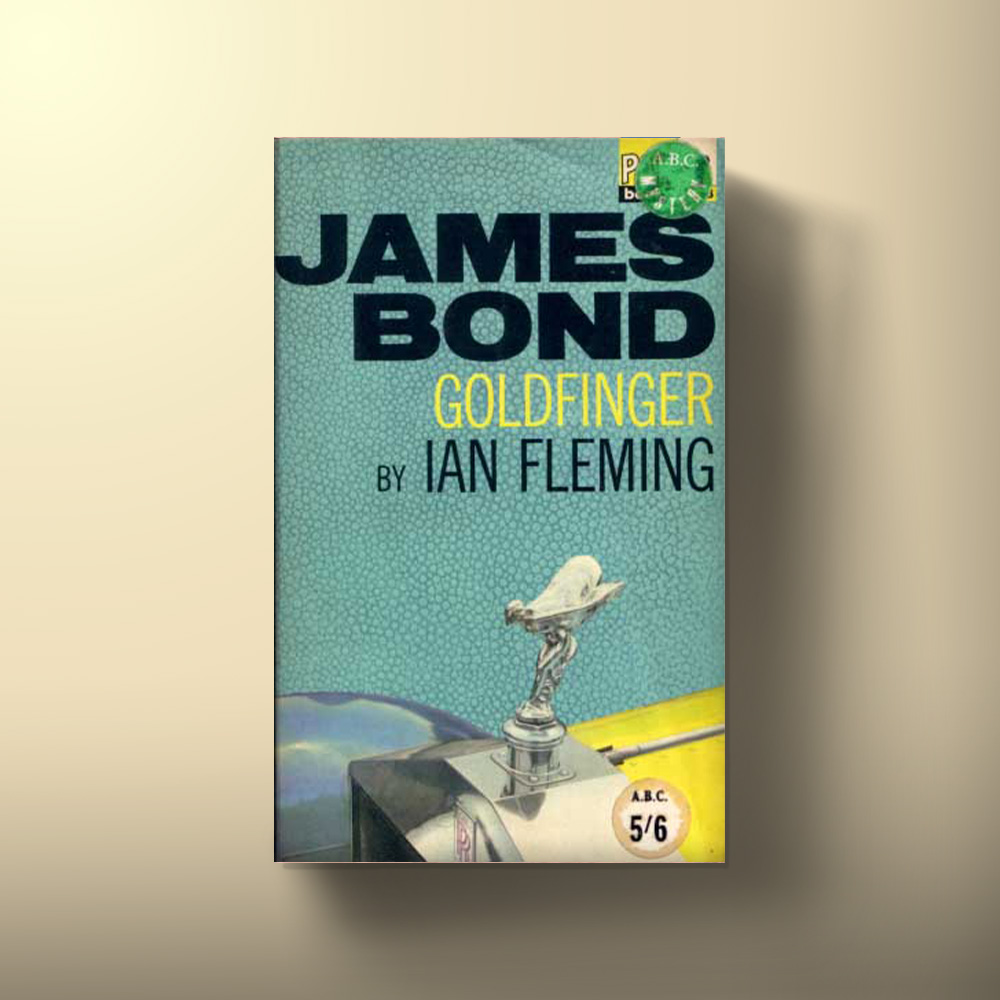
Ian Fleming’s Goldfinger is perhaps overshadowed in popular culture by the overwhelming success and iconography of the film adaptation. However, it is the novel that provided two of the greatest villains of all time in Auric Goldfinger and his henchman Oddjob, and of course one of the best Bond girls, Pussy Galore, who features in Horowitz’s Trigger Mortis. Perhaps occluded due to Gert Frobe’s excellent performance, is the fact that Auric Goldfinger’s Fort Knox plan speech was taken almost verbatim from the novel.
While her name might have raised eyebrows, Pussy Galore is in more ways than one Bond’s equal rather than a mere gender stereotype. She is a gang leader, a ‘trapeze artiste’. She is also impervious to Bond’s charms, until, as The Moneypenny Diaries authorSamantha Weinberg puts it, ‘it suited her.’ Weinberg also noted that another tough woman in Goldfinger, Tilly Masterton, finds ‘her heart beating faster for Pussy Galore than it did for 007.’These are no pallid damsels in distress.
Whereas many of Fleming’s other novels have an atavistic feel that speaks to the influences of thriller novelists of the early part of the century, Goldfinger is distinctly and unequivocally Fleming. Despite SMERSH’s existence as the omniscient threat in Goldfinger, Fleming is not bound by the Cold War or the Soviet apparatus that he so painstakingly captured in From Russia With Love, his fifth novel. The plot actually takes a back seat in Bond’s Aston Martin DB Mark III, whilst wonderful set pieces take the driver’s seat. Fleming overcomes these plot frailties by delivering memorable scenes with glorious self-indulgence and glee. Even with no hitherto interest in golf, readers cannot help but be enthralled by the gamesmanship between Bond and Goldfinger at the Royal St. Marks course.
‘As soon as Bond had hit the shot he knew it wouldn’t do. The difference between a good golf shot and a bad one is the same as the difference between a beautiful and a plain woman – a matter of millimetres.’
It is perhaps no accident that the novel is best remembered for its individual scenes, since many were ideas that Fleming had originally conceived as short stories and plot devices for other project. Since many of them did make it into the novel, Goldfinger is one of Fleming’s longest endeavours, and as often is the case, Fleming drew on personal experiences in order to create these timeless characters and events. The modernist architect Erno Goldfinger, whose buildings Fleming abhorred, lent his name to Auric Goldfinger. Alfred Whiting, the golf pro at Fleming’s beloved Royal St. George’s golf course, became Alfred Blacking, a Royal St. Marks caddy. As in Moonraker, Fleming’s familiar setting of Kent is the backdrop, for Bond’s early encounters with Goldfinger. Yet whereas Moonraker lacks some international glamour, Fleming made up for this deficiency in Goldfinger by staging the action in a number of exotic and unfamiliar locations including Miami, Geneva, and Kentucky.
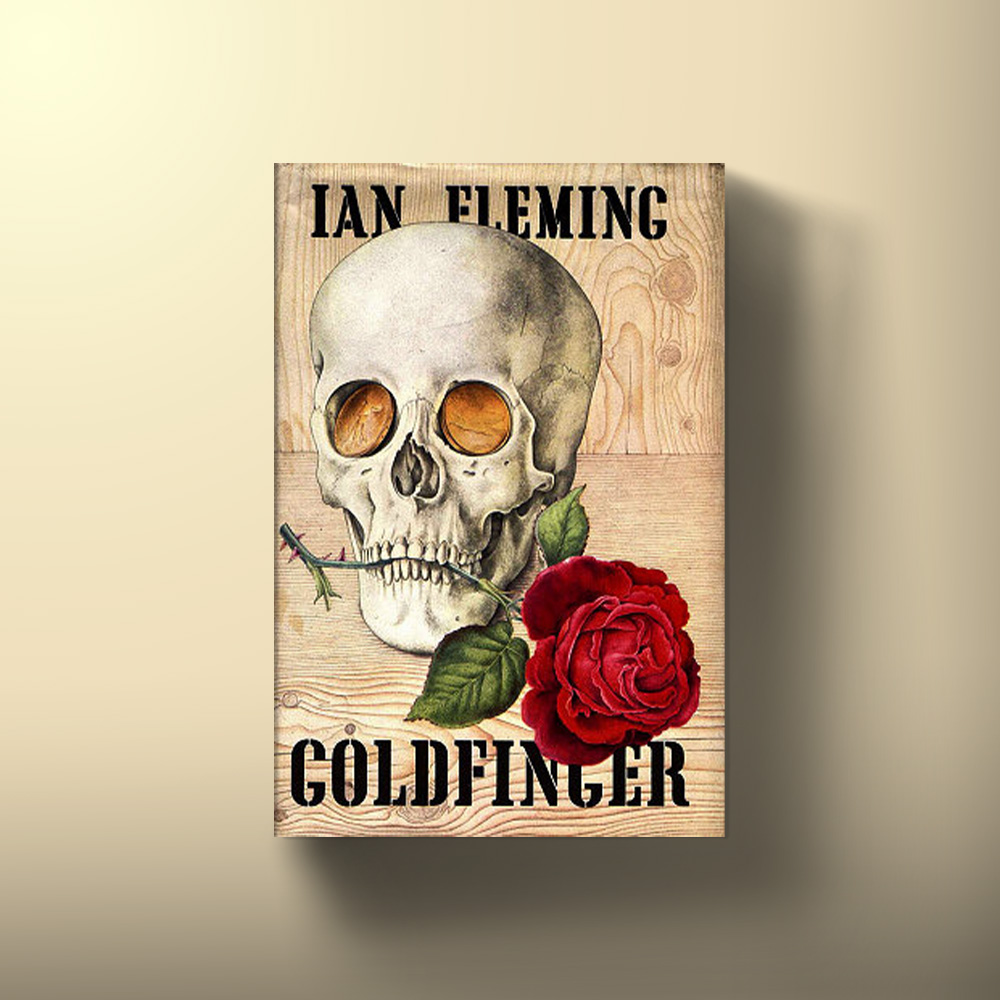
Goldfinger, published on 23 March 1959, was Ian Fleming’s 7th James Bond novel and was a great success which hit the top of the best-seller list almost immediately. Fleming was clearly proud of this effort and took on various promotional activities in order to show it off. The book also came complete with another outstanding Richard Chopping dust jacket cover, this one showing a skull with gold coins for eyes biting a rose. Chopping himself considered this piece to be his finest work in the series.
Critically, Goldfinger was better received than some of Fleming’s previous efforts. Even Anthony Boucher of The New York Times, who was Fleming’s arch-nemesis and a constant critic of James Bond, said ‘the whole preposterous fantasy strikes me as highly entertaining.’ In his 99 Novels: The Best in English Since 1939, Anthony Burgess perhaps unexpectedly selected Goldfinger as one of his honoured entrants, whileO.F. Snelling, a friend of Fleming and the author of Double O Seven James Bond: A Report, perhaps puts it best when he writes that,
‘Ian Fleming walked an extremely shaky tight-rope across a pond of very thin ice when he wrote Goldfinger. What with its characters and situations, Goldfinger is the most bizarre example in a generally somewhat extraordinary output. But it is also, I submit, at the same time one of the best.’
Goldfinger sees Ian Fleming and his most famous creation at the height of their powers. Upon publication, the book also provided a welcome sense of escapism during a particularly tense portion of the Cold War. Take the time to relive Bond’s classic adventure.
Tom Cull runs Artistic Licence Renewed. He knew iconic Bond cover artist Richard Chopping well as a child and Tom’s great grandfather hired a young Ian Fleming to work at the family bank Cull & Co. between 1933 and 1935.
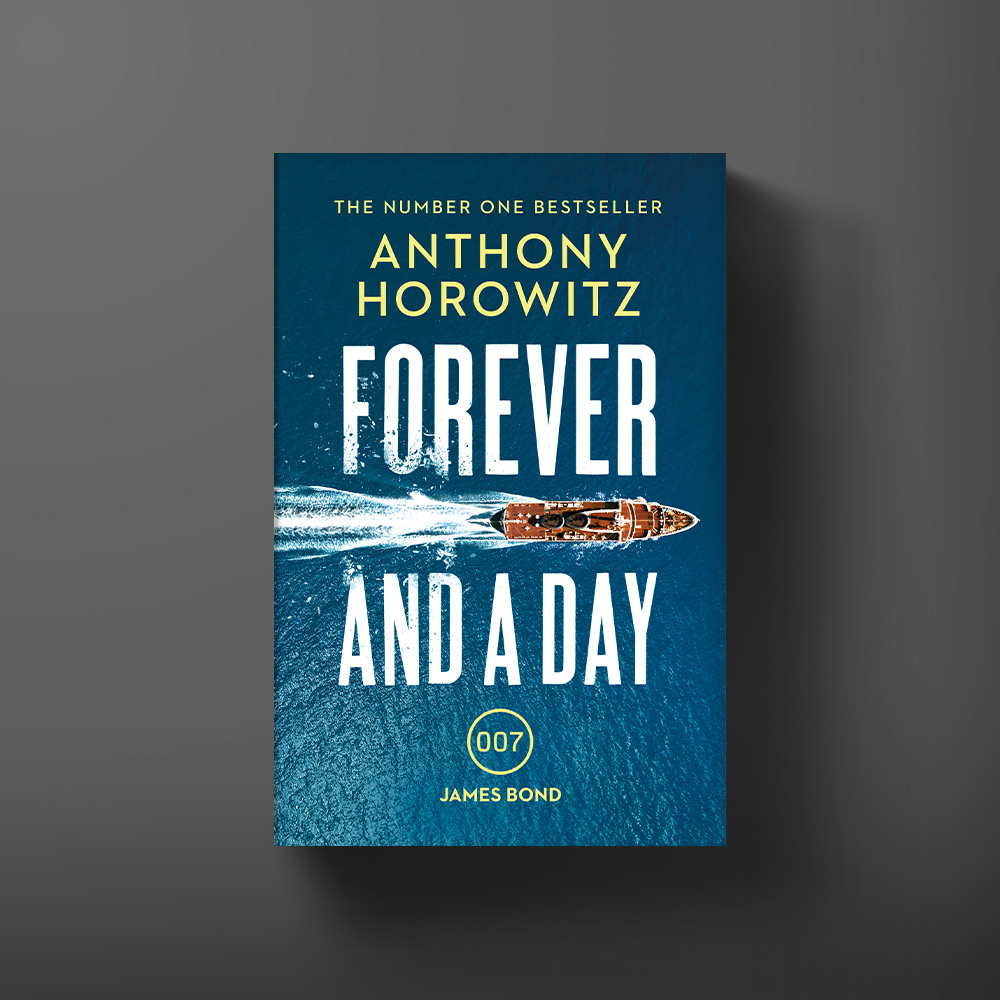
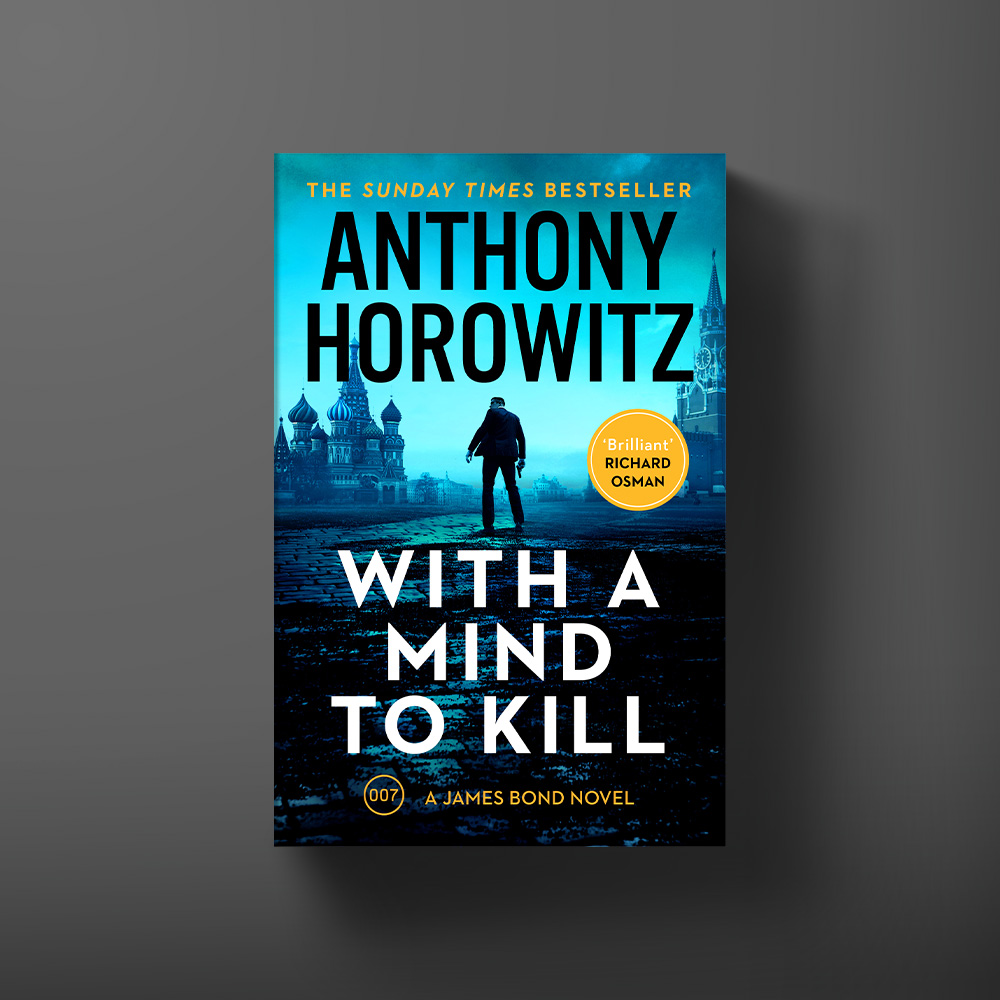
We meet British author Anthony Horowitz to talk literary inspiration, Ian Fleming and James Bond. Anthony has written three official James Bond continuation novels, Trigger Mortis (2015), Forever and a Day (2018) and With a Mind to Kill (2022), all of which draw on original material by Ian Fleming.
What was the greatest challenge involved in writing a Bond novel?
I’ve been a James Bond fan pretty much all my life and I suppose the greatest challenge, for me, was meeting my own expectations. It’s not just that he’s such an iconic character. I think people forget just how good a writer Ian Fleming was. He came up with amazing set pieces, wonderful action sequences, memorable characters. How could I possible write as well as him?
Why did you to choose to keep Bond in his original time period?
Bond represents a particular sort of man at a particular time. He is the ultimate spy at a time – the Cold War – when spying mattered most. He brings with him all the best values that we associate with the Second World War but he has the coldness and ruthlessness demanded by a new atomic age. He is an amazing character who epitomises the age he lived in, which is why, for me, it was critical to keep him in his original timeline.
How did you conjure up Trigger Mortis‘ wonderfully sinister Jason Sin and his Korean War backstory?
Getting the villain right in a James Bond novel is perhaps the biggest challenge of all. Make him too monstrous, too extreme, and you risk slipping into parody. And yet he/she has to be somehow larger-than-life. At the end of the day, what matters most, I think, is that the villain should be real and believable. It struck me that although both Hugo Drax and Goldfinger employed Koreans, there had never been a major Korean villain in a James Bond novel. Looking at the history of Korea, I stumbled upon the massacre at No Gun Ri. At that moment, I knew I had my villain, a man with every reason to hate the West.
In Fleming’s James Bond books are there any phrases you wish you’d written? Or that you feel particularly embody the spirit of a Bond novel?
There are dozens of lines and phrases that I wish I’d come up with myself. That was Fleming’s genius. The 007 designation, the licence to kill, the names of the characters (M, Miss Moneypenny), the unforgettable titles – it’s impossible to do better.
Do you have a favourite phrase/sentence of your own from Bond series?
My favourite line in Trigger Mortis – because it really does capture Fleming’s style, is the line that opens Chapter 24. ‘Rain swept into London like an angry bride.’ I’m not sure what it means. Or why it works. But when I read it, it makes me smile.
How has the process of writing Bond differed from that of your revival of another British literary legend, Sherlock Holmes?
There’s not much comparison – except that I have an equally healthy respect for Sir Arthur Conan Doyle. Sherlock is so much more distant that I didn’t feel quite so nervous writing about him. Late Victorian England is easier to characterise than the 1950s. I’d add that in the end I enjoyed writing the books equally. If you’re going to write a continuation novel, it helps to love the world into which you’ve been invited.
Which authors have influenced you the most and inspired you to become a writer yourself?
Obviously, Doyle and Fleming. I read both of them when I was a boy, dreaming of being a writer. Other influences were Charles Dickens and Tintin’s creator, Hergé.
Writer Tom Cull talks about The Man with the Golden Gun, the last of Ian Fleming’s 007 novels.
Eight months after Ian Fleming’s death, The Man with the Golden Gun was published. The birth of the final James Bond novel was difficult and its merits within the canon are still debated among aficionados.
Although Fleming had on many occasions claimed that he was finished with writing Bond books, he had completed the first draft of The Man with the Golden Gun by March 1964. After once again undertaking a Bond novel despite his rapidly deteriorating health, a word to his editor William Plomer at Jonathan Cape, rings with an eerie finality:
‘This is, alas, the last Bond and, again alas, I mean it, for I really have run out of both puff and zest.’
Along with Fleming’s reservations, the artwork for The Man with the Golden Gun also initially proved difficult. Once again Richard Chopping collaborated with Fleming on the dust jacket. Finding Scaramanga’s golden Colt .45 pistol too long to confine to a single panel, his artwork extended to the back of the jacket. Apparently, booksellers were not enamored with the experiment because it required them to open the book in order to display it properly. Now of course, it is regarded as a masterpiece of book jacket design and one of the few still affordable as a first edition.
Fleming’s Gambit
Despite this lack of “puff and zest”, the opening to The Man with the Golden Gun is as good as anything Fleming ever wrote. In summary, the opening is: fantastical, surprising, implausible, and tense. Classic Fleming.
The Service learns that a year after destroying Blofeld’s castle in Japan, Bond suffered a head injury and developed amnesia. Having lived as a Japanese fisherman for several months, Bond traveled to the Soviet Union to learn his true identity. While there, he was brainwashed and assigned to kill M upon returning to England, and during his debriefing interview with M, Bond tries to kill him with a cyanide pistol. Thankfully, the attempt fails.
The psychological tension between Bond and M is palpable in Fleming’s final Bond novel. We know that something’s not right, but we’re not entirely sure what it is until the meeting takes place and we see Bond attempt to assassinate his superior, whom he had previously “loved, honoured and obeyed.” Without question, this unspoken, taut hostility between the two men is only successful because The Man with the Golden Gun explores Bond’s psychology more than any other Bond book.
Spy-thriller writer Charles Cumming, who wrote the introduction to the 2006 Penguin edition of The Man with the Golden Gun, reflected on this opening sequence:
“Given the author’s fragile condition, The Man with the Golden Gun is a remarkable success. The opening sequence is as good as anything Fleming ever received; I particularly love Moneypenny’s ‘quick, emphatic shake of the head’ as she desperately tries to warn Bill Tanner that something is amiss with Bond.”
After recovering from the episode, Bond is dispatched to Jamaica to assassinate Francisco Scaramanga, a.k.a., The Man with the Golden Gun:
“‘Bond was a good agent once,’ said M. ‘There’s no reason why he shouldn’t be a good agent again.’”
The Golden Misfire?
Fleming died before the manuscript could go through the usual process of a second draft and revisions. If Fleming had had his druthers, he might have delayed the publishing of The Man with the Golden Gun, as Fleming biographer Andrew Lycett stated:
“He hoped he might be able to rework it when he was in Jamaica the following spring. But Plomer disabused him of that idea, telling him that the novel was well up to standard.”
Kingsley Amis, a confirmed Fleming fan, was asked for his opinion of the manuscript, but it’s debatable how many of his suggestions, if any, were used. “No decent villain, no decent conspiracy, no branded goods…and even no sex, sadism or snobbery” were just some of Amis’s objections. His main criticisms concerned Scaramanga, whom he labeled a “dandy with a special (and ineffective) gun”. To the celebrated novelist this seemed a bit thin considering Fleming’s usual prowess for creating well-drawn and memorable villains. Amis was also concerned with the lack of what he called ‘The Fleming Sweep,’ Fleming’s signature use of rich detail.
With more hindsight, Amis tempered his earlier criticisms of The Man with the Golden Gun in a later collection of essays entitled What Became of Jane Austen. According to Amis, there is no doubt that the lack of follow-up on plot points, such as why Scaramanga hires Bond as his trigger-man, is due to an uncharacteristically unconfident Fleming. Amis suggests that the Bond-as-trigger-man idea might be the responsibility of “an earlier draft perhaps never committed to paper, wherein Scaramanga’s hiring of Bond is sexually motivated”. Amis goes on to muse that Fleming could have been in critical retreat after too many bashings, and chose not to pursue this idea. However, according to William Plomer in Andrew Lycett’s biography of Fleming, he “can’t think that Ian had any qualms about ‘prudence.’”
Part of Amis’ ire was the result of holding Fleming to such a high standard, and Amis maintained that beneath all the dash and flair (and plot inconsistencies), there was “formidable ingenuity and sheer brainwork” in Fleming. I tend to agree, and if The Man with the Golden Gun were to come out today by a new thriller writer, it would likely receive an overwhelmingly positive reaction. However, in the context of Fleming’s oeuvre and his standing with the critics of his day, The Man with the Golden Gun never stood a chance.
Yet despite all the negative criticism at the time, history has been a little kinder. Of late, The Man with the Golden Gun has undergone critical reappraisal, with acclaimed novelist and Bond continuation author William Boyd arguing for the book as one of Fleming’s “realistic” novels (rather than “fantastical”) in the introduction to the 2012 UK edition published by Vintage.
“Fleming’s Bond novels are full of implausibility and coincidences and convenient plot-twists – narrative coherence, complexity, nuance, surprise and originality were not aspects of the spy novel that Fleming was particularly interested in, and The Man with the Golden Gun is no exception. And indeed Scaramanga’s eventual drawn-out demise is almost low-key, by Fleming’s standards, and as well written – in a brutal, deadpan sense – as anything Fleming achieved.”
Charles Cumming has even better things to say about Scaramanga:
“When 007 and Scaramanga are sizing one another up at the hotel, we are treated to dialogue worthy of Raymond Chandler.”
The Final Curtain
It is apparent that Fleming’s work rate and ingenuity were failing as we witness the end of him and his creation in The Man with the Golden Gun; a novel filled with unintended verisimilitude. After creating and defining a genre, it was mission accomplished for Fleming and Bond well before this novel and Fleming’s old enemy – boredom – was lurking in the wings years before the first sentence of The Man with the Golden Gun had been written.
‘[Bond] decided that he was either too old or too young for the worst torture of all, boredom, and got up and went to the head of the table. He said to Mr. Scaramanga, 2I’ve got a headache. I’m going to bed.”‘
The Man with the Golden Gun is also fittingly about Fleming’s relationship with his beloved Jamaica and the disintegration of British colonialism. Bond and Felix Leiter are awarded the Jamaican Police Medal for “Services to the Independent State of Jamaica”, which is a blunt nod to the end of British imperialism in Jamaica in 1962. In a final effort to hang on to the old vestiges of the British Empire, Fleming takes potshots at the new world power, the United States, and the perceived “Americanization” of the Cold War West. In his recent book Goldeneye: Where Bond Was Born, author Matthew Parker underscores these jabs at America by highlighting how the American-accented Scaramanga is depicted as a keen promoter of tacky Americanized resort hotels with “tropical jungle” dining rooms.
As if he were well aware that he had one figurative bullet left in the chamber, Fleming seized the chance to set the record straight about his creation in The Man with the Golden Gun. Namely, Fleming set out to dispel the notion of Bond as a snob by offering him the ultimate in status symbols – a Knighthood from the Queen. Bond declines, explaining to M: “I am a Scottish peasant and will always feel at home being a Scottish peasant.” One could read this as Fleming’s grand send-off to his critics, or one could see it as Bond’s defiance alone. Either way it presents the literary end for Fleming’s Bond and the very real finale for Fleming himself.
Tom Cull runs Artistic Licence Renewed. He knew iconic Bond cover artist Richard Chopping well as a child and Tom’s great grandfather hired a young Ian Fleming to work at the family bank Cull & Co. between 1933 and 1935.
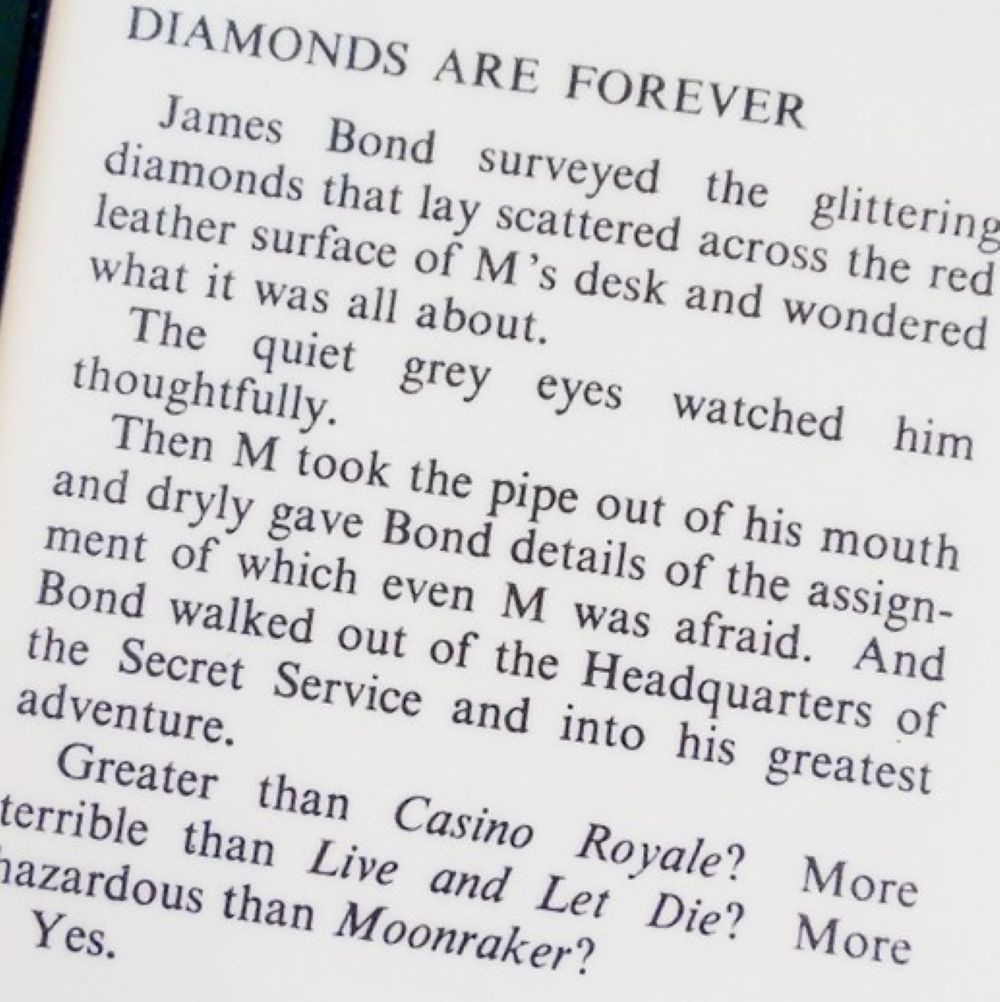
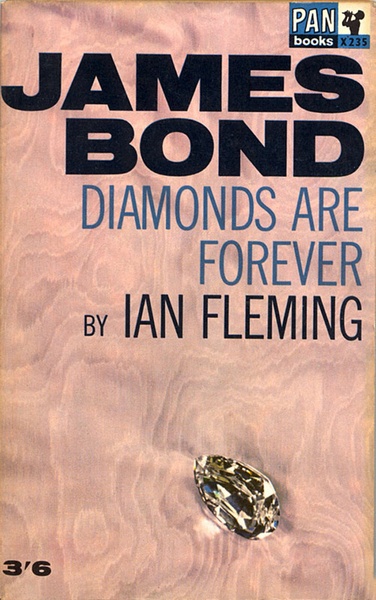
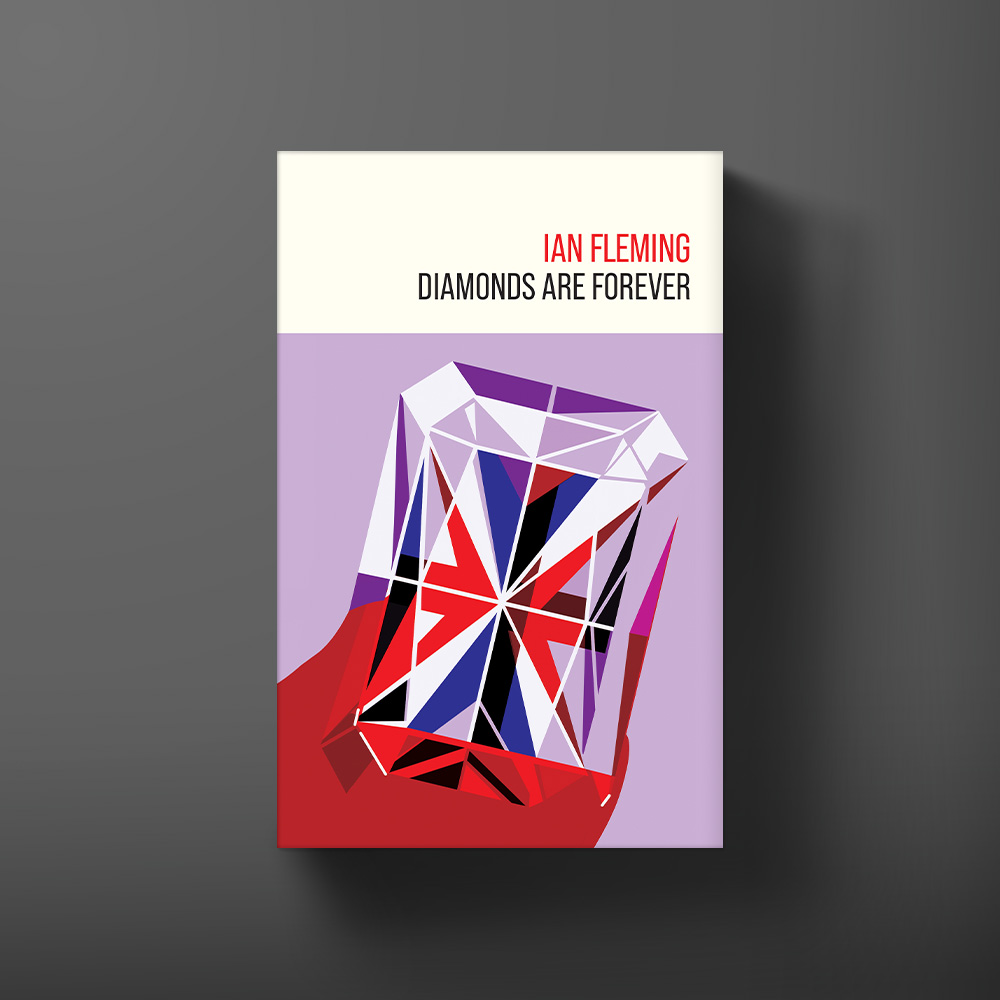
Writer Tom Cull takes us on a deep dive into Ian Fleming’s trans-continental thriller Diamonds Are Forever.
‘Bond put down the piece of quartz and gazed again into the heart of the diamond. Now he could understand the passion that diamonds had inspired through the centuries, the almost sexual love they aroused among those who handled them and cut them and traded in them. It was domination by a beauty so pure that it held a kind of truth, a divine authority before which all other material things turned, like the bit of quartz, to clay. In these few minutes Bond understood the myth of diamonds, and he knew that he would never forget what he had suddenly seen inside the heart of this stone…’
Ian Fleming said of Diamonds Are Forever in an interview with the Daily Express in 1956, ‘I’ve put everything into this except the kitchen sink. Can you think of a plot about a kitchen sink for the next one? Otherwise I am lost.’
And indeed he did. Whereas some of his books relied heavily on his imagination, this vastly under-rated fourth novel published in 1956, required lots of first-hand research and travel. Fleming’s twin love of travel and ‘things’ were indulged to their fullest potential in this novel. The central plot revolved around diamond smuggling – a hot topic at the time – and like many, he was enchanted by their lustre, permanence and chatoyance:
‘When jewels have chatoyance the colour in the lustre changes with movement in the light, and the colour of this girl’s eyes seemed to vary between a light grey and a deep grey-blue.’
He was also fascinated in the power and allure of these jewels that could provoke people, even of good standing, to smuggle them. In his book The Man With The Golden Typewriter, Fergus Fleming describes how in 1954, while coming home from Jamaica, his uncle saw an advertisement in American Vogue that read ‘A Diamond is Forever’. He reported on this for one of his Atticus columns in The Sunday Times commenting in his piece upon the fifth largest diamond ever recorded at the time on June 20th.
Fleming’s enthrallment with diamonds would need to be tied to a thrilling narrative to become the core of the new Bond novel; one possible source of inspiration for the plot was the true story of a former geologist for De Beers who, while prospecting in a forbidden zone in Namibia, had managed to hide a container of some 1400 diamonds. On December 21, 1952, a small aircraft landed on the diamond-strewn beach in the forbidden zone, whereby the geologist got out of the plane and retrieved the cache of diamonds that he had squirrelled away six months earlier. The geologist and his pilot were spotted and arrested.
The opening chapter of Diamonds Are Forever– ‘The Pipeline’ – is very reminiscent of this true-life event and brilliantly describes the details of a smuggling operation conducted by the Spang brothers. As Fleming later told the Daily Express in 1964, “I always study the best authorities on a particular subject.” These authorities included De Beers themselves and former head of MI5 Sir Percy Sillitoe of the International Diamond Security Organisation, who later would help advise him on his non-fiction work The Diamond Smugglers. De Beers allowed him to watch the cutting and sorting of the diamonds, and Sillitoe’s name would make it into the novel as M tells Bond in chapter 2, ‘”You probably saw in the papers that De Beers took on our friend Sillitoe when he left MI5, and he’s out there now, working in with the South African security people.”’
After confining Bond to a domestic English setting in Moonraker, both Fleming, Bond, and apparently their readers, were ready for some foreign travel. What better excuse for Fleming to visit his old Eton chum Ivar Bryce? Bryce who was now in Vermont at Black Hole Hollow Farm with his new wife, the millionairess Josephine Hart.
Bryce had played an important role in Fleming’s life as a friend, confidante and business partner, while his regular summer excursions to this idyllic spot in the Green Mountains of Vermont gave Ian the kind of relaxation and adventure that fed his imagination. He and Bryce would take road trips in Bryce’s Studillac car to various places, notably across the border to New York state to Saratoga and the famous racetrack and mud baths. The resort was a favourite of former President Franklin D. Roosevelt known for its healing properties that helped his polio, as Fleming alludes to in his novel: ‘People drift up to take the waters and the mud baths for their troubles, rheumatism and such like, and it’s like any other off-season spa anywhere in the world.’
In chapter 10 entitled ‘Studillac to Saratoga’, Fleming beautifully describes the atmosphere at the racetrack, ‘It’s probably the smartest race-meeting in America, and the place crawls with Vanderbilts and Whitneys.’And the scenes with Bond and Felix Leiter could well be describing Fleming and Bryce.
The American artist and literary Bond fan Gerald Wadsworth commented on the accuracy of the US setting.
‘When Bond and Felix Leiter drive up to Saratoga Springs in the Studillac, Bond is treated to an exercise in American car culture – a black Studebaker convertible with a Cadillac engine, special transmission, brakes and suspension, designed by Raymond Loewy, and could run circles around Corvette’s and Thunderbird’s of the day. Their route to Saratoga was detailed, not unlike when Bond would travel through Europe. Roads, highways, turnpikes and various elements of local laws would be routinely described to the reader.’
Another one of their gang was Ernie Cuneo, whose name features heavily as an undercover cab driver, Ernie Cureo. No argument who this was based on. Famous gangster Lucky Luciano also gets a mention, who later featured again in Fleming’s Thrilling Cities travelogue.
Fleming’s fascination with American gangster culture would feature in a few of his novels (Goldfinger, for example), but in Diamonds Are Forever, he placed it at the fore in the form of the Spang brothers, Wint and Kidd and Shady Tree. The setting, style and tone of this novel reads more like one of Raymond Chandler’s hard-boiled detective novels; indeed, as the great man noted himself, Fleming’s proficiency for setting was one for his most unique strengths, ‘Fleming can go to a town for the background of a new novel, and in three days he will have mapped up every detail of that town.’
Fleming was not immune from criticism however, and his friend and peer Chandler knowingly jibed Fleming for forgetting to ‘have a glass of iced water on the table while he wrote about Las Vegas.’In Chandler’s well-qualified review in The Sunday Times, he criticised the book for a certain amount of padding, which Fleming disagreed with: ‘I find technical details of a place like Las Vegas so fascinating that I put them in over-generously.’ He went on. ‘I quite admit to my tendency of overloading my books with Baedekerish information, but Chandler is wrong in thinking this was ‘padding’ which I abhor in other writers.’
Chandler did however finish his review with a resounding endorsement of Fleming’s ability to please his American audience, saying in the Sunday Times on 25th March 1956,
‘I have left the remarkable thing about this book to the last. And that it is written by an Englishman. The scene is almost entirely American, and it rings true to an American. I am unaware of any other writer who has accomplished this.’
Finally, and not least, is the wonderful Tiffany Case (a nod to Tiffany & Co. presumably), who is one of the very few women that earns an extended stay at Bond’s Chelsea flat. A diamond in the rough herself, if you will forgive the pun, Tiffany has a troubled past and gets mixed up with the Spang brothers in their diamond smuggling racket. Tiffany and Bond are kindred spirits in many ways; loners who struggle with attachment which leads to some particularly reflective conversations about love and marriage. Fleming’s writing here perhaps reflected by his own cynical views on matrimony by this time, a few years into his own marriage with Ann Fleming.
“Are you married?” She paused. “Or anything?”
“No. I occasionally have affairs.”
“So you’re one of those old-fashioned men who like sleeping with women. Why haven’t you ever married?”
“I expect because I think I can handle life better on my own. Most marriages don’t add two people together. They subtract one from the other.” Tiffany Case thought this over. “Maybe there’s something in that,” she said finally. “But it depends what you want to add up to. Something human or something inhuman. You can’t be complete by yourself.”
Diamonds Are Forever is unique in the Bond canon as it is one of the most true to life stories Ian Fleming wrote. Take the road trip with him once again.
Tom Cull runs Artistic Licence Renewed. He knew iconic Bond cover artist Richard Chopping well as a child and Tom’s great grandfather hired a young Ian Fleming to work at the family bank Cull & Co. between 1933 and 1935.
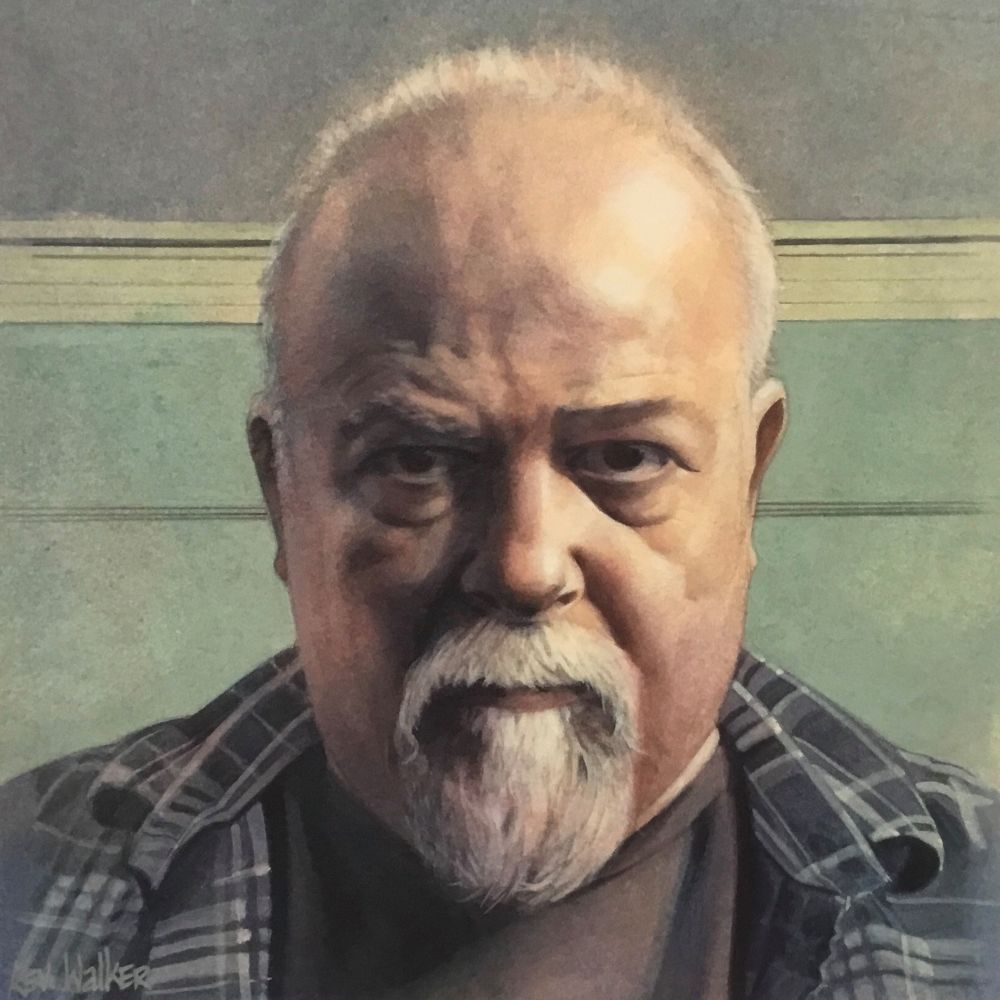
In 2005, Kevin Walker was commissioned to draw the character of a 13-year-old James Bond for Charlie Higson’s first Young Bond adventure, SilverFin. He went on to illustrate a graphic novel of SilverFin in 2008 and cover art for the Young Bond books in the USA. We catch up with the British comic book artist to talk about his process and experiences in the Young Bond world.
Have you always been a James Bond fan?
Absolutely, Bond is one of those iconic characters, you can’t miss. I came to the novels quite late, but I certainly watched all the movies from a young age. Young Bond was my chance to become a fairly prominent part of the whole James Bond universe.
Which is your favourite Young Bond book?
My favourite of the series is Charlie Higson’s Double or Die. I love the whole setting, with the analytical engine and the communist enemy, the whole feel of it being like one long chase in grim weather. It’s the one where James trashes his Aunt Charmian’s Bentley.
Where did you get your inspiration for the James Bond Origin comic covers?
I can’t take all the credit for that. I was asked to come up with Bond pin-ups that were reminiscent of WWII propaganda posters, and I didn’t want to go too close because the image still has to work as a cover. That’s how I came up with the idea of using the same formal layout design on each illustration.
What’s your process for creating a cover and how does it differ to illustrating comic strips?
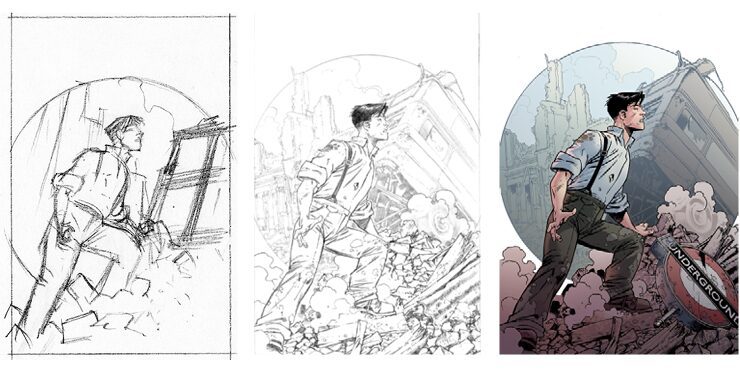
It’s actually the same process: rough sketches, finished pencils, inks and colours, with consultation in between each step. The difference is you don’t have to worry about continuity and narrative flow. You’re trying to tell a story in a single image. You can see the evolution of a piece of cover art here.
Which Young Bond action scene did you most enjoy illustrating?
It’s where James confronts Mimic in the slum apartment, from Steve Cole’s Red Nemesis.
Where do you work?
I have a converted attic where I’ve been working for the last 10 years. A comfy chair and a table pitched at just the right angle, good lighting, a fan in summer and a heater in winter. I used to be able to work with music, but now I can’t. Any repetitive beat and I stop working and start listening to the music instead. I stream a lot of stuff – documentaries, any weird drama that I can listen to in the background while I work.
Who inspired you to become and artist?
The ones that made me want to become an artist in the first place were people like Ralph McQuarrie, Chris Foss, just masses of influences from all over the place. When you realise, as a teenager, that there are plenty of people making a living at it, you have to be single-minded, stubborn and a bit selfish to focus on doing it, despite all the naysayers that tell you you’ll never get a job in art… like my art teachers when I was 12 (and I have that in writing).
What advice would you give to anyone wanting to become a full-time artist?
The trick is to keep doing the things that make you happy, always keep looking, and don’t be afraid to try new things.
Kev is known for his work on 2000AD and Warhammer comics, Marvel and Magic: The Gathering. Find out more here.
Writer Tom Cull explores the real heroes behind some of Ian Fleming’s most admired characters.
Like many authors before him, Fleming took ideas for his James Bond novels from the world around him and the people he knew. The plots were often heightened re-imaginings of his wartime experiences or altered versions of real-world intrigues he’d reported on as a journalist. He often drew upon the names of his real-life acquaintances when christening his characters: from Felix Leiter whose name is inspired by combining the middle name of Fleming’s school friend Ivar Felix Bryce with the surname of their good friends Tommy and Oatsie Leiter, to Mary Trueblood whose name is a nod to Ian Fleming’s secretary at the Sunday Times, Una Trueblood. Many of the female characters in Fleming’s stories have intriguing links to people Fleming knew and many could claim to have been immortalised under the stroke of Fleming’s typewriter keys.
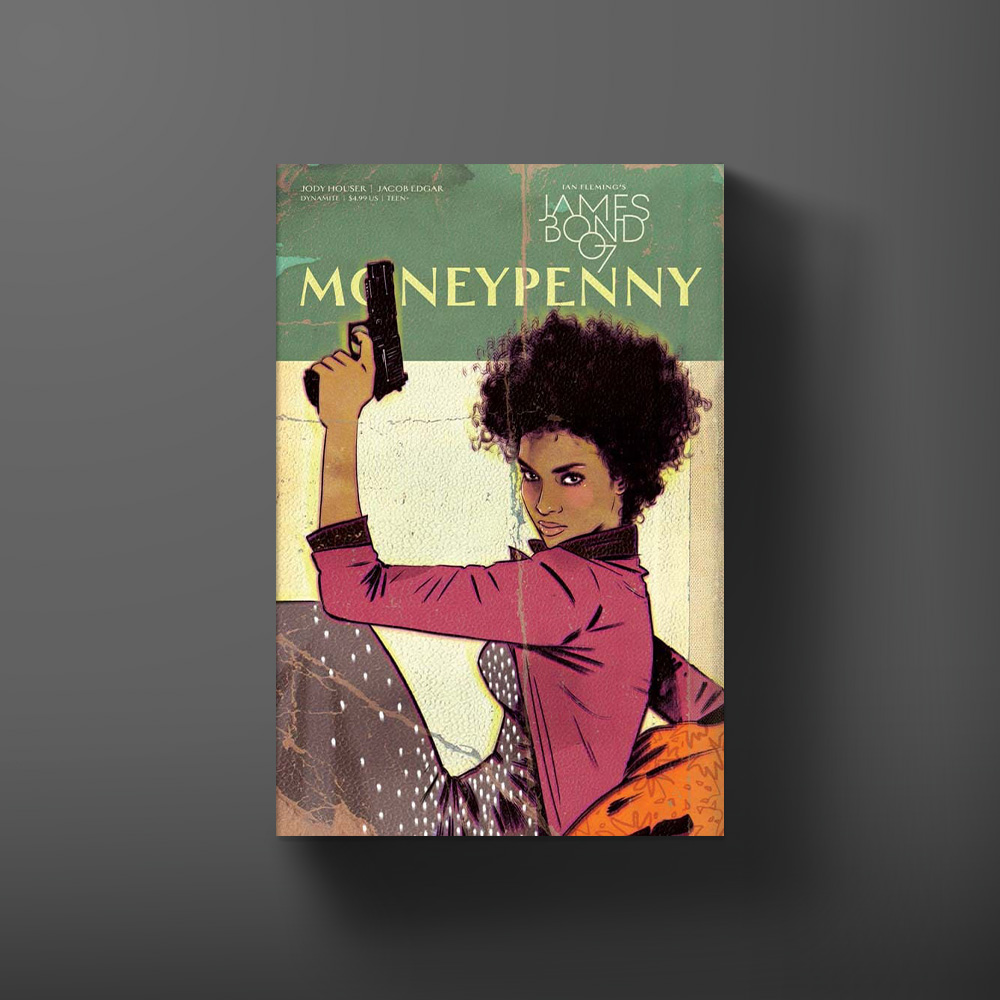
Miss Moneypenny
‘Moneypenny screwed up her nose. ‘But, James, do you really drink and smoke as much as that? It can’t be good for you, you know.’ She looked up at him with motherly eyes.’
Thunderball
As part of the Special Operations Executive (SOE) during the Second World War, Vera Atkins is a strong candidate as an inspiration for Miss Moneypenny. Atkins would visit Room 055a in the Old Admiralty Building down the corridor from Fleming’s office and he would have known of her. She joined Section F (France) in April 1941 and oversaw the secret preparation of more than 400 agents, seeing off most of them in person. Vera was most intimately associated with the female agents whom she called her ‘girls’, among whom were Noor Inayat Khan and Violette Szabo.
Many who worked with Atkins could find her intimidating and protective of her operatives but she commanded the respect of her superiors. The atmosphere at Orchard Court, one of the SOE headquarters, was akin to a private members’ club, with women smoking at their desks and handsome men passing through and breaking into French. They were only known by their aliases.
Another inspiration for Moneypenny is hinted at in an early draft of Casino Royale, where M’s assistant is named Miss ‘Petty’ Pettaval, no doubt borrowed from Kathleen Pettigrew, the Personal Assistant to the Chief of MI6, Stewart Menzies.
Fleming had many loyal secretaries throughout his career and greatly admired their skill and dedication. At The Times, it was Joan Howe who typed the manuscript of Casino Royale. Others who played their part included Beryl Griffie-Williams and Una Trueblood, but perhaps Jean Frampton was the most significant. Letters between Fleming and Frampton appeared in 2008 at Duke’s auctioneers in Dorset. Amy Brenan of Duke’s comments
“You can look on Mrs. Frampton as Ian Fleming’s Miss Moneypenny because he really does seem to rely on her. She was the first person to read the books and the collection is interesting because it details how the James Bond books were put together in the early 1960s.”
Mary Ann Russell
‘Taking these people on all by yourself! – It’s showing off.’
From a View to a Kill
In the short story From a View to a Kill, the character Mary Ann Russell is an agent for Section F who saves Bond’s bacon against the Russian military intelligence agency. Her name is likely to have been inspired by a woman who played a significant role in Fleming’s life, Maud Russell. Her granddaughter Emily Russell has recently edited a revelatory collection of Maud’s war-time diaries, and explains:
‘Maud and Ian met in late 1931 or early 1932 and they quickly became close friends. Through Maud and her husband Gilbert Russell, Ian met a number of influential political figures during the 1930s and also obtained contacts in Military Intelligence. After Gilbert died in May 1942, Ian got Maud a job at the Admiralty. From 1943, she worked in the Admiralty’s Naval Intelligence Division (NID) 17Z, a section led by Donald McLachlan that was dedicated to generating white, grey and black propaganda from naval intelligence to undermine enemy morale.’
Maud shared the same zeal for her work at the NID as Fleming did, as she notes in her diary:
‘London, Thursday 10 December 1943 — On Monday the Scharnhorst sinking kept us very busy. Only Mc., C.B. & I. [Ian Fleming] in the room. Then came the news of the sinking of the blockade runner and more excitement. Only Mc. reacts as I do, froths and fizzes over with inward excitement. I. of course is the same as Mc. and I – tension, excitement, hammering energy.GR’
Vesper Lynd
‘”People are islands”’ she said. “They don’t really touch. However close they are, they’re really quite separate.”’
Casino Royale
A popular suggestion for the inspiration behind Vesper Lynd was the SOE agent Krystyna Skarbek, also known as Christine Granville. Polish by birth, she was recruited by the SOE, won a George Medal and was reputedly Churchill’s favourite spy.
Granville was remarkably beautiful and she stole, and broke, many hearts. She was certainly known to Fleming who briefly mentions her in his non-fiction book The Diamond Smugglers. The rumour that Ian Fleming had an affair with Christine Granville is unfounded as her biographer Clare Mulley and writer Jeremy Duns have explored. Christine Granville survived the War but was tragically stabbed by a love-crazed stalker in 1952, aged 44.
There were other members of the SOE who Fleming would have encountered during his time working with Section 17 in Naval Intelligence, where he was responsible for coordinating intelligence between divisions. Violette Szabo was recruited by the SOE at 23, as a war widow with a one year old child. She was dropped into France in 1943 and bravely served the war effort, in one instance fending off an SS Panzer division with a Sten gun before collapsing exhausted. After being captured, Szabo, was shot along with fellow agents Denise Bloch and Lillian Rolfe at the Ravensbrück concentration camp in northern Germany. Szabo’s defiance was greatly admired by her fellow prisoners and she was one of only four women to receive a posthumous George Cross Medal.
Whatever the truth behind the fiction, the women Fleming encountered during his time in Naval Intelligence were truly courageous. They faced daily dangers and risked everything to help secure the freedom of Europe. Fleming was inspired to write about many interesting characters from his real life, from naming Bond’s mother Monique after a former fiancée, to calling Bond’s Secretary Loelia Ponsonby after the Duchess of Westminster. We may never know the full extent of the real people who lend parts of themselves to the James Bond story, but it’s certainly inspiring to learn more about these real-life heroes.
Tom Cull runs Artistic Licence Renewed. He knew iconic Bond cover artist Richard Chopping well as a child and Tom’s great grandfather hired a young Ian Fleming to work at the family bank Cull & Co. between 1933 and 1935.
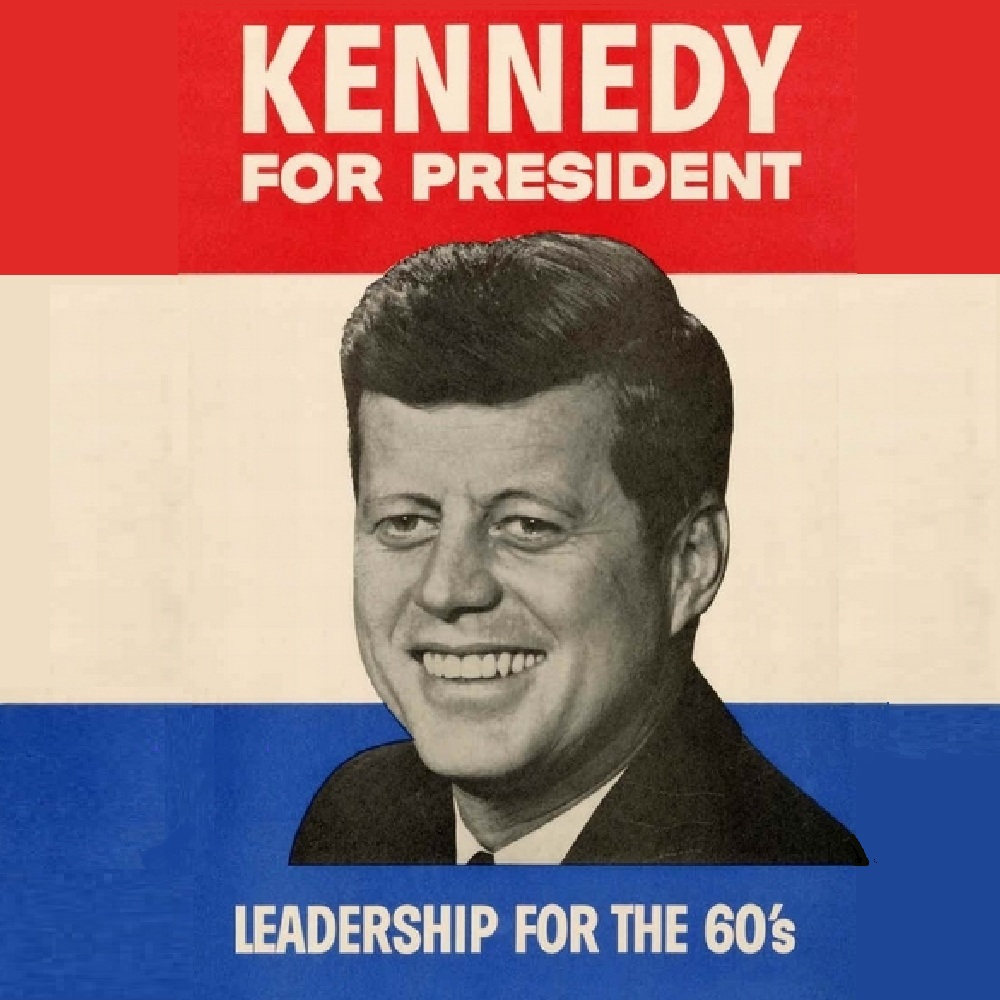
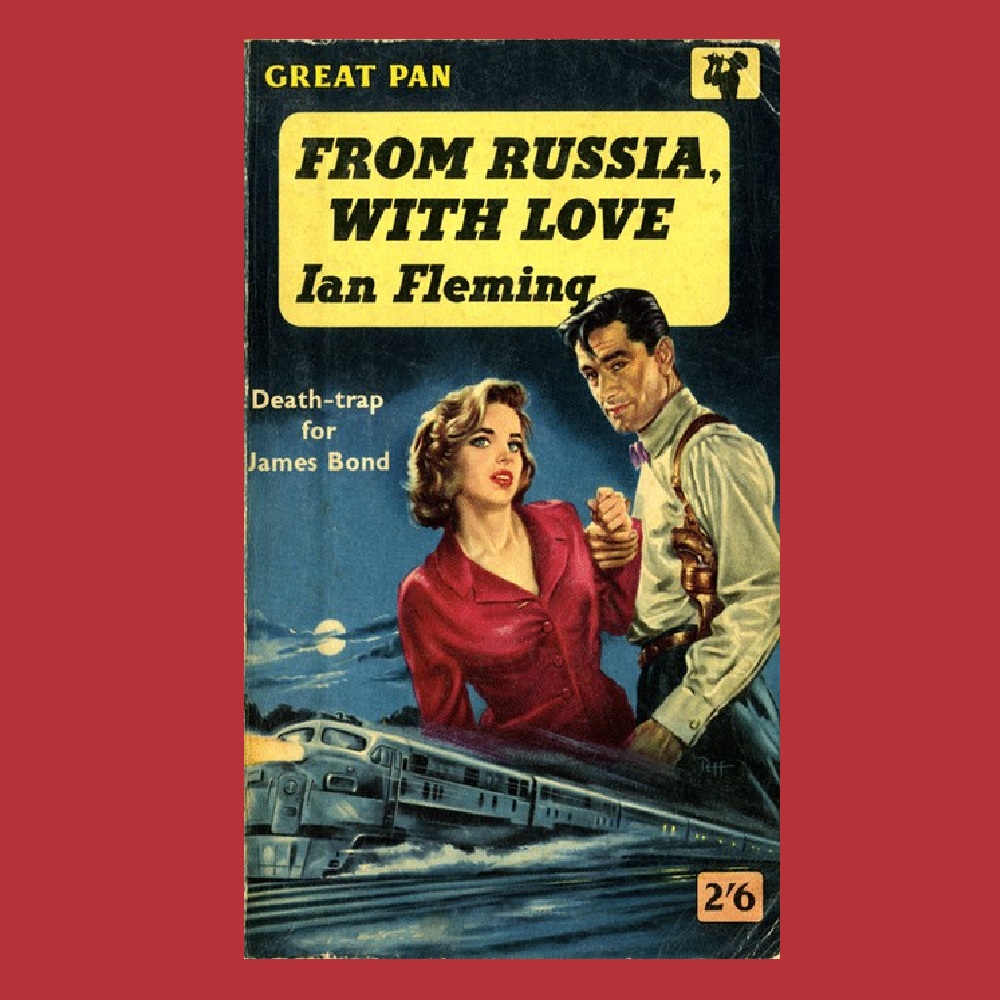
Author, screenwriter, filmmaker and Bond aficionado, John Cork investigates how From Russia, with Love came to be on President John F. Kennedy’s bedside table and went on to appear on his top-ten book list.
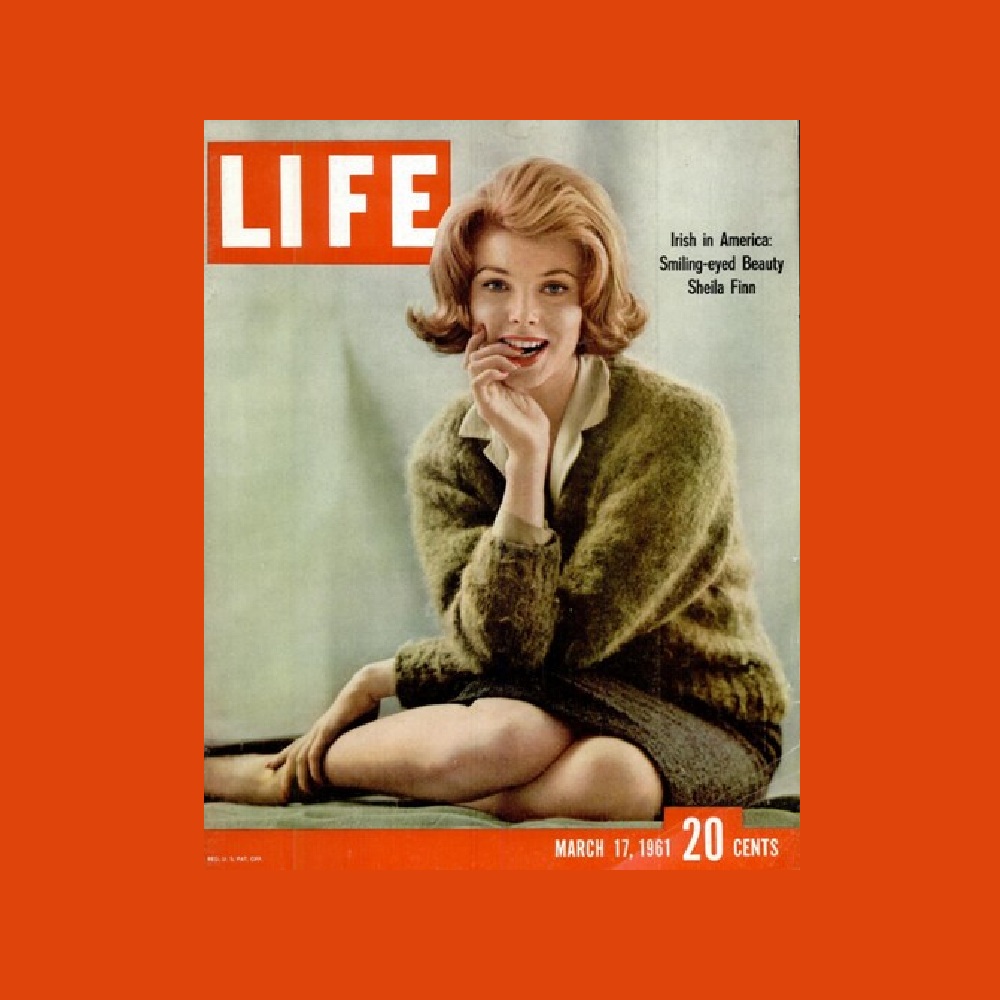
From The President’s Voracious Reading Habits,LIFE magazine, 17th March 1961:
‘Kennedy has confined himself mostly to nonfiction, but like many of the world’s leaders he has a weakness for detective stories, especially those of British author Ian Fleming and his fictitious undercover man, James Bond.’
The story has been told far and wide. In the late 1950s, Ian Fleming’s James Bond novels sold well in the UK, but in the massive US market, sales barely made a ripple. Not one single Bond title generated a second printing in either hardback or paperback in the United States. All that started to change in March 1961 when LIFE magazine published a list of the president’s ten favourite books, naming From Russia, with Love as one of them. It was, by far, the highest profile endorsement for which an author could hope.
How did From Russia, with Love get on the president’s list? Like so many things associated with 007, it happened with the help of a remarkable and strong woman.
She was born Marion Oates in Montgomery, Alabama, the Cradle of the Confederacy. Marion came from obstinate and ambitious stock. Her grandfather, William Oates, once fractured a man’s skull in a fight. He went on to be deemed a Confederate Civil War hero, having led a charge up Little Round Top during the Battle of Gettysburg and then losing an arm at Fussel’s Mill. He returned to Alabama, was elected to Congress and served as a combative one-term Governor.
Raised to be a society hostess, Oatsie (as she was known) married Thomas Leiter in 1942. Tommy was the grandson of one of Chicago’s great real estate barons and two of Tommy’s aunts married British nobility. Tommy’s father once attempted to corner the U.S. wheat market, which is a fine gamble as long as one has family that can pay off the $10,000,000 of debt when it all goes pear-shaped. The night before Oatsie’s wedding, legendary Alabama-born actress Tallulah Bankhead explained the finer points of intimate marital relations to her. That was Oatsie’s world, and it was quite a place.
Oatsie and Tommy Leiter took up residence in ‘a most glorious apartment’ built inside the converted stables of the famed Leiter family mansion near Dupont Circle in Washington.
‘I knew both Ian (vaguely) and Ivar [Bryce – a close friend of Ian’s] in Washington during the Second World War,’ she recalled in 2000. After the war, Oatsie and Tommy started vacationing in Jamaica for what was known then as ‘the season.’ ‘We’d be there three months a year. Which was lovely. Really lovely.’ During her stay in 1949, she was dramatically re-introduced to Ian Fleming.
‘I’d gone to a party, and a great friend of mine was very much in love with Ian, or thought she was. And he was treating her in the most atrocious way. And with the arrogance of youth, I walked up to Mr. Fleming when I was introduced to him, and said, “Mr. Fleming, I consider you’re a cad.” And he looked at me and said, “Mrs. Leiter, you’re indeed right. Shall we have a drink on it?”’
They did and became fast friends. ‘Ian really had enormous charm…he was irresistible as a companion, as a guest, as a friend. And he was an extremely good friend.’
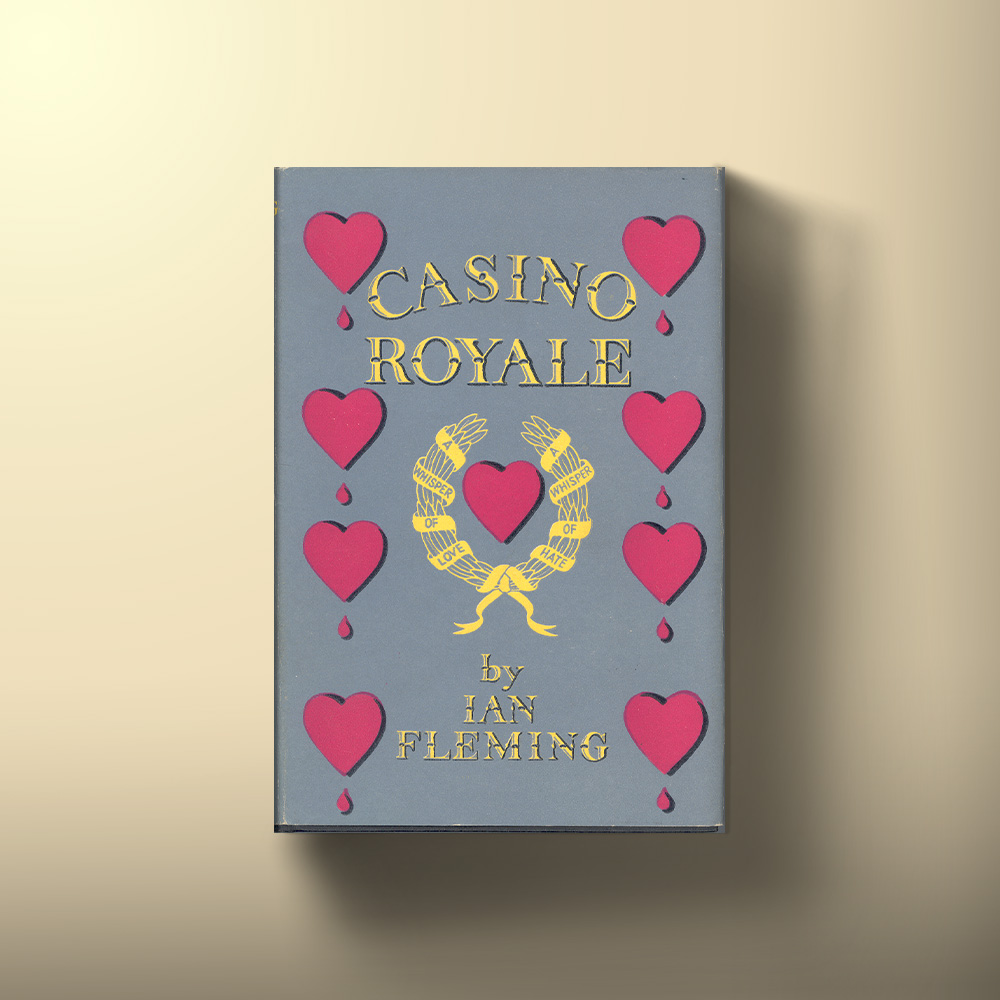
In the first James Bond novel, Casino Royale, Fleming borrowed Tommy Leiter’s last name for Bond’s CIA accomplice, Felix. Naturally Fleming sent Oatsie and Tommy a copy and Oatsie, never one to mince words, quite enjoyed the book.
Oatsie and Tommy maintained homes not just in Washington D.C., but in Aiken, South Carolina and Newport, Rhode Island. Newport also happened to be where Jacqueline Bouvier grew up at Hammersmith Farm. After marrying John F. Kennedy, a newly elected young senator from Massachusetts, Jackie and JFK spent summer vacations there. Oatsie knew JFK and Jackie socially. In 1954, JFK called up Oatsie. ‘Oates, I’m sick,’ she recalled Kennedy telling her. ‘“Have you got anything to read? I can’t find anything in this house that I think is possible to read.” And I said, “Yes, do you like spy stories?”’
She sent over her copy of Casino Royale. ‘He was crazy about it. And he said, “If you get another one at any point, let me know.”’
Jackie Kennedy, on her husband’s recommendation, also took to reading the Bond novels, and she made another important connection for Ian. ‘I was introduced to Fleming’s books,’ noted CIA Director Allen Dulles, ‘by Mrs. Jacqueline Kennedy herself. “Here is a book you should have, Mr. Director” she said.’ Dulles went on to praise From Russia, with Love as ‘one of the best of Fleming’s thrillers.’
In March, 1960, Ian Fleming arrived in Washington D.C. He was staying as the guest of one of the Sunday Times’ most renowned correspondents, Henry Brandon. On Sunday, 13th March, Ian went to see Oatsie who was now divorced from Tommy Leiter. ‘Ian and I were going somewhere, probably the National Gallery or something, and we were driving down one of the streets in Georgetown. And I saw Jack and Jackie walking down the street. As they started to cross one street, I stopped. And we yelled,’ Oatsie recalled. ‘I said, “Jack, this is Ian Fleming.” And Jack poked his head in the window and said, “Not the Ian Fleming.” And I said, “Yes.” “Well,” he said, “bring him for dinner.”’
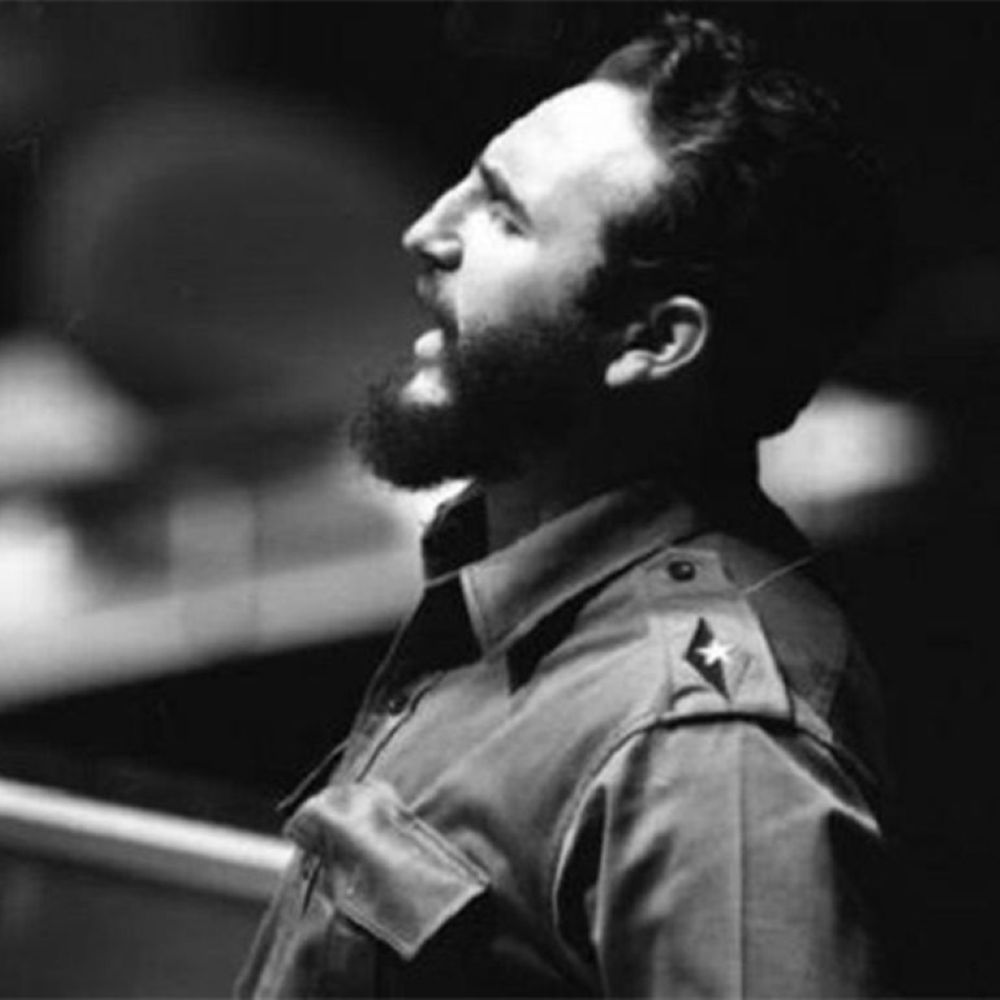
Castro, not yet officially claiming to be communist, was nonetheless quickly nationalizing U.S. industries in Cuba and signing lucrative trade deals with the Soviets. Joseph Alsop wanted to know how James Bond would handle Castro. Fleming said ridicule was the proper response. ‘And Ian had us all absolutely hysterical saying that he had some plots that he thought would be wonderful if the CIA would play on Castro,’ Oatsie said.
Indeed, Fleming opined that there were only three things for which the Cubans cared: money, religion and sex. Thus, the first plot involved counterfeiting Cuban money and dropping it by the bushel from planes along with notes that read, ‘compliments of the United States.’ To take care of religion, Fleming proposed a massive Bat-signal of sorts that would put a cross in the night sky above the nation. The Cubans would stay up all night praying to the mysterious sign rather than worshipping Castro.
The last idea was the one that caused the greatest laughter. Fleming noted that beards were essential to the Cuban revolution and had become a sign of male virility on the island. The CIA, he declared, could promote the idea that nuclear fallout was collecting in men’s beards:
‘The CIA could just fly over Cuba and drop these leaflets, telling the women of Cuba that all the men wearing beards were impotent,’ remembered Oatsie. All the men would shave their beards, and with no beards, there could be no revolution.
At the CIA’s Monday staff meeting, John Bross told the story of his Sunday evening, relating with gusto Fleming’s plot to get Cubans to shave their beards. CIA Director Allen Dulles, who was a fan of the Bond novels and had dined with Fleming in London, was more alarmed than amused and wanted to know how to reach Fleming, immediately.
‘The telephone rang, and it was Allen Dulles,’ according to Oatsie. ‘“Oatsie, where is Ian Fleming?” And I said, ”I don’t know, I suppose he’s in bed at Henry Brandon’s.” “Well, I have to get in touch with him.”’
Dulles called Brandon only to find that Fleming had already left for New York. There is no record of Dulles reaching Fleming on that trip, but Fleming’s story of the Cubans shaving their beards was not published in Alsop’s column nor propagated by Fleming in the many articles he penned during this era, and there may have been a good reason for that.
What Bross did not know was that the CIA was that very week preparing to present to the Eisenhower administration a plan entitled ‘Program of Covert Action Against the Castro Regime.’ This program would lead directly to the Bay of Pigs invasion, but it also contained plans, as President Eisenhower later stated, to ‘undermine Castro’s position and prestige.’ One of those plans involved dusting Castro’s boots with thallium salts. The idea was that the salts would get on Castro’s fingers, and when he touched his beard the poison would make the beard fall out in splotches, humiliating the revolutionary and making him look weak, impotent and sickly.
Six months later, according to some sources, CIA-backed operatives entered the Hotel Theresa in Harlem (where Castro and his entourage were staying for the opening of the UN General Assembly) and dutifully dusted Castro’s boots with powdered thallium salts. Other, possibly more reliable, sources, claim the plot was never carried out. Regardless, Castro’s beard remained. In 1977, Castro railed against the CIA plots, telling interviewer Fred Ward, ‘I could write a book [about the CIA plots]! Exploding cigars, poisoned cigars, powder to make my beard fall out! Bazookas! Grenades! Incredible!’
That night Fleming joined Oatsie at the Kennedy’s home. Also in attendance were the columnist and part-time CIA operative Joseph Alsop, John Bross (soon to be a deputy director at the CIA) and the painter and Kennedy confidant William Walton. ‘And somehow the conversation got around to Castro, which was not all that unusual in those days,’ Oatsie recounted.
John F. Kennedy won the election in November 1960, and in March the following year, LIFE ran their article on Kennedy’s reading habits. The inclusion of From Russia, with Love stood out among the scholarly biographies and histories, most many decades old. Some have maintained that Kennedy was repaying Fleming for the entertaining evening by including From Russia, with Love on the list of favourite books, which could certainly be the case. Others say that he wanted a book on the list that showed he was not so much of an egghead that he couldn’t enjoy popular literature, and Fleming happened to be the one he chose.
Henry Brandon told a different story. He said that he knew for a fact that a White House staffer compiled the list by talking to others like Jackie and William Walton, and that Kennedy, far too busy with the nation’s business, never approved it. Regardless, the public proclamation that Kennedy was a fan gave Fleming’s American publishers an important tool to promote the James Bond novels. Dulles himself acknowledged this in an essay he penned after Fleming’s death:
‘The Kennedy interest in James Bond gave Fleming’s books a great lift, and Ian well knew it. But,’ Dulles added, ‘there is something more than that in his success.’
To a casual observer, it may seem like that ‘something more’ is luck. Without a well-placed friend like Oatsie Leiter, a chance dinner invitation, and a White House staffer’s audacity, From Russia, with Love would have never appeared on the list in LIFE. These things, though, did not happen by luck or chance. No, Fleming appeared on the list in LIFE because when called a cad, he was cool under pressure. When he sat down to write a novel, he created a thrilling and unique tale that engaged readers and was easily recommended. When he found himself at dinner with his most influential fan, he rose to the occasion. Fleming appeared on the president’s list in LIFE because of his talent and the sheer force of his personality. In that, Fleming embodied so many of the qualities we admire in 007.
As to the wonderful woman who brought Kennedy and Fleming together, she is known as one of the most charming and respected scions of Newport. She befriended many presidents, senators and diplomats over the decades with her irreverent humor, her lack of pretension and disarming grace. In her nineties, she said outliving so many of her friends like John F. Kennedy and Ian Fleming is a curse of sorts. Yet, looking back on her remarkable life, she expressed only a few regrets. A small one was her chance at immortality on the pages of a Bond novel.
‘I said to Ian once, not long before he died, “Ian, I’m really terribly hurt, you’ve got every friend you’ve ever known in those books,” because all the characters in his books are taken from his friends. And he said, “Oh, I couldn’t possibly use Oatsie. It’s far too distinctive. You know, it just wouldn’t do.” And I said, “Come on, Ian, anybody who can use Pussy Galore can use Oatsie.” …He said, “Alright, I’ll use you in the next book.” But that was…’
She trails off, her eyes filling with memories eventually punctuated by a shrug. ‘He died shortly after that.’
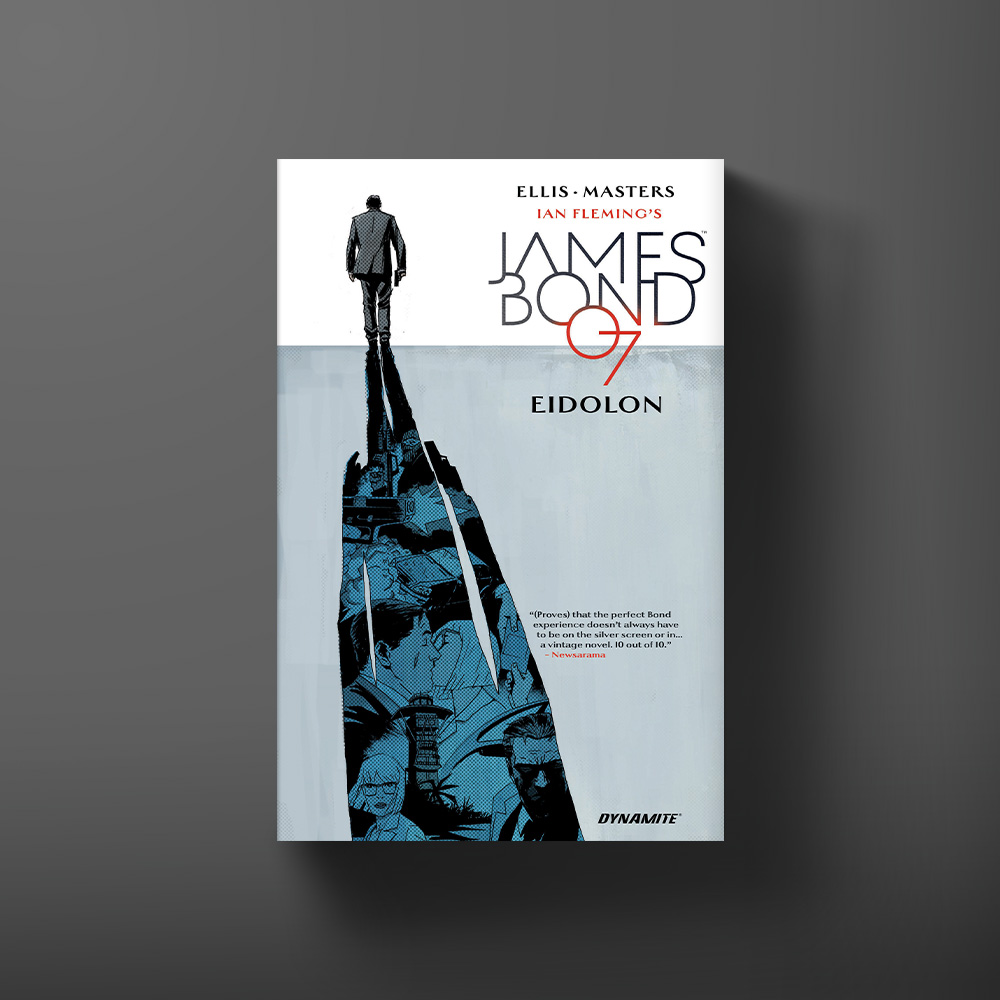
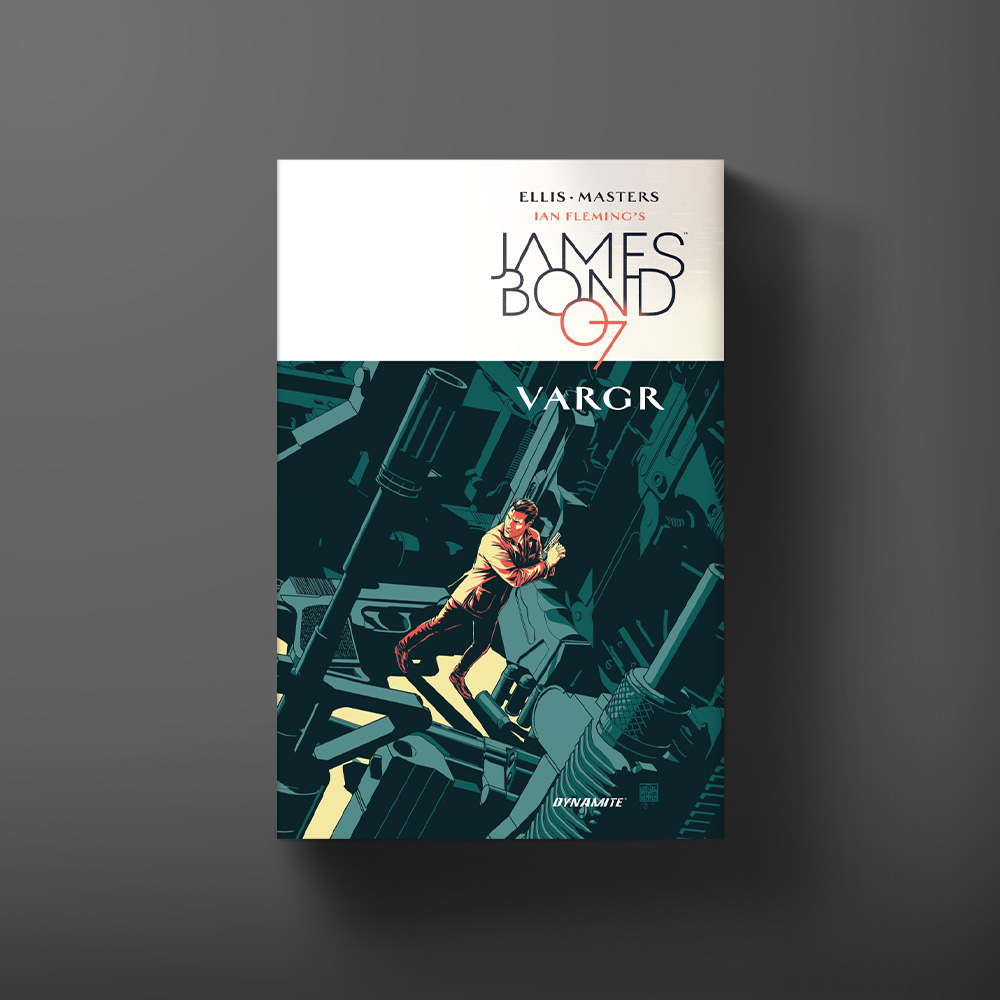
We catch up with Jason Masters, South African artist responsible for the 007 comic book series’ VARGR, Eidolon and Black Box, to find out about his work, his collaboration with Warren Ellis and time with James Bond.
Are you a fan of the Bond universe?
I’m pretty sure I was hooked after the first cold open in the film Octopussy. It introduced me to the idea that there were other 00’s and that they could die. How was Bond going to defeat a villain that 009 couldn’t handle? Surely he was better than 007? He was 2 whole numbers above Bond! At least that’s how my kid’s brain interpreted the information. I loved it and made my way backwards and forwards through the catalogue from there.
How did you go about creating Bond’s look for VARGR?
If James Bond hadn’t been played by so many different actors, the design process would probably have been a lot easier. There were times I’d sketch something, come back, and realise I’d drawn Timothy Dalton or Sean Connery. I thankfully got to bounce a few ideas off Warren in the beginning and that was incredibly helpful. In the end, starting with the actor Hoagy Carmichael as a base got me to where I am now. I easily did 20+ versions of Bond’s look before everyone was happy. Everyone has an idea of how Bond should look and pleasing everyone is very difficult.
I spent quite a lot of time thinking about 007’s body language. How would someone who is, almost certainly, the most dangerous person in the room carry himself? There would be a confidence there, not arrogance per se, but comfort in almost any situation. At any point, wherever he is at the time, it certainly isn’t the worst thing he’s been through that day. ‘Comfort’ within his surroundings might be too strong a word but any situation in which his environment isn’t trying to murder him must be quite a relief.
Bond might appear quite simple at face value but his aesthetic choices seem to say he’s a man who could be dead at any point, so why not experience the finest the world has to offer? He’s sometimes a killer dripping with brutal character.
What’s it like collaborating with the legendary Warren Ellis?
I’ve wanted to work with Warren for a long, long time. I never quite dreamed I’d get the added bonus of first working with him on a character so tremendously iconic. He’s a very generous creator, allowing me to throw in the occasional storytelling idea and answering my inane questions succinctly. He could have been a horrible monster to work with and I would still have come out of this smiling. It’s been quite the opposite experience in fact.
Was there anything he asked you for which was too crazy to draw?
Definitely not! To paraphrase Robert Crumb, ‘it’s just lines on paper’. I don’t think you could ask me to draw anything that was too crazy, difficult, sure but that’s the job. One of the most satisfying parts of the comic drawing process is the problem solving.
Can you talk through the style and atmosphere you have in mind when you sit down to draw these Bond stories – and how you use layout to reinforce that?
My pre-comic background is in advertising, art direction and design. From there I moved to commercial illustration and as a result, I like to approach a project by first trying to figure out a look for it. It’s a habit I can’t break but it does get me into what I think is the correct headspace for each job.
I did quite a bit of research on the old James Bond newspaper strips. I thought it would be fun to take the look and feel of that but give it a modern storytelling twist. Then if possible throw in a little bit of the grandeur that is present in all the settings of the films.
These are all the ingredients I tried to throw into the pot. What I achieved was nowhere near what I aimed for but I got close enough for me to at least feel I had made something enjoyable for the reader. Thankfully Dynamite also agreed to let me bring Guy Major on board for the colours and he’s been a great collaborator. Seeming to know exactly what I was trying to do from the start.
We love the crisp realness of the settings and the architectural detail. Is this something which has always been a component of your style?
There’s probably always been an element of that in my work. I want backgrounds to be characters that are influenced by how the characters react to them. Unfortunately, the only way I know right now to make environments believable is to add details.
How do you approach the action and intense gore of Warren’s scripts?
Warren writes action exactly how I like to draw it. While I love bold over-the-top superhero action I believe there’s also a place for violence with immediate consequences. I love depicting the almost chess-like moves and decisions a character has to make in a fight to get the results he wants. Bond is the most like this of all the characters I’ve ever drawn. Using what’s around him to get the job done with the least amount of attrition. That’s not always possible of course and sometimes he gets hurt. Violence is ugly and brutal and in these stories it shouldn’t be elevated. Violence without consequences is dancing. I’m not sure there’s a comic artist out there that doesn’t giggle to themselves, at least a little bit, when they have to draw something gross.
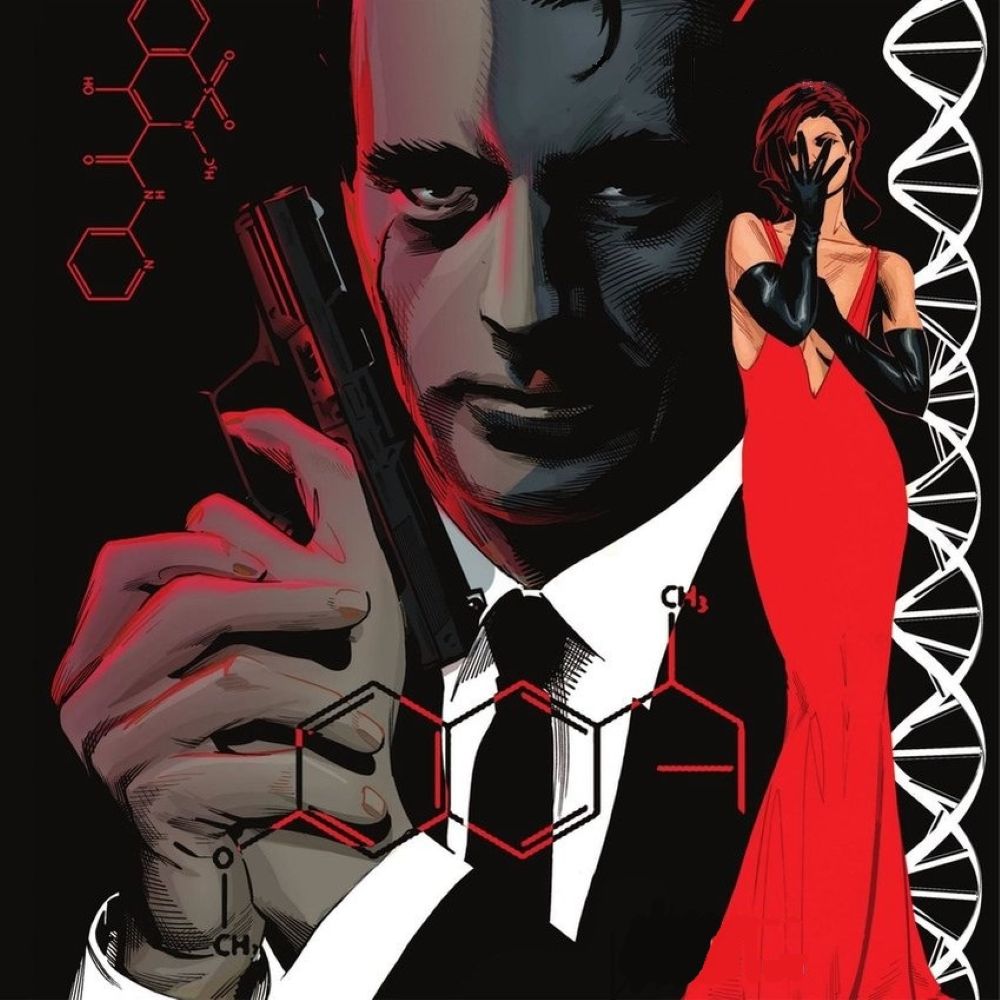
Can you talk about your variant cover for issue #1? Were you given any sort of brief, or was it purely a case of constructing an image which embodied the spirit of this new Bond iteration?
Dynamite has been great with letting me try out ideas. I wanted an image with a minimal colour palette that would stand out on the comic shelf. In Bond’s hands anything could be a weapon: walls, furniture etc. So the idea was an environment made out of weapons while he, a weapon made flesh, stalked or was stalked by his prey. I think it turned out pretty well.
And finally, is the character Masters in the comic, a total coincidence?
Ha! I actually asked Warren that exact question when I got the first script but it turns out he hadn’t realised he’d done it. I think subconsciously, knowing Masters’ end, Warren might have wanted me dead for harassing him about working together.
To provide the best experiences, we use technologies like cookies to store and/or access device information. Consenting to these technologies will allow us to process data such as browsing behaviour or unique IDs on this site. Not consenting or withdrawing consent, may adversely affect certain features and functions.
Functional
Always active
The technical storage or access is strictly necessary for the legitimate purpose of enabling the use of a specific service explicitly requested by the subscriber or user, or for the sole purpose of carrying out the transmission of a communication over an electronic communications network.
Preferences
The technical storage or access is necessary for the legitimate purpose of storing preferences that are not requested by the subscriber or user.
Statistics
The technical storage or access that is used exclusively for statistical purposes.The technical storage or access that is used exclusively for anonymous statistical purposes. Without a subpoena, voluntary compliance on the part of your Internet Service Provider, or additional records from a third party, information stored or retrieved for this purpose alone cannot usually be used to identify you.
Marketing
The technical storage or access is required to create user profiles to send advertising, or to track the user on a website or across several websites for similar marketing purposes.
 Skip to main content