The Story Behind: Three Bond Women

Writer Tom Cull explores the real heroes behind some of Ian Fleming’s most admired characters.

Like many authors before him, Fleming took ideas for his James Bond novels from the world around him and the people he knew. The plots were often heightened re-imaginings of his wartime experiences or altered versions of real-world intrigues he’d reported on as a journalist. He often drew upon the names of his real-life acquaintances when christening his characters: from Felix Leiter whose name is inspired by combining the middle name of Fleming’s school friend Ivar Felix Bryce with the surname of their good friends Tommy and Oatsie Leiter, to Mary Trueblood whose name is a nod to Ian Fleming’s secretary at the Sunday Times, Una Trueblood. Many of the female characters in Fleming’s stories have intriguing links to people Fleming knew and many could claim to have been immortalised under the stroke of Fleming’s typewriter keys.
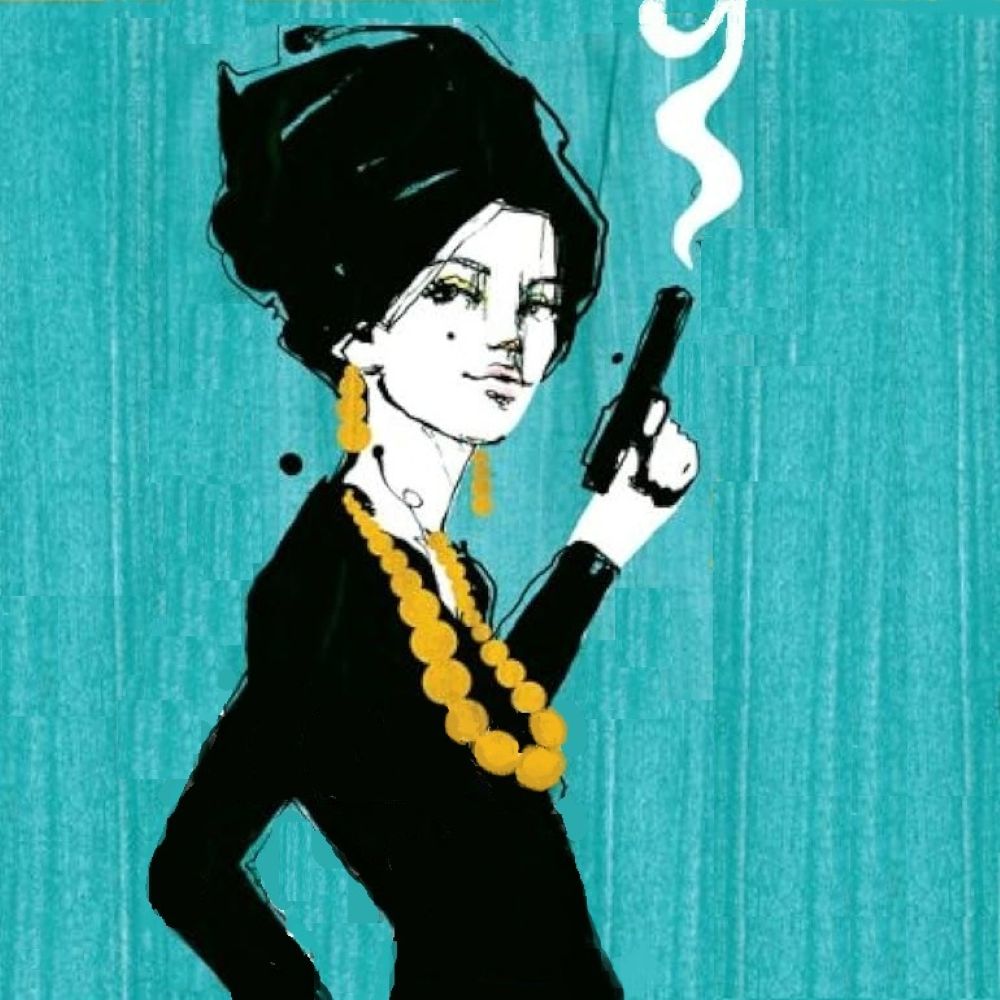
An illustration of Miss Moneypenny from Ian Fleming's James Bond. Image shows a woman with black hair piled on top of her head in chic fashion, holding a smoking gun on a teal background.

Miss Moneypenny

‘Moneypenny screwed up her nose. ‘But, James, do you really drink and smoke as much as that? It can’t be good for you, you know.’ She looked up at him with motherly eyes.’

Thunderball

As part of the Special Operations Executive (SOE) during the Second World War, Vera Atkins is a strong candidate as an inspiration for Miss Moneypenny. Atkins would visit Room 055a in the Old Admiralty Building down the corridor from Fleming’s office and he would have known of her. She joined Section F (France) in April 1941 and oversaw the secret preparation of more than 400 agents, seeing off most of them in person. Vera was most intimately associated with the female agents whom she called her ‘girls’, among whom were Noor Inayat Khan and Violette Szabo.

Many who worked with Atkins could find her intimidating and protective of her operatives but she commanded the respect of her superiors. The atmosphere at Orchard Court, one of the SOE headquarters, was akin to a private members’ club, with women smoking at their desks and handsome men passing through and breaking into French. They were only known by their aliases.

Another inspiration for Moneypenny is hinted at in an early draft of Casino Royale, where M’s assistant is named Miss ‘Petty’ Pettaval, no doubt borrowed from Kathleen Pettigrew, the Personal Assistant to the Chief of MI6, Stewart Menzies.

Fleming had many loyal secretaries throughout his career and greatly admired their skill and dedication. At The Times, it was Joan Howe who typed the manuscript of Casino Royale. Others who played their part included Beryl Griffie-Williams and Una Trueblood, but perhaps Jean Frampton was the most significant. Letters between Fleming and Frampton appeared in 2008 at Duke’s auctioneers in Dorset. Amy Brenan of Duke’s comments

“You can look on Mrs. Frampton as Ian Fleming’s Miss Moneypenny because he really does seem to rely on her. She was the first person to read the books and the collection is interesting because it details how the James Bond books were put together in the early 1960s.”
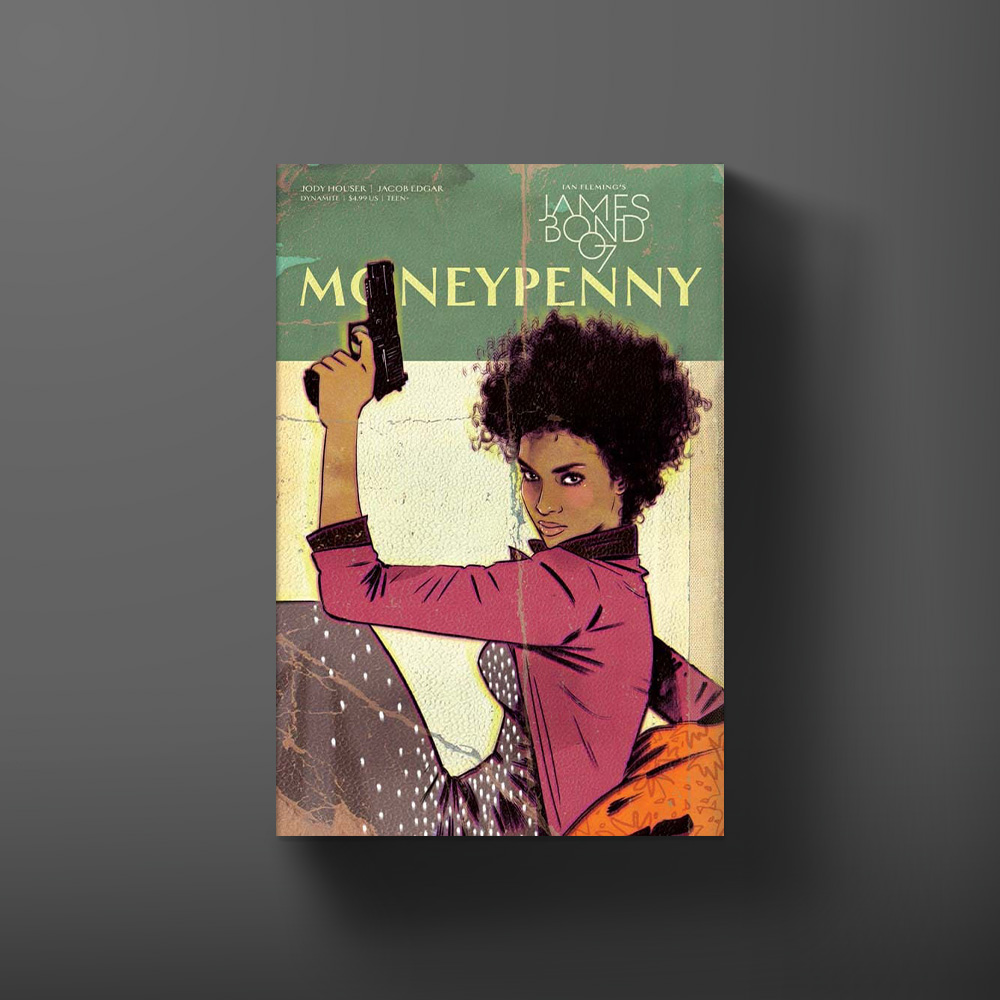
Cover for the Moneypenny graphic novel written by Jody Houser, with art by Jacob Edgar.

Mary Ann Russell

‘Taking these people on all by yourself! – It’s showing off.’

From a View to a Kill

In the short story From a View to a Kill, the character Mary Ann Russell is an agent for Section F who saves Bond’s bacon against the Russian military intelligence agency. Her name is likely to have been inspired by a woman who played a significant role in Fleming’s life, Maud Russell. Her granddaughter Emily Russell has recently edited a revelatory collection of Maud’s war-time diaries, and explains:

‘Maud and Ian met in late 1931 or early 1932 and they quickly became close friends. Through Maud and her husband Gilbert Russell, Ian met a number of influential political figures during the 1930s and also obtained contacts in Military Intelligence. After Gilbert died in May 1942, Ian got Maud a job at the Admiralty. From 1943, she worked in the Admiralty’s Naval Intelligence Division (NID) 17Z, a section led by Donald McLachlan that was dedicated to generating white, grey and black propaganda from naval intelligence to undermine enemy morale.’

Maud shared the same zeal for her work at the NID as Fleming did, as she notes in her diary:

‘London, Thursday 10 December 1943 — On Monday the Scharnhorst sinking kept us very busy. Only Mc., C.B. & I. [Ian Fleming] in the room. Then came the news of the sinking of the blockade runner and more excitement.  Only Mc. reacts as I do, froths and fizzes over with inward excitement. I. of course is the same as Mc. and I – tension, excitement, hammering energy.GR’
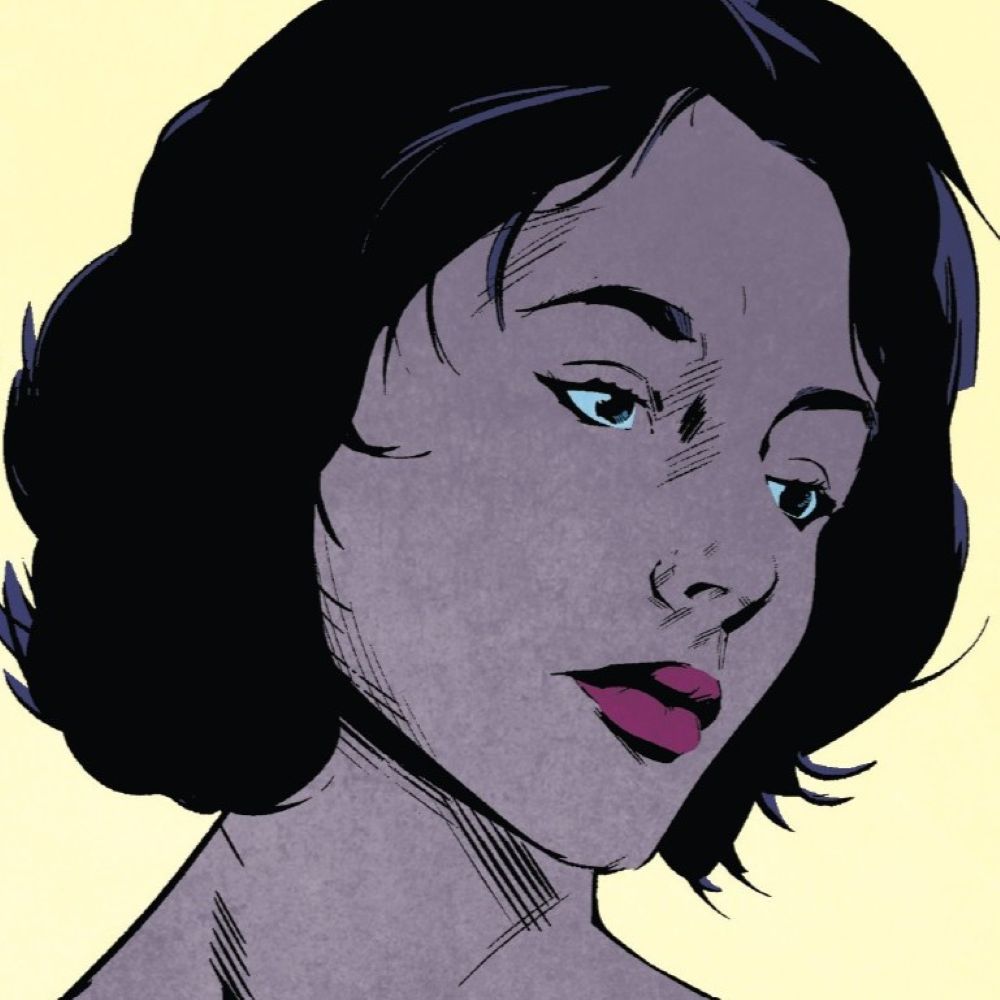
A picture of Vesper Lynd from Ian Fleming's Casino Royale, seen as a comic book art of a white woman with dark hair and red lipstick

Vesper Lynd

‘”People are islands”’ she said. “They don’t really touch. However close they are, they’re really quite separate.”’

Casino Royale

A popular suggestion for the inspiration behind Vesper Lynd was the SOE agent Krystyna Skarbek, also known as Christine Granville. Polish by birth, she was recruited by the SOE, won a George Medal and was reputedly Churchill’s favourite spy.

Granville was remarkably beautiful and she stole, and broke, many hearts. She was certainly known to Fleming who briefly mentions her in his non-fiction book The Diamond Smugglers. The rumour that Ian Fleming had an affair with Christine Granville is unfounded as her biographer Clare Mulley and writer Jeremy Duns have explored. Christine Granville survived the War but was tragically stabbed by a love-crazed stalker in 1952, aged 44.

There were other members of the SOE who Fleming would have encountered during his time working with Section 17 in Naval Intelligence, where he was responsible for coordinating intelligence between divisions. Violette Szabo was recruited by the SOE at 23, as a war widow with a one year old child. She was dropped into France in 1943 and bravely served the war effort, in one instance fending off an SS Panzer division with a Sten gun before collapsing exhausted. After being captured, Szabo, was shot along with fellow agents Denise Bloch and Lillian Rolfe at the Ravensbrück concentration camp in northern Germany. Szabo’s defiance was greatly admired by her fellow prisoners and she was one of only four women to receive a posthumous George Cross Medal.
Whatever the truth behind the fiction, the women Fleming encountered during his time in Naval Intelligence were truly courageous. They faced daily dangers and risked everything to help secure the freedom of Europe. Fleming was inspired to write about many interesting characters from his real life, from naming Bond’s mother Monique after a former fiancée, to calling Bond’s Secretary Loelia Ponsonby after the Duchess of Westminster. We may never know the full extent of the real people who lend parts of themselves to the James Bond story, but it’s certainly inspiring to learn more about these real-life heroes.

Tom Cull runs Artistic Licence Renewed. He knew iconic Bond cover artist Richard Chopping well as a child and Tom’s great grandfather hired a young Ian Fleming to work at the family bank Cull & Co. between 1933 and 1935.
The Story Behind: Ian Fleming & The President

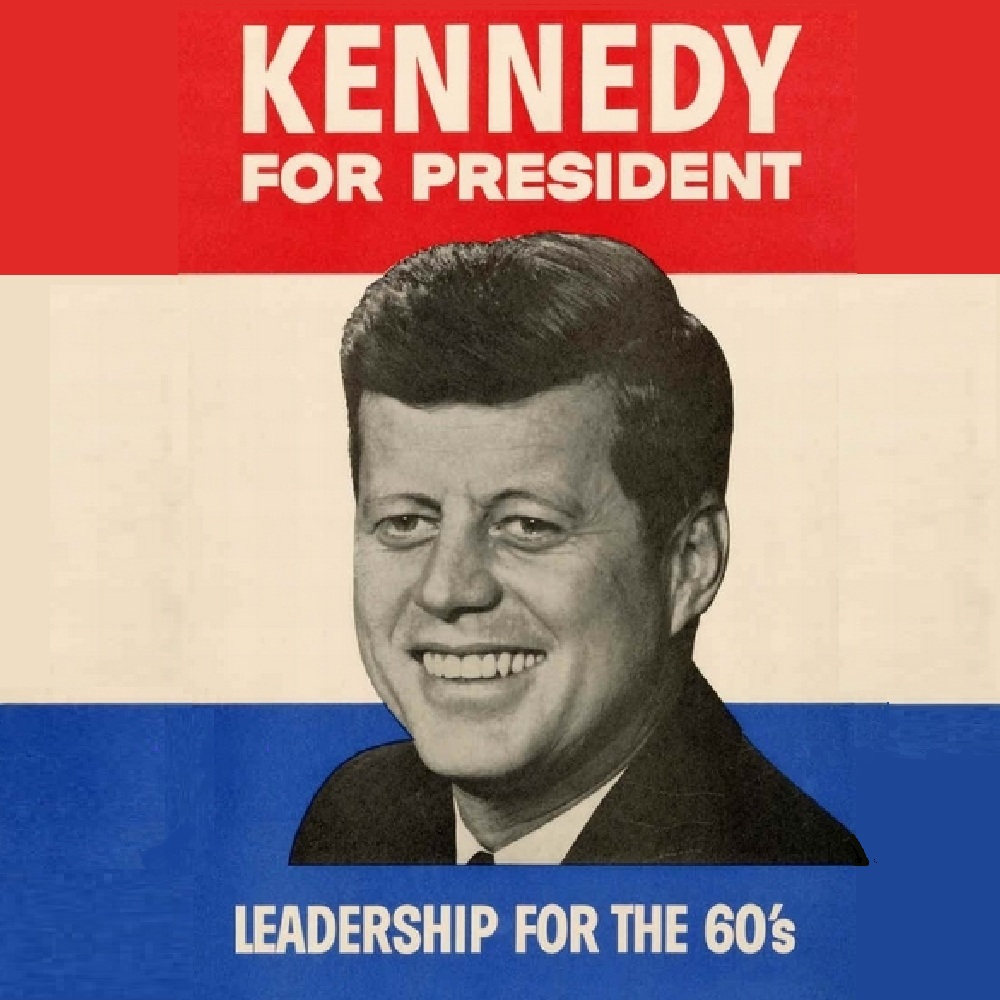
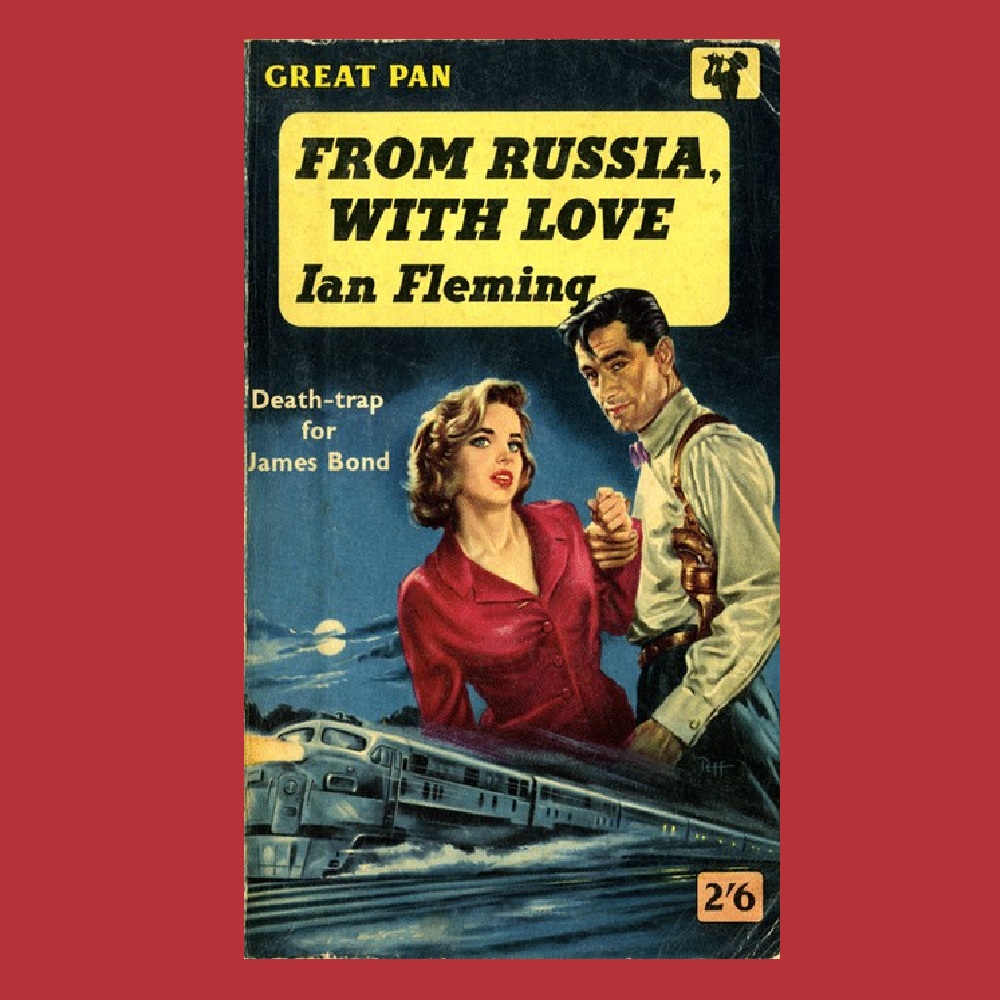
Author, screenwriter, filmmaker and Bond aficionado, John Cork investigates how From Russia, with Love came to be on President John F. Kennedy’s bedside table and went on to appear on his top-ten book list.

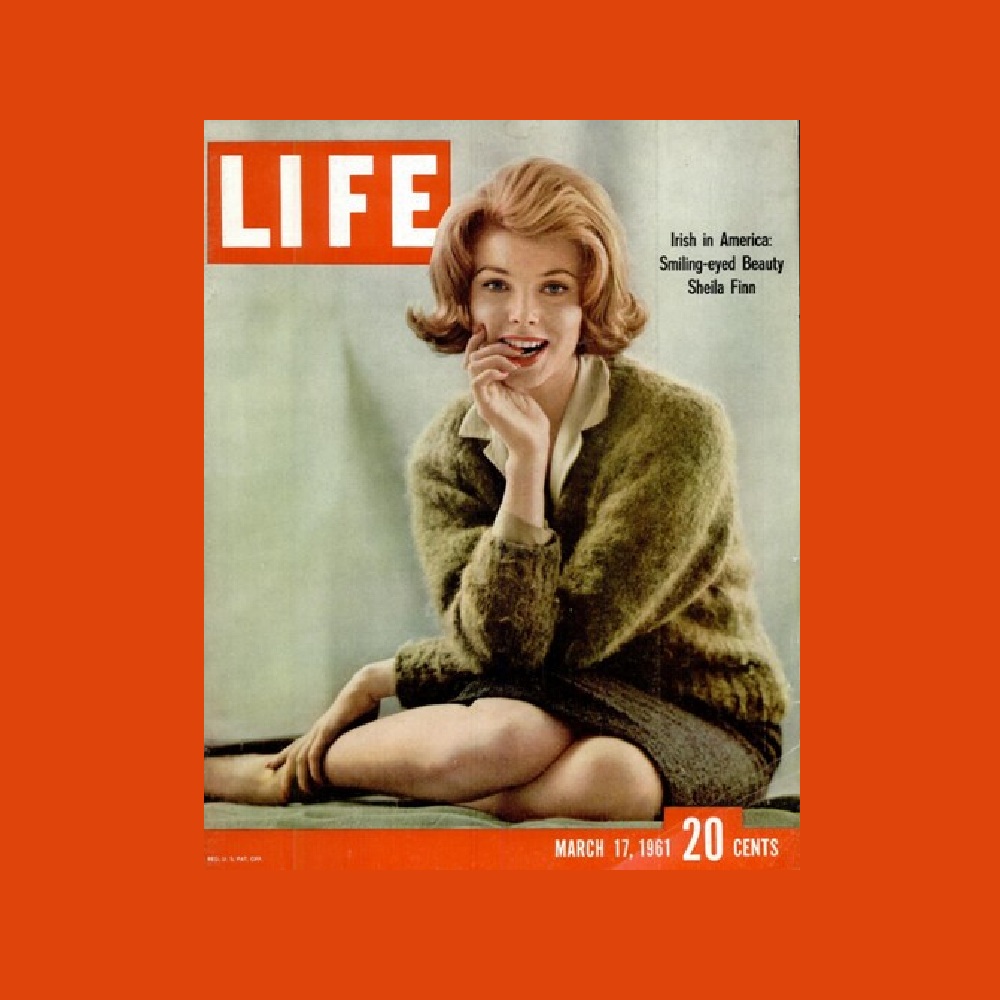
From The President’s Voracious Reading Habits, LIFE magazine, 17th March 1961:

‘Kennedy has confined himself mostly to nonfiction, but like many of the world’s leaders he has a weakness for detective stories, especially those of British author Ian Fleming and his fictitious undercover man, James Bond.’

The story has been told far and wide. In the late 1950s, Ian Fleming’s James Bond novels sold well in the UK, but in the massive US market, sales barely made a ripple. Not one single Bond title generated a second printing in either hardback or paperback in the United States. All that started to change in March 1961 when LIFE magazine published a list of the president’s ten favourite books, naming From Russia, with Love as one of them. It was, by far, the highest profile endorsement for which an author could hope.

How did From Russia, with Love get on the president’s list? Like so many things associated with 007, it happened with the help of a remarkable and strong woman.

She was born Marion Oates in Montgomery, Alabama, the Cradle of the Confederacy. Marion came from obstinate and ambitious stock. Her grandfather, William Oates, once fractured a man’s skull in a fight. He went on to be deemed a Confederate Civil War hero, having led a charge up Little Round Top during the Battle of Gettysburg and then losing an arm at Fussel’s Mill. He returned to Alabama, was elected to Congress and served as a combative one-term Governor.

Raised to be a society hostess, Oatsie (as she was known) married Thomas Leiter in 1942.  Tommy was the grandson of one of Chicago’s great real estate barons and two of Tommy’s aunts married British nobility. Tommy’s father once attempted to corner the U.S. wheat market,  which is a fine gamble as long as one has family that can pay off the $10,000,000 of debt when it all goes pear-shaped. The night before Oatsie’s wedding, legendary Alabama-born actress Tallulah Bankhead explained the finer points of intimate marital relations to her. That was Oatsie’s world, and it was quite a place.

Oatsie and Tommy Leiter took up residence in ‘a most glorious apartment’ built inside the converted stables of the famed Leiter family mansion near Dupont Circle in Washington.

‘I knew both Ian (vaguely) and Ivar [Bryce – a close friend of Ian’s] in Washington during the Second World War,’ she recalled in 2000. After the war, Oatsie and Tommy started vacationing in Jamaica for what was known then as ‘the season.’ ‘We’d be there three months a year. Which was lovely. Really lovely.’  During her stay in 1949, she was dramatically re-introduced to Ian Fleming.

‘I’d gone to a party, and a great friend of mine was very much in love with Ian, or thought she was. And he was treating her in the most atrocious way. And with the arrogance of youth, I walked up to Mr. Fleming when I was introduced to him, and said, “Mr. Fleming, I consider you’re a cad.” And he looked at me and said, “Mrs. Leiter, you’re indeed right. Shall we have a drink on it?”’

They did and became fast friends. ‘Ian really had enormous charm…he was irresistible as a companion, as a guest, as a friend.  And he was an extremely good friend.’

In the first James Bond novel, Casino Royale, Fleming borrowed Tommy Leiter’s last name for Bond’s CIA accomplice, Felix.  Naturally Fleming sent Oatsie and Tommy a copy and Oatsie, never one to mince words, quite enjoyed the book.

Oatsie and Tommy maintained homes not just in Washington D.C., but in Aiken, South Carolina and Newport, Rhode Island. Newport also happened to be where Jacqueline Bouvier grew up at Hammersmith Farm. After marrying John F. Kennedy, a newly elected young senator from Massachusetts, Jackie and JFK spent summer vacations there. Oatsie knew JFK and Jackie socially. In 1954, JFK called up Oatsie. ‘Oates, I’m sick,’ she recalled Kennedy telling her. ‘“Have you got anything to read? I can’t find anything in this house that I think is possible to read.” And I said, “Yes, do you like spy stories?”’

She sent over her copy of Casino Royale. ‘He was crazy about it. And he said, “If you get another one at any point, let me know.”’

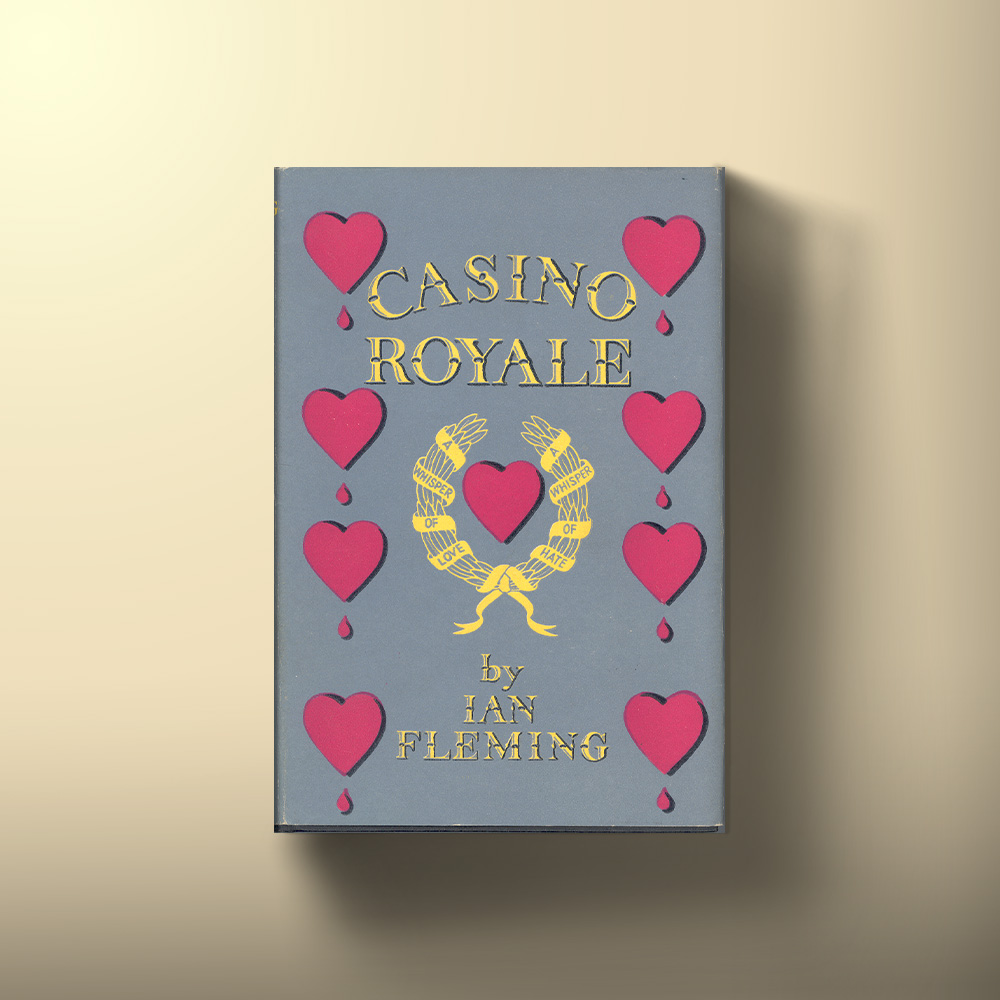
Book cover of Casino Royale by Ian Fleming, featuring yellow typography and a repeated heart motif.

Jackie Kennedy, on her husband’s recommendation, also took to reading the Bond novels, and she made another important connection for Ian. ‘I was introduced to Fleming’s books,’ noted CIA Director Allen Dulles, ‘by Mrs. Jacqueline Kennedy herself. “Here is a book you should have, Mr. Director” she said.’ Dulles went on to praise From Russia, with Love as ‘one of the best of Fleming’s thrillers.’

In March, 1960, Ian Fleming arrived in Washington D.C. He was staying as the guest of one of the Sunday Times’ most renowned correspondents, Henry Brandon. On Sunday, 13th March, Ian went to see Oatsie who was now divorced from Tommy Leiter. ‘Ian and I were going somewhere, probably the National Gallery or something, and we were driving down one of the streets in Georgetown. And I saw Jack and Jackie walking down the street. As they started to cross one street, I stopped. And we yelled,’ Oatsie recalled. ‘I said, “Jack, this is Ian Fleming.”  And Jack poked his head in the window and said, “Not the Ian Fleming.” And I said, “Yes.” “Well,” he said, “bring him for dinner.”’

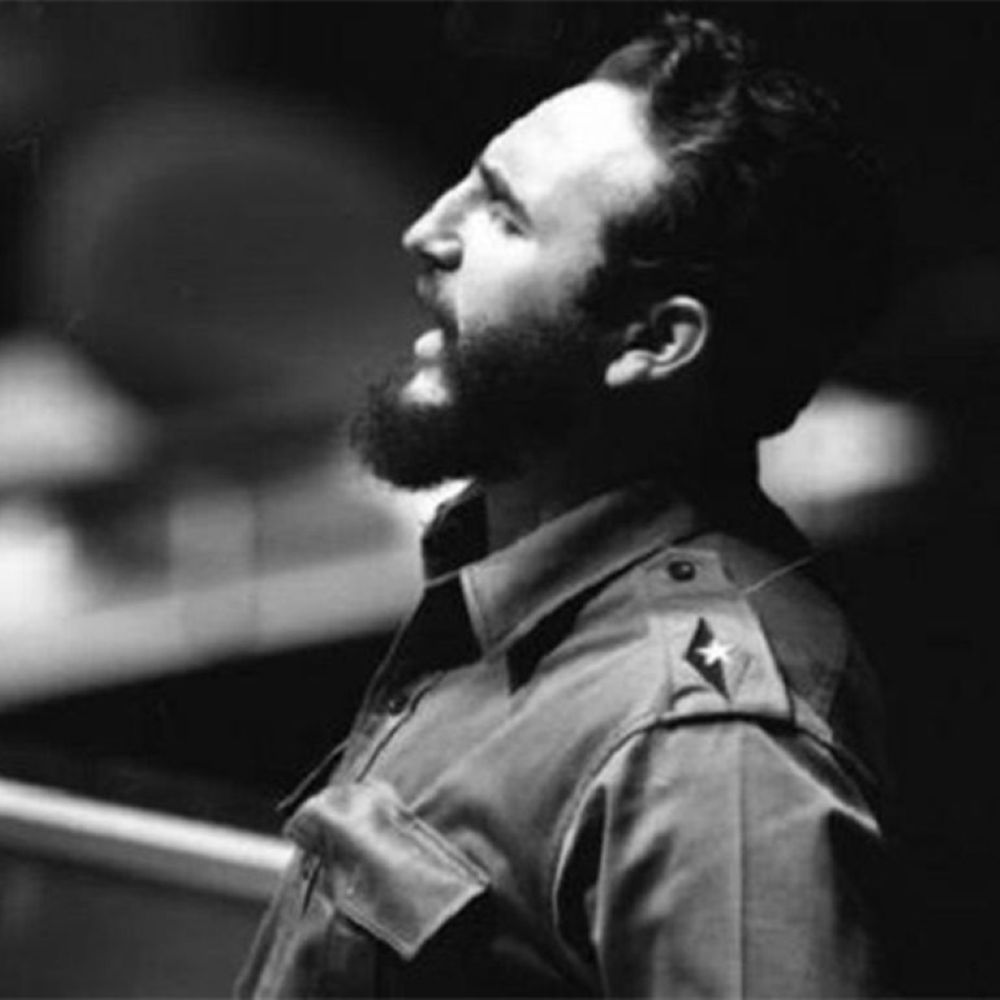
Castro, not yet officially claiming to be communist, was nonetheless quickly nationalizing U.S. industries in Cuba and signing lucrative trade deals with the Soviets. Joseph Alsop wanted to know how James Bond would handle Castro. Fleming said ridicule was the proper response. ‘And Ian had us all absolutely hysterical saying that he had some plots that he thought would be wonderful if the CIA would play on Castro,’ Oatsie said.

Indeed, Fleming opined that there were only three things for which the Cubans cared: money, religion and sex. Thus, the first plot involved counterfeiting Cuban money and dropping it by the bushel from planes along with notes that read, ‘compliments of the United States.’ To take care of religion, Fleming proposed a massive Bat-signal of sorts that would put a cross in the night sky above the nation. The Cubans would stay up all night praying to the mysterious sign rather than worshipping Castro.

The last idea was the one that caused the greatest laughter. Fleming noted that beards were essential to the Cuban revolution and had become a sign of male virility on the island. The CIA, he declared, could promote the idea that nuclear fallout was collecting in men’s beards:

‘The CIA could just fly over Cuba and drop these leaflets, telling the women of Cuba that all the men wearing beards were impotent,’ remembered Oatsie. All the men would shave their beards, and with no beards, there could be no revolution.

At the CIA’s Monday staff meeting, John Bross told the story of his Sunday evening, relating with gusto Fleming’s plot to get Cubans to shave their beards. CIA Director Allen Dulles, who was a fan of the Bond novels and had dined with Fleming in London, was more alarmed than amused and wanted to know how to reach Fleming, immediately.

‘The telephone rang, and it was Allen Dulles,’ according to Oatsie. ‘“Oatsie, where is Ian Fleming?” And I said, ”I don’t know, I suppose he’s in bed at Henry Brandon’s.”  “Well, I have to get in touch with him.”’

Dulles called Brandon only to find that Fleming had already left for New York. There is no record of Dulles reaching Fleming on that trip, but Fleming’s story of the Cubans shaving their beards was not published in Alsop’s column nor propagated by Fleming in the many articles he penned during this era, and there may have been a good reason for that.

What Bross did not know was that the CIA was that very week preparing to present to the Eisenhower administration a plan entitled ‘Program of Covert Action Against the Castro Regime.’ This program would lead directly to the Bay of Pigs invasion, but it also contained plans, as President Eisenhower later stated, to ‘undermine Castro’s position and prestige.’ One of those plans involved dusting Castro’s boots with thallium salts. The idea was that the salts would get on Castro’s fingers, and when he touched his beard the poison would make the beard fall out in splotches, humiliating the revolutionary and making him look weak, impotent and sickly.

Six months later, according to some sources, CIA-backed operatives entered the Hotel Theresa in Harlem (where Castro and his entourage were staying for the opening of the UN General Assembly) and dutifully dusted Castro’s boots with powdered thallium salts. Other, possibly more reliable, sources, claim the plot was never carried out. Regardless, Castro’s beard remained. In 1977, Castro railed against the CIA plots, telling interviewer Fred Ward, ‘I could write a book [about the CIA plots]! Exploding cigars, poisoned cigars, powder to make my beard fall out! Bazookas! Grenades! Incredible!’

That night Fleming joined Oatsie at the Kennedy’s home. Also in attendance were the columnist and part-time CIA operative Joseph Alsop, John Bross (soon to be a deputy director at the CIA) and the painter and Kennedy confidant William Walton. ‘And somehow the conversation got around to Castro, which was not all that unusual in those days,’ Oatsie recounted.

John F. Kennedy won the election in November 1960, and in March the following year, LIFE ran their article on Kennedy’s reading habits. The inclusion of From Russia, with Love stood out among the scholarly biographies and histories, most many decades old. Some have maintained that Kennedy was repaying Fleming for the entertaining evening by including From Russia, with Love on the list of favourite books, which could certainly be the case. Others say that he wanted a book on the list that showed he was not so much of an egghead that he couldn’t enjoy popular literature, and Fleming happened to be the one he chose.

Henry Brandon told a different story. He said that he knew for a fact that a White House staffer compiled the list by talking to others like Jackie and William Walton, and that Kennedy, far too busy with the nation’s business, never approved it. Regardless, the public proclamation that Kennedy was a fan gave Fleming’s American publishers an important tool to promote the James Bond novels. Dulles himself acknowledged this in an essay he penned after Fleming’s death:

‘The Kennedy interest in James Bond gave Fleming’s books a great lift, and Ian well knew it. But,’ Dulles added, ‘there is something more than that in his success.’

To a casual observer, it may seem like that ‘something more’ is luck. Without a well-placed friend like Oatsie Leiter, a chance dinner invitation, and a White House staffer’s audacity, From Russia, with Love would have never appeared on the list in LIFE. These things, though, did not happen by luck or chance. No, Fleming appeared on the list in LIFE because when called a cad, he was cool under pressure. When he sat down to write a novel, he created a thrilling and unique tale that engaged readers and was easily recommended. When he found himself at dinner with his most influential fan, he rose to the occasion. Fleming appeared on the president’s list in LIFE because of his talent and the sheer force of his personality. In that, Fleming embodied so many of the qualities we admire in 007.

As to the wonderful woman who brought Kennedy and Fleming together, she is known as one of the most charming and respected scions of Newport. She befriended many presidents, senators and diplomats over the decades with her irreverent humor, her lack of pretension and disarming grace. In her nineties, she said outliving so many of her friends like John F. Kennedy and Ian Fleming is a curse of sorts. Yet, looking back on her remarkable life, she expressed only a few regrets. A small one was her chance at immortality on the pages of a Bond novel.

‘I said to Ian once, not long before he died, “Ian, I’m really terribly hurt, you’ve got every friend you’ve ever known in those books,” because all the characters in his books are taken from his friends.  And he said, “Oh, I couldn’t possibly use Oatsie. It’s far too distinctive. You know, it just wouldn’t do.” And I said, “Come on, Ian, anybody who can use Pussy Galore can use Oatsie.” …He said, “Alright, I’ll use you in the next book.”  But that was…’

She trails off, her eyes filling with memories eventually punctuated by a shrug. ‘He died shortly after that.’

Thanks to the John F. Kennedy Presidential Library and Museum. Photos courtesy of Cecil Stought and Robert Knudsen.

The Story Behind: Bond On Radio

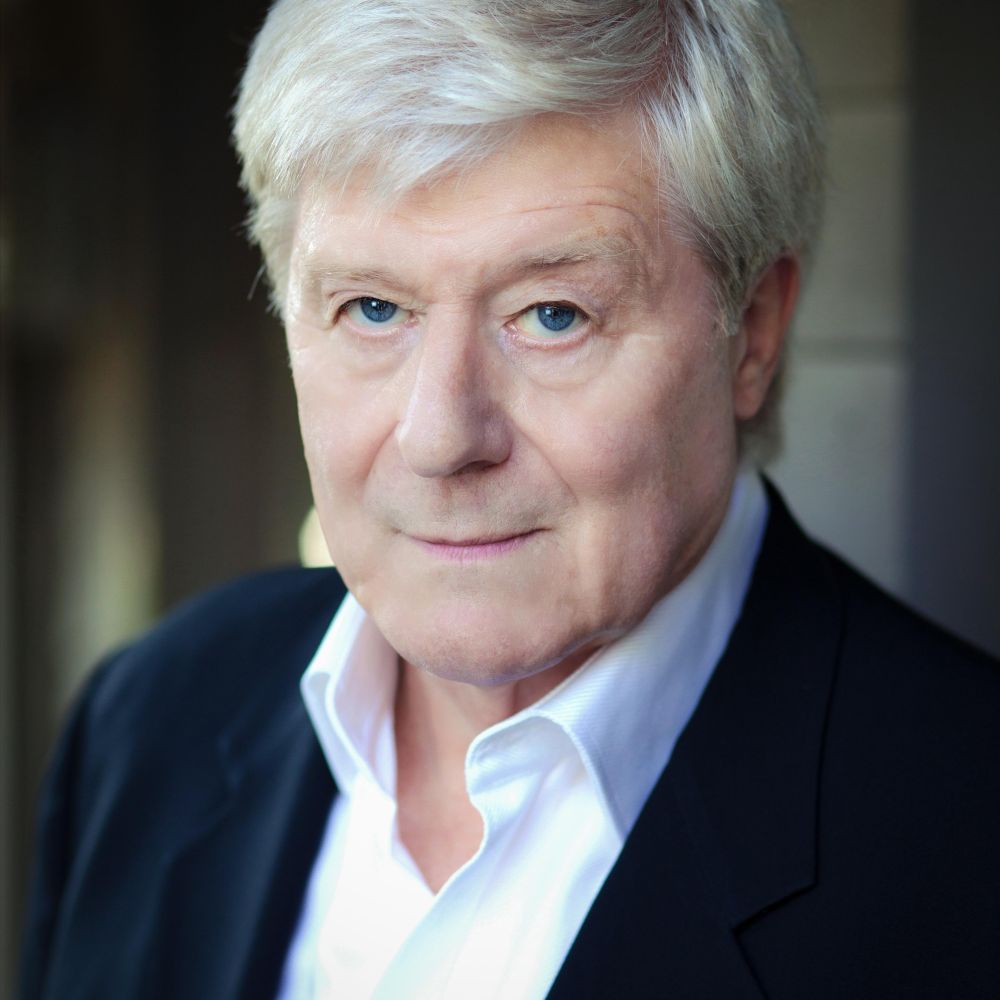
We talk to Martin Jarvis OBE, actor, director and producer about 007 on the radio. Martin has co-produced a number of drama adaptations of Ian Fleming’s Bond novels for BBC Radio 4, narrated the You Only Live Twice audiobook, and is the voice of Ian Fleming in the Radio 4 production of Thunderball.

When did your interest in producing for radio begin? What was it about the medium that inspired you to produce your own dramas?

A life-long interest in radio drama. At first as a child, enjoying adventure serials on radio – Journey Into Space and Dick Barton Special Agent. Great stories and exciting spring-boards to the listening imagination. Then as an actor, recording all kinds of plays and comedies in BBC radio studios (and writing some of them) taught me the basic techniques of creating drama for radio. It seemed only natural that my company, Jarvis & Ayres Productions should start to offer the BBC specially produced plays and comedies for the medium. I’m delighted to say that BBC saw the force of this too. Rosalind Ayres and I have now produced hundreds of programmes ranging from plays, series, serials and readings, as well as big dramas for BBC Radio 3 and 4. And, we’re pleased to say, six James Bond feature-length radio-screenplays. We have also directed and/or performed numerous productions for National Public Radio in America.

How did you decide which of Fleming’s books to adapt?  

At the suggestion of Ian niece, Lucy Fleming, EON Productions, the rights holders at that time, gave permission for a production. They suggested we produce Dr. No as a one-off to celebrate Ian Fleming’s centenary. There was no question of doing more than just that single dramatisation. However it went so well with the BBC Radio 4 audience – Toby Stephens a perfect 007 and David Suchet a brilliantly authentic Dr. No – that EON asked if we might like to produce another of the titles. Of course! It was suggested that Goldfinger might be fun – and so it turned out, with Sir Ian McKellen inhabiting the role with great wit and brilliance – and a fine Latvian accent!

What do you think it is about Fleming’s work which makes it so well suited for the radio?

As well as his understanding of the complex world of espionage, Fleming has great and graceful narrative skills. In his travel writing he is always able to evoke the colours, scents and atmosphere of exotic locations, and this he does equally compellingly in his novels. The scenarios are perfect, too, for radio, where you can literally go anywhere – under the sea, above the Bahamian waters in a sea-plane, visit a Saratoga race track, ride on the Orient Express, join the mafia in New York and win or lose at cards in Le Touquet or Las Vegas. Wonderful, enticing locations, and characters – all transposed from Fleming’s entertaining writing directly into the actors’ (and therefore the listeners’) imagination.

Was 007 a part of your literary upbringing?

Yes, along with P.G. Wodehouse, John Buchan, Richmal Crompton, Agatha Christie, and Shakespeare! I read most of the novels and always particularly enjoyed the card game sequences. When I came to adapt /direct On Her Majesty’s Secret Service, Diamonds Are Forever and most recently Thunderball for radio, I initially wondered how it would be possible to ‘show’ the minutiae of baccarat, chemin de fer or blackjack. But it seems to work well, partly due to the fact that, in radio, we can enter James Bond’s head and almost take part in the game ourselves via his inner thoughts and responses. No lack of focus there!

How do you set about casting the stories? 

It seems that many actors have enjoyed the Bond novels. And it has been gratifying that so many stars have relished the chance to take part in our productions including Toby Stephens, Dame Eileen Atkins, Stacy Keach, Sir Ian McKellen, Joanna Lumley, Tom Hollander, David Suchet, Alfred Molina, Jared Harris, Tom Conti, Nigel Havers, Lisa Dillon, Peter Capaldi, Alistair McGowan, John Sessions, Tim Pigott-Smith, Janie Dee, John Standing, Mark Gatiss and many more. When Mark joined us to play Colonel Kronsteen in From Russia With Love he told me ‘this is the best acting day of my life!’

Ros Ayres and I have of course worked with many of this extended company on screen or in the theatre – it’s very often an excuse to get together and have fun (again) courtesy of 007, the BBC, EON and the genius of Ian Fleming.

Is there any significance in the order in which you’ve chosen to produce the Bond radio dramas? Or is it a case of which one seems the most interesting project to follow the previous?

Sometimes there’s a neat progression. After Diamonds, in which Bond is in quite a bad way at the end, it seemed appropriate to bring him back after ‘some time away’ and have him sent (in Thunderball) to the Shrublands health farm. But then in his adventurous life he often needs a period of recuperation before the next extravaganza. Don’t we all!

Find out more about Martin here.