Interview: Fergus Fleming

We speak to Fergus Fleming about his inspiration for his book, The Man with the Golden Typewriter, his developing view of his uncle Ian Fleming, and some of the correspondences he discovered while researching.

Why did you start the project?

A book of Ian’s letters was long overdue and, somewhat rashly, I raised my hand. Even more rashly, the offer was accepted.

Can you tell us more about Ian Fleming’s golden typewriter?

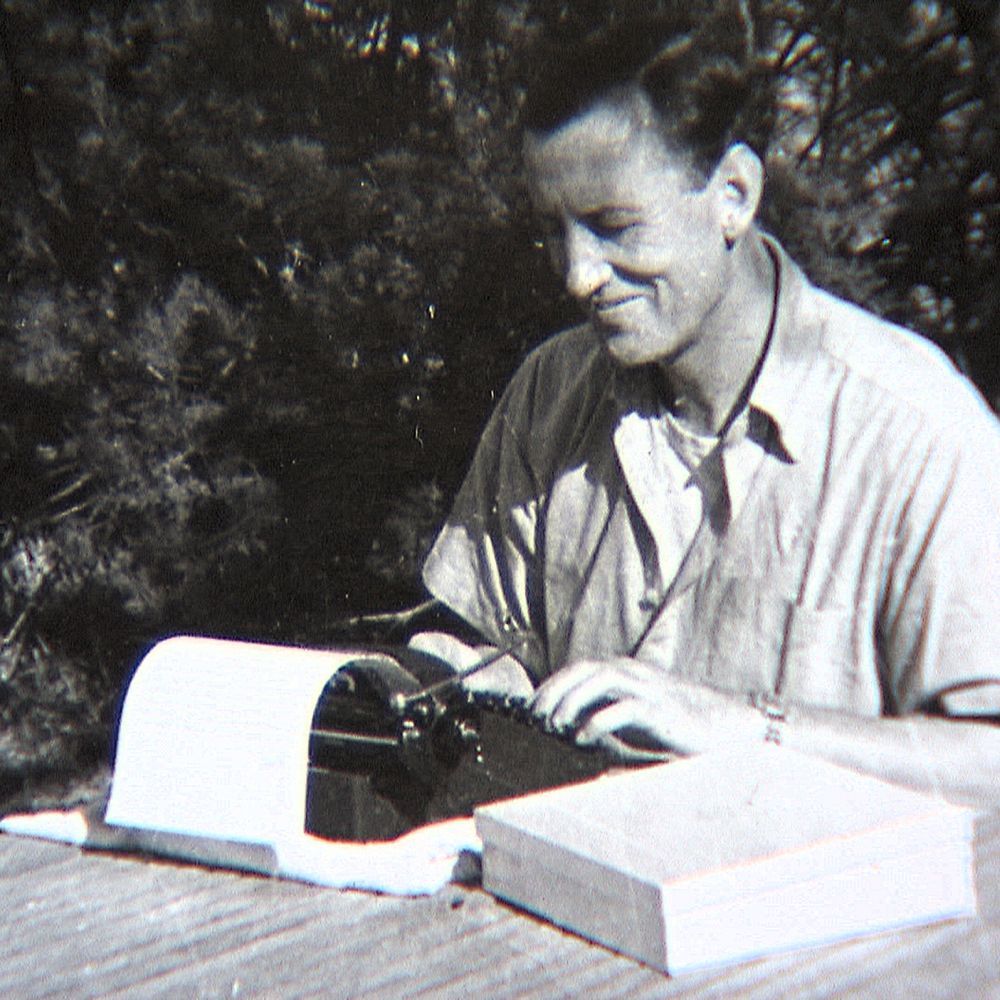
The golden typewriter was Ian’s great joke to himself. Just imagine his glee when it arrived in all its glittering splendour (smuggled in from America by his friend Ivar Bryce to avoid taxes). Serious-minded contemporaries considered it the height of vulgarity, but Ian didn’t care. Let them sneer! He had a golden typewriter and they didn’t. The machine in question was a Royal Quiet De Luxe and cost the princely sum (then) of $174. It wasn’t the only one in the world: the Royal Typewriter Co. produced a small run of them as an advertising gimmick. They were often given away as sports prizes or to favoured employees. None, however, have achieved the same iconic status as Ian’s. In 1995 an unknown bidder – rumoured to be Pierce Brosnan – bought Ian’s Quiet De Luxe for a sum that has been calibrated by the Guinness Book of Records as the highest ever paid for a typewriter.

Did Ian use it for the Bond novels?  My impression is that he didn’t. It doesn’t seem to feature in any of the pictures of him at his desk. But who knows?  

How much did you know about your uncle’s works and legacy when you were growing up?

Ian’s books were on the shelves when I grew up, but I don’t remember them being held in particular reverence. As he said to Raymond Chandler, ‘[I] meekly accept having my head ragged off about them in the family circle’. My father was so horrified by The Spy Who Loved Me that he made my mother read it under a brown paper cover. His brother Peter was also a writer, and his books too were on the shelves. So it was just an accepted fact of life that our family wrote books.

But I will say this. When checking a fact in You Only Live Twice, I used an original copy. And there, all at once, was the excitement of it. The Chopping jacket, the typeface, the Cape logo, the smell, the feel of the paper, the price – 16s. net – and the memory of something you will never find in a bookshop today. For a moment I caught the thrill that Ian, and his readers, must have experienced when the latest Bond came out.

Do you have any favourites from the correspondences you went through?

One of the best is Ian’s apology to Mrs. James Bond. Her husband was an ornithologist whose book Birds of the West Indies happened to be on Ian’s desk in GoldenEye when he wrote Casino Royale. In 1961 she caught up with him and demanded an explanation.

‘Your husband has every reason to sue me in every possible position and for practically every kind of libel’

Ian replied, adding that he had chosen James Bond because it was plain, masculine and anonymous – unlike Peregrine Carruthers or some such. In recompense,

‘I can only offer your James Bond unlimited use of the name Ian Fleming for any purpose he may see fit. Perhaps one day he will discover some particularly horrible species of bird which he would like to christen in an insulting fashion.’

Did any of the letters mention ideas that he never used in his Bond books?

This is a sensitive matter that falls under The Official Publishing Secrets Act and as such I am not permitted to disclose the contents of any files that may or may not have come to my attention. That said, he did float the possibility of setting a Bond novel in Australia – which would have been interesting.

Did your opinion of Ian Fleming change after reading his correspondence and did you discover any new aspects of his character?

Ian has been portrayed so often in films and books as a callous, suave womaniser – in essence a mirror image of Bond – that I was prepared for something along those lines. To my surprise it didn’t materialise. Of course, this isn’t a biography and a fuller examination would probably confirm the accepted picture. All I can say is that his letters reveal a man who was witty, punctilious and kind, assailed by fits of self-doubt yet resolutely optimistic, who worked hard to make a living the best way he knew.

Do you think Ian was a true eccentric, or was the typewriter more a symbol of a persona he enjoyed cultivating as the writer of thrilling – and at times bombastic – fiction?

Ian wasn’t an eccentric. I would say he was more a romantic. He enjoyed turning dreams into reality and vice versa. He had an urge to tell stories. If he could make life a story – the martinis, the golden typewriter – then all to the good. If he could make a story out of life – to tell people what he saw, what he experienced, and how it inspired him – then so much the better.

‘Writing makes you more alive to your surroundings,’ he once said, ‘and since the main ingredient of living… is to be alive, this a quite a worthwhile by-product of writing.’ If writing made him alive, so did the imagination that underpinned it.
The Story Behind: Fleming’s War

Writer Benjamin Welton looks back at Ian Fleming’s war years and how they influenced his literary creativity.

James Bond remains the quintessential cold warrior of fiction, and yet it’s not that conflict that animated his creator. Sure, the Soviet Union and her agents are the arch villains of Fleming’s oeuvre, and the mere existence of SMERSH (a real entity of history) is evidence enough of Fleming’s interest in using Bond as a loyal British ‘instrument’ in the service against a contemporary enemy. But despite Fleming’s journalistic attachment to current events, the engine driving his creation of Bond was World War II.

Described by Fleming once as a ‘very interesting war,’ the Second World War gave this former Etonian and child of privilege not only an insider’s view of intelligence work and covert operations, but also a deep sense of duty that he later bequeathed to 007. As a result, Fleming’s Bond novels are haunted by the specter of the 1939-1945 conflict, from the machinations of diehard Nazis like Sir Hugo Drax or former double agents like Ernst Stavro Blofeld to Bond’s overall excitement for what American President Theodore Roosevelt once called ‘the strenuous life,’ albeit one chock full of custom-made cigarettes, well mixed drinks, and beautiful, but slightly damaged women.

Salad Days 

The military and the call to defend the crown were never far from young Fleming. His father, Valentine Fleming, had served first as a Conservative MP before being killed on the Western Front in 1917. The death of his father left a giant vacancy in the Fleming household, and his mother Evelyn pushed her sons to pick up the mantle left behind by their father. Fleming’s older brother Peter became not only an Oxford-educated adventurer and travel writer, but he also served as an officer in charge of military deception during World War II in Southeast Asia.

It took longer for such glory to come Ian’s way. After attending Eton College, where he collected an impressive array of sporting titles and trophies, Fleming was pushed by a disapproving housemaster at Eton and his mother to attend the Royal Military College at Sandhurst. While there less than a year, Fleming flaunted a good many of the school’s strict regulations and left after an indiscretion out in town.

After failing to achieve a commission, Fleming spent the interwar years performing an assortment of high-end jobs. Besides trying his hand at banking with Cull & Co. and being a stockbroker with Rowe and Pitman, Fleming’s most important role before becoming a novelist was his time as a journalist and sub-editor for Reuters. Although Fleming’s mother had lobbied for the job on behalf of her wayward son, Fleming proved to be an excellent journalist, which Anthony Burgess, in a preface to the 1987 Coronet paperback editions of Ian Fleming’s original Bond novels, blames for Fleming’s ‘clarity of…style’ :

‘It is important to remember, that, like Daniel Defoe, [Fleming] was a journalist before he was a writer of fiction, and a good journalist too. The clarity of his style in the novels proclaims this, the apt image, the eye for detail, the interest in world affairs on the one hand and, on the other, the fascination with the minutiae of everyday life.’

While on assignment for Reuters in 1933, Fleming covered the trial of six British engineers with Metropolitan-Vickers who were accused of espionage and sabotage while working in the Soviet Union. The trial was nothing more than a Stalinist show trial, but it did provide Fleming, who had only been with Reuters for eighteen months at that point, with a taste of the world of international espionage. While not his first taste (Fleming had earlier attended a private school in Austria run by a former British secret agent named Ernan Forbes Dennis), the Metropolitan-Vickers trial did however expose Fleming to the dangers of communism and the potential thrills associated with being a British spy abroad.

On His Majesty’s Secret Service

Later in life, Fleming admitted that: ‘I extracted the Bond plots from my wartime memories, dolled them up, attached a hero, a villain, and there was the book.’ Barring some exaggeration, Fleming could lay claim to being privy to some of the war’s more interesting elements. As a Royal Navy Commander attached to Senior Service, Fleming got to experience the ‘intelligence machine’ from the inside. While serving as a liaison between MI5, the Security Service, and SOE, Fleming regularly attended top secret meetings and had access to Bletchley Park, where men like Alan Turing and others were busy decoding the ciphers of the German Enigma machine.

Fleming wasn’t content to just spend the war as a go-between, however. As author Nicholas Rankin details in his excellent book Ian Fleming’s Commandos, Commander Fleming was instrumental in the creation of a commando force within the Naval Intelligence Division, which he labeled an ‘Intelligence Assault Unit.’ Called both 30 Commando and 30 Assault Unit, this collection of Naval intelligence officers and Royal Marine Commandos were tasked with ‘pinching’ secret material from the enemy. Along the way, 30AU saw action in Algeria, Norway, the Greek Islands, Sicily, and most disastrously of all, the assault on Dieppe.

While Fleming was not frequently on the front lines, he did however actively engage in overseeing the unit’s activities (he was also known to accompany them on certain assaults), plus he had a habit of concocting fabulous missions for his men. Examples include Operation Ruthless, which was a plan devised  before the creation of 30AU in order to retrieve the Enigma codebooks while using what Fleming himself described as ‘a tough bachelor, able to swim.’ Operation Ruthless’s ideal operator not only prefigures James Bond’s grueling underwater storming of Mr. Big’s fortress in Jamaica in Live and Let Die, but Fleming’s description of the task reads like a synopsis of one of Bond’s many exploits:

TOP SECRET

For Your Eyes Only. 12 September 1940

To: Director Naval Intelligence

From: Ian Fleming

Operation Ruthless

I suggest we obtain the loot by the following means:

Obtain from Air Ministry an air-worthy German bomber

Pick a tough crew of five, including a pilot, W/T operator and word-perfect German speaker. Dress them in German Air Force uniform, add blood and bandages to suit

Crash plane in the Channel after making SOS to rescue service

Once aboard rescue boat, shoot German crew, dump overboard, bring rescue boat back to English port

Another Fleming-created operation was Operation Golden Eye, which centered on keeping the lines of communication open to Gibraltar if Spain decided to join the Axis. Like Operation Ruthless, Operation Golden Eye was closed down before it could be put into action.

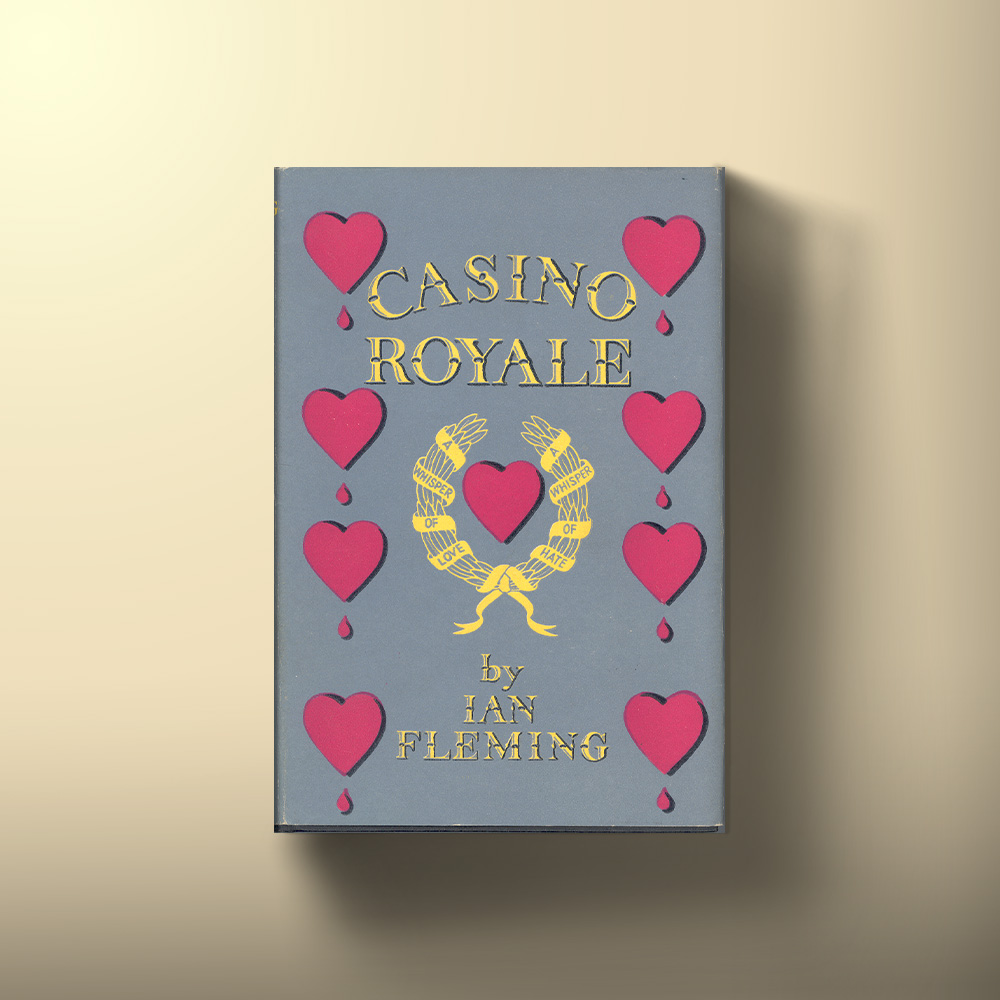
Book cover of Casino Royale by Ian Fleming, featuring yellow typography and a repeated heart motif.

The War Becomes a Best-Seller

When Fleming set out to write Casino Royale, the ‘hot war’ had turned cold. Britain’s main enemies were communism and the various post-colonial nationalist movements that helped to bring down the empire. And yet, in most of Fleming’s Bond novels, the action as well as the villains all have some tie to the older conflict. Moonraker deals not only with the lingering fear of the Nazis’s V-2 rocket, but also the idea that some former Nazi scientists in Britain and America were still enraptured by the Hitlerian philosophy. According to Ben Macintyre’s For Your Eyes Only: Ian Fleming and James Bond, the inspiration behind mining Mr. Big’s boat in Live and Let Die and giving the Disco Volante a trap door in Thunderball may very well have been the 10th Light Flotilla, a special unit of the Italian Navy that Fleming saw operate in the Mediterranean during the war. Of course, Bond’s most enduring enemy, Blofeld, began his life of infamy as a Polish double agent who sent secret items to the Nazis ahead of their 1939 invasion of Poland.

Even Bond himself is a product of the war, for while serving as Commander Bond in the Royal Navy’s Intelligence Service, he earned his 007 title by killing what he describes in Casino Royale as ‘two villains’ — a Japanese cipher expert and a Norwegian double agent. And while Bond spends a small portion of the same novel conflicted over his role in the more morally slippery Cold War, he nevertheless decides to stay in the action as an agent tasked with eliminating or weakening some of the wrongs associated with the postwar fallout between the former Allies. In another way, the Bond novels can be read as a continuation of Fleming’s work during the war, as Bond, through fiction, reasserts British dominance on the world stage all the while re-living some of his creator’s experiences from his time as an intelligence officer.

Benjamin is a freelance journalist who has been published in The Atlantic, VICE, MI6-HQ, and others. He is a regular contributor to Literary007.com.

The Story Behind: The Diamond Smugglers

‘”There’s a big packet of smuggled stones in London at this very moment”, said M, and his eyes glittered across the desk at Bond’

On 15th September 1957, Ian Fleming’s true account of diamond smuggling in Africa was serialised by the Sunday Times. The articles were then bound together and published as a book the following year.  Sixty years on, we celebrate this fascinating piece of journalism which shows a side to Fleming’s writing career not often in the spotlight.

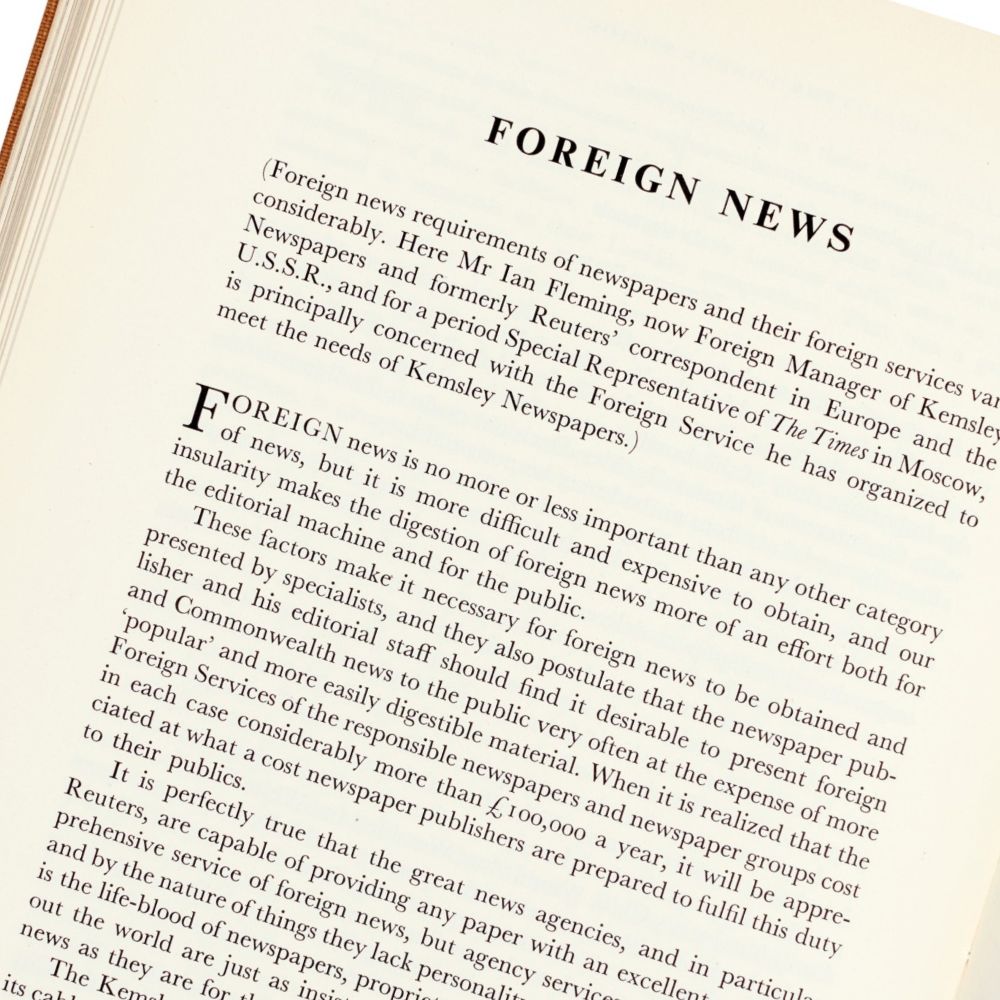
After a period studying in Europe, Fleming became a journalist in the 1930s for Reuters News Agency and covered stories such as the Metro-Vickers espionage trial in Moscow. After trying his hand at stockbroking and then working in Naval Intelligence during the Second World War, Fleming returned to journalism and became Foreign Manager at Kemsley News, owners of the Sunday Times. Fleming’s experience in journalism helped him to hone a quick and engaging writing formula which shaped his style as a thriller writer.

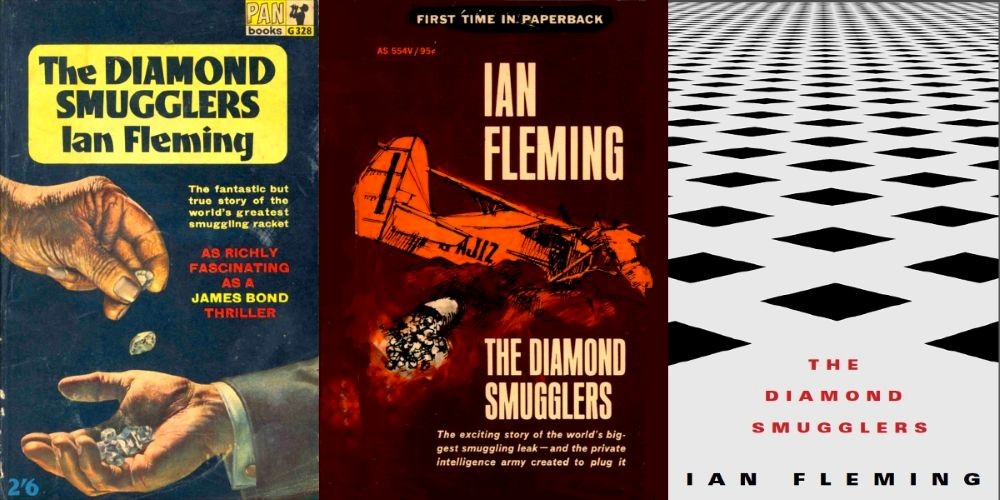
Paperback cover for The Diamond Smugglers by Ian Fleming.

Fleming first read a story about illicit diamonds leaving Sierra Leone in the Sunday Times in 1954. The article intrigued him and he was inspired to research it for the basis of one of his James Bond stories.  Diamonds Are Forever was published in 1956 and the following year, Fleming was invited to write an account of the experiences of a real-life diamond spy, resulting in The Diamond Smugglers

Here, Fergus Fleming, writer and Ian Fleming’s nephew, takes us behind the book.

When The Diamond Smugglers was first published Ian Fleming had a copy bound for his own library. On the flyleaf, as was his custom, he wrote a short paragraph describing its genesis. It started with the alarming words: “This was written in two weeks in Tangiers, April 1957.” As the ensuing tale of woe made clear, he didn’t consider it his finest fortnight. He ended with the dismissive verdict: “It is adequate journalism but a poor book and necessarily rather ‘contrived’ though the facts are true.”

It should have been a golden opportunity. The Sunday Times had acquired a manuscript from an ex-MI5 agent called John Collard who had been employed by De Beers to break a diamond smuggling ring. Fleming, whose Diamonds Are Forever had been one of the hits of 1956, was invited to bring it to life. Treasure, travel, cunning and criminality: here were the things he loved. Flying to Tangier – home to every shade of murky dealing – he spent ten days interviewing Collard, for whom he had already prepared the romantic pseudonym “John Blaize” and the equally romanticised job description of ‘diamond spy’.

The glister tarnished swiftly. He visited neither the diamond fields of Namibia or Sierra Leone, with which the story was primarily concerned, but sat in the Hotel Minzah typing up his notes. It rained constantly and he found the landscape dull. There was little scope for literary flair, his more extravagant flourishes being blue-pencilled routinely by Collard. When the final version was serialised by the Sunday Times in September and October 1957 further material had to be excised under threat of legal action by De Beers. “It was a good story until all the possible libel was cut out,” Fleming wrote gloomily.

Yet if The Diamond Smugglers was a disappointment to its author it still contains flashes of Fleming-esque magic. Amidst the Tangerian alleys he strays unerringly to the thieves’ kitchen of Socco Chico, “[where] crooks and smugglers and dope pedlars congregate, and a pretty villainous gang they are.” Travelling with ‘Blaize’ to the Atlantic coast, he encounters a forest of radio masts – still one of the world’s communication hubs – where they “could imagine the air above us filled with whispering voices.”

Later, as they walk down the beach they stumble (literally) on a shoal of Portuguese Men of War driven ashore by a storm. Alone on the tip of Africa, with the coast stretching 200 miles to Casablanca, the sea running uninterrupted to America, and a carpet of jellyfish beneath their feet, the two men conduct what has to be one of the most surreal interviews in history. “It amused Blaize to stamp on their poisonous-looking violet bladders as we went along,” Fleming wrote, “and his talk was punctuated with what sounded like small-calibre revolver shots.”

Today The Diamond Smugglers is one of Fleming’s least known works. But in its time it was one of his most commercially valuable. It sold in its hundreds of thousands. No sooner was it in print than Rank bought a film treatment for the princely sum of £12,500. (Further misery: he had to split the proceeds with Collard and the Sunday Times.) Nothing came of the project. But in 1965, by which time Fleming was dead and Bond a worldwide phenomenon, it flared briefly into life. Items concerning its progress featured in the press: a thrusting young producer had it in hand; John Blaize would emerge as a new Bond-like character; Kingsley Amis had been hired to write the script; the drama would be intense. After a while the announcements became slightly plaintive. And then they stopped.

More than forty years later it remains something of a conundrum; a journalistic chore that its author disliked but which nevertheless became a best-seller and very nearly his first film; a book that is neither travelogue nor thriller but combines the discarded hopes of both; a tale of international intrigue and exploding jellyfish that leads to the final question: “Who wouldn’t rather play golf?”

It is a wry, unplaceable thing, but all the more interesting for that. Certainly it doesn’t live up to Fleming’s self-damning critique. Take this sentence from the opening paragraph:

“One day in April 1957 I had just answered a letter from an expert in unarmed combat writing from a cover address in Mexico City, and I was thanking a fan in Chile, when my telephone rang.”

If you’re given a line like that you can only read on.

Fergus Fleming is the author of The Man with the Golden Typewriter: Ian Fleming’s James Bond Letters. 

The Story Behind: Ian Fleming The Journalist

Writer Tom Cull takes a stroll through London and examines Ian’s career as a journalist, before he found fame with fiction.

On a quiet Sunday in the City of London, I re-traced some of Ian Fleming’s old haunts during his journalism and banking days, including what used to be the Reuters building at The Royal Exchange. It occurred to me that it was here that Ian Fleming got his first taste of writing professionally. Throughout his career, journalism formed an important part of his research and inspiration, before finally becoming a way to remain ‘part of the action’ after the war.

His well-documented two month break in Jamaica to write his James Bond novels was a feat of discipline and economy; writing quickly and accurately and never looking back, trusting totally in his technique. Many writers, including the prolific Raymond Chandler, found this timetable astonishing. He asked Ian in an interview in 1958 how he could write so quickly with all the other things that he did, and remarked that the fastest book he ever wrote was in three months. So, from where did Ian Fleming acquire this skill?

For this we must go back to Monday October 19, 1931.

Fleming was given the responsibility of updating over 500 obituaries, work which his editor-in-chief described as ‘accurate, painstaking and methodical’. But soon, his superiors realised he could be of better use in the field. He was sent to Austria to cover the Alpine Motor Trials (Coupe des Alpes) in the summer of 1932 and thrived on the excitement of it all.

When an intriguing assignment came up in Stalin’s Russia, to report on a court case involving British construction workers (tantamount to a show trial), Fleming was called up. His ‘smattering of Russian’ and the fact that the regular Reuters Moscow correspondent might have had his Russian sources compromised meant that this was Ian’s big break. It was also his first exposure to the dark underbelly of Soviet communism that would pique his interest in cloak and dagger matters and mark Russia out as the political bête noire for the West. His reporting again impressed his peers. He turned in articles on tight deadlines. Ian described his training at Reuters as giving him a ‘good, straightforward style’ and there he learned to write fast and accurately because at Reuters ‘if you weren’t accurate you were fired, and that was the end of that.’

He returned to England to an offer of a higher salary and posting to Shanghai but his earning potential was not quite what he was after. His brother Richard had entered the flourishing family banking firm and it was suggested that Ian had hoped to inherit money from his grandfather, but when this didn’t happen, he decided to go into the City for himself. Doors were being held open for Ian as a fait accompli as he conceded:

‘I loathe the idea from nearly every point of view, and I shall hate leaving Reuters. But I’m afraid it has got to be done.’

In 1933 he was offered a job at the stockbroking firm Cull and Company on Throgmorton Avenue; where he worked for two years before joining Rowe and Pitman, the company from which he was recruited by Naval Intelligence. Fleming’s brief but formative years in journalism would not be his last, as after the war he returned to Fleet Street to work for Kemsley Newspapers as their Foreign Editor, providing him with the perfect opportunity to remain at the heart of things. Another opportunity to hone his craft, collect information, or ‘gen’, and keep his hand in with old contacts from the intelligence world. His friend from SIS days Nicholas Elliott, for instance, kept in touch with Fleming and offered his help if ever he needed a ‘useful piece of information from one of his many City contacts.’

Instead of running agents, Fleming was running foreign correspondents such as Richard ‘Dikko’ Hughes, stationed in Japan, and Anthony Terry who was stationed in Berlin. Two great friends who were to provide him with inspiration and crucial cultural and geographic details for his James Bond adventures You Only Live Twice and The Living Daylights, as well as his non-fiction work Thrilling Cities.

Fleming’s page-turning style owed a debt to those early years at Reuters, which remains to this day one of the largest news organisations in the world.

Tom Cull runs Artistic Licence Renewed. He knew iconic Bond cover artist Richard Chopping well as a child and Tom’s great grandfather hired a young Ian Fleming to work at the family bank Cull & Co. between 1933 and 1935.

The Story Behind: The Living Daylights

Writer Tom Cull takes us on a journey into Fleming’s short story of assassination on the streets of Berlin; the fulcrum of Cold War tension.

The Living Daylights had a few working titles including Trigger Finger, but first appeared in The Sunday Times colour supplement in 1962, under the title Berlin Escape. Written in two weeks at the end of September, before On Her Majesty’s Secret Service and after the disappointing reception of The Spy Who Loved Me, this short story was a serious, back-to-basics effort, which took Bond to his secret service roots. Not for nothing did Bond own a Double-0 status and this was Fleming’s way of proving it: by the no-nonsense briefing from M, target practice at the Century Range in Bisley, then off to Berlin to assassinate a deadly KGB sniper codenamed Trigger.

Original Magazine Trigger Finger

It is a taut, tough and brutally realistic window into a fraught Cold War Berlin, which by 1961 was still emerging from economic and political divisions from a war that destroyed 50% of the city and left 8 million dead. Two very different political ideologies were pitted against each other between the Soviet socialist sector in the East of Berlin and the Allied sector in the West. The Soviets dismantled much of the industries and transport that existed, which encouraged a thriving black market economy and culminated in the ultimate segregation – the Berlin Wall. When Fleming visited Berlin for part of his Thrilling Cities volume, he described the Eastern Sector where ‘death and chaos and, worst of all, present drabness hang most heavily in the air.’

Fleming knew Germany well from his education and travels, but to reflect the state of play on the ground during the Cold War with the right verisimilitude, he turned to a trusted colleague and friend, who was every bit as skilled as Bond; Anthony Terry.

Terry had worked under Fleming for the Mercury Foreign News Service in Vienna, Bonn, Paris, and most importantly, Berlin. Terry had been one of MI6’s most successful agents during WW2 and his knowledge of Berlin provided a wealth of intelligence, or ‘gen’ as Fleming would commonly say. He ran his foreign correspondents at the newspaper much like he had whilst in Naval Intelligence, and the lines were often blurred as to whether he was seeking news stories or genuine intelligence to relay back to his former employers. One such recipient was the MI6 officer Nicholas Elliot, who was at Durnford School with Fleming and became famous for the disappearance of Lionel ‘Buster’ Crabb and the defection of Kim Philby on his watch.

Terry’s detailed knowledge of Germany provided Fleming with local news and gossip on Berlin for his regular Atticus column (chronicling a range of obscure incidents, interesting facts and mild gossip) at The Sunday Times, as well as much of the location information for the chapter on Berlin in Thrilling Cities. Letters between the two frequently flowed between Kemsley House and wherever Terry was at the time in Germany. Fleming’s more light-hearted letters, still revelling in the cloak and dagger aspects of the work, were met with Terry’s precise (and lengthy) replies; the hallmarks of an intelligence officer.

In a letter sent to Fleming in 1956, Terry wrote responses to questions (with alternative scenarios) for Fleming to use for his next story, even including tram numbers and building addresses. The detail was remarkable. Fleming responded in a letter to Anthony Terry on 17th July 1956:

‘You really shouldn’t have taken so much trouble. You have practically written a thriller and I was fascinated by all the gen.’

Fleming had moved to 4 Mitre Court, just off Fleet St., after finishing with The Sunday Times, and continued to correspond with Terry – this time more as friends than as business associates. On 31st October 1961 Fleming, without hesitation, wrote to Terry for advice on his next story, to be set in Berlin. For example, he asked about which sectors Kochstrasse and Wilhelmstrasse were in order to accurately portray the apartment buildings where Bond and Trigger are respectively holed up waiting for Agent 272 to make a run for it between the East and West sectors.

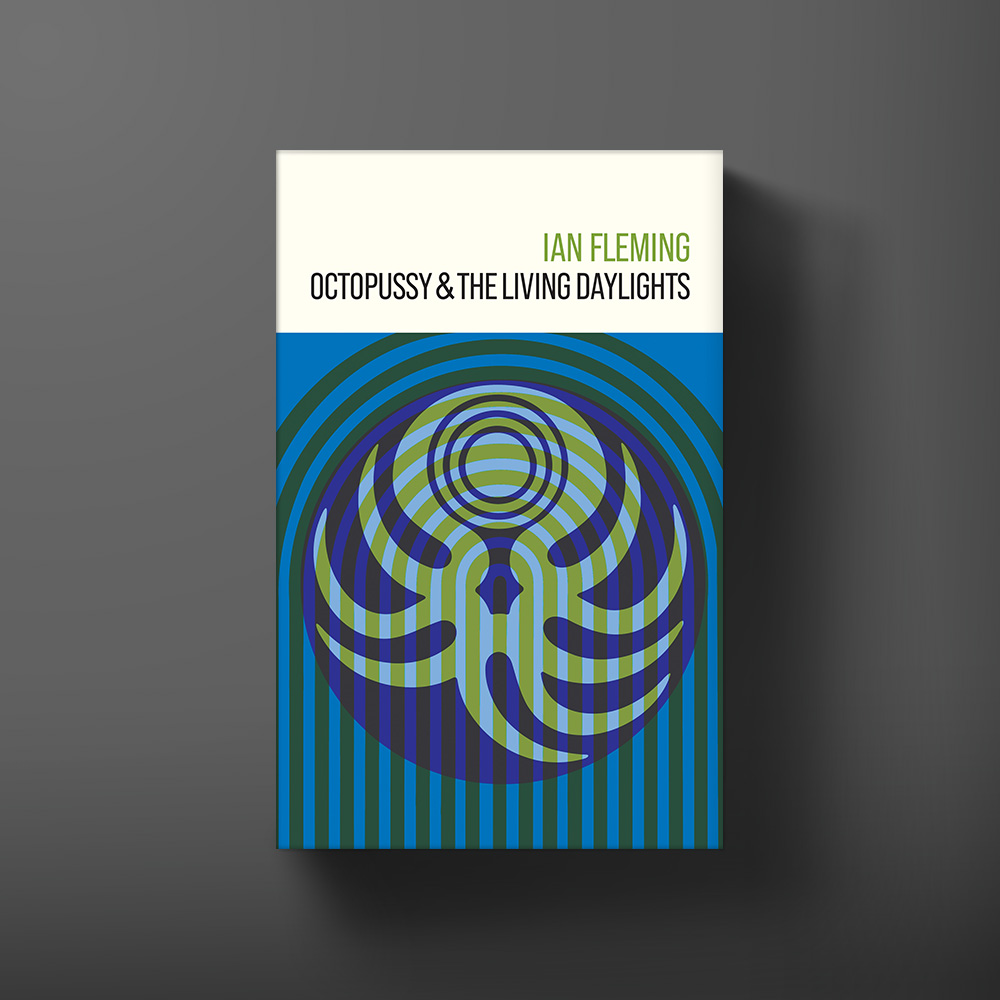
Hardback book cover for Octopussy and the Living Daylights by Ian Fleming, designed by Michael Gillette.

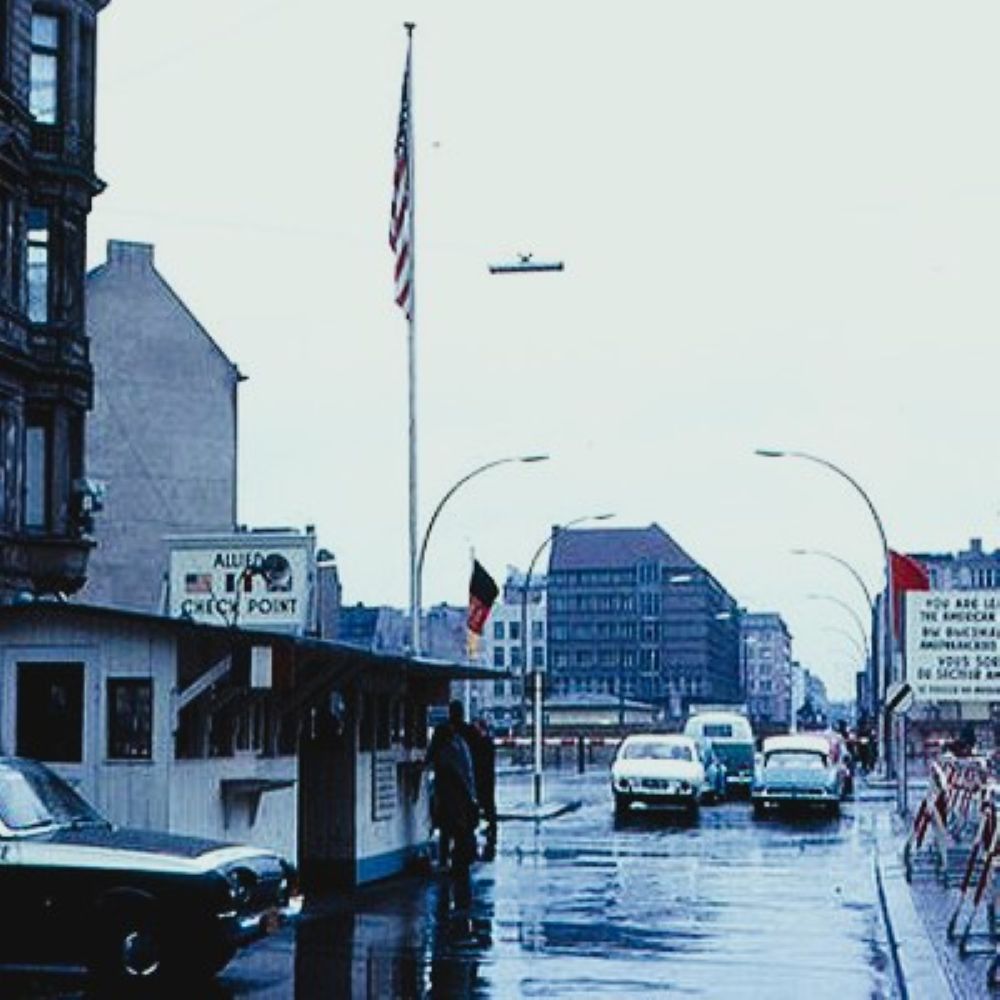
The crux of the drama takes place over the three days and nights where Bond waits patiently to take the shot from 40a Wilhelmstrasse, one block away from Checkpoint Charlie. This crossing point between the East and West sectors was designated for foreigners and members of the Allied forces and later became a renowned symbol for the Cold War. Today it is a tourist attraction, but in 1962, when The Living Daylights was written, this might have been the first introduction to it for his readers, despite several incidents there. The story eerily foreshadowed the death of an East German teenager Peter Fechter on 17 August 1962, six months after the story was first published. Fechter was shot by East German guards when trying to cross the wall into the West and bled to death a few metres inside the Soviet sector.

A tedious enough task as it was for Bond, he suffers further from the company of straight-laced staff-man Captain Paul Sender, nervously watching over him all the time with only a bottle of Dimple Haig and a copy of Verderbt, Verdammt, Verraten (a fabrication of Fleming’s) as respite.

Through Sender’s character, Fleming inserts a dig at Wykehamists (former pupils of Winchester College) on several occasions. Bond paints him as a tea or a Horlicks man and learns all he needs from his tie:

Bond knew the type: backbone of the Civil Service; over-crammed and under-loved at Winchester; a good second in PPE at Oxford; the war, staff jobs he would have done meticulously; perhaps an OBE.’

He even has a ‘Wykehamist snore’.

As the action unfolds, the noise of the orchestra cleverly masks the KGB’s gunfire as they try to prevent the agent whom Bond has been sent to protect, escape to the West. It is commonly suggested that this idea was inspired by Pat Reid’s true-life escape from the Colditz prisoner of war camp, where two escapees ran across a courtyard under the cover of orchestra noise. The conductor of the Colditz orchestra was Reid’s fellow POW Douglas Bader, who happened to be a golfing partner of Fleming later in life.

Bond assumes his target, ‘Trigger’ is a man but it turns out to be the beautiful woman he had spotted with the orchestra earlier carrying a cello case. The inspiration for this character was clear:

‘Of course Suggia had managed to look elegant, as did that girl Amaryllis somebody.’

This is a reference to Fleming’s sister Amaryllis Fleming, who was a celebrated cellist and had been mentored by the Portuguese concert cellist Guilhermina Suggia.  Amaryllis was a very popular member of the Fleming clan. In Fergus Fleming’s biography Amaryllis Fleming, he mentions that Ian had even offered her royalties from From Russia, with Love, so it was fitting that she should have been immortalised at some point within one of his stories. She solemnly returned the favour by playing Bach’s Sarabande in C-minor at Fleming’s funeral.

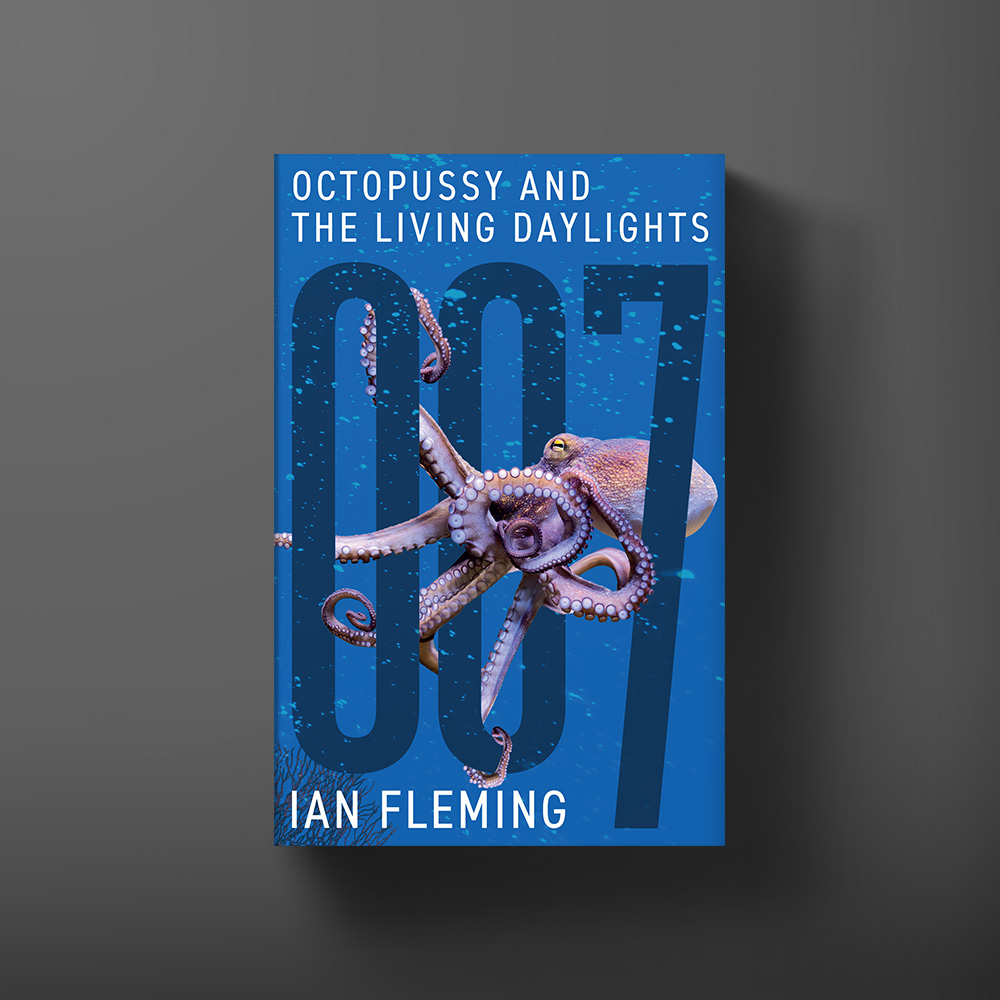
Paperback book cover for Octopussy and the Living Daylights by Ian Fleming.

Yet perhaps another inspiration, not directly indicated, came from a real-life Russian sniper – one who was responsible for fifty-four confirmed kills, including enemy snipers during the Battle of Vilnius. Roza Shanina was a beautiful, blonde Russian sniper and was among the first female snipers to receive the Soviet Medal for Courage. Roza only lived to be 20 years old, killed in battle in 1945, but her legend as ‘the unseen terror of East Prussia’ lived on. Might Fleming have had her in mind for ‘Trigger’ too? It’s certainly possible… Fleming’s ‘Trigger’ was luckier than Roza. Bond could not bring himself to kill her, instead shooting her Kalashnikov from her hands. When quizzed by Sender as to why Bond let her off, he remarks:

‘Certainly broke her nerve for that kind of work. Scared the living daylights out of her. In my book, that was enough.’

Ours too.

Tom Cull runs Artistic Licence Renewed. He knew iconic Bond cover artist Richard Chopping well as a child and Tom’s great grandfather hired a young Ian Fleming to work at the family bank Cull & Co. between 1933 and 1935.

The Story Behind: Ian & Maud

The diaries of Maud Russell, A Constant Heart, shed interesting light on Ian Fleming’s War years. Here Josephine Lane examines their contents and shares insights into this intimate and significant relationship.

 On the 8th February 1944, Maud Russell wrote in her diary,

‘Yesterday I. came to dinner, looking well and busy with a dream, the dream being a house and 10 acres on a mountain slope in Jamaica after the war.’

‘I.’ was none other than Ian Fleming, who went on to realise this exotic dream in 1947 by buying an old donkey racetrack in Jamaica where he built GoldenEye, the home which sheltered him from the bitter British winter and where he wrote his James Bond novels every year from 1952 until his death in 1964.  Russell’s recently published war diaries reveal that it was her gift of £5,000 that enabled Fleming to build this creative sanctuary which nurtured the rise of his fictional hero. But who was Fleming’s generous benefactor and what significance does their relationship with each other hold?

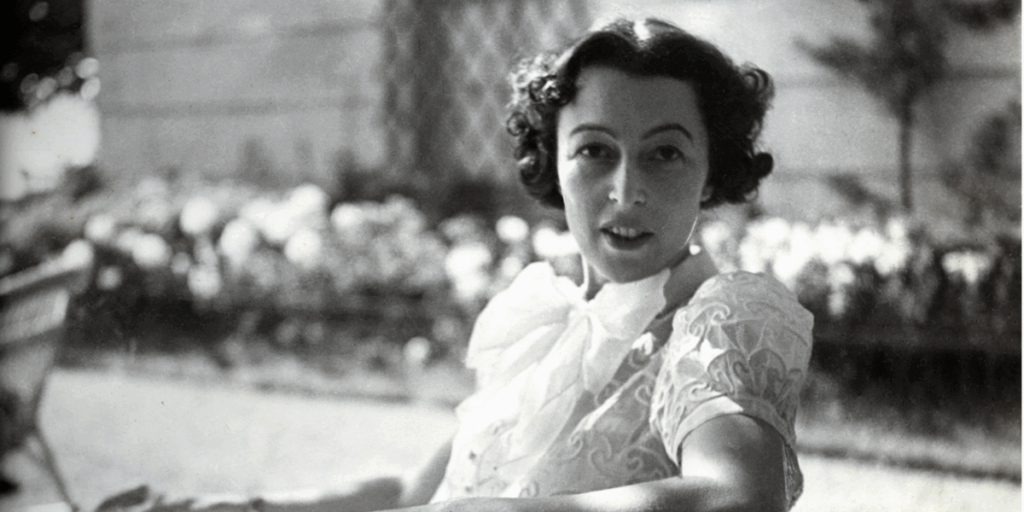
Born in 1891 to German Jewish parents who had settled in London in the 1880s, Maud Russell was a society hostess and one of the foremost French art collectors of her time. She married Gilbert Russell, a stockbroker and cousin of the Duke of Bedford, during the First World War and they lived between the beautiful Mottisfont Abbey in Hampshire and their house in Cavendish Square in London. Gilbert introduced Maud to many politicians and members of the aristocracy while her interest in the arts encouraged a host of artists, writers, society figures and musicians into their social circle. Amongst them was Ian Fleming who Maud described as having the ‘handsome looks of a fallen angel.’ Although Maud was quite a few years older than Ian, their relationship blossomed from casual acquaintances to intimate friends and likely lovers.

A Constant Heart: The War Diaries of Maud Russell 1938-1945 is skilfully and affectionately edited by Maud’s granddaughter Emily Russell and reveals an intimate portrait of an intelligent and independent-minded woman who was surrounded by influential people of the day. The book is bursting with references to key figures of the time, such as this auspicious entry about a new acquaintance she met when dining with Lord Louis Mountbatten in 1942, ‘At lunch there was his nephew Prince Philip of Greece, a nice looking man, who speaks perfect English and is in the Navy. It struck me afterwards that he would do for Princess Elizabeth.’

Maud’s passion for art led her to be acquainted with several exceptional artists of the day and the diaries record lunches with Matisse, for whom she sat in the 1930s, members of the Bloomsbury Group and the photographer Cecil Beaton. She was also close friends with the artist Boris Anrep who specialised in the art of mosaic and whose work can be seen in the foyer of the National Gallery; a project funded by Maud. Undoubtedly her most important artistic relationship during this period was with Rex Whistler whom Maud commissioned to undertake a stunning and vast trompe l’oeil in what is now known as the Whistler Room at Mottisfont Abbey.

As well as documenting meetings with interesting figures from the 1940s, the diaries open a captivating window into a very unique perspective of life during the Second World War. They are a stark reminder of the great uncertainty and the daily anxiety faced when victory against the Axis powers was by no means guaranteed and international freedom was at grave risk. ‘I was in a rage all day and mad to think we have so miscalculated the German forces as to be in danger of losing Egypt… I roared myself hoarse.’

But few fights were more personal than Maud’s own endeavour to help her Jewish relatives living in Germany. On the 9th–10th November 1938 there was an atrocious, nationwide attack on the Jews in Germany, which came to be known as Kristallnacht – the Night of Broken Glass. Approximately 1,000 synagogues were burned, 7,000 Jewish businesses were destroyed, 91 Jews were murdered and tens of thousands more were arrested and interned in concentration camps. The situation was critical and Maud not only campaigned for visas for her relatives but actually flew to Cologne in December, risking her own safety to help her family. ‘I had arrived on the day when all Jews in Germany were ordered to stay indoors between 8am and 8pm so I wondered whether my appearance might arouse comment, but it didn’t.’ The courage and fearlessness of such actions inspire limitless admiration.

‘I think these months are enormously significant and interesting but I wish I was living on another planet.’

The diaries also bear witness to the death of Maud’s beloved husband Gilbert, who died of asthma in 1942. These passages are incredibly moving, as Maud unravels her grief and processes her loss;

‘The main, the fullest, the richest and the most feeling part of life ended with him. I gave him all the tenderness I possessed. There was little over.’

Reading through the diaries it becomes clear how vital her relationship with Ian Fleming was, particularly during this difficult time, ‘His solid friendship helped me these days. He understood how I felt about G. I think he was very distressed about Gilbert himself.’ Indeed, it is likely that Gilbert Russell engineered Fleming’s role in Naval Intelligence during the War and in turn Ian helped Maud to obtain a post in the Admiralty after Gilbert’s death in her bid to forge a new life.

‘He loves his NID work better than anything he has ever done, I think, except skiing.’

The diaries reveal an intimate closeness and fond affection between Ian and Maud, who meet at least once a week throughout the war. An outcome of this is the extraordinary insight the diaries provide into Fleming’s wartime activities. Amongst other things she notes that Fleming broadcasts directly to the Germans, tours the coastal defences, witnesses the Dieppe raid from a destroyer and visits Spain and Portugal to discuss intelligence matters with Roosevelt’s special envoy. A particularly shocking anecdote is recorded in November 1941,

‘He has been on some dangerous job again. He cannot ever tell me what they are.  A house in which he was dining was blown from under him. He and his friends were left marooned on the third floor, the staircase and most of the floors below were blown away. Eventually there was a tap at the window, a fireman’s head appeared and they left the house by the fireman’s ladder. The story was told as if there hadn’t been any danger.’

‘We discussed how either would know if the other was killed.  Not knowing at once gives an empty blank feeling.’

There are hints throughout the diaries that Ian and Maud’s relationship was more intimate than mere friendship. Maud provided Ian with his identification tag during the War (which he stipulated be made of gun-metal) and Emily Russell reveals that she found an envelope labelled ‘I.’s’ containing a lock of black hair, amongst her grandmother’s possessions. However, most telling of all is this touching and raw recollection, ‘He talked about marrying me, I had qualities he wants to find. I said, ‘No, ages makes it impossible.’ He said, ‘If I was five years older.’ ‘No,’ I said, ‘If you were at least 10 years older.’ For he is sixteen and a half years younger than me. If he were 10 years older I would marry him, but it’s no use a woman of 52 trying to keep pace with a man of 36. After a few years he might fall in love and want me to release him. I should do it and be alone again after much pain and drama, a good deal older, and in still greater need of compassion. He is very good to me.’

A Constant Heart front cover

A Constant Heart is a fascinating book, documenting a period of great international importance from a very personal perspective. Maud Russell’s concise and witty records set within an awe-inspiring social circle are a joy to read and her relationship with Ian Fleming is both moving and surprising. Little was known about Maud’s role in Ian’s life before the publication of these diaries and it is a pleasure to encounter Fleming from her perspective as a kind and thoughtful friend. And perhaps her influence runs deeper still. Without her generous gift of £5,000 who knows whether Fleming would have had the peace, quiet and solitude to dedicate himself to devising the deeds of agent 007. But when one learns that he addressed his correspondence to her as ‘Dear M.,’ perhaps it could be argued that her impact was even more fundamental to the literary lore of James Bond.

A Constant Heart: The War Diaries of Maud Russell 1938-1945 is published by Dovecote Press. Photographs courtesy of Dovecote Press and Emily Russell.

The Story Behind: The Casino Royale Graphic Novel

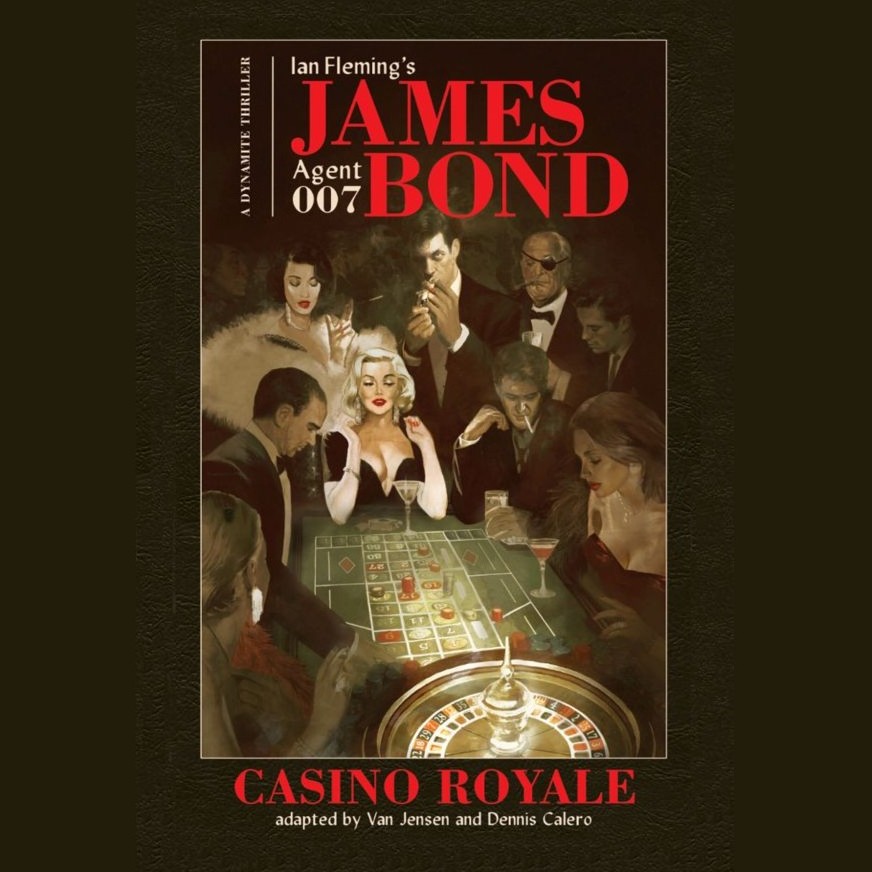
Love Casino Royale? Discover the graphic novel. Adapted by Van Jensen, with stunning artwork by Dennis Calero and a cover by Fay Dalton, this visual delight is a fantastic addition to the James Bond library.

When Ian Fleming’s Casino Royale was first published in 1953, it struck a chord with its readers. Britain was reeling from World War Two, rationing was still in force and the nation’s global importance was on the wane.  Audiences reached for Casino Royale to indulge in escapism and to believe in the vision that, behind the scenes, Britain was still a major player. The fanciful yet brutally real world Fleming created was entertainment in its purest form.

 The first time we meet James Bond, he is not what one might expect.  We join him in a French casino at 3am where the air is stale and the mood is sombre. Far from being the slick superhero familiar to film audiences, he is a dark and brooding character on the edge of his nerves. The faded glamour of the casino at Royale-les-Eaux perfectly enhances the ‘dirty business’ of spying and creates a low-lit and moody setting for the tense power play that unfolds across the baccarat table. 

Bond’s mission is to attack the Soviet machine, SMERSH, by bankrupting one of their agents, the avaricious and ruthless man known as Le Chiffre. The two men go head-to-head in a battle of wits but little does Bond know that his enemy holds the trump card all along. The calm elegance of the casino contrasts perfectly with the violent battle between the two men, and the unpredictable charm of luck runs through the heart of both the cards and the game of espionage.

Adapting Casino Royale into a graphic novel is no mean feat. Readers of the original will attest that the thrill of the experience comes as much from the pace of the plot as Fleming’s lively style. The graphic novel as a medium demands that images conjure the atmosphere and that the nuances of character must be shown in expression and language rather than relying solely on description. So, the first challenge of this project was to create a script that would encapsulate the essence of Fleming’s novel without overloading the artwork with too much text.

With this in mind, writer Van Jensen began by selecting Casino Royale’s most crucial scenes and dialogue to construct a comprehensive and accurate script. Alongside this, there would be two further elements to make the project as faithful to the original as possible. The first of these comes directly from Fleming, whose narrative voice presides and his unique turn of phrase is preserved in order to accentuate the actions and atmosphere. For example: ‘Like an octopus under a rock, Le Chiffre watched him from the other side of the table’, or the novel’s famous first line: ‘The scent and smoke and sweat of a casino are nauseating at three in the morning’. Fleming’s gift for sensual description and characterful attributions to inanimate objects, such as describing playing cards as, ‘inert like two watchful pink crabs’ are key to successfully evoking the spirit of the original.

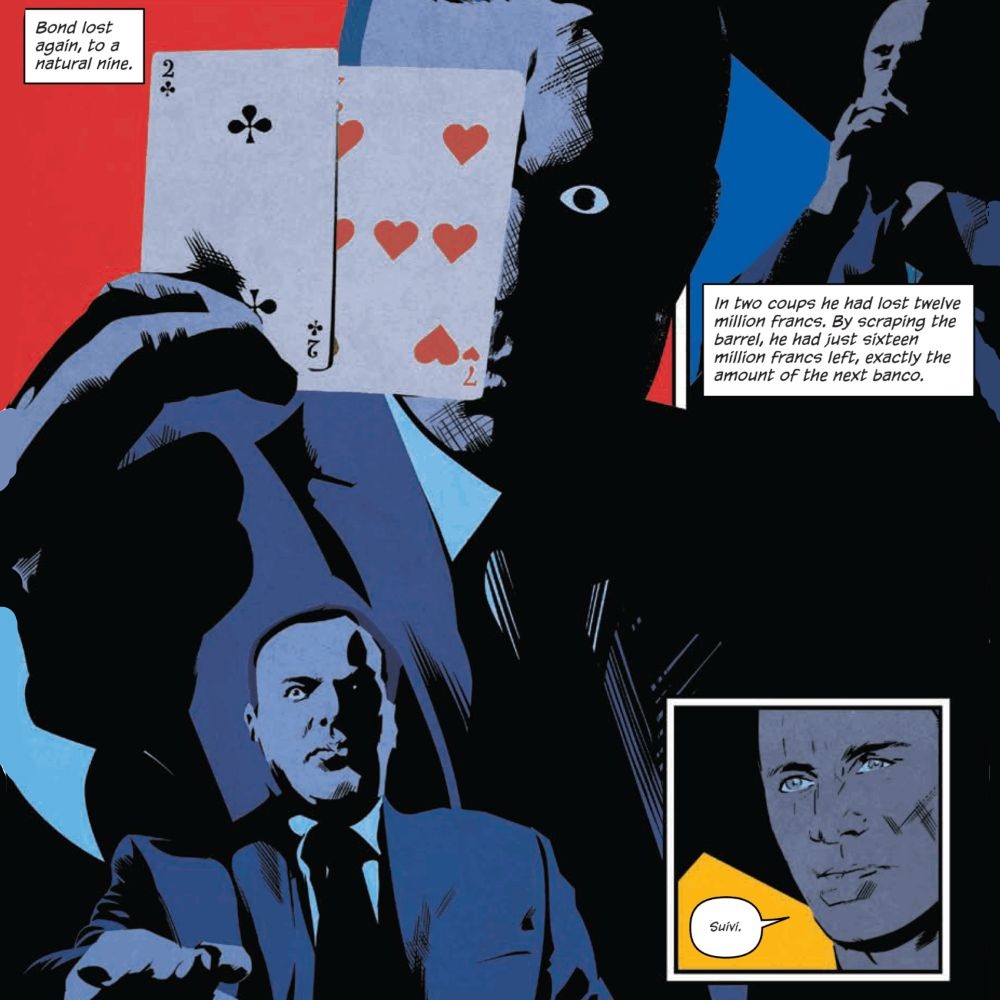
The second element is what Jensen has coined ‘Bond View’, in which, during the course of a scene, we see Bond’s analytical mind highlighting dangers and commenting on the people, objects and setting around him. These additional captions appear in white text outside of the word balloons, arranged close to their subject in the panel. Again, they take their cues from Fleming, translating Bond’s world-view into a visual form. This includes the quick calculation of risks, the habits and observations of a trained secret agent, and the preferences and opinions of Bond the man.

Of course, all of this rests on top of new original art by Dennis Calero. A master of shadows and dramatic lighting, his style sings to the tense, atmosphere of the novel, and the paranoid and careful life of a spy at work. The moment Bond sets foot in Royale-les-Eaux, he is under scrutiny and in danger, and the visual tone is a constant reminder of this. When combined with colouring by Chris O’Halloran, the book achieves a visceral quality that fits perfectly with Fleming’s Bond. Violence is felt as well as seen, the sensory overload of the casino is palpable, and the narrative crescendos explode into mesmerising spectacle.

The graphic novel of Casino Royale is a faithful adaptation, with a new dimension and fresh energy.  Although the original story was conceived in a very different time for a very different audience, this version aims to transcend the years and deliver the same tension and power that enraptured readers all that time ago.


The Gold Standard: Ian Fleming’s Goldfinger

Writer Tom Cull talks about Goldfinger, a book full of iconic images, characters and scenes.

It is with little surprise that Anthony Horowitz chose to begin Trigger Mortis just at the point where Bond wraps up the case in Goldfinger. By his own admission, Horowitz has loved this particular Bond novel since childhood.

Goldfinger has Bond himself, tired and cynical after a dirty assignment at the start of the book. The sequence at Miami airport as he watches the sun set and considers the vicissitudes of fate is writing of the highest order.’

Ian Fleming’s Goldfinger is perhaps overshadowed in popular culture by the overwhelming success and iconography of the film adaptation. However, it is the novel that provided two of the greatest villains of all time in Auric Goldfinger and his henchman Oddjob, and of course one of the best Bond girls, Pussy Galore, who features in Horowitz’s Trigger Mortis. Perhaps occluded due to Gert Frobe’s excellent performance, is the fact that Auric Goldfinger’s Fort Knox plan speech was taken almost verbatim from the novel.

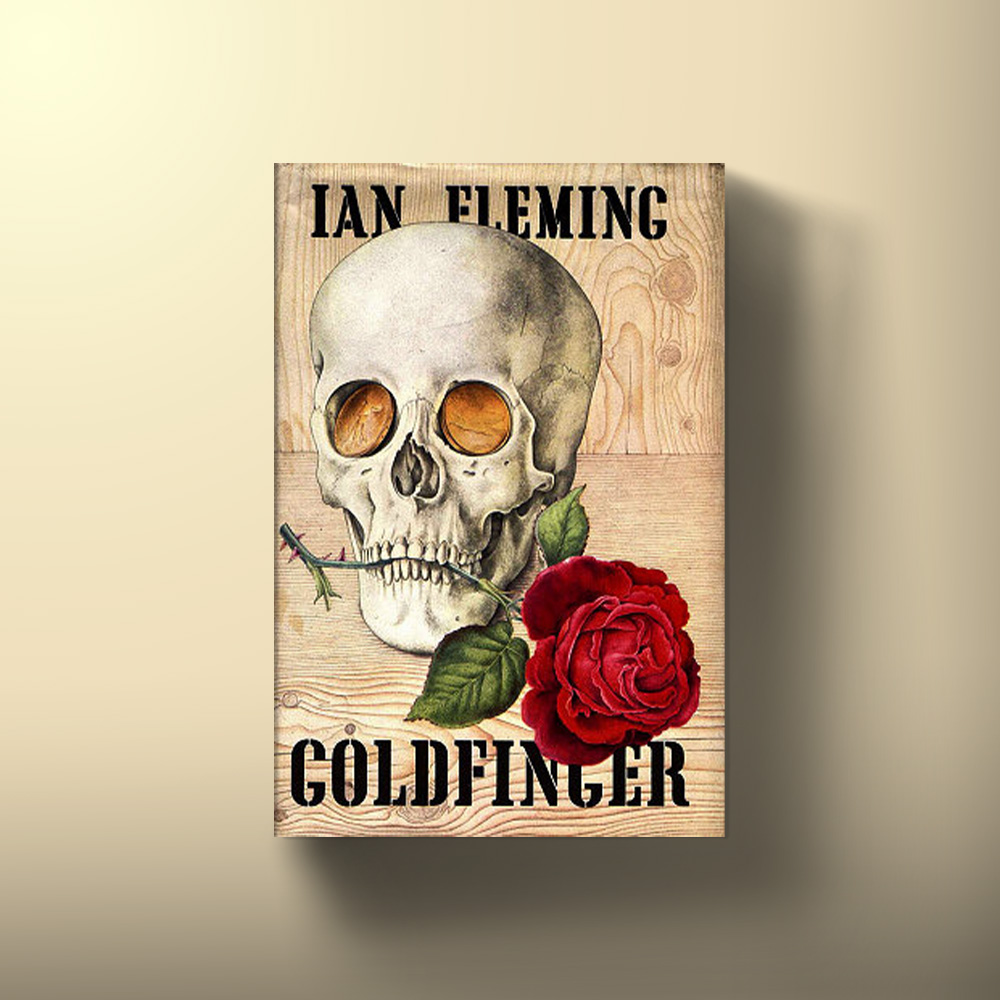
Book cover for Goldfinger by Ian Fleming, featuring an illustration of a skull with a rose in its mouth.

While her name might have raised eyebrows, Pussy Galore is in more ways than one Bond’s equal rather than a mere gender stereotype. She is a gang leader, a ‘trapeze artiste’. She is also impervious to Bond’s charms, until, as The Moneypenny Diaries author Samantha Weinberg puts it, ‘it suited her.’ Weinberg also noted that another tough woman in Goldfinger, Tilly Masterton, finds ‘her heart beating faster for Pussy Galore than it did for 007.’ These are no pallid damsels in distress.

Whereas many of Fleming’s other novels have an atavistic feel that speaks to the influences of thriller novelists of the early part of the century, Goldfinger is distinctly and unequivocally Fleming. Despite SMERSH’s existence as the omniscient threat in Goldfinger, Fleming is not bound by the Cold War or the Soviet apparatus that he so painstakingly captured in From Russia With Love, his fifth novel. The plot actually takes a back seat in Bond’s Aston Martin DB Mark III, whilst wonderful set pieces take the driver’s seat. Fleming overcomes these plot frailties by delivering memorable scenes with glorious self-indulgence and glee. Even with no hitherto interest in golf, readers cannot help but be enthralled by the gamesmanship between Bond and Goldfinger at the Royal St. Marks course.

‘As soon as Bond had hit the shot he knew it wouldn’t do. The difference between a good golf shot and a bad one is the same as the difference between a beautiful and a plain woman – a matter of millimetres.’

Book cover for Goldfinger by Ian Fleming, featuring silver detail on the hood of a yellow car, against a blue background.

It is perhaps no accident that the novel is best remembered for its individual scenes, since many were ideas that Fleming had originally conceived as short stories and plot devices for other project. Since many of them did make it into the novel, Goldfinger is one of Fleming’s longest endeavours, and as often is the case, Fleming drew on personal experiences in order to create these timeless characters and events. The modernist architect Erno Goldfinger, whose buildings Fleming abhorred, lent his name to Auric Goldfinger. Alfred Whiting, the golf pro at Fleming’s beloved Royal St. George’s golf course, became Alfred Blacking, a Royal St. Marks caddy. As in Moonraker, Fleming’s familiar setting of Kent is the backdrop, for Bond’s early encounters with Goldfinger. Yet whereas Moonraker lacks some international glamour, Fleming made up for this deficiency in Goldfinger by staging the action in a number of exotic and unfamiliar locations including Miami, Geneva, and Kentucky.

Goldfinger, published on 23 March 1959, was Ian Fleming’s 7th James Bond novel and was a great success which hit the top of the best-seller list almost immediately. Fleming was clearly proud of this effort and took on various promotional activities in order to show it off. The book also came complete with another outstanding Richard Chopping dust jacket cover, this one showing a skull with gold coins for eyes biting a rose. Chopping himself considered this piece to be his finest work in the series.

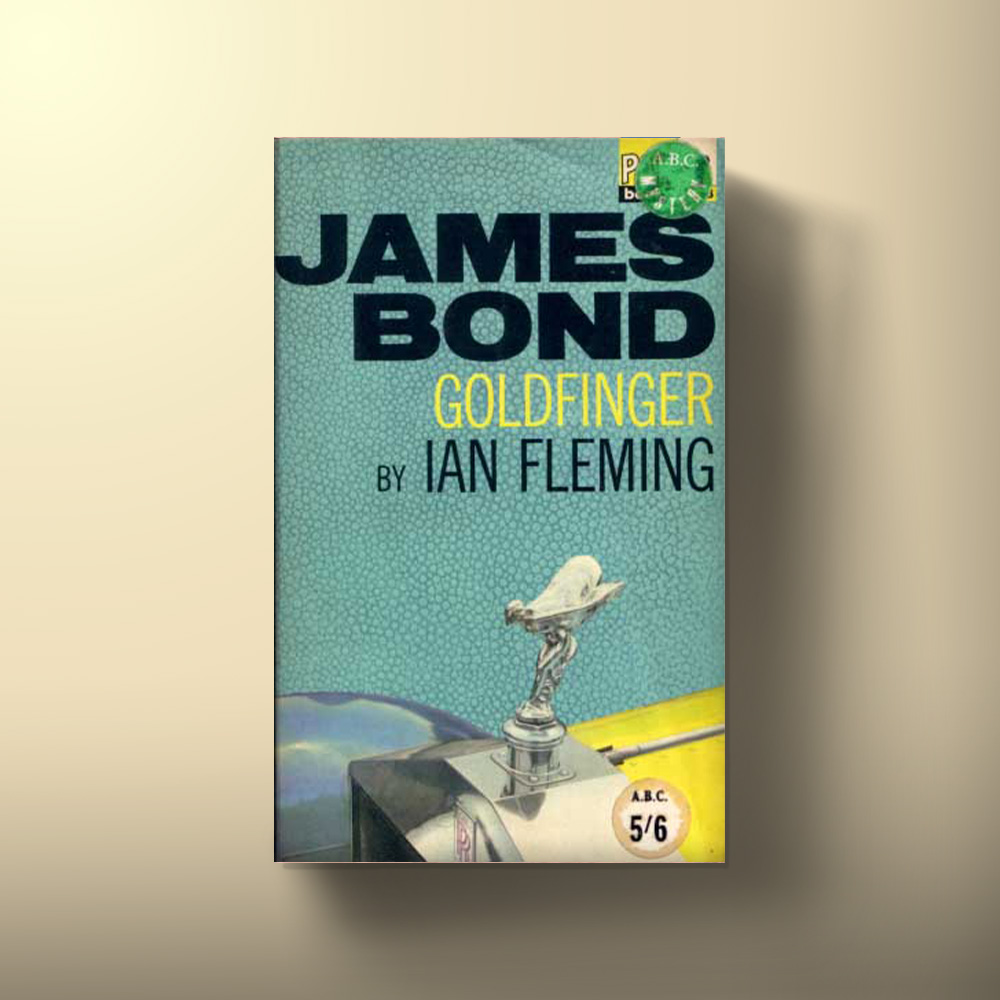
Paperback book cover for Goldfinger by Ian Fleming.

Critically, Goldfinger was better received than some of Fleming’s previous efforts. Even Anthony Boucher of The New York Times, who was Fleming’s arch-nemesis and a constant critic of James Bond, said ‘the whole preposterous fantasy strikes me as highly entertaining.’ In his 99 Novels: The Best in English Since 1939, Anthony Burgess perhaps unexpectedly selected Goldfinger as one of his honoured entrants, while O.F. Snelling, a friend of Fleming and the author of Double O Seven James Bond: A Report, perhaps puts it best when he writes that,

‘Ian Fleming walked an extremely shaky tight-rope across a pond of very thin ice when he wrote Goldfinger. What with its characters and situations, Goldfinger is the most bizarre example in a generally somewhat extraordinary output. But it is also, I submit, at the same time one of the best.’

Goldfinger sees Ian Fleming and his most famous creation at the height of their powers. Upon publication, the book also provided a welcome sense of escapism during a particularly tense portion of the Cold War. Take the time to relive Bond’s classic adventure.

Tom Cull runs Artistic Licence Renewed. He knew iconic Bond cover artist Richard Chopping well as a child and Tom’s great grandfather hired a young Ian Fleming to work at the family bank Cull & Co. between 1933 and 1935.

The Story Behind: The Man With The Golden Gun

Writer Tom Cull talks about The Man with the Golden Gun, the last of Ian Fleming’s 007 novels.

Eight months after Ian Fleming’s death, The Man with the Golden Gun was published. The birth of the final James Bond novel was difficult and its merits within the canon are still debated among aficionados.

Although Fleming had on many occasions claimed that he was finished with writing Bond books, he had completed the first draft of The Man with the Golden Gun by March 1964. After once again undertaking a Bond novel despite his rapidly deteriorating health, a word to his editor William Plomer at Jonathan Cape, rings with an eerie finality:

‘This is, alas, the last Bond and, again alas, I mean it, for I really have run out of both puff and zest.’

Along with Fleming’s reservations, the artwork for The Man with the Golden Gun also initially proved difficult. Once again Richard Chopping collaborated with Fleming on the dust jacket. Finding Scaramanga’s golden Colt .45 pistol too long to confine to a single panel, his artwork extended to the back of the jacket. Apparently, booksellers were not enamored with the experiment because it required them to open the book in order to display it properly. Now of course, it is regarded as a masterpiece of book jacket design and one of the few still affordable as a first edition.

Fleming’s Gambit

Despite this lack of “puff and zest”, the opening to The Man with the Golden Gun is as good as anything Fleming ever wrote. In summary, the opening is: fantastical, surprising, implausible, and tense. Classic Fleming.

The Service learns that a year after destroying Blofeld’s castle in Japan, Bond suffered a head injury and developed amnesia. Having lived as a Japanese fisherman for several months, Bond traveled to the Soviet Union to learn his true identity. While there, he was brainwashed and assigned to kill M upon returning to England, and during his debriefing interview with M, Bond tries to kill him with a cyanide pistol. Thankfully, the attempt fails.

The psychological tension between Bond and M is palpable in Fleming’s final Bond novel. We know that something’s not right, but we’re not entirely sure what it is until the meeting takes place and we see Bond attempt to assassinate his superior, whom he had previously “loved, honoured and obeyed.”  Without question, this unspoken, taut hostility between the two men is only successful because The Man with the Golden Gun explores Bond’s psychology more than any other Bond book.

Spy-thriller writer Charles Cumming, who wrote the introduction to the 2006 Penguin edition of The Man with the Golden Gun, reflected on this opening sequence:

“Given the author’s fragile condition, The Man with the Golden Gun is a remarkable success. The opening sequence is as good as anything Fleming ever received; I particularly love Moneypenny’s ‘quick, emphatic shake of the head’ as she desperately tries to warn Bill Tanner that something is amiss with Bond.”

After recovering from the episode, Bond is dispatched to Jamaica to assassinate Francisco Scaramanga, a.k.a., The Man with the Golden Gun:

“‘Bond was a good agent once,’ said M. ‘There’s no reason why he shouldn’t be a good agent again.’”

The Golden Misfire?

Fleming died before the manuscript could go through the usual process of a second draft and revisions.  If Fleming had had his druthers, he might have delayed the publishing of The Man with the Golden Gun, as Fleming biographer Andrew Lycett stated:

“He hoped he might be able to rework it when he was in Jamaica the following spring. But Plomer disabused him of that idea, telling him that the novel was well up to standard.”

Kingsley Amis, a confirmed Fleming fan, was asked for his opinion of the manuscript, but it’s debatable how many of his suggestions, if any, were used. “No decent villain, no decent conspiracy, no branded goods…and even no sex, sadism or snobbery” were just some of Amis’s objections.  His main criticisms concerned Scaramanga, whom he labeled a “dandy with a special (and ineffective) gun”.  To the celebrated novelist this seemed a bit thin considering Fleming’s usual prowess for creating well-drawn and memorable villains.  Amis was also concerned with the lack of what he called ‘The Fleming Sweep,’ Fleming’s signature use of rich detail.

With more hindsight, Amis tempered his earlier criticisms of The Man with the Golden Gun in a later collection of essays entitled What Became of Jane Austen.  According to Amis, there is no doubt that the lack of follow-up on plot points, such as why Scaramanga hires Bond as his trigger-man, is due to an uncharacteristically unconfident Fleming.  Amis suggests that the Bond-as-trigger-man  idea might be the responsibility of “an earlier draft perhaps never committed to paper, wherein Scaramanga’s hiring of Bond is sexually motivated”.  Amis goes on to muse that Fleming could have been in critical retreat after too many bashings, and chose not to pursue this idea.  However, according to William Plomer in Andrew Lycett’s biography of Fleming, he “can’t think that Ian had any qualms about ‘prudence.’”

Part of Amis’ ire was the result of holding Fleming to such a high standard, and Amis maintained that beneath all the dash and flair (and plot inconsistencies), there was “formidable ingenuity and sheer brainwork” in Fleming.  I tend to agree, and if The Man with the Golden Gun were to come out today by a new thriller writer, it would likely receive an overwhelmingly positive reaction.  However, in the context of Fleming’s oeuvre and his standing with the critics of his day, The Man with the Golden Gun never stood a chance.

Yet despite all the negative criticism at the time, history has been a little kinder.  Of late, The Man with the Golden Gun has undergone critical reappraisal, with acclaimed novelist and Bond continuation author William Boyd arguing for the book as one of Fleming’s “realistic” novels (rather than “fantastical”) in the introduction to the 2012 UK edition published by Vintage.

“Fleming’s Bond novels are full of implausibility and coincidences and convenient plot-twists – narrative coherence, complexity, nuance, surprise and originality were not aspects of the spy novel that Fleming was particularly interested in, and The Man with the Golden Gun is no exception.  And indeed Scaramanga’s eventual drawn-out demise is almost low-key, by Fleming’s standards, and as well written – in a brutal, deadpan sense – as anything Fleming achieved.”

Charles Cumming has even better things to say about Scaramanga:

“When 007 and Scaramanga are sizing one another up at the hotel, we are treated to dialogue worthy of Raymond Chandler.”

The Final Curtain

It is apparent that Fleming’s work rate and ingenuity were failing as we witness the end of him and his creation in The Man with the Golden Gun; a novel filled with unintended verisimilitude. After creating and defining a genre, it was mission accomplished for Fleming and Bond well before this novel and Fleming’s old enemy – boredom – was lurking in the wings years before the first sentence of The Man with the Golden Gun had been written.

‘[Bond] decided that he was either too old or too young for the worst torture of all, boredom, and got up and went to the head of the table. He said to Mr. Scaramanga, 2I’ve got a headache. I’m going to bed.”‘

The Man with the Golden Gun is also fittingly about Fleming’s relationship with his beloved Jamaica and the disintegration of British colonialism. Bond and Felix Leiter are awarded the Jamaican Police Medal for “Services to the Independent State of Jamaica”, which is a blunt nod to the end of British imperialism in Jamaica in 1962. In a final effort to hang on to the old vestiges of the British Empire, Fleming takes potshots at the new world power, the United States, and the perceived “Americanization” of the Cold War West. In his recent book Goldeneye: Where Bond Was Born, author Matthew Parker underscores these jabs at America by highlighting how the American-accented Scaramanga is depicted as a keen promoter of tacky Americanized resort hotels with “tropical jungle” dining rooms.

As if he were well aware that he had one figurative bullet left in the chamber, Fleming seized the chance to set the record straight about his creation in The Man with the Golden Gun. Namely, Fleming set out to dispel the notion of Bond as a snob by offering him the ultimate in status symbols – a Knighthood from the Queen. Bond declines, explaining to M: “I am a Scottish peasant and will always feel at home being a Scottish peasant.” One could read this as Fleming’s grand send-off to his critics, or one could see it as Bond’s defiance alone. Either way it presents the literary end for Fleming’s Bond and the very real finale for Fleming himself.

Tom Cull runs Artistic Licence Renewed. He knew iconic Bond cover artist Richard Chopping well as a child and Tom’s great grandfather hired a young Ian Fleming to work at the family bank Cull & Co. between 1933 and 1935.

Interview: Artist, Kevin Walker

In 2005, Kevin Walker was commissioned to draw the character of a 13-year-old James Bond for Charlie Higson’s first Young Bond adventure, SilverFin. He went on to illustrate a graphic novel of SilverFin in 2008 and cover art for the Young Bond books in the USA. We catch up with the British comic book artist to talk about his process and experiences in the Young Bond world.

Have you always been a James Bond fan? 

Absolutely, Bond is one of those iconic characters, you can’t miss. I came to the novels quite late, but I certainly watched all the movies from a young age. Young Bond was my chance to become a fairly prominent part of the whole James Bond universe.

Which is your favourite Young Bond book?

My favourite of the series is Charlie Higson’s Double or Die. I love the whole setting, with the analytical engine and the communist enemy, the whole feel of it being like one long chase in grim weather. It’s the one where James trashes his Aunt Charmian’s Bentley.

Where did you get your inspiration for the James Bond Origin comic covers?

I can’t take all the credit for that. I was asked to come up with Bond pin-ups that were reminiscent of WWII propaganda posters, and I didn’t want to go too close because the image still has to work as a cover. That’s how I came up with the idea of using the same formal layout design on each illustration.

articleimage5kw

What’s your process for creating a cover and how does it differ to illustrating comic strips?

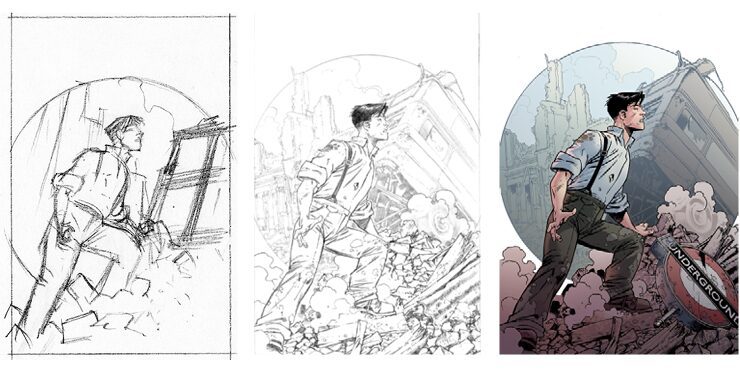
It’s actually the same process: rough sketches, finished pencils, inks and colours, with consultation in between each step. The difference is you don’t have to worry about continuity and narrative flow. You’re trying to tell a story in a single image. You can see the evolution of a piece of cover art here.

Three images showing the evolution of a piece of comic book cover art by Kev Walker. The pictures show a young man in WW2 London on rubble.

Which Young Bond action scene did you most enjoy illustrating? 

It’s where James confronts Mimic in the slum apartment, from Steve Cole’s Red Nemesis.

Where do you work?

I have a converted attic where I’ve been working for the last 10 years. A comfy chair and a table pitched at just the right angle, good lighting, a fan in summer and a heater in winter. I used to be able to work with music, but now I can’t. Any repetitive beat and I stop working and start listening to the music instead. I stream a lot of stuff – documentaries, any weird drama that I can listen to in the background while I work.

 Who inspired you to become and artist? 

The ones that made me want to become an artist in the first place were people like Ralph McQuarrie, Chris Foss, just masses of influences from all over the place. When you realise, as a teenager, that there are plenty of people making a living at it, you have to be single-minded, stubborn and a bit selfish to focus on doing it, despite all the naysayers that tell you you’ll never get a job in art… like my art teachers when I was 12 (and I have that in writing).

What advice would you give to anyone wanting to become a full-time artist?

The trick is to keep doing the things that make you happy, always keep looking, and don’t be afraid to try new things.

 Kev is known for his work on 2000AD and Warhammer comics, Marvel and Magic: The Gathering. Find out more here.