The Story Behind: The Living Daylights

Writer Tom Cull takes us on a journey into Fleming’s short story of assassination on the streets of Berlin; the fulcrum of Cold War tension.

The Living Daylights had a few working titles including Trigger Finger, but first appeared in The Sunday Times colour supplement in 1962, under the title Berlin Escape. Written in two weeks at the end of September, before On Her Majesty’s Secret Service and after the disappointing reception of The Spy Who Loved Me, this short story was a serious, back-to-basics effort, which took Bond to his secret service roots. Not for nothing did Bond own a Double-0 status and this was Fleming’s way of proving it: by the no-nonsense briefing from M, target practice at the Century Range in Bisley, then off to Berlin to assassinate a deadly KGB sniper codenamed Trigger.

Original Magazine Trigger Finger

It is a taut, tough and brutally realistic window into a fraught Cold War Berlin, which by 1961 was still emerging from economic and political divisions from a war that destroyed 50% of the city and left 8 million dead. Two very different political ideologies were pitted against each other between the Soviet socialist sector in the East of Berlin and the Allied sector in the West. The Soviets dismantled much of the industries and transport that existed, which encouraged a thriving black market economy and culminated in the ultimate segregation – the Berlin Wall. When Fleming visited Berlin for part of his Thrilling Cities volume, he described the Eastern Sector where ‘death and chaos and, worst of all, present drabness hang most heavily in the air.’

Fleming knew Germany well from his education and travels, but to reflect the state of play on the ground during the Cold War with the right verisimilitude, he turned to a trusted colleague and friend, who was every bit as skilled as Bond; Anthony Terry.

Terry had worked under Fleming for the Mercury Foreign News Service in Vienna, Bonn, Paris, and most importantly, Berlin. Terry had been one of MI6’s most successful agents during WW2 and his knowledge of Berlin provided a wealth of intelligence, or ‘gen’ as Fleming would commonly say. He ran his foreign correspondents at the newspaper much like he had whilst in Naval Intelligence, and the lines were often blurred as to whether he was seeking news stories or genuine intelligence to relay back to his former employers. One such recipient was the MI6 officer Nicholas Elliot, who was at Durnford School with Fleming and became famous for the disappearance of Lionel ‘Buster’ Crabb and the defection of Kim Philby on his watch.
Terry’s detailed knowledge of Germany provided Fleming with local news and gossip on Berlin for his regular Atticus column (chronicling a range of obscure incidents, interesting facts and mild gossip) at The Sunday Times, as well as much of the location information for the chapter on Berlin in Thrilling Cities. Letters between the two frequently flowed between Kemsley House and wherever Terry was at the time in Germany. Fleming’s more light-hearted letters, still revelling in the cloak and dagger aspects of the work, were met with Terry’s precise (and lengthy) replies; the hallmarks of an intelligence officer.

In a letter sent to Fleming in 1956, Terry wrote responses to questions (with alternative scenarios) for Fleming to use for his next story, even including tram numbers and building addresses. The detail was remarkable. Fleming responded in a letter to Anthony Terry on 17th July 1956:

‘You really shouldn’t have taken so much trouble. You have practically written a thriller and I was fascinated by all the gen.’

Fleming had moved to 4 Mitre Court, just off Fleet St., after finishing with The Sunday Times, and continued to correspond with Terry – this time more as friends than as business associates. On 31st October 1961 Fleming, without hesitation, wrote to Terry for advice on his next story, to be set in Berlin. For example, he asked about which sectors Kochstrasse and Wilhelmstrasse were in order to accurately portray the apartment buildings where Bond and Trigger are respectively holed up waiting for Agent 272 to make a run for it between the East and West sectors.
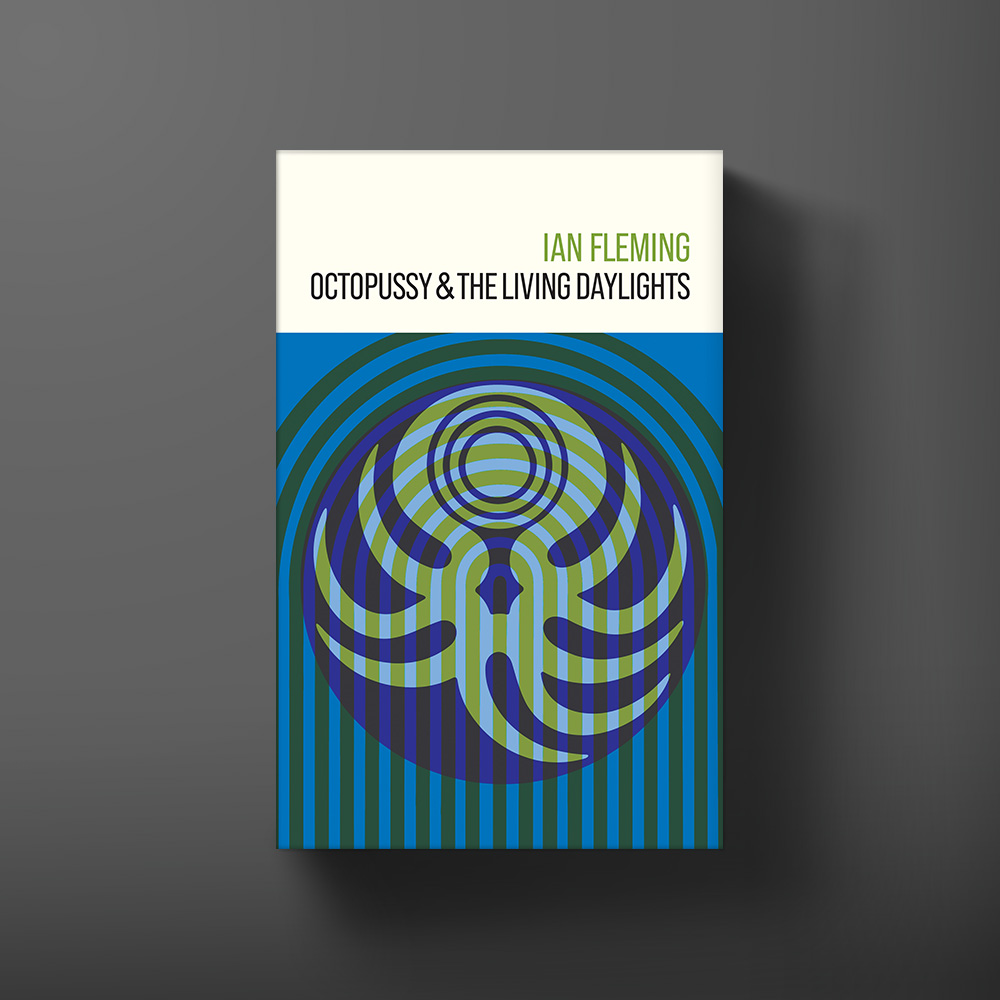
Hardback book cover for Octopussy and the Living Daylights by Ian Fleming, designed by Michael Gillette.

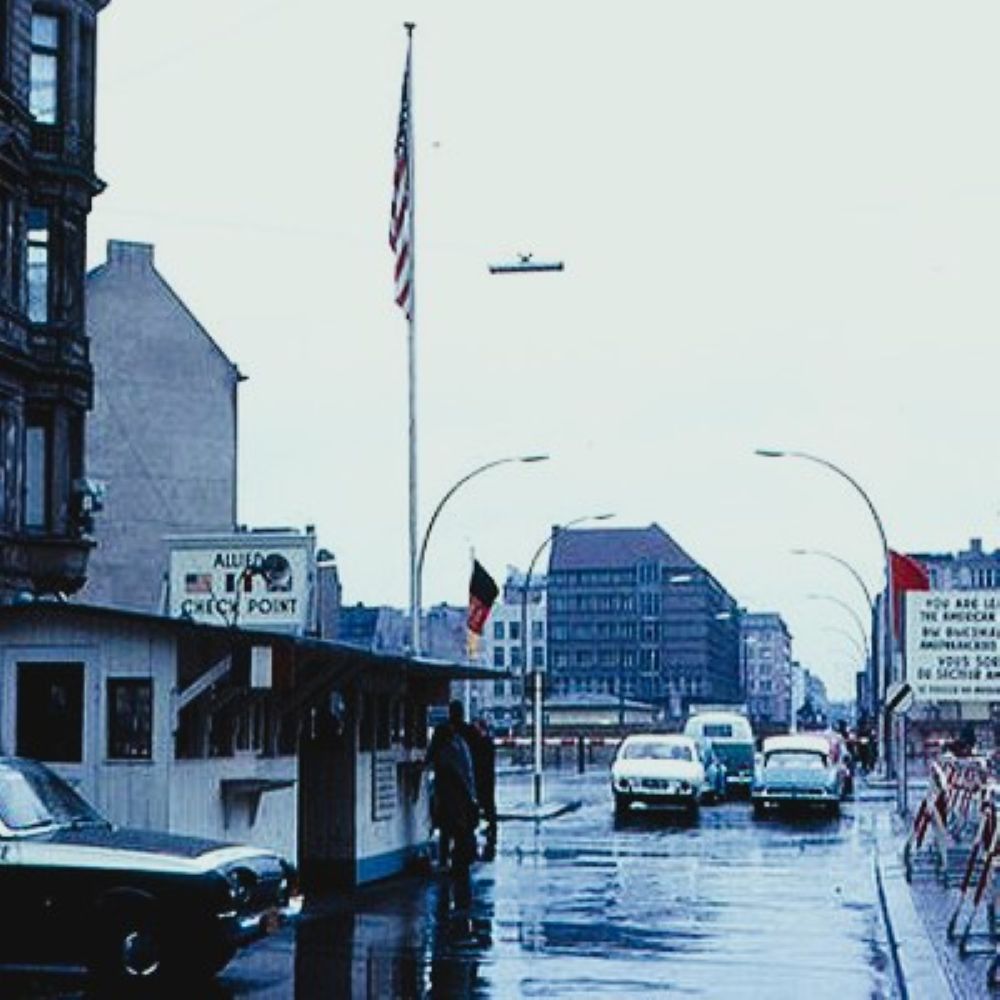
The crux of the drama takes place over the three days and nights where Bond waits patiently to take the shot from 40a Wilhelmstrasse, one block away from Checkpoint Charlie. This crossing point between the East and West sectors was designated for foreigners and members of the Allied forces and later became a renowned symbol for the Cold War. Today it is a tourist attraction, but in 1962, when The Living Daylights was written, this might have been the first introduction to it for his readers, despite several incidents there. The story eerily foreshadowed the death of an East German teenager Peter Fechter on 17 August 1962, six months after the story was first published. Fechter was shot by East German guards when trying to cross the wall into the West and bled to death a few metres inside the Soviet sector.
A tedious enough task as it was for Bond, he suffers further from the company of straight-laced staff-man Captain Paul Sender, nervously watching over him all the time with only a bottle of Dimple Haig and a copy of Verderbt, Verdammt, Verraten (a fabrication of Fleming’s) as respite.

Through Sender’s character, Fleming inserts a dig at Wykehamists (former pupils of Winchester College) on several occasions. Bond paints him as a tea or a Horlicks man and learns all he needs from his tie:

Bond knew the type: backbone of the Civil Service; over-crammed and under-loved at Winchester; a good second in PPE at Oxford; the war, staff jobs he would have done meticulously; perhaps an OBE.’

He even has a ‘Wykehamist snore’.

As the action unfolds, the noise of the orchestra cleverly masks the KGB’s gunfire as they try to prevent the agent whom Bond has been sent to protect, escape to the West. It is commonly suggested that this idea was inspired by Pat Reid’s true-life escape from the Colditz prisoner of war camp, where two escapees ran across a courtyard under the cover of orchestra noise. The conductor of the Colditz orchestra was Reid’s fellow POW Douglas Bader, who happened to be a golfing partner of Fleming later in life.

Bond assumes his target, ‘Trigger’ is a man but it turns out to be the beautiful woman he had spotted with the orchestra earlier carrying a cello case. The inspiration for this character was clear:

‘Of course Suggia had managed to look elegant, as did that girl Amaryllis somebody.’

This is a reference to Fleming’s sister Amaryllis Fleming, who was a celebrated cellist and had been mentored by the Portuguese concert cellist Guilhermina Suggia.  Amaryllis was a very popular member of the Fleming clan. In Fergus Fleming’s biography Amaryllis Fleming, he mentions that Ian had even offered her royalties from From Russia, with Love, so it was fitting that she should have been immortalised at some point within one of his stories. She solemnly returned the favour by playing Bach’s Sarabande in C-minor at Fleming’s funeral.
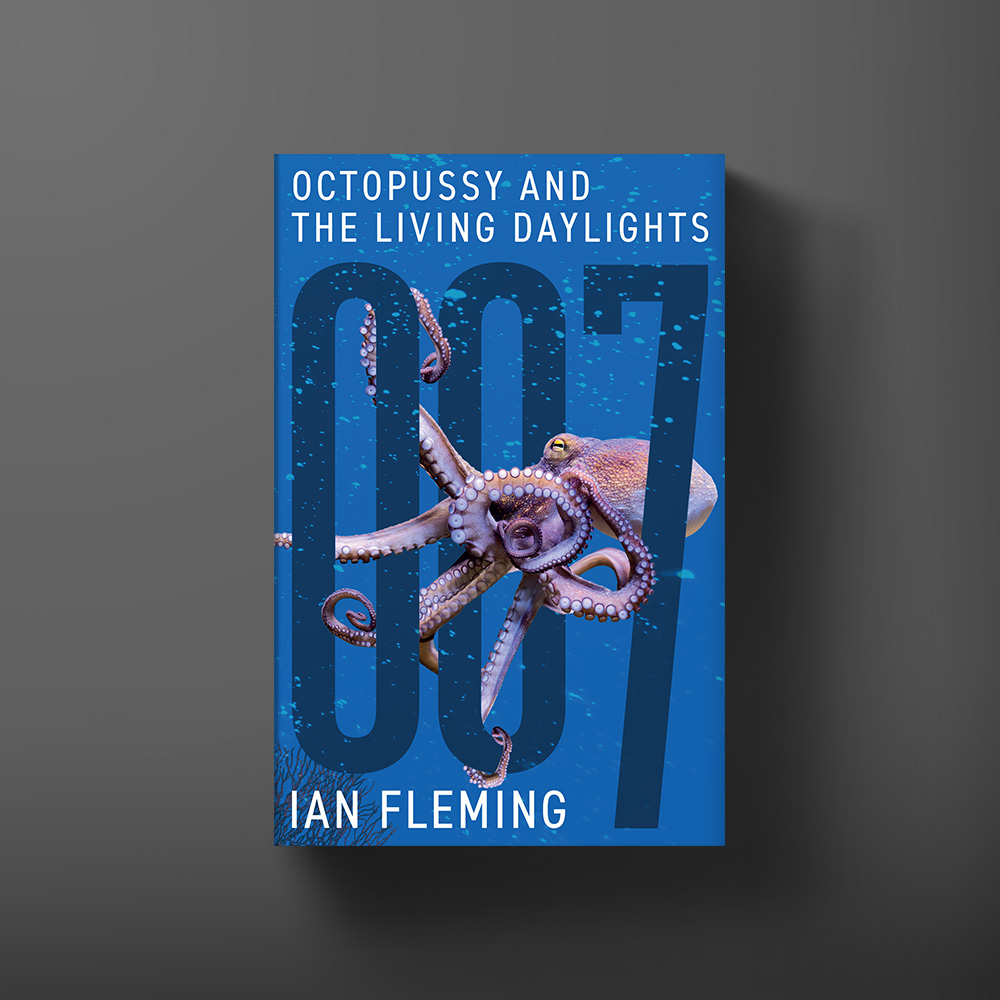
Paperback book cover for Octopussy and the Living Daylights by Ian Fleming.

Yet perhaps another inspiration, not directly indicated, came from a real-life Russian sniper – one who was responsible for fifty-four confirmed kills, including enemy snipers during the Battle of Vilnius. Roza Shanina was a beautiful, blonde Russian sniper and was among the first female snipers to receive the Soviet Medal for Courage. Roza only lived to be 20 years old, killed in battle in 1945, but her legend as ‘the unseen terror of East Prussia’ lived on. Might Fleming have had her in mind for ‘Trigger’ too? It’s certainly possible… Fleming’s ‘Trigger’ was luckier than Roza. Bond could not bring himself to kill her, instead shooting her Kalashnikov from her hands. When quizzed by Sender as to why Bond let her off, he remarks:

‘Certainly broke her nerve for that kind of work. Scared the living daylights out of her. In my book, that was enough.’

Ours too.

Tom Cull runs Artistic Licence Renewed. He knew iconic Bond cover artist Richard Chopping well as a child and Tom’s great grandfather hired a young Ian Fleming to work at the family bank Cull & Co. between 1933 and 1935.
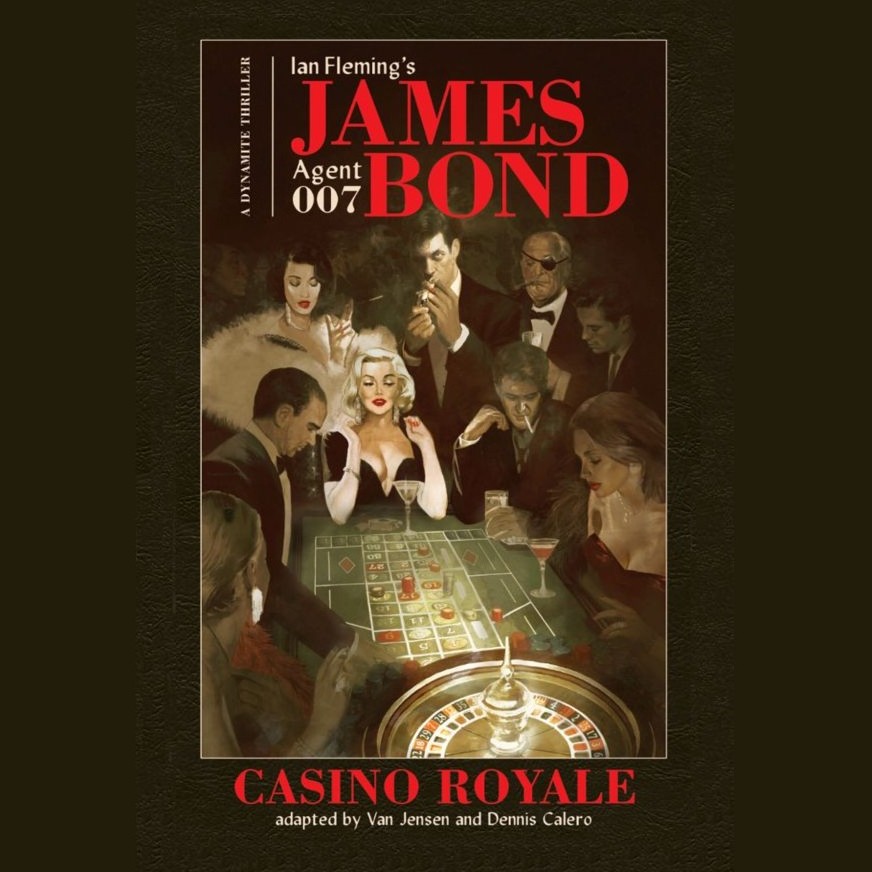

The Story Behind: The Casino Royale Graphic Novel

Love Casino Royale? Discover the graphic novel. Adapted by Van Jensen, with stunning artwork by Dennis Calero and a cover by Fay Dalton, this visual delight is a fantastic addition to the James Bond library.

When Ian Fleming’s Casino Royale was first published in 1953, it struck a chord with its readers. Britain was reeling from World War Two, rationing was still in force and the nation’s global importance was on the wane.  Audiences reached for Casino Royale to indulge in escapism and to believe in the vision that, behind the scenes, Britain was still a major player. The fanciful yet brutally real world Fleming created was entertainment in its purest form.

 The first time we meet James Bond, he is not what one might expect.  We join him in a French casino at 3am where the air is stale and the mood is sombre. Far from being the slick superhero familiar to film audiences, he is a dark and brooding character on the edge of his nerves. The faded glamour of the casino at Royale-les-Eaux perfectly enhances the ‘dirty business’ of spying and creates a low-lit and moody setting for the tense power play that unfolds across the baccarat table. 

Bond’s mission is to attack the Soviet machine, SMERSH, by bankrupting one of their agents, the avaricious and ruthless man known as Le Chiffre. The two men go head-to-head in a battle of wits but little does Bond know that his enemy holds the trump card all along. The calm elegance of the casino contrasts perfectly with the violent battle between the two men, and the unpredictable charm of luck runs through the heart of both the cards and the game of espionage.

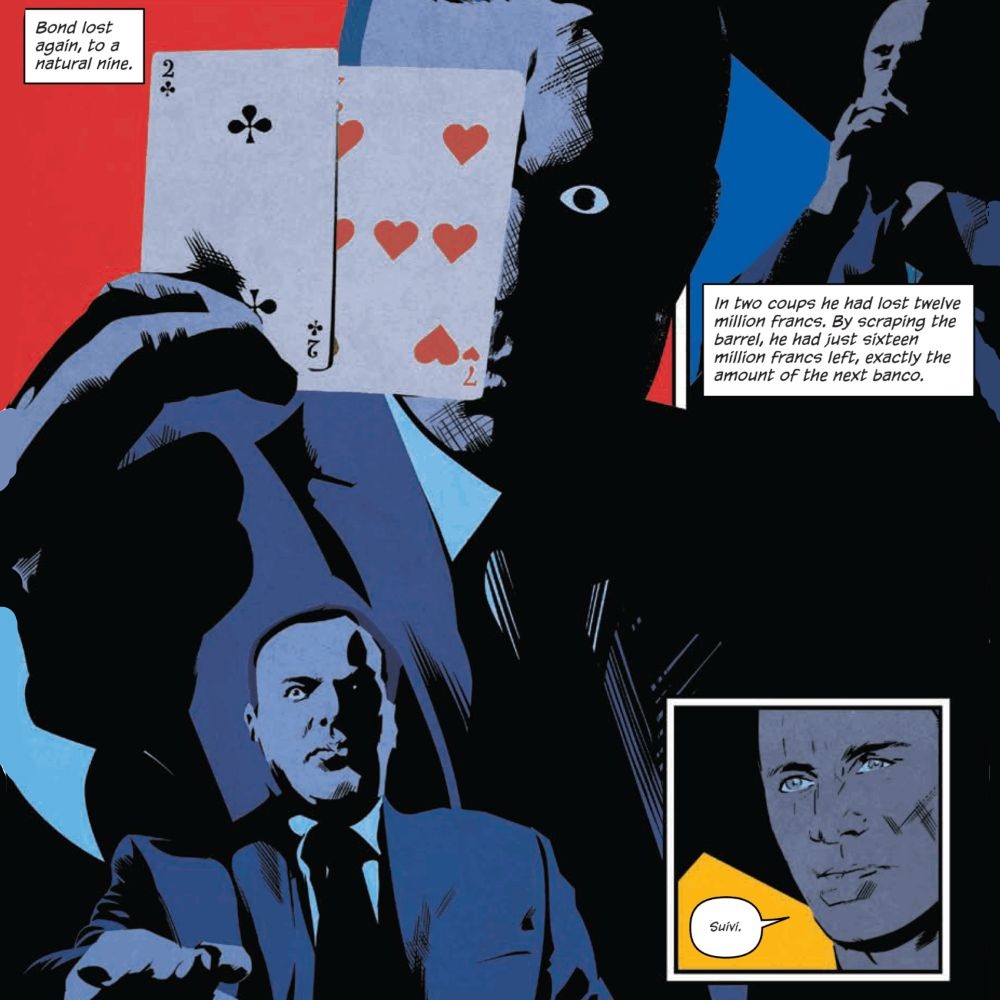
Adapting Casino Royale into a graphic novel is no mean feat. Readers of the original will attest that the thrill of the experience comes as much from the pace of the plot as Fleming’s lively style. The graphic novel as a medium demands that images conjure the atmosphere and that the nuances of character must be shown in expression and language rather than relying solely on description. So, the first challenge of this project was to create a script that would encapsulate the essence of Fleming’s novel without overloading the artwork with too much text.

With this in mind, writer Van Jensen began by selecting Casino Royale’s most crucial scenes and dialogue to construct a comprehensive and accurate script. Alongside this, there would be two further elements to make the project as faithful to the original as possible. The first of these comes directly from Fleming, whose narrative voice presides and his unique turn of phrase is preserved in order to accentuate the actions and atmosphere. For example: ‘Like an octopus under a rock, Le Chiffre watched him from the other side of the table’, or the novel’s famous first line: ‘The scent and smoke and sweat of a casino are nauseating at three in the morning’. Fleming’s gift for sensual description and characterful attributions to inanimate objects, such as describing playing cards as, ‘inert like two watchful pink crabs’ are key to successfully evoking the spirit of the original.

The second element is what Jensen has coined ‘Bond View’, in which, during the course of a scene, we see Bond’s analytical mind highlighting dangers and commenting on the people, objects and setting around him. These additional captions appear in white text outside of the word balloons, arranged close to their subject in the panel. Again, they take their cues from Fleming, translating Bond’s world-view into a visual form. This includes the quick calculation of risks, the habits and observations of a trained secret agent, and the preferences and opinions of Bond the man.

Of course, all of this rests on top of new original art by Dennis Calero. A master of shadows and dramatic lighting, his style sings to the tense, atmosphere of the novel, and the paranoid and careful life of a spy at work. The moment Bond sets foot in Royale-les-Eaux, he is under scrutiny and in danger, and the visual tone is a constant reminder of this. When combined with colouring by Chris O’Halloran, the book achieves a visceral quality that fits perfectly with Fleming’s Bond. Violence is felt as well as seen, the sensory overload of the casino is palpable, and the narrative crescendos explode into mesmerising spectacle.

The graphic novel of Casino Royale is a faithful adaptation, with a new dimension and fresh energy.  Although the original story was conceived in a very different time for a very different audience, this version aims to transcend the years and deliver the same tension and power that enraptured readers all that time ago.


Opinion: The Importance Of Colonel Sun

Writer Tom Cull discusses Kingsley Amis’ Colonel Sun, the story behind the novel and its relationship with the film, Spectre.

‘So James, I am going to where you are, the inside of your head.’

So says Ernst Stavro Blofeld in the 2015 film Spectre. He proclaims that he is the architect behind the many ghosts of Bond’s past and if this line echoes for you, then you probably recognise it from the very first James Bond continuation novel, Colonel Sun, written by Sir Kingsley Amis CBE under the not-so-secret pen name of Robert Markham.

In 1968, four years after Ian Fleming’s death, Ian Fleming Publications (then Glidrose) asked Amis if he would be interested in writing a new 007 novel. He was already a popular author and shrewdly – on the commissioners’ part – was known to be a Fleming fan.

Amis understood the high and low art paradoxes that existed in Fleming and the literary snobbery that befell him within some of his social circles. Amis’ own steadfast appreciation of wine and beer; classical music and pop, the Classics and science fiction, motivated him to take time out to write a semi-serious literary criticism of Bond entitled The James Bond Dossier.

‘There’s a whole series of absurd critical judgements on Fleming’s books that need to be set right. Bond has been turned into a lush-living, snobbish, lecherous, sadistic corrupting Fascist… But if you read with care, you will notice for instance, that there is a strong, consistent moral framework to the books: Toughness, loyalty and persistence are the touchstones.’

This, coupled with Amis’ choice to teach Le Carré’s The Spy Who Came In From The Cold to students at Tennessee University demonstrates a lack of genre snobbery on his part. By delving this deeply into Fleming’s oeuvre, he was essentially attending a sort of Bond finishing school for authors. His first official mission would come quickly: Colonel Sun.

What works about Colonel Sun (originally called Dragon Island) – and which is true of the best continuation novels – is that Amis does not overtly impersonate Fleming, fall into pastiche or simply try too hard to match the originator’s style. Amis understood his own limitations in writing Bond as he documented in What Became of Jane Austen and other Questions in 1968. He couldn’t match Fleming for his great knowledge of technical minutiae, but he held detailed knowledge on diverse subjects – Lee Enfield rifles for instance – and more importantly, he understood the ideology of Bond.

You may wonder also if Amis’ own brand of humour worked its way into the novel as Fleming’s did. In part yes, but it is different from Fleming’s. Whereas Fleming’s dialogue often had a sense of the absurd and theatrical, Amis’ conversations have a more conversational rhythm and lightness of touch, seen for instance during Bond and Ariadne’s debate on Capitalism vs. Communism. The character of Litsas offers most of the light relief, as did many of Fleming’s supporting characters, but Bond does not play for laughs.

We also find a lower tech Bond, good with his fists and basic weaponry; Amis’ Bond was for men, not boys. Many of Fleming’s tropes are still there though. He plays golf (at Sunningdale) with Bill Tanner; drives a Bentley; lunches at Scott’s, that sort of thing.

Yet, Amis acknowledged the need to provide the reader with reassuring touch points to avoid any immediate dissonance with a fervent audience. Few of these things Amis did in his private life either:

‘Golf – a game I hope fervently to go to my grave without once having had to play – was there in the first sentence.’

M is given an expanded role and the backdrop is a reassuringly exotic: the Greek Islands. And like all of Fleming’s best novels, we get a brilliantly insidious master villain – the Chinese Colonel Sun Liang-Tan. Kingsley’s son, the novelist Martin Amis approved:

‘Apart from the odd repetition or slightly inept term, the style is excellent. Just like Fleming.’

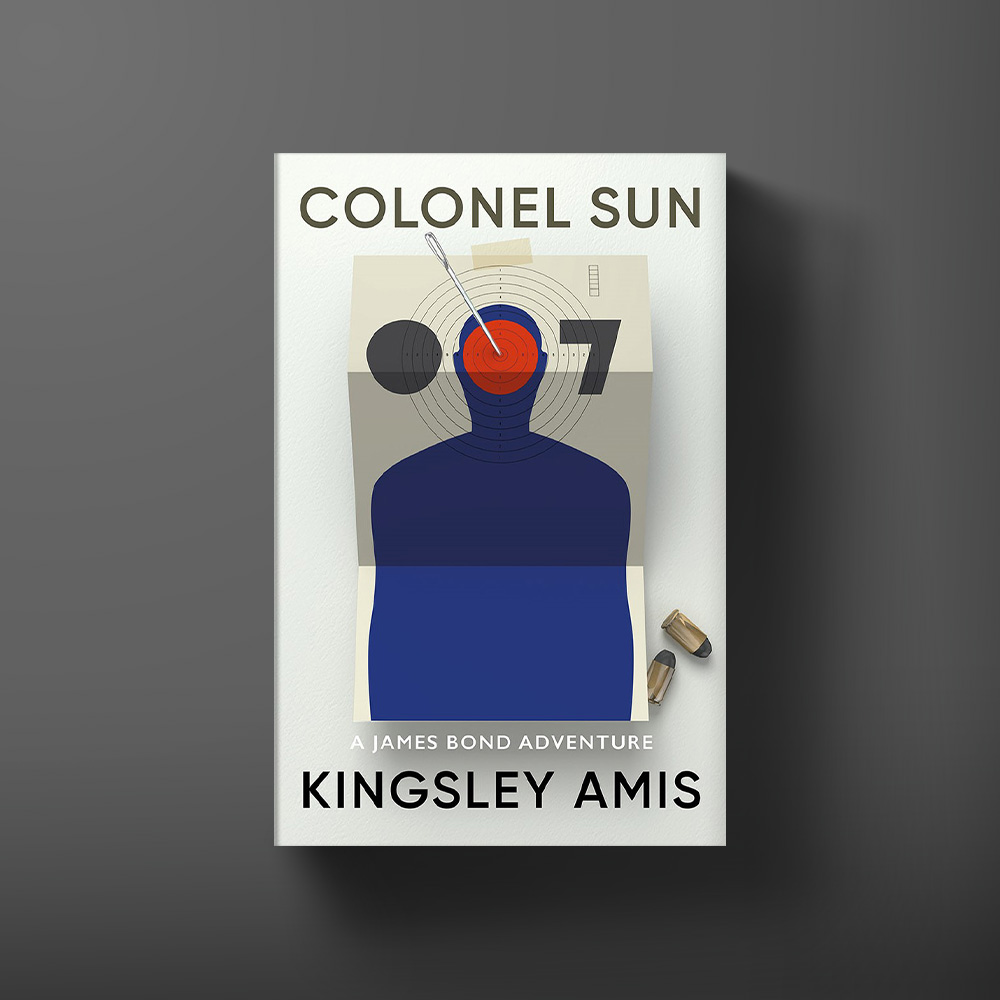
Paperback book cover for Colonel Sun by Kingsley Amis.

The torture in Colonel Sun is arguably the book’s pièce de résistance. Sun literally gets inside Bond’s head. In the chapter titled ‘The Theory and Practice of Torture’, Bond is strapped to a chair in a cellar and Sun provides Bond with what is almost an education on torture methods.

‘When an American prisoner in Korea was deprived of his eyes, the most astonishing thing happened. He wasn’t there anymore. He’d gone, though he was still alive.’

Readers who felt squeamish during Fleming’s Casino Royale torture scene will certainly want to brace themselves here.

‘So James, I am going to penetrate to where you are, to the inside of your head. We’ll make our first approach via the ear.’

But what caused Amis to station his Chinese super-villain in Greece? For one, Amis was conscious of not re-treading old Fleming ground, so Jamaica and the USA were out. Yet he needed to match Fleming’s expert attention to detail, so a sojourn to the friendly islands of Ios and Naxos gave Amis enough time to gen up on the scenery and local food and drink, to add enough of what he coined ‘The Fleming Effect’. Bond eats manouri cheese; drinks light Mamos retsina and also Votris, the ‘only drinkable’ Greek brandy according to Litsas.

As for choosing a Chinese villain, Amis was again keen to avoid re-hashing any of Fleming’s villains, save perhaps for Dr. No who was Chinese-German, as Amis recanted:

‘Red China as a villain is both new to Bond and obvious in the right kind of way.’

Obvious perhaps, because by 1965 relations were strained between China and the rest of the world – and in particular Russia during the Sino-Soviet split, resulting in border clashes. Amis would have been conscious of this and also of how attitudes in Britain during the ’60s were changing. Another shift from the Fleming formula was to team 007 up with a female Russian agent. A whisper of From Russia with Love but with the notion that the Cold War against the Soviet Union was thawing as Bond suggests to Ariadne:

‘If they’re telling you there that the United States is world enemy number one, they need to catch up on their studies. The Kremlin knows perfectly well that the main threat isn’t the West any more, but the East. Surely that’s not news to you?’

Amis was brave enough to mould his own Bond while paying homage to its creator. With Colonel Sun, he set the benchmark for future continuation novelists and proved that Fleming’s Bond universe does welcome guests.

Tom Cull runs Artistic Licence Renewed. He knew iconic Bond cover artist Richard Chopping well as a child and Tom’s great grandfather hired a young Ian Fleming to work at the family bank Cull & Co. between 1933 and 1935.
Interview: Young Bond Author, Steve Cole

Meet Young Bond author Steve Cole, as he shares his experience writing the series and being part of the 007 universe.

How did you choose the title for your last novel, Red Nemesis?

Lurking somewhere between inspiration and desperation is the titling department of my mind! For the synopsis it was named On Moscow’s Orders as a counterpoint to Charlie Higson’s final Young Bond, By Royal Command. Then for the first draft it was called Dance With Death, which ultimately felt a bit too generic. Fleming’s Bond titles have a wonderful, tantalising quality to them, you want to know what they’re about. I made a list of possible titles and Red Nemesis really seemed to sum it up, the idea of how importantly and dangerously the Soviet Union will figure in Bond’s life. It also syllabically matches book three, Strike Lightning, just as Heads You Die matches Shoot to Kill. So that appealed to the nerd in me.

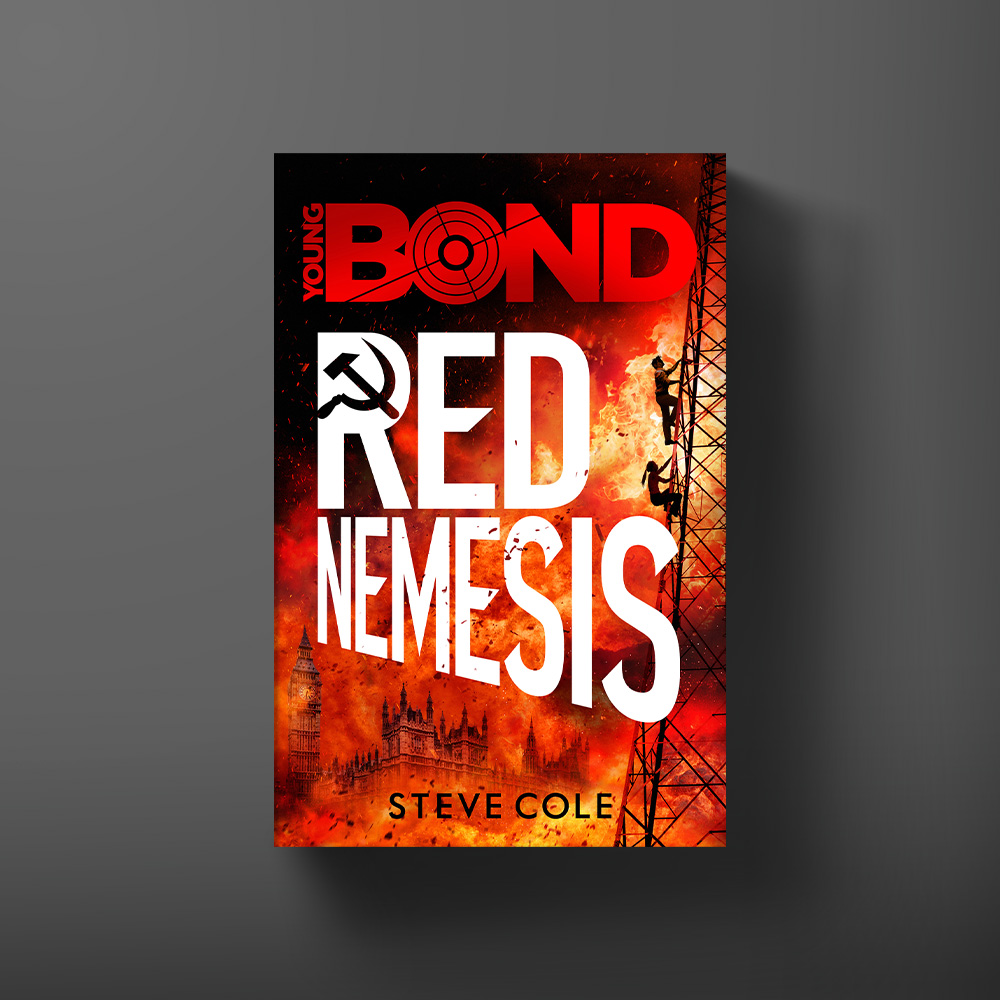
Book cover for Red Nemesis, a Young Bond book by Steve Cole.

Red Nemesis has a grimly dramatic Russian edge, was this a homage to From Russia with Love or were there other points of inspiration for this direction?

From Russia With Love is my second favourite 007 novel (after On Her Majesty’s Secret Service), and I thought it would be fun to get Bond to Russia, himself. Also, of course, it’s the last book of my arc and I wanted an iconic and suitably dangerous location. You don’t have Moscow as a setting second or third in the cycle; it’s the big one and I always planned it as a location for the conclusion. Stalin’s Russia looms in the modern imagination as a truly horrifying place, so to throw young James into its jaws ups the stakes.

Why did you decide to delve into some of the sadder parts of Bond’s past – particularly the death of his mother and father when he was eleven years old?

When you have a character as magnetic as James Bond I think you want to know what’s shaped him in life. The death of his parents obviously affected Bond deeply, and my first thought when plotting was to have someone exploit that incident to their own advantage. As Red Nemesis is the last of my Young Bonds I wanted to push James a little further towards the adult world of espionage and spy-play that lays before him. What better way to pull him into that world than the adults now missing from his life? 

This book provides Bond with the chance to deal with his father’s unfinished business. Anya, his ally in Moscow, finds herself in a similar position; so, the influences of fathers and fatherlands are key themes and add a bit of personal weight to the story.

Mimic is a wonderfully creepy villain and one of our favourites in all of the Young Bond books – what was your inspiration?

I actually conceived a Mimic-like character when planning Heads You Die, though ultimately he didn’t quite fit into the villains’ set up: there wasn’t enough for him to do. I didn’t forget him though. He was nearly a bodyguard in Strike Lightning too! It just seemed very creepy to have someone who could impersonate anyone, particularly when communication was so much more primitive – that voice on the crackling telephone line or the wireless broadcast, is it really who you think it is? That person crying for help, are you sure it’s them? So for my final book, I made his talents – both verbal and physical – more integral.

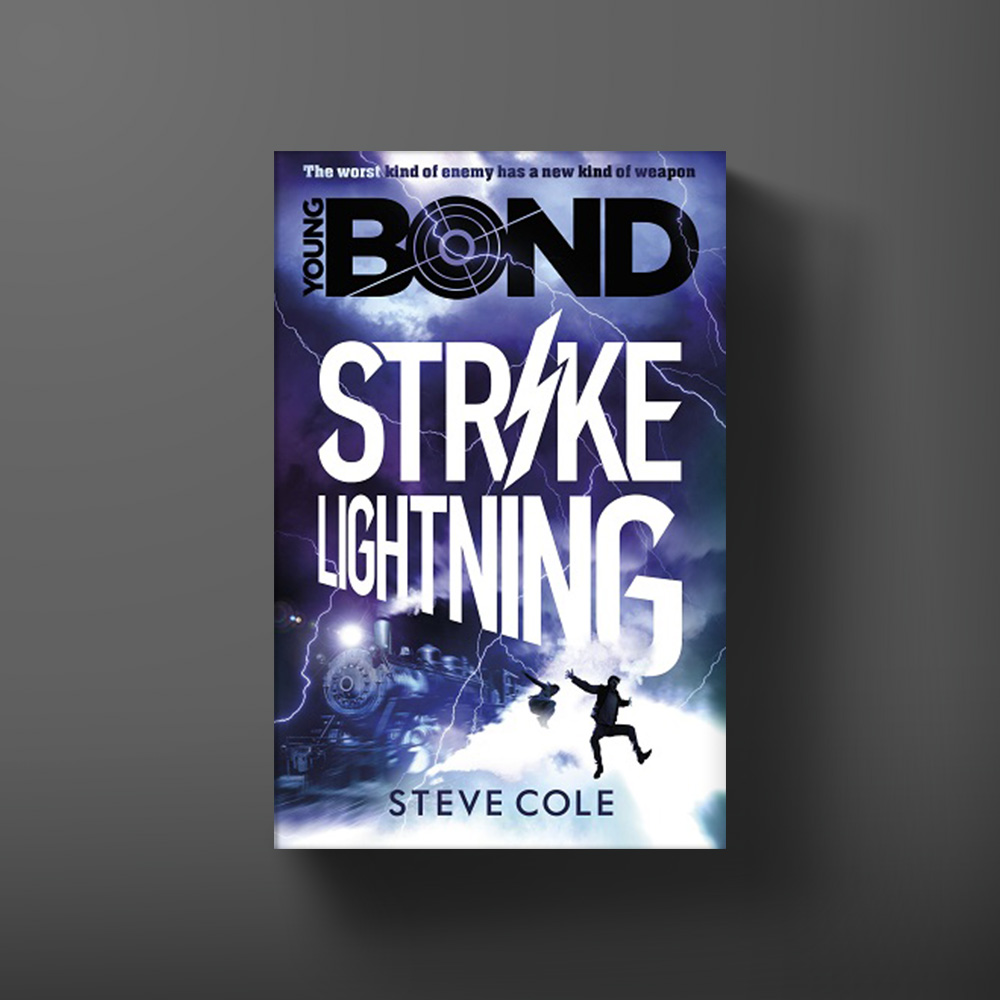
Book cover for Strike Lightning, a Young Bond book by Steve Cole.

It feels like you had great fun coming up with the clues for James to follow – how did you think of them and was it as enjoyable as it comes across?

It can be tricky, when setting a cryptic puzzle for your hero, to know just how devious to be! It’s not really any fun unless you can allow your reader enough clues to try to work it out themselves. You don’t want to make things too easy but the puzzle can’t be too contrived either. The challenge was to make the clues personal to James, so that in the end he is the only one who can really work things out. But no one wants the hero to solve things too early, so I tried to set things up so that even when James has figured out one cryptic clue, it leads to another mystery.

How do you feel about your time with Young Bond?

The time seems to have zipped past in a patter of nervous heartbeats. I’ve so enjoyed my time with Bond: I’ve worked with so many lovely people, heard from so many nice 007 fans and visited so many cool places over the course of these four novels. It’s been a challenge like no other. I’ve cared passionately about it, I’ve given it my best and I shall miss it. But it’s part of a writer’s brief to reinvent their job as the years push onward.

Who has been your favourite Young Bond character to write about?

Discounting Bond himself, I suppose I enjoyed writing about James’s friend, Hugo, in Shoot to Kill and particularly Heads You Die. He brings a different perspective to the storytelling and reveals a different side of James – I enjoyed teaming them up. Kitty Drift from Strike Lightning is a favourite. Wonderfully straightforward, she wears her heart a little self-consciously on her sleeve. She’s resourceful and witty and passionate about what she does.

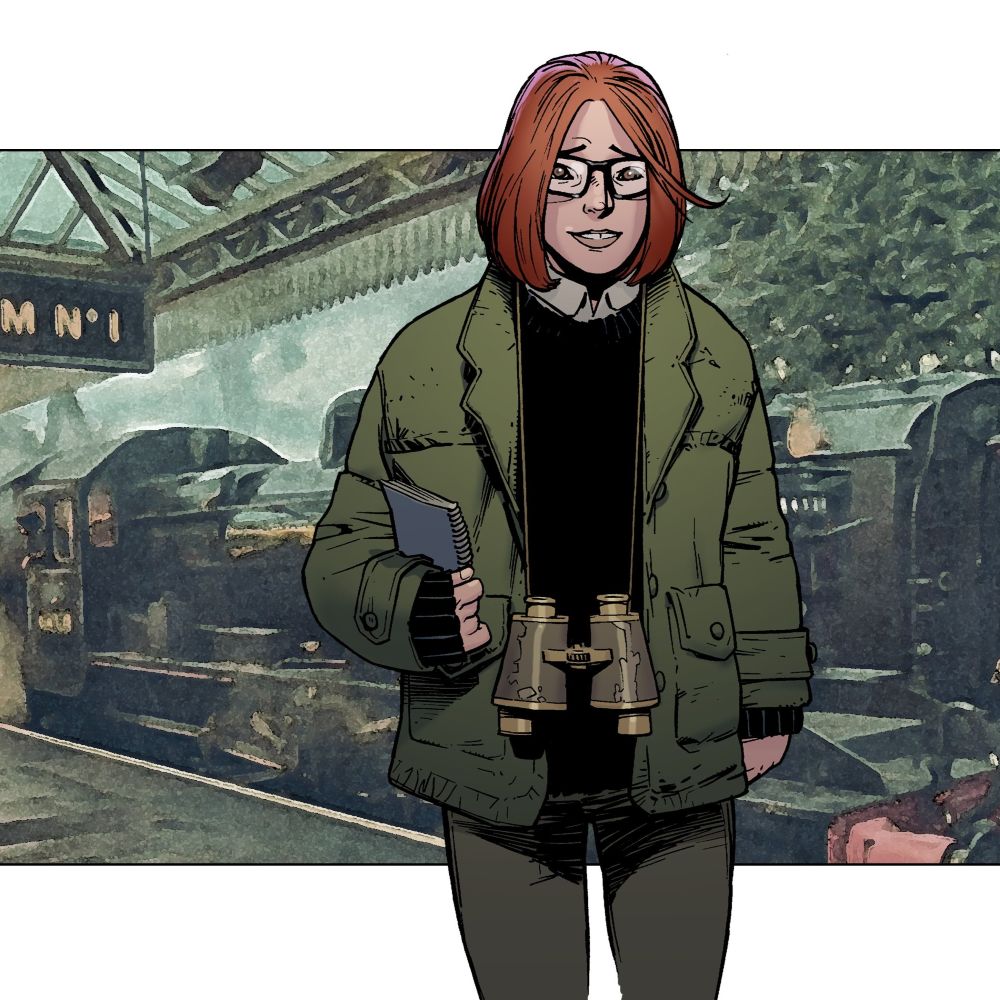
Kitty Drift is a character from Strike Lightning, part of the Young Bond book series. Kitty is shown here as a trainspotting young girl at the rail station, with binoculars and red bobbed hair and glasses.

Which of your Young Bond adventures have you enjoy writing the most?

I can’t really single one out as I enjoyed each in different ways. But I really had fun going full throttle with Red Nemesis, where the stakes are perhaps their highest and James is given frightening glimpses of both his father’s past and his own future. Being able to write scenes that touch at the heart of a character like Bond is a great privilege.

What other projects are you pursuing and what would you like to achieve next?

I think like most writers, parts of my head are always pursuing other projects without permission! I’ll see what they come up with. I am currently thinking of some standalone projects but love series fiction too; you’re not just writing a book, you’re making a continuing world that readers can revisit, time and again. I always used to be known as the Astrosaurs guy, and I guess now I’m known as the new Young Bond guy, so I’m happy to wait and see what the next book label will be.

Find out more about Steve Cole here.

The Story Behind: The Man With The Golden Gun

Writer Tom Cull talks about The Man with the Golden Gun, the last of Ian Fleming’s 007 novels.

Eight months after Ian Fleming’s death, The Man with the Golden Gun was published. The birth of the final James Bond novel was difficult and its merits within the canon are still debated among aficionados.

Although Fleming had on many occasions claimed that he was finished with writing Bond books, he had completed the first draft of The Man with the Golden Gun by March 1964. After once again undertaking a Bond novel despite his rapidly deteriorating health, a word to his editor William Plomer at Jonathan Cape, rings with an eerie finality:

‘This is, alas, the last Bond and, again alas, I mean it, for I really have run out of both puff and zest.’

Along with Fleming’s reservations, the artwork for The Man with the Golden Gun also initially proved difficult. Once again Richard Chopping collaborated with Fleming on the dust jacket. Finding Scaramanga’s golden Colt .45 pistol too long to confine to a single panel, his artwork extended to the back of the jacket. Apparently, booksellers were not enamored with the experiment because it required them to open the book in order to display it properly. Now of course, it is regarded as a masterpiece of book jacket design and one of the few still affordable as a first edition.

Fleming’s Gambit

Despite this lack of “puff and zest”, the opening to The Man with the Golden Gun is as good as anything Fleming ever wrote. In summary, the opening is: fantastical, surprising, implausible, and tense. Classic Fleming.

The Service learns that a year after destroying Blofeld’s castle in Japan, Bond suffered a head injury and developed amnesia. Having lived as a Japanese fisherman for several months, Bond traveled to the Soviet Union to learn his true identity. While there, he was brainwashed and assigned to kill M upon returning to England, and during his debriefing interview with M, Bond tries to kill him with a cyanide pistol. Thankfully, the attempt fails.

The psychological tension between Bond and M is palpable in Fleming’s final Bond novel. We know that something’s not right, but we’re not entirely sure what it is until the meeting takes place and we see Bond attempt to assassinate his superior, whom he had previously “loved, honoured and obeyed.”  Without question, this unspoken, taut hostility between the two men is only successful because The Man with the Golden Gun explores Bond’s psychology more than any other Bond book.

Spy-thriller writer Charles Cumming, who wrote the introduction to the 2006 Penguin edition of The Man with the Golden Gun, reflected on this opening sequence:

“Given the author’s fragile condition, The Man with the Golden Gun is a remarkable success. The opening sequence is as good as anything Fleming ever received; I particularly love Moneypenny’s ‘quick, emphatic shake of the head’ as she desperately tries to warn Bill Tanner that something is amiss with Bond.”

After recovering from the episode, Bond is dispatched to Jamaica to assassinate Francisco Scaramanga, a.k.a., The Man with the Golden Gun:

“‘Bond was a good agent once,’ said M. ‘There’s no reason why he shouldn’t be a good agent again.’”

The Golden Misfire?

Fleming died before the manuscript could go through the usual process of a second draft and revisions.  If Fleming had had his druthers, he might have delayed the publishing of The Man with the Golden Gun, as Fleming biographer Andrew Lycett stated:

“He hoped he might be able to rework it when he was in Jamaica the following spring. But Plomer disabused him of that idea, telling him that the novel was well up to standard.”

Kingsley Amis, a confirmed Fleming fan, was asked for his opinion of the manuscript, but it’s debatable how many of his suggestions, if any, were used. “No decent villain, no decent conspiracy, no branded goods…and even no sex, sadism or snobbery” were just some of Amis’s objections.  His main criticisms concerned Scaramanga, whom he labeled a “dandy with a special (and ineffective) gun”.  To the celebrated novelist this seemed a bit thin considering Fleming’s usual prowess for creating well-drawn and memorable villains.  Amis was also concerned with the lack of what he called ‘The Fleming Sweep,’ Fleming’s signature use of rich detail.

With more hindsight, Amis tempered his earlier criticisms of The Man with the Golden Gun in a later collection of essays entitled What Became of Jane Austen.  According to Amis, there is no doubt that the lack of follow-up on plot points, such as why Scaramanga hires Bond as his trigger-man, is due to an uncharacteristically unconfident Fleming.  Amis suggests that the Bond-as-trigger-man  idea might be the responsibility of “an earlier draft perhaps never committed to paper, wherein Scaramanga’s hiring of Bond is sexually motivated”.  Amis goes on to muse that Fleming could have been in critical retreat after too many bashings, and chose not to pursue this idea.  However, according to William Plomer in Andrew Lycett’s biography of Fleming, he “can’t think that Ian had any qualms about ‘prudence.’”

Part of Amis’ ire was the result of holding Fleming to such a high standard, and Amis maintained that beneath all the dash and flair (and plot inconsistencies), there was “formidable ingenuity and sheer brainwork” in Fleming.  I tend to agree, and if The Man with the Golden Gun were to come out today by a new thriller writer, it would likely receive an overwhelmingly positive reaction.  However, in the context of Fleming’s oeuvre and his standing with the critics of his day, The Man with the Golden Gun never stood a chance.

Yet despite all the negative criticism at the time, history has been a little kinder.  Of late, The Man with the Golden Gun has undergone critical reappraisal, with acclaimed novelist and Bond continuation author William Boyd arguing for the book as one of Fleming’s “realistic” novels (rather than “fantastical”) in the introduction to the 2012 UK edition published by Vintage.

“Fleming’s Bond novels are full of implausibility and coincidences and convenient plot-twists – narrative coherence, complexity, nuance, surprise and originality were not aspects of the spy novel that Fleming was particularly interested in, and The Man with the Golden Gun is no exception.  And indeed Scaramanga’s eventual drawn-out demise is almost low-key, by Fleming’s standards, and as well written – in a brutal, deadpan sense – as anything Fleming achieved.”

Charles Cumming has even better things to say about Scaramanga:

“When 007 and Scaramanga are sizing one another up at the hotel, we are treated to dialogue worthy of Raymond Chandler.”

The Final Curtain

It is apparent that Fleming’s work rate and ingenuity were failing as we witness the end of him and his creation in The Man with the Golden Gun; a novel filled with unintended verisimilitude. After creating and defining a genre, it was mission accomplished for Fleming and Bond well before this novel and Fleming’s old enemy – boredom – was lurking in the wings years before the first sentence of The Man with the Golden Gun had been written.

‘[Bond] decided that he was either too old or too young for the worst torture of all, boredom, and got up and went to the head of the table. He said to Mr. Scaramanga, 2I’ve got a headache. I’m going to bed.”‘

The Man with the Golden Gun is also fittingly about Fleming’s relationship with his beloved Jamaica and the disintegration of British colonialism. Bond and Felix Leiter are awarded the Jamaican Police Medal for “Services to the Independent State of Jamaica”, which is a blunt nod to the end of British imperialism in Jamaica in 1962. In a final effort to hang on to the old vestiges of the British Empire, Fleming takes potshots at the new world power, the United States, and the perceived “Americanization” of the Cold War West. In his recent book Goldeneye: Where Bond Was Born, author Matthew Parker underscores these jabs at America by highlighting how the American-accented Scaramanga is depicted as a keen promoter of tacky Americanized resort hotels with “tropical jungle” dining rooms.

As if he were well aware that he had one figurative bullet left in the chamber, Fleming seized the chance to set the record straight about his creation in The Man with the Golden Gun. Namely, Fleming set out to dispel the notion of Bond as a snob by offering him the ultimate in status symbols – a Knighthood from the Queen. Bond declines, explaining to M: “I am a Scottish peasant and will always feel at home being a Scottish peasant.” One could read this as Fleming’s grand send-off to his critics, or one could see it as Bond’s defiance alone. Either way it presents the literary end for Fleming’s Bond and the very real finale for Fleming himself.

Tom Cull runs Artistic Licence Renewed. He knew iconic Bond cover artist Richard Chopping well as a child and Tom’s great grandfather hired a young Ian Fleming to work at the family bank Cull & Co. between 1933 and 1935.

Art Evolution: For Special Services

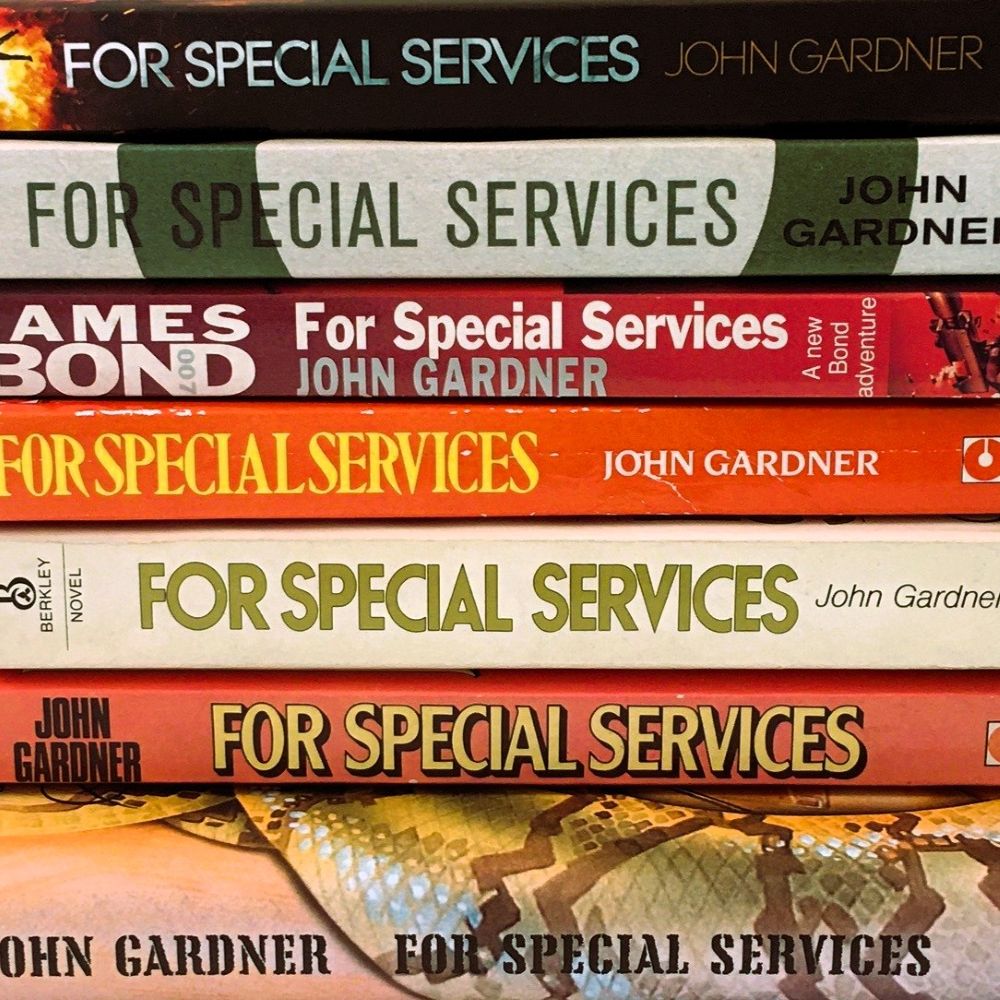
John Gardner’s second Bond book, For Special Services sees Bond on Special Services to the US government alongside Cedar Leiter, the daughter of Felix Leiter. Together they pose as art experts to infiltrate the organisation of art lover Markus Bismaquer, whose ventures threaten to “set the world ablaze”. To celebrate this much-loved thriller we take a closer look at the evolution of its cover art.

When For Special Services was first published in 1982, the cover for Jonathan Cape’s UK hardback edition was created by British artist, illustrator and designer Bill Botten, whose work has decorated over 250 books, including novels by Kingsley and Martin Amis, Ian McEwan, Ian Fleming’s old friend William Plomer, Salman Rushdie, Kurt Vonnegut, Michael Crichton and J.G. Ballard. Among James Bond fans, Bill’s work is most recognisable from John Gardner’s novels Icebreaker and, of course, For Special Services, but it can also be found on Christopher Wood’s screenplay novelisations of The Spy Who Loved Me and James Bond and Moonraker.

The snake adorning the first edition of For Special Services – referencing the deadly thirty-foot pythons in Nena Blofeld’s house in the Bayou – is reminiscent of the artwork created by Richard Chopping for Ian Fleming’s original James Bond books, even down to the black cloth and gold lettering. When interviewed by Literary 007, Bill said that this was the only time that Jonathan Cape gave an indication of what they wanted on a cover. For the other books, it was (creative) Licence to Bill.

The paperback editions of For Special Services were published by Coronet Books, which soon became the third publisher of paperback James Bond novels in the UK. Like the hardback, the cover made by Coronet featured a snake but its block red background and the addition of a spy silhouette contributed to a bolder and more commercial look for the novel. It emphasised the speed and captured the action of John Gardner’s storytelling as well as his mission to “bring Mr Bond into the 1980s”.

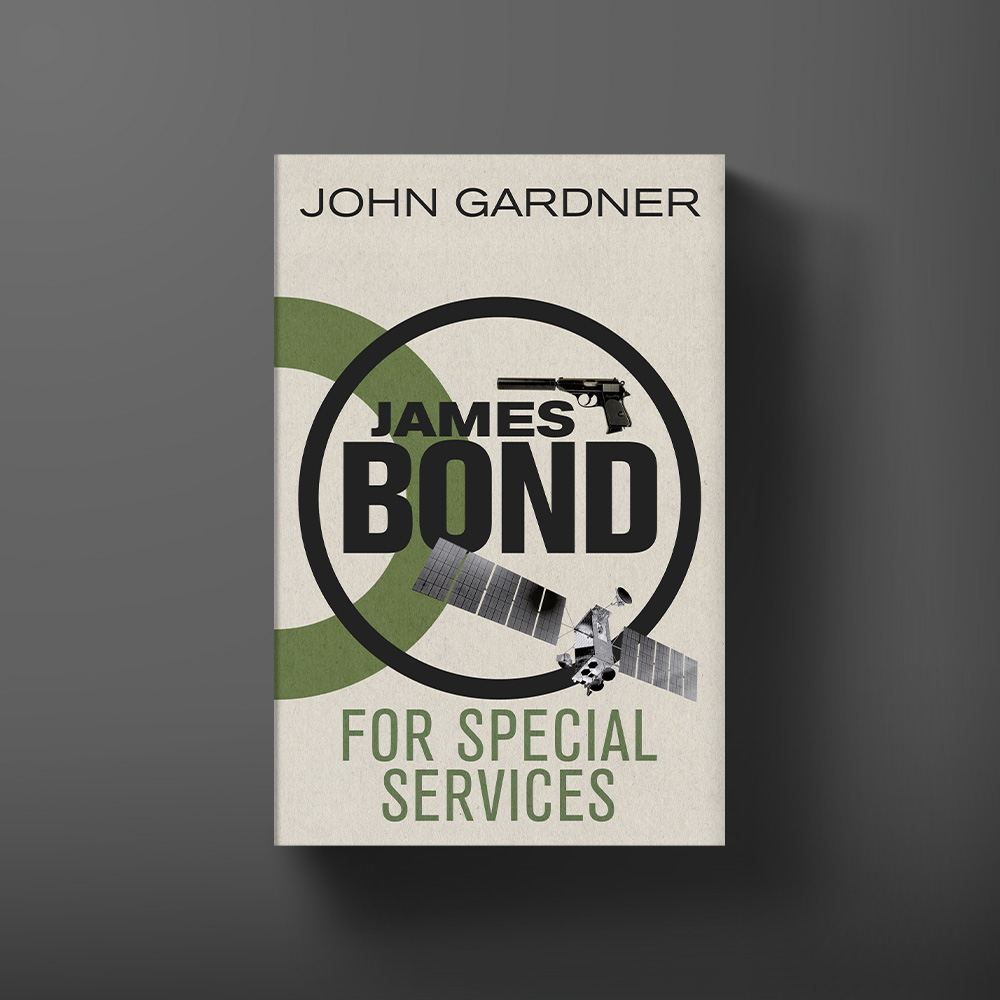
Book cover for For Special Services by John Gardner

In 1995 Coronet revamped the entire 007 series with vibrant new covers by David Scutt, Bill Gregory and Paul Robinson. This series is the most complete set of James Bond books to date. It would be the last set to include Colonel Sun and the only set to include both John Gardner and Raymond Benson titles. A 2003 omnibus containing the first three John Gardner books (Licence Renewed, For Special Services and Role of Honour) used the artwork from For Special Services.

In 2012 all fourteen of John Gardner’s James Bond titles were republished by Orion. The cover artist on this series, Dan Mogford, explains on his website how the concept came to him at the very last minute after he had decided to go in a different direction from the typical spy clichés of sex and villainy. The snake previously associated with the For Special Services covers moved (or sssssslithered along to) Scorpius, Gardner’s seventh 007 book, during the climax of which Bond’s bride, Horner is killed by a snake. On the new For Special Services cover, a satellite replaces the python, which arguably gives a more accurate impression of the novel’s atmosphere: airplane hijackings and a murdered CIA agent’s body, not to mention SPECTRE’s world-threatening plans to gain control of America’s military space satellite network.

The Story Behind: Three Bond Women

Writer Tom Cull explores the real heroes behind some of Ian Fleming’s most admired characters.

Like many authors before him, Fleming took ideas for his James Bond novels from the world around him and the people he knew. The plots were often heightened re-imaginings of his wartime experiences or altered versions of real-world intrigues he’d reported on as a journalist. He often drew upon the names of his real-life acquaintances when christening his characters: from Felix Leiter whose name is inspired by combining the middle name of Fleming’s school friend Ivar Felix Bryce with the surname of their good friends Tommy and Oatsie Leiter, to Mary Trueblood whose name is a nod to Ian Fleming’s secretary at the Sunday Times, Una Trueblood. Many of the female characters in Fleming’s stories have intriguing links to people Fleming knew and many could claim to have been immortalised under the stroke of Fleming’s typewriter keys.

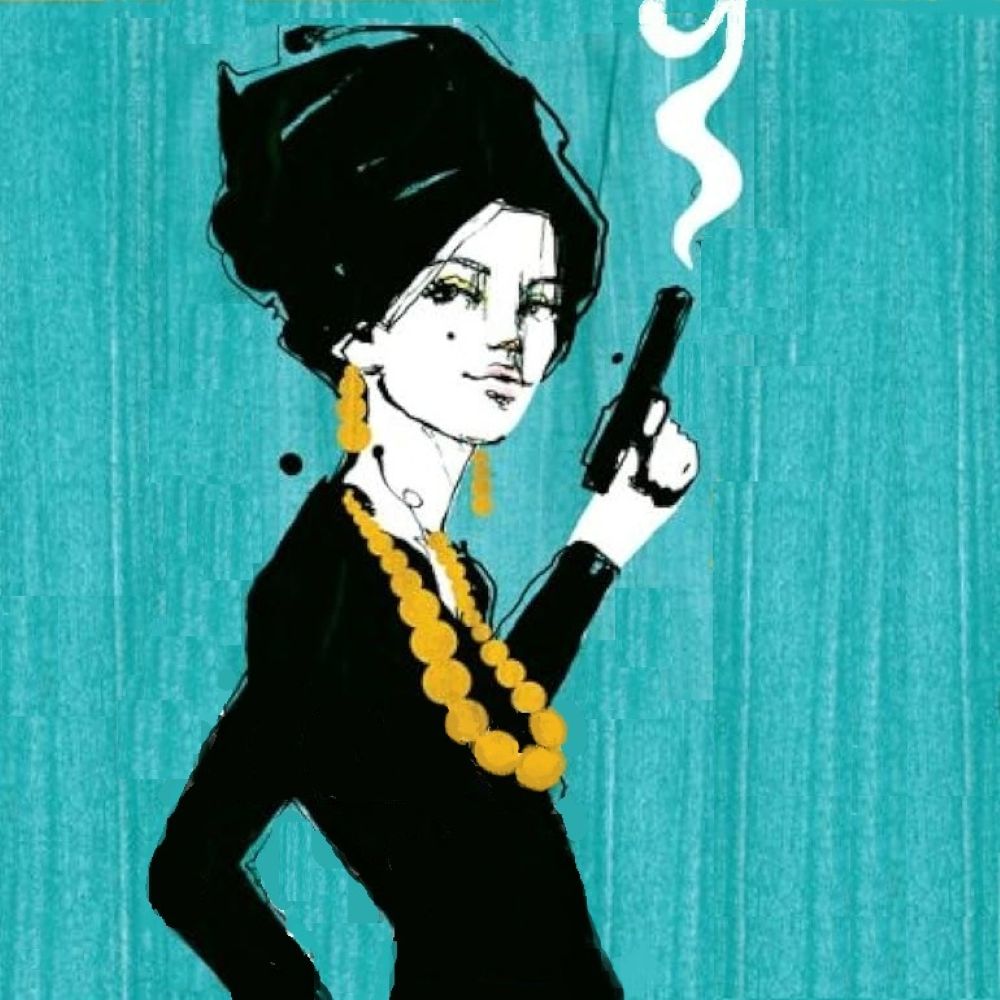
An illustration of Miss Moneypenny from Ian Fleming's James Bond. Image shows a woman with black hair piled on top of her head in chic fashion, holding a smoking gun on a teal background.

Miss Moneypenny

‘Moneypenny screwed up her nose. ‘But, James, do you really drink and smoke as much as that? It can’t be good for you, you know.’ She looked up at him with motherly eyes.’

Thunderball

As part of the Special Operations Executive (SOE) during the Second World War, Vera Atkins is a strong candidate as an inspiration for Miss Moneypenny. Atkins would visit Room 055a in the Old Admiralty Building down the corridor from Fleming’s office and he would have known of her. She joined Section F (France) in April 1941 and oversaw the secret preparation of more than 400 agents, seeing off most of them in person. Vera was most intimately associated with the female agents whom she called her ‘girls’, among whom were Noor Inayat Khan and Violette Szabo.

Many who worked with Atkins could find her intimidating and protective of her operatives but she commanded the respect of her superiors. The atmosphere at Orchard Court, one of the SOE headquarters, was akin to a private members’ club, with women smoking at their desks and handsome men passing through and breaking into French. They were only known by their aliases.

Another inspiration for Moneypenny is hinted at in an early draft of Casino Royale, where M’s assistant is named Miss ‘Petty’ Pettaval, no doubt borrowed from Kathleen Pettigrew, the Personal Assistant to the Chief of MI6, Stewart Menzies.

Fleming had many loyal secretaries throughout his career and greatly admired their skill and dedication. At The Times, it was Joan Howe who typed the manuscript of Casino Royale. Others who played their part included Beryl Griffie-Williams and Una Trueblood, but perhaps Jean Frampton was the most significant. Letters between Fleming and Frampton appeared in 2008 at Duke’s auctioneers in Dorset. Amy Brenan of Duke’s comments

“You can look on Mrs. Frampton as Ian Fleming’s Miss Moneypenny because he really does seem to rely on her. She was the first person to read the books and the collection is interesting because it details how the James Bond books were put together in the early 1960s.”

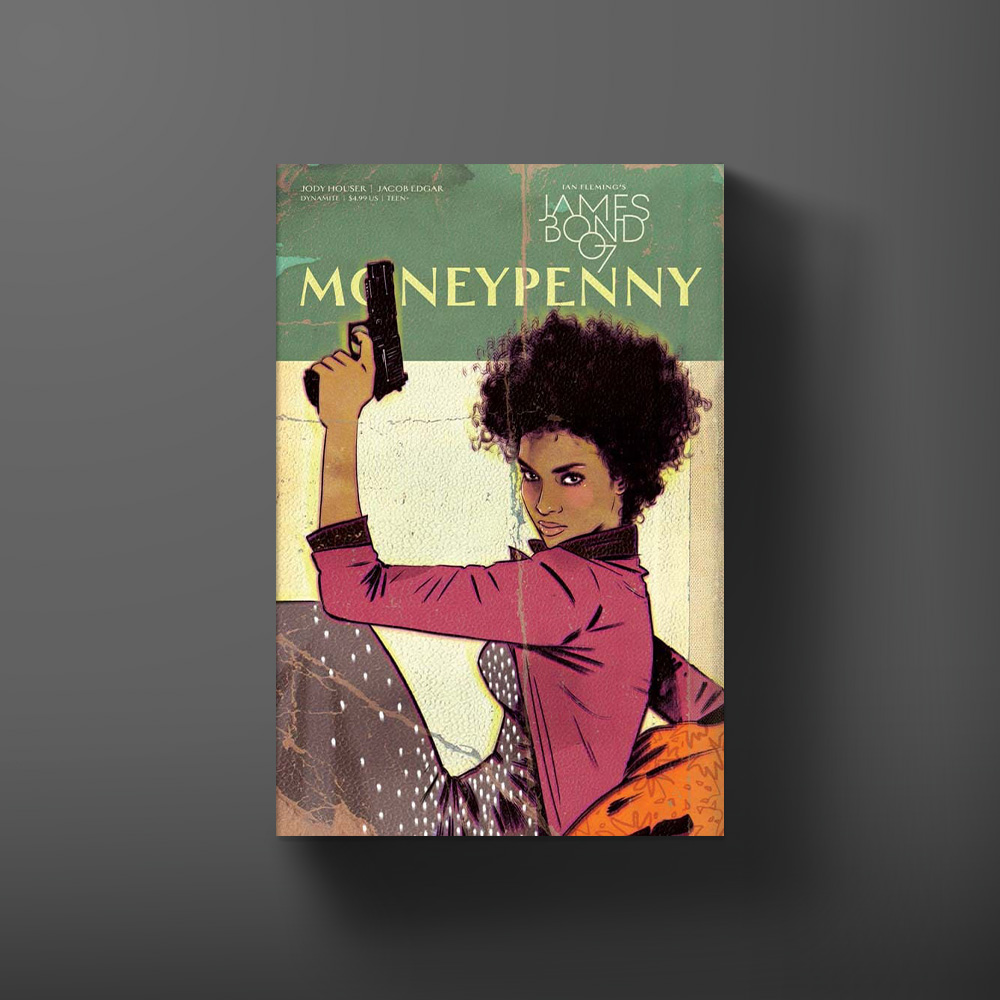
Cover for the Moneypenny graphic novel written by Jody Houser, with art by Jacob Edgar.

Mary Ann Russell

‘Taking these people on all by yourself! – It’s showing off.’

From a View to a Kill

In the short story From a View to a Kill, the character Mary Ann Russell is an agent for Section F who saves Bond’s bacon against the Russian military intelligence agency. Her name is likely to have been inspired by a woman who played a significant role in Fleming’s life, Maud Russell. Her granddaughter Emily Russell has recently edited a revelatory collection of Maud’s war-time diaries, and explains:

‘Maud and Ian met in late 1931 or early 1932 and they quickly became close friends. Through Maud and her husband Gilbert Russell, Ian met a number of influential political figures during the 1930s and also obtained contacts in Military Intelligence. After Gilbert died in May 1942, Ian got Maud a job at the Admiralty. From 1943, she worked in the Admiralty’s Naval Intelligence Division (NID) 17Z, a section led by Donald McLachlan that was dedicated to generating white, grey and black propaganda from naval intelligence to undermine enemy morale.’

Maud shared the same zeal for her work at the NID as Fleming did, as she notes in her diary:

‘London, Thursday 10 December 1943 — On Monday the Scharnhorst sinking kept us very busy. Only Mc., C.B. & I. [Ian Fleming] in the room. Then came the news of the sinking of the blockade runner and more excitement.  Only Mc. reacts as I do, froths and fizzes over with inward excitement. I. of course is the same as Mc. and I – tension, excitement, hammering energy.GR’

A picture of Vesper Lynd from Ian Fleming's Casino Royale, seen as a comic book art of a white woman with dark hair and red lipstick

Vesper Lynd

‘”People are islands”’ she said. “They don’t really touch. However close they are, they’re really quite separate.”’

Casino Royale

A popular suggestion for the inspiration behind Vesper Lynd was the SOE agent Krystyna Skarbek, also known as Christine Granville. Polish by birth, she was recruited by the SOE, won a George Medal and was reputedly Churchill’s favourite spy.

Granville was remarkably beautiful and she stole, and broke, many hearts. She was certainly known to Fleming who briefly mentions her in his non-fiction book The Diamond Smugglers. The rumour that Ian Fleming had an affair with Christine Granville is unfounded as her biographer Clare Mulley and writer Jeremy Duns have explored. Christine Granville survived the War but was tragically stabbed by a love-crazed stalker in 1952, aged 44.

There were other members of the SOE who Fleming would have encountered during his time working with Section 17 in Naval Intelligence, where he was responsible for coordinating intelligence between divisions. Violette Szabo was recruited by the SOE at 23, as a war widow with a one year old child. She was dropped into France in 1943 and bravely served the war effort, in one instance fending off an SS Panzer division with a Sten gun before collapsing exhausted. After being captured, Szabo, was shot along with fellow agents Denise Bloch and Lillian Rolfe at the Ravensbrück concentration camp in northern Germany. Szabo’s defiance was greatly admired by her fellow prisoners and she was one of only four women to receive a posthumous George Cross Medal.

Whatever the truth behind the fiction, the women Fleming encountered during his time in Naval Intelligence were truly courageous. They faced daily dangers and risked everything to help secure the freedom of Europe. Fleming was inspired to write about many interesting characters from his real life, from naming Bond’s mother Monique after a former fiancée, to calling Bond’s Secretary Loelia Ponsonby after the Duchess of Westminster. We may never know the full extent of the real people who lend parts of themselves to the James Bond story, but it’s certainly inspiring to learn more about these real-life heroes.

Tom Cull runs Artistic Licence Renewed. He knew iconic Bond cover artist Richard Chopping well as a child and Tom’s great grandfather hired a young Ian Fleming to work at the family bank Cull & Co. between 1933 and 1935.