Interview: Artist, Kevin Walker

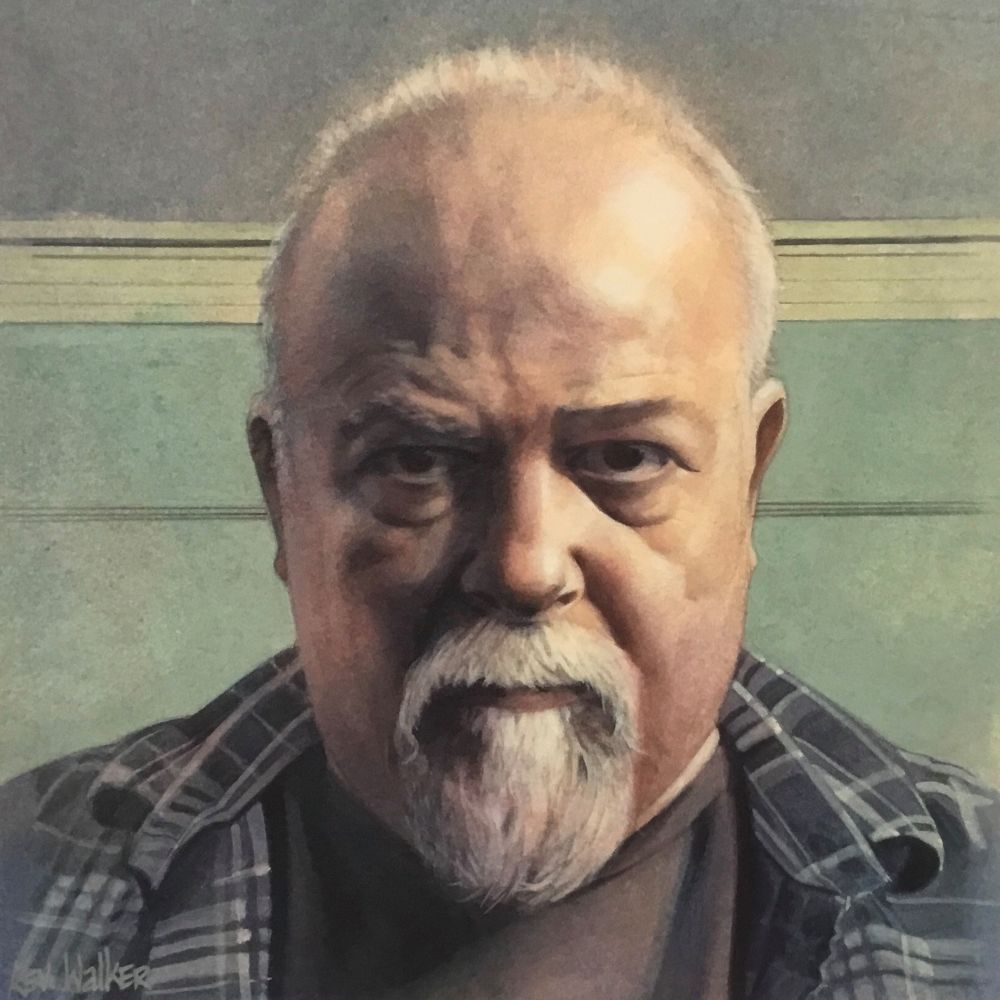
In 2005, Kevin Walker was commissioned to draw the character of a 13-year-old James Bond for Charlie Higson’s first Young Bond adventure, SilverFin. He went on to illustrate a graphic novel of SilverFin in 2008 and cover art for the Young Bond books in the USA. We catch up with the British comic book artist to talk about his process and experiences in the Young Bond world.

Have you always been a James Bond fan? 

Absolutely, Bond is one of those iconic characters, you can’t miss. I came to the novels quite late, but I certainly watched all the movies from a young age. Young Bond was my chance to become a fairly prominent part of the whole James Bond universe.

Which is your favourite Young Bond book?

My favourite of the series is Charlie Higson’s Double or Die. I love the whole setting, with the analytical engine and the communist enemy, the whole feel of it being like one long chase in grim weather. It’s the one where James trashes his Aunt Charmian’s Bentley.
Where did you get your inspiration for the James Bond Origin comic covers?

I can’t take all the credit for that. I was asked to come up with Bond pin-ups that were reminiscent of WWII propaganda posters, and I didn’t want to go too close because the image still has to work as a cover. That’s how I came up with the idea of using the same formal layout design on each illustration.

articleimage5kw

What’s your process for creating a cover and how does it differ to illustrating comic strips?

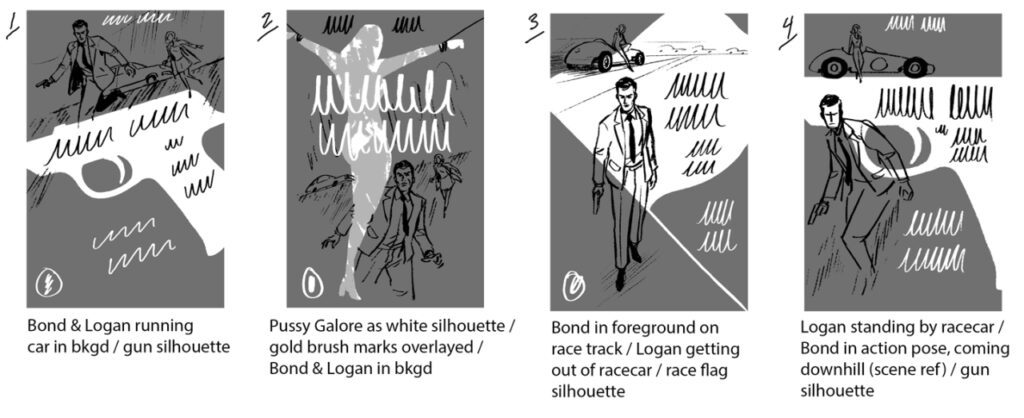
It’s actually the same process: rough sketches, finished pencils, inks and colours, with consultation in between each step. The difference is you don’t have to worry about continuity and narrative flow. You’re trying to tell a story in a single image. You can see the evolution of a piece of cover art here.
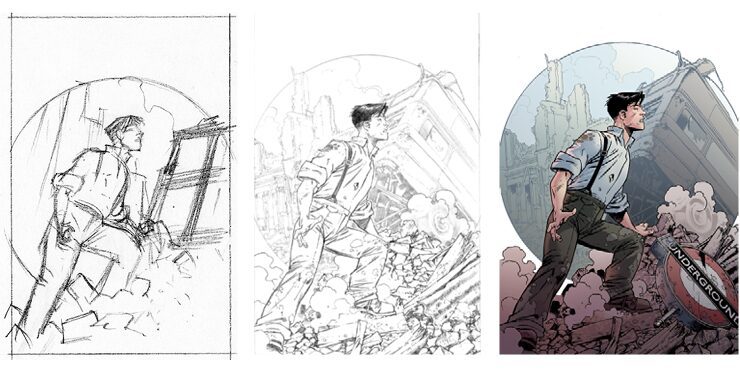
Three images showing the evolution of a piece of comic book cover art by Kev Walker. The pictures show a young man in WW2 London on rubble.

Which Young Bond action scene did you most enjoy illustrating? 

It’s where James confronts Mimic in the slum apartment, from Steve Cole’s Red Nemesis.

Where do you work?

I have a converted attic where I’ve been working for the last 10 years. A comfy chair and a table pitched at just the right angle, good lighting, a fan in summer and a heater in winter. I used to be able to work with music, but now I can’t. Any repetitive beat and I stop working and start listening to the music instead. I stream a lot of stuff – documentaries, any weird drama that I can listen to in the background while I work.

 Who inspired you to become and artist? 

The ones that made me want to become an artist in the first place were people like Ralph McQuarrie, Chris Foss, just masses of influences from all over the place. When you realise, as a teenager, that there are plenty of people making a living at it, you have to be single-minded, stubborn and a bit selfish to focus on doing it, despite all the naysayers that tell you you’ll never get a job in art… like my art teachers when I was 12 (and I have that in writing).

What advice would you give to anyone wanting to become a full-time artist?

The trick is to keep doing the things that make you happy, always keep looking, and don’t be afraid to try new things.

 Kev is known for his work on 2000AD and Warhammer comics, Marvel and Magic: The Gathering. Find out more here.
 

Interview: Audio Book Narrator, Nathaniel Parker

Join us as we delve into the world of audiobooks with TV, stage and voice actor, Nathaniel Parker, narrator of all nine Young Bond books.

Do you remember your first experience with James Bond?

It was wonderfully exciting. I think my first experience was at the Kensington Odeon. I thought it was Goldfinger, but I would have only been two years old, so I think it was probably You Only Live Twice. It felt so grand, with the audience standing and singing the national anthem, guided by an organist on the stage in front of the screen, before the curtain up. Such a glamorous introduction. I was hooked.

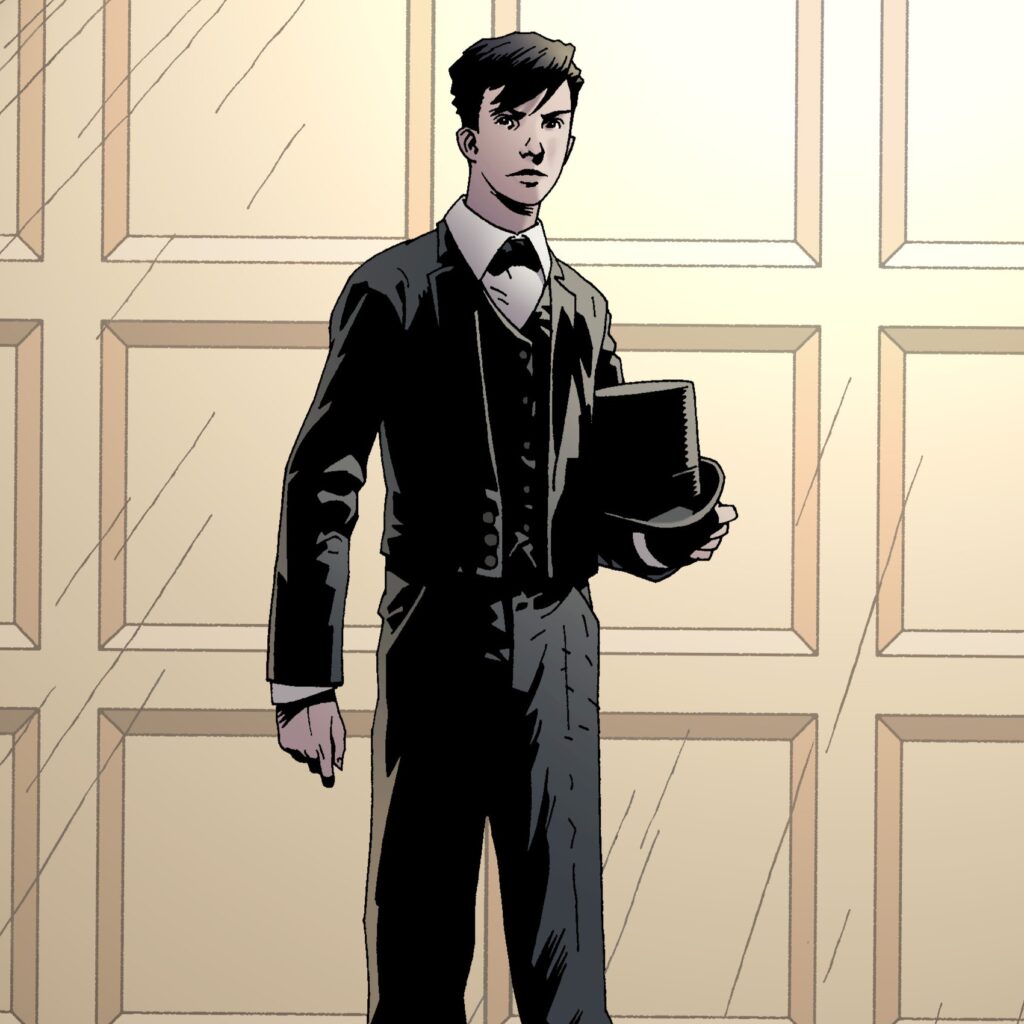
Illustration of James Bond, from the young Bond book series. James is shown in his Eton school uniform as a young man.

How did you find your voice for Young Bond?

Well, obviously, I look to my own voice for James himself because I have always cherished the thought of playing him! This is the biggest buzz of all you see, pretending to be James Bond. The voices are great fun to find, but I will admit to using some old Bond villains from the films as a basis for some of them – Charles Gray, for instance. Such fun to do. I worked with him years ago and his marvellous gravelly voice with a side helping of evil is wonderfully adaptable.

I do look to include as much variety as possible, but perhaps that’s only in my head. I can usually picture the character and fit a voice to that. Sometimes, like in Strike Lightning, I am told quite clearly by the author. That always helps. Take a listen.

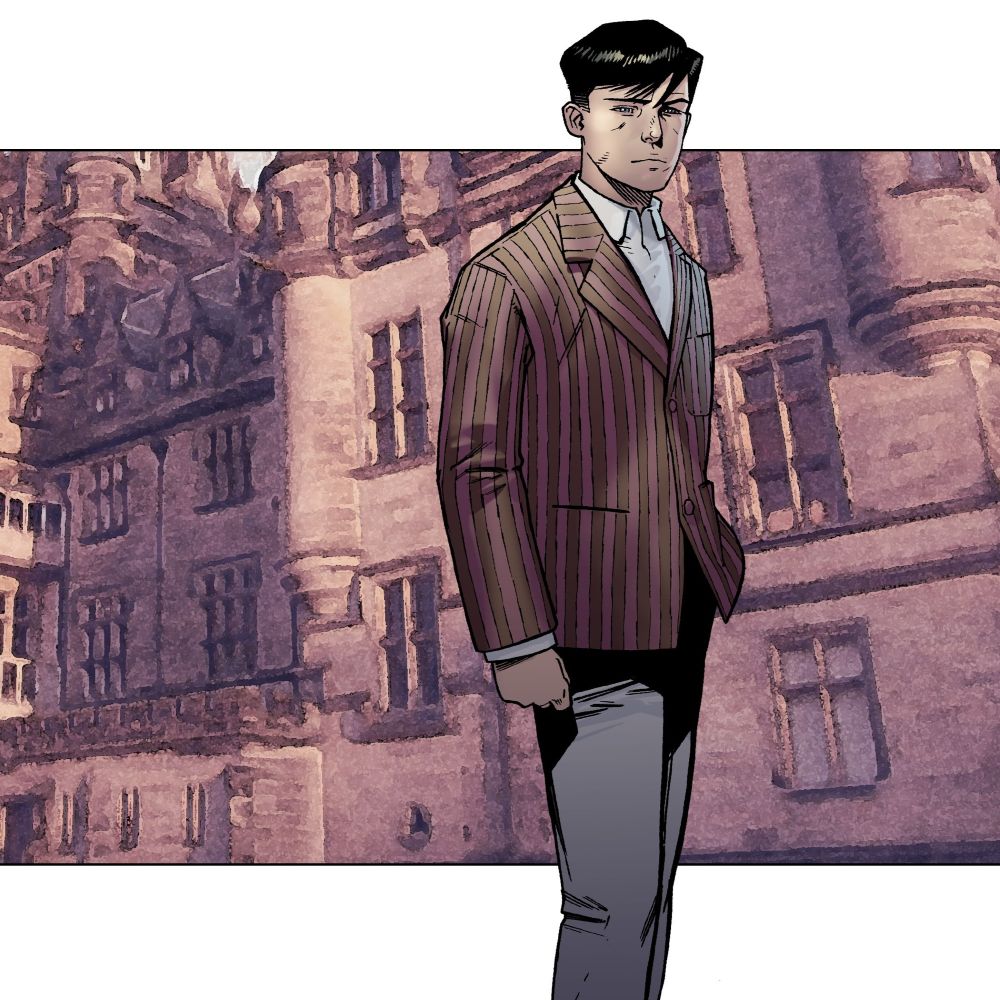
Illustration of James Bond from the Young Bond book series. James is shown here in his striped school blazer as a young man.

How does Bond change on the journey from SilverFin to Strike Lightning?

He definitely changes. He has to grow up fast. One of the most intriguing parts of the process is seeing how he learns various death-defying talents and how they progress into the grown up version we see in the later books. There’s a little less naivety and he accepts the thrill of the moment as a bit of a drug. What is unchanging is his reliance on justice and his ‘fight for right’.

What is your most memorable Young Bond moment?

I think it was in Hurricane Gold, when Bond has to get through an obstacle course and there are alligators and more waiting to snap him if he falls – reminiscent of Live and Let Die. I think I generally enjoy the pace as it all builds up to the denouement. Strangely for me, I make slightly fewer mistakes at pace. I am slightly dyslexic, so it can be a wee bit tortuous for the engineer.

Can you tell us more about the process of recording audiobooks?

One of the joys about audiobooks that has not been afforded to me as an actor on stage or screen, is the opportunity to do my voices. I have always loved imitating others and finding voices and accents, and this is the perfect platform. Some books, like the Artemis Fowl series I used to do, actually have made up creatures, so finding voices for them is terrific fun. As for performance, it is relentless. Nowhere else do you sit in a tiny room for roughly eight hours a day trying to keep up the pace and passion that in turn keeps the audience listening. The studios themselves often get hot and then you put on the air-con and then your voice dries up, so it’s a delicate balance, and you need to get on quickly and trustingly with your producer and engineer through the window.

Which are your favourite characters to bring to life?

Baddies, definitely.

And finally, if you were to feature in a Young Bond novel, would you play a heroic ally, or a scheming villain?

Well, to be honest the heroic allies don’t get much of a look in. They’re there a lot, but you only really want to know what’s happening to James Bond himself, and that is usually down to the villain. So baddie for me.

Find out more about Nathaniel Parker here.

Interview: Illustrator, Patrick Léger

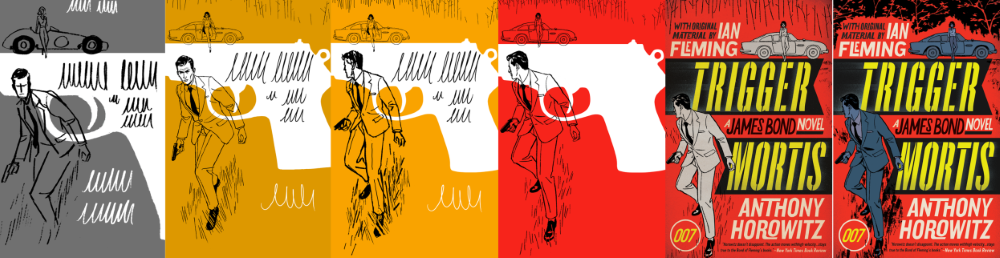
We check in with New York-based illustrator Patrick Léger who created the art for the US paperback edition of Anthony Horowitz’s Trigger Mortis.

What was your first encounter with James Bond?

My mother was a huge Timothy Dalton fan, and I remember watching our VHS of The Living Daylights constantly, growing up. I’m a bit of a movie buff so I’ve seen every Bond film. From Russia With Love is one of my favorite movies from the ’60s.

Your cover is a gorgeous hark back to Bond’s ’50s and ’60s origins – could you tell us about your inspirations?

When I was asked to do Trigger Mortis, I had just finished another spy novel cover a few months earlier and was currently working on an assignment for a men’s fashion magazine, so a James Bond cover seemed like a inevitable next step! The scene for the cover didn’t require too much research but I tried to make the fashion, hairstyles, and other details appropriate for the period. I referenced several of the earlier Bond films, which are a treasure trove for the look and the style of the ’60s. I did look at some of the original Bond covers, but I was more enamored with Robert McGinnis’ posters for the films and his own incredible covers for various crime novels of the ’60s and ’70s.

What originally drew you to the style of the ’50s, ’60s and ’70s?

When I first began illustrating, I was working in ink and looking at a lot of work by the illustrators from the 60s and 70s to study mark-making and learn more about the medium. Their techniques of drawing and that kind of generalised realism made it’s way into my own work and became a strong aspect of my own style.

How did this cover process differ from independent artwork projects?

Not being able to show Bond’s face was an interesting challenge. Typically you have those kinds of limitations with any book now though because marketability has become a big part of the process. I think overall it was actually easier to work on this than a typical book cover. James Bond is such an iconic character; you don’t really need to convey to the reader as much as you normally would. They already know what to expect from a Bond adventure.

How does the process for covers differs from other pieces of illustration?

Often with books, the art director will describe a rough concept, because the book may still be in the editing phase or there isn’t enough time for the illustrator to read through the entire text before the sketches are due. Here I believe the scene used was chosen by the Ian Fleming Estate. With editorial work, it’s usually entirely up to the artist to come up with multiple concepts for an article from which the editorial staff can choose a direction.

Your style always includes a striking palette – can you talk us through your colour decisions for Trigger Mortis?

The color choice was mainly up to the art director/designer in this case. We worked together doing various combinations and landed on those. The original idea was to use very limited color, so we tried to find 3-4 colors that would work in conjunction with the title design. I often use brighter colors because it helps to set off the the heavy, black linework in a way that a muted color scheme wouldn’t.

Explore Patrick Léger’s work here.


The Story Behind: Bond On Radio

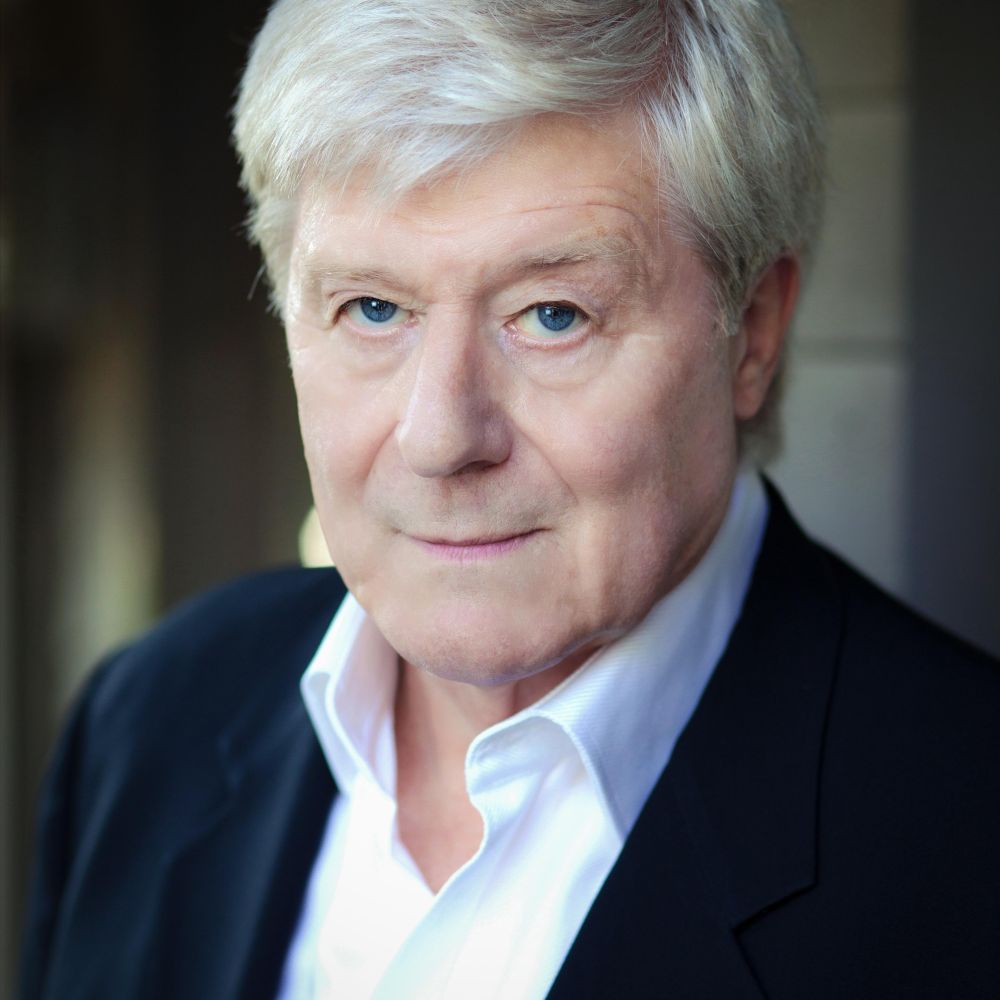
We talk to Martin Jarvis OBE, actor, director and producer about 007 on the radio. Martin has co-produced a number of drama adaptations of Ian Fleming’s Bond novels for BBC Radio 4, narrated the You Only Live Twice audiobook, and is the voice of Ian Fleming in the Radio 4 production of Thunderball.

When did your interest in producing for radio begin? What was it about the medium that inspired you to produce your own dramas?

A life-long interest in radio drama. At first as a child, enjoying adventure serials on radio – Journey Into Space and Dick Barton Special Agent. Great stories and exciting spring-boards to the listening imagination. Then as an actor, recording all kinds of plays and comedies in BBC radio studios (and writing some of them) taught me the basic techniques of creating drama for radio. It seemed only natural that my company, Jarvis & Ayres Productions should start to offer the BBC specially produced plays and comedies for the medium. I’m delighted to say that BBC saw the force of this too. Rosalind Ayres and I have now produced hundreds of programmes ranging from plays, series, serials and readings, as well as big dramas for BBC Radio 3 and 4. And, we’re pleased to say, six James Bond feature-length radio-screenplays. We have also directed and/or performed numerous productions for National Public Radio in America.

How did you decide which of Fleming’s books to adapt?  

At the suggestion of Ian niece, Lucy Fleming, EON Productions, the rights holders at that time, gave permission for a production. They suggested we produce Dr. No as a one-off to celebrate Ian Fleming’s centenary. There was no question of doing more than just that single dramatisation. However it went so well with the BBC Radio 4 audience – Toby Stephens a perfect 007 and David Suchet a brilliantly authentic Dr. No – that EON asked if we might like to produce another of the titles. Of course! It was suggested that Goldfinger might be fun – and so it turned out, with Sir Ian McKellen inhabiting the role with great wit and brilliance – and a fine Latvian accent!

What do you think it is about Fleming’s work which makes it so well suited for the radio?

As well as his understanding of the complex world of espionage, Fleming has great and graceful narrative skills. In his travel writing he is always able to evoke the colours, scents and atmosphere of exotic locations, and this he does equally compellingly in his novels. The scenarios are perfect, too, for radio, where you can literally go anywhere – under the sea, above the Bahamian waters in a sea-plane, visit a Saratoga race track, ride on the Orient Express, join the mafia in New York and win or lose at cards in Le Touquet or Las Vegas. Wonderful, enticing locations, and characters – all transposed from Fleming’s entertaining writing directly into the actors’ (and therefore the listeners’) imagination.

Was 007 a part of your literary upbringing?

Yes, along with P.G. Wodehouse, John Buchan, Richmal Crompton, Agatha Christie, and Shakespeare! I read most of the novels and always particularly enjoyed the card game sequences. When I came to adapt /direct On Her Majesty’s Secret Service, Diamonds Are Forever and most recently Thunderball for radio, I initially wondered how it would be possible to ‘show’ the minutiae of baccarat, chemin de fer or blackjack. But it seems to work well, partly due to the fact that, in radio, we can enter James Bond’s head and almost take part in the game ourselves via his inner thoughts and responses. No lack of focus there!

How do you set about casting the stories? 

It seems that many actors have enjoyed the Bond novels. And it has been gratifying that so many stars have relished the chance to take part in our productions including Toby Stephens, Dame Eileen Atkins, Stacy Keach, Sir Ian McKellen, Joanna Lumley, Tom Hollander, David Suchet, Alfred Molina, Jared Harris, Tom Conti, Nigel Havers, Lisa Dillon, Peter Capaldi, Alistair McGowan, John Sessions, Tim Pigott-Smith, Janie Dee, John Standing, Mark Gatiss and many more. When Mark joined us to play Colonel Kronsteen in From Russia With Love he told me ‘this is the best acting day of my life!’

Ros Ayres and I have of course worked with many of this extended company on screen or in the theatre – it’s very often an excuse to get together and have fun (again) courtesy of 007, the BBC, EON and the genius of Ian Fleming.

Is there any significance in the order in which you’ve chosen to produce the Bond radio dramas? Or is it a case of which one seems the most interesting project to follow the previous?

Sometimes there’s a neat progression. After Diamonds, in which Bond is in quite a bad way at the end, it seemed appropriate to bring him back after ‘some time away’ and have him sent (in Thunderball) to the Shrublands health farm. But then in his adventurous life he often needs a period of recuperation before the next extravaganza. Don’t we all!

Find out more about Martin here.