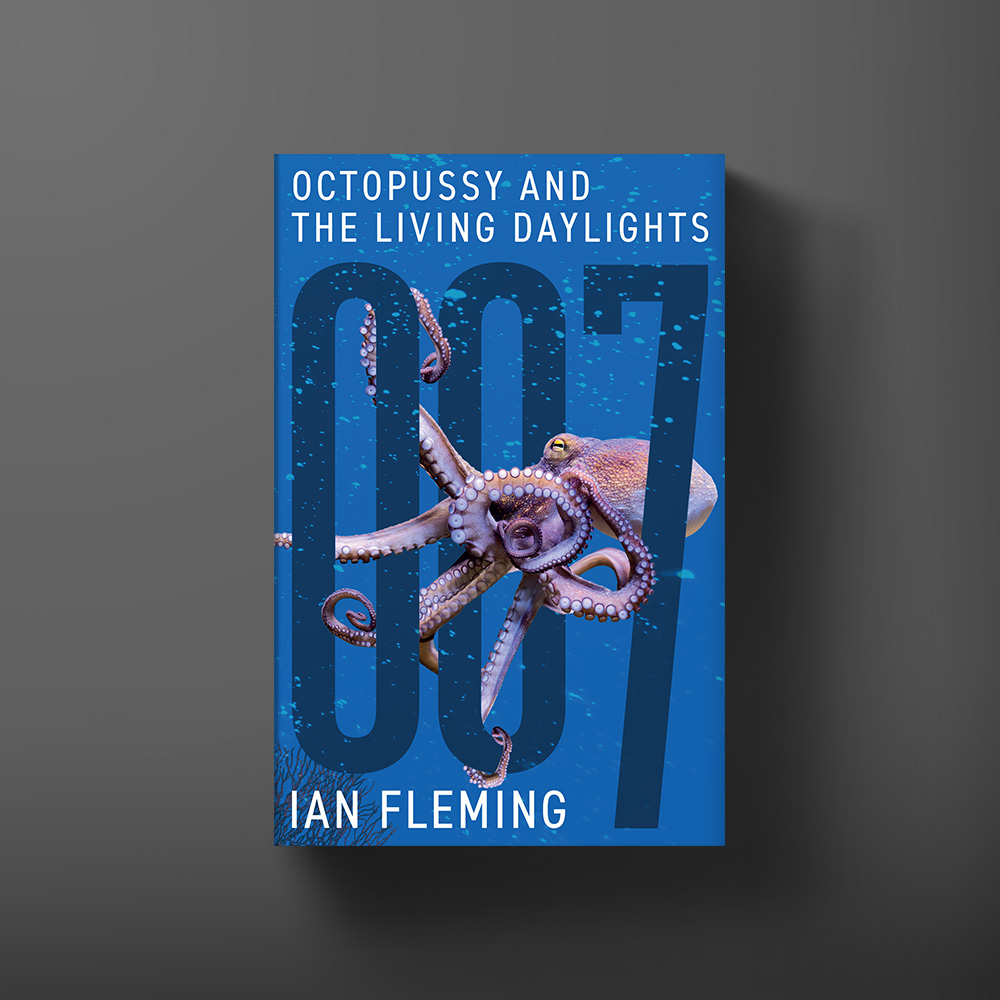
Opinion: The Importance Of Colonel Sun

Writer Tom Cull discusses Kingsley Amis’ Colonel Sun, the story behind the novel and its relationship with the film, Spectre.

‘So James, I am going to where you are, the inside of your head.’

So says Ernst Stavro Blofeld in the 2015 film Spectre. He proclaims that he is the architect behind the many ghosts of Bond’s past and if this line echoes for you, then you probably recognise it from the very first James Bond continuation novel, Colonel Sun, written by Sir Kingsley Amis CBE under the not-so-secret pen name of Robert Markham.

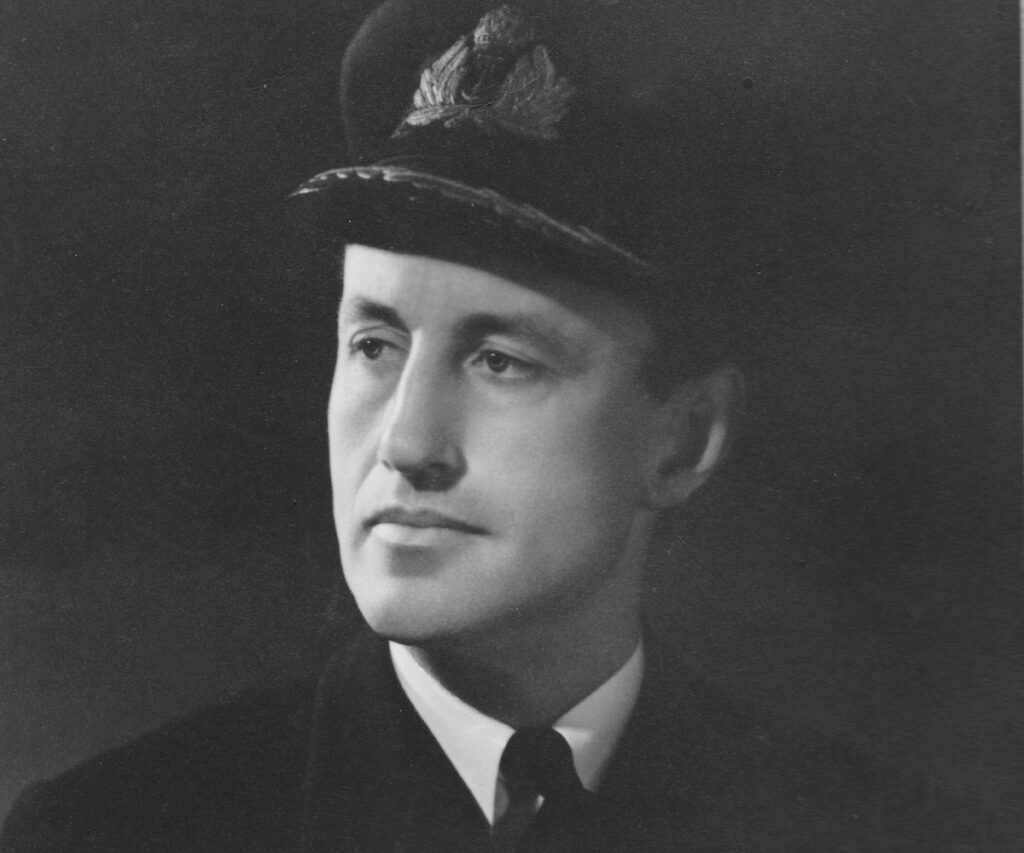
In 1968, four years after Ian Fleming’s death, Ian Fleming Publications (then Glidrose) asked Amis if he would be interested in writing a new 007 novel. He was already a popular author and shrewdly – on the commissioners’ part – was known to be a Fleming fan.

Amis understood the high and low art paradoxes that existed in Fleming and the literary snobbery that befell him within some of his social circles. Amis’ own steadfast appreciation of wine and beer; classical music and pop, the Classics and science fiction, motivated him to take time out to write a semi-serious literary criticism of Bond entitled The James Bond Dossier.

‘There’s a whole series of absurd critical judgements on Fleming’s books that need to be set right. Bond has been turned into a lush-living, snobbish, lecherous, sadistic corrupting Fascist… But if you read with care, you will notice for instance, that there is a strong, consistent moral framework to the books: Toughness, loyalty and persistence are the touchstones.’

This, coupled with Amis’ choice to teach Le Carré’s The Spy Who Came In From The Cold to students at Tennessee University demonstrates a lack of genre snobbery on his part. By delving this deeply into Fleming’s oeuvre, he was essentially attending a sort of Bond finishing school for authors. His first official mission would come quickly: Colonel Sun.

What works about Colonel Sun (originally called Dragon Island) – and which is true of the best continuation novels – is that Amis does not overtly impersonate Fleming, fall into pastiche or simply try too hard to match the originator’s style. Amis understood his own limitations in writing Bond as he documented in What Became of Jane Austen and other Questions in 1968. He couldn’t match Fleming for his great knowledge of technical minutiae, but he held detailed knowledge on diverse subjects – Lee Enfield rifles for instance – and more importantly, he understood the ideology of Bond.

You may wonder also if Amis’ own brand of humour worked its way into the novel as Fleming’s did. In part yes, but it is different from Fleming’s. Whereas Fleming’s dialogue often had a sense of the absurd and theatrical, Amis’ conversations have a more conversational rhythm and lightness of touch, seen for instance during Bond and Ariadne’s debate on Capitalism vs. Communism. The character of Litsas offers most of the light relief, as did many of Fleming’s supporting characters, but Bond does not play for laughs.

We also find a lower tech Bond, good with his fists and basic weaponry; Amis’ Bond was for men, not boys. Many of Fleming’s tropes are still there though. He plays golf (at Sunningdale) with Bill Tanner; drives a Bentley; lunches at Scott’s, that sort of thing.

Yet, Amis acknowledged the need to provide the reader with reassuring touch points to avoid any immediate dissonance with a fervent audience. Few of these things Amis did in his private life either:

‘Golf – a game I hope fervently to go to my grave without once having had to play – was there in the first sentence.’

M is given an expanded role and the backdrop is a reassuringly exotic: the Greek Islands. And like all of Fleming’s best novels, we get a brilliantly insidious master villain – the Chinese Colonel Sun Liang-Tan. Kingsley’s son, the novelist Martin Amis approved:

‘Apart from the odd repetition or slightly inept term, the style is excellent. Just like Fleming.’

Paperback book cover for Colonel Sun by Kingsley Amis.

The torture in Colonel Sun is arguably the book’s pièce de résistance. Sun literally gets inside Bond’s head. In the chapter titled ‘The Theory and Practice of Torture’, Bond is strapped to a chair in a cellar and Sun provides Bond with what is almost an education on torture methods.

‘When an American prisoner in Korea was deprived of his eyes, the most astonishing thing happened. He wasn’t there anymore. He’d gone, though he was still alive.’

Readers who felt squeamish during Fleming’s Casino Royale torture scene will certainly want to brace themselves here.

‘So James, I am going to penetrate to where you are, to the inside of your head. We’ll make our first approach via the ear.’

But what caused Amis to station his Chinese super-villain in Greece? For one, Amis was conscious of not re-treading old Fleming ground, so Jamaica and the USA were out. Yet he needed to match Fleming’s expert attention to detail, so a sojourn to the friendly islands of Ios and Naxos gave Amis enough time to gen up on the scenery and local food and drink, to add enough of what he coined ‘The Fleming Effect’. Bond eats manouri cheese; drinks light Mamos retsina and also Votris, the ‘only drinkable’ Greek brandy according to Litsas.

As for choosing a Chinese villain, Amis was again keen to avoid re-hashing any of Fleming’s villains, save perhaps for Dr. No who was Chinese-German, as Amis recanted:

‘Red China as a villain is both new to Bond and obvious in the right kind of way.’

Obvious perhaps, because by 1965 relations were strained between China and the rest of the world – and in particular Russia during the Sino-Soviet split, resulting in border clashes. Amis would have been conscious of this and also of how attitudes in Britain during the ’60s were changing. Another shift from the Fleming formula was to team 007 up with a female Russian agent. A whisper of From Russia with Love but with the notion that the Cold War against the Soviet Union was thawing as Bond suggests to Ariadne:

‘If they’re telling you there that the United States is world enemy number one, they need to catch up on their studies. The Kremlin knows perfectly well that the main threat isn’t the West any more, but the East. Surely that’s not news to you?’

Amis was brave enough to mould his own Bond while paying homage to its creator. With Colonel Sun, he set the benchmark for future continuation novelists and proved that Fleming’s Bond universe does welcome guests.

Tom Cull runs Artistic Licence Renewed. He knew iconic Bond cover artist Richard Chopping well as a child and Tom’s great grandfather hired a young Ian Fleming to work at the family bank Cull & Co. between 1933 and 1935.
Celebrating: The Life Of John Pearson 1930-2021

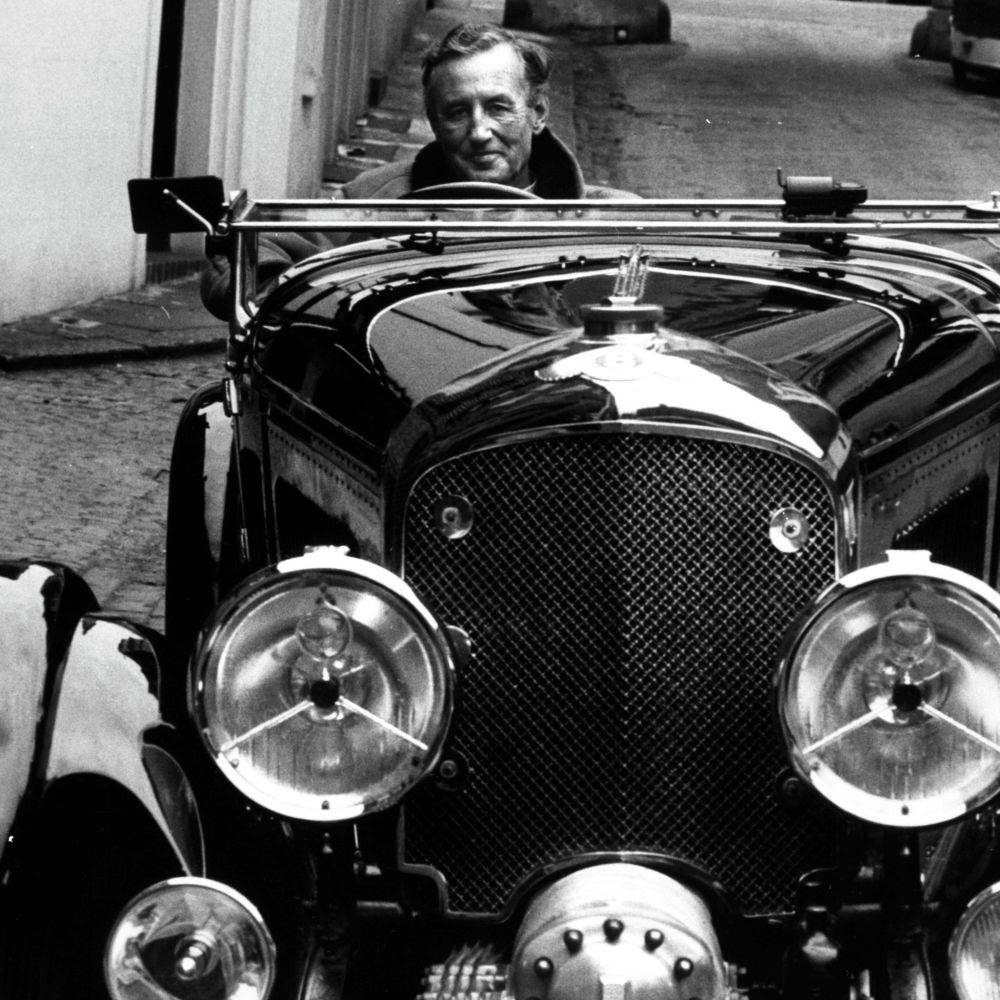
John Pearson was a longstanding and vital part of Ian Fleming and James Bond’s literary legacy. Ian and John worked together at The Sunday Times, both men learning their craft side-by-side and sharing experiences which would prove vital in later life. When Ian Fleming died in 1964 it fell to John to write what would become for many years the definitive biography: The Life of Ian Fleming. First published in 1966, it was a deeply personal and expansive history of the creator of James Bond. John was able to gain unprecedented access to Ian’s family, friends, colleagues and peers as well as – vitally – drawing from his own friendship with the late author. The resulting book was a success; so successful, in fact, that John later claimed he was able to live in Italy off the back of it.

His work on The Life of Ian Fleming made him the ideal candidate for James Bond: The Authorised Biography. Published in 1973 (after the first Bond continuation novel, Colonel Sun, and before John Gardner’s long run of original 007 novels starting in 1981) this playful book uses the premise that James Bond is a real person, with Ian Fleming’s novels adapting actual events from this agent’s colourful life. It is a loving homage to both Fleming and 007. The journalist Malcolm Muggeridge complimented Pearson’s first novel, calling it “… exciting, wryly funny and perceptive” and perceptive is the ideal word to describe John, whose observations of Fleming and Bond would dismantle some of the myths that had grown up around both whilst further understanding of their entwined identities.

A great chronicler of people, Pearson would go on to write tomes on everyone from Barbara Cartland, the Kray brothers, to Lord Lucan. His chronicle on Lucan would be adapted into a TV mini-series and his Painfully Rich: The Outrageous Fortunes and Misfortunes of the Heirs of J. Paul Getty would form the basis of Ridley Scott’s 2017 movie All the Money in the World.

In 2020, Queen Anne Press partnered with John on Ian Fleming: The Notes, a collection of the research the author compiled whilst researching The Life of Ian Fleming. More than merely a time capsule, this book gives a wonderful insight into John’s writing process, reminding us crucially that there is always a person behind the words one reads on a page.

John died on 13th November 2021 leaving an incredible legacy. Ian Fleming Publications is proud of the work done with John Pearson. He will be sorely missed.

The Writer, The Spy And The Silver Beast: John Gardner’s 007

John Gardner’s first published book was the autobiographical Spin the Bottle (1964), and while he never returned to non-fiction writing, he set out to bring reality, the real world, and a sense of verisimilitude into his work – especially to his fourteen original James Bond novels.

Gardner cited his eleventh Bond novel, 1991’s The Man from Barbarossa, as the best of his 007 adventures. Crucially, this is the story most grounded in then-current events, with Bond thrown into the very timely Middle East conflicts, as well the book correctly anticipating the close of the Cold War. Despite the thrilling, inventive narratives in his stories, Gardner was no fantasist. In his hands, the world’s most famous secret agent fought for Queen and country in a world readers could relate to.

Book cover for The Man From Barbarossa by John Gardner

Having previously worked as both a stage magician and Royal Marine officer amongst other jobs, John Gardner was a hands-on man and it was important to him that the gadgets in his 007 stories be grounded and plausible. In the acknowledgements to 1981’s Licence Renewed Gardner states

“I would like to point out to any unbelievers that all the hardware used by Mr. Bond in this story is genuine. Everything provided by Q Branch and carried by Bond – even the modification to Mr. Bond’s Saab – is obtainable on either the open, or clandestine, markets.”

For his tech research, Gardner spent his own time and money speaking to those in the know and actually getting to handle and experience the equipment on the bleeding edge of covert operations.

“One of the things that he wanted to do right from the word go,” explains John Gardner’s son, Simon, “was to make sure that at least 90% of the gadgets were real and could be obtained.

“At the time he was using a place on South Audley Street called Communication Controls Systems Ltd (CSS) and those were the ones he did a lot of work with. He wanted to show that someone like Bond would have, as he put it, ‘trade craft’. I think he wanted to try and get Bond to become a real person as opposed to this kind of fantasy character: he was trying to bring him back to the reality of espionage. There were a lot of fans who didn’t like that. They simply wanted to see the Bond of the films… He said, if I’m going to do Bond I want to try and do it as much my way as possible, which means that the trade craft has to be right and the gadgets have to be believable. That was his starting point.”

It is the aforementioned Saab that is one of John Gardner’s most famous contributions to the 007 canon. Motoring and James Bond’s licence to drive has always been an essential and beloved part of the adventures and the decision to put him into the Swedish automobile classic turned a lot of heads in 1981. The very first sentence Gardner writes Bond into in Licence Renewed, has him driving the mid-size, four-cylinder car.

“James Bond shifted down into third gear, drifted the Saab 900 Turbo into a tight left-hand turn, clinging to the grass shoulder, then put on a fraction more power to bring the car out of the bend.”

007’s car of choice was named ‘The Silver Beast’ and was of course equipped with special hidden features, such as bulletproof glass, rotating licence plates, tear gas ducts, steel-reinforced bumpers, hidden compartments for handguns, a mobile phone and much more. In the prose, Gardner namedrops CCS as the company who personalised the car for Bond but to further underline that the world of James Bond was now ‘our world’, Saab went ahead and created The Silver Beast themselves. This one-of-a-kind machine made the regional news, with John himself showcasing its bespoke additions.

Not only was this a wonderful marketing opportunity but it spoke to how so many fans of 007 see the character – as aspirational. You may not be taking on globe-trotting missions, but you can drink the drink, wear the suit and now buy the car!  

Gardner was tasked with bridging the gap between an idealised pop culture version of James Bond circa the early 1908s and a readership that was very different to 1953 when Casino Royale was published. In total he would write fourteen original Bond novels, plus two movie novelisations, landing him a spot in the Guinness World Records. “History is moving pretty quickly these days” said Ian Fleming and – like so many situations Bond finds himself in – John Gardner was in the right place at the right time, making him the perfect author for 007 in 1981.


The Story Behind: Chitty Chitty Bang Bang

Jon Gilbert, internationally renowned dealer in rare Fleming-related material and author of Ian Fleming: The Bibliography, explores the provenance of Chitty Chitty Bang Bang.

By the 1960s, novelist Ian Fleming had created a literary and cinematic phenomenon in the shape of British Secret Agent James Bond.  Occasionally writing that he was tiring of his ‘cardboard hero’, Fleming would soon conjure up another unforgettable gadget-laden champion of literature and the big screen, though sadly he would not live to see the runaway success of his next great invention.

His only book for children, Chitty Chitty Bang Bang was the written version of the fantastic bedtime stories he concocted for his son Caspar.  It tells the adventures of a magical, flying car restored by Caractacus Pott, a retired Naval Commander and now family-man inventor, who bought the vehicle using proceeds from his ingenious ‘whistling’ sweets which he had sold to the aristocratic owner of a large local confectionery factory. The car, whose original registration was GEN 11, was soon christened Chitty Chitty Bang Bang’ after the ritual noises produced when her powerful engine burst into life. Fleming’s Chitty seemingly has a mind of her own and reveals her unusual abilities to the spell-bound Pott family, whisking them off on a crime-busting caper across the English Channel.

The author took his inspiration for the motor from a series of aero-engined racing cars built and raced by Count Louis Zborowski in the early 1920s at Higham Park near Canterbury. Zborowski was the son of a racing driver who died in a crash and an American heiress to the Astor family,  and at the age of sixteen became spectacularly wealthy upon his mother’s death, inheriting a sizeable portion of Manhattan. He invested in designing, building and racing his own cars, each called Chitty Bang Bang, before he too was involved in a fatal accident, during the 1924 Italian Grand Prix at Monza.

Fleming, who had experienced heart trouble from his late thirties, suffered a heart attack in April 1961 and was confined to bed at the London Clinic, subsequently convalescing on the south coast of England and Dieppe in Northern France.  Doctors advised his coronary thrombosis was due to heavy smoking and recommended he reduce his cigarette consumption from sixty to twenty per day and cease golf and exercise for one year. Whilst recovering, Fleming committed these Chitty tales to paper, under the working title The Magical Car, informing his friend and publisher Michael Howard of Jonathan Cape – in typically playful style.

‘I can assure you that I will be firing on all cylinders again before long … [and] I am writing a children’s book, so you will see that there is never a moment, even on the edge of the tomb, when I am not slaving for you’

Fleming was known to borrow names from people he knew for his fictional characters and had plundered the roll of fellow students from Eton College when considering names for his James Bond novels (Strangways, Scaramanga, Hilary Bray, etc).  A glance at the school list also reveals two pupils called Chitty and Chitty (Major and Minor), sons of Eton schoolmaster the Reverend George Jameson Chitty; these may also have inspired the Chitty Chitty of the final title.

At the end of April 1961 Fleming advised Howard that his children’s story was nearly finished, and on 27th June he took Caspar to see the latest Walt Disney film The Absent-Minded Professor. He was horrified to find it featured a flying motor car, built by a crackpot inventor in his own backyard, which was shown circling a church spire. Fleming, whose own tale included Chitty soaring over the spire of Canterbury Cathedral, was rightly frustrated, commenting to Howard:

‘This really is the limit. Would you ask one of your intelligence spies to have a look at this film and suggest what amendments we ought to make? Personally I think we could get away with cutting out the spire of Canterbury Cathedral, but it really is pretty maddening’.

Fearing repercussions, Fleming did make this suggested change to the church-roof section of the story.

Written as three instalments, a proper manuscript was typed up in August 1961, corrected by the author and dispatched to Cape’s offices that October. From this, various typescripts were produced, one of which Fleming sent in May 1962 to his great friend the automotive and aeronautical designer Amherst Villiers.  Villiers was famous for his pioneering work in superchargers which were fitted with great success to the ‘Blower’ Bentley race cars of the 1930s and which Fleming had chosen for James Bond to drive in his early adventures.

A covering letter requested Villiers read the enclosed stories with a view to providing illustrations for the motor car. The author’s instructions as to how the car should look were rather specific, but he trusted Villiers to give the car the right appearance mechanically, with vents and pipes and entrails all spilling out, as well as a snazzy dashboard displaying various knobs and buttons. He suggested visually stimulating drawings intended for children aged ‘about seven to ten’, and signed off the letter requesting that Villiers return the stories whatever the outcome, as they were the only copies to hand at that time. Although Villiers produced a few sketches, he could not commit to the project as he was busy developing Grand Prix cars for Graham Hill, but preliminary drawings were provided by artist Haro Hodson before the award-winning children’s author and illustrator John Burningham was commissioned in late 1963.

Fleming had originally suggested his friend Trog as the illustrator, Trog being the pseudonym of Wally Fawkes, cartoonist for the Daily Mail, who had created a spoof James Bond in his ‘Flook’ strip. A further script was typed in July 1962, and copy-editing was carried out in February 1963. The galley proofs were read for errors and the text was set for all three volumes in January 1964, before the bound proofs were issued in August. The first impressions of the three separate adventures of the magical car were printed, bound and delivered to Cape simultaneously, but their publication was staggered to maximise sales over Christmas 1964. Adventure Number 1 was published on 22nd October 1964, followed by Adventure Number 2 on 26th November and Adventure Number 3 on 14th January 1965. The first American printing, published by Random House as a single volume in autumn 1964, is an important edition marking the earliest published appearance of the entire text.

The book was an instant children’s classic, has remained in print ever since and inspired three official sequels by Frank Cottrell Boyce. The story was adapted into a screenplay by Roald Dahl and Ken Hughes in 1967, and released as a film by the James Bond producer Albert R. ‘Cubby’ Broccoli in 1968 to great critical and commercial acclaim. Dahl, a wartime intelligence colleague of Ian Fleming, was by that date a successful writer of children’s stories himself, and introduced some of the darker elements in the movie such as the evil child-catcher. The story also became the basis of an Olivier and Tony-nominated stage musical, which premiered at the London Palladium in 2002 and at the Lyric Theatre on Broadway in 2005. The show has since toured around the UK and there have been Australian and German national productions.

The creator of Chitty would not experience any of this success, however. After his heart scare in 1961 Fleming had returned to a busy life of journalism, leisure pursuits and globetrotting – over the next two years he would travel to America, Japan, Venice, Zurich, Lake Geneva, Istanbul and Jamaica (three times). Tellingly, he continued to enjoy cigarettes. Over Easter 1964, Fleming was golfing when the heavens opened. Playing through the storm, he caught a severe cold and developed pleurisy from which he never really recovered. Following the death of his mother in July that year, a frail Fleming collapsed just two weeks later at his beloved Royal St George’s Golf Club in Kent. He died in the early hours of August 12th, on the twelfth birthday of his son Caspar, for whom the magical stories were first imagined.


The Gold Standard: Ian Fleming’s Goldfinger

Writer Tom Cull talks about Goldfinger, a book full of iconic images, characters and scenes.

It is with little surprise that Anthony Horowitz chose to begin Trigger Mortis just at the point where Bond wraps up the case in Goldfinger. By his own admission, Horowitz has loved this particular Bond novel since childhood.

Goldfinger has Bond himself, tired and cynical after a dirty assignment at the start of the book. The sequence at Miami airport as he watches the sun set and considers the vicissitudes of fate is writing of the highest order.’

Ian Fleming’s Goldfinger is perhaps overshadowed in popular culture by the overwhelming success and iconography of the film adaptation. However, it is the novel that provided two of the greatest villains of all time in Auric Goldfinger and his henchman Oddjob, and of course one of the best Bond girls, Pussy Galore, who features in Horowitz’s Trigger Mortis. Perhaps occluded due to Gert Frobe’s excellent performance, is the fact that Auric Goldfinger’s Fort Knox plan speech was taken almost verbatim from the novel.

Book cover for Goldfinger by Ian Fleming, featuring an illustration of a skull with a rose in its mouth.

While her name might have raised eyebrows, Pussy Galore is in more ways than one Bond’s equal rather than a mere gender stereotype. She is a gang leader, a ‘trapeze artiste’. She is also impervious to Bond’s charms, until, as The Moneypenny Diaries author Samantha Weinberg puts it, ‘it suited her.’ Weinberg also noted that another tough woman in Goldfinger, Tilly Masterton, finds ‘her heart beating faster for Pussy Galore than it did for 007.’ These are no pallid damsels in distress.

Whereas many of Fleming’s other novels have an atavistic feel that speaks to the influences of thriller novelists of the early part of the century, Goldfinger is distinctly and unequivocally Fleming. Despite SMERSH’s existence as the omniscient threat in Goldfinger, Fleming is not bound by the Cold War or the Soviet apparatus that he so painstakingly captured in From Russia With Love, his fifth novel. The plot actually takes a back seat in Bond’s Aston Martin DB Mark III, whilst wonderful set pieces take the driver’s seat. Fleming overcomes these plot frailties by delivering memorable scenes with glorious self-indulgence and glee. Even with no hitherto interest in golf, readers cannot help but be enthralled by the gamesmanship between Bond and Goldfinger at the Royal St. Marks course.

‘As soon as Bond had hit the shot he knew it wouldn’t do. The difference between a good golf shot and a bad one is the same as the difference between a beautiful and a plain woman – a matter of millimetres.’

Book cover for Goldfinger by Ian Fleming, featuring silver detail on the hood of a yellow car, against a blue background.

It is perhaps no accident that the novel is best remembered for its individual scenes, since many were ideas that Fleming had originally conceived as short stories and plot devices for other project. Since many of them did make it into the novel, Goldfinger is one of Fleming’s longest endeavours, and as often is the case, Fleming drew on personal experiences in order to create these timeless characters and events. The modernist architect Erno Goldfinger, whose buildings Fleming abhorred, lent his name to Auric Goldfinger. Alfred Whiting, the golf pro at Fleming’s beloved Royal St. George’s golf course, became Alfred Blacking, a Royal St. Marks caddy. As in Moonraker, Fleming’s familiar setting of Kent is the backdrop, for Bond’s early encounters with Goldfinger. Yet whereas Moonraker lacks some international glamour, Fleming made up for this deficiency in Goldfinger by staging the action in a number of exotic and unfamiliar locations including Miami, Geneva, and Kentucky.

Goldfinger, published on 23 March 1959, was Ian Fleming’s 7th James Bond novel and was a great success which hit the top of the best-seller list almost immediately. Fleming was clearly proud of this effort and took on various promotional activities in order to show it off. The book also came complete with another outstanding Richard Chopping dust jacket cover, this one showing a skull with gold coins for eyes biting a rose. Chopping himself considered this piece to be his finest work in the series.

Paperback book cover for Goldfinger by Ian Fleming.

Critically, Goldfinger was better received than some of Fleming’s previous efforts. Even Anthony Boucher of The New York Times, who was Fleming’s arch-nemesis and a constant critic of James Bond, said ‘the whole preposterous fantasy strikes me as highly entertaining.’ In his 99 Novels: The Best in English Since 1939, Anthony Burgess perhaps unexpectedly selected Goldfinger as one of his honoured entrants, while O.F. Snelling, a friend of Fleming and the author of Double O Seven James Bond: A Report, perhaps puts it best when he writes that,

‘Ian Fleming walked an extremely shaky tight-rope across a pond of very thin ice when he wrote Goldfinger. What with its characters and situations, Goldfinger is the most bizarre example in a generally somewhat extraordinary output. But it is also, I submit, at the same time one of the best.’

Goldfinger sees Ian Fleming and his most famous creation at the height of their powers. Upon publication, the book also provided a welcome sense of escapism during a particularly tense portion of the Cold War. Take the time to relive Bond’s classic adventure.

Tom Cull runs Artistic Licence Renewed. He knew iconic Bond cover artist Richard Chopping well as a child and Tom’s great grandfather hired a young Ian Fleming to work at the family bank Cull & Co. between 1933 and 1935.
Interview: Young Bond Author, Steve Cole

Meet Young Bond author Steve Cole, as he shares his experience writing the series and being part of the 007 universe.

How did you choose the title for your last novel, Red Nemesis?

Lurking somewhere between inspiration and desperation is the titling department of my mind! For the synopsis it was named On Moscow’s Orders as a counterpoint to Charlie Higson’s final Young Bond, By Royal Command. Then for the first draft it was called Dance With Death, which ultimately felt a bit too generic. Fleming’s Bond titles have a wonderful, tantalising quality to them, you want to know what they’re about. I made a list of possible titles and Red Nemesis really seemed to sum it up, the idea of how importantly and dangerously the Soviet Union will figure in Bond’s life. It also syllabically matches book three, Strike Lightning, just as Heads You Die matches Shoot to Kill. So that appealed to the nerd in me.

Book cover for Red Nemesis, a Young Bond book by Steve Cole.

Red Nemesis has a grimly dramatic Russian edge, was this a homage to From Russia with Love or were there other points of inspiration for this direction?

From Russia With Love is my second favourite 007 novel (after On Her Majesty’s Secret Service), and I thought it would be fun to get Bond to Russia, himself. Also, of course, it’s the last book of my arc and I wanted an iconic and suitably dangerous location. You don’t have Moscow as a setting second or third in the cycle; it’s the big one and I always planned it as a location for the conclusion. Stalin’s Russia looms in the modern imagination as a truly horrifying place, so to throw young James into its jaws ups the stakes.

Why did you decide to delve into some of the sadder parts of Bond’s past – particularly the death of his mother and father when he was eleven years old?

When you have a character as magnetic as James Bond I think you want to know what’s shaped him in life. The death of his parents obviously affected Bond deeply, and my first thought when plotting was to have someone exploit that incident to their own advantage. As Red Nemesis is the last of my Young Bonds I wanted to push James a little further towards the adult world of espionage and spy-play that lays before him. What better way to pull him into that world than the adults now missing from his life? 

This book provides Bond with the chance to deal with his father’s unfinished business. Anya, his ally in Moscow, finds herself in a similar position; so, the influences of fathers and fatherlands are key themes and add a bit of personal weight to the story.

Mimic is a wonderfully creepy villain and one of our favourites in all of the Young Bond books – what was your inspiration?

I actually conceived a Mimic-like character when planning Heads You Die, though ultimately he didn’t quite fit into the villains’ set up: there wasn’t enough for him to do. I didn’t forget him though. He was nearly a bodyguard in Strike Lightning too! It just seemed very creepy to have someone who could impersonate anyone, particularly when communication was so much more primitive – that voice on the crackling telephone line or the wireless broadcast, is it really who you think it is? That person crying for help, are you sure it’s them? So for my final book, I made his talents – both verbal and physical – more integral.

Book cover for Strike Lightning, a Young Bond book by Steve Cole.

It feels like you had great fun coming up with the clues for James to follow – how did you think of them and was it as enjoyable as it comes across?

It can be tricky, when setting a cryptic puzzle for your hero, to know just how devious to be! It’s not really any fun unless you can allow your reader enough clues to try to work it out themselves. You don’t want to make things too easy but the puzzle can’t be too contrived either. The challenge was to make the clues personal to James, so that in the end he is the only one who can really work things out. But no one wants the hero to solve things too early, so I tried to set things up so that even when James has figured out one cryptic clue, it leads to another mystery.

How do you feel about your time with Young Bond?

The time seems to have zipped past in a patter of nervous heartbeats. I’ve so enjoyed my time with Bond: I’ve worked with so many lovely people, heard from so many nice 007 fans and visited so many cool places over the course of these four novels. It’s been a challenge like no other. I’ve cared passionately about it, I’ve given it my best and I shall miss it. But it’s part of a writer’s brief to reinvent their job as the years push onward.

Who has been your favourite Young Bond character to write about?

Discounting Bond himself, I suppose I enjoyed writing about James’s friend, Hugo, in Shoot to Kill and particularly Heads You Die. He brings a different perspective to the storytelling and reveals a different side of James – I enjoyed teaming them up. Kitty Drift from Strike Lightning is a favourite. Wonderfully straightforward, she wears her heart a little self-consciously on her sleeve. She’s resourceful and witty and passionate about what she does.

Kitty Drift is a character from Strike Lightning, part of the Young Bond book series. Kitty is shown here as a trainspotting young girl at the rail station, with binoculars and red bobbed hair and glasses.

Which of your Young Bond adventures have you enjoy writing the most?

I can’t really single one out as I enjoyed each in different ways. But I really had fun going full throttle with Red Nemesis, where the stakes are perhaps their highest and James is given frightening glimpses of both his father’s past and his own future. Being able to write scenes that touch at the heart of a character like Bond is a great privilege.

What other projects are you pursuing and what would you like to achieve next?

I think like most writers, parts of my head are always pursuing other projects without permission! I’ll see what they come up with. I am currently thinking of some standalone projects but love series fiction too; you’re not just writing a book, you’re making a continuing world that readers can revisit, time and again. I always used to be known as the Astrosaurs guy, and I guess now I’m known as the new Young Bond guy, so I’m happy to wait and see what the next book label will be.

Find out more about Steve Cole here.

Interview: Anthony Horowitz

We meet British author Anthony Horowitz to talk literary inspiration, Ian Fleming and James Bond. Anthony has written three official James Bond continuation novels, Trigger Mortis (2015), Forever and a Day (2018) and With a Mind to Kill (2022), all of which draw on original material by Ian Fleming.

What was the greatest challenge involved in writing a Bond novel?

I’ve been a James Bond fan pretty much all my life and I suppose the greatest challenge, for me, was meeting my own expectations. It’s not just that he’s such an iconic character. I think people forget just how good a writer Ian Fleming was. He came up with amazing set pieces, wonderful action sequences, memorable characters. How could I possible write as well as him?

Black and white photograph of author Anthony Horowitz. He is a smiling middle aged white man wearing a suit jacket and baseball hat.

Why did you to choose to keep Bond in his original time period?

Bond represents a particular sort of man at a particular time. He is the ultimate spy at a time – the Cold War – when spying mattered most. He brings with him all the best values that we associate with the Second World War but he has the coldness and ruthlessness demanded by a new atomic age. He is an amazing character who epitomises the age he lived in, which is why, for me, it was critical to keep him in his original timeline.

How did you conjure up Trigger Mortis‘ wonderfully sinister Jason Sin and his Korean War backstory?

Getting the villain right in a James Bond novel is perhaps the biggest challenge of all. Make him too monstrous, too extreme, and you risk slipping into parody. And yet he/she has to be somehow larger-than-life. At the end of the day, what matters most, I think, is that the villain should be real and believable. It struck me that although both Hugo Drax and Goldfinger employed Koreans, there had never been a major Korean villain in a James Bond novel. Looking at the history of Korea, I stumbled upon the massacre at No Gun Ri. At that moment, I knew I had my villain, a man with every reason to hate the West.

Book cover for Forever and a Day by Anthony Horowitz.

In Fleming’s James Bond books are there any phrases you wish you’d written? Or that you feel particularly embody the spirit of a Bond novel?

There are dozens of lines and phrases that I wish I’d come up with myself. That was Fleming’s genius. The 007 designation, the licence to kill, the names of the characters (M, Miss Moneypenny), the unforgettable titles – it’s impossible to do better.

Do you have a favourite phrase/sentence of your own from Bond series?

My favourite line in Trigger Mortis – because it really does capture Fleming’s style, is the line that opens Chapter 24. ‘Rain swept into London like an angry bride.’ I’m not sure what it means. Or why it works. But when I read it, it makes me smile.

Book cover for With a Mind to Kill by Anthony Horowitz.

How has the process of writing Bond differed from that of your revival of another British literary legend, Sherlock Holmes?

There’s not much comparison – except that I have an equally healthy respect for Sir Arthur Conan Doyle. Sherlock is so much more distant that I didn’t feel quite so nervous writing about him. Late Victorian England is easier to characterise than the 1950s. I’d add that in the end I enjoyed writing the books equally. If you’re going to write a continuation novel, it helps to love the world into which you’ve been invited.

Which authors have influenced you the most and inspired you to become a writer yourself?

Obviously, Doyle and Fleming. I read both of them when I was a boy, dreaming of being a writer. Other influences were Charles Dickens and Tintin’s creator, Hergé.

Discover more about Anthony Horowitz here.

The Story Behind: The Man With The Golden Gun

Writer Tom Cull talks about The Man with the Golden Gun, the last of Ian Fleming’s 007 novels.

Eight months after Ian Fleming’s death, The Man with the Golden Gun was published. The birth of the final James Bond novel was difficult and its merits within the canon are still debated among aficionados.

Although Fleming had on many occasions claimed that he was finished with writing Bond books, he had completed the first draft of The Man with the Golden Gun by March 1964. After once again undertaking a Bond novel despite his rapidly deteriorating health, a word to his editor William Plomer at Jonathan Cape, rings with an eerie finality:

‘This is, alas, the last Bond and, again alas, I mean it, for I really have run out of both puff and zest.’

Along with Fleming’s reservations, the artwork for The Man with the Golden Gun also initially proved difficult. Once again Richard Chopping collaborated with Fleming on the dust jacket. Finding Scaramanga’s golden Colt .45 pistol too long to confine to a single panel, his artwork extended to the back of the jacket. Apparently, booksellers were not enamored with the experiment because it required them to open the book in order to display it properly. Now of course, it is regarded as a masterpiece of book jacket design and one of the few still affordable as a first edition.

Fleming’s Gambit

Despite this lack of “puff and zest”, the opening to The Man with the Golden Gun is as good as anything Fleming ever wrote. In summary, the opening is: fantastical, surprising, implausible, and tense. Classic Fleming.

The Service learns that a year after destroying Blofeld’s castle in Japan, Bond suffered a head injury and developed amnesia. Having lived as a Japanese fisherman for several months, Bond traveled to the Soviet Union to learn his true identity. While there, he was brainwashed and assigned to kill M upon returning to England, and during his debriefing interview with M, Bond tries to kill him with a cyanide pistol. Thankfully, the attempt fails.

The psychological tension between Bond and M is palpable in Fleming’s final Bond novel. We know that something’s not right, but we’re not entirely sure what it is until the meeting takes place and we see Bond attempt to assassinate his superior, whom he had previously “loved, honoured and obeyed.”  Without question, this unspoken, taut hostility between the two men is only successful because The Man with the Golden Gun explores Bond’s psychology more than any other Bond book.

Spy-thriller writer Charles Cumming, who wrote the introduction to the 2006 Penguin edition of The Man with the Golden Gun, reflected on this opening sequence:

“Given the author’s fragile condition, The Man with the Golden Gun is a remarkable success. The opening sequence is as good as anything Fleming ever received; I particularly love Moneypenny’s ‘quick, emphatic shake of the head’ as she desperately tries to warn Bill Tanner that something is amiss with Bond.”

After recovering from the episode, Bond is dispatched to Jamaica to assassinate Francisco Scaramanga, a.k.a., The Man with the Golden Gun:

“‘Bond was a good agent once,’ said M. ‘There’s no reason why he shouldn’t be a good agent again.’”

The Golden Misfire?

Fleming died before the manuscript could go through the usual process of a second draft and revisions.  If Fleming had had his druthers, he might have delayed the publishing of The Man with the Golden Gun, as Fleming biographer Andrew Lycett stated:

“He hoped he might be able to rework it when he was in Jamaica the following spring. But Plomer disabused him of that idea, telling him that the novel was well up to standard.”

Kingsley Amis, a confirmed Fleming fan, was asked for his opinion of the manuscript, but it’s debatable how many of his suggestions, if any, were used. “No decent villain, no decent conspiracy, no branded goods…and even no sex, sadism or snobbery” were just some of Amis’s objections.  His main criticisms concerned Scaramanga, whom he labeled a “dandy with a special (and ineffective) gun”.  To the celebrated novelist this seemed a bit thin considering Fleming’s usual prowess for creating well-drawn and memorable villains.  Amis was also concerned with the lack of what he called ‘The Fleming Sweep,’ Fleming’s signature use of rich detail.

With more hindsight, Amis tempered his earlier criticisms of The Man with the Golden Gun in a later collection of essays entitled What Became of Jane Austen.  According to Amis, there is no doubt that the lack of follow-up on plot points, such as why Scaramanga hires Bond as his trigger-man, is due to an uncharacteristically unconfident Fleming.  Amis suggests that the Bond-as-trigger-man  idea might be the responsibility of “an earlier draft perhaps never committed to paper, wherein Scaramanga’s hiring of Bond is sexually motivated”.  Amis goes on to muse that Fleming could have been in critical retreat after too many bashings, and chose not to pursue this idea.  However, according to William Plomer in Andrew Lycett’s biography of Fleming, he “can’t think that Ian had any qualms about ‘prudence.’”

Part of Amis’ ire was the result of holding Fleming to such a high standard, and Amis maintained that beneath all the dash and flair (and plot inconsistencies), there was “formidable ingenuity and sheer brainwork” in Fleming.  I tend to agree, and if The Man with the Golden Gun were to come out today by a new thriller writer, it would likely receive an overwhelmingly positive reaction.  However, in the context of Fleming’s oeuvre and his standing with the critics of his day, The Man with the Golden Gun never stood a chance.

Yet despite all the negative criticism at the time, history has been a little kinder.  Of late, The Man with the Golden Gun has undergone critical reappraisal, with acclaimed novelist and Bond continuation author William Boyd arguing for the book as one of Fleming’s “realistic” novels (rather than “fantastical”) in the introduction to the 2012 UK edition published by Vintage.

“Fleming’s Bond novels are full of implausibility and coincidences and convenient plot-twists – narrative coherence, complexity, nuance, surprise and originality were not aspects of the spy novel that Fleming was particularly interested in, and The Man with the Golden Gun is no exception.  And indeed Scaramanga’s eventual drawn-out demise is almost low-key, by Fleming’s standards, and as well written – in a brutal, deadpan sense – as anything Fleming achieved.”

Charles Cumming has even better things to say about Scaramanga:

“When 007 and Scaramanga are sizing one another up at the hotel, we are treated to dialogue worthy of Raymond Chandler.”

The Final Curtain

It is apparent that Fleming’s work rate and ingenuity were failing as we witness the end of him and his creation in The Man with the Golden Gun; a novel filled with unintended verisimilitude. After creating and defining a genre, it was mission accomplished for Fleming and Bond well before this novel and Fleming’s old enemy – boredom – was lurking in the wings years before the first sentence of The Man with the Golden Gun had been written.

‘[Bond] decided that he was either too old or too young for the worst torture of all, boredom, and got up and went to the head of the table. He said to Mr. Scaramanga, 2I’ve got a headache. I’m going to bed.”‘

The Man with the Golden Gun is also fittingly about Fleming’s relationship with his beloved Jamaica and the disintegration of British colonialism. Bond and Felix Leiter are awarded the Jamaican Police Medal for “Services to the Independent State of Jamaica”, which is a blunt nod to the end of British imperialism in Jamaica in 1962. In a final effort to hang on to the old vestiges of the British Empire, Fleming takes potshots at the new world power, the United States, and the perceived “Americanization” of the Cold War West. In his recent book Goldeneye: Where Bond Was Born, author Matthew Parker underscores these jabs at America by highlighting how the American-accented Scaramanga is depicted as a keen promoter of tacky Americanized resort hotels with “tropical jungle” dining rooms.

As if he were well aware that he had one figurative bullet left in the chamber, Fleming seized the chance to set the record straight about his creation in The Man with the Golden Gun. Namely, Fleming set out to dispel the notion of Bond as a snob by offering him the ultimate in status symbols – a Knighthood from the Queen. Bond declines, explaining to M: “I am a Scottish peasant and will always feel at home being a Scottish peasant.” One could read this as Fleming’s grand send-off to his critics, or one could see it as Bond’s defiance alone. Either way it presents the literary end for Fleming’s Bond and the very real finale for Fleming himself.

Tom Cull runs Artistic Licence Renewed. He knew iconic Bond cover artist Richard Chopping well as a child and Tom’s great grandfather hired a young Ian Fleming to work at the family bank Cull & Co. between 1933 and 1935.
Opinion: The Horror Inspirations For You Only Live Twice

American writer Benjamin Welton share his take on the references Fleming may have drawn from for his macabre, ghostly novel, You Only Live Twice.
You Only Live Twice is everything you could ever want in a Bond novel. It has great action, stirling dialogue, and, for 1964, an exotic setting. But unlike other 007 novels, it has something else – Gothic horror. Set in the land of ghosts, monsters (yōkai), and demons (oni), You Only Live Twice is ultimately a revenge tale about Bond avenging his late wife Tracy’s death at the hands of Ernst Stavro Blofeld in On Her Majesty’s Secret Service. In order to imbue the novel with a fairy tale-like quality, Fleming brilliantly chose to make Blofeld even more monstrous for You Only Live Twice, which is his swan song. In particular, Fleming used two sources – Lafcadio Hearn’s Kwaidan and Bram Stoker’s Dracula – to not only mark You Only Live Twice as more outré than its predecessors, but to also turn the brilliant criminal mastermind Blofeld into a modern-day vampire, thus making Bond’s conquest all the more important. In short, You Only Live Twice is a haunting Götterdämmerung that facilitates Bond’s short-lived renewal.

Book cover for You Only Live Twice by Ian Fleming, featuring a scorpion holding a pearl on a green background.

To be fair, weirdness has always permeated the Bond novels. From the Dr. Fu Manchu-like and hideously disfigured Dr. Julius No, to the very real possibility that Le Chiffre in Casino Royale was based on famous British occultist Aleister Crowley, Fleming’s Bond novels regularly flirt with elements of horror and the fantastique, but tend to keep them at arm’s length. In You Only Live Twice, however, speculative fiction comes to the forefront. Partially this is a product of the alienating effect of Japanese culture. The first half of You Only Live Twice is more or less a tit-for-tat exchange between Bond and Tiger Tanaka, the head of the Japanese Secret Service. Scenes such as when Bond and Tiger play an unusually significant game of Rock, Paper, Scissors (or, as it’s called in the novel, Scissors Cut Paper, Paper Wraps Stone, Stone Blunts Scissors) are indicative of Fleming’s attempt to display the dissimilarities between the Orient and Occident. Less childish examples include soliloquies including this when Tiger savages American culture:

‘The Oriental way of life is particularly attractive to the American who wishes to escape from a culture, which, I am sure you will agree, has become, to say the least of it, more and more unattractive except to the lower grades of the human species to whom bad but plentiful food, shiny toys such as the automobile and the television, and the “quick buck”, often dishonestly earned, or earned in exchange for minimal labour or skills, are the summum bonum…’

But of all the arguments between Tiger and Bond in the lead up to the novel’s climax, none is more central to the novel’s plot than the Japanese viewpoint on suicide. For Bond, Tiger’s veneration of suicides as honorable people who erased the shame they earned in life with the ultimate sacrifice is disturbing if not disgusting. Furthermore, it is this opinion that allows Blofeld to argue that his suicide garden performs a great benefit to the Japanese nation as a whole. As he puts it to Bond directly:

‘I have not only provided the common man with a solution to the problem of whether to be or not to be, I have also provided the Japanese Government…with a tidy, out-of-the-way charnel house which relieves them of a constant flow of messy occurrences involving the trains, the trams, the volcanoes and other unattractively public means of killing yourself. You must admit that, far from being a crime, this is a public service unique in the history of the world.’

This then is the heart of Blofeld’s vampiric nature in You Only Live Twice. In order to evade capture, Blofeld, like Lafcadio Hearn, the Irish-Greek writer who ended his life as one of the pre-eminent translators of Japanese ghost stories, has moved to Japan under the disguise of the eccentric Swiss botanist Doctor Guntram Shatterhand. After buying a semi-ruined castle on the southern island of Kyushu, Blofeld meticulously stocks his grounds with an entire army of poisonous plants, piranhas, and guardsmen who were all former members of the Black Dragon Society, a real organisation from Japanese history that included militarists, anarchists, criminals, and ultranationalist terrorists. He has made nothing less than a formidable ‘Castle of Death,’ which acts as a magnet for those seeking suicide. As Tiger Tanaka puts it, Blofeld ‘collects death.’

Blofeld adds a theatricality to his villainy by parading around his own grounds in samurai armor and sporting a drooping black moustache that is not unlike Count Dracula’s ‘great white moustache’ in Bram Stoker’s 1897 novel. Even Bond himself comments on Blofeld’s ‘Disneyland of Death’ (Irma Bunt’s phrase) by calling it ‘a brilliant attempt to make a stage setting for Dracula.’

Book cover for You Only Live Twice by Ian Fleming, featuring an illustration of a samurai helmet, and an asian woman kneeling whilst wearing an open robe.

Unlike Dracula however, Blofeld cannot directly feed on his victims. Instead, he draws them to his haunted edifice and gives them the tools for suicide. He is, in other words, slightly enfeebled and not the Nietzschean ‘Overman’ that he believes himself to be. This fact is fundamentally proven when Bond kills Blofeld during what can only be described as an underwhelming final battle. Like the Texan Quincey Morris who kills the ancient Dracula with a Bowie knife, Bond manages to strangle Blofeld after a short duel between katana and stave.

What follows this final battle is a dreamlike, almost surreal exit engineered by Bond. Using a balloon, Bond tries to flee the ‘Castle of Death’ through the air, but is shot in the head by one of Blofeld’s accomplices. Bond manages to survive, but is publicly and officially declared dead in the British press. Until the word ‘Vladivostok’ triggers something in Bond’s deep memory, thus inspiring him to renew his former life as Great Britain’s greatest secret agent, he lives the life of a simple fisherman with the former Hollywood actress-turned-pearl diver Kissy Suzuki. Again, You Only Live Twice commingles the horror of Blofeld’s vampire castle with the enchanted rural splendour of Japan’s southern islands. Like the old ghost stories translated by Hearn, whose name appears frequently in the novel, the terrifying and the traditional, as well as the mysterious and the bucolic converge in what is often Fleming’s most underrated novel.

Find out more about Benjamin Welton here.

Art Evolution: For Special Services

John Gardner’s second Bond book, For Special Services sees Bond on Special Services to the US government alongside Cedar Leiter, the daughter of Felix Leiter. Together they pose as art experts to infiltrate the organisation of art lover Markus Bismaquer, whose ventures threaten to “set the world ablaze”. To celebrate this much-loved thriller we take a closer look at the evolution of its cover art.

When For Special Services was first published in 1982, the cover for Jonathan Cape’s UK hardback edition was created by British artist, illustrator and designer Bill Botten, whose work has decorated over 250 books, including novels by Kingsley and Martin Amis, Ian McEwan, Ian Fleming’s old friend William Plomer, Salman Rushdie, Kurt Vonnegut, Michael Crichton and J.G. Ballard. Among James Bond fans, Bill’s work is most recognisable from John Gardner’s novels Icebreaker and, of course, For Special Services, but it can also be found on Christopher Wood’s screenplay novelisations of The Spy Who Loved Me and James Bond and Moonraker.

The snake adorning the first edition of For Special Services – referencing the deadly thirty-foot pythons in Nena Blofeld’s house in the Bayou – is reminiscent of the artwork created by Richard Chopping for Ian Fleming’s original James Bond books, even down to the black cloth and gold lettering. When interviewed by Literary 007, Bill said that this was the only time that Jonathan Cape gave an indication of what they wanted on a cover. For the other books, it was (creative) Licence to Bill.

The paperback editions of For Special Services were published by Coronet Books, which soon became the third publisher of paperback James Bond novels in the UK. Like the hardback, the cover made by Coronet featured a snake but its block red background and the addition of a spy silhouette contributed to a bolder and more commercial look for the novel. It emphasised the speed and captured the action of John Gardner’s storytelling as well as his mission to “bring Mr Bond into the 1980s”.

Book cover for For Special Services by John Gardner

In 1995 Coronet revamped the entire 007 series with vibrant new covers by David Scutt, Bill Gregory and Paul Robinson. This series is the most complete set of James Bond books to date. It would be the last set to include Colonel Sun and the only set to include both John Gardner and Raymond Benson titles. A 2003 omnibus containing the first three John Gardner books (Licence Renewed, For Special Services and Role of Honour) used the artwork from For Special Services.

In 2012 all fourteen of John Gardner’s James Bond titles were republished by Orion. The cover artist on this series, Dan Mogford, explains on his website how the concept came to him at the very last minute after he had decided to go in a different direction from the typical spy clichés of sex and villainy. The snake previously associated with the For Special Services covers moved (or sssssslithered along to) Scorpius, Gardner’s seventh 007 book, during the climax of which Bond’s bride, Horner is killed by a snake. On the new For Special Services cover, a satellite replaces the python, which arguably gives a more accurate impression of the novel’s atmosphere: airplane hijackings and a murdered CIA agent’s body, not to mention SPECTRE’s world-threatening plans to gain control of America’s military space satellite network.