We’re thrilled to announce a new blockbuster 007 literary adventure, James Bond and the Secret Agent Academy, by bestselling crime writer M.W. Craven. Publishing in June 2026, it will kick-off an action-packed new series for readers aged 8-12.
The series will take the world’s most beloved secret agent to a place of dread, weirdos and strange food: school. A new generation of young heroes, mentored by 007, have entered the Secret Agent Academy to see if they have what it takes to join the ranks of the Double O’s. Together with Bond can they defeat a deadly foe lurking in the shadows – and, more importantly, can they pass their exams? For existing fans and a new generation of spy adventure readers, this is 007 like you’ve never seen him before.
The series is written by bestselling and CWA Ian Fleming Steel Dagger award-winning crime and thriller author M.W. Craven who says, “While writing a middle-grade book that features James Bond training the secret agents of tomorrow is undoubtedly an extraordinary honour, it also comes with a daunting responsibility. The challenge of introducing Ian Fleming’s Bond – a brand that has transcended books and movies to become part of our national identity – to a brand-new audience is not something to accept lightly, but after speaking with the team at Ian Fleming Publications Ltd, sharing our concerns about recent research from the National Literacy Trust in the UK showing that reading for pleasure amongst children is at a 20-year low, it wasn’t an opportunity I felt I could turn down. Yet this is not James Bond as you’ve seen him before. Expect whacky gadgets, whacky lessons, and even whackier members of staff.”
Simon Ward, Publishing Director at Ian Fleming Publications, says: “We are always looking for stories we want to read: stories that have everything we love from Ian Fleming’s legendary James Bond adventures but with new characters and new settings that Ian would approve of. This is a James Bond story unlike any other we’ve done: a world of twisted villains, extremely silly names and bizarre gadgets but with a contemporary setting and a cast of young heroes children can relate to. For this we needed an author unlike any we’ve had before: M.W. Craven is the perfect combination of fierce intelligence, nail-biting action and mischievous humour. Not only is he the perfect adult thriller writer, it turns out that he is also a born children’s author. This is a series that kids and grownups alike will love. We look forward to welcoming all new recruits.”
James Bond and the Secret Agent Academy will be published in June 2026. Pre-order your copy now.
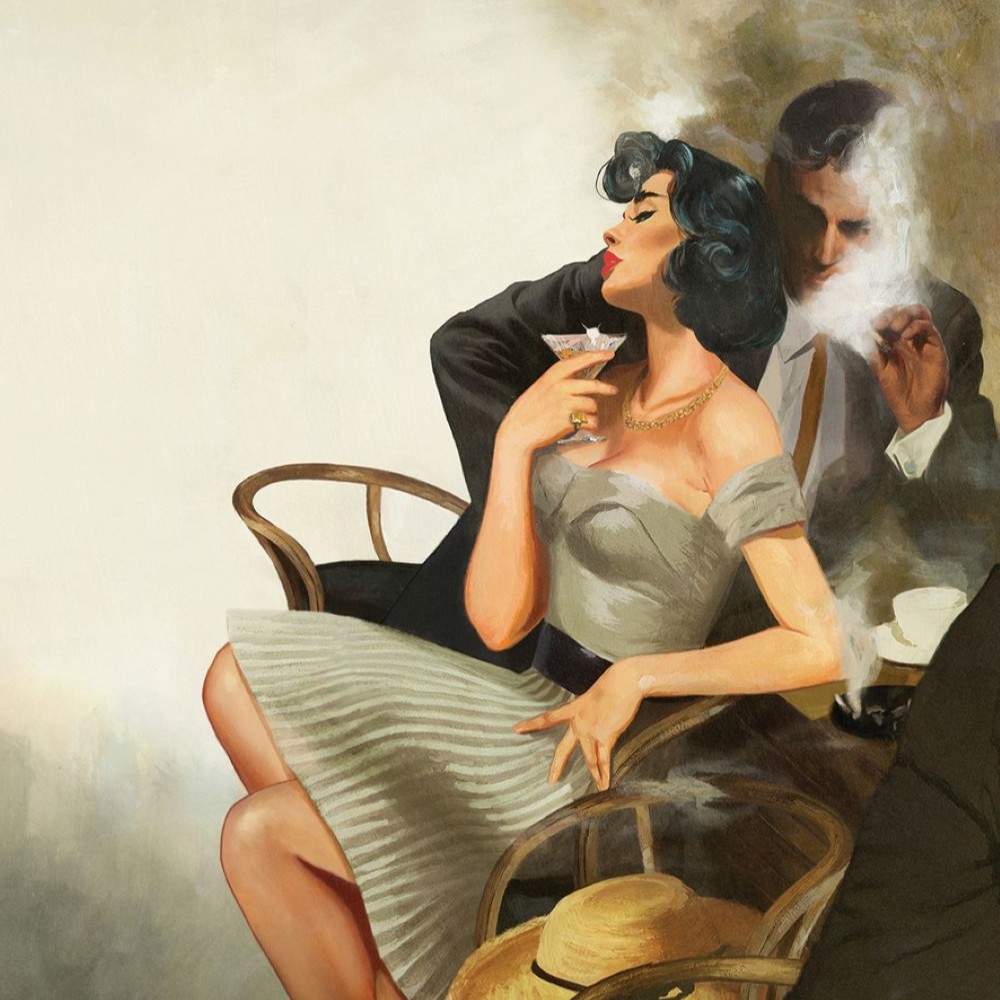
Join us as we take a look at the role drinks play in Ian Fleming’s James Bond novels.
It begins in the very first 007 adventure, Casino Royale, with the immortal line, ‘shaken and not stirred’ and The Vesper martini, christened in honour of Bond’s great love, Vesper Lynd. From then on, strong, carefully crafted drinks are at the heart of every 007 story.
Ian Fleming was very particular about the finer details of his hero’s lifestyle. As well as Bond’s drinking habits, his clothes, weaponry, cars and food are all described with precision, a narrative trait which is perfectly highlighted by his instruction on how to make the perfect martini.
Diamonds Are Forever
‘The waiter brought the martinis, shaken and not stirred, as Bond had stipulated, and some slivers of lemon peel in a wine glass. Bond twisted two of them and let them sink to the bottom of his drink. He picked up his glass and looked at the girl over the rim. “We haven’t drunk to the success of a mission” he said.’
The particular attention that is paid to how eggs should be scrambled, how a car should be customised and how best to serve vodka, are all testament to the writer’s own preferences. Though many have debated how much of Ian Fleming there was in James Bond, there has always been agreement amongst fans that Fleming shared his own tastes and enthusiasms with his character. Along with the advocation of particular brands, these strokes of realism provide a layer of truth and help to bring the fantasy of James Bond’s world to within the readers’ reach. ‘All these small details’, Fleming wrote, ‘are ‘points de repère’ to comfort and reassure the reader on his journey into fantastic adventure.’
Goldfinger
‘James Bond, with two double bourbons inside him, sat in the final departure lounge of Miami Airport and thought about life and death.’
In a feature titled ‘London’s Best Dining’ for Holiday magazine, Fleming provides a tip for American tourists on how to sample a decent martini, showing how much it mattered to him beyond the pages of his novels.
‘It is extremely difficult to get a good martini anywhere in England. In London restaurants and hotels the way to get one is to ask for a double dry martini made with Vodka. The way to get one in any pub is to walk calmly and confidently up to the counter and, speaking very distinctly, ask the man or girl behind it to put plenty of ice in the shaker (they nearly all have a shaker), pour in six gins and one dry vermouth (enunciate ‘dry’ carefully) and shake until I tell them to stop. You then point to a suitably large glass and ask them to pour the mixture in. Your behaviour will create a certain amount of astonishment, not unmixed with fear, but you will have achieved a very large and fairly good Martini.’
Paying attention to exact details are crucial skills for any spy who wants to complete a mission successfully and safely. The life of a secret agent is one of daring action and life-threatening peril. James Bond’s preference for the finer things in life suggests that when the moments of danger have passed, pleasures should be indulged. Enjoying the very finest dover sole and a glass of chilled champagne provides 007 with a reward and pushes his experiences to the height of sophistication and quality, in those brief respites from danger.
Live and Let Die
‘There are moments of great luxury in the life of a secret agent… occasions when he takes refuge in good living to efface the memory of danger and the shadow of death.’
As well as enjoying the pleasures of drinking, alcohol serves to ease the conscience of a cold blooded killer such as 007, and provides moments of relief in a life of violence and upheaval. Drinks play a soothing role in the James Bond novels and offer a well-earned splash of luxury after a long day spent navigating the dirty business of spying.
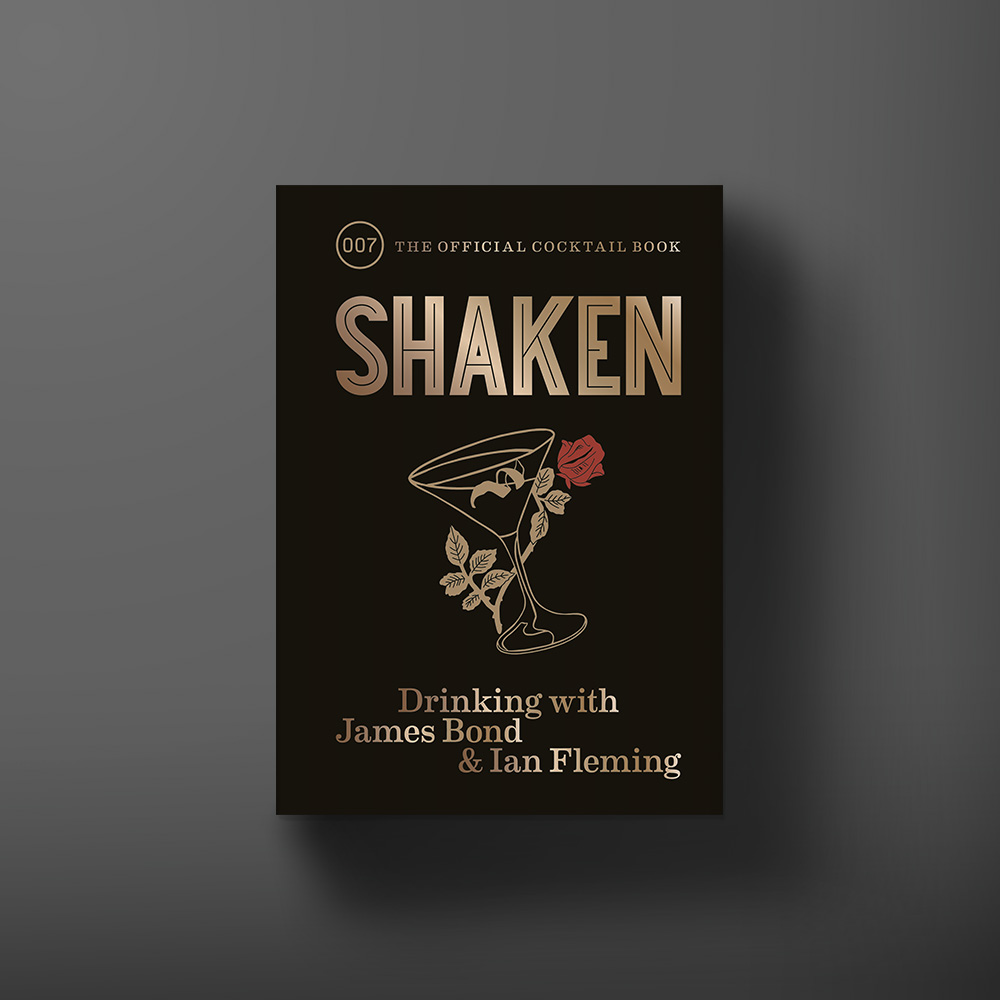
Discover 50 cocktails inspired by the characters and plots of the 007 novels in Shaken: Drinking with James Bond and Ian Fleming, created by the team at award-winning Bar Swift in London’s Soho.
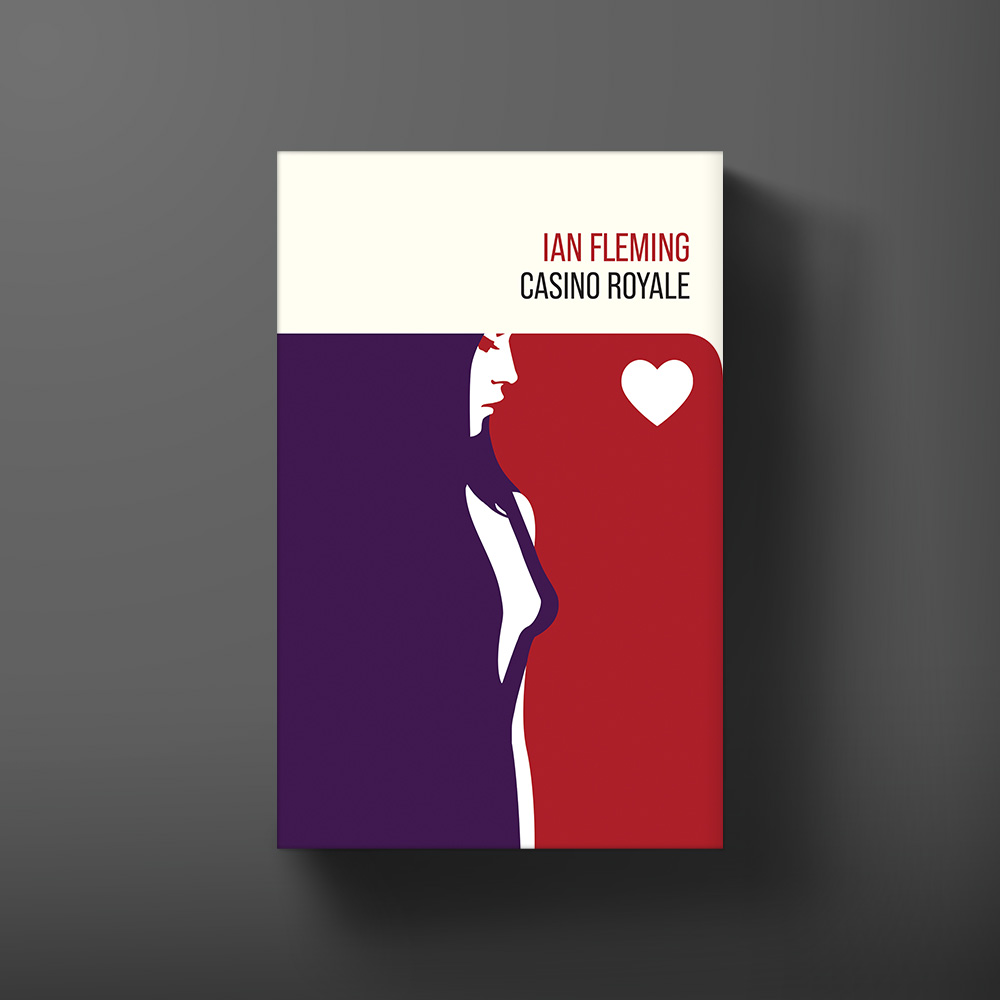
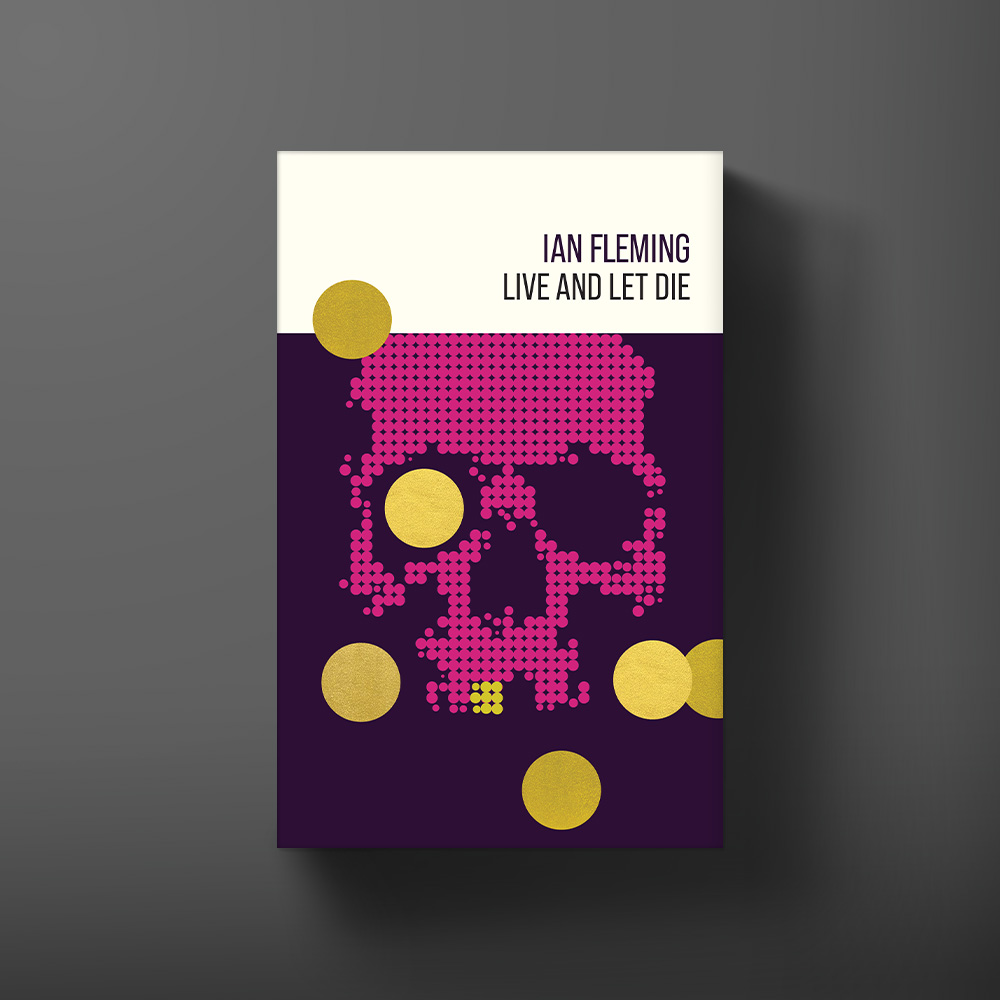
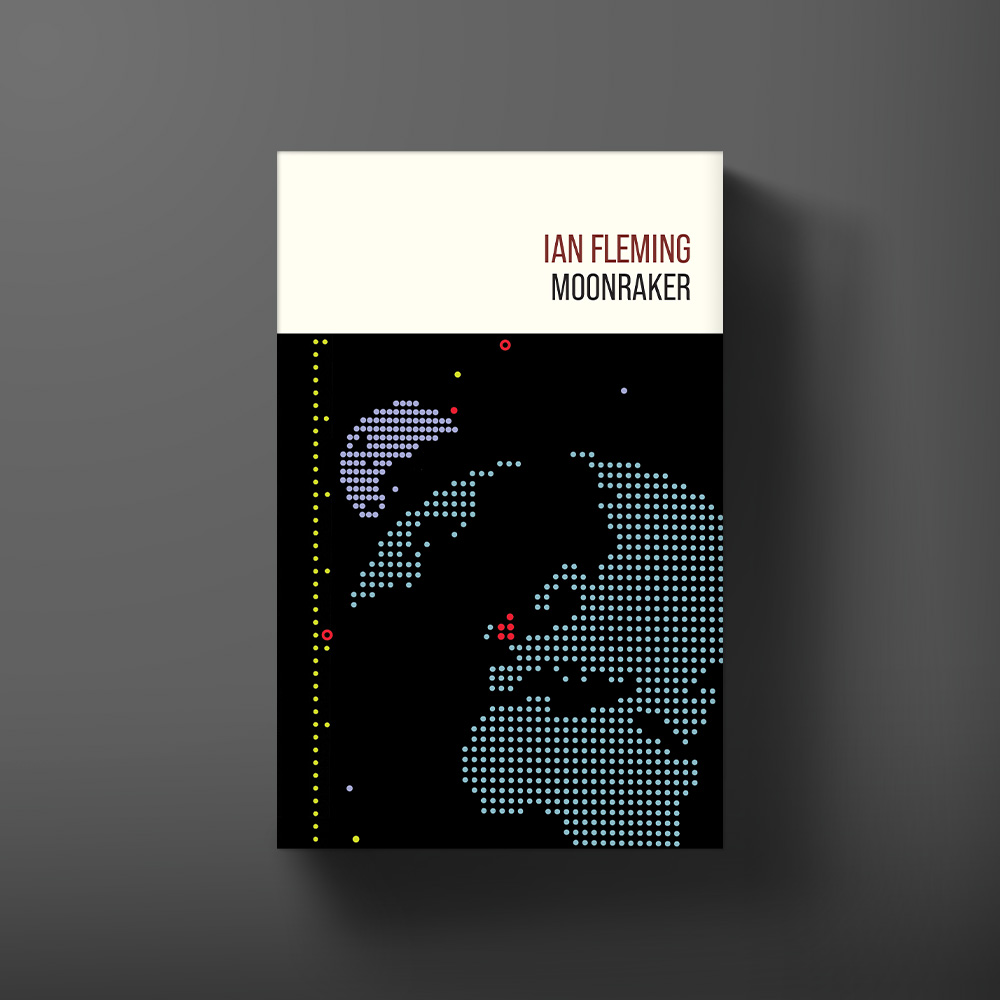
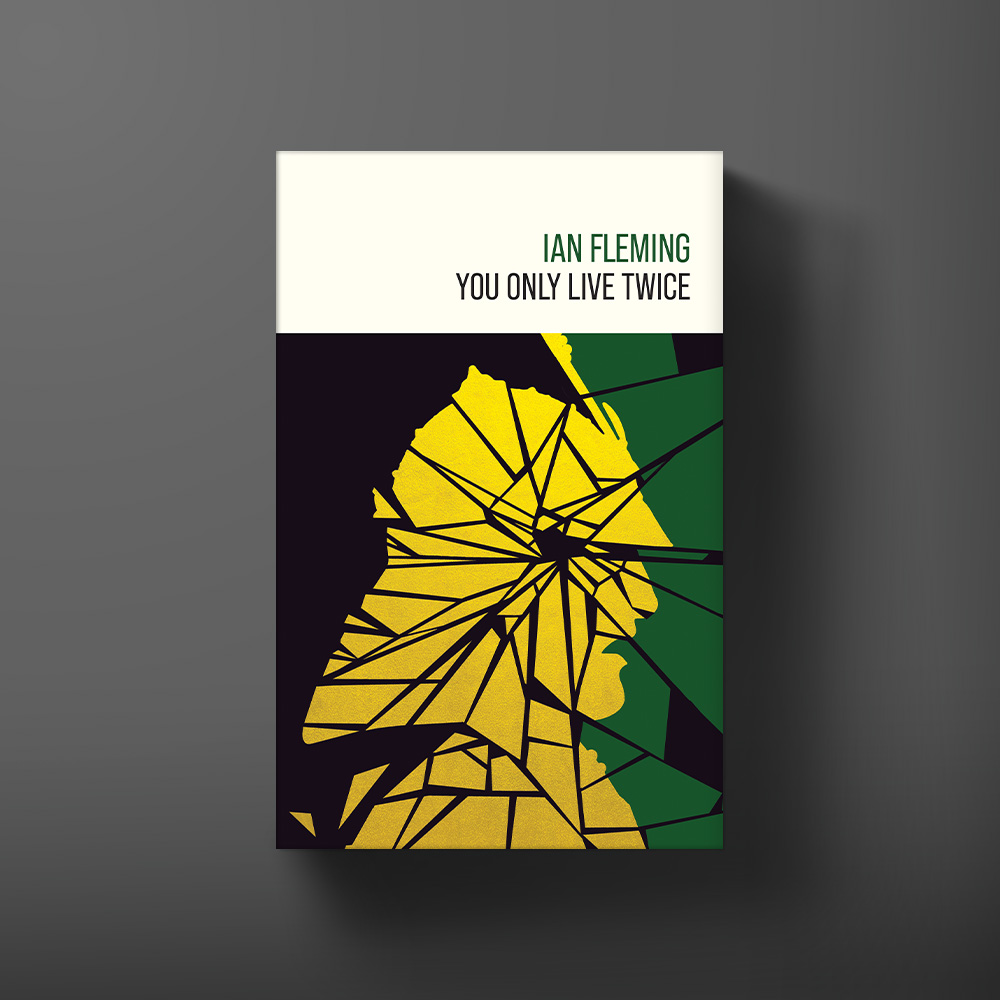
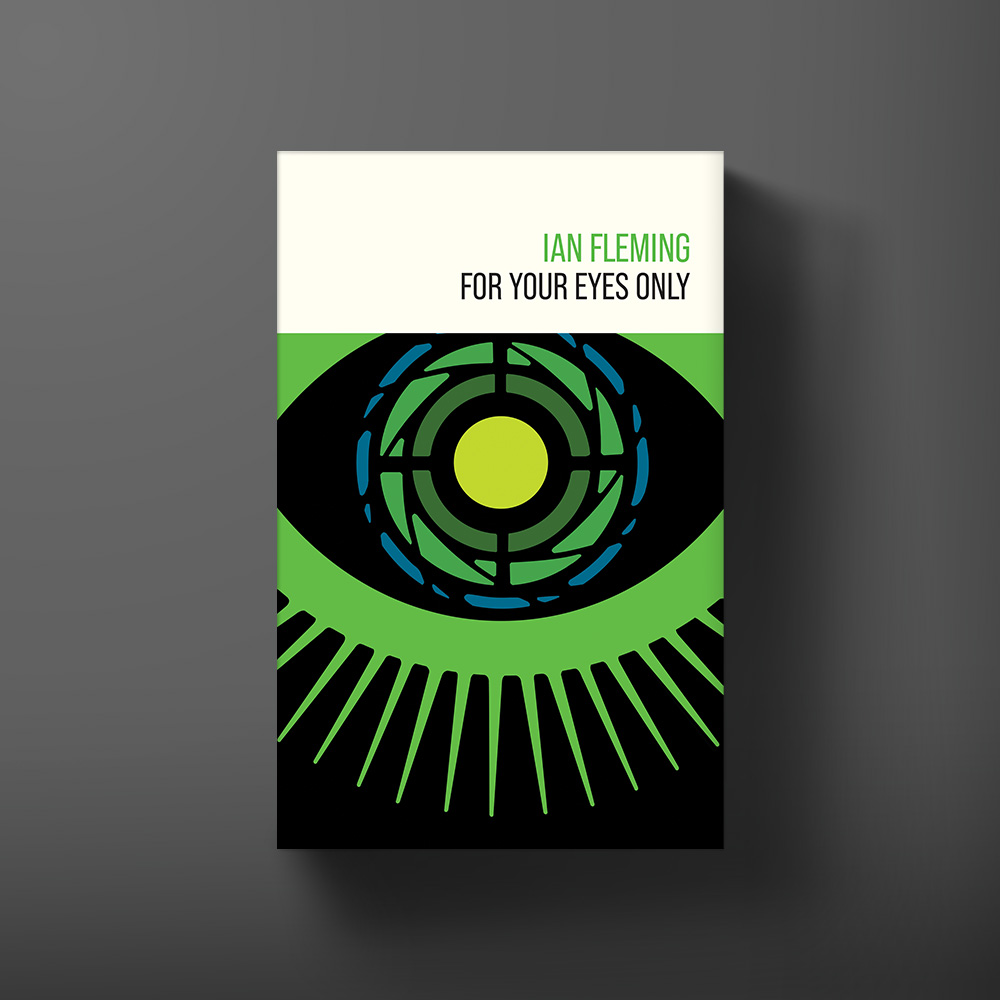
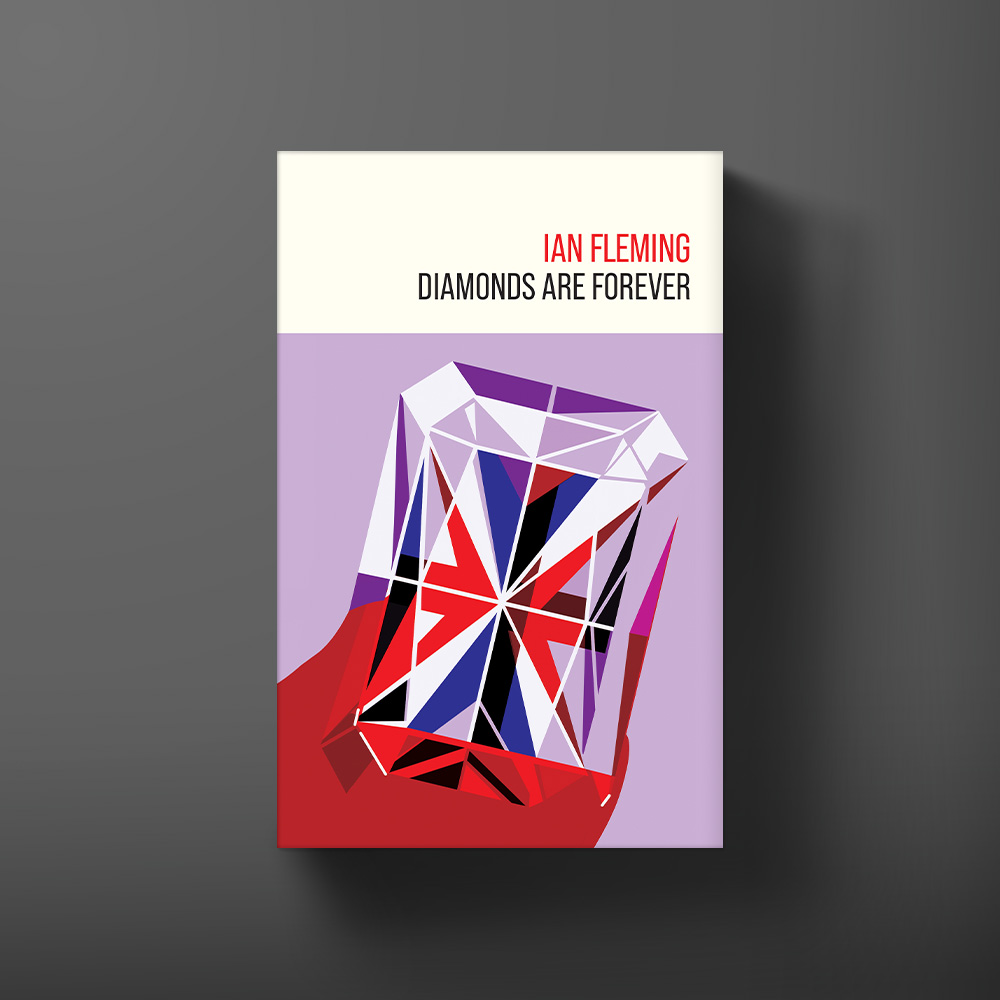
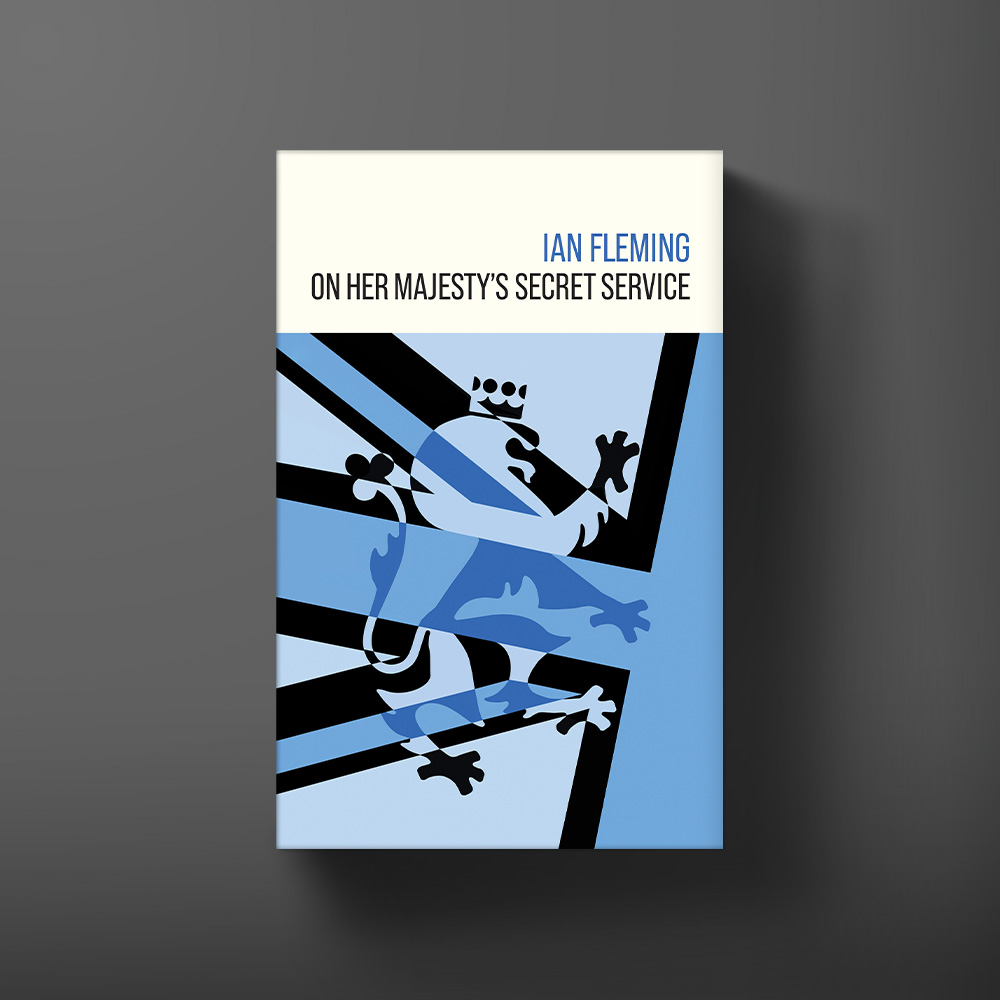
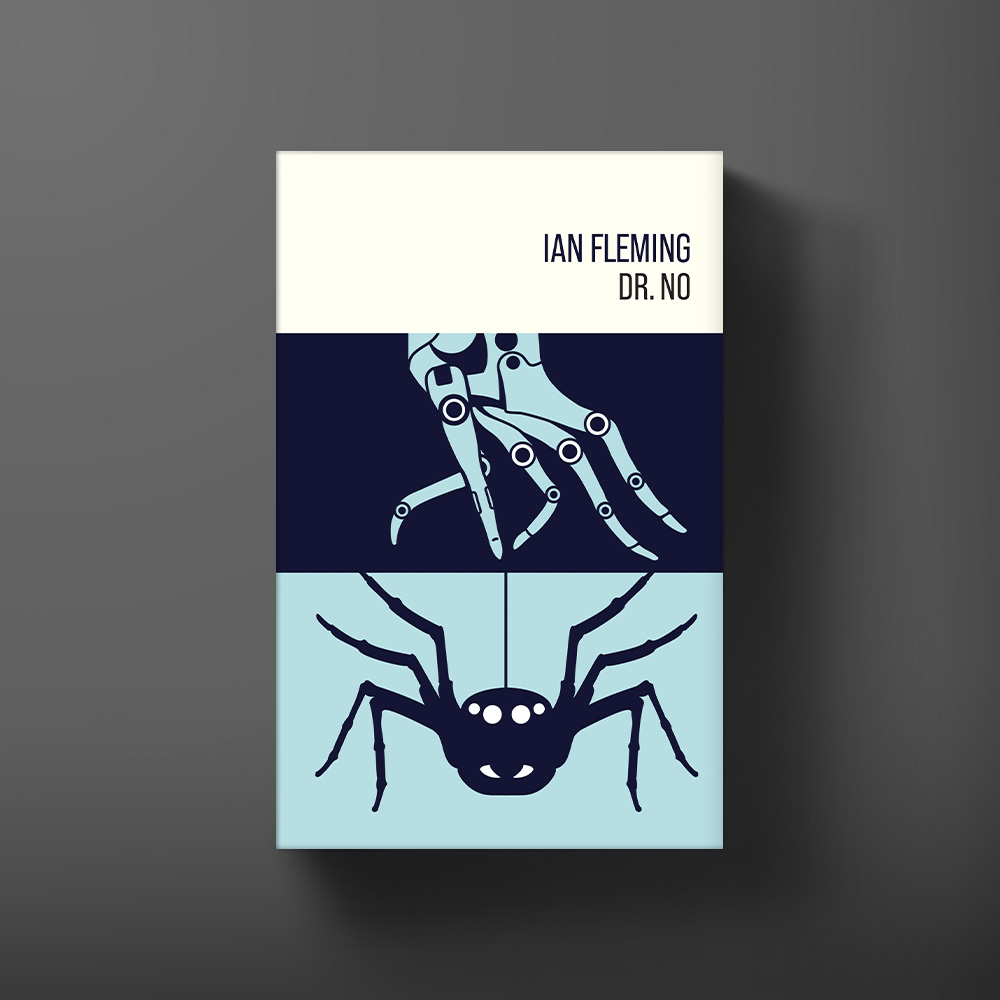
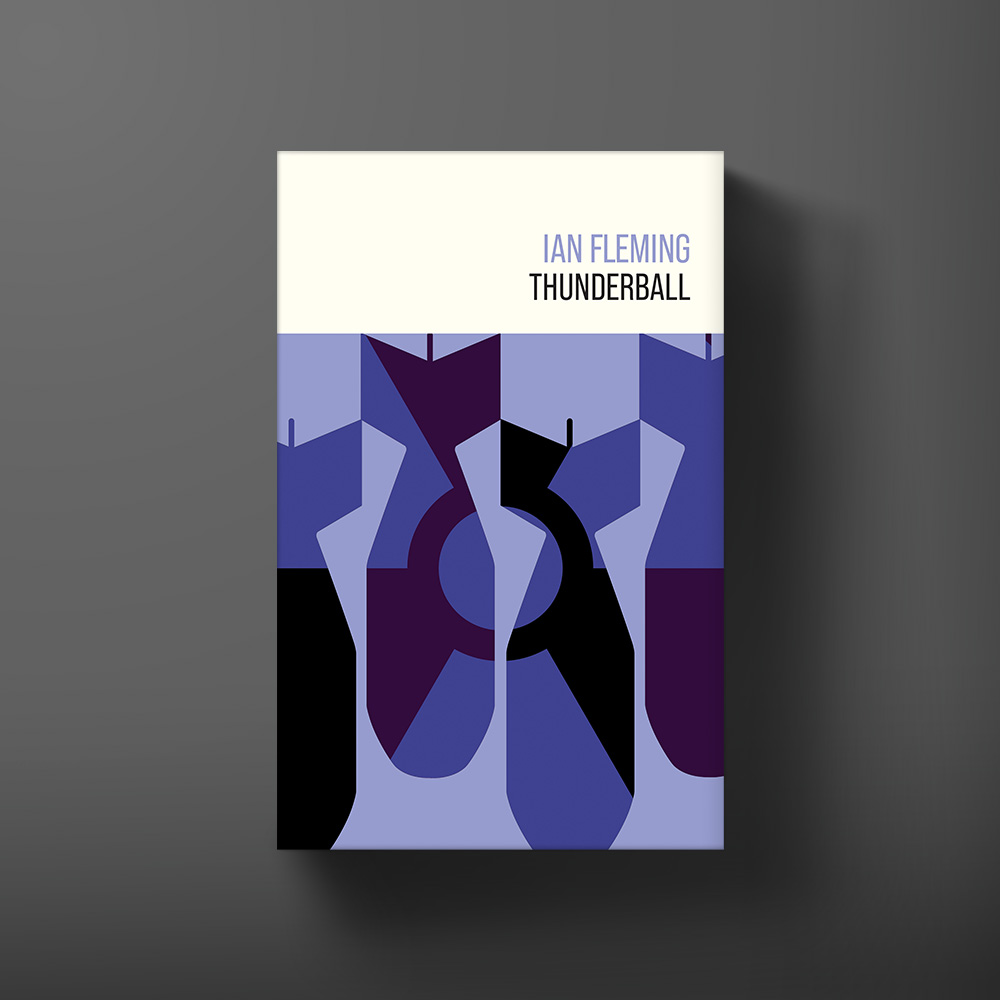
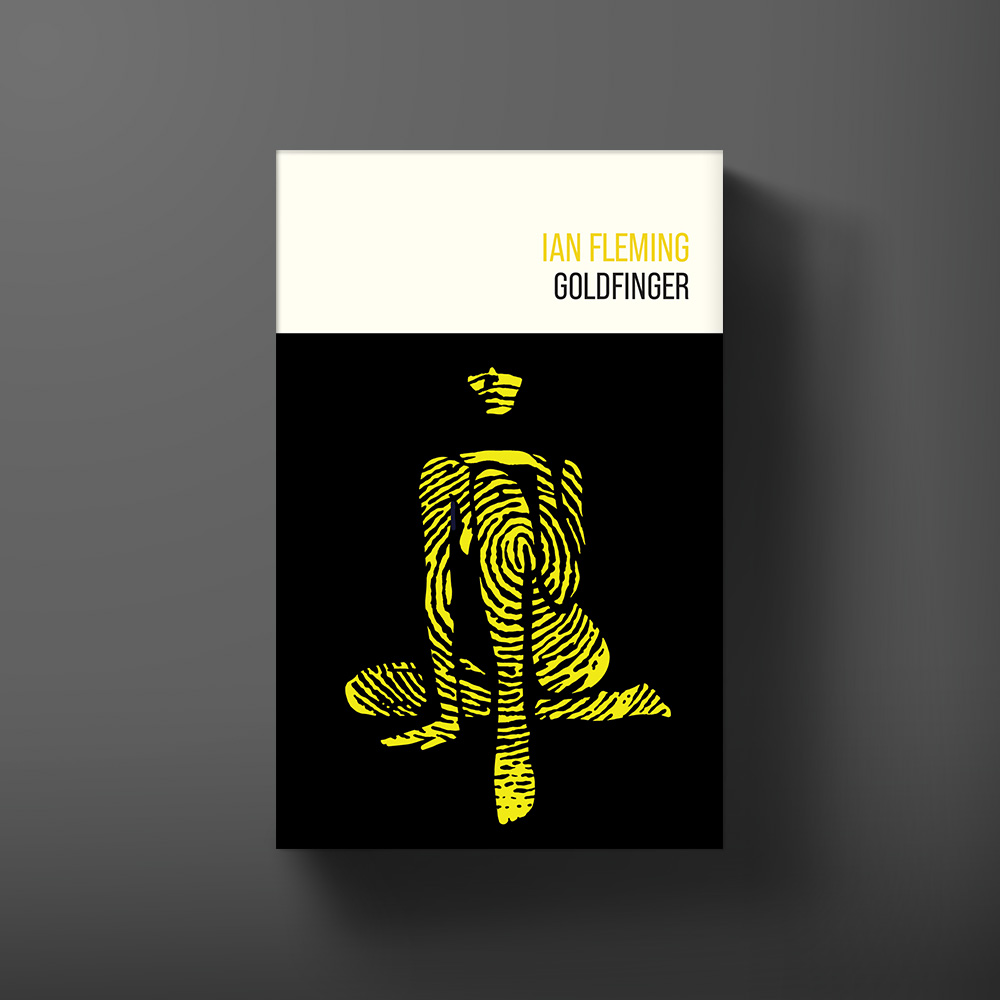
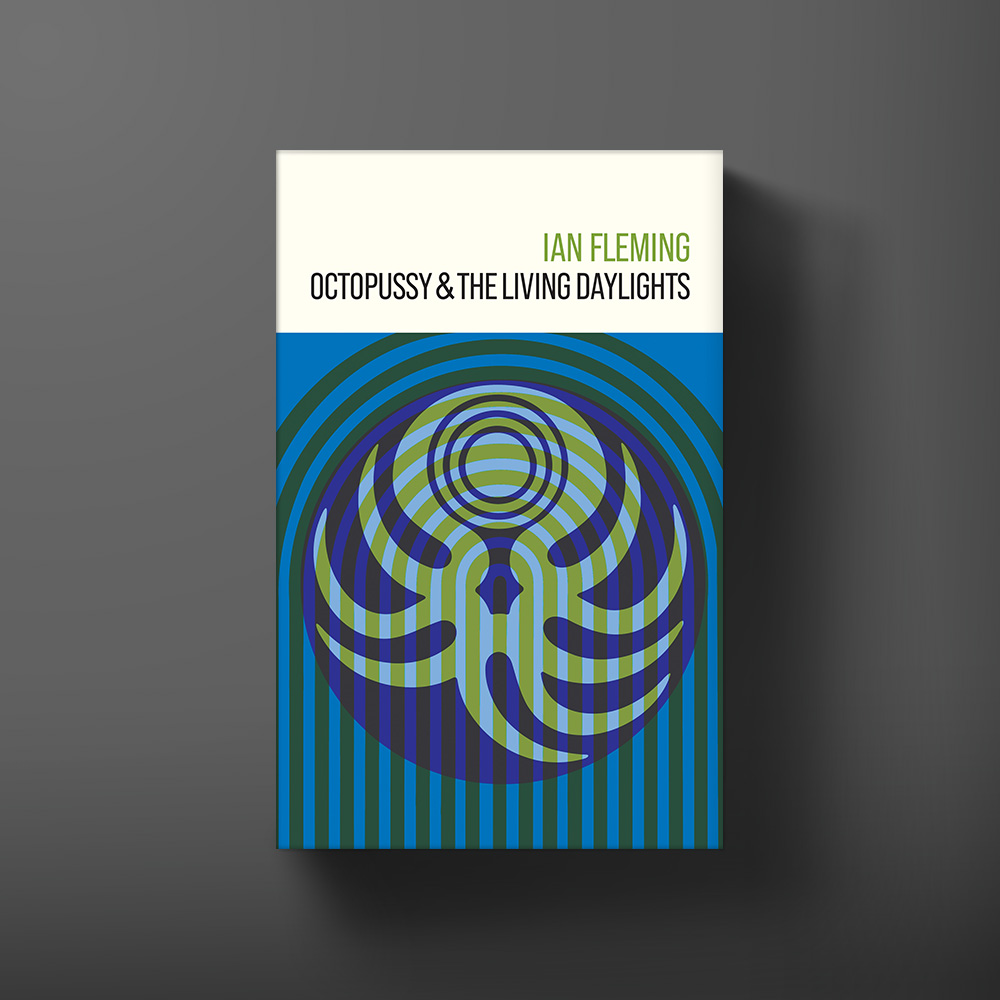
We sit down with Michael Gillette, the man behind the colourful James Bond hardback editions, which are now also available in limited edition art prints at ianflemingshop.com.
How did it feel to collaborate to build on Fleming’s 007 legacy with us at the start of our self-publishing journey?
2018 was when I first had the idea to pitch these designs. I felt like it was inevitable that you would self-publish the books. I’m not sure you’d even decided to at that point [we hadn’t!] so I don’t know why I was so convinced. I had the idea for something really geometric, simple, bright and bold which hadn’t been done, that I could recall. I’m really glad you’re self-publishing. In the shifting sands, it’s the right thing to do. And I know it’s a massive venture. I started out doing sleeves for indie bands, and it feels a bit like that. Being part of a smaller unit, you’re much more part of the endeavor, and you want it to succeed. I want the books to succeed and I want you folks at Ian Fleming Publications to succeed.
I view my career as a rodeo illustrator. Certainly when I did the centenary editions, I was right in the middle of doing a million other jobs. And obviously, I never had any dealings with The Ian Fleming Estate then, just a shadowy missive every now and again that would come through Penguin. You don’t really build a relationship, you do the job and then it’s off and gone. It’s been really interesting to get to know you all, to see how it works, and to watch your progress too. I don’t want to conflate my experience with everyone’s experience, but it seems as things get more and more virtual, the relationships that sustain are the real world relationships. That’s the way I feel. It seems like The Estate has always been a bit like that anyway – more about direct relationships and for sure, it’s hard to get into, but it is loyal once you are in there.
There was no doubt that these books had to be designed by someone who understood the Bond book world. Do you think these new circumstances had an effect on the designs and the design process?
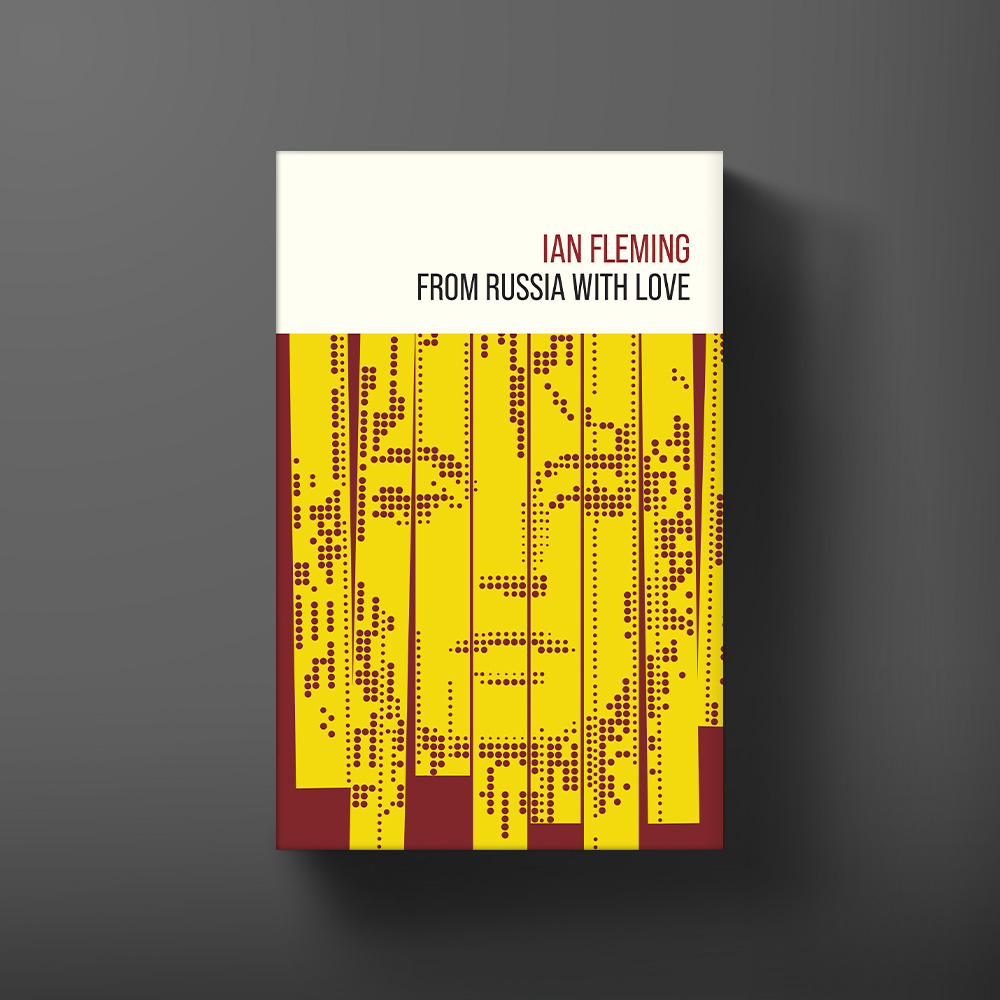
Yes definitely. At Penguin, there was a whole marketing department, a designer and an art director, John Hamilton, a legend. It did go very smoothly, but you’re being presented with something and told what to do. Even though it’s what everyone sees first, the artist is generally hired last. They know what they want, and then they pick an illustrator to do it. This project was completely the opposite, it was self-initiated. I could do anything I wanted, certainly to begin with. Take From Russia with Love. You’d already approved a different idea, but I thought this was better.
Does that extra flexibility facilitate your creative process? Do you wait for the flash of inspiration or do you go looking for it?
Well, initially the ideas came in a flood. I did this very geometric burst to begin with and then I just put them away until 2021. I was teaching a class on concept illustration which includes things like negative space and symbolism. I’d say to the students ‘your mind will give you as many solutions as you ask of it,’ which sounds ridiculous, but it’s actually true. Most people only ask for one idea, or ask for a couple of ideas, and then get very stuck. At the end of that class, I had a lull because Covid was still strong in California, so I took another two weeks. I had these ideas that were based on what I’d been teaching and showing the students, these graphic concepts. The designers I introduced them to were people like Saul Bass, and those ideas were absorbed into them too. So I did another two week burst of that, and then put them away again. I thought I could just be doing it forever.
I guess it’s just trying to keep things fresh. I teach my students that your subconscious is where all the ideas are, and your conscious is, you know, the little peak on the mountain, above the sea, and all the ideas that are going on underneath it, you just have to keep asking for them. If I got really stuck with an idea, I’d go back and read the book just to try and find a new direction on it. The other difference of this job is just how long it went on. I’ve never had anything go on this long. It’s been six years and I couldn’t show anybody at any point, apart from maybe my wife, who is a good sounding board.
With From Russia with Love, for example, there were at least four versions which are all very similar. Do you think a design improves the more times you do it, or can you overdo it?
Oh, you can kill something by over-polishing it. That one is a bit different, because it was a technical difficulty. I had an idea which I couldn’t find an easy way of executing. I could get it approximated quite quickly but making the image read without the face getting wider or distorted took a lot of shifting of dots by hand. It might have been a day and a half’s worth of shifting small dots to make it right. I’d spent so long getting it to try and work, and realizing that it was working, that I probably did ‘white knuckle’ it a bit and say, ‘no, this is the idea.’
Why were you insistent that we went with this cover in particular?
Because it’s an idea that I think is absolutely right for the book. It suits the story of the book. The two lures of the story are the cipher machine and the love interest. For those things to be married together in a single image with just two colors, it just works. Saul Bass is about symbolizing and summarizing. And that’s exactly what this cover does. I suppose there’s a point at which you’ve spent so much time on something that you will not let it go. Your mind has become shrunk to that idea. It’s like you’ve become a stalker for your own idea. I think that’s the only one that I really felt like that about. It was a good call. Well, it was a call.
The design process for these books was more like creating an object than just a cover. What did you learn from this?
With the 2008 books, I didn’t see them until they were physical products. Apart from the cover, I had no idea what the rest of it was. When I left college, I started designing for bands. That was my USP. I really loved it. I stopped because my illustration career took over, but I’ve always been into the idea of the total look of something. To be able to have that total look really excites me. I think that at this point in time to make a physical book, especially a beautiful hardback, there’s got to be a level of thought behind it that’s worth people buying it. You just think, ‘how does this look in the hand?’ That’s why I tried to make things look as close to the size they would be, like the bullets.
I’m not saying it’s a dying art, I think it’s just that designers are dying off because they can’t afford to do it as a job. You go into Waterstones and everything looks very much the same, the same typeface and the same treatment. With the self-publishing, you’ve done something more considered.
The endpapers really add to this. How did you go about making them?
I’ve got this sketchbook with lots of ideas, where I would just draw endlessly, like a bank of ideas. I always tell my students to use their sketchbooks. Draw, draw, draw. Sketch it out. You never know what you’re going to get. The muse comes when you’ve got a pencil in your hand. I couldn’t understand how I was still coming up with ideas, but they were working. Sometimes, the more ideas you’re having, the more ideas they have. I don’t know how it works, but that’s how it works.
Many of them are like optical illusions. This must have been fiddly and time-consuming?
They’re techniques I taught at college: concept art and digital design. So I know how to manipulate things that way and make them repeat. Sometimes they work and sometimes they don’t. Like for Thunderball with the silencer that almost looks like a crucifix – that’s a motif that worked really well. I was amazed at how I was still doing all the endpapers right down to the wire. It takes a long time. I want to give some value for money there. I know the expectancy of being a fan of something and the disappointment when it’s shabbily treated. I want to speak to that in the Bond world.
For the centenary editions, you decided not to use any guns. Why was that and what was different for these editions?
We just don’t want to glamorise guns, really. They’re still not gun heavy but they just work so well. I feel they draw on the action of the books a lot more than the previous covers. If there was a big wheel of things, this series draws on them: gadgets, some girls, some guns, some death, some bombs… The whole world of it has become so iconic that it’s so much fun to play around with that stuff. I’m not reinventing the wheel, just putting some good rims on it, trying to combine things in a new way to make you see them slightly differently. It’s so much fun just to play around with that stuff, it’s why everybody loves James Bond.
The wheel is a great analogy. The designs draw on so many elements, but then they feel cohesive at the same time. Was this hard to achieve?
That is the difficult thing to pull off. When I was at college, I could make really good images of things, but I could never make a second one the same. I couldn’t make a cohesive series of things, which is a bit like where AI is currently at. It can’t make a cohesive set of ideas. It’s taken me a long time to be able to pull that manoeuvre off. I do sometimes wonder how long it will be before AI makes that leap.
I try to ask myself, ‘what is a human response to this?’ Is this natural or is this synthetic? Leonardo da Vinci said that 98% of people create nothing but excrement. A lot of work that I’ve done wasn’t very good, but I was sharpening the axe to do something which was good.
What are you doing in your work to combat these fears? What would you teach to your students?
Look at Ian Fleming, he didn’t wait for the muse. He went on holiday and then bombed them out. But they’ve endured somehow. Something went on those pages that’s well beyond what you could ask a machine for. And I think it’s his complicated human nature that’s connected with people. Whether they know the books or not, there’s something about the complicated nature that he has put into James Bond that has endured. Bringing it back to the books, I view this as a vote for the continuation of holding something in your hand and connecting with it. I hope that the physical world is going to continue, and things like books had better be good in order to survive. We’ve all got to try a bit harder at it, I think, to be more considered. That’s why it’s so exciting that you’re doing it yourself. You know your product and your mind enough to know when something is right or not, and you know it’s not about what’s new, but what’s true. I think that’s what people want to respond to.
Check out more of Michael’s work here and find the full range of books and art prints at our shop.
Raymond Benson gives us an insight into the life and origins of Felix Leiter.
I love Felix Leiter. Always have. Ever since I first read Ian Fleming’s novels in the 1960s. While it was certainly the character of James Bond who lit a fire under me at a very young age, I identified with Felix. After all, Felix was a Texan. So was I. In the premiere book, Casino Royale, Bond reflects that “good Americans were fine people and that most of them seemed to come from Texas.”
Where did the author find his inspiration for Felix Leiter? We really don’t know. Felix’s first name was one of the middle names of Fleming’s longtime friend, John Felix Charles Bryce (but everyone knew him as “Ivar”). The surname came from Fleming’s Washington, DC friends, socialites Tommy and Marion “Oatsie” Leiter. Neither of them were Texans. Did Fleming know any Texans? I am not aware of any evidence to that effect.
Unless one has read Fleming’s books, a Bond fan might not know the “real Felix.” While several fine actors have portrayed the character on film, a faithful incarnation of Fleming’s Felix has never been seen.
Allow me to paint a portrait of Ian Fleming’s Felix Leiter. Felix is Bond’s closest ally in six of the novels. At first, he’s with the CIA. After Felix loses a right arm and a leg to a shark in Live and Let Die, the CIA lets him go; however, he then finds work with Pinkerton’s Detective Agency. Felix remains with Pinkerton’s until Thunderball, in which Allen Dulles (the CIA chief) puts Felix on the reserve force. Felix is again placed on the reserves in The Man With the Golden Gun.
When Bond meets him in Casino Royale, Felix is about thirty-five. He is tall and thin, and he wears his clothes “loosely from his shoulders like Frank Sinatra.” Although his movements and speech are slow, Bond gets the feeling that there is plenty of speed and strength in Felix, and that he would be a “tough and cruel fighter.” Fleming goes on to describe him in Chapter 7:
‘As he sat hunched over the table, he seemed to have some of the jackknife quality of a falcon. There was this impression also in his face, in the sharpness of his chin and cheekbones and the wide wry mouth. His grey eyes had a feline slant which was increased by his habit of screwing them up against the smoke of the Chesterfields which he tapped out of the pack in a chain. The permanent wrinkles which this habit had etched at the corners gave the impression that he smiled more with his eyes than with his mouth. A mop of straw-coloured hair lent his face a boyish look which closer examination contradicted.’
One of the ties between the Englishman and the American may be that they enjoy being barroom rivals. There is almost always an obligatory scene in which the two visit a bar and drink themselves silly. In Casino Royale, Bond educates Felix on the making of a “real” martini, and Felix remembers the formula in subsequent novels. In Thunderball, Felix seems to have studied martinis thoroughly, for he, in turn, educates a barman in a Nassau hotel on the ingredients of that real martini. Felix knows when he’s being had; the martinis at the hotel are served with inadequate portions of liquor. Felix explains to the barman: “… here’s one who’s dry behind the ears. A good barman should learn to be able to recognize the serious drinker from the status-seeker who wants just to be seen in your fine bar.”
Kingsley Amis, in The James Bond Dossier,seems to think that Felix has no personality. Nonsense! (Sorry, Kingsley.) Felix’s personality is clearly revealed in his manner of speech and the subjects about which he speaks, as well as through several of the character’s idiosyncrasies. For instance, Felix is a jazz fan, and he escapes a nasty scrape in Live and Let Die by “arguing the finer points of jazz” with his black captor. Felix tells Bond many anecdotes about America while giving him guided tours of New York, Saratoga, or Florida. He and Bond have a good laugh at the quaint citizens of St Petersburg, and they take pleasure in complaining about the commercialism of the Bahamas’ hotels.
Felix is actually a bit of a goofball! He is so buoyant that the sun always seems to shine on him when he’s around Bond. Even after his mishap with the shark, Felix retains his upbeat humor. He’s the kind of joker who comes up behind Bond (in Diamonds Are Forever), sticks his hook against Bond’s back, and says, “All right, Limey. Take it easy unless you want lead for lunch.”
Most importantly, though, is the fact that Felix reinforces the theme of Friendship running through the series. The bond between the two men is extremely heartfelt. Felix Leiter, of all of Bond’s allies, brings to the books a warmth and joviality which is missing most of the time.
When Bond first encounters Felix in Casino Royale, the Texan is amiable and boyish. Fleming succeeds in giving the character a personality that is distinctly American. But the CIA man is a mere shell of what is to come. Not much is revealed about Felix in Casino Royale, but he is an immediately likeable figure. Fleming was wise in using Felix as the “cavalry to the rescue” when Bond loses all his money at the baccarat table.
Felix is further developed in Live and Let Die, where he has a strong supporting role. His cheeriness is an excellent complement to Bond’s seriousness, almost a breath of fresh air. Felix acts as Bond’s guide to America, and much of Fleming’s sense of humor is revealed in the Texan’s speeches: “You can get through any American conversation,” advised Leiter, “with ‘Yeah,’ ‘Nope,’ and ‘Sure.’ The English word to be avoided at all costs,” added Leiter, “was ‘Ectually,’” Bond had said that this word was not part of his vocabulary.
The friendship between Bond and Felix comes to fruition in this second novel. From the first chapter, in which the American surprises the Englishman by greeting him in a hotel room, to the tragic incident in which Felix almost loses his life to a shark, the men are inseparable. They barhop through Harlem together, sharing meals, conversation, and clue-gathering. Despite their differences in background, the men hit it off as if they’ve been friends since childhood. Bond seems to depend on this alliance with a male friend—it means more to him, sometimes, than his relationship with any woman in the novels. Bond even has trouble keeping the emotion from choking his voice in Chapter 17 when he learns that Felix, after having lost half an arm and half a leg, will live after all.
‘Bond’s heart was full. He looked out of the window. “Tell him to get well quickly,” he said abruptly. “Tell him I miss him.”’
Interestingly, Fleming killed off Felix in the first draft of the novel. It was the author’s American literary agent, Naomi Burton, who objected and talked Fleming into keeping Felix alive. She recognised the appeal of the character.
One of the highlights of Diamonds Are Forever is Bond’s reunion with Felix. Bond seems to remove his cold, stone-faced exterior when he’s around the Texan. Their tight friendship is apparent in their conversation and actions. Bond again allows some emotion to reveal itself when he says goodbye to Felix toward the end of the novel in Chapter 21:
‘Bond felt a lump in his throat as he watched the lanky figure limp off to his car after being warmly embraced by Tiffany Case. “You’ve got yourself a good friend there,” said the girl.
“Yes,” said Bond, “Felix is all of that.”’
Felix accompanies Bond to Saratoga and again pops up in the nick of time in Las Vegas. Now Felix is working for Pinkerton’s Detective Agency, “The Eye That Never Sleeps.” Felix does not seem bitter at all about carrying a steel hook for a right hand or limping through life with a wooden leg. He is as good-humored as ever. Perhaps this conscious negation of his physical disabilities is one reason why Felix remains a useful friend to Bond. Their reunion on the streets of New York is a joyful moment: they immediately proceed to their usual form of entertainment, i.e., eating and drinking. Besides procuring Bond’s drinks, Felix takes the liberty of ordering the Englishman’s meal. Felix is once again very helpful as Bond’s tour guide. He “mansplains” everything Bond needs to know about the Saratoga race track, Las Vegas gambling statistics, and American life.
The character appears only briefly at the end of Goldfinger, again in the form of cavalry to the rescue. He saves Bond’s life and the Englishman admits that Felix is always good at doing so. Felix, who still works for Pinkerton’s, is the same cordial character who is so refreshing to have around. It’s too bad his appearance is so brief in the book.
Felix has one of his biggest roles in Thunderball. The alliance between Bond and Felix is the tightest it has ever been. The loyalty thesetwo men have for each other is one of the warmest qualities of the book—the sequence in which Bond meets the CIA agent at the airport and realizes it’s none other than Felix is an uplifting moment. Then it seems all they want to do is drink each other under the table after gorging themselves with meals. Describing the “chopped tenderloin of beef” at the Royal Bahamian, Nassau in Chapter 12, Felix complains, “This is hamburger and bad hamburger. The French onion rings were never in France, and what’s more, they’re not even rings. They’re oval.”
Bond and Felix constantly kid each other, much like how I understand the relationship between Ian Fleming and his American friend, Ernest Cuneo, would have played out. For example, in the following Chapter 14, the men are using the cover of a property-seeking English businessman and his American lawyer when they meet in a hotel restaurant:
‘Bond joined Leiter at a corner table. They both wore white dinner jackets with their dress trousers. Bond had pointed up his rich, property-seeking status with a wine-red cummerbund. Leiter laughed. “I nearly tied a gold-plated bicycle chain round my waist in case of trouble, but I remembered just in time that I’m a peaceful lawyer. I suppose it’s right that you should get the girls on this assignment I suppose I just stand by and arrange the marriage settlement and later the alimony.”’
Felix doesn’t seem to have any bitterness about the loss of his right hand and leg. Toward the end of the book in Chapter 22, the Texan insists on joining Bond in the underwater ambush of Largo’s men:
‘Felix Leiter interrupted. He said obstinately, “And don’t think you’re going to leave me behind eating Virginia ham. I put an extra foot-flipper on this”—he held up the shining hook—”and I’ll race you over half a mile any day, gammy leg and all. You’d be surprised the things one gets around to improvising when someone chews off one of your arms. Compensation it’s called by the medics, in case you hadn’t heard about it…”
Leiter turned to Bond. “You goddam shyster. Thought you were going to leave your old pal behind, didn’t you? God, the treachery of you Limeys! Perfidious Albion is right, all right.”
Bond laughed. “How the hell was I to know you’d been in the hands of rehabilitators and therapists and so on? I never knew you took life so seriously. I suppose you’ve even found some way of petting with that damned meathook of yours.” Leiter said darkly, “You’d be surprised. Get a girl round the arm with this and you’d be amazed the effect it has on their good resolutions.”’
The character’s final Fleming appearance is in The Man With the Golden Gun. Although there is no traditional drinking scene between Bond and Felix (a disappointing first), the sequences in which the Texan appears are high points. As usual, Felix pops up in the nick of time at the novel’s end, clearing the way for Bond to clean up the business at hand. And again, as usual, Felix is hurt and can’t participate in the final battle. Felix escapes this adventure by breaking his one good leg. Then, in a half-kidding, half-poignant moment in Chapter 15 as he leaves the hospital on crutches where Bond is under medical care, Felix tells Mary Goodnight:
‘“Okay, Miss Goodnight. Tell matron to take him off the danger list. And tell him to keep away from me for a week or two. Every time I see him a piece of me gets broken off. I don’t fancy myself as The Vanishing Man.” Again he raised his only hand in Bond’s direction and limped out.’
It is my great pleasure and privilege to be inserting into Ian Fleming’s timeline a special tale featuring someone I’ve considered a friend for a long time… Felix Leiter in The Hook and the Eye.
For more insights from Raymond, check out his book, The James Bond Bedside Companion.
Meet cocktail maestro Edmund Weil, part of the team behind essential cocktail book, Shaken: Drinking with James Bond and Ian Fleming. A distant relative of Ian Fleming, Edmund introduces a range of James Bond and Ian Fleming inspired cocktails to make at home, presenting each recipe with knowledge and passion for both the literary connection and the art of mixology.
The book is the work of experienced bar keepers – and real life husband and wife team – Edmund Weil and Rosie Stimpson, together with bar industry legends Bobby Hiddleston and Mia Johansson. Here we talk to Edmund about how the project came together and what makes the perfect cocktail.
We love the detail behind each drink – something that Fleming himself was particular about in his own books. How did you achieve this?
The selection of passages from the books and the names and themes selected by Ian Fleming Publications made it a real pleasure to research and execute the cocktail creation and write them up. In my experience it is much easier to create the perfect cocktail with a clear framework; whether it’s a theme for a menu, or thinking about a very particular clientele, or as in this case a literary inspiration.
How did you first get involved in the world of speakeasies?
My wife Rosie and I have always loved vintage style and music; that was always going to be the basis for our dream of opening a bar. Our first bar, Nightjar, was also located underground with an unassuming doorway between a café and a chicken shop, so the concept of a hidden bar really lent itself to the space. Luckily the drinking public at the time were also very taken by the speakeasy concept and the craft cocktail revolution, so it became very popular very quickly.
All of your bars, Nightjar, Oriole and Swift are named after birds. What was the inspiration?
My grandfather, who was Ian Fleming’s cousin, had a great passion for birds and passed that on to me. It was very interesting to learn while researching this book that this passion was shared by Ian Fleming himself. His descriptions of nature (and birds in particular) are rivalled only by his descriptions of food and drink.
How have drinking habits changed from Ian Fleming’s day in the 1950s to now?
By the 1950s the first golden age of the cocktail was already on the wane. Prohibition, followed by the 2nd World War, had eroded much of the cocktail knowledge and finesse that had built up during the Belle Epoque. Fleming, on the other hand, was a greater connoisseur than most. Some of his preferred methods are a little unorthodox by today’s standards (you won’t find too many bartenders shaking their martinis for instance!). Perhaps the biggest societal change however is quantity; if you look at Bond’s alcohol consumption over the timeframes of the novels it works out at about 92 units per week! Today’s drinkers are as a rule, more abstemious and more discerning, which means that creating special but responsible drinking experiences for guests is the biggest challenge for bar operators.
What makes the perfect cocktail?
The perfect cocktail must have excellent ingredients, which need to be mixed in harmony and balance. With some ingredients (especially pungent amari) even a few drops can change the balance of a drink completely. Likewise it is often the simplest of drinks in which that harmony is hardest to attain. That’s why I would advise any budding cocktail-maker to always taste their drinks before serving. This gives the chance to rebalance the drink if it’s off.
Which of the 50 cocktails in the book is your personal favourite?
I’m a sucker for ‘stirred down and brown’ drinks with pungent flavours, so the Trueblood is high on the list. It’s based around barrel proof blended Japanese whisky, with strong support coming from Campari, crème de dassis and sweet vermouth. The perfect after-dinner digestif.
Which of the recipes would you suggest a cocktail beginner start with?
The Moneypenny is an excellent choice. A rose and cucumber-tinted Collins, it’s refreshing and easy on the palate, but still has enough flavour elements to turn someone on to the joy of mixing drinks.
Which is best for a party?
Without doubt the Old Man’s Thing. Adapted from a punch that Ian Fleming would serve to his guests at GoldenEye, it is a delicious classic rum punch with a theatrical element in the flaming float of overproof rum.
Do you have a favourite literary Bond character?
Tiger Tanaka. The ultimate badass.
And a favourite Bond novel?
Casino Royale – it is the grittiest and most realistic of the Bond novels (he even falls in love!). I love the vividness of the gambling scenes and Vesper Lynd is a fantastic femme fatale.
Check out Shaken: Drinking with James Bond and Ian Fleming for yourself in our shop.
We sit down with Mark Pearson to learn more about his father John’s work and 007’s impact on his own life. Mark has written an introduction in the latest edition of his father’s book, James Bond: The Authorised Biography.
Was Bond a big part of your upbringing?
I was exposed to the first of the Bond films by my father. He took a party of young children on my birthday to see Dr. No. Looking back on it, it was a slightly inappropriate thing to do for an eight-year-old child but there you go, it was fun. And all my friends thought it was really cool. Bond was quintessentially cool. And there were also the conversations around the dinner table when my father came to write James Bond: The Authorised Biography. They often centred on ‘Well, what would Bond have done in these circumstances?’ We’d be sitting around and talking about behaviours and people. My father was very open to the idea of getting ideas about Bond from us as children, which is slightly odd.
In your introduction, you write about some of the characters being based on people you knew growing up. What is this experience like, reading fictionalised versions of people from your real life?
One of the funniest for me is the depiction of my grandmother. In the book, James Bond has a cleaning lady who looks after his life and she’s much more than the cleaning lady. Sort of a female butler, if you like. And she sniffs in disapproval whenever Bond does something that she doesn’t like, and this is exactly what my grandmother used to do. We all knew that when my father wrote that, he was actually writing about his own mother, our grandmother, and we found that quite funny. Then there was the inclusion of our landlord as a porter at Blades, John Prizeman. And then the rather more surprising one, which was when we discover that James Bond’s mistress has been sponsored by a rich armament millionaire, who was named after Richard de Combray. He was a family friend who in fact was gay, so very unlikely to sponsor a female prostitute. Very unlikely to sponsor a prostitute full stop. Richard was a lovely, delightful man, who couldn’t have been less like an arms dealer.
The biography is so deeply researched. Do you recall anything about your father’s research, writing and creative processes?
My father was both a meticulous researcher and note-taker. When he was writing The Life of Ian Fleming he interviewed about 140 people. He kept every single one of the notes from that and so one of the things that the Queen Anne Press did before my father died was to publish the notes. The reality is that you could produce something similar for the Gettys or the Kray twins. You could do something similar for the Churchills because he kept meticulous notes of the conversations he had with people. But sometimes those notes were not exactly tactful. Coming back to our core subject here, which is Bond – Admiral Godfrey was clearly the model for M, and my father wasn’t taken by him when they met. What’s funny about that story, is that I think it was a two-way thing. I believe Admiral Godfrey was thinking ‘Is this whippersnapper, at 34, mature enough to write the book about my friend Ian?’ What we’re left with in the notes are comments about Admiral Godfrey’s appearance being fundamentally rundown, wearing rather tired looking brogues, but that you could still see a glint of the old M, or C, in his eyes, you could see the ruthlessness. I thought that was rather revealing and compelling.
How do you feel about the new edition of the James Bond: The Authorised Biography?
Well, I think let’s start with the really obvious thing – the cover of the new book is fun. Fun is actually central to this book, and it’s an opportunity to reengage with different populations. But the fun that goes with this is great: having a kit which any self-respecting spy can take into a mission. It feels very 60s. But I also think this edition celebrates the fact that this book is 50 years old. It’s actually 50 years young and in a curious way it’s still quite relevant. It’s still fresh. And I think people of my children’s and, dare I say, even my children’s children’s generation will enjoy this book.
Why do you think 007 and everything around 007 is so enduring?
I think it’s a mixture of things. There are massive overlays between a perception of what it meant to be British, coupled with the intelligence world and the lack of information about it, which is true to this day, although perhaps less so than it was at the time when Ian was writing. Coupled with this enormous sense of derring-do and a belief that one person could make a difference. That’s also very compelling, I think. Without question in the 50s and 60s we’d come out of a world war and people were desperate to have something which gave them a more positive view and a bit of fun. So I’ll come back to the theme of fun: the enduring theme of Bond, for me anyway, is fun.
What is your favourite James Bond book?
Diamonds Are Forever. An absolutely compelling page-turner. It is interesting, isn’t it? I was given the Bond books as a child. I remember being completely befuddled by Casino Royale, I didn’t understand it. Although my father did take me and my brother to Monte Carlo to look at a casino in action. My brother was eight and I was nine. And we were not allowed in. My father went in to do his research on gambling which took him a couple of hours. So we were parked, opposite, quite literally parked in a car. And he went off and did his research, and that was that really.
Had he given you Casino Royale before or after the casino visit?
Oh after that. But Ian gave my father a copy of Casino Royale, a first edition, which he inscribed. In fact I’d love to track down this copy because it means a lot. It’s inscribed to my father and it says ‘Thank you for supporting me through the writing of these books’. If anybody out there knows where it is, I’d love to see if we can find a way of borrowing it back!
Finally, what is your favourite John Pearson book?
Well, I really do love this book. So I think I’ll just stick with that.
Learn more about the life and work of John Pearson here.
Writer Tom Cull takes us on a journey into Fleming’s short story of assassination on the streets of Berlin; the fulcrum of Cold War tension.
The Living Daylights had a few working titles including Trigger Finger, but first appeared in The Sunday Times colour supplement in 1962, under the title Berlin Escape. Written in two weeks at the end of September, before On Her Majesty’s Secret Service and after the disappointing reception of The Spy Who Loved Me, this short story was a serious, back-to-basics effort, which took Bond to his secret service roots. Not for nothing did Bond own a Double-0 status and this was Fleming’s way of proving it: by the no-nonsense briefing from M, target practice at the Century Range in Bisley, then off to Berlin to assassinate a deadly KGB sniper codenamed Trigger.
It is a taut, tough and brutally realistic window into a fraught Cold War Berlin, which by 1961 was still emerging from economic and political divisions from a war that destroyed 50% of the city and left 8 million dead. Two very different political ideologies were pitted against each other between the Soviet socialist sector in the East of Berlin and the Allied sector in the West. The Soviets dismantled much of the industries and transport that existed, which encouraged a thriving black market economy and culminated in the ultimate segregation – the Berlin Wall. When Fleming visited Berlin for part of his Thrilling Cities volume, he described the Eastern Sector where ‘death and chaos and, worst of all, present drabness hang most heavily in the air.’
Fleming knew Germany well from his education and travels, but to reflect the state of play on the ground during the Cold War with the right verisimilitude, he turned to a trusted colleague and friend, who was every bit as skilled as Bond: Anthony Terry.
Terry had worked under Fleming for the Mercury Foreign News Service in Vienna, Bonn, Paris, and most importantly, Berlin. Terry had been one of MI6’s most successful agents during WW2 and his knowledge of Berlin provided a wealth of intelligence, or ‘gen’ as Fleming would commonly say. He ran his foreign correspondents at the newspaper much like he had whilst in Naval Intelligence, and the lines were often blurred as to whether he was seeking news stories or genuine intelligence to relay back to his former employers. One such recipient was the MI6 officer Nicholas Elliot, who was at Durnford School with Fleming and became famous for the disappearance of Lionel ‘Buster’ Crabb and the defection of Kim Philby on his watch.
Terry’s detailed knowledge of Germany provided Fleming with local news and gossip on Berlin for his regular Atticus column (chronicling a range of obscure incidents, interesting facts and mild gossip) at The Sunday Times, as well as much of the location information for the chapter on Berlin in Thrilling Cities. Letters between the two frequently flowed between Kemsley House and wherever Terry was at the time in Germany. Fleming’s more light-hearted letters, still revelling in the cloak and dagger aspects of the work, were met with Terry’s precise (and lengthy) replies; the hallmarks of an intelligence officer.
In a letter sent to Fleming in 1956, Terry wrote responses to questions (with alternative scenarios) for Fleming to use for his next story, even including tram numbers and building addresses. The detail was remarkable. Fleming responded in a letter to Anthony Terry on 17th July 1956:
‘You really shouldn’t have taken so much trouble. You have practically written a thriller and I was fascinated by all the gen.’
Fleming had moved to 4 Mitre Court, just off Fleet St., after finishing with The Sunday Times, and continued to correspond with Terry – this time more as friends than as business associates. On 31st October 1961 Fleming, without hesitation, wrote to Terry for advice on his next story, to be set in Berlin. For example, he asked about which sectors Kochstrasse and Wilhelmstrasse were in order to accurately portray the apartment buildings where Bond and Trigger are respectively holed up waiting for Agent 272 to make a run for it between the East and West sectors.
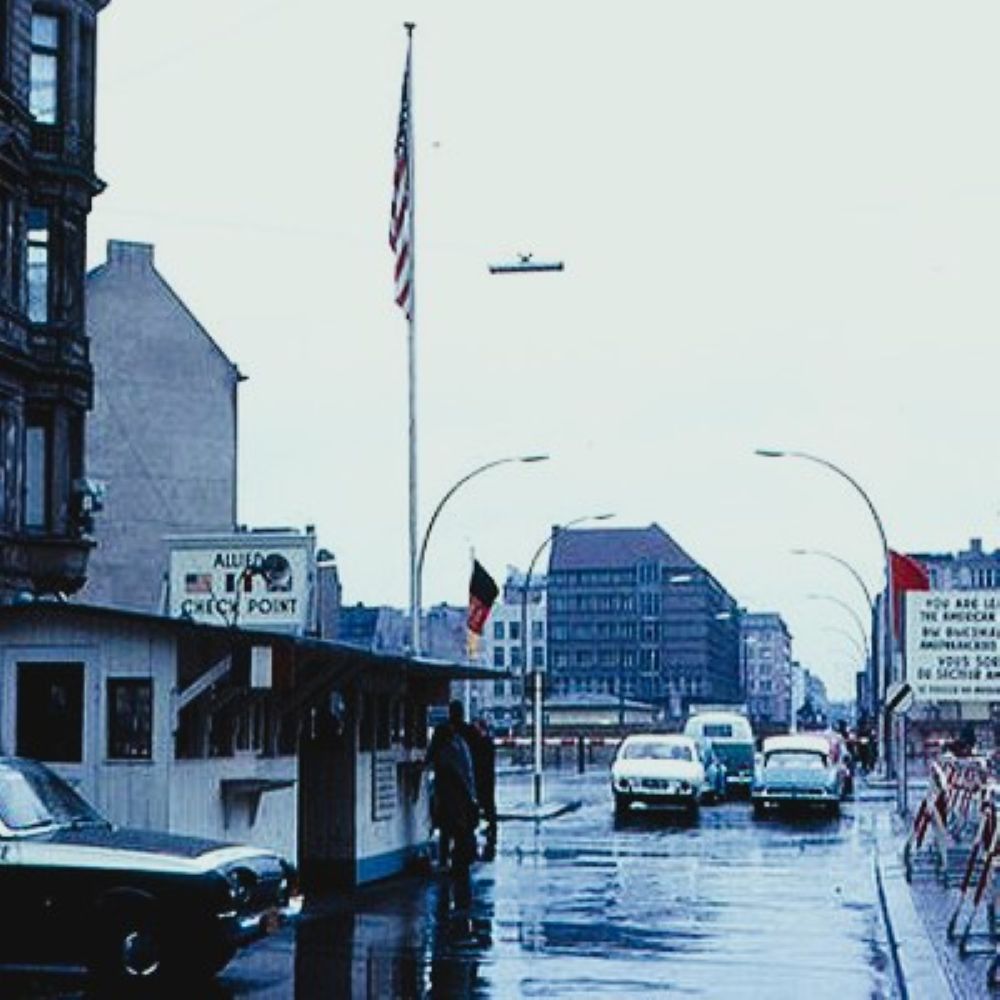
The crux of the drama takes place over the three days and nights where Bond waits patiently to take the shot from 40a Wilhelmstrasse, one block away from Checkpoint Charlie. This crossing point between the East and West sectors was designated for foreigners and members of the Allied forces and later became a renowned symbol for the Cold War. Today it is a tourist attraction, but in 1962, when The Living Daylights was written, this might have been the first introduction to it for his readers, despite several incidents there. The story eerily foreshadowed the death of an East German teenager Peter Fechter on 17 August 1962, six months after the story was first published. Fechter was shot by East German guards when trying to cross the wall into the West and bled to death a few metres inside the Soviet sector.
A tedious enough task as it was for Bond, he suffers further from the company of straight-laced staff-man Captain Paul Sender, nervously watching over him all the time with only a bottle of Dimple Haig and a copy of Verderbt, Verdammt, Verraten (a fabrication of Fleming’s) as respite.
Through Sender’s character, Fleming inserts a dig at Wykehamists (former pupils of British public school, Winchester College) on several occasions. Bond paints him as a tea or a Horlicks man and learns all he needs from his tie:
‘Bond knew the type: backbone of the Civil Service; over-crammed and under-loved at Winchester; a good second in PPE at Oxford; the war, staff jobs he would have done meticulously; perhaps an OBE.’
He even has a ‘Wykehamist snore’.
As the action unfolds, the noise of the orchestra cleverly masks the KGB’s gunfire as they try to prevent the agent whom Bond has been sent to protect, escape to the West. It is commonly suggested that this idea was inspired by Pat Reid’s true-life escape from the Colditz prisoner of war camp, where two escapees ran across a courtyard under the cover of orchestra noise. The conductor of the Colditz orchestra was Reid’s fellow POW Douglas Bader, who happened to be a golfing partner of Fleming later in life.
Bond assumes his target, ‘Trigger’ is a man but it turns out to be the beautiful woman he had spotted with the orchestra earlier carrying a cello case. The inspiration for this character was clear:
‘Of course Suggia had managed to look elegant, as did that girl Amaryllis somebody.’
This is a reference to Fleming’s sister Amaryllis Fleming, who was a celebrated cellist and had been mentored by the Portuguese concert cellist Guilhermina Suggia. Amaryllis was a very popular member of the Fleming clan. In Fergus Fleming’s biography Amaryllis Fleming, he mentions that Ian had even offered her royalties from From Russia with Love, so it was fitting that she should have been immortalised at some point within one of his stories. She solemnly returned the favour by playing Bach’s Sarabande in C-minor at Fleming’s funeral.
Yet perhaps another inspiration, not directly indicated, came from a real-life Russian sniper – one who was responsible for fifty-four confirmed kills, including enemy snipers during the Battle of Vilnius. Roza Shanina was a beautiful, blonde Russian sniper and was among the first female snipers to receive the Soviet Medal for Courage. Roza only lived to be 20 years old, killed in battle in 1945, but her legend as ‘the unseen terror of East Prussia’ lived on. Might Fleming have had her in mind for ‘Trigger’ too? It’s certainly possible… Fleming’s ‘Trigger’ was luckier than Roza. Bond could not bring himself to kill her, instead shooting her Kalashnikov from her hands. When quizzed by Sender as to why Bond let her off, he remarks:
‘Certainly broke her nerve for that kind of work. Scared the living daylights out of her. In my book, that was enough.’
Ours too.
Tom Cull runs Artistic Licence Renewed. He knew iconic Bond cover artist Richard Chopping well as a child and Tom’s great grandfather hired a young Ian Fleming to work at the family bank Cull & Co. between 1933 and 1935.
Meet Jim Wright, author of The Real James Bond, the biography of the ornithologist whose name was appropriated by Ian Fleming for his 007. Jim gives us an insight into the story of the Fleming Doctor Bird.
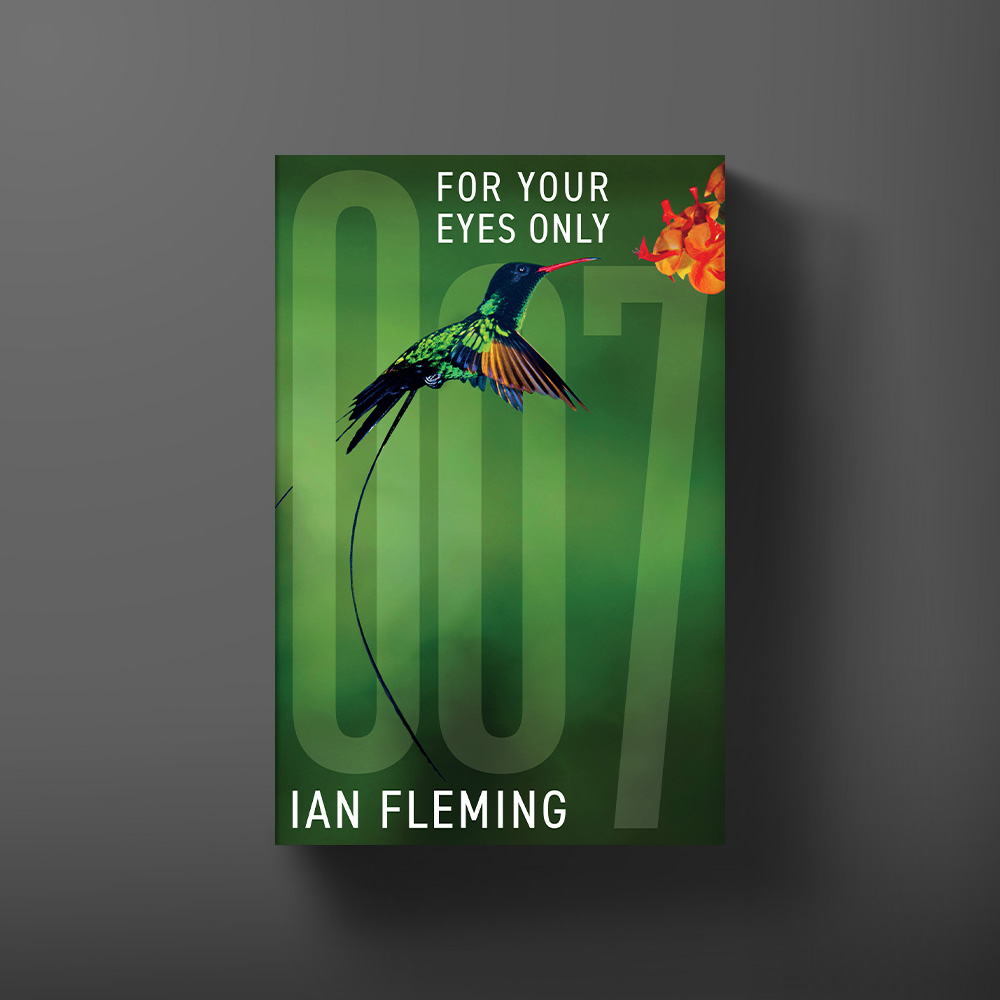
Wonder why the colophon for Ian Fleming Publications features a bird, and what kind of bird it is? For the answer, look no farther than For Your Eyes Only, arguably the best short story in the 1960 compilation of the same name. Fleming begins the tale in a most atypical fashion. He spends the first 105 words waxing poetic about the bird that would become integral to the colophon and Ian Fleming Publications’ logo:
‘The most beautiful bird in Jamaica, and some say the most beautiful bird in the world, is the streamertail or doctor hummingbird. The cock bird is about nine inches long, but seven inches of it are tail – two long black feathers that curve and cross each other and whose inner edges are in a form of scalloped design. The head and crest are black, the wings dark green, the long bill is scarlet, and the eyes, bright and confiding, are black. The body is emerald green, so dazzling that when the sun is on the breast you see the brightest green thing in nature.’
Appropriately, the Red-billed Streamertail also takes centre stage on the front cover of Ian Fleming Publications’ new reissue of For Your Eyes Only. Webb & Webb Design Ltd. surely must have taken Fleming’s description to heart when they created the cover. If you look closely, you can see one of those long tailfeathers arching behind the first “0” in 007.
The hummingbirds of Jamaica were a big Fleming favourite. After he built GoldenEye on a bluff overlooking the Caribbean in the late 1940s, he planted hibiscus and bougainvillea flowers to attract these dynamic little fliers – especially the Red-billed Streamertails that grace the property to this day. Fleming’s stepson Raymond O’Neill once commented about GoldenEye: ‘Hummingbirds buzzing all around you – it was absolute paradise.’
The plantings and a local tree known as a Poor Man’s Orchid also likely attracted the two other hummers known only to this island nation: The muscular Jamaican Mango, with its iridescent green and purple feathers, and the Vervain, just a wisp or two larger than neighbouring Cuba’s Bee Hummingbird, the smallest in the world.
The Jamaican Mango (by Ricardo Miller)The Vervain Hummingbird (by Jim Wright)
The Streamertail is also called the Doctor Bird, most likely as a result of its stiff black crest and elongated tail feathers, which were said to resemble the old-fashioned top hat and long tailcoats that Jamaican doctors once wore. Another theory maintains that the name originates from the way these birds pierce the flowers with their bills to extract nectar like a doctor with a syringe. Not only are these scissor-tailed hummers beautiful to watch, but they make distinct sounds with both their wings and their bills. Even with their oversized tail feathers, they weigh just 6 grams, but you can hear them coming 50 yards away.
When Fleming and Ann Charteris Harmsworth married in March 1952, he described ‘a marvellous honeymoon among hummingbirds and barracudas.’ Later that same year, back in Britain and increasingly homesick for Jamaica, he told his friend and literary critic Cyril Connolly that ‘the Doctor Birds are waiting in the Crown of Thorns bushes and the butterfly fish on the reef.’ Another literary friend of the family, Peter Quennell, talked of visiting GoldenEye and seeing Doctor Birds appear “in a spark of celestial brilliance.”
Unlike most of the wild birds that make cameo appearances in the 007 thrillers, the Streamertails at the beginning of For Your Eyes Only are not gunned down by a villain. Perhaps it’s because they are never within shooting range. Perhaps the birds are too small for a villain to shoot. Or perhaps Fleming could never bring himself to kill such a beautiful bird, even on paper.
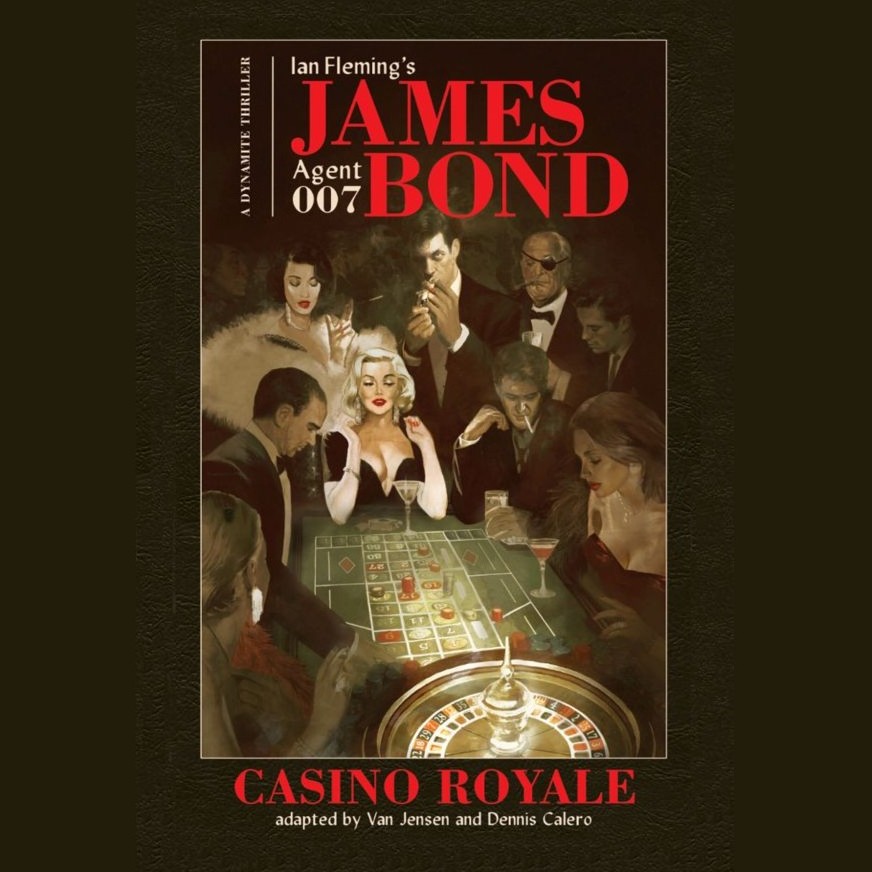
Love Casino Royale? Discover the graphic novel. Adapted by Van Jensen, with stunning artwork by Dennis Calero and a cover by Fay Dalton, this visual delight is a fantastic addition to the James Bond library.
When Ian Fleming’s Casino Royale was first published in 1953, it struck a chord with its readers. Britain was reeling from World War Two, rationing was still in force and the nation’s global importance was on the wane. Audiences reached for Casino Royale to indulge in escapism and to believe in the vision that, behind the scenes, Britain was still a major player. The fanciful yet brutally real world Fleming created was entertainment in its purest form.
The first time we meet James Bond, he is not what one might expect. We join him in a French casino at 3am where the air is stale and the mood is sombre. Far from being the slick superhero familiar to film audiences, he is a dark and brooding character on the edge of his nerves. The faded glamour of the casino at Royale-les-Eaux perfectly enhances the ‘dirty business’ of spying and creates a low-lit and moody setting for the tense power play that unfolds across the baccarat table.
Bond’s mission is to attack the Soviet machine, SMERSH, by bankrupting one of their agents, the avaricious and ruthless man known as Le Chiffre. The two men go head-to-head in a battle of wits but little does Bond know that his enemy holds the trump card all along. The calm elegance of the casino contrasts perfectly with the violent battle between the two men, and the unpredictable charm of luck runs through the heart of both the cards and the game of espionage.
Adapting Casino Royale into a graphic novel is no mean feat. Readers of the original will attest that the thrill of the experience comes as much from the pace of the plot as Fleming’s lively style. The graphic novel as a medium demands that images conjure the atmosphere and that the nuances of character must be shown in expression and language rather than relying solely on description. So, the first challenge of this project was to create a script that would encapsulate the essence of Fleming’s novel without overloading the artwork with too much text.
With this in mind, writer Van Jensen began by selecting Casino Royale’s most crucial scenes and dialogue to construct a comprehensive and accurate script. Alongside this, there would be two further elements to make the project as faithful to the original as possible. The first of these comes directly from Fleming, whose narrative voice presides and his unique turn of phrase is preserved in order to accentuate the actions and atmosphere. For example: ‘Like an octopus under a rock, Le Chiffre watched him from the other side of the table’, or the novel’s famous first line: ‘The scent and smoke and sweat of a casino are nauseating at three in the morning’. Fleming’s gift for sensual description and characterful attributions to inanimate objects, such as describing playing cards as, ‘inert like two watchful pink crabs’ are key to successfully evoking the spirit of the original.
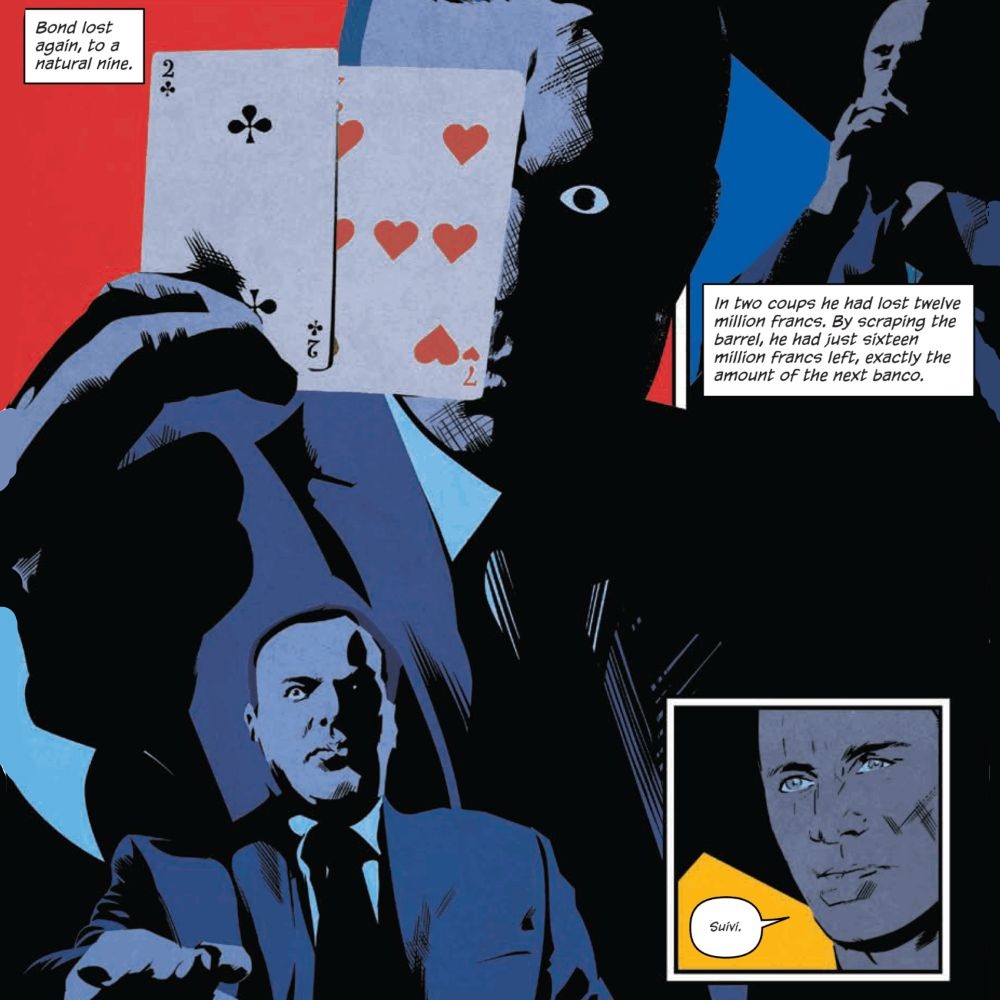
The second element is what Jensen has coined ‘Bond View’, in which, during the course of a scene, we see Bond’s analytical mind highlighting dangers and commenting on the people, objects and setting around him. These additional captions appear in white text outside of the word balloons, arranged close to their subject in the panel. Again, they take their cues from Fleming, translating Bond’s world-view into a visual form. This includes the quick calculation of risks, the habits and observations of a trained secret agent, and the preferences and opinions of Bond the man.
Of course, all of this rests on top of new original art by Dennis Calero. A master of shadows and dramatic lighting, his style sings to the tense, atmosphere of the novel, and the paranoid and careful life of a spy at work. The moment Bond sets foot in Royale-les-Eaux, he is under scrutiny and in danger, and the visual tone is a constant reminder of this. When combined with colouring by Chris O’Halloran, the book achieves a visceral quality that fits perfectly with Fleming’s Bond. Violence is felt as well as seen, the sensory overload of the casino is palpable, and the narrative crescendos explode into mesmerising spectacle.
The graphic novel of Casino Royale is a faithful adaptation, with a new dimension and fresh energy. Although the original story was conceived in a very different time for a very different audience, this version aims to transcend the years and deliver the same tension and power that enraptured readers all that time ago.
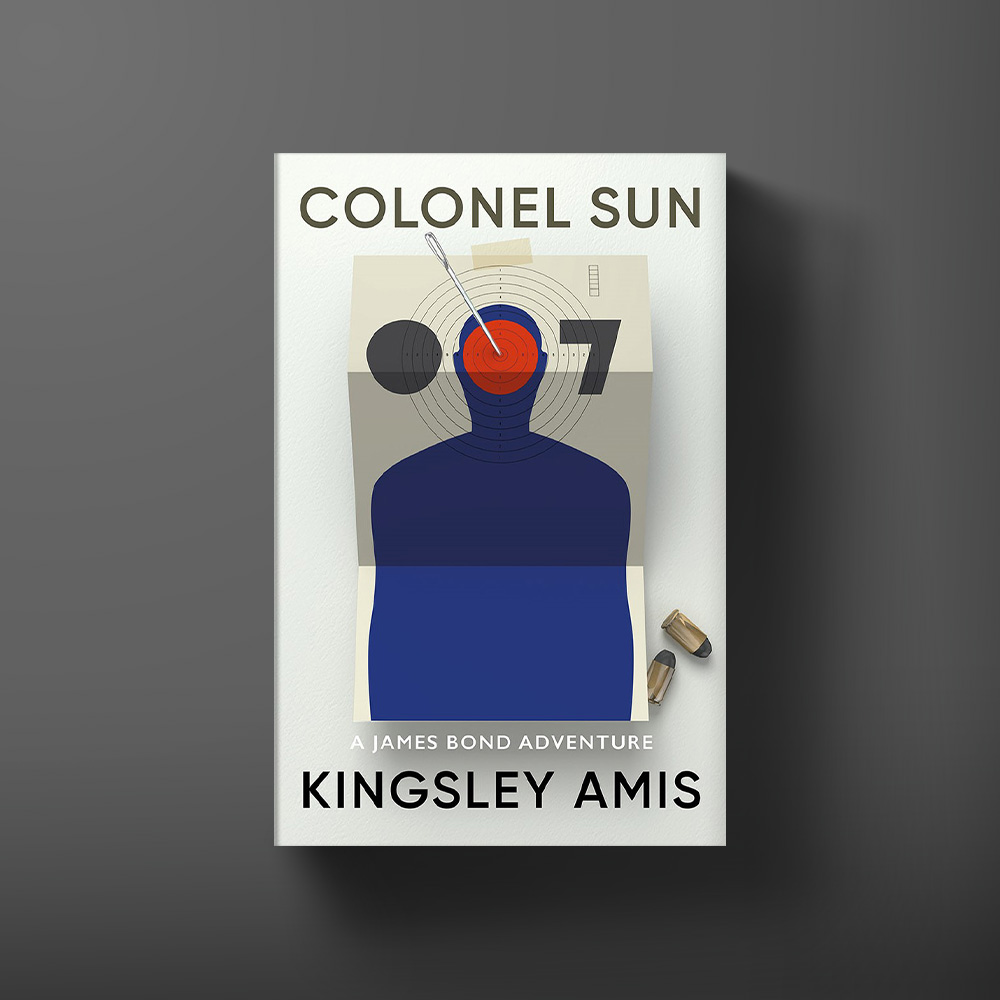
Writer Tom Cull discusses Kingsley Amis’ Colonel Sun, the story behind the novel and its relationship with the film, Spectre.
‘So James, I am going to where you are, the inside of your head.’
So says Ernst Stavro Blofeld in the 2015 film Spectre. He proclaims that he is the architect behind the many ghosts of Bond’s past and if this line echoes for you, then you probably recognise it from the very first James Bond continuation novel, Colonel Sun, written by Sir Kingsley Amis CBE under the not-so-secret pen name of Robert Markham.
In 1968, four years after Ian Fleming’s death, Ian Fleming Publications (then Glidrose) asked Amis if he would be interested in writing a new 007 novel. He was already a popular author and shrewdly – on the commissioners’ part – was known to be a Fleming fan.
Amis understood the high and low art paradoxes that existed in Fleming and the literary snobbery that befell him within some of his social circles. Amis’ own steadfast appreciation of wine andbeer; classical music andpop, the Classics and science fiction, motivated him to take time out to write a semi-serious literary criticism of Bond entitled The James Bond Dossier.
‘There’s a whole series of absurd critical judgements on Fleming’s books that need to be set right. Bond has been turned into a lush-living, snobbish, lecherous, sadistic corrupting Fascist… But if you read with care, you will notice for instance, that there is a strong, consistent moral framework to the books: Toughness, loyalty and persistence are the touchstones.’
This, coupled with Amis’ choice to teach Le Carré’s The Spy Who Came In From The Cold to students at Tennessee University demonstrates a lack of genre snobbery on his part. By delving this deeply into Fleming’s oeuvre, he was essentially attending a sort of Bond finishing school for authors. His first official mission would come quickly: Colonel Sun.
What works about Colonel Sun (originally called Dragon Island) – and which is true of the best continuation novels – is that Amis does not overtly impersonate Fleming, fall into pastiche or simply try too hard to match the originator’s style. Amis understood his own limitations in writing Bond as he documented in What Became of Jane Austen and other Questions in 1968. He couldn’t match Fleming for his great knowledge of technical minutiae, but he held detailed knowledge on diverse subjects – Lee Enfield rifles for instance – and more importantly, he understood the ideology of Bond.
You may wonder also if Amis’ own brand of humour worked its way into the novel as Fleming’s did. In part yes, but it is different from Fleming’s. Whereas Fleming’s dialogue often had a sense of the absurd and theatrical, Amis’ conversations have a more conversational rhythm and lightness of touch, seen for instance during Bond and Ariadne’s debate on Capitalism vs. Communism. The character of Litsas offers most of the light relief, as did many of Fleming’s supporting characters, but Bond does not play for laughs.
We also find a lower tech Bond, good with his fists and basic weaponry; Amis’ Bond was for men, not boys. Many of Fleming’s tropes are still there though. He plays golf (at Sunningdale) with Bill Tanner; drives a Bentley; lunches at Scott’s, that sort of thing.
Yet, Amis acknowledged the need to provide the reader with reassuring touch points to avoid any immediate dissonance with a fervent audience. Few of these things Amis did in his private life either:
‘Golf – a game I hope fervently to go to my grave without once having had to play – was there in the first sentence.’
M is given an expanded role and the backdrop is a reassuringly exotic: the Greek Islands. And like all of Fleming’s best novels, we get a brilliantly insidious master villain – the Chinese Colonel Sun Liang-Tan. Kingsley’s son, the novelist Martin Amis approved:
‘Apart from the odd repetition or slightly inept term, the style is excellent. Just like Fleming.’
The torture in Colonel Sun is arguably the book’s pièce de résistance. Sun literally gets inside Bond’s head. In the chapter titled ‘The Theory and Practice of Torture’, Bond is strapped to a chair in a cellar and Sun provides Bond with what is almost an education on torture methods.
‘When an American prisoner in Korea was deprived of his eyes, the most astonishing thing happened. He wasn’t there anymore. He’d gone, though he was still alive.’
Readers who felt squeamish during Fleming’s Casino Royale torture scene will certainly want to brace themselves here.
‘So James, I am going to penetrate to where you are, to the inside of your head. We’ll make our first approach via the ear.’
But what caused Amis to station his Chinese super-villain in Greece? For one, Amis was conscious of not re-treading old Fleming ground, so Jamaica and the USA were out. Yet he needed to match Fleming’s expert attention to detail, so a sojourn to the friendly islands of Ios and Naxos gave Amis enough time to gen up on the scenery and local food and drink, to add enough of what he coined ‘The Fleming Effect’. Bond eats manouri cheese; drinks light Mamos retsina and also Votris, the ‘only drinkable’ Greek brandy according to Litsas.
As for choosing a Chinese villain, Amis was again keen to avoid re-hashing any of Fleming’s villains, save perhaps for Dr. No who was Chinese-German, as Amis recanted:
‘Red China as a villain is both new to Bond and obvious in the right kind of way.’
Obvious perhaps, because by 1965 relations were strained between China and the rest of the world – and in particular Russia during the Sino-Soviet split, resulting in border clashes. Amis would have been conscious of this and also of how attitudes in Britain during the ’60s were changing. Another shift from the Fleming formula was to team 007 up with a female Russian agent. A whisper of From Russia with Love but with the notion that the Cold War against the Soviet Union was thawing as Bond suggests to Ariadne:
‘If they’re telling you there that the United States is world enemy number one, they need to catch up on their studies. The Kremlin knows perfectly well that the main threat isn’t the West any more, but the East. Surely that’s not news to you?’
Amis was brave enough to mould his own Bond while paying homage to its creator. With Colonel Sun, he set the benchmark for future continuation novelists and proved that Fleming’s Bond universe does welcome guests.
Tom Cull runs Artistic Licence Renewed. He knew iconic Bond cover artist Richard Chopping well as a child and Tom’s great grandfather hired a young Ian Fleming to work at the family bank Cull & Co. between 1933 and 1935.
Manage Consent
To provide the best experiences, we use technologies like cookies to store and/or access device information. Consenting to these technologies will allow us to process data such as browsing behaviour or unique IDs on this site. Not consenting or withdrawing consent, may adversely affect certain features and functions.
Functional
Always active
The technical storage or access is strictly necessary for the legitimate purpose of enabling the use of a specific service explicitly requested by the subscriber or user, or for the sole purpose of carrying out the transmission of a communication over an electronic communications network.
Preferences
The technical storage or access is necessary for the legitimate purpose of storing preferences that are not requested by the subscriber or user.
Statistics
The technical storage or access that is used exclusively for statistical purposes.The technical storage or access that is used exclusively for anonymous statistical purposes. Without a subpoena, voluntary compliance on the part of your Internet Service Provider, or additional records from a third party, information stored or retrieved for this purpose alone cannot usually be used to identify you.
Marketing
The technical storage or access is required to create user profiles to send advertising, or to track the user on a website or across several websites for similar marketing purposes.
 Skip to main content