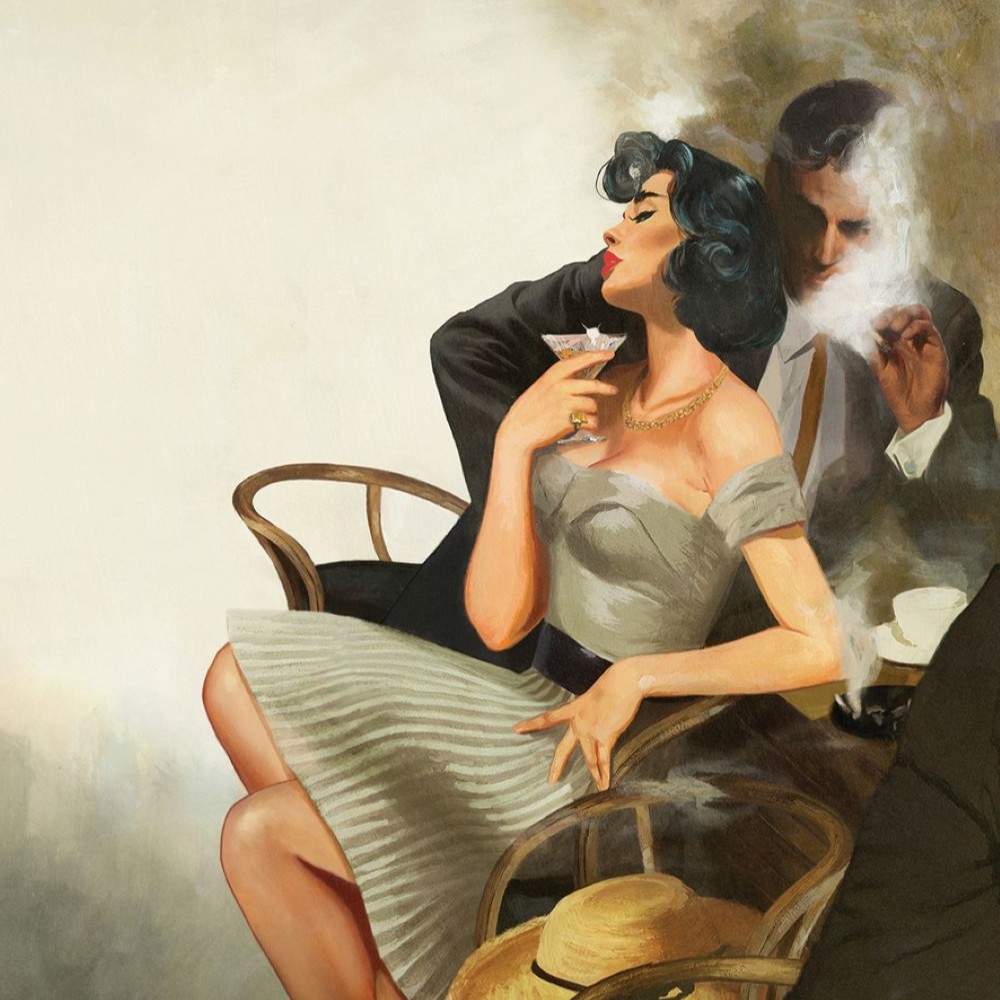
Join us as we take a look at the role drinks play in Ian Fleming’s James Bond novels.
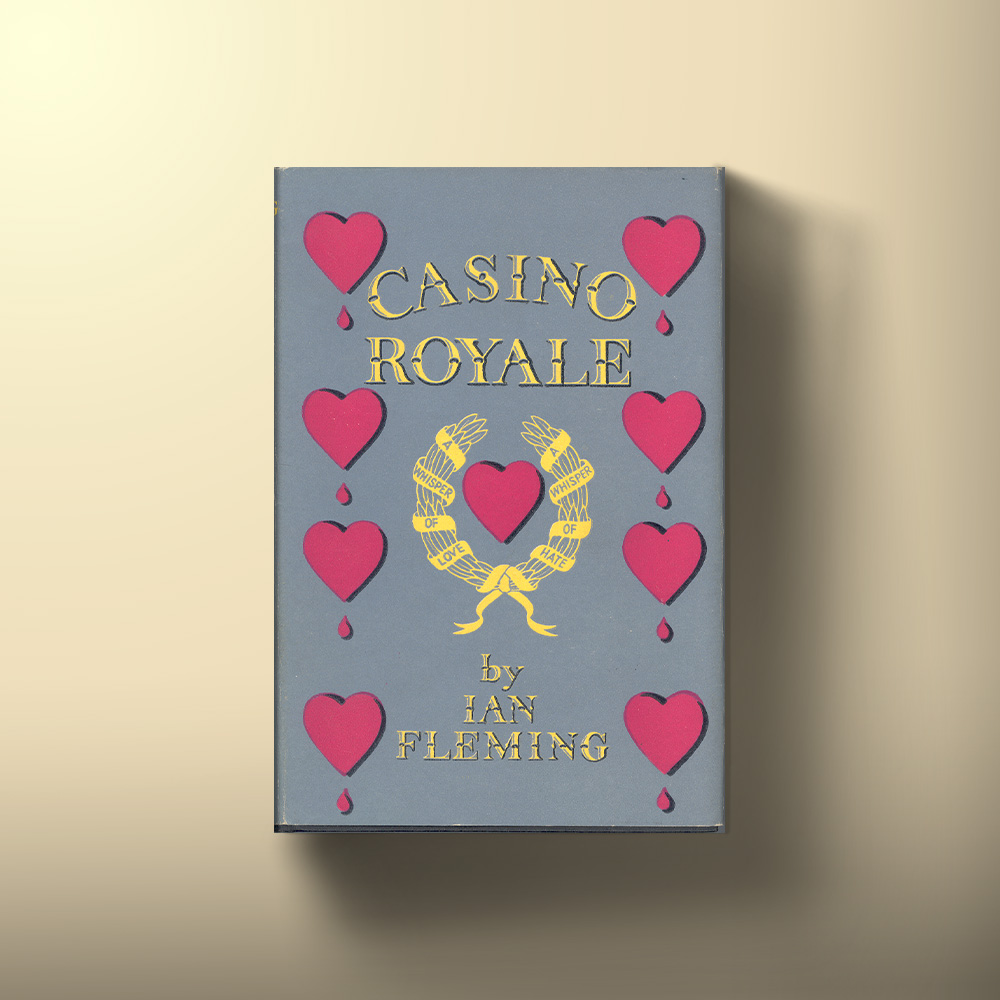
It begins in the very first 007 adventure, Casino Royale, with the immortal line, ‘shaken and not stirred’ and The Vesper martini, christened in honour of Bond’s great love, Vesper Lynd. From then on, strong, carefully crafted drinks are at the heart of every 007 story.
Ian Fleming was very particular about the finer details of his hero’s lifestyle. As well as Bond’s drinking habits, his clothes, weaponry, cars and food are all described with precision, a narrative trait which is perfectly highlighted by his instruction on how to make the perfect martini.
Diamonds Are Forever
‘The waiter brought the martinis, shaken and not stirred, as Bond had stipulated, and some slivers of lemon peel in a wine glass. Bond twisted two of them and let them sink to the bottom of his drink. He picked up his glass and looked at the girl over the rim. “We haven’t drunk to the success of a mission” he said.’
The particular attention that is paid to how eggs should be scrambled, how a car should be customised and how best to serve vodka, are all testament to the writer’s own preferences. Though many have debated how much of Ian Fleming there was in James Bond, there has always been agreement amongst fans that Fleming shared his own tastes and enthusiasms with his character. Along with the advocation of particular brands, these strokes of realism provide a layer of truth and help to bring the fantasy of James Bond’s world to within the readers’ reach. ‘All these small details’, Fleming wrote, ‘are ‘points de repère’ to comfort and reassure the reader on his journey into fantastic adventure.’
Goldfinger
‘James Bond, with two double bourbons inside him, sat in the final departure lounge of Miami Airport and thought about life and death.’
In a feature titled ‘London’s Best Dining’ for Holiday magazine, Fleming provides a tip for American tourists on how to sample a decent martini, showing how much it mattered to him beyond the pages of his novels.
‘It is extremely difficult to get a good martini anywhere in England. In London restaurants and hotels the way to get one is to ask for a double dry martini made with Vodka. The way to get one in any pub is to walk calmly and confidently up to the counter and, speaking very distinctly, ask the man or girl behind it to put plenty of ice in the shaker (they nearly all have a shaker), pour in six gins and one dry vermouth (enunciate ‘dry’ carefully) and shake until I tell them to stop. You then point to a suitably large glass and ask them to pour the mixture in. Your behaviour will create a certain amount of astonishment, not unmixed with fear, but you will have achieved a very large and fairly good Martini.’
Paying attention to exact details are crucial skills for any spy who wants to complete a mission successfully and safely. The life of a secret agent is one of daring action and life-threatening peril. James Bond’s preference for the finer things in life suggests that when the moments of danger have passed, pleasures should be indulged. Enjoying the very finest dover sole and a glass of chilled champagne provides 007 with a reward and pushes his experiences to the height of sophistication and quality, in those brief respites from danger.
Live and Let Die
‘There are moments of great luxury in the life of a secret agent… occasions when he takes refuge in good living to efface the memory of danger and the shadow of death.’
As well as enjoying the pleasures of drinking, alcohol serves to ease the conscience of a cold blooded killer such as 007, and provides moments of relief in a life of violence and upheaval. Drinks play a soothing role in the James Bond novels and offer a well-earned splash of luxury after a long day spent navigating the dirty business of spying.
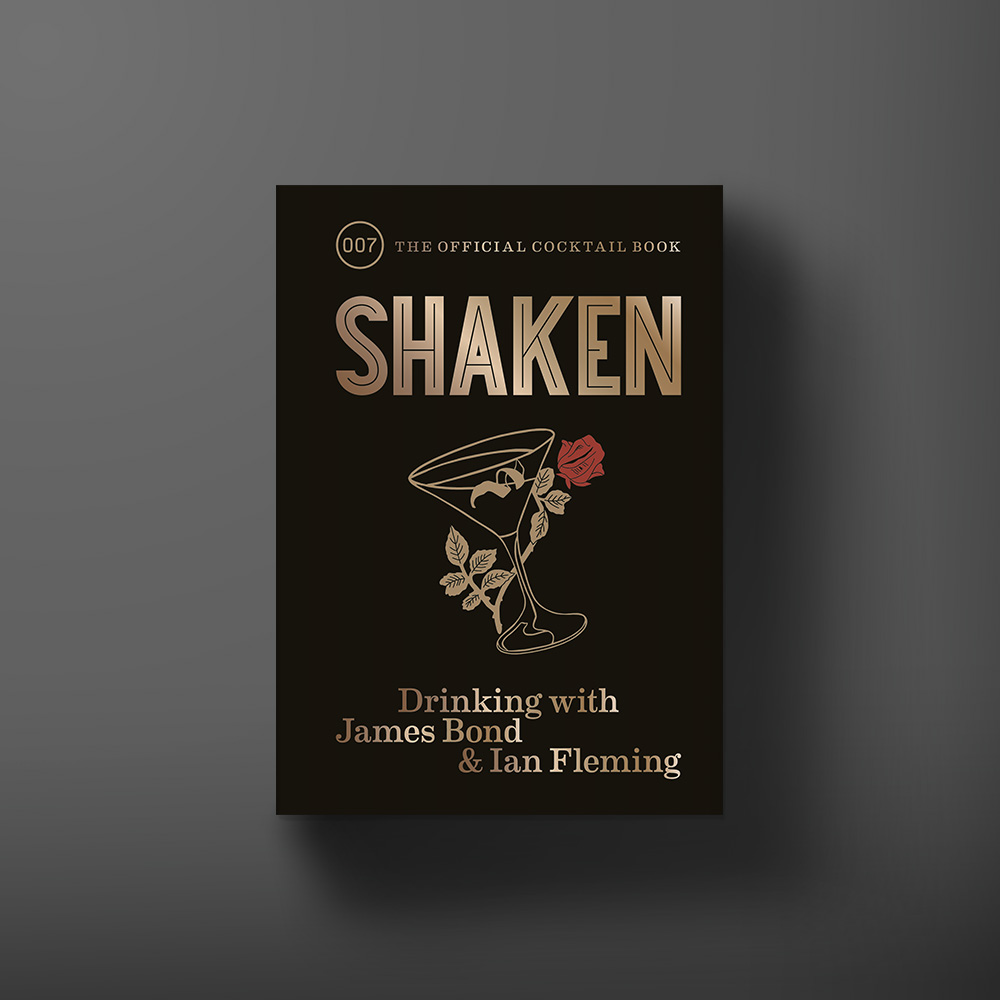
Discover 50 cocktails inspired by the characters and plots of the 007 novels in Shaken: Drinking with James Bond and Ian Fleming, created by the team at award-winning Bar Swift in London’s Soho.
We speak to Fergus Fleming about his inspiration for his book, The Man with the Golden Typewriter, his developing view of his uncle Ian Fleming, and some of the correspondences he discovered while researching.
Why did you start the project?
A book of Ian’s letters was long overdue and, somewhat rashly, I raised my hand. Even more rashly, the offer was accepted.
Can you tell us more about Ian Fleming’s golden typewriter?
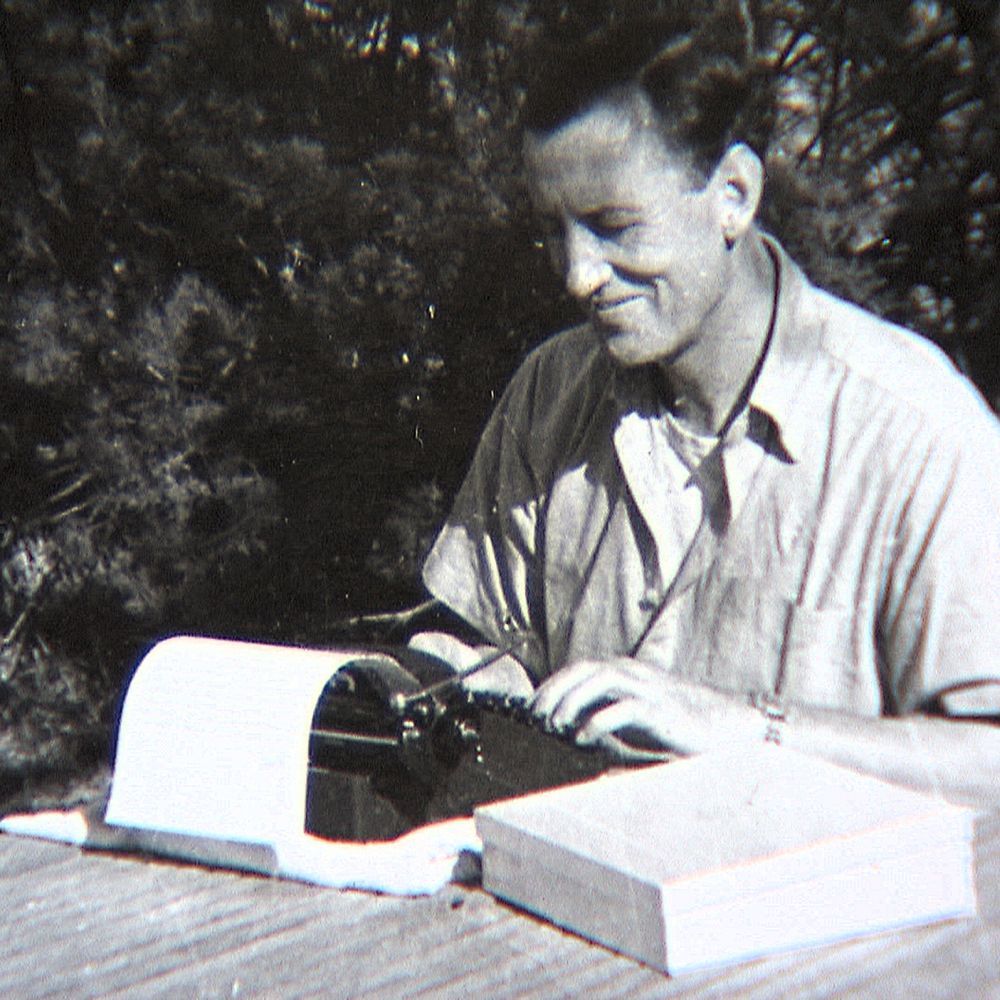
The golden typewriter was Ian’s great joke to himself. Just imagine his glee when it arrived in all its glittering splendour (smuggled in from America by his friend Ivar Bryce to avoid taxes). Serious-minded contemporaries considered it the height of vulgarity, but Ian didn’t care. Let them sneer! He had a golden typewriter and they didn’t. The machine in question was a Royal Quiet De Luxe and cost the princely sum (then) of $174. It wasn’t the only one in the world: the Royal Typewriter Co. produced a small run of them as an advertising gimmick. They were often given away as sports prizes or to favoured employees. None, however, have achieved the same iconic status as Ian’s. In 1995 an unknown bidder – rumoured to be Pierce Brosnan – bought Ian’s Quiet De Luxe for a sum that has been calibrated by the Guinness Book of Records as the highest ever paid for a typewriter.
Did Ian use it for the Bond novels? My impression is that he didn’t. It doesn’t seem to feature in any of the pictures of him at his desk. But who knows?
How much did you know about your uncle’s works and legacy when you were growing up?
Ian’s books were on the shelves when I grew up, but I don’t remember them being held in particular reverence. As he said to Raymond Chandler, ‘[I] meekly accept having my head ragged off about them in the family circle’. My father was so horrified by The Spy Who Loved Me that he made my mother read it under a brown paper cover. His brother Peter was also a writer, and his books too were on the shelves. So it was just an accepted fact of life that our family wrote books.
But I will say this. When checking a fact in You Only Live Twice, I used an original copy. And there, all at once, was the excitement of it. The Chopping jacket, the typeface, the Cape logo, the smell, the feel of the paper, the price – 16s. net – and the memory of something you will never find in a bookshop today. For a moment I caught the thrill that Ian, and his readers, must have experienced when the latest Bond came out.
Do you have any favourites from the correspondences you went through?
One of the best is Ian’s apology to Mrs. James Bond. Her husband was an ornithologist whose book Birds of the West Indies happened to be on Ian’s desk in GoldenEye when he wrote Casino Royale. In 1961 she caught up with him and demanded an explanation.
‘Your husband has every reason to sue me in every possible position and for practically every kind of libel’
Ian replied, adding that he had chosen James Bond because it was plain, masculine and anonymous – unlike Peregrine Carruthers or some such. In recompense,
‘I can only offer your James Bond unlimited use of the name Ian Fleming for any purpose he may see fit. Perhaps one day he will discover some particularly horrible species of bird which he would like to christen in an insulting fashion.’
Did any of the letters mention ideas that he never used in his Bond books?
This is a sensitive matter that falls under The Official Publishing Secrets Act and as such I am not permitted to disclose the contents of any files that may or may not have come to my attention. That said, he did float the possibility of setting a Bond novel in Australia – which would have been interesting.
Did your opinion of Ian Fleming change after reading his correspondence and did you discover any new aspects of his character?
Ian has been portrayed so often in films and books as a callous, suave womaniser – in essence a mirror image of Bond – that I was prepared for something along those lines. To my surprise it didn’t materialise. Of course, this isn’t a biography and a fuller examination would probably confirm the accepted picture. All I can say is that his letters reveal a man who was witty, punctilious and kind, assailed by fits of self-doubt yet resolutely optimistic, who worked hard to make a living the best way he knew.
Do you think Ian was a true eccentric, or was the typewriter more a symbol of a persona he enjoyed cultivating as the writer of thrilling – and at times bombastic – fiction?
Ian wasn’t an eccentric. I would say he was more a romantic. He enjoyed turning dreams into reality and vice versa. He had an urge to tell stories. If he could make life a story – the martinis, the golden typewriter – then all to the good. If he could make a story out of life – to tell people what he saw, what he experienced, and how it inspired him – then so much the better.
‘Writing makes you more alive to your surroundings,’ he once said, ‘and since the main ingredient of living… is to be alive, this a quite a worthwhile by-product of writing.’ If writing made him alive, so did the imagination that underpinned it.
Writer Benjamin Welton looks back at Ian Fleming’s war years and how they influenced his literary creativity.
James Bond remains the quintessential cold warrior of fiction, and yet it’s not that conflict that animated his creator. Sure, the Soviet Union and her agents are the arch villains of Fleming’s oeuvre, and the mere existence of SMERSH (a real entity of history) is evidence enough of Fleming’s interest in using Bond as a loyal British ‘instrument’ in the service against a contemporary enemy. But despite Fleming’s journalistic attachment to current events, the engine driving his creation of Bond was World War II.
Described by Fleming once as a ‘very interesting war,’ the Second World War gave this former Etonian and child of privilege not only an insider’s view of intelligence work and covert operations, but also a deep sense of duty that he later bequeathed to 007. As a result, Fleming’s Bond novels are haunted by the specter of the 1939-1945 conflict, from the machinations of diehard Nazis like Sir Hugo Drax or former double agents like Ernst Stavro Blofeld to Bond’s overall excitement for what American President Theodore Roosevelt once called ‘the strenuous life,’ albeit one chock full of custom-made cigarettes, well mixed drinks, and beautiful, but slightly damaged women.
Salad Days
The military and the call to defend the crown were never far from young Fleming. His father, Valentine Fleming, had served first as a Conservative MP before being killed on the Western Front in 1917. The death of his father left a giant vacancy in the Fleming household, and his mother Evelyn pushed her sons to pick up the mantle left behind by their father. Fleming’s older brother Peter became not only an Oxford-educated adventurer and travel writer, but he also served as an officer in charge of military deception during World War II in Southeast Asia.
It took longer for such glory to come Ian’s way. After attending Eton College, where he collected an impressive array of sporting titles and trophies, Fleming was pushed by a disapproving housemaster at Eton and his mother to attend the Royal Military College at Sandhurst. While there less than a year, Fleming flaunted a good many of the school’s strict regulations and left after an indiscretion out in town.
After failing to achieve a commission, Fleming spent the interwar years performing an assortment of high-end jobs. Besides trying his hand at banking with Cull & Co. and being a stockbroker with Rowe and Pitman, Fleming’s most important role before becoming a novelist was his time as a journalist and sub-editor for Reuters. Although Fleming’s mother had lobbied for the job on behalf of her wayward son, Fleming proved to be an excellent journalist, which Anthony Burgess, in a preface to the 1987 Coronet paperback editions of Ian Fleming’s original Bond novels, blames for Fleming’s ‘clarity of…style’ :
‘It is important to remember, that, like Daniel Defoe, [Fleming] was a journalist before he was a writer of fiction, and a good journalist too. The clarity of his style in the novels proclaims this, the apt image, the eye for detail, the interest in world affairs on the one hand and, on the other, the fascination with the minutiae of everyday life.’
While on assignment for Reuters in 1933, Fleming covered the trial of six British engineers with Metropolitan-Vickers who were accused of espionage and sabotage while working in the Soviet Union. The trial was nothing more than a Stalinist show trial, but it did provide Fleming, who had only been with Reuters for eighteen months at that point, with a taste of the world of international espionage. While not his first taste (Fleming had earlier attended a private school in Austria run by a former British secret agent named Ernan Forbes Dennis), the Metropolitan-Vickers trial did however expose Fleming to the dangers of communism and the potential thrills associated with being a British spy abroad.
On His Majesty’s Secret Service
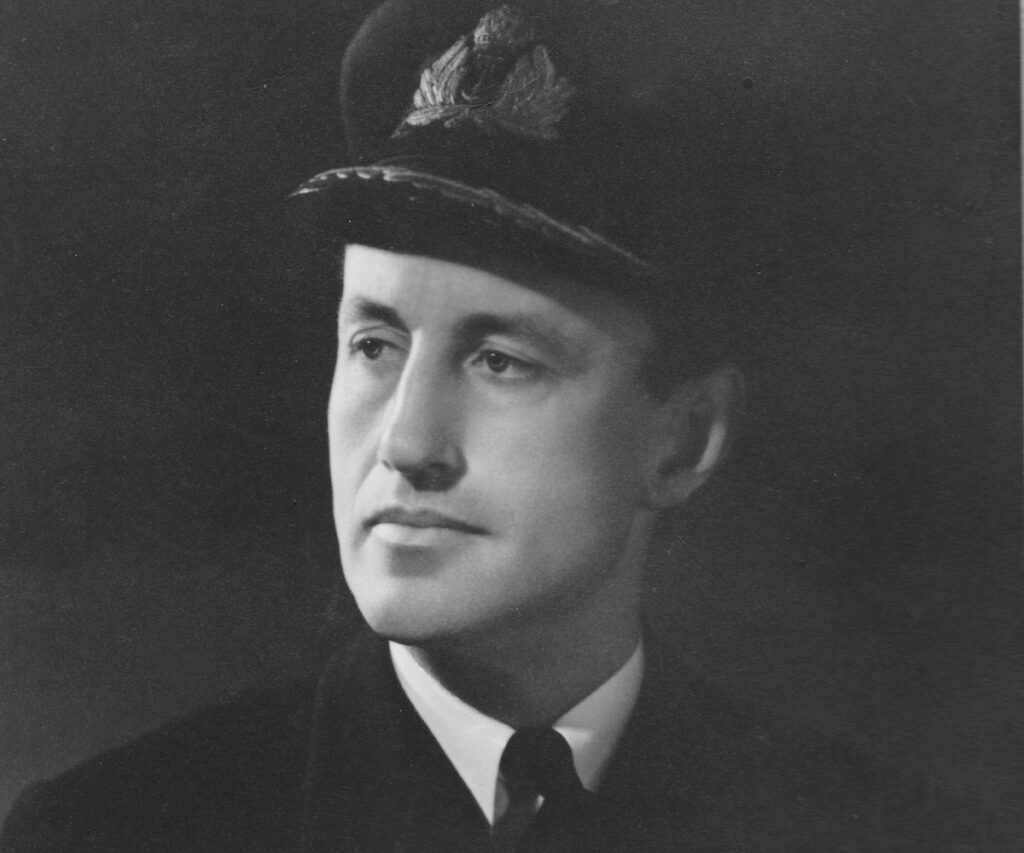
Later in life, Fleming admitted that: ‘I extracted the Bond plots from my wartime memories, dolled them up, attached a hero, a villain, and there was the book.’ Barring some exaggeration, Fleming could lay claim to being privy to some of the war’s more interesting elements. As a Royal Navy Commander attached to Senior Service, Fleming got to experience the ‘intelligence machine’ from the inside. While serving as a liaison between MI5, the Security Service, and SOE, Fleming regularly attended top secret meetings and had access to Bletchley Park, where men like Alan Turing and others were busy decoding the ciphers of the German Enigma machine.
Fleming wasn’t content to just spend the war as a go-between, however. As author Nicholas Rankin details in his excellent book Ian Fleming’s Commandos, Commander Fleming was instrumental in the creation of a commando force within the Naval Intelligence Division, which he labeled an ‘Intelligence Assault Unit.’ Called both 30 Commando and 30 Assault Unit, this collection of Naval intelligence officers and Royal Marine Commandos were tasked with ‘pinching’ secret material from the enemy. Along the way, 30AU saw action in Algeria, Norway, the Greek Islands, Sicily, and most disastrously of all, the assault on Dieppe.
While Fleming was not frequently on the front lines, he did however actively engage in overseeing the unit’s activities (he was also known to accompany them on certain assaults), plus he had a habit of concocting fabulous missions for his men. Examples include Operation Ruthless, which was a plan devised before the creation of 30AU in order to retrieve the Enigma codebooks while using what Fleming himself described as ‘a tough bachelor, able to swim.’ Operation Ruthless’s ideal operator not only prefigures James Bond’s grueling underwater storming of Mr. Big’s fortress in Jamaica in Live and Let Die, but Fleming’s description of the task reads like a synopsis of one of Bond’s many exploits:
TOP SECRET
For Your Eyes Only. 12 September 1940
To: Director Naval Intelligence
From: Ian Fleming
Operation Ruthless
I suggest we obtain the loot by the following means:
Obtain from Air Ministry an air-worthy German bomber
Pick a tough crew of five, including a pilot, W/T operator and word-perfect German speaker. Dress them in German Air Force uniform, add blood and bandages to suit
Crash plane in the Channel after making SOS to rescue service
Once aboard rescue boat, shoot German crew, dump overboard, bring rescue boat back to English port
Another Fleming-created operation was Operation Golden Eye, which centered on keeping the lines of communication open to Gibraltar if Spain decided to join the Axis. Like Operation Ruthless, Operation Golden Eye was closed down before it could be put into action.
The War Becomes a Best-Seller
When Fleming set out to write Casino Royale, the ‘hot war’ had turned cold. Britain’s main enemies were communism and the various post-colonial nationalist movements that helped to bring down the empire. And yet, in most of Fleming’s Bond novels, the action as well as the villains all have some tie to the older conflict. Moonraker deals not only with the lingering fear of the Nazis’s V-2 rocket, but also the idea that some former Nazi scientists in Britain and America were still enraptured by the Hitlerian philosophy. According to Ben Macintyre’s For Your Eyes Only: Ian Fleming and James Bond, the inspiration behind mining Mr. Big’s boat in Live and Let Die and giving the Disco Volantea trap door in Thunderball may very well have been the 10th Light Flotilla, a special unit of the Italian Navy that Fleming saw operate in the Mediterranean during the war. Of course, Bond’s most enduring enemy, Blofeld, began his life of infamy as a Polish double agent who sent secret items to the Nazis ahead of their 1939 invasion of Poland.
Even Bond himself is a product of the war, for while serving as Commander Bond in the Royal Navy’s Intelligence Service, he earned his 007 title by killing what he describes in Casino Royale as ‘two villains’ — a Japanese cipher expert and a Norwegian double agent. And while Bond spends a small portion of the same novel conflicted over his role in the more morally slippery Cold War, he nevertheless decides to stay in the action as an agent tasked with eliminating or weakening some of the wrongs associated with the postwar fallout between the former Allies. In another way, the Bond novels can be read as a continuation of Fleming’s work during the war, as Bond, through fiction, reasserts British dominance on the world stage all the while re-living some of his creator’s experiences from his time as an intelligence officer.
Benjamin is a freelance journalist who has been published in The Atlantic, VICE, MI6-HQ, and others. He is a regular contributor to Literary007.com.
‘”There’s a big packet of smuggled stones in London at this very moment”, said M, and his eyes glittered across the desk at Bond’
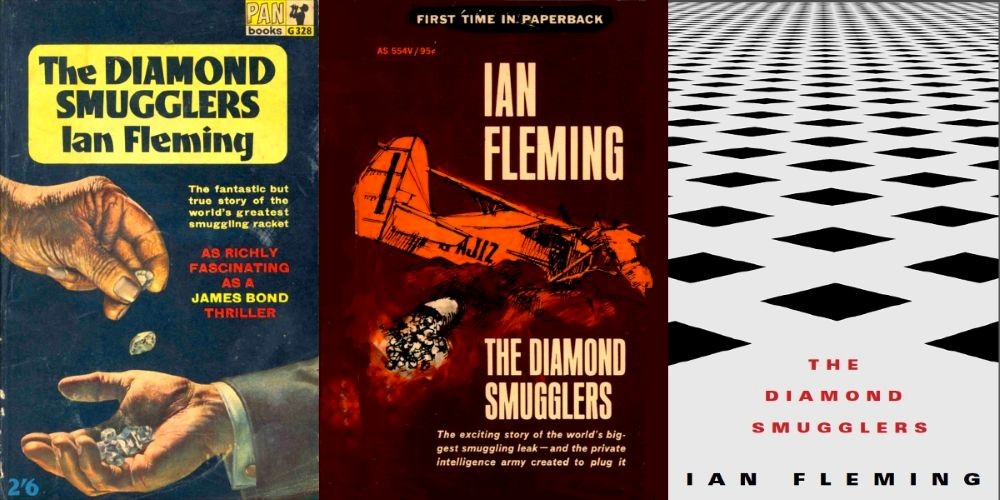
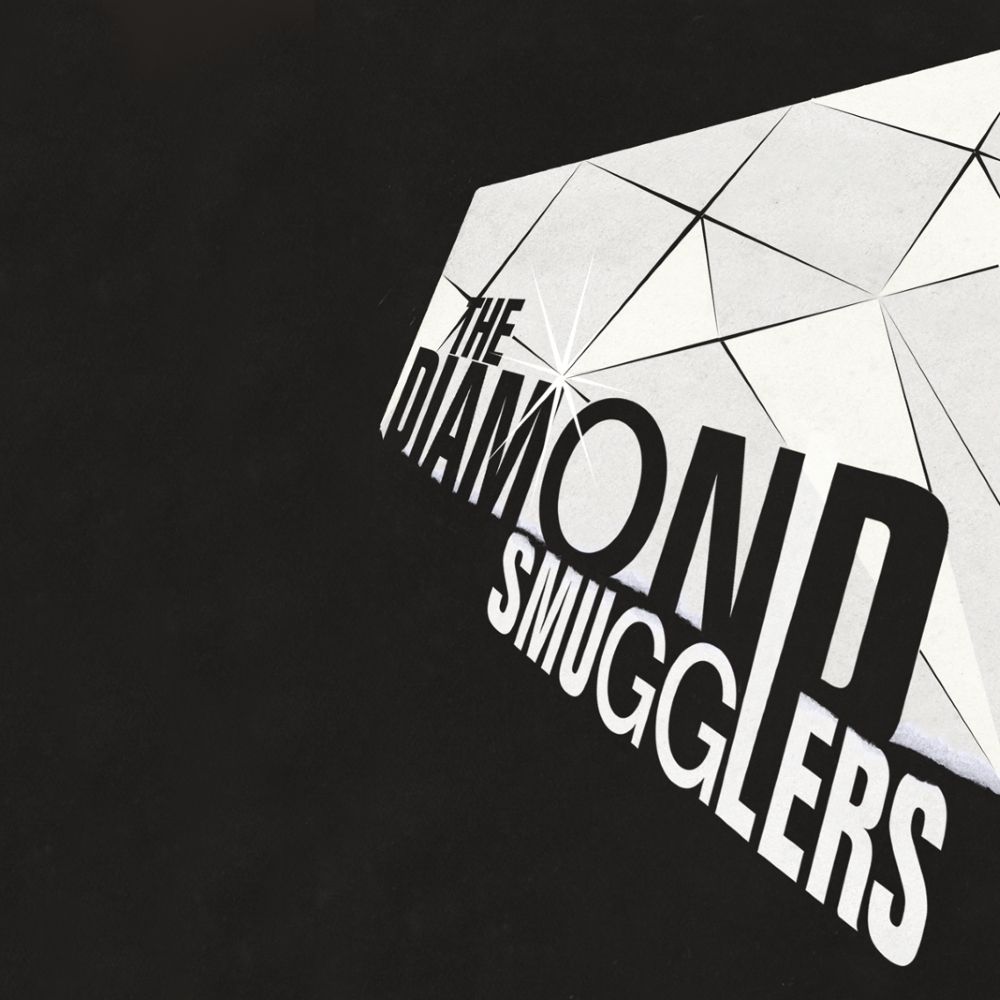
On 15th September 1957, Ian Fleming’s true account of diamond smuggling in Africa was serialised by the Sunday Times. The articles were then bound together and published as a book the following year. Sixty years on, we celebrate this fascinating piece of journalism which shows a side to Fleming’s writing career not often in the spotlight.
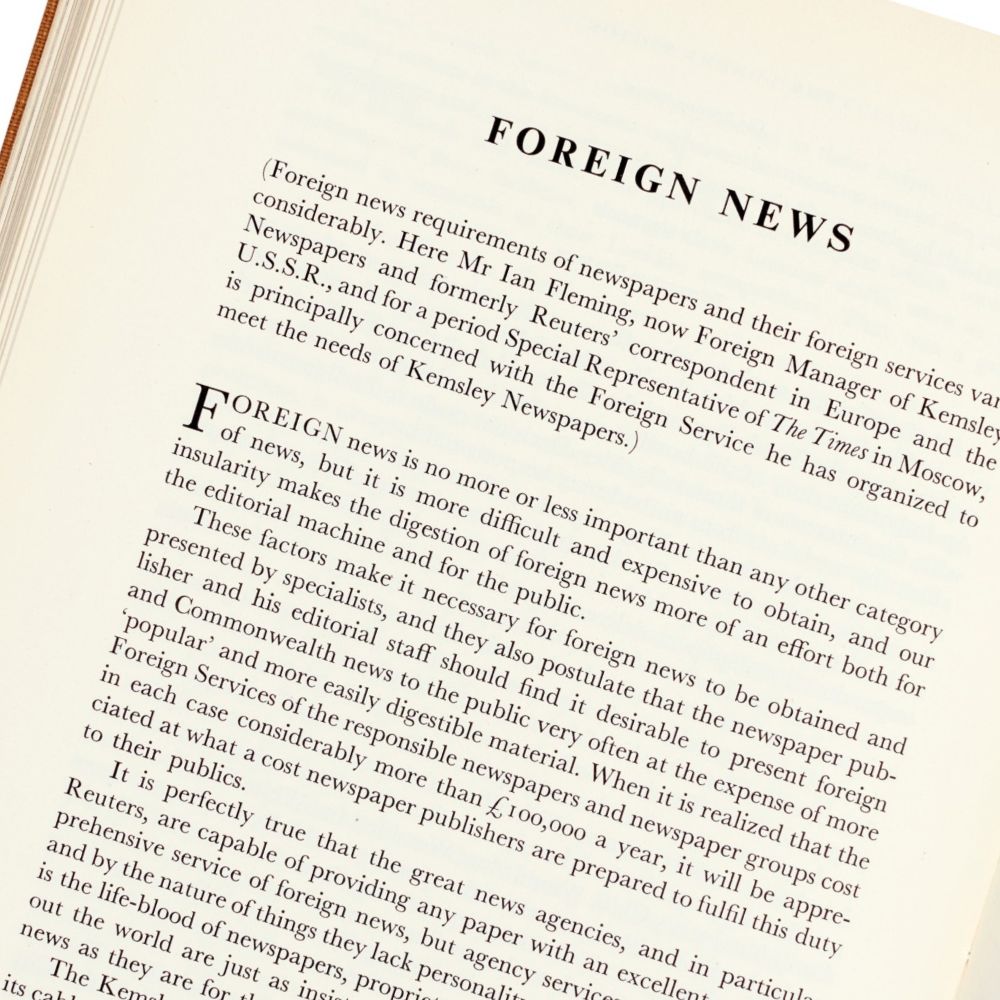
After a period studying in Europe, Fleming became a journalist in the 1930s for Reuters News Agency and covered stories such as the Metro-Vickers espionage trial in Moscow. After trying his hand at stockbroking and then working in Naval Intelligence during the Second World War, Fleming returned to journalism and became Foreign Manager at Kemsley News, owners of the Sunday Times. Fleming’s experience in journalism helped him to hone a quick and engaging writing formula which shaped his style as a thriller writer.
Fleming first read a story about illicit diamonds leaving Sierra Leone in the Sunday Times in 1954. The article intrigued him and he was inspired to research it for the basis of one of his James Bond stories. Diamonds Are Forever was published in 1956 and the following year, Fleming was invited to write an account of the experiences of a real-life diamond spy, resulting in The Diamond Smugglers.
Here, Fergus Fleming, writer and Ian Fleming’s nephew, takes us behind the book.
When The Diamond Smugglers was first published Ian Fleming had a copy bound for his own library. On the flyleaf, as was his custom, he wrote a short paragraph describing its genesis. It started with the alarming words: “This was written in two weeks in Tangiers, April 1957.” As the ensuing tale of woe made clear, he didn’t consider it his finest fortnight. He ended with the dismissive verdict: “It is adequate journalism but a poor book and necessarily rather ‘contrived’ though the facts are true.”
It should have been a golden opportunity. The Sunday Times had acquired a manuscript from an ex-MI5 agent called John Collard who had been employed by De Beers to break a diamond smuggling ring. Fleming, whose Diamonds Are Forever had been one of the hits of 1956, was invited to bring it to life. Treasure, travel, cunning and criminality: here were the things he loved. Flying to Tangier – home to every shade of murky dealing – he spent ten days interviewing Collard, for whom he had already prepared the romantic pseudonym “John Blaize” and the equally romanticised job description of ‘diamond spy’.
The glister tarnished swiftly. He visited neither the diamond fields of Namibia or Sierra Leone, with which the story was primarily concerned, but sat in the Hotel Minzah typing up his notes. It rained constantly and he found the landscape dull. There was little scope for literary flair, his more extravagant flourishes being blue-pencilled routinely by Collard. When the final version was serialised by the Sunday Times in September and October 1957 further material had to be excised under threat of legal action by De Beers. “It was a good story until all the possible libel was cut out,” Fleming wrote gloomily.
Yet if The Diamond Smugglers was a disappointment to its author it still contains flashes of Fleming-esque magic. Amidst the Tangerian alleys he strays unerringly to the thieves’ kitchen of Socco Chico, “[where] crooks and smugglers and dope pedlars congregate, and a pretty villainous gang they are.” Travelling with ‘Blaize’ to the Atlantic coast, he encounters a forest of radio masts – still one of the world’s communication hubs – where they “could imagine the air above us filled with whispering voices.”
Later, as they walk down the beach they stumble (literally) on a shoal of Portuguese Men of War driven ashore by a storm. Alone on the tip of Africa, with the coast stretching 200 miles to Casablanca, the sea running uninterrupted to America, and a carpet of jellyfish beneath their feet, the two men conduct what has to be one of the most surreal interviews in history. “It amused Blaize to stamp on their poisonous-looking violet bladders as we went along,” Fleming wrote, “and his talk was punctuated with what sounded like small-calibre revolver shots.”
Today The Diamond Smugglers is one of Fleming’s least known works. But in its time it was one of his most commercially valuable. It sold in its hundreds of thousands. No sooner was it in print than Rank bought a film treatment for the princely sum of £12,500. (Further misery: he had to split the proceeds with Collard and the Sunday Times.) Nothing came of the project. But in 1965, by which time Fleming was dead and Bond a worldwide phenomenon, it flared briefly into life. Items concerning its progress featured in the press: a thrusting young producer had it in hand; John Blaize would emerge as a new Bond-like character; Kingsley Amis had been hired to write the script; the drama would be intense. After a while the announcements became slightly plaintive. And then they stopped.
More than forty years later it remains something of a conundrum; a journalistic chore that its author disliked but which nevertheless became a best-seller and very nearly his first film; a book that is neither travelogue nor thriller but combines the discarded hopes of both; a tale of international intrigue and exploding jellyfish that leads to the final question: “Who wouldn’t rather play golf?”
It is a wry, unplaceable thing, but all the more interesting for that. Certainly it doesn’t live up to Fleming’s self-damning critique. Take this sentence from the opening paragraph:
“One day in April 1957 I had just answered a letter from an expert in unarmed combat writing from a cover address in Mexico City, and I was thanking a fan in Chile, when my telephone rang.”
If you’re given a line like that you can only read on.
Fergus Fleming is the author of The Man with the Golden Typewriter: Ian Fleming’s James Bond Letters.
Meet cocktail maestro Edmund Weil, part of the team behind essential cocktail book, Shaken: Drinking with James Bond and Ian Fleming. A distant relative of Ian Fleming, Edmund introduces a range of James Bond and Ian Fleming inspired cocktails to make at home, presenting each recipe with knowledge and passion for both the literary connection and the art of mixology.
The book is the work of experienced bar keepers – and real life husband and wife team – Edmund Weil and Rosie Stimpson, together with bar industry legends Bobby Hiddleston and Mia Johansson. Here we talk to Edmund about how the project came together and what makes the perfect cocktail.
We love the detail behind each drink – something that Fleming himself was particular about in his own books. How did you achieve this?
The selection of passages from the books and the names and themes selected by Ian Fleming Publications made it a real pleasure to research and execute the cocktail creation and write them up. In my experience it is much easier to create the perfect cocktail with a clear framework; whether it’s a theme for a menu, or thinking about a very particular clientele, or as in this case a literary inspiration.
How did you first get involved in the world of speakeasies?
My wife Rosie and I have always loved vintage style and music; that was always going to be the basis for our dream of opening a bar. Our first bar, Nightjar, was also located underground with an unassuming doorway between a café and a chicken shop, so the concept of a hidden bar really lent itself to the space. Luckily the drinking public at the time were also very taken by the speakeasy concept and the craft cocktail revolution, so it became very popular very quickly.
All of your bars, Nightjar, Oriole and Swift are named after birds. What was the inspiration?
My grandfather, who was Ian Fleming’s cousin, had a great passion for birds and passed that on to me. It was very interesting to learn while researching this book that this passion was shared by Ian Fleming himself. His descriptions of nature (and birds in particular) are rivalled only by his descriptions of food and drink.
How have drinking habits changed from Ian Fleming’s day in the 1950s to now?
By the 1950s the first golden age of the cocktail was already on the wane. Prohibition, followed by the 2nd World War, had eroded much of the cocktail knowledge and finesse that had built up during the Belle Epoque. Fleming, on the other hand, was a greater connoisseur than most. Some of his preferred methods are a little unorthodox by today’s standards (you won’t find too many bartenders shaking their martinis for instance!). Perhaps the biggest societal change however is quantity; if you look at Bond’s alcohol consumption over the timeframes of the novels it works out at about 92 units per week! Today’s drinkers are as a rule, more abstemious and more discerning, which means that creating special but responsible drinking experiences for guests is the biggest challenge for bar operators.
What makes the perfect cocktail?
The perfect cocktail must have excellent ingredients, which need to be mixed in harmony and balance. With some ingredients (especially pungent amari) even a few drops can change the balance of a drink completely. Likewise it is often the simplest of drinks in which that harmony is hardest to attain. That’s why I would advise any budding cocktail-maker to always taste their drinks before serving. This gives the chance to rebalance the drink if it’s off.
Which of the 50 cocktails in the book is your personal favourite?
I’m a sucker for ‘stirred down and brown’ drinks with pungent flavours, so the Trueblood is high on the list. It’s based around barrel proof blended Japanese whisky, with strong support coming from Campari, crème de dassis and sweet vermouth. The perfect after-dinner digestif.
Which of the recipes would you suggest a cocktail beginner start with?
The Moneypenny is an excellent choice. A rose and cucumber-tinted Collins, it’s refreshing and easy on the palate, but still has enough flavour elements to turn someone on to the joy of mixing drinks.
Which is best for a party?
Without doubt the Old Man’s Thing. Adapted from a punch that Ian Fleming would serve to his guests at GoldenEye, it is a delicious classic rum punch with a theatrical element in the flaming float of overproof rum.
Do you have a favourite literary Bond character?
Tiger Tanaka. The ultimate badass.
And a favourite Bond novel?
Casino Royale – it is the grittiest and most realistic of the Bond novels (he even falls in love!). I love the vividness of the gambling scenes and Vesper Lynd is a fantastic femme fatale.
Check out Shaken: Drinking with James Bond and Ian Fleming for yourself in our shop.
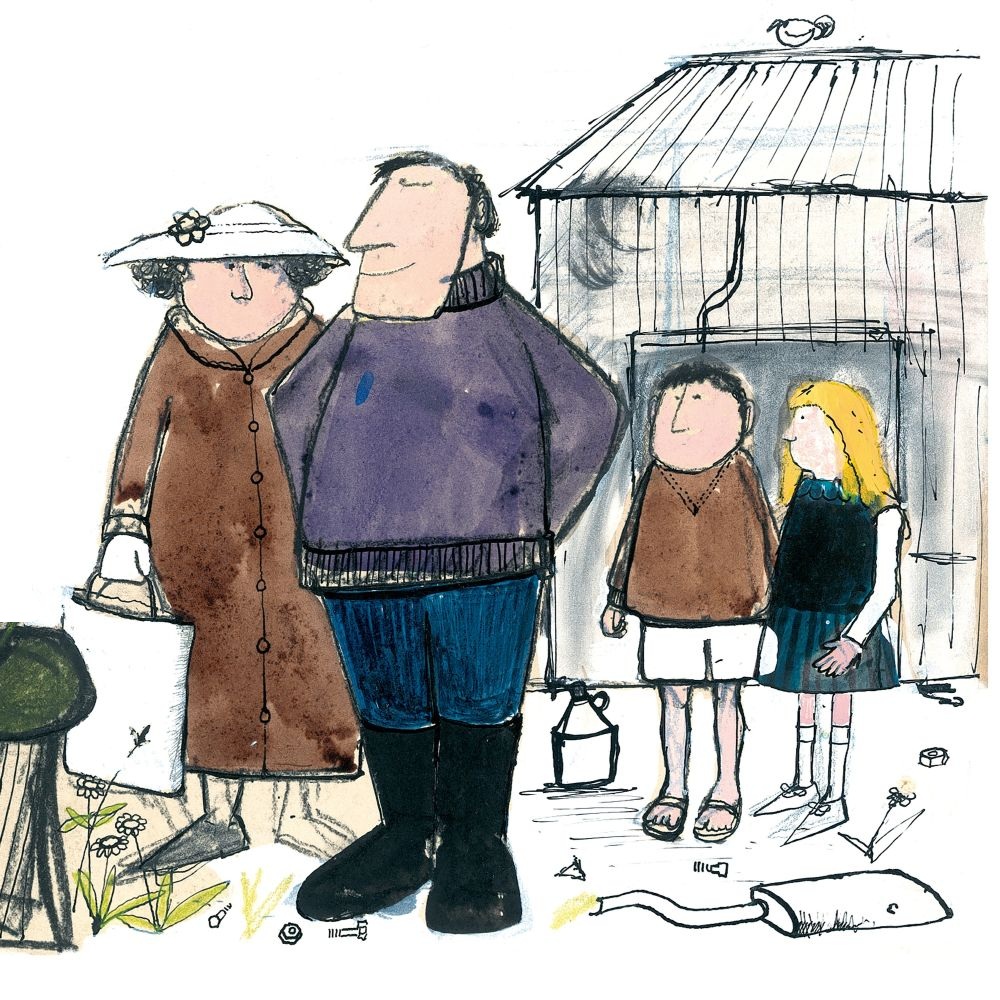
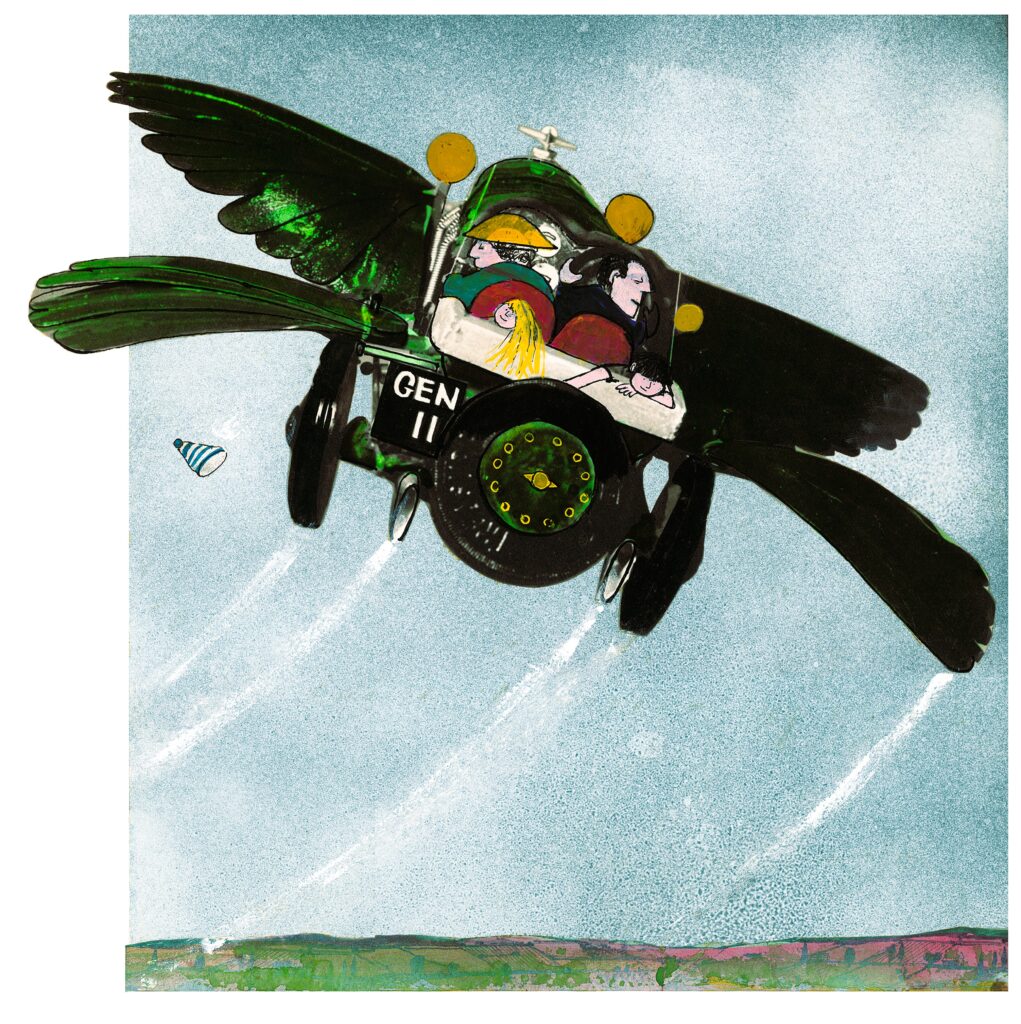
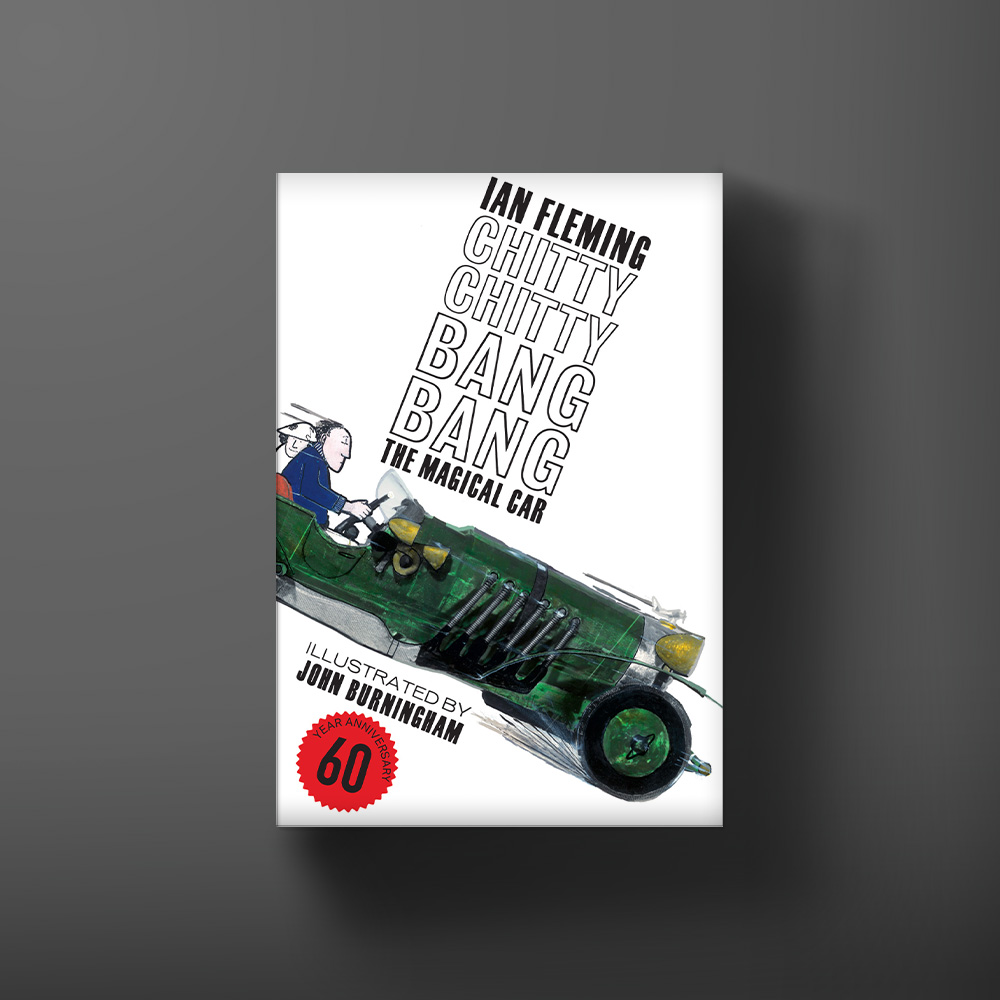
When Chitty Chitty Bang Bang was first published in 1964 it featured original illustrations by John Burningham. Burningham had been the recipient in 1963 of a Kate Greenaway Medal for his illustrations in his book Borka: The Adventures of a Goose With No Feathers and he would go on to win many more awards throughout his long career, creating books beloved by generations.
The initial artist in the frame for Chitty Chitty Bang Bang was Wally Fawkes, better known as ‘Trog’. Fawkes was the cartoonist for the Daily Mail and his work was far more in the mold of caricature and surrealism, which, whilst suiting the eccentricity of the Potts clan, may not have appealed to all ages. To Ian’s mind, the ideal reading group was children aged seven to ten and while Trog’s iconic ‘Flook’ character had started as children’s comic strip it had by the Sixties already begun to appeal more to parents, with its sardonic, satirical tone.
Getting the image of the car itself right was of utmost importance to Ian Fleming and to this end he himself sent the only copy of the manuscript he had available to his old friend Amherst Villiers. Villiers was an automotive and aeronautical designer and in addition to designing the car that broke the land speed record in 1927, he developed a supercharger that could be successfully fitted to a Bentley – which is exactly what James Bond drove in his earliest prose adventures. Fleming asked Villiers to try his hand at Chitty, with specific instructions as to the technology of the car and its appearance. Making this magical car a tactile vehicle – with gadgets and engineering based in reality rather than fairy land – was crucial to the character of Chitty. This distinction bases the car so beautifully in reality and gives children a relatable place to begin before they and the Potts family get whisked away to France.
Villiers could not commit to providing illustrations for the book, so the mantle then fell to Haro Hodson, a war artist and cartoonist working with the Observer when Chitty landed on his desk. Haro – who died in February 2021 at the age of 97 – shared a mutual friend with Ian Fleming in the form of Noël Coward. His sophisticated, Indian ink drawings still ooze style half a century later and he was able to offer some preliminary designs for the Chitty manuscript.
By the time John Burningham was brought on it was late 1963 and his artwork was what finally brought the magical car to life on the page. Ian Fleming died in May 1964, with the book first published in a staggered release in the UK from October that year until January 1965.
The film adaptation took flight in 1968, with the titular car designed by the legendary production designer Ken Adam, whose work was already synonymous with Fleming due to his James Bond movie sets. A novelisation of the movie was also published but not with illustrations.
In 2002 the stage production of the film used a car prop that has been listed in the Guinness World Records as the most expensive stage prop ever and now reportedly resides in film director Peter Jackson’s collection.
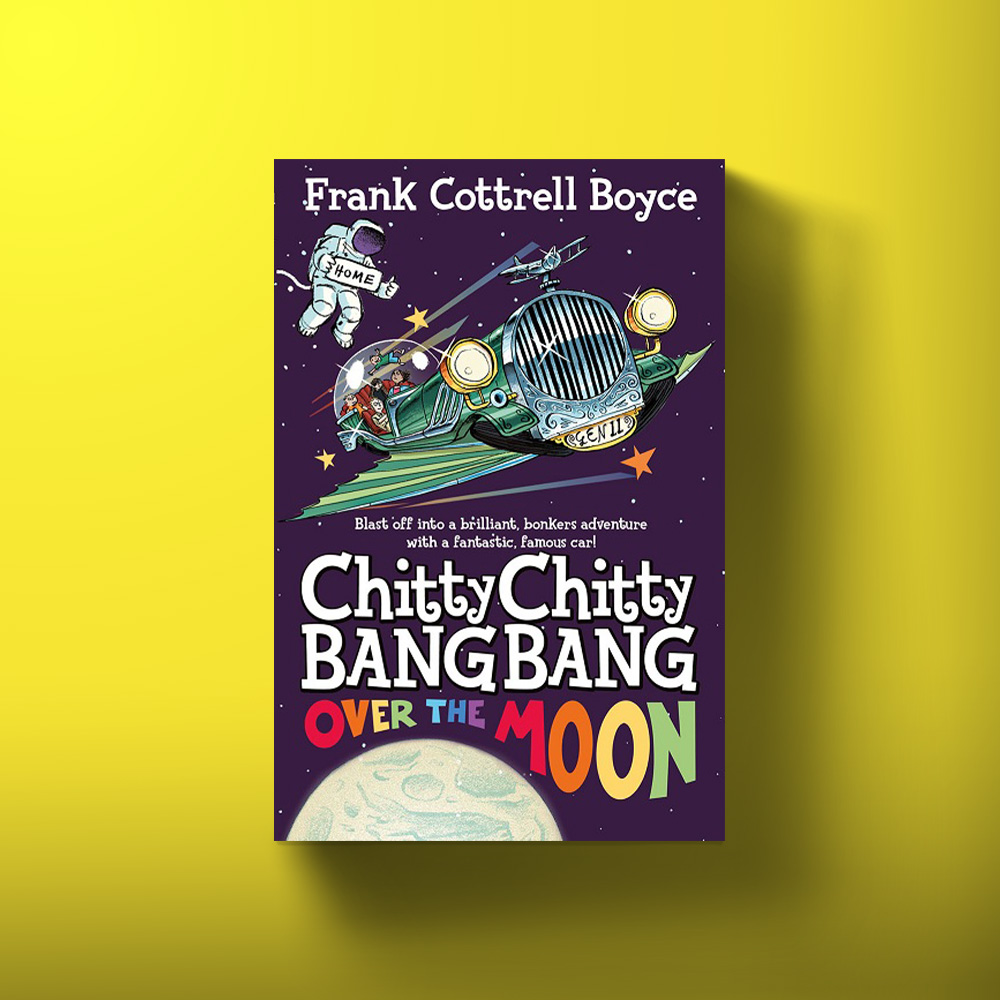
While the original novel was published with designs by different artists over the years, Chitty was reinvented on the page in 2011 in the official book sequel by Frank Cottrell Boyce Chitty Chitty Bang Bang Flies Again. The all-new illustrations for what became a trilogy of books were by Joe Berger. Berger’s line is dynamic, full of adventure but with wonderfully detailed technology that Amherst Villiers would no doubt pore over. Berger also illustrated a new edition of the original Fleming classic, bringing 21st century colour and action to new readers.
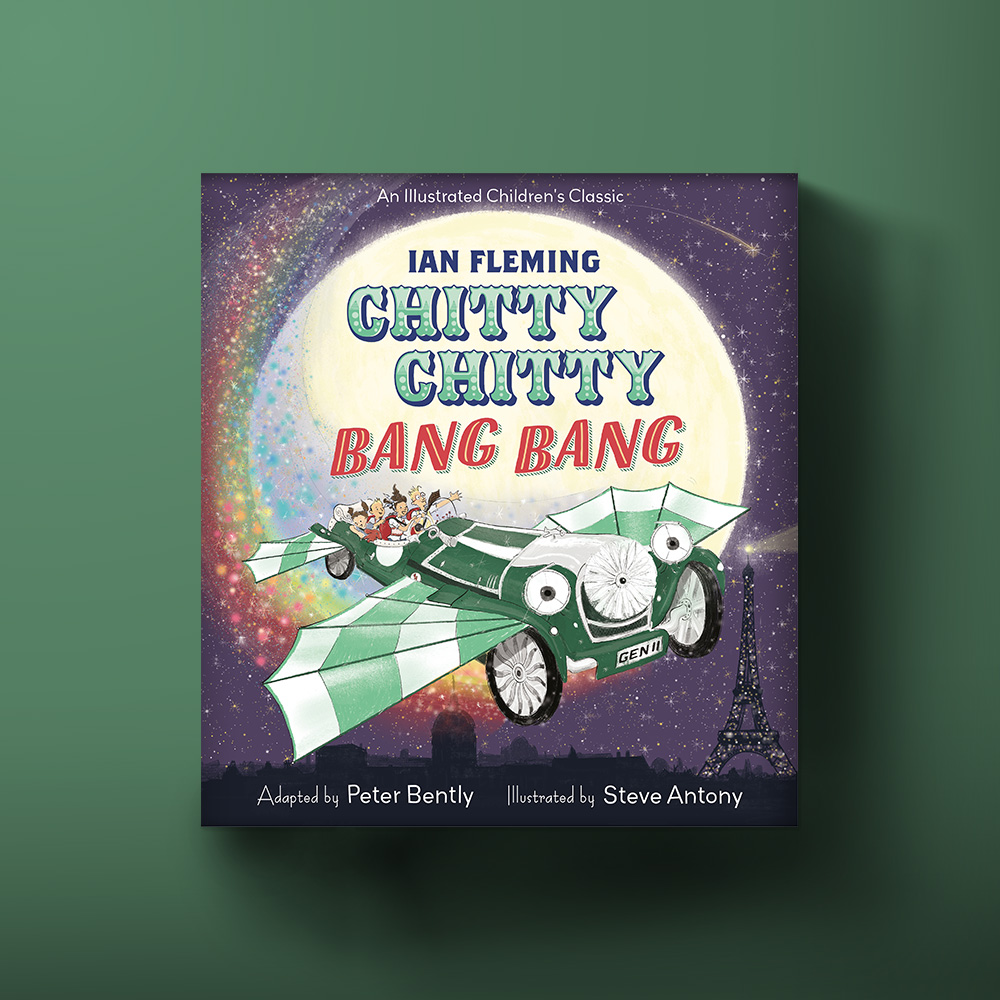
The flying car would be in the garage for only a handful of years before she was reintroduced in 2020 in hardback picture-book format, adapted by Peter Bently and illustrated by Steve Antony. Aimed at the younger readership of 3-5 years-old, the story has never been more accessible or more playful. A paperback edition with foil cover finish followed.
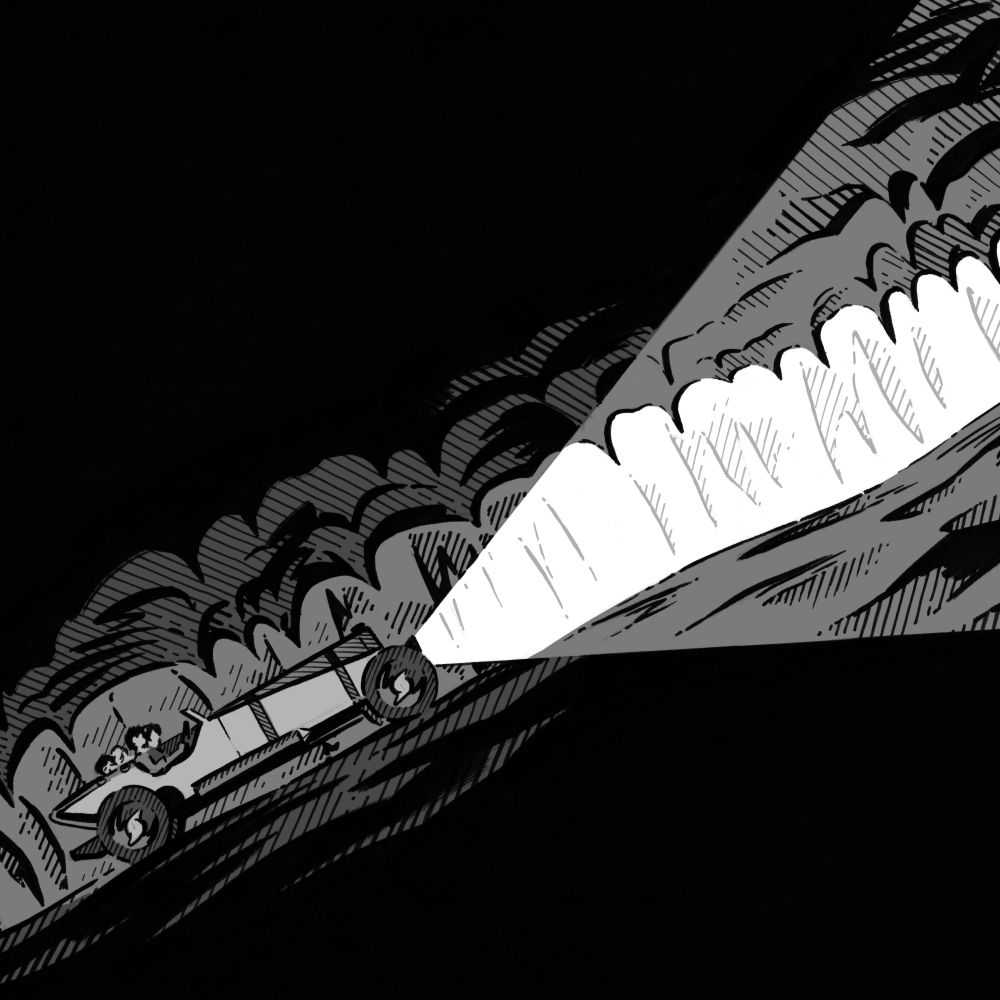
In 2024 a new British artist was commissioned to reimagine the iconic car and story for a new edition of Fleming’s treasured children’s classic. Thomas Gilbert drew on his longtime love of vintage cars to create a dynamic new cover design and 30+ original black and white illustrations for the interior.
The story in the pages is as fresh as ever and whilst the design of the car has evolved and adapted over the years, the character and spirit of Chitty has never altered. We can never know what Ian Fleming would have thought of the finished artwork, but it is safe to say that he would have been amazed and delighted by the incredible legacy of his story. Much like the various reincarnations of James Bond onscreen, no matter which iteration has been drawn for the page, decades of readers have a version of Chitty Chitty Bang Bang in their own imaginations.
Writer Tom Cull takes a stroll through London and examines Ian’s career as a journalist, before he found fame with fiction.
On a quiet Sunday in the City of London, I re-traced some of Ian Fleming’s old haunts during his journalism and banking days, including what used to be the Reuters building at The Royal Exchange. It occurred to me that it was here that Ian Fleming got his first taste of writing professionally. Throughout his career, journalism formed an important part of his research and inspiration, before finally becoming a way to remain ‘part of the action’ after the war.
His well-documented two month break in Jamaica to write his James Bond novels was a feat of discipline and economy; writing quickly and accurately and never looking back, trusting totally in his technique. Many writers, including the prolific Raymond Chandler, found this timetable astonishing. He asked Ian in an interview in 1958 how he could write so quickly with all the other things that he did, and remarked that the fastest book he ever wrote was in three months. So, from where did Ian Fleming acquire this skill?
For this we must go back to Monday October 19, 1931.
Fleming was given the responsibility of updating over 500 obituaries, work which his editor-in-chief described as ‘accurate, painstaking and methodical’. But soon, his superiors realised he could be of better use in the field. He was sent to Austria to cover the Alpine Motor Trials (Coupe des Alpes) in the summer of 1932 and thrived on the excitement of it all.
When an intriguing assignment came up in Stalin’s Russia, to report on a court case involving British construction workers (tantamount to a show trial), Fleming was called up. His ‘smattering of Russian’ and the fact that the regular Reuters Moscow correspondent might have had his Russian sources compromised meant that this was Ian’s big break. It was also his first exposure to the dark underbelly of Soviet communism that would pique his interest in cloak and dagger matters and mark Russia out as the political bête noire for the West. His reporting again impressed his peers. He turned in articles on tight deadlines. Ian described his training at Reuters as giving him a ‘good, straightforward style’ and there he learned to write fast and accurately because at Reuters ‘if you weren’t accurate you were fired, and that was the end of that.’
He returned to England to an offer of a higher salary and posting to Shanghai but his earning potential was not quite what he was after. His brother Richard had entered the flourishing family banking firm and it was suggested that Ian had hoped to inherit money from his grandfather, but when this didn’t happen, he decided to go into the City for himself. Doors were being held open for Ian as a fait accompli as he conceded:
‘I loathe the idea from nearly every point of view, and I shall hate leaving Reuters. But I’m afraid it has got to be done.’
In 1933 he was offered a job at the stockbroking firm Cull and Company on Throgmorton Avenue; where he worked for two years before joining Rowe and Pitman, the company from which he was recruited by Naval Intelligence. Fleming’s brief but formative years in journalism would not be his last, as after the war he returned to Fleet Street to work for Kemsley Newspapers as their Foreign Editor, providing him with the perfect opportunity to remain at the heart of things. Another opportunity to hone his craft, collect information, or ‘gen’, and keep his hand in with old contacts from the intelligence world. His friend from SIS days Nicholas Elliott, for instance, kept in touch with Fleming and offered his help if ever he needed a ‘useful piece of information from one of his many City contacts.’
Instead of running agents, Fleming was running foreign correspondents such as Richard ‘Dikko’ Hughes, stationed in Japan, and Anthony Terry who was stationed in Berlin. Two great friends who were to provide him with inspiration and crucial cultural and geographic details for his James Bond adventures You Only Live Twice and The Living Daylights, as well as his non-fiction work Thrilling Cities.
Fleming’s page-turning style owed a debt to those early years at Reuters, which remains to this day one of the largest news organisations in the world.
Tom Cull runs Artistic Licence Renewed. He knew iconic Bond cover artist Richard Chopping well as a child and Tom’s great grandfather hired a young Ian Fleming to work at the family bank Cull & Co. between 1933 and 1935.
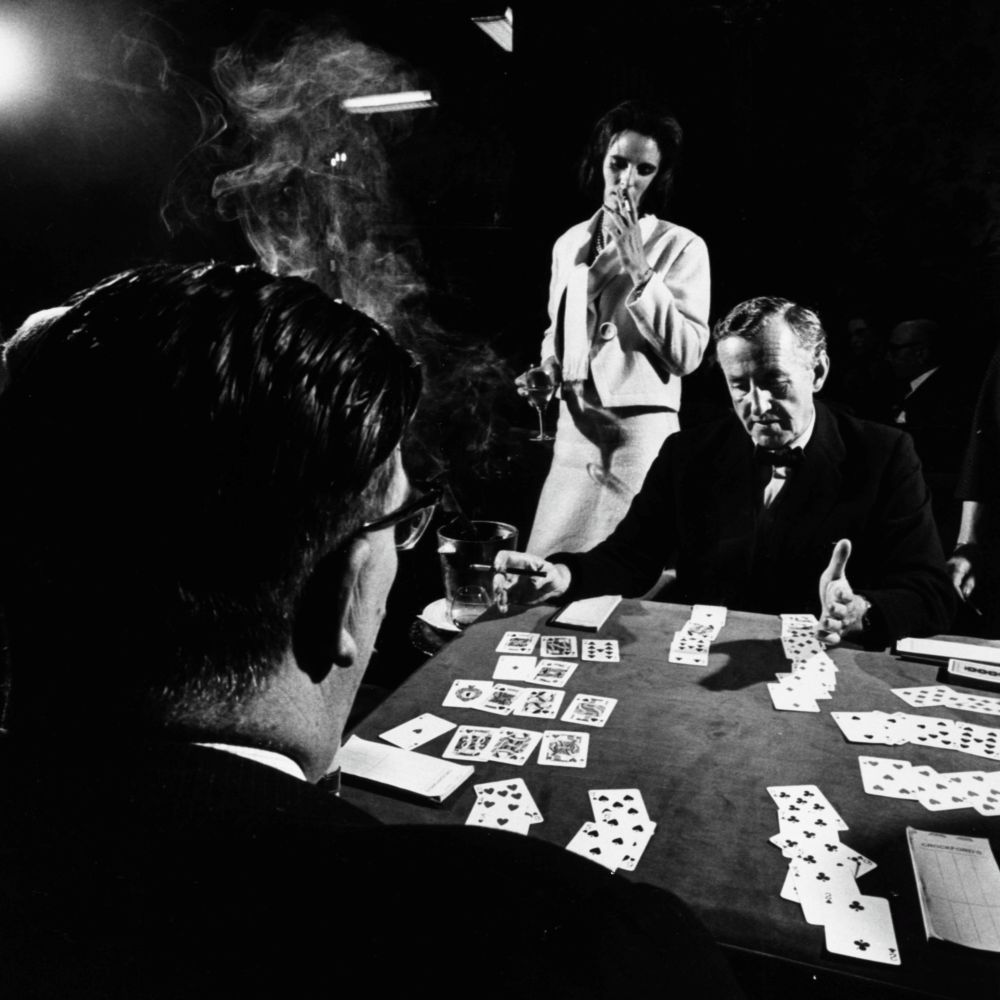
Ian Fleming Images is delighted to have acquired the Ian Fleming portfolio of legendary American photographer Loomis Dean (1917–2005). The collection includes iconic images which first featured in LIFEMagazine in the 1960s. Dean’s images join the official photographic archive of the author overseen by Ian Fleming Images for his Estate.
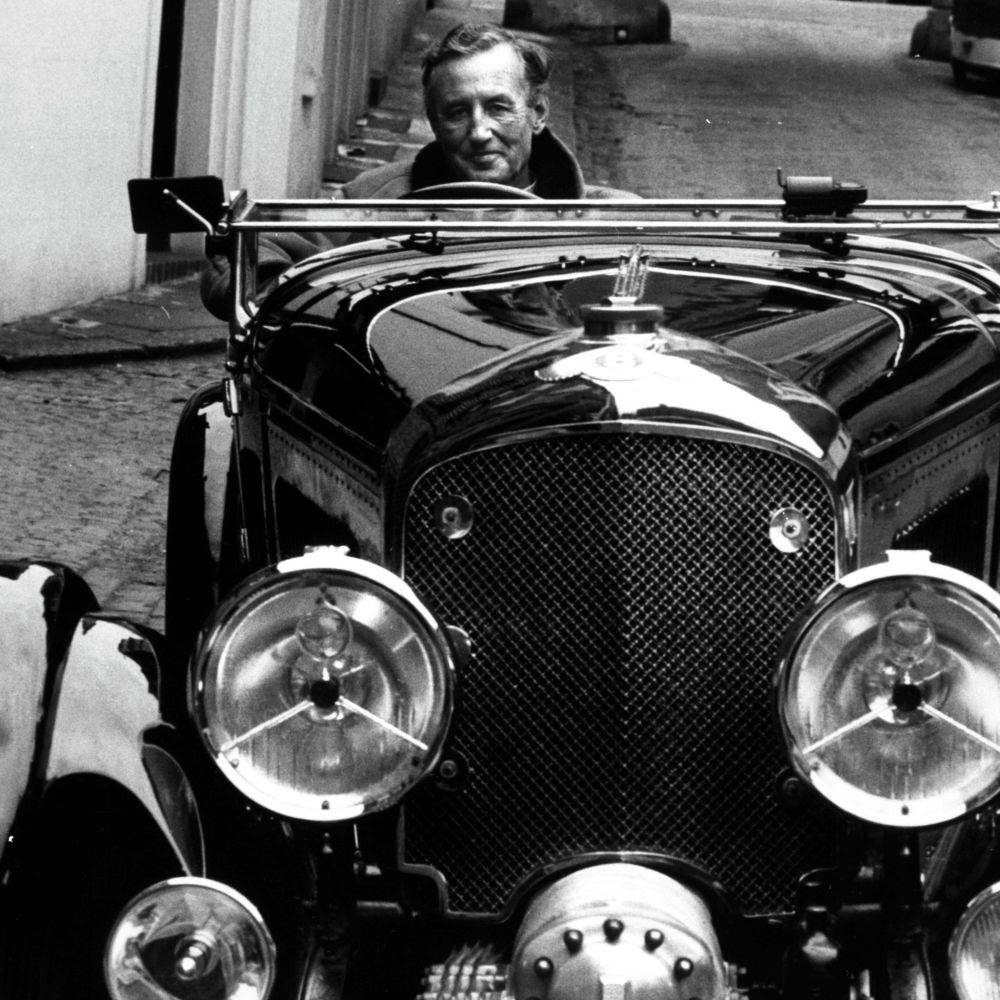
Loomis Dean (1917-2005) photographed a wide variety of people and events during his long career. He spent time as an aerial reconnaissance photographer in the Pacific during the Second World War and also photographed Elvis Presley and many Hollywood greats of the 1950s. This was followed by 25 years capturing personalities and events around the world from his base at LIFE‘s Paris office. Dean’s photographs appeared on more than 50 covers of the iconic magazine, including the iconic image of Ian Fleming behind the wheel of a friend’s 4 1/2 litre Bentley, much like the one driven by 007.
Dean was famed for his ability to put his subjects at ease. His habit of adding amusing or interesting elements to the scene, sets his work apart from more traditional portrait shots. He mixes styles: reportage, candid and formal portraiture are combined to give us a unique insight into his subject’s personality – all with an appealing sense of informality and a fun atmosphere.
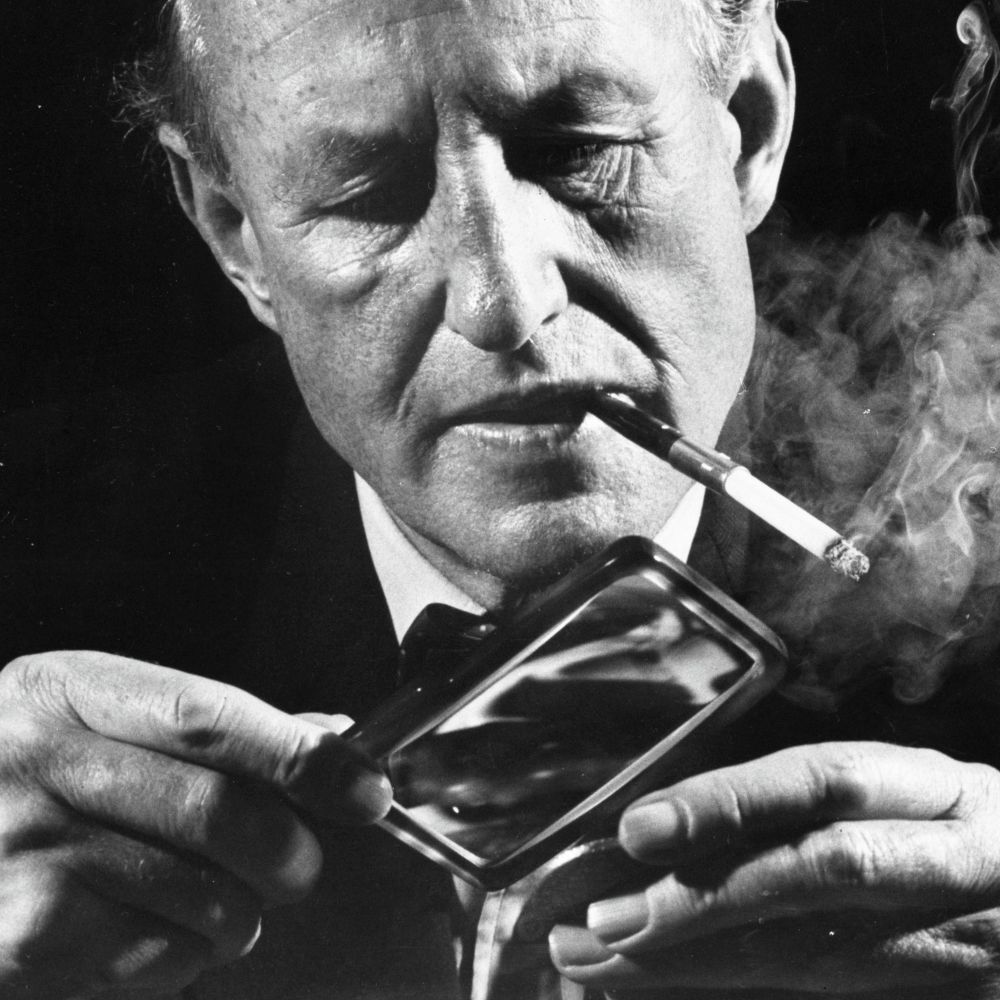
The 17-piece collection acquired by Ian Fleming Images include photos of the author in situations in which James Bond might have found himself, blurring the lines between the two. Watch him examining old Brazilian coins at a London coin shop when researching pirate gold for Live and Let Die in 1962. Other images access a more private part of Fleming’s life, such as rustling up his famous scrambled eggs at his London home in an apron, as featured in 007 in New York, and deep in thought at the card table.
Dean’s camera took him back into the world of 007 in 1967, when the search was on for a new actor to play James Bond on screen. LIFE sent Dean to casting sessions for new movie, On Her Majesty’s Secret Service, to capture the candidates being put through their paces. The five hopefuls included George Lazenby, who would eventually win the coveted role, and the magazine went on to publish a handful of Dean’s photos in an article on the film and on the Bond phenomenon.
Ian Fleming Images work to promote the author’s legacy through pictures. They manage the licensing of his image internationally, offering a wide range of photographs of Fleming throughout his life for both commercial and editorial usage. Please contact images@ianfleming.com for more details.
We shine the spotlight on the prolific career of graphic designer Milton Glaser. Born in New York City to Hungarian Jewish immigrants, Glaser’s influence on the American visual landscape cannot be overstated. His working life spanned over 60 years, and in 2009 he became the first graphic designer to be awarded the National Medal of Arts.
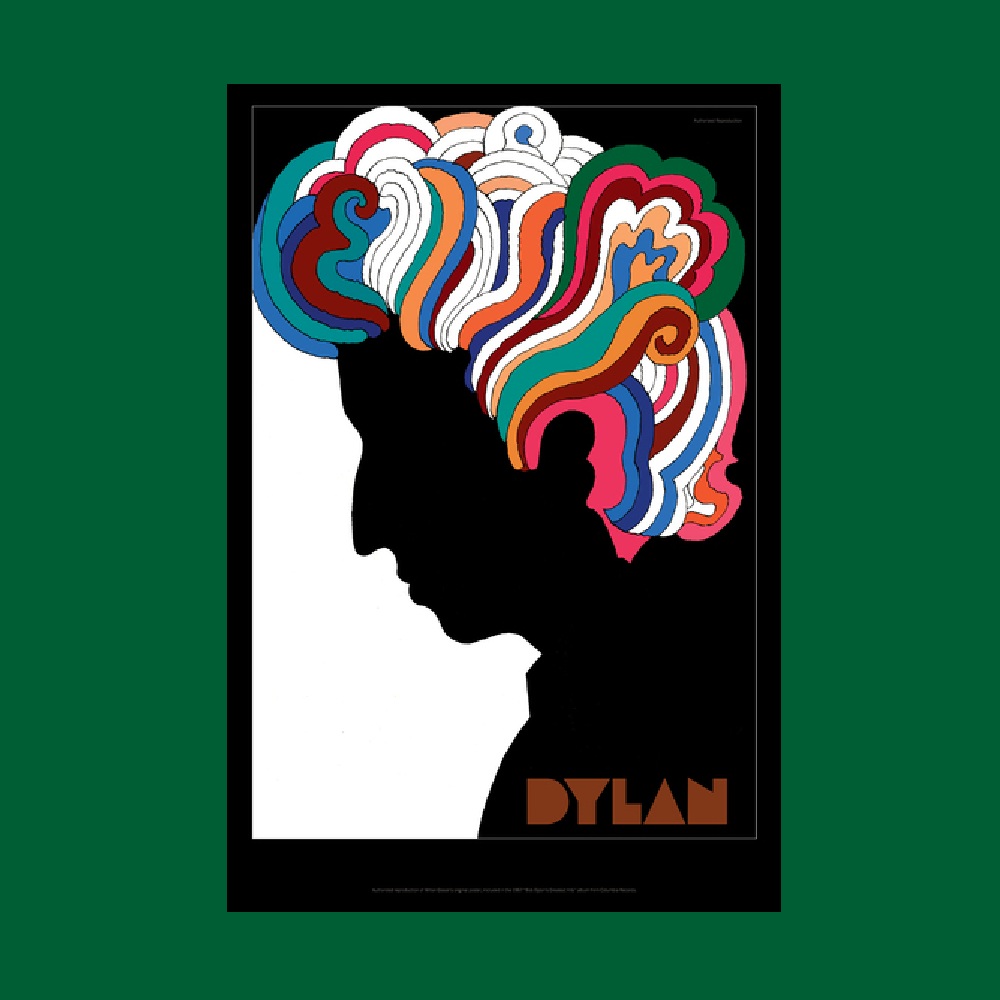
Glaser’s output was as eclectic as it was striking. He created the logos for DC Comics, for Brooklyn Brewery, and for New York magazine – which he also co-founded. He designed over 400 posters, including an album poster for Bob Dylan, the poster for Tony Kushner’s Pulitzer-winning play, Angels in America, and the poster for the 1984 Winter Olympics.
However, he is undoubtedly most famous for the ‘I♥NY’ logo he created in 1977 to promote tourism and civic pride – an image so deceptively simple and so ubiquitous it’s easy to forget that someone actually designed it. It didn’t spring spontaneously into being. Like 007 (both the phrase and the character), the logo has become a cultural phenomenon, globally recognised, frequently referenced or parodied, instantly familiar. A true icon.
So it makes sense, that Milton Glaser has a tangible connection to James Bond.
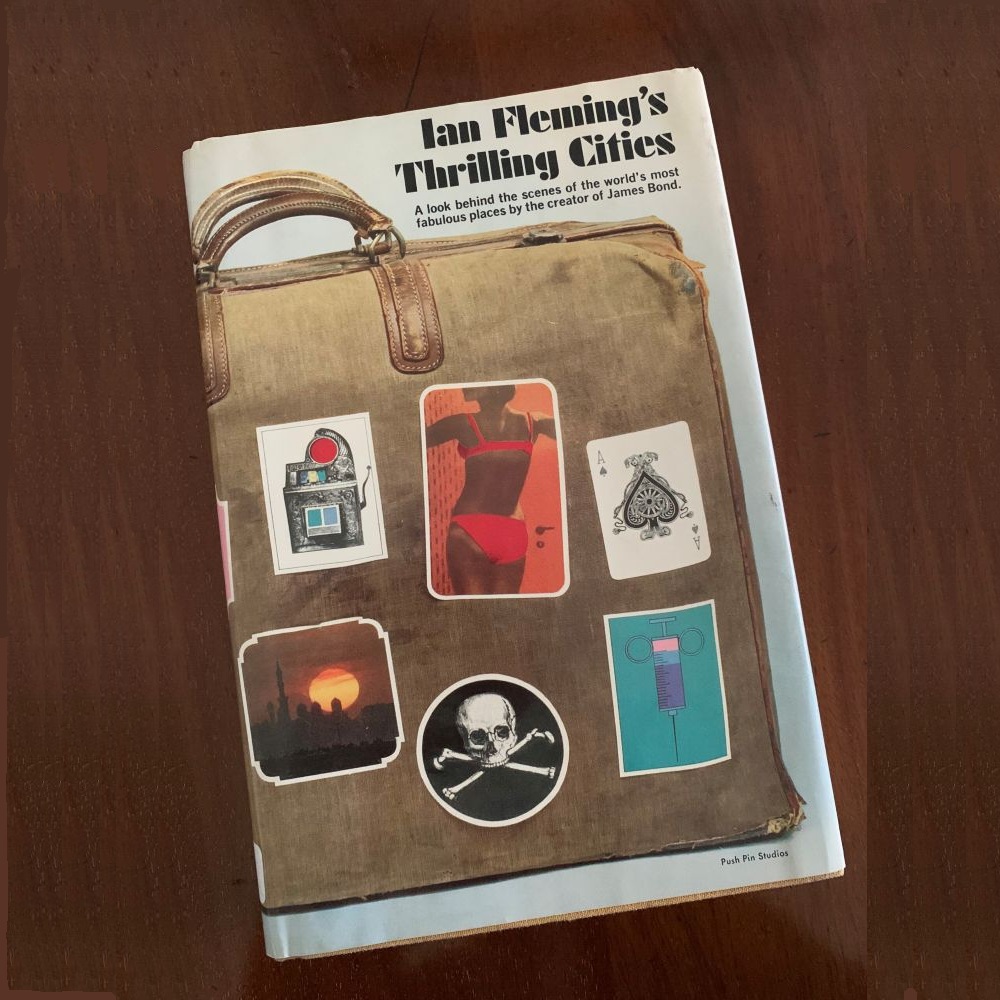
In 1959 and 1960, between work on the manuscripts for Goldfinger and For Your Eyes Only, Ian Fleming travelled to thirteen cities around the world, documenting his impressions in a series of articles for TheSundayTimes. Edited versions of these articles were published in the UK as Thrilling Cities in 1963. When the New American Library edition followed in 1964, it boasted jacket artwork by Glaser’s own design company, Push Pin Studios.
The jacket depicts a battered suitcase sporting a playful collection of stickers – a skull, a bikini-clad woman, the ace of spades – evoking the glamour of Fleming’s famous secret agent.
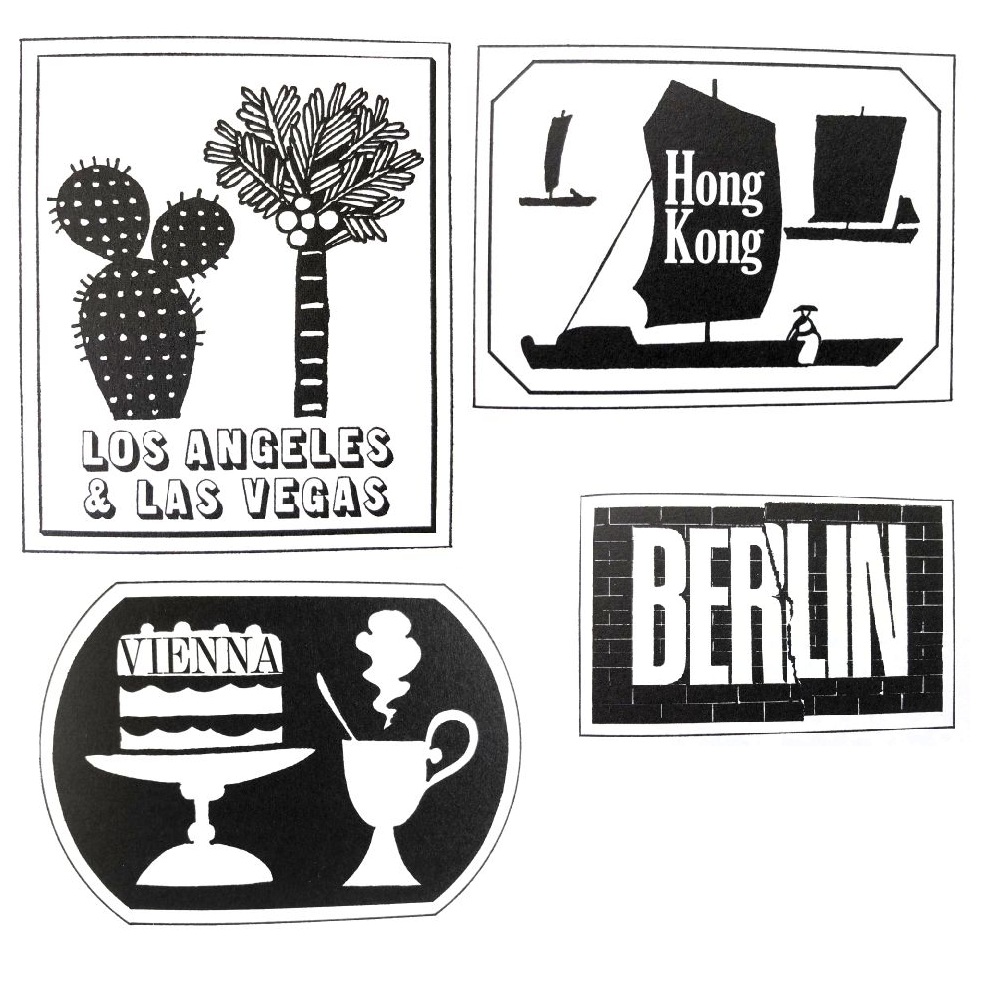
Each chapter heading also features a unique illustration drawn by Glaser himself. The illustrations capture an element of each city, with Glaser’s trademark economy and wit.
It is somewhat ironic that the designer whose name is indelibly linked with his love for NY should have illustrated this particular book. Fleming’s chapter on the city is famously damning, opening as it does with the words, ‘I enjoyed myself least of all in New York‘. He goes on to conclude that the city is ‘rapidly losing its heart‘. We will never know what Glaser made of this pronouncement. But thanks to his timeless design, nobody else will truly be able to claim that New York lacks ♥.
Fleming himself refused to soften his words for an American audience despite requests from his US publisher. Instead, he gave the city a peace-offering in the form of a James Bond short story titled 007 In New York. This was included in the US edition of Thrilling Cities, with an introduction conceding that Bond’s ‘tastes and responses are not always my own and [his] recent minor adventure in New York […] may prove more cheerful in the reading‘: Fleming’s apology, and a gift, to the city that had hosted him so often.
Milton Glaser died in 2020, aged 91, and he was still busy working. His final creation harks back to the origins of I♥NY and is a typographical treatment of the word together. This is his bequest to a city, and a planet, in the throes of tumultuous change.
The world today is not the world recorded in snapshots by Fleming in 1960, and Glaser’s contributions to Thrilling Cities represent a tiny fraction of his overall legacy. But like 007, Glaser’s cultural icons will long outlive their creator.
The diaries of Maud Russell, A Constant Heart, shed interesting light on Ian Fleming’s War years. Here Josephine Lane examines their contents and shares insights into this intimate and significant relationship.
On the 8th February 1944, Maud Russell wrote in her diary,
‘Yesterday I. came to dinner, looking well and busy with a dream, the dream being a house and 10 acres on a mountain slope in Jamaica after the war.’
‘I.’ was none other than Ian Fleming, who went on to realise this exotic dream in 1947 by buying an old donkey racetrack in Jamaica where he built GoldenEye, the home which sheltered him from the bitter British winter and where he wrote his James Bond novels every year from 1952 until his death in 1964. Russell’s recently published war diaries reveal that it was her gift of £5,000 that enabled Fleming to build this creative sanctuary which nurtured the rise of his fictional hero. But who was Fleming’s generous benefactor and what significance does their relationship with each other hold?
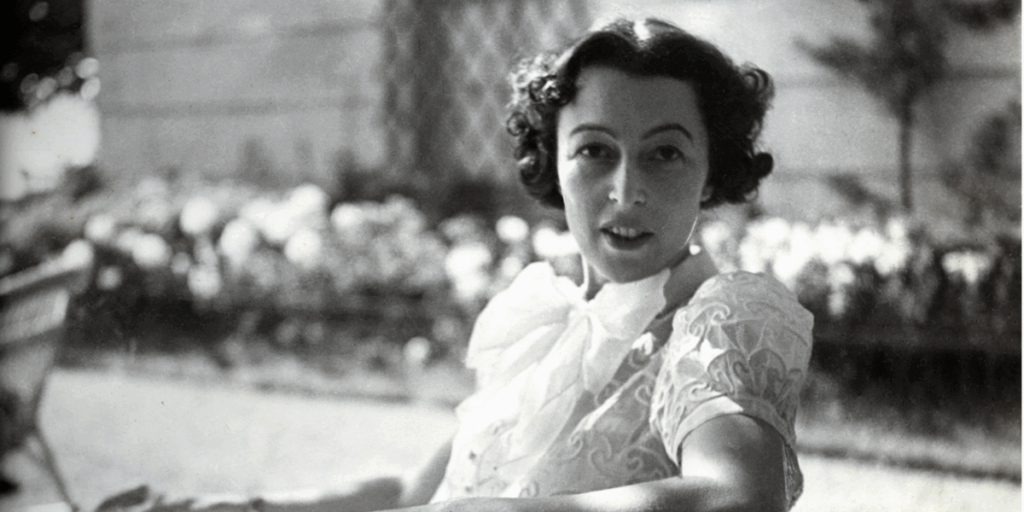
Born in 1891 to German Jewish parents who had settled in London in the 1880s, Maud Russell was a society hostess and one of the foremost French art collectors of her time. She married Gilbert Russell, a stockbroker and cousin of the Duke of Bedford, during the First World War and they lived between the beautiful Mottisfont Abbey in Hampshire and their house in Cavendish Square in London. Gilbert introduced Maud to many politicians and members of the aristocracy while her interest in the arts encouraged a host of artists, writers, society figures and musicians into their social circle. Amongst them was Ian Fleming who Maud described as having the ‘handsome looks of a fallen angel.’ Although Maud was quite a few years older than Ian, their relationship blossomed from casual acquaintances to intimate friends and likely lovers.
A Constant Heart: The War Diaries of Maud Russell 1938-1945 is skilfully and affectionately edited by Maud’s granddaughter Emily Russell and reveals an intimate portrait of an intelligent and independent-minded woman who was surrounded by influential people of the day. The book is bursting with references to key figures of the time, such as this auspicious entry about a new acquaintance she met when dining with Lord Louis Mountbatten in 1942, ‘At lunch there was his nephew Prince Philip of Greece, a nice looking man, who speaks perfect English and is in the Navy. It struck me afterwards that he would do for Princess Elizabeth.’
Maud’s passion for art led her to be acquainted with several exceptional artists of the day and the diaries record lunches with Matisse, for whom she sat in the 1930s, members of the Bloomsbury Group and the photographer Cecil Beaton. She was also close friends with the artist Boris Anrep who specialised in the art of mosaic and whose work can be seen in the foyer of the National Gallery; a project funded by Maud. Undoubtedly her most important artistic relationship during this period was with Rex Whistler whom Maud commissioned to undertake a stunning and vast trompe l’oeil in what is now known as the Whistler Room at Mottisfont Abbey.
As well as documenting meetings with interesting figures from the 1940s, the diaries open a captivating window into a very unique perspective of life during the Second World War. They are a stark reminder of the great uncertainty and the daily anxiety faced when victory against the Axis powers was by no means guaranteed and international freedom was at grave risk. ‘I was in a rage all day and mad to think we have so miscalculated the German forces as to be in danger of losing Egypt… I roared myself hoarse.’
But few fights were more personal than Maud’s own endeavour to help her Jewish relatives living in Germany. On the 9th–10th November 1938 there was an atrocious, nationwide attack on the Jews in Germany, which came to be known as Kristallnacht – the Night of Broken Glass. Approximately 1,000 synagogues were burned, 7,000 Jewish businesses were destroyed, 91 Jews were murdered and tens of thousands more were arrested and interned in concentration camps. The situation was critical and Maud not only campaigned for visas for her relatives but actually flew to Cologne in December, risking her own safety to help her family. ‘I had arrived on the day when all Jews in Germany were ordered to stay indoors between 8am and 8pm so I wondered whether my appearance might arouse comment, but it didn’t.’ The courage and fearlessness of such actions inspire limitless admiration.
‘I think these months are enormously significant and interesting but I wish I was living on another planet.’
The diaries also bear witness to the death of Maud’s beloved husband Gilbert, who died of asthma in 1942. These passages are incredibly moving, as Maud unravels her grief and processes her loss;
‘The main, the fullest, the richest and the most feeling part of life ended with him. I gave him all the tenderness I possessed. There was little over.’
Reading through the diaries it becomes clear how vital her relationship with Ian Fleming was, particularly during this difficult time, ‘His solid friendship helped me these days. He understood how I felt about G. I think he was very distressed about Gilbert himself.’ Indeed, it is likely that Gilbert Russell engineered Fleming’s role in Naval Intelligence during the War and in turn Ian helped Maud to obtain a post in the Admiralty after Gilbert’s death in her bid to forge a new life.
‘He loves his NID work better than anything he has ever done, I think, except skiing.’
The diaries reveal an intimate closeness and fond affection between Ian and Maud, who meet at least once a week throughout the war. An outcome of this is the extraordinary insight the diaries provide into Fleming’s wartime activities. Amongst other things she notes that Fleming broadcasts directly to the Germans, tours the coastal defences, witnesses the Dieppe raid from a destroyer and visits Spain and Portugal to discuss intelligence matters with Roosevelt’s special envoy. A particularly shocking anecdote is recorded in November 1941,
‘He has been on some dangerous job again. He cannot ever tell me what they are. A house in which he was dining was blown from under him. He and his friends were left marooned on the third floor, the staircase and most of the floors below were blown away. Eventually there was a tap at the window, a fireman’s head appeared and they left the house by the fireman’s ladder. The story was told as if there hadn’t been any danger.’
‘We discussed how either would know if the other was killed. Not knowing at once gives an empty blank feeling.’
There are hints throughout the diaries that Ian and Maud’s relationship was more intimate than mere friendship. Maud provided Ian with his identification tag during the War (which he stipulated be made of gun-metal) and Emily Russell reveals that she found an envelope labelled ‘I.’s’ containing a lock of black hair, amongst her grandmother’s possessions. However, most telling of all is this touching and raw recollection, ‘He talked about marrying me, I had qualities he wants to find. I said, ‘No, ages makes it impossible.’ He said, ‘If I was five years older.’ ‘No,’ I said, ‘If you were at least 10 years older.’ For he is sixteen and a half years younger than me. If he were 10 years older I would marry him, but it’s no use a woman of 52 trying to keep pace with a man of 36. After a few years he might fall in love and want me to release him. I should do it and be alone again after much pain and drama, a good deal older, and in still greater need of compassion. He is very good to me.’
A Constant Heart is a fascinating book, documenting a period of great international importance from a very personal perspective. Maud Russell’s concise and witty records set within an awe-inspiring social circle are a joy to read and her relationship with Ian Fleming is both moving and surprising. Little was known about Maud’s role in Ian’s life before the publication of these diaries and it is a pleasure to encounter Fleming from her perspective as a kind and thoughtful friend. And perhaps her influence runs deeper still. Without her generous gift of £5,000 who knows whether Fleming would have had the peace, quiet and solitude to dedicate himself to devising the deeds of agent 007. But when one learns that he addressed his correspondence to her as ‘Dear M.,’ perhaps it could be argued that her impact was even more fundamental to the literary lore of James Bond.
To provide the best experiences, we use technologies like cookies to store and/or access device information. Consenting to these technologies will allow us to process data such as browsing behaviour or unique IDs on this site. Not consenting or withdrawing consent, may adversely affect certain features and functions.
Functional
Always active
The technical storage or access is strictly necessary for the legitimate purpose of enabling the use of a specific service explicitly requested by the subscriber or user, or for the sole purpose of carrying out the transmission of a communication over an electronic communications network.
Preferences
The technical storage or access is necessary for the legitimate purpose of storing preferences that are not requested by the subscriber or user.
Statistics
The technical storage or access that is used exclusively for statistical purposes.The technical storage or access that is used exclusively for anonymous statistical purposes. Without a subpoena, voluntary compliance on the part of your Internet Service Provider, or additional records from a third party, information stored or retrieved for this purpose alone cannot usually be used to identify you.
Marketing
The technical storage or access is required to create user profiles to send advertising, or to track the user on a website or across several websites for similar marketing purposes.
 Skip to main content