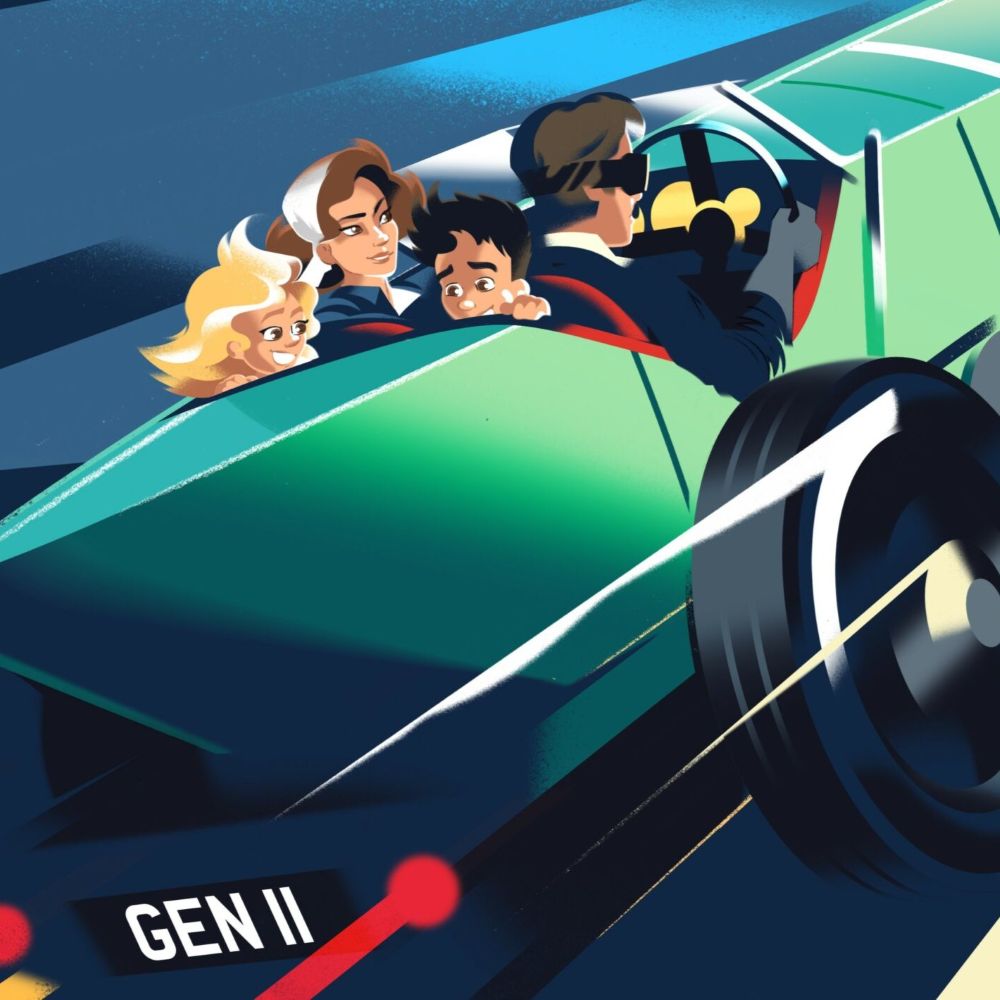
Thomas Gilbert, artist on two of the newest Ian Fleming Publications releases, talks to us about his work.
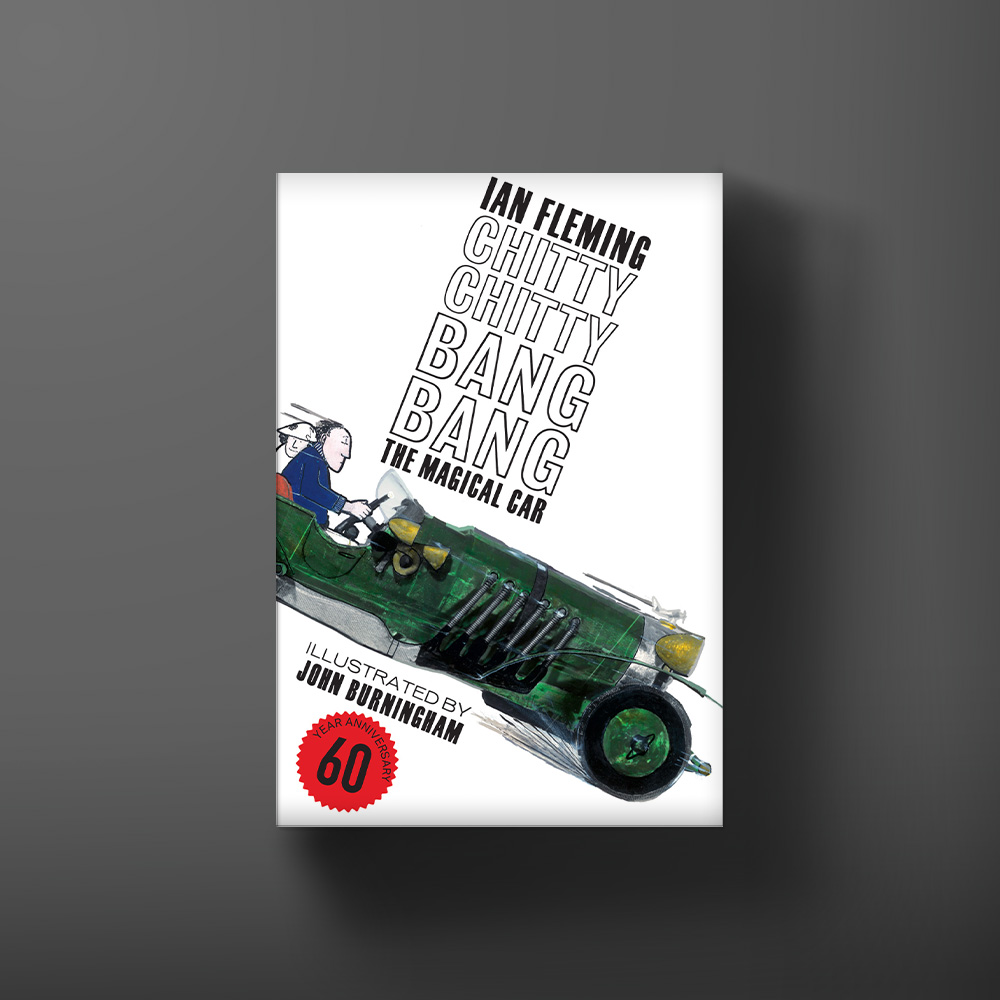
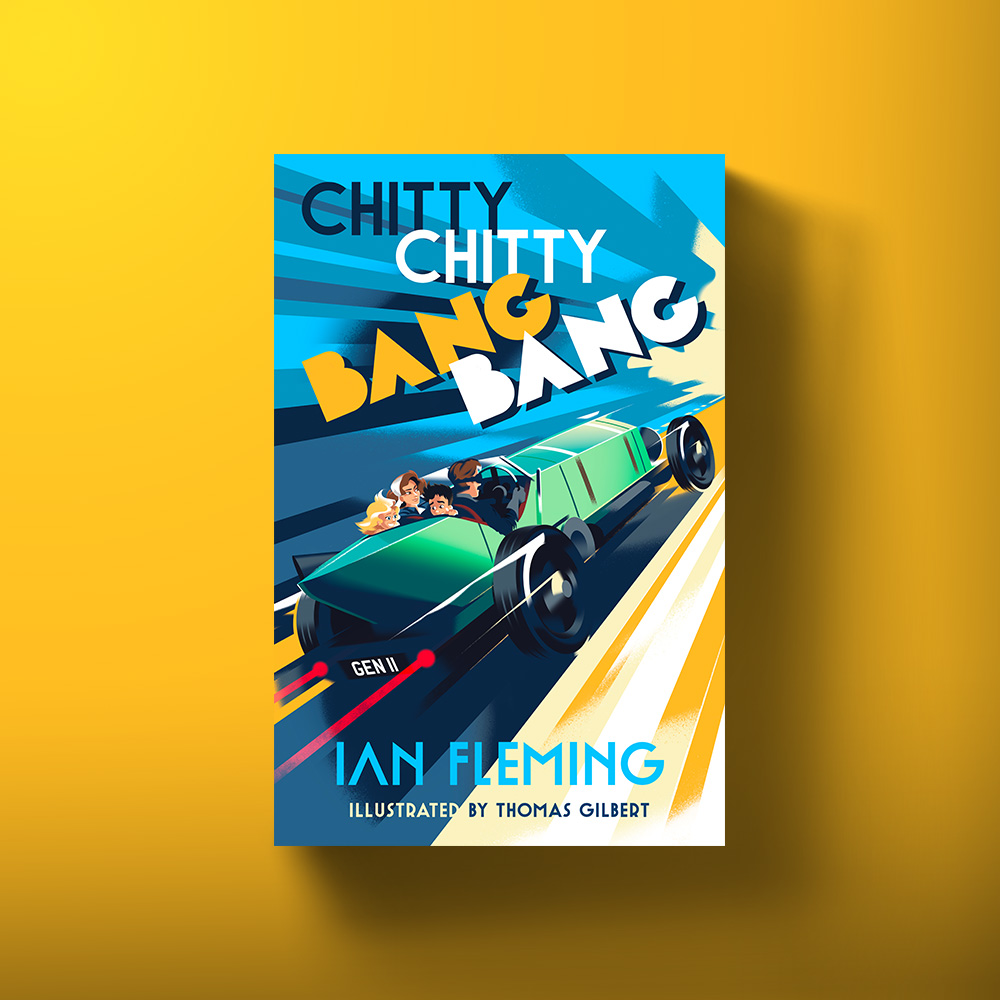
In 2024 we released a new paperback edition of Ian Fleming’s children’s classic adventure, Chitty Chitty Bang Bang. The team first came across Thomas through his striking fan covers for Fleming’s Bond novels, and fell for his bold style. Publishing Director Simon Ward says, “From the moment we saw Thomas’ work we knew he’d be perfect for this beloved book. His imagination and knowledge of Ian’s classic car is second to none.”
Thomas is a graphic artist and illustrator, based in Warwickshire, England. Working primarily in the field of poster illustration, he has a passion for modernising vintage styles through a combination of traditional and digital media. A lifelong car enthusiast, Thomas has a background in car design. He graduated with a Masters Degree from Coventry University in 2011, and has since enjoyed creating several high profile cars for iconic British marques.
“I am a lifelong fan of Ian Fleming, so to be asked to illustrate one of his most iconic books is an incredible honour. In book and film form, Chitty Chitty Bang Bang is a story which has always been close by. I grew up somewhat surrounded by vintage cars (one in particular is a lot like my family’s very own Chitty!) so the notion of a car being alive and a part of the family just naturally resonated with me from a very young age. Chitty is a wonderful story, imbued with all of Fleming’s characteristic warmth, adventure, inventiveness and authenticity – I’m very excited to be illustrating it for a new generation of young readers.”
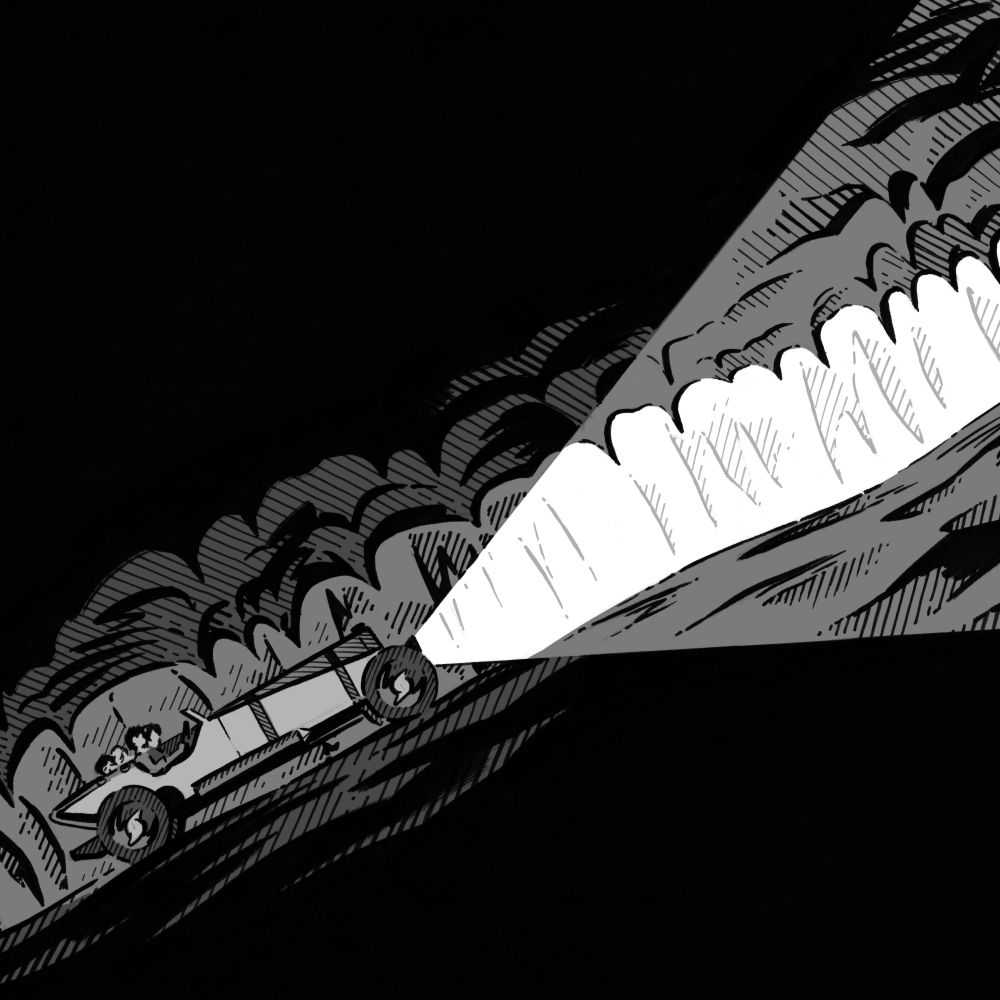
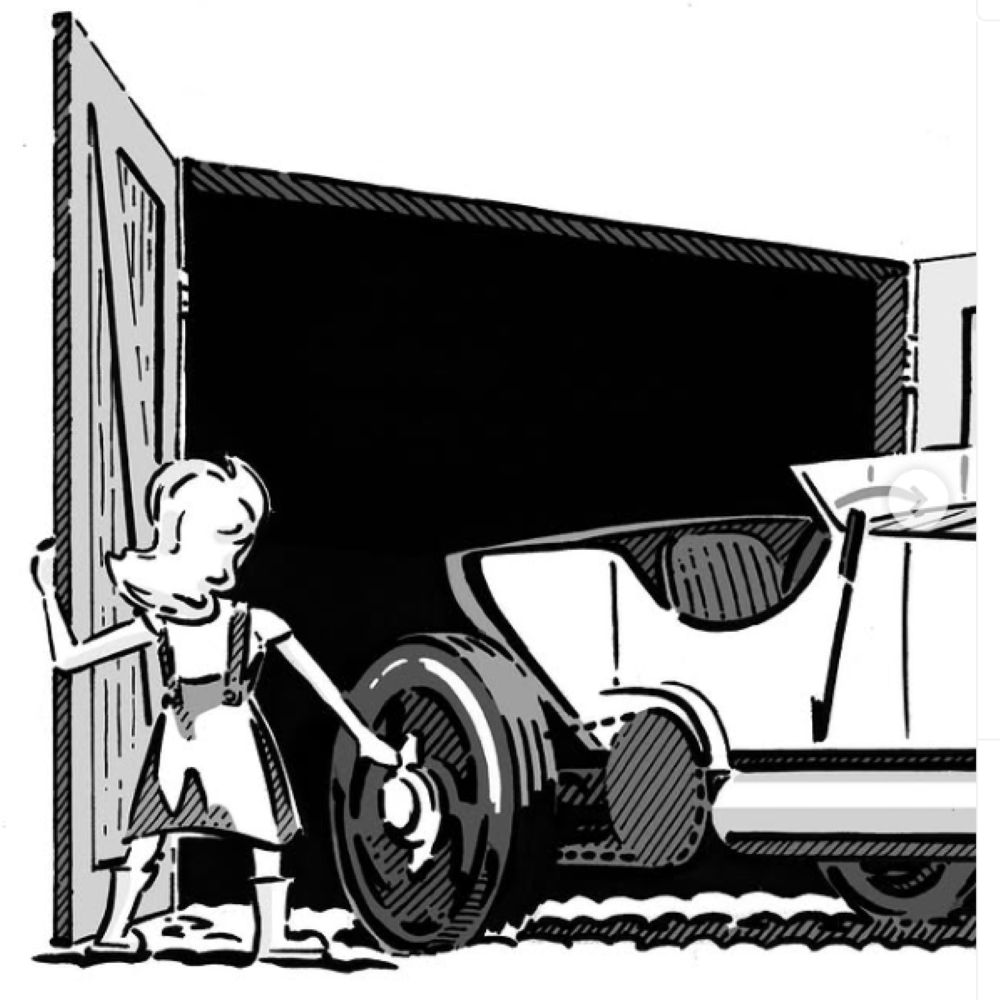
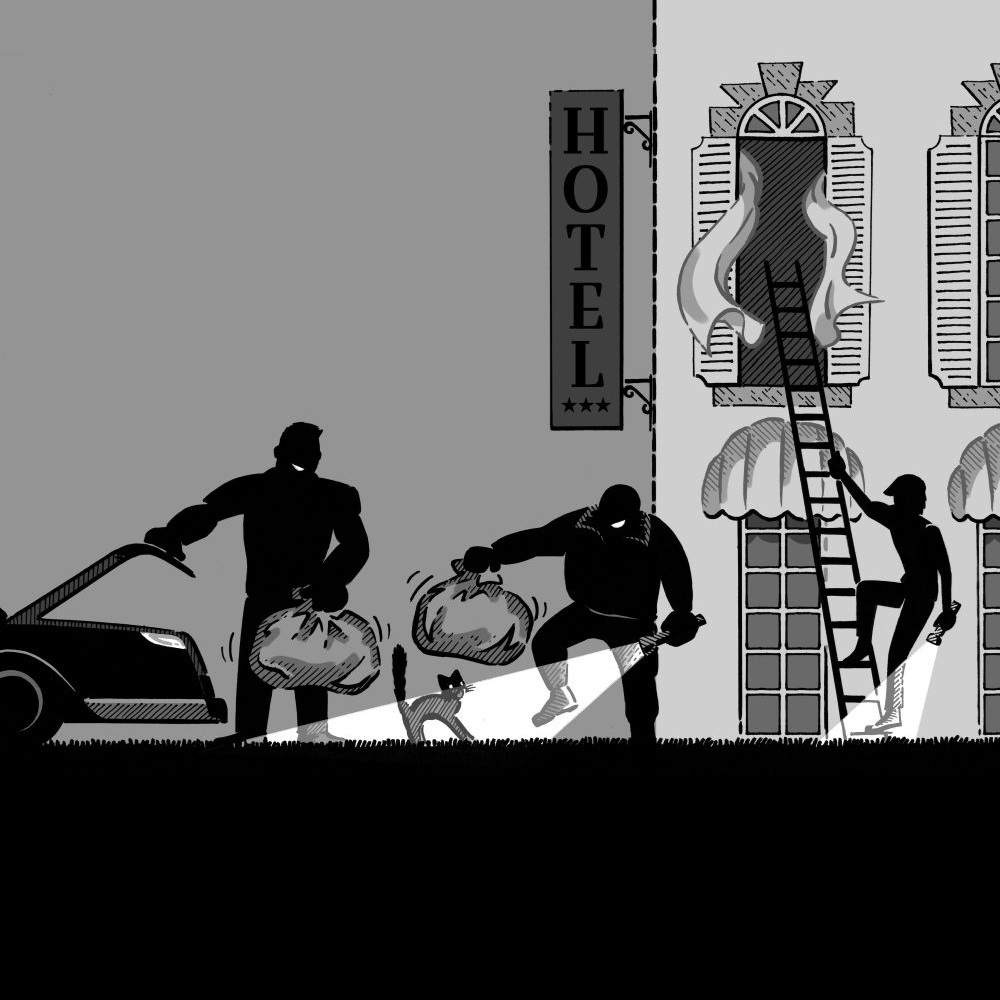
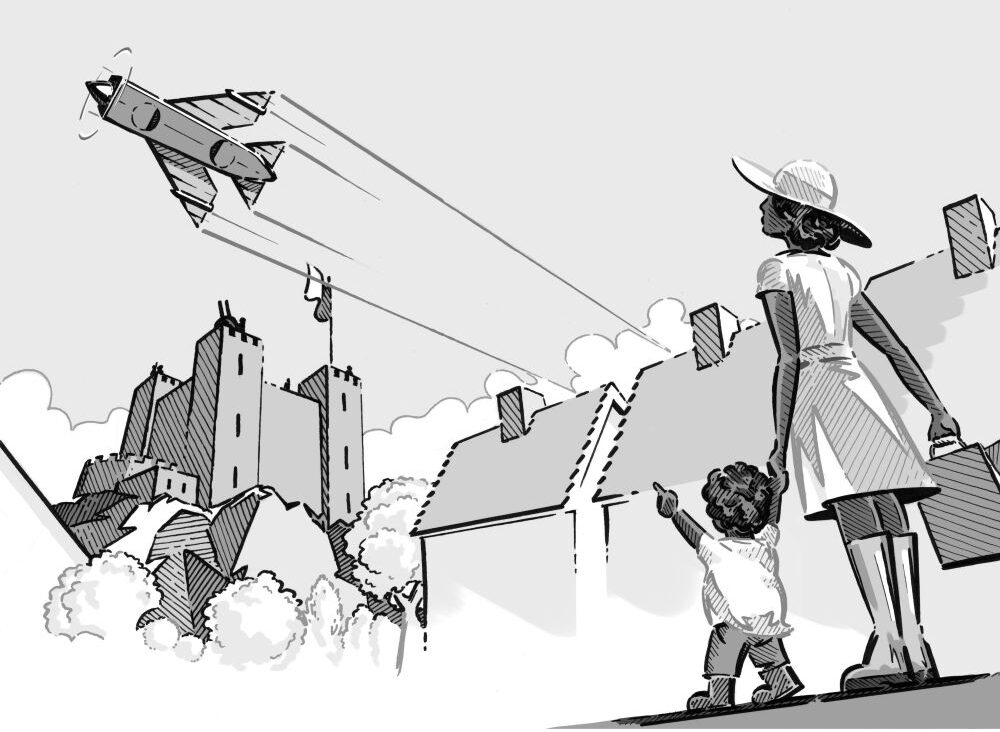
Thomas brings a vibrant new look to this treasured story, with a dynamic cover design and 30+ original black and white illustrations for the interior. Take a look at the evolution of the cover below.
“Chitty Chitty Bang Bang was inspired by a real life speed trial car. As a young boy, Ian Fleming witnessed Count Louis Zborowski driving his monstrous Chitty Bang Bang special over 100mph at Brooklands – and that is the car and the scene that he describes in the book’s foreword. So when I was preparing to illustrate the book, there was zero question for me that this HAD to be the car I would draw. It’s a brutish car, a sort of sledgehammer on wheels! But with such astonishing proportions and simple honest lines, it was a pleasure to draw. I only had to simplify the design very slightly for the illustrations, cherry-picking and combining the best of Zborowski’s various design iterations like the tapered tail and blunt heptagonal grille.”
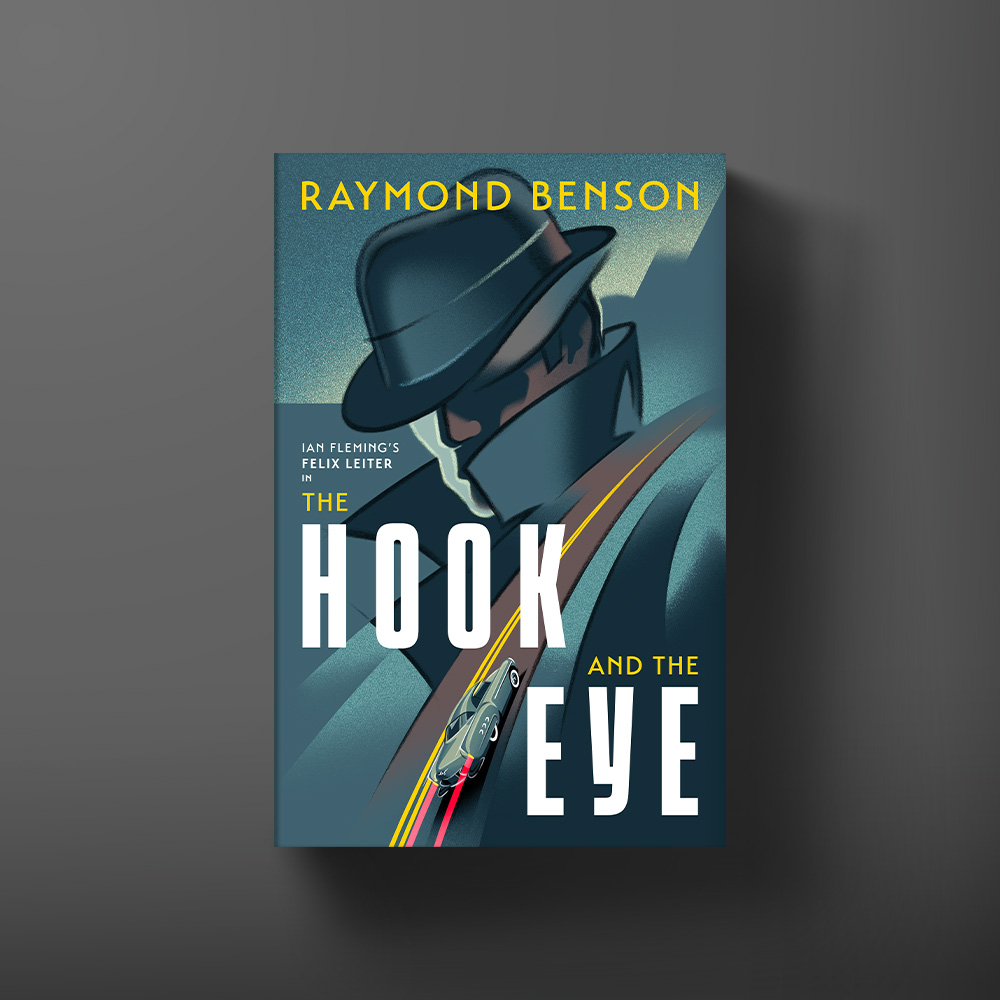
Thomas has also created the striking cover for over very first solo Felix Leiter novel, The Hook and the Eye, by Raymond Benson. This he describes as ‘a dream project’ and depicts Felix, now a private investigator in year 1952, as a mysterious figure with a noir styling.
‘When I read the manuscript of The Hook and the Eye I was struck by its lovingly hand-crafted, analogue feel. To do justice to the warmth and authenticity of Raymond’s words, I felt the cover could only be an original piece, sketched by hand. I explored some wide ranging ideas – the book was a gold mine of possibilities! Pencil on paper gives an energy and texture that can’t be replicated – most of the pencil strokes remain in the final cover art.’
Discover more about Thomas’ work and process here.
Have you read Ian Fleming’s children’s adventure story? David Lowbridge-Ellis MBE thinks you should. Read on to hear why.
As with Bond, most people’s first encounter with that other great Fleming creation, Chitty Chitty Bang Bang, is through the film version. It’s an admirable adaptation and it still works, nearly sixty years down the road from its first release. I recently rewatched it with my niece (age seven, going on 17) and nephew (aged four, obsessed with anything that goes on four wheels) and they enjoyed it immensely, as did I.
But I’ve spoken with so many avowed fans of Fleming – people who have read all fourteen Bond books cover to cover ad infinitum – who have never even picked up a copy of Chitty Chitty Bang Bang, let alone read one. Why? The obvious answer is that Chitty doesn’t feature the character of James Bond. But there are several Fleming ‘James Bond’ stories where 007 barely features. See for instance, Quantum of Solace and Octopussy, widely acclaimed as two of his best (and two of my personal favourites). Even more so than Bond himself, many of us are attracted to Bond’s world. As anyone who has read Chitty Chitty Bang Bang already knows, all of Fleming’s works take place in the same milieu.
Perhaps Bond fans resist reading Chitty because it’s pigeonholed as a children’s book. But this argument holds less water than it once did. There’s a growing recognition that reading books intended for children doesn’t merely reconnect us to our childhoods in a nostalgic way. Rather than infantalising us, reading the odd children’s book every once in a while is good for us, reminding us of what we once thought we might be capable of, before our imaginations were stifled by adulthood, thereby motivating us to make more ambitious life choices.
WH Auden – incidentally a big Fleming Bond fan – summed it up best: “There are good books which are only for adults, because their comprehension presupposes adult experiences, but there are no good books which are only for children.”
As someone who read their first Fleming Bond book aged eight, I can attest to some of the ‘adult experiences’ in Thunderball being beyond my comprehension! Had I instead taken Chitty Chitty Bang Bang into school as my reading book I would no doubt have provoked less eyebrow-raising from my teacher.
But the worlds of Chitty and Bond are not as different as they first appear. While we’re currently going through a golden age of multiverses in popular media, Chitty and Bond are recognisably part of the same universe, even a shared universe.
There are treasures aplenty in Chitty for hunters of Bond Easter Eggs. I won’t spoil it for those about to embark on their first reading, but much of the action of the first section takes place in territory familiar to fans of Fleming’s Moonraker. And later in the story, the Pott family check into a hotel that anyone who has read Casino Royale will recognise immediately.
The Pott family’s patriarch, Commander Caractacus Pott, not only shares Bond’s Royal Navy rank but also his predilection for bacon and eggs. He’s more of a free-spirit than Bond, living a precariously-impecunious existence. But although Pott didn’t follow Bond’s career path into salaried civil servitude, you could easily imagine them having served together in the Second World War.
Commander Pott is the character who Fleming has vocalise his own personal credo (which Fleming himself inherited from his mother):
“Never say no to adventures. Always say ‘yes’, otherwise you’ll lead a very dull life.”
While Fleming never has Bond himself say this, the principle underpins the whole of the Bond series. We all know how quickly his 007 goes off the rails whenever boredom appears on the horizon. His you only live once (or possibly twice) attitude to life is something many Bond fans seek to emulate. If anything, Chitty Chitty Bang Bang is an even purer distillation of Fleming’s carpe diem philosophy. Midway through the story, after the Pott family realise they are in very real danger, the response of their patriarch is to cheerfully announce: “You never get real adventures without a bit of risk somewhere.”
Like all of the best books primarily intended for children, Chitty Chitty Bang Bang doesn’t skimp on putting its heroes at risk. By turns they face many of the threats Bond faces down throughout his adventures, being almost drowned, electrocuted, shot and blown to smithereens. An encounter with a human skeleton is genuinely creepy for readers of all ages. One of my favourite passages is the Pott family sailing Chitty – in her hovercraft form, years before 007 rode an inflatable gondola through Venice in the film of Moonraker – through spooky shipwrecks. Here, and throughout the novel, Fleming’s imagery is as uncanny as it ever is in the Bond series.
The villains are more grounded than those of the film adaptation, but no less colourful. As with his Bond books, Fleming revels in using underworld argot, deploying it with brio. The difference with Chitty is he stops to explain what the slang terms mean to younger – or less criminally-conversant – readers. Who knew there were so many terms for high explosives? If this all sounds a bit patronising, don’t fear; when I re-read Chitty recently, I found all of the direct addresses to the reader gave the whole book a surprisingly (post)modern feel, certainly compared with other children’s books from the 1960s.
Even when writing for adults, Fleming was never afraid to slip into the declarative mood, explaining things to us – food, drink, vehicles, weapons, architecture – like a patient and ever-so-knowledgeable teacher. As escapist as the Bond books are, they are also great infotainment. A standout example in Chitty is Fleming’s veritable essay on how a French breakfast differs from an English one, which even present day readers who are well aware of the meaning of cafe au lait will find satiating.
Fleming knows exactly what he is doing. His omniscient narration is so playful, you can’t help but get drawn in. Rather than explain everything about the villain’s plan in tedious detail, he tells us this is “more or less” what they’re up to, cobbled together from overheard conversations by young heroes Jeremy and Jemima, who are both given more agency as the story progresses. This is childhood as we choose to remember it: with the boring bits cut out.
As adult readers, we take delight in Fleming’s playful asides (was there ever a book with more parentheses?). It’s also a joy to read Fleming doing what he rarely dares to do in the Bond series: undercutting the seriousness. You can see this as soon as the opening sentence. As ever with Fleming, the book’s opener is a punchy and perfectly formed conglomeration of clauses – but here there is a wry and very relatable toffee-related twist in the tail.
The spectre of confectionery looms large across the whole story. In the world of Bond, sweet things are associated with childhood memories (most notably in the opening to On Her Majesty’s Secret Service). In Chitty, sweets are the story, culminating in an “easy to make and absolutely delicious” fudge recipe (folded more organically into the story than Ian’s recipe for scrambled eggs in 007 in New York, the raison d’etre of that particular short story/apology to the denizens of NYC).
As ever with Fleming, the women are a force to be reckoned with. This is as far from a ‘boy’s own’ story as you can imagine. Young Jemima has just as much – if not more – agency than her twin brother Jeremy. She’s certainly more of a strategist than her male counterpart, preferring to think her way out of problems. Jeremy is more content to follow his first impulse and suggest blowing things up. There are definitely shades of the male/female dynamics at play at the end of Fleming’s Moonraker, with Jemima emerging as a younger version of Gala Brand.
But the ‘Bond Girl’ of the piece is, of course, Chitty herself. Early on, we have Commander Pott picking apart why we use female pronouns for “all bits of machinery that people love”. And Chitty – anthropomorphised throughout – is more than capable of giving this love back in return. After escaping not-quite-unscathed from an adventure, she is “quite happy being attended by a host of admiring French mechanics”. Oooh la la!
In a 1956 letter to Raymond Chandler, Fleming described his own books as “pillow fantasies of the bang-bang, kiss-kiss variety”. There is nothing approaching kiss-kiss action in Chitty, but we do get a lot of bang bang.
While Chitty was generally well-reviewed on its original release in 1964, John Rowe Townsend in The Guardian was one of the dissenters. He sniffily observed that “we have the adult writer at play rather than the children’s writer at work.”
Needless to say, generations of children have disagreed with him. And to my adult ears, although Townsend didn’t intend his comment to be taken as ringing endorsement, this is what it sounds like to me! As an adult reader well-versed in Fleming’s other work, it’s a joy to read Fleming in more playful mode, especially considering the circumstances that attended the writing. When Fleming wrote Chitty Chitty Bang Bang, he was recovering from a heart attack, unable to have any adventures beyond those in his own head. Chitty had been going around in his brain for years; it started life as the bedtime story he told his son Caspar. Even though Fleming was far from firing on all cylinders physically, his imagination was driving away with him. Forbidden by doctors to use a typewriter, he wrote the whole of Chitty in pencil. Writing provided him with some sorely needed escapism.
Anyone thinking they shouldn’t bother reading the book of Chitty Chitty Bang Bang because they’ve already seen the film would do well to remember how different experiences the Bond books are from the Bond films. The film of Chitty was produced by Albert R. Broccoli, co-written by You Only Live Twice screenwriter Roald Dahl and features several Bond film alumni in the cast. While technically not an Eon production (Harry Saltzman did not co-produce) it’s almost as Eon-ised a version of Fleming’s world as the one depicted in the Eon Bond films.
Both the book and film of Chitty are adventures well worth saying yes to.
Fleming himself appeared to be uncertain about whether he had succeeded in writing Chitty for children, telling his publisher “Heaven knows what your children’s book readers will think of them”. Self-deprecating as ever about his literary talent, he nevertheless rallied sufficient courage to nail his colours to the mast, adding “they are in fact designed for a readership of around seven to ten”.
Whatever one’s age, Fleming’s original text is well worth reading in its own right, especially if you’re a Bond fan.
David Lowbridge-Ellis MBE is a lifelong Bond fan, a teacher by vocation and the creator of the Licence to Queer. Launched in 2020, the website, podcast and social channels are on a mission to uncover why James Bond appeals so much to the LGBTQIA+ community. David always intended Licence to Queer to reach the widest possible audience, not just people who identify as LGBTQIA+. To that end, Licence to Queer straddles the line between being educational and fun.
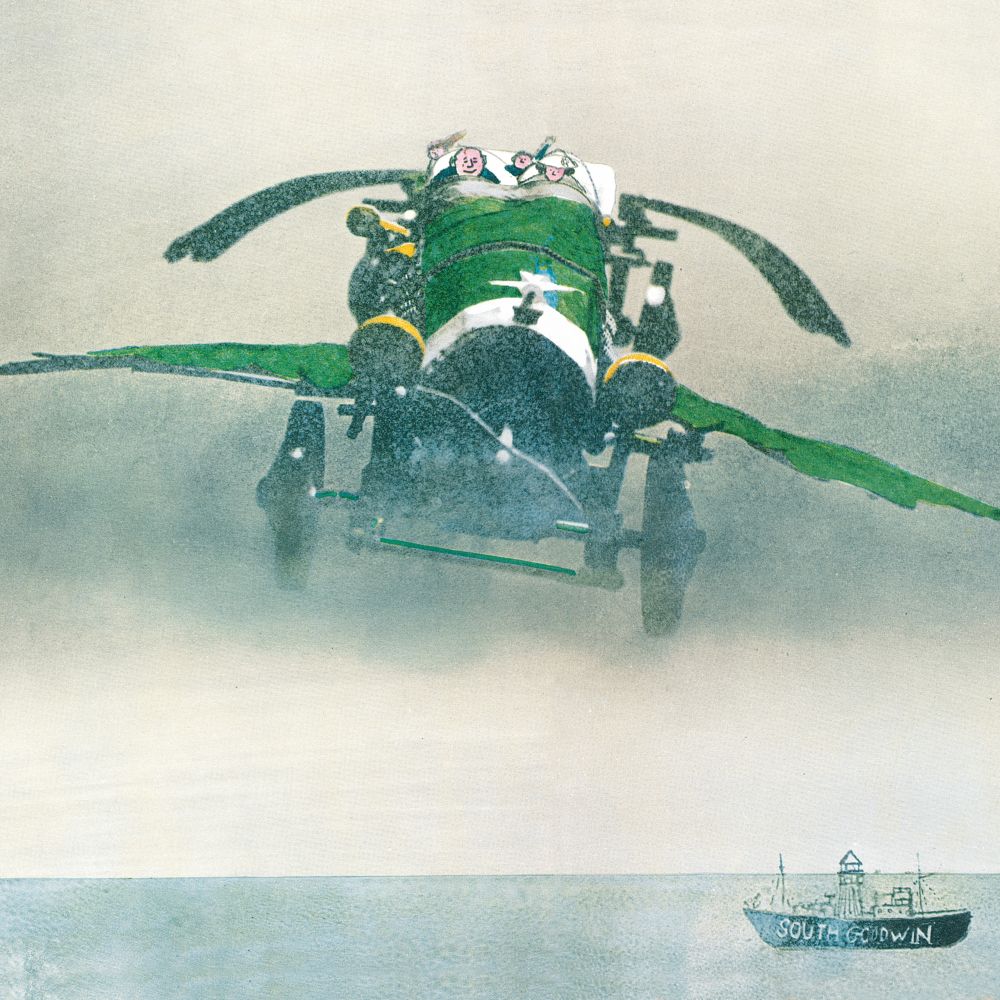
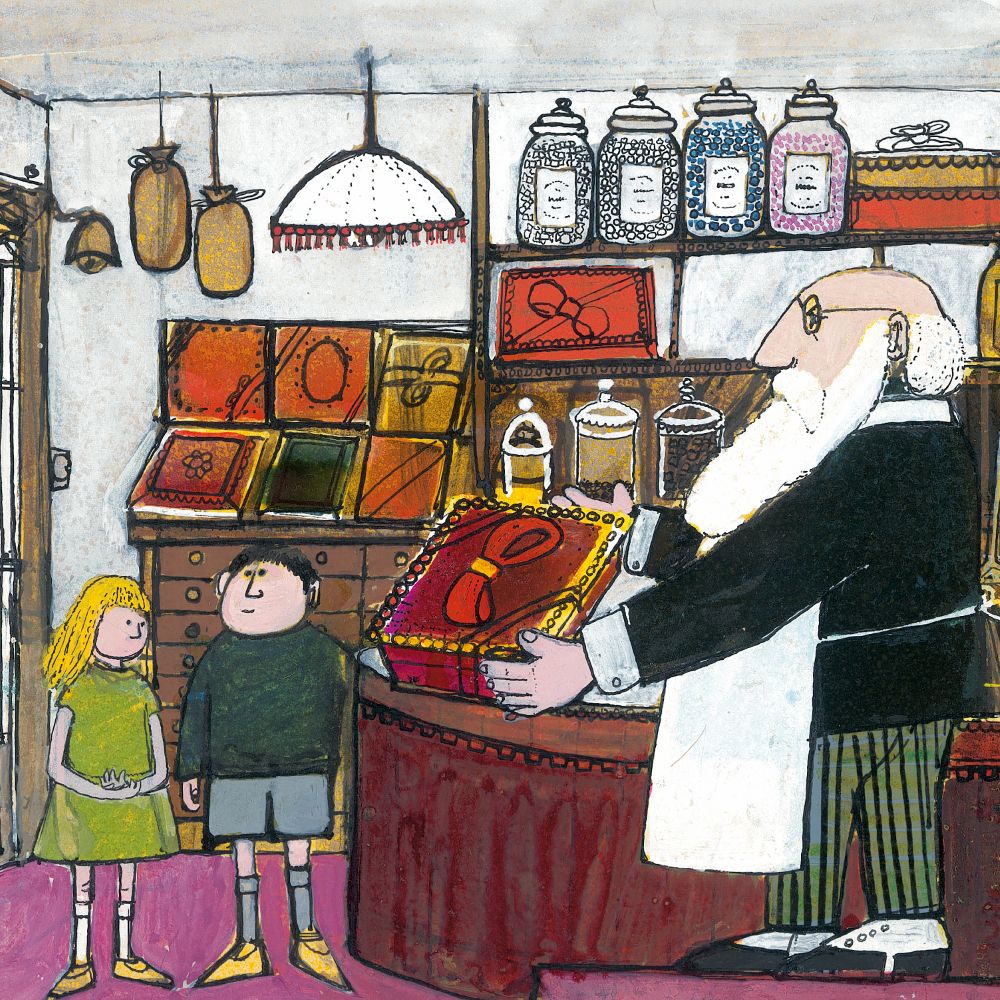
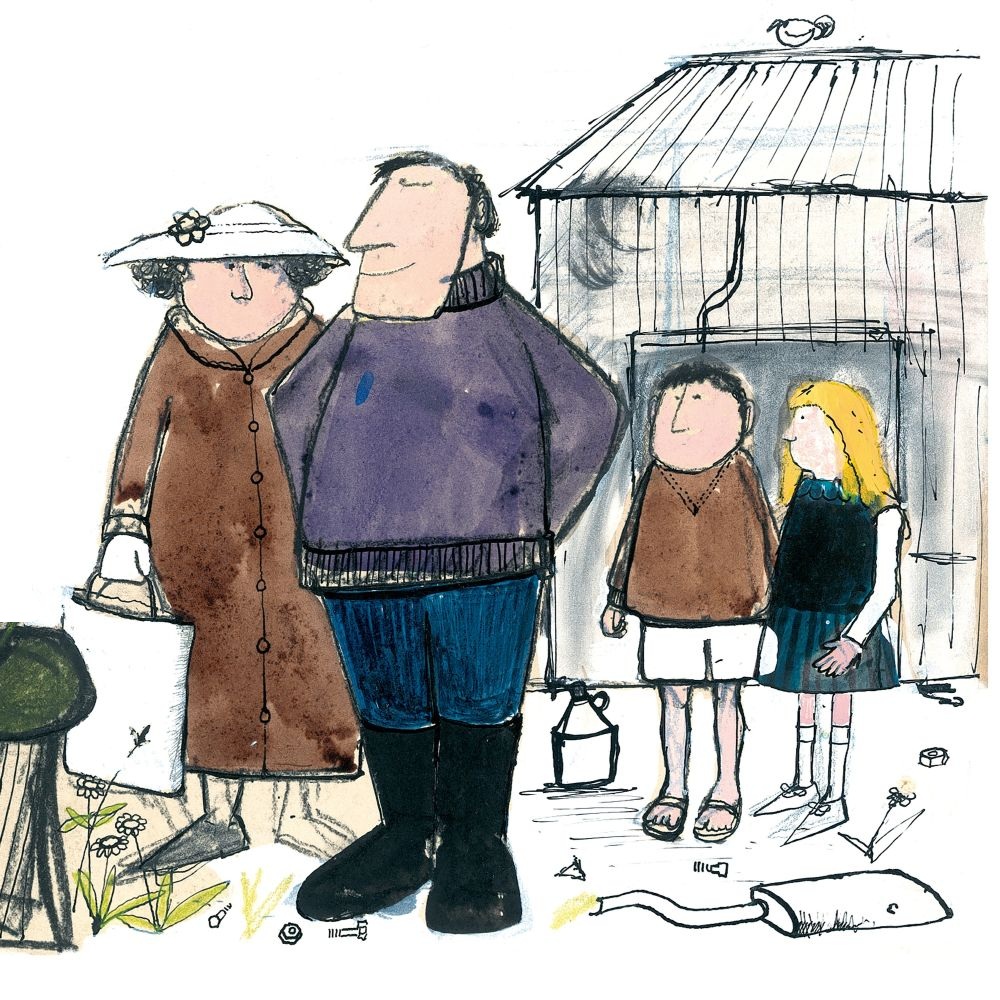
When Chitty Chitty Bang Bang was first published in 1964 it featured original illustrations by John Burningham. Burningham had been the recipient in 1963 of a Kate Greenaway Medal for his illustrations in his book Borka: The Adventures of a Goose With No Feathers and he would go on to win many more awards throughout his long career, creating books beloved by generations.
The initial artist in the frame for Chitty Chitty Bang Bang was Wally Fawkes, better known as ‘Trog’. Fawkes was the cartoonist for the Daily Mail and his work was far more in the mold of caricature and surrealism, which, whilst suiting the eccentricity of the Potts clan, may not have appealed to all ages. To Ian’s mind, the ideal reading group was children aged seven to ten and while Trog’s iconic ‘Flook’ character had started as children’s comic strip it had by the Sixties already begun to appeal more to parents, with its sardonic, satirical tone.
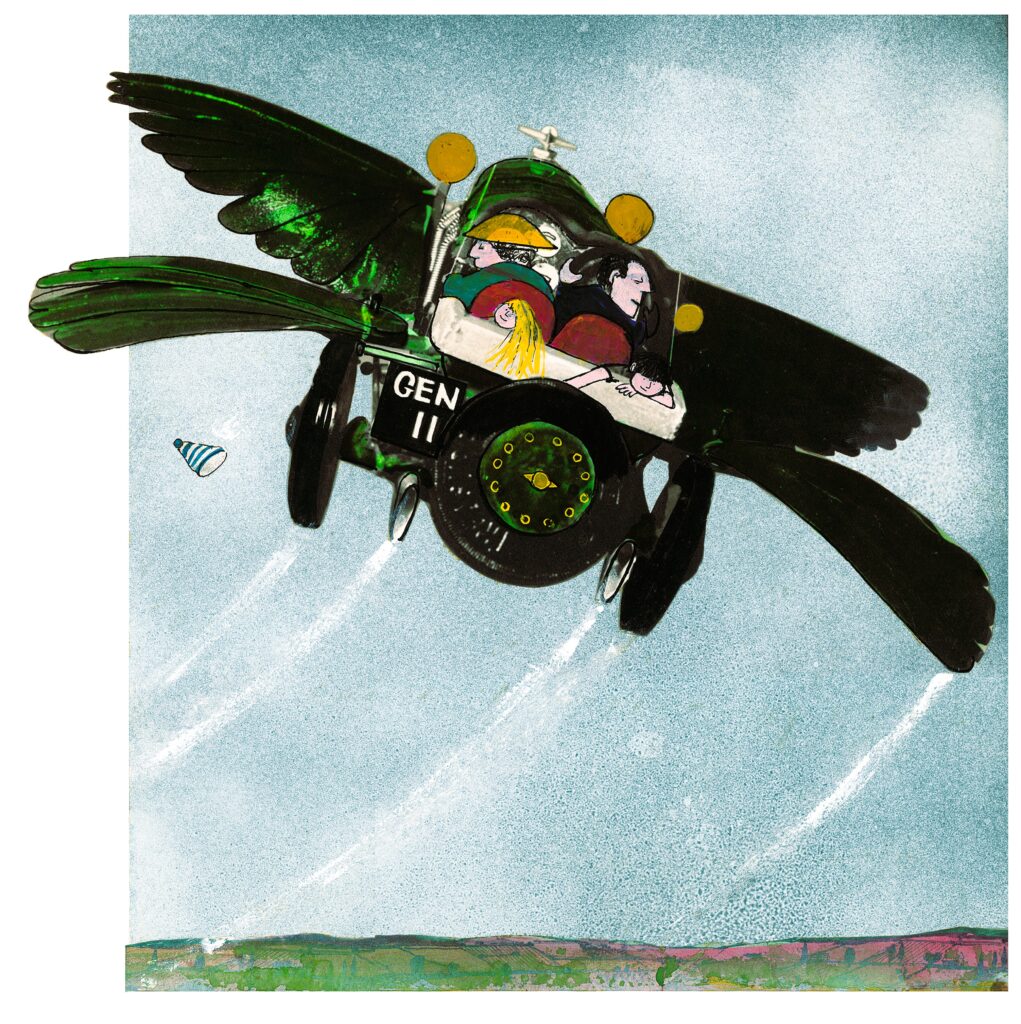
Getting the image of the car itself right was of utmost importance to Ian Fleming and to this end he himself sent the only copy of the manuscript he had available to his old friend Amherst Villiers. Villiers was an automotive and aeronautical designer and in addition to designing the car that broke the land speed record in 1927, he developed a supercharger that could be successfully fitted to a Bentley – which is exactly what James Bond drove in his earliest prose adventures. Fleming asked Villiers to try his hand at Chitty, with specific instructions as to the technology of the car and its appearance. Making this magical car a tactile vehicle – with gadgets and engineering based in reality rather than fairy land – was crucial to the character of Chitty. This distinction bases the car so beautifully in reality and gives children a relatable place to begin before they and the Potts family get whisked away to France.
Villiers could not commit to providing illustrations for the book, so the mantle then fell to Haro Hodson, a war artist and cartoonist working with the Observer when Chitty landed on his desk. Haro – who died in February 2021 at the age of 97 – shared a mutual friend with Ian Fleming in the form of Noël Coward. His sophisticated, Indian ink drawings still ooze style half a century later and he was able to offer some preliminary designs for the Chitty manuscript.
By the time John Burningham was brought on it was late 1963 and his artwork was what finally brought the magical car to life on the page. Ian Fleming died in May 1964, with the book first published in a staggered release in the UK from October that year until January 1965.
The film adaptation took flight in 1968, with the titular car designed by the legendary production designer Ken Adam, whose work was already synonymous with Fleming due to his James Bond movie sets. A novelisation of the movie was also published but not with illustrations.
In 2002 the stage production of the film used a car prop that has been listed in the Guinness World Records as the most expensive stage prop ever and now reportedly resides in film director Peter Jackson’s collection.
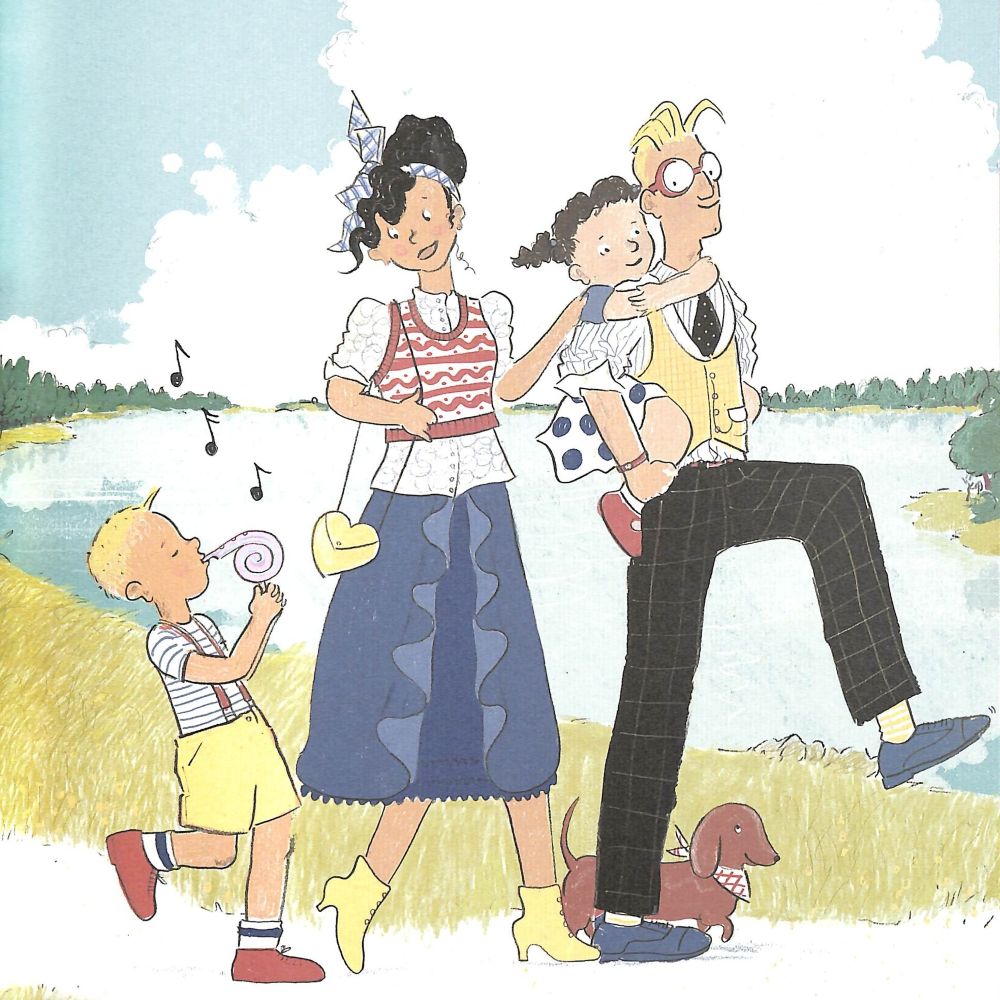
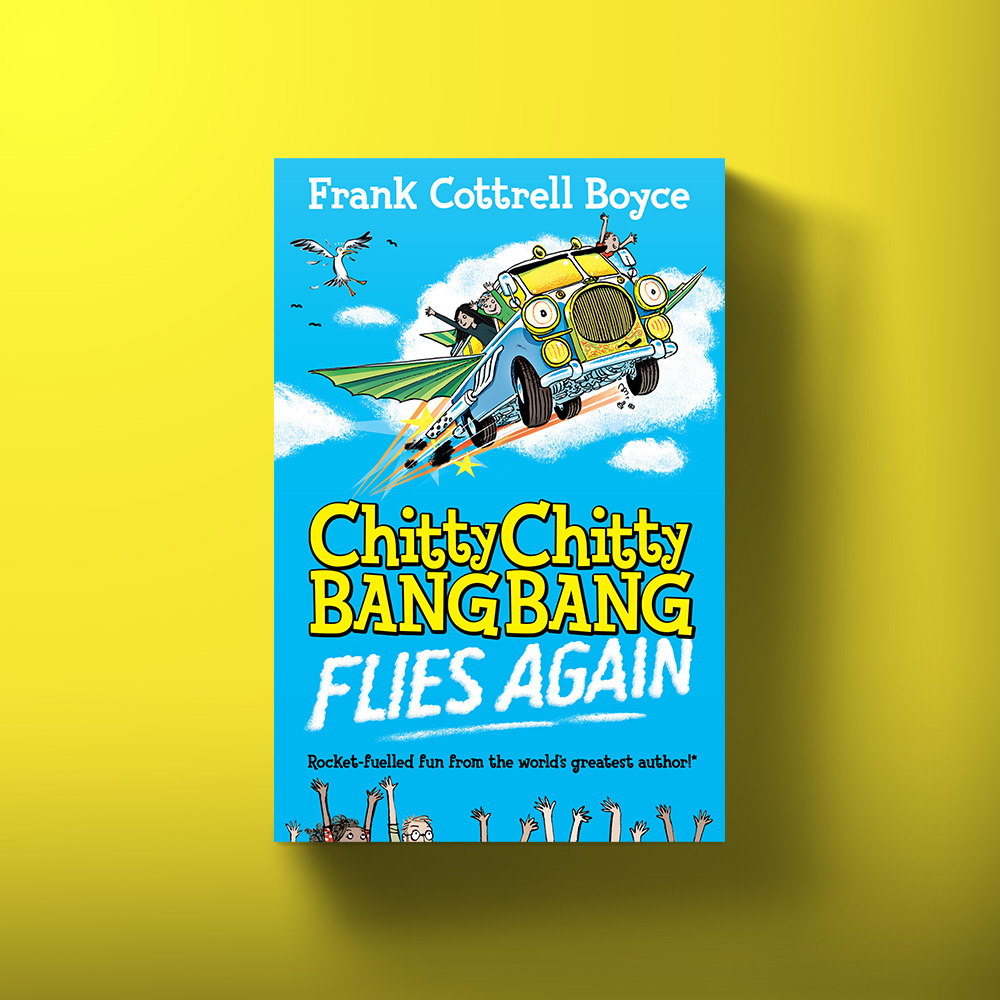
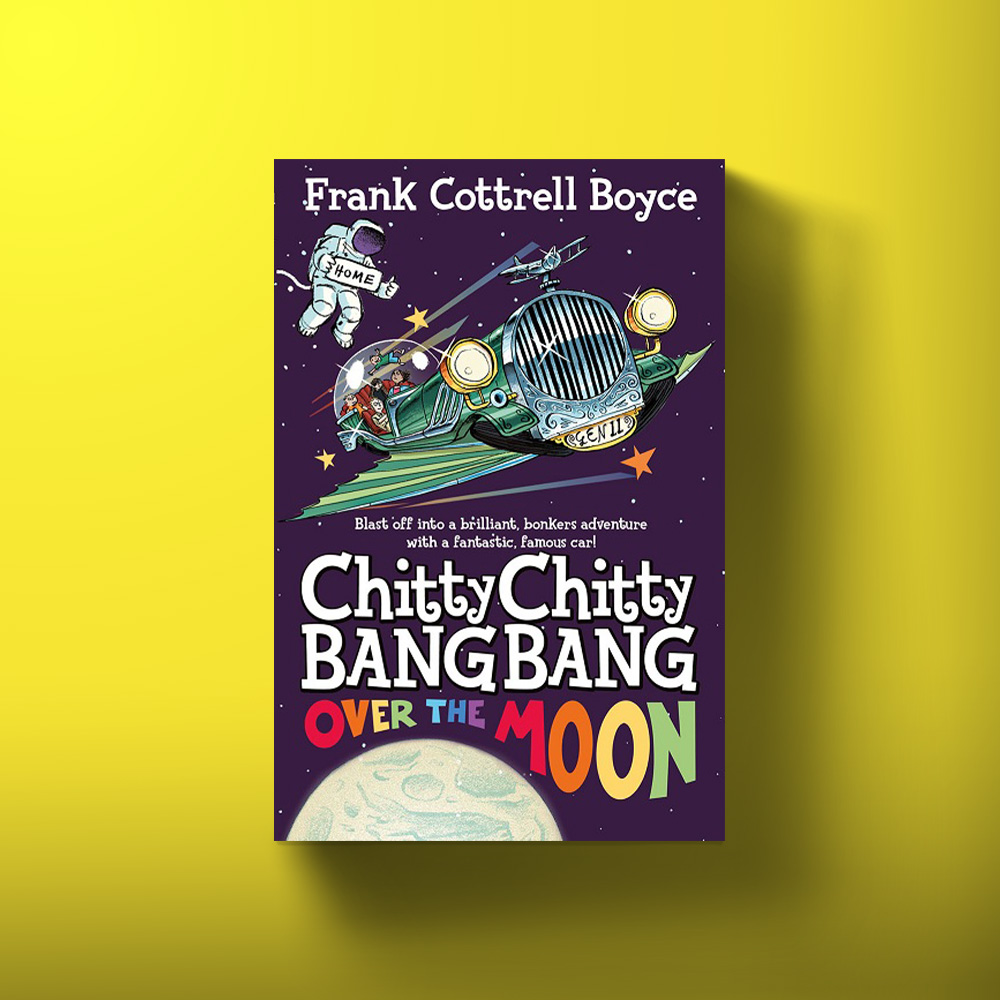
While the original novel was published with designs by different artists over the years, Chitty was reinvented on the page in 2011 in the official book sequel by Frank Cottrell Boyce Chitty Chitty Bang Bang Flies Again. The all-new illustrations for what became a trilogy of books were by Joe Berger. Berger’s line is dynamic, full of adventure but with wonderfully detailed technology that Amherst Villiers would no doubt pore over. Berger also illustrated a new edition of the original Fleming classic, bringing 21st century colour and action to new readers.
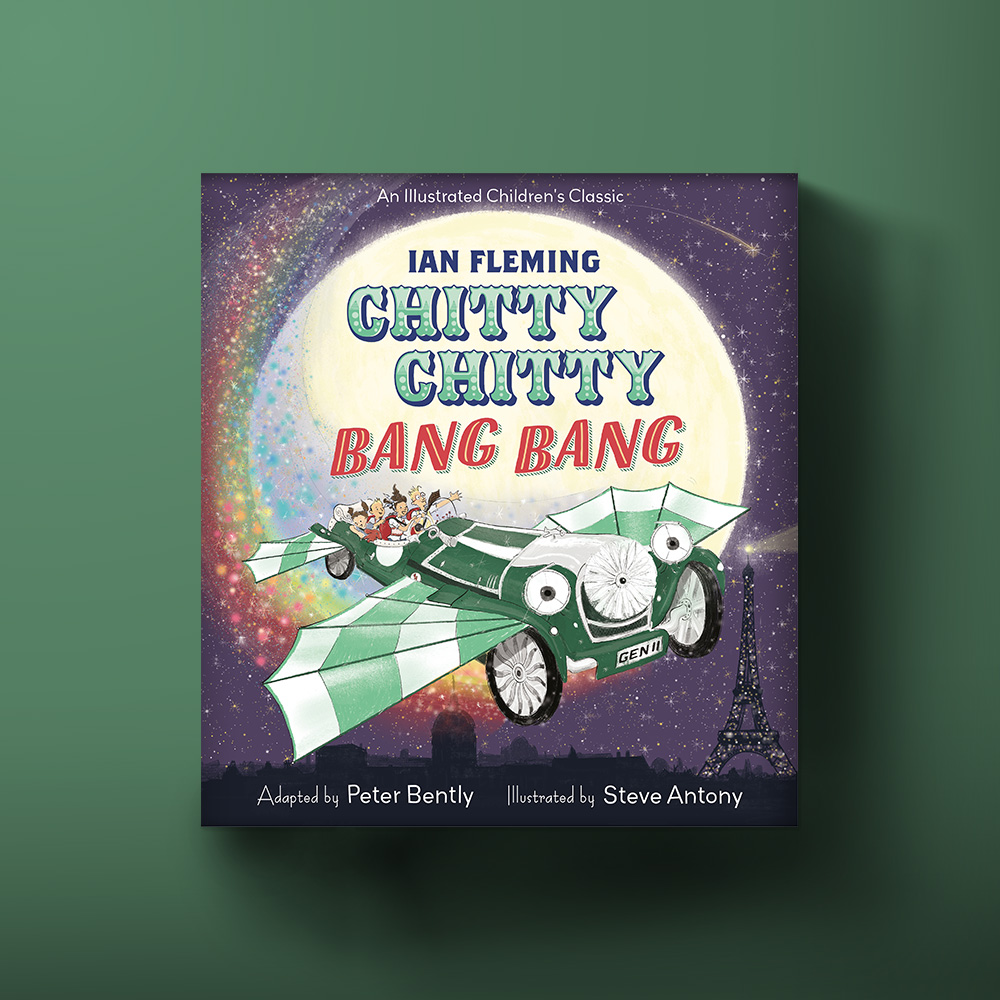
The flying car would be in the garage for only a handful of years before she was reintroduced in 2020 in hardback picture-book format, adapted by Peter Bently and illustrated by Steve Antony. Aimed at the younger readership of 3-5 years-old, the story has never been more accessible or more playful. A paperback edition with foil cover finish followed.
In 2024 a new British artist was commissioned to reimagine the iconic car and story for a new edition of Fleming’s treasured children’s classic. Thomas Gilbert drew on his longtime love of vintage cars to create a dynamic new cover design and 30+ original black and white illustrations for the interior.
The story in the pages is as fresh as ever and whilst the design of the car has evolved and adapted over the years, the character and spirit of Chitty has never altered. We can never know what Ian Fleming would have thought of the finished artwork, but it is safe to say that he would have been amazed and delighted by the incredible legacy of his story. Much like the various reincarnations of James Bond onscreen, no matter which iteration has been drawn for the page, decades of readers have a version of Chitty Chitty Bang Bang in their own imaginations.
Jon Gilbert, internationally renowned dealer in rare Fleming-related material and author of Ian Fleming: The Bibliography, explores the provenance of Chitty Chitty Bang Bang.
By the 1960s, novelist Ian Fleming had created a literary and cinematic phenomenon in the shape of British Secret Agent James Bond. Occasionally writing that he was tiring of his ‘cardboard hero’, Fleming would soon conjure up another unforgettable gadget-laden champion of literature and the big screen, though sadly he would not live to see the runaway success of his next great invention.
His only book for children, Chitty Chitty Bang Bang was the written version of the fantastic bedtime stories he concocted for his son Caspar. It tells the adventures of a magical, flying car restored by Caractacus Pott, a retired Naval Commander and now family-man inventor, who bought the vehicle using proceeds from his ingenious ‘whistling’ sweets which he had sold to the aristocratic owner of a large local confectionery factory. The car, whose original registration was GEN 11, was soon christened Chitty Chitty Bang Bang’ after the ritual noises produced when her powerful engine burst into life. Fleming’s Chitty seemingly has a mind of her own and reveals her unusual abilities to the spell-bound Pott family, whisking them off on a crime-busting caper across the English Channel.
The author took his inspiration for the motor from a series of aero-engined racing cars built and raced by Count Louis Zborowski in the early 1920s at Higham Park near Canterbury. Zborowski was the son of a racing driver who died in a crash and an American heiress to the Astor family, and at the age of sixteen became spectacularly wealthy upon his mother’s death, inheriting a sizeable portion of Manhattan. He invested in designing, building and racing his own cars, each called Chitty Bang Bang, before he too was involved in a fatal accident, during the 1924 Italian Grand Prix at Monza.
Fleming, who had experienced heart trouble from his late thirties, suffered a heart attack in April 1961 and was confined to bed at the London Clinic, subsequently convalescing on the south coast of England and Dieppe in Northern France. Doctors advised his coronary thrombosis was due to heavy smoking and recommended he reduce his cigarette consumption from sixty to twenty per day and cease golf and exercise for one year. Whilst recovering, Fleming committed these Chitty tales to paper, under the working title The Magical Car, informing his friend and publisher Michael Howard of Jonathan Cape – in typically playful style.
‘I can assure you that I will be firing on all cylinders again before long … [and] I am writing a children’s book, so you will see that there is never a moment, even on the edge of the tomb, when I am not slaving for you’
Fleming was known to borrow names from people he knew for his fictional characters and had plundered the roll of fellow students from Eton College when considering names for his James Bond novels (Strangways, Scaramanga, Hilary Bray, etc). A glance at the school list also reveals two pupils called Chitty and Chitty (Major and Minor), sons of Eton schoolmaster the Reverend George Jameson Chitty; these may also have inspired the Chitty Chitty of the final title.
At the end of April 1961 Fleming advised Howard that his children’s story was nearly finished, and on 27th June he took Caspar to see the latest Walt Disney film The Absent-Minded Professor. He was horrified to find it featured a flying motor car, built by a crackpot inventor in his own backyard, which was shown circling a church spire. Fleming, whose own tale included Chitty soaring over the spire of Canterbury Cathedral, was rightly frustrated, commenting to Howard:
‘This really is the limit. Would you ask one of your intelligence spies to have a look at this film and suggest what amendments we ought to make? Personally I think we could get away with cutting out the spire of Canterbury Cathedral, but it really is pretty maddening’.
Fearing repercussions, Fleming did make this suggested change to the church-roof section of the story.
Written as three instalments, a proper manuscript was typed up in August 1961, corrected by the author and dispatched to Cape’s offices that October. From this, various typescripts were produced, one of which Fleming sent in May 1962 to his great friend the automotive and aeronautical designer Amherst Villiers. Villiers was famous for his pioneering work in superchargers which were fitted with great success to the ‘Blower’ Bentley race cars of the 1930s and which Fleming had chosen for James Bond to drive in his early adventures.
A covering letter requested Villiers read the enclosed stories with a view to providing illustrations for the motor car. The author’s instructions as to how the car should look were rather specific, but he trusted Villiers to give the car the right appearance mechanically, with vents and pipes and entrails all spilling out, as well as a snazzy dashboard displaying various knobs and buttons. He suggested visually stimulating drawings intended for children aged ‘about seven to ten’, and signed off the letter requesting that Villiers return the stories whatever the outcome, as they were the only copies to hand at that time. Although Villiers produced a few sketches, he could not commit to the project as he was busy developing Grand Prix cars for Graham Hill, but preliminary drawings were provided by artist Haro Hodson before the award-winning children’s author and illustrator John Burningham was commissioned in late 1963.
Fleming had originally suggested his friend Trog as the illustrator, Trog being the pseudonym of Wally Fawkes, cartoonist for the Daily Mail, who had created a spoof James Bond in his ‘Flook’ strip. A further script was typed in July 1962, and copy-editing was carried out in February 1963. The galley proofs were read for errors and the text was set for all three volumes in January 1964, before the bound proofs were issued in August. The first impressions of the three separate adventures of the magical car were printed, bound and delivered to Cape simultaneously, but their publication was staggered to maximise sales over Christmas 1964. Adventure Number 1 was published on 22nd October 1964, followed by Adventure Number 2 on 26th November and Adventure Number 3 on 14th January 1965. The first American printing, published by Random House as a single volume in autumn 1964, is an important edition marking the earliest published appearance of the entire text.
The book was an instant children’s classic, has remained in print ever since and inspired three official sequels by Frank Cottrell Boyce. The story was adapted into a screenplay by Roald Dahl and Ken Hughes in 1967, and released as a film by the James Bond producer Albert R. ‘Cubby’ Broccoli in 1968 to great critical and commercial acclaim. Dahl, a wartime intelligence colleague of Ian Fleming, was by that date a successful writer of children’s stories himself, and introduced some of the darker elements in the movie such as the evil child-catcher. The story also became the basis of an Olivier and Tony-nominated stage musical, which premiered at the London Palladium in 2002 and at the Lyric Theatre on Broadway in 2005. The show has since toured around the UK and there have been Australian and German national productions.
The creator of Chitty would not experience any of this success, however. After his heart scare in 1961 Fleming had returned to a busy life of journalism, leisure pursuits and globetrotting – over the next two years he would travel to America, Japan, Venice, Zurich, Lake Geneva, Istanbul and Jamaica (three times). Tellingly, he continued to enjoy cigarettes. Over Easter 1964, Fleming was golfing when the heavens opened. Playing through the storm, he caught a severe cold and developed pleurisy from which he never really recovered. Following the death of his mother in July that year, a frail Fleming collapsed just two weeks later at his beloved Royal St George’s Golf Club in Kent. He died in the early hours of August 12th, on the twelfth birthday of his son Caspar, for whom the magical stories were first imagined.
Manage Consent
To provide the best experiences, we use technologies like cookies to store and/or access device information. Consenting to these technologies will allow us to process data such as browsing behaviour or unique IDs on this site. Not consenting or withdrawing consent, may adversely affect certain features and functions.
Functional
Always active
The technical storage or access is strictly necessary for the legitimate purpose of enabling the use of a specific service explicitly requested by the subscriber or user, or for the sole purpose of carrying out the transmission of a communication over an electronic communications network.
Preferences
The technical storage or access is necessary for the legitimate purpose of storing preferences that are not requested by the subscriber or user.
Statistics
The technical storage or access that is used exclusively for statistical purposes.The technical storage or access that is used exclusively for anonymous statistical purposes. Without a subpoena, voluntary compliance on the part of your Internet Service Provider, or additional records from a third party, information stored or retrieved for this purpose alone cannot usually be used to identify you.
Marketing
The technical storage or access is required to create user profiles to send advertising, or to track the user on a website or across several websites for similar marketing purposes.
 Skip to main content