 Skip to main content
NEWS
The Best in Spy Fiction, According to Paul Warner
BECOME A FLEMING INSIDER > JOIN HERE

The Best in Spy Fiction, According to Paul Warner

Posted on 29 July, 2026
Paul Warner, author of A Spy in the Blood, this month’s pick for the James Bond Book Club, kindly shared his (00)7 all-time favourite spy fiction reads with us.
The spy novel, I think it’s fair to say, is having a moment. In compiling my top 007 espionage books, I’ve tried to balance different eras, to reflect the wealth of literature we’ve been blessed with since Childers, Conrad and Buchan wrote the blueprint in the early part of the last century, but it wasn’t easy. I’ve had to leave out many classics – sorry, Len, Berlin Game would have been 008, I promise – in my quest to be true to my personal favourites and the books which influenced me formatively or rekindled my love of the genre in recent times.
In no particular order, let’s open the mission dossier:
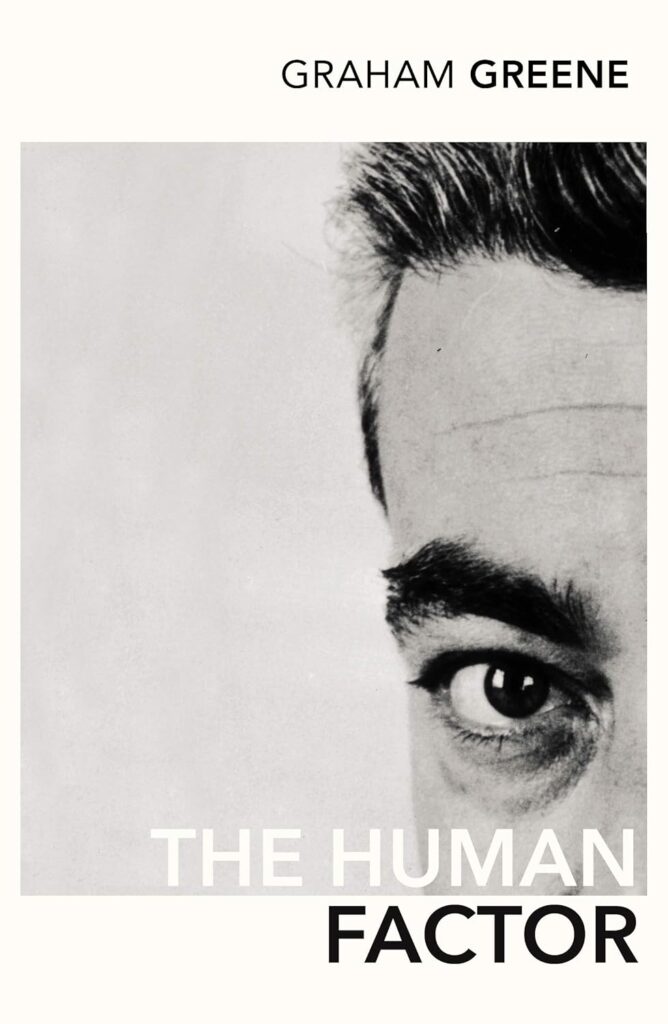
Words can’t express how much I love Graham Greene, and this late novel feels like a distillation of everything that made him such a powerful writer (his primary couple even sport names borrowed from The End of the Affair). His protagonist, Maurice Castle, is as conflicted as any in Greeneland and yet, this time, his story contains more than a healthy trace of autobiography, including reminiscences of Berkhamsted and the bureaucracy involved in working for the intelligence services. There are some wonderful early conversations between Castle and the unfortunate Davis, comparing the mundanity of their Service lives with the hedonistic exploits of James Bond. Ultimately, the book is about the effects of betraying country for family and, though Greene claimed at the time it wasn’t influenced by his friend Kim Philby, the book’s end leaves little doubt that Philby’s defection weighed heavily on Greene’s psyche.
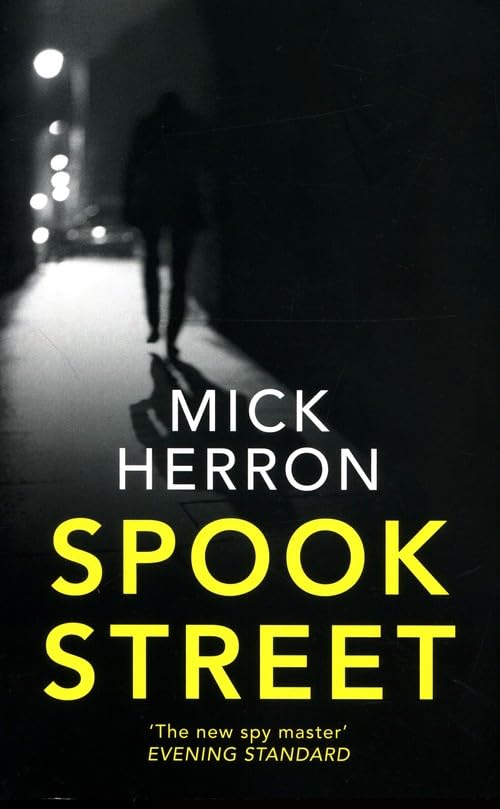
The fourth of the Slough House thrillers, Spook Street feels a more personal story than a lot of the adventures involving the Slow Horses, the group of no-hopers ditched ignominiously from HQ. This one deals with River Cartwright’s grandfather, a legend from yesteryear, whose dementia is causing him to leak sensitive intel. The politically incorrect Jackson Lamb (surely the greatest fictional creation of the millennium so far?), worked with River’s grandfather back in the day and intervenes explosively when River goes rogue. The core theme of family, and the collateral damage family members cause for their descendants, raises this book above Herron’s others for me, though all his entries in this series are gloriously witty and irreverent whilst maintaining serious, cynical statements on modern politics and the associated deep-state conspiracies.
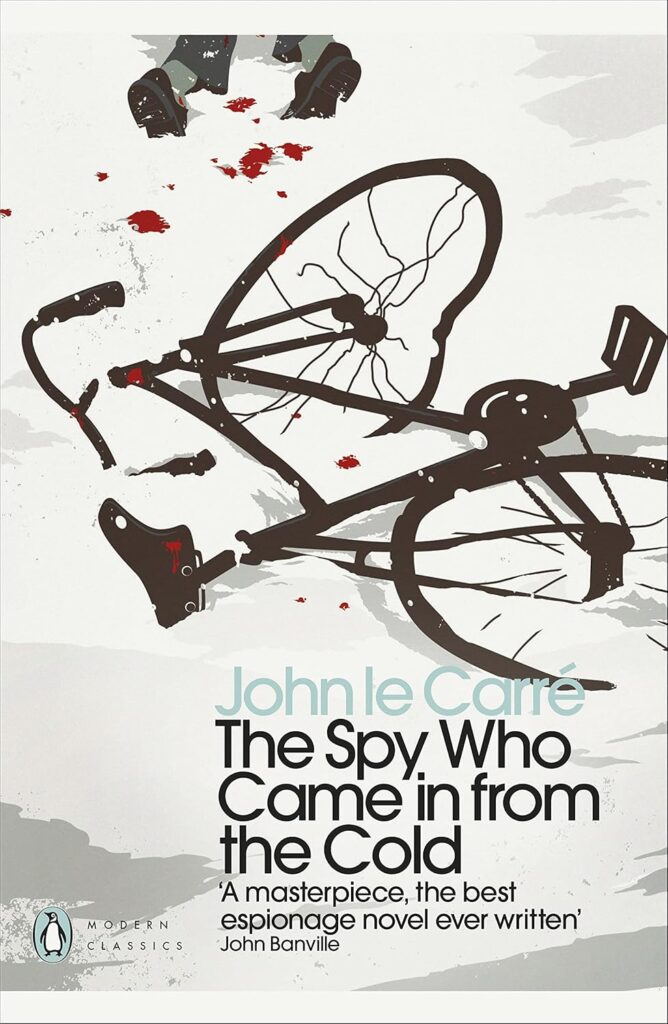
Published in 1963, in a Cold War landscape of Profumo affairs, Cuban Missile Crises and Cambridge Five defections, The Spy Who Came in from the Cold wears its weariness in bitter, disillusioned Alec Leamas, sent on one final assignment on the wrong side of the Berlin wall. It’s a book that feels horribly real, in the year before true spymania and all its attendant gadgets swept the nation, as Leamas attempts to navigate a grey world of moral ambiguity. The love story at the book’s centre is as tragic as anything in Shakespeare. It’s beautifully constructed and powerfully written, and never forgets what’s at stake. ‘This is a war,’ Leamas says at one point. ‘…graphic and unpleasant… fought on a tiny scale, at close range… with a wastage of innocent life.’ You could argue that le Carré went on to write better masterpieces than this but, my God, this one hits.
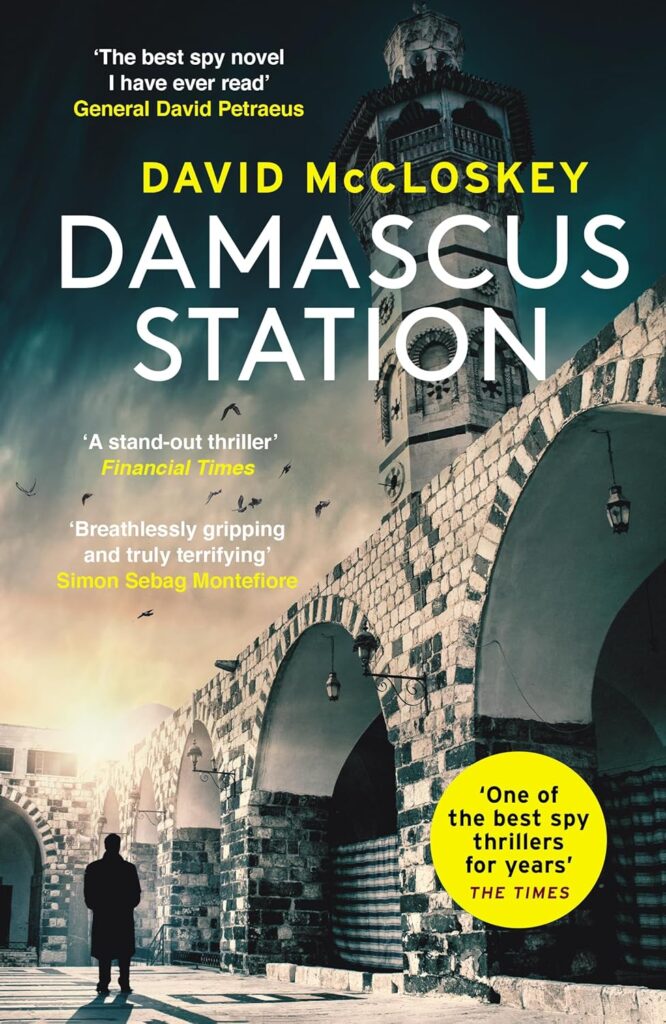
Set during the early days of the Syrian Civil War, CIA officer Sam Joseph recruits Mariam Haddad, an official connected to the presidential palace, to hunt for the killer of an American spy. They uncover a whole host of unpleasantries and, for their pains, are hunted by the regime’s spy catcher and his brother, the head of the Republican Guard. Uncompromising and brutal at times, the novel is also surprisingly tender, as Sam and Mariam break the rules of the game and fall in love. The characters’ backstories feel fully rendered and the alarmingly blunt Artemis Aphrodite Procter (we really need a spin off with her and Jackson Lamb going toe-to-toe) steals every scene she’s in, but it’s the tradecraft that truly grips. Despite Sam’s expertise and professionalism, McCloskey’s characters never feel safe and there’s palpable tension behind every scene.
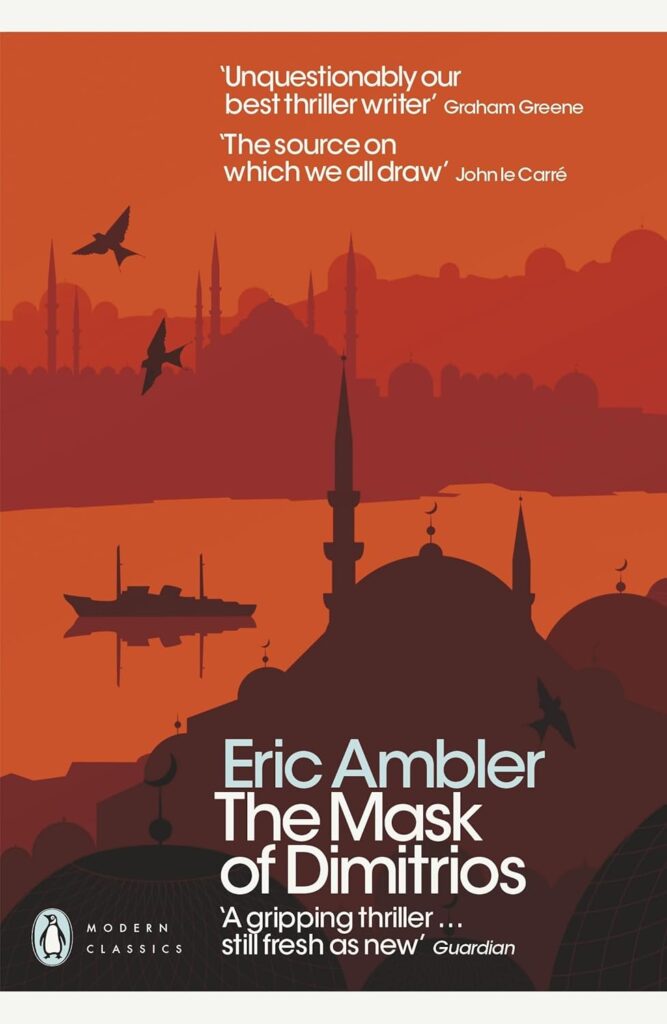
Like Ambler’s Uncommon Danger and Epitaph for a Spy before, The Mask of Dimitrios’ great strength is its main character’s everyman, fallible qualities. English crime novelist Charles Latimer is looking for literary inspiration in Istanbul when he gets in deep with his investigations into the death of a master criminal found in the Bosphorus and, as in John Buchan’s 39 Steps, or Graham Greene’s Ministry of Fear, there’s something so intoxicating about his protagonist’s civvy street arc: out of his depth in the early stages, outwitting hardened opponents by the final page as he finds himself thrust into a position of heroism. Few, if any, writers wrote about nobodies becoming somebodies better than Ambler did. We’re all familiar with Ambler’s influence on Fleming, but the fact that his books still hold up today speaks volumes about how good they are.
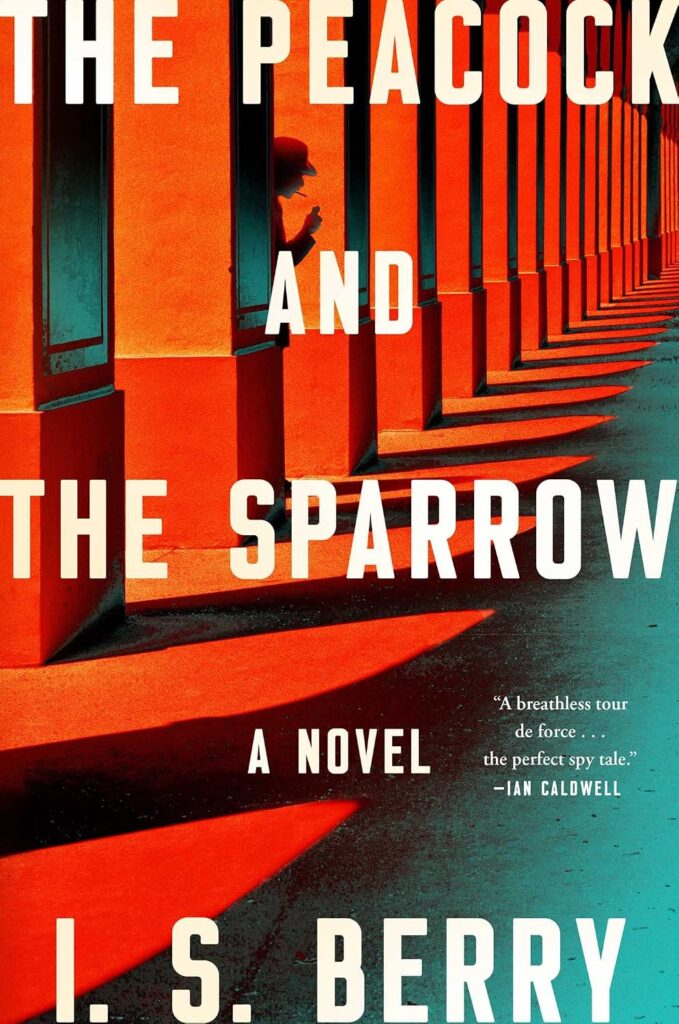
The most recent book on this list, and another by an ex-CIA employee. I. S. Berry’s only book to date is a realistic and heartfelt thriller, concerning Shane Collins’ final tour in Bahrain as he digs for evidence that the Iranians are supporting a Shiite insurgency there. Poets and artists and alcoholics mix during the Arab Spring, and no one can trust anybody, even the beguiling Almaisa who, it transpires, has reasons to forgive Collins of his unforgivable impropriety. Collins himself is a modern day Alec Leamas: jaded; romantically-challenged; bruised by the dangerous game he’s chosen to play for his country. Beautifully written and twisty without being showy, I. S. Berry weaves a gripping story of uncertain love and disloyalty, her prose in turns literary and urgent. I’m hoping for lots more.
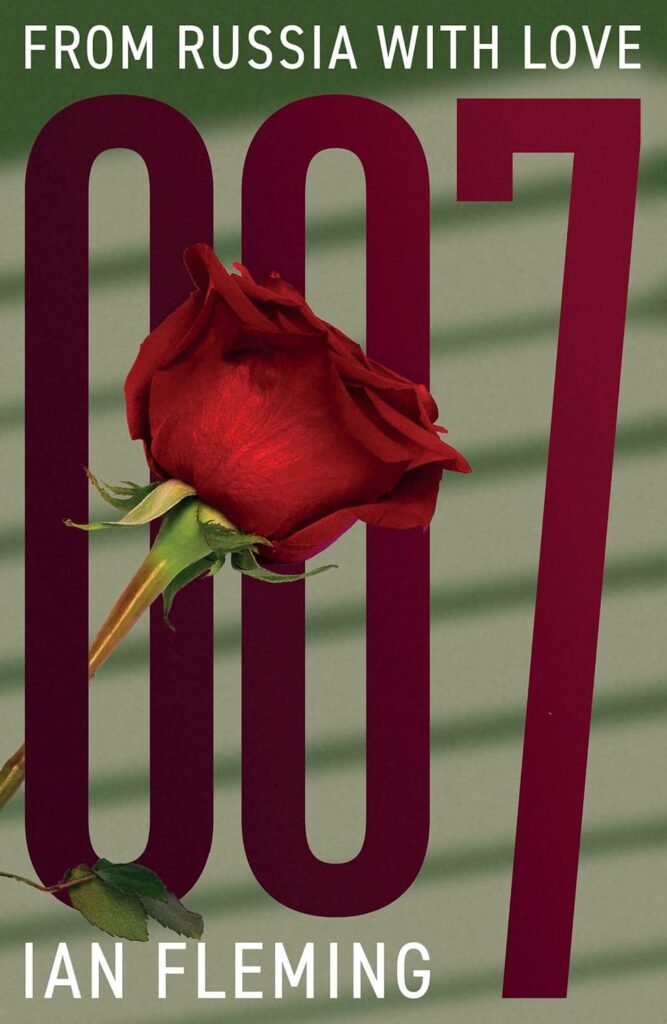
Who else was I going to glorify at this number but James Bond? For my money, Fleming’s fifth is the series at its peak. The story focuses on SMERSH’s attempt to not only assassinate Bond but do so in such a way as to ruin both his and Britain’s image in the process, by baiting him with a beautiful Russian cipher clerk and a Soviet decoding machine. Fleming is at his descriptive best in this one (the first chapter alone contains a six page description of Donovan Grant’s massage), and Bond himself doesn’t appear until deep into the novel; because we’re privy to the Russians’ machinations for ten chapters, we’re one step ahead of Bond and worry for his safety all the way up to the rare cliffhanger. Though Fleming quickly decided he didn’t want to kill his character off, that final image of Bond pivoting on his heel and crashing headlong to the wine-red floor lingers in the imagination for a long time. In my case, for four decades.
BY PAUL WARNER
Thanks to Paul Warner for sharing this list.
Paul is a thriller writer himself and we can’t recommend his book, A Spy in the Blood, highly enough. Read more about it here, and watch our interview with Paul here.